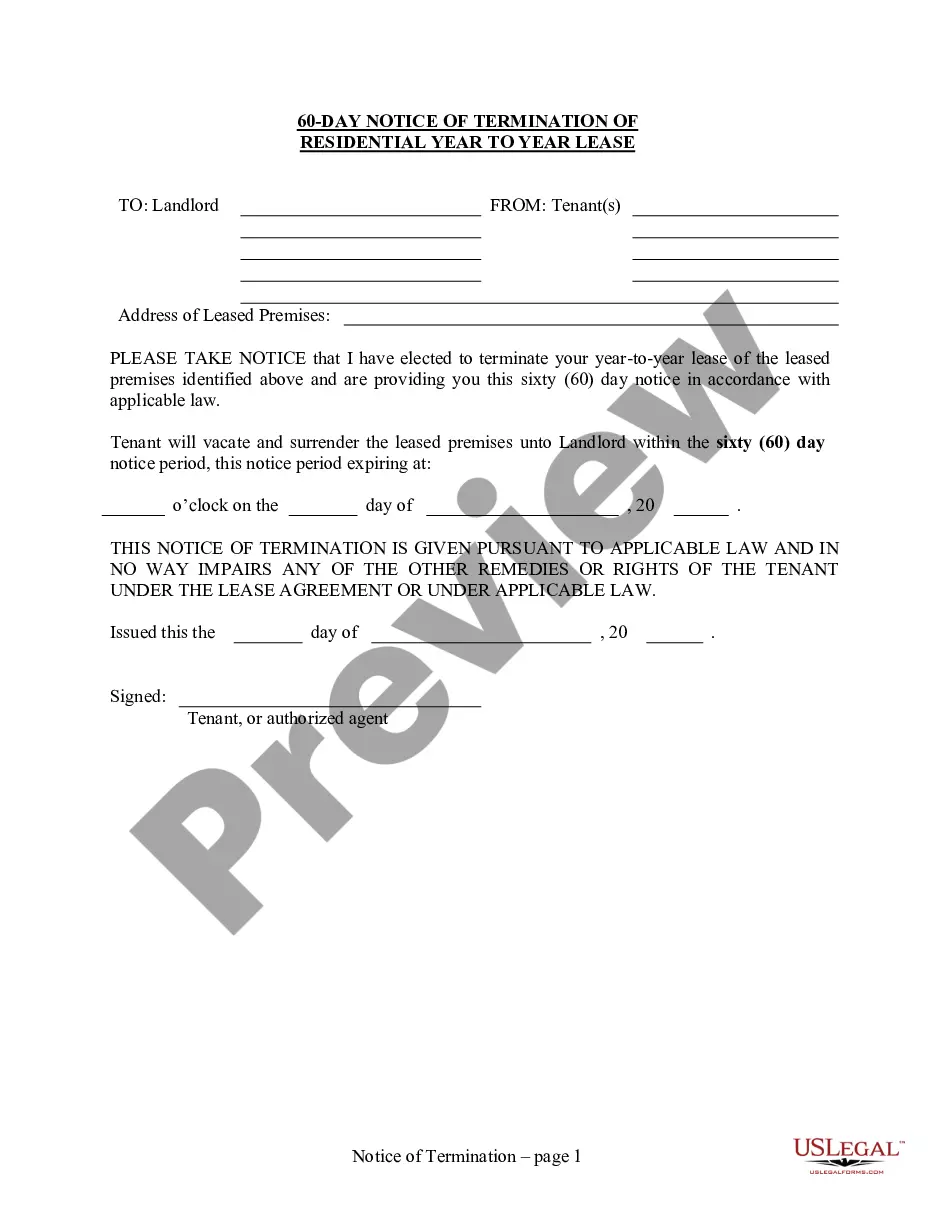
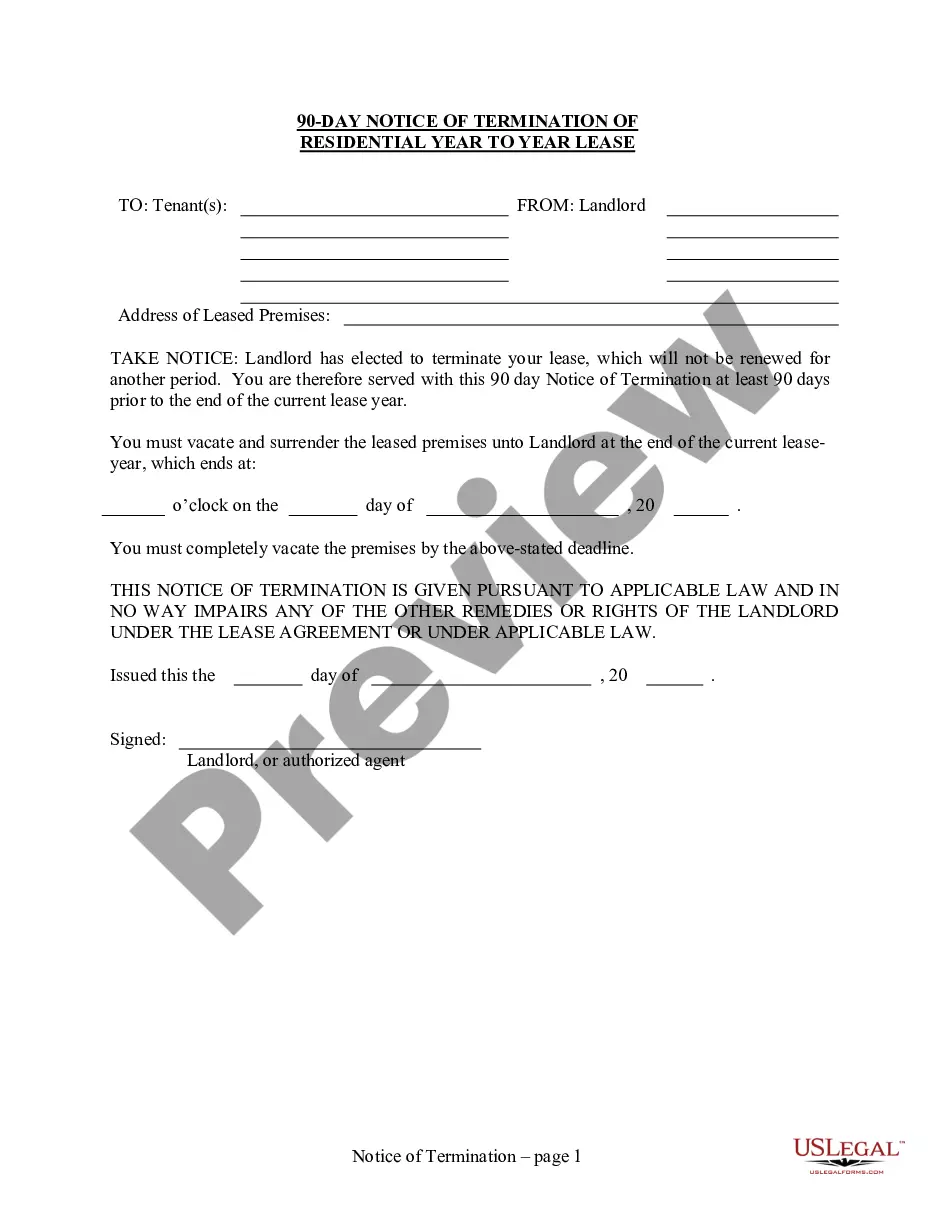
60 Day Move Out Notice Without Notice
Description

Get your form ready online
Our built-in tools help you complete, sign, share, and store your documents in one place.
Make edits, fill in missing information, and update formatting in US Legal Forms—just like you would in MS Word.
Download a copy, print it, send it by email, or mail it via USPS—whatever works best for your next step.
Sign and collect signatures with our SignNow integration. Send to multiple recipients, set reminders, and more. Go Premium to unlock E-Sign.
If this form requires notarization, complete it online through a secure video call—no need to meet a notary in person or wait for an appointment.
We protect your documents and personal data by following strict security and privacy standards.

Make edits, fill in missing information, and update formatting in US Legal Forms—just like you would in MS Word.

Download a copy, print it, send it by email, or mail it via USPS—whatever works best for your next step.

Sign and collect signatures with our SignNow integration. Send to multiple recipients, set reminders, and more. Go Premium to unlock E-Sign.

If this form requires notarization, complete it online through a secure video call—no need to meet a notary in person or wait for an appointment.

We protect your documents and personal data by following strict security and privacy standards.
Looking for another form?









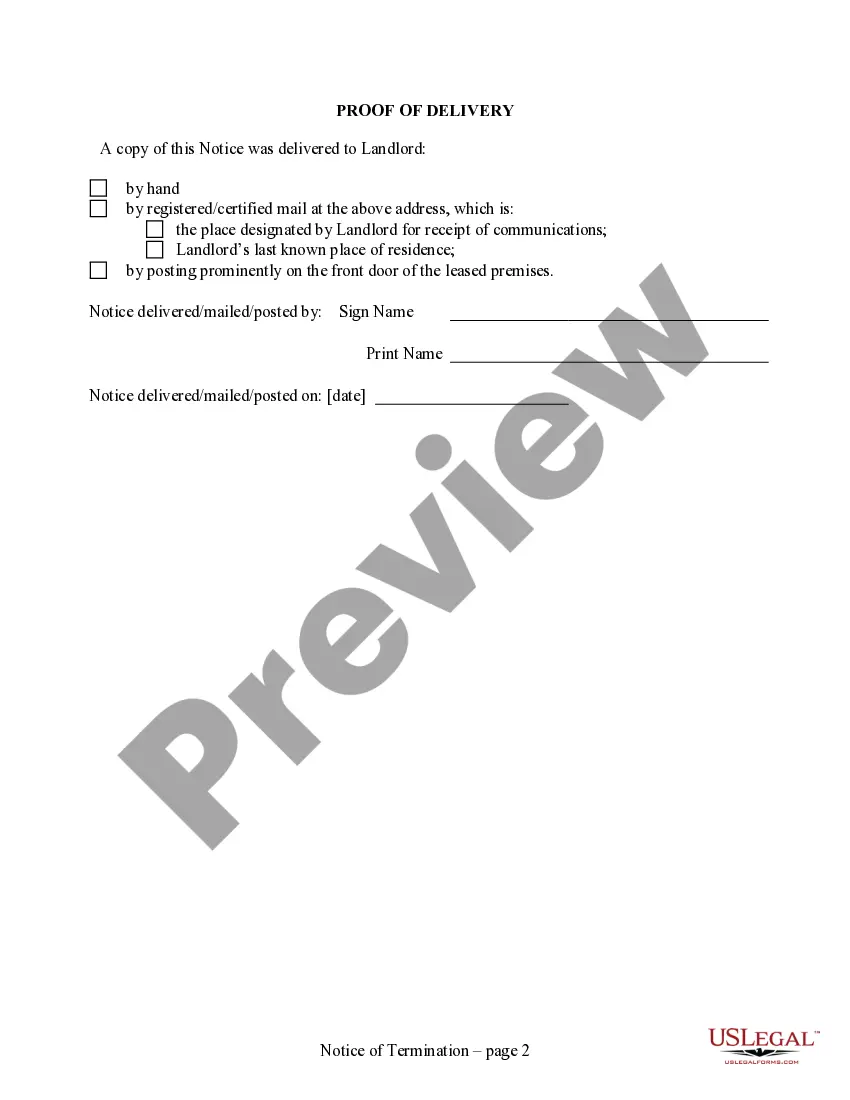
How to fill out Virginia 60 Day Notice To Terminate Year-to-Year Lease - Residential From Tenant To Landlord?
The 60-Day Eviction Notice Without Prior Notification that you view on this page is a reusable legal document designed by experienced attorneys in compliance with federal and state regulations.
For over 25 years, US Legal Forms has supplied individuals, businesses, and lawyers with more than 85,000 validated, state-specific forms for any business and personal event.
Access the same document again whenever necessary. Go to the My documents section in your profile to redownload any previously downloaded forms.
- Seek out the document you require and review it.
- Browse through the file you searched and preview it or examine the form description to ensure it meets your requirements. If it doesn't, use the search feature to find the appropriate one. Click Buy Now when you have found the template you need.
- Register and Log In.
- Select the pricing plan that fits you and create an account. Use PayPal or a credit card for a swift payment. If you already possess an account, Log In and check your subscription to move forward.
- Acquire the editable template.
Form popularity
FAQ
A 60 day notice to terminate a tenancy is a formal document that a landlord uses to inform a tenant about the end of their lease. This notice provides the tenant with a 60-day period to vacate the rental property. It is important to understand that even if the landlord provides this notice, tenants may still have rights under certain circumstances. If you need assistance with this process, consider using US Legal Forms to obtain the necessary documents for a 60 day move out notice without notice.
To submit a 60 day move out notice without notice, you should begin by preparing a written statement that clearly outlines your intent to vacate the property. Make sure to include the date you plan to move out and any relevant details, such as your current address and the landlord's information. After drafting the notice, deliver it to your landlord or property manager in person, via certified mail, or through email, depending on your lease agreement. For a seamless process, consider using platforms like USLegalForms, which provide templates and guidance for creating your notice.
Filling out an eviction notice requires clear and accurate information about the tenant, the property, and the reason for eviction. Include the date, specific lease violations, and any necessary legal citations. Consider using a template from US Legal Forms to ensure you meet all legal standards and requirements. This way, you can create a valid eviction notice while being mindful of the importance of a 60 day move out notice without notice.
Moving out without a 60 day notice can lead to legal complications, depending on your lease agreement and state laws. However, some situations, such as unsafe living conditions, may permit you to leave without adhering to the notice period. It’s essential to consult your lease and possibly seek legal advice if you find yourself in this situation. US Legal Forms offers resources that may help you understand your rights regarding moving out without a 60 day move out notice.
Counting a 60 day notice starts on the day you deliver your notice to your landlord. Make sure to include the day of delivery in your count, and consider any specific terms in your lease regarding the timing. It's crucial to calculate accurately to avoid misunderstandings about your move-out date. Using tools or resources from US Legal Forms can simplify this process for you, ensuring you effectively manage your 60 day move out notice without notice.
To write a 60 day move out notice, start by clearly stating your intent to vacate the property. Include the date you plan to move out, your current address, and any relevant details about your lease. You can find templates and guidance on platforms like US Legal Forms, which can help ensure your notice meets all legal requirements. This way, you will have a well-structured 60 day move out notice without notice.
Whether you need to give a 60 day notice depends on your lease agreement and state laws. Many leases require advance notice for terminating tenancy, which is often 30 or 60 days. Always verify the requirements in your lease and consult resources like US Legal Forms to ensure compliance with local regulations.
Failing to provide your landlord with a 60 day move out notice without notice can lead to financial implications. You may be responsible for the rent during the notice period, which can be significant. Understanding your lease terms helps mitigate surprises and ensures a smoother transition when moving out.
When a tenant leaves without giving notice, the landlord may incur losses due to the vacancy. They might also pursue the tenant for any unpaid rent during the notice period. Moreover, leaving without proper notice can lead to negative references in future rental applications, affecting the tenant's ability to secure housing.
Typically, if your lease is expiring, you may not need to provide a 60 day move out notice without notice. However, it's crucial to check your lease for specific terms. Some landlords may still require advance notice to prepare for new tenants. Always review your lease agreement for clarity.