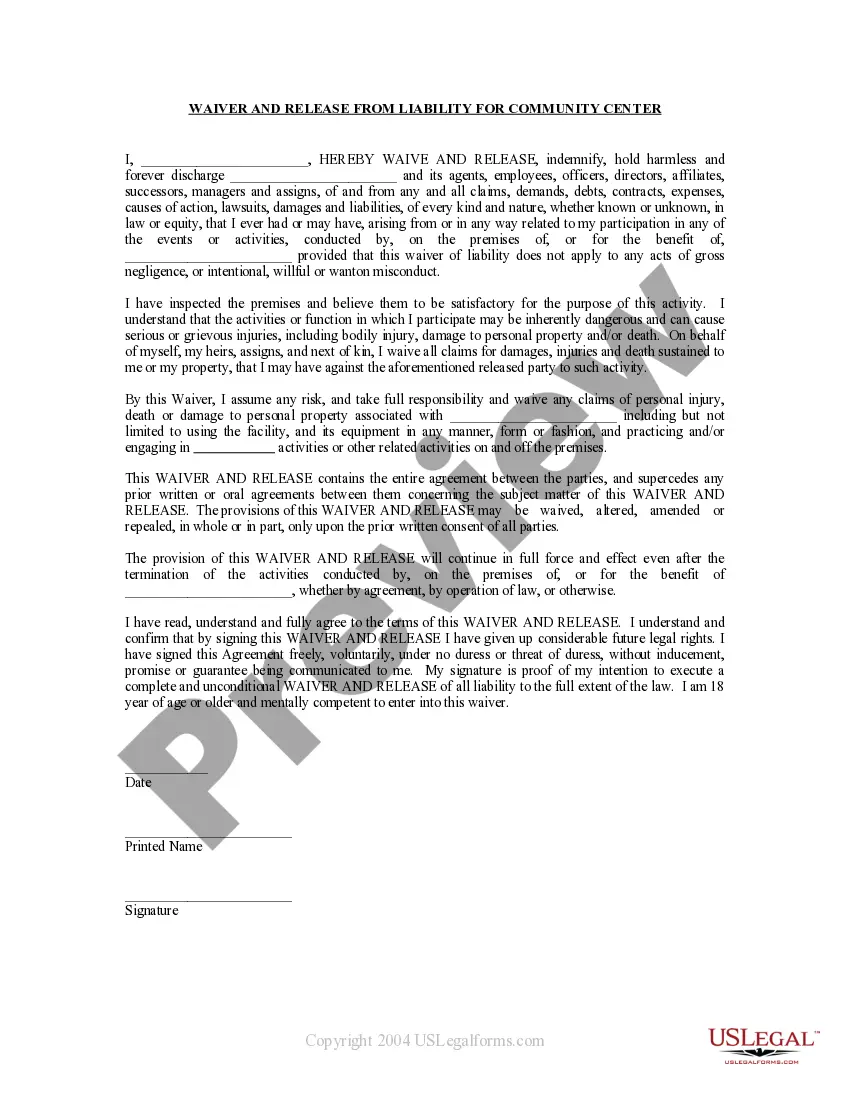
Release Liability Form Template For Business
Description
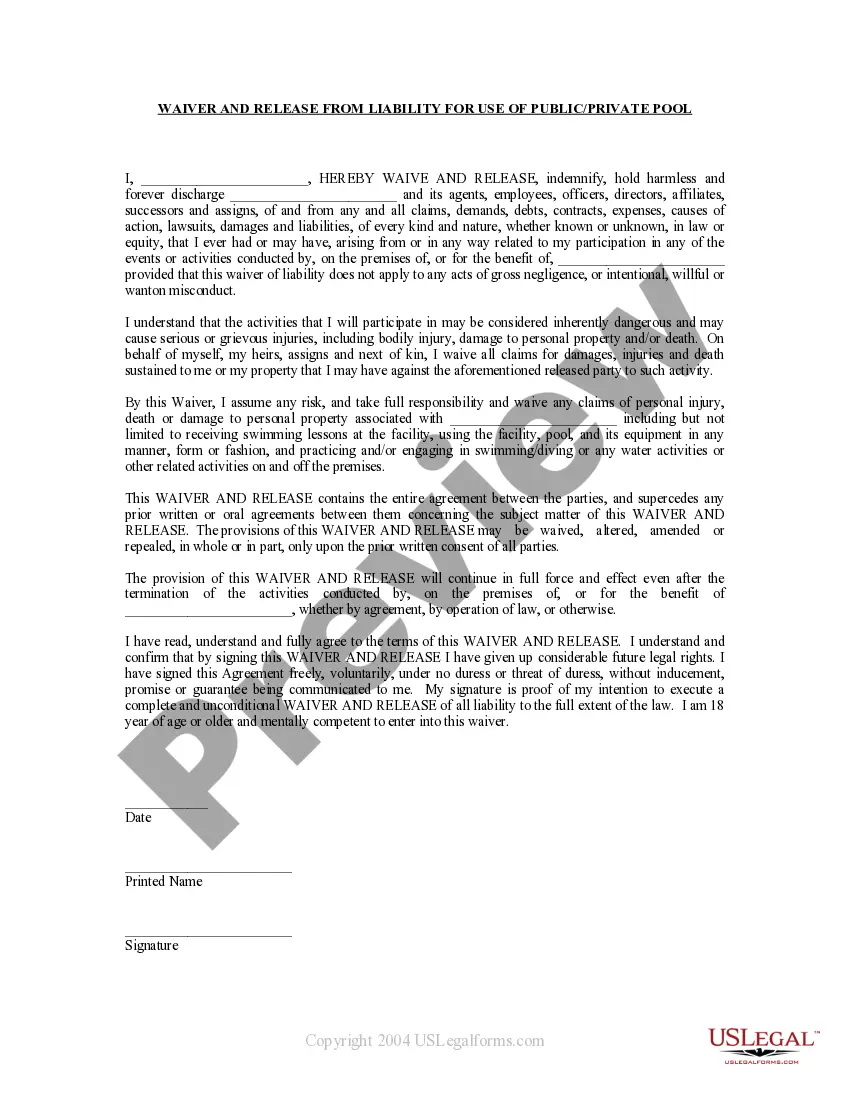
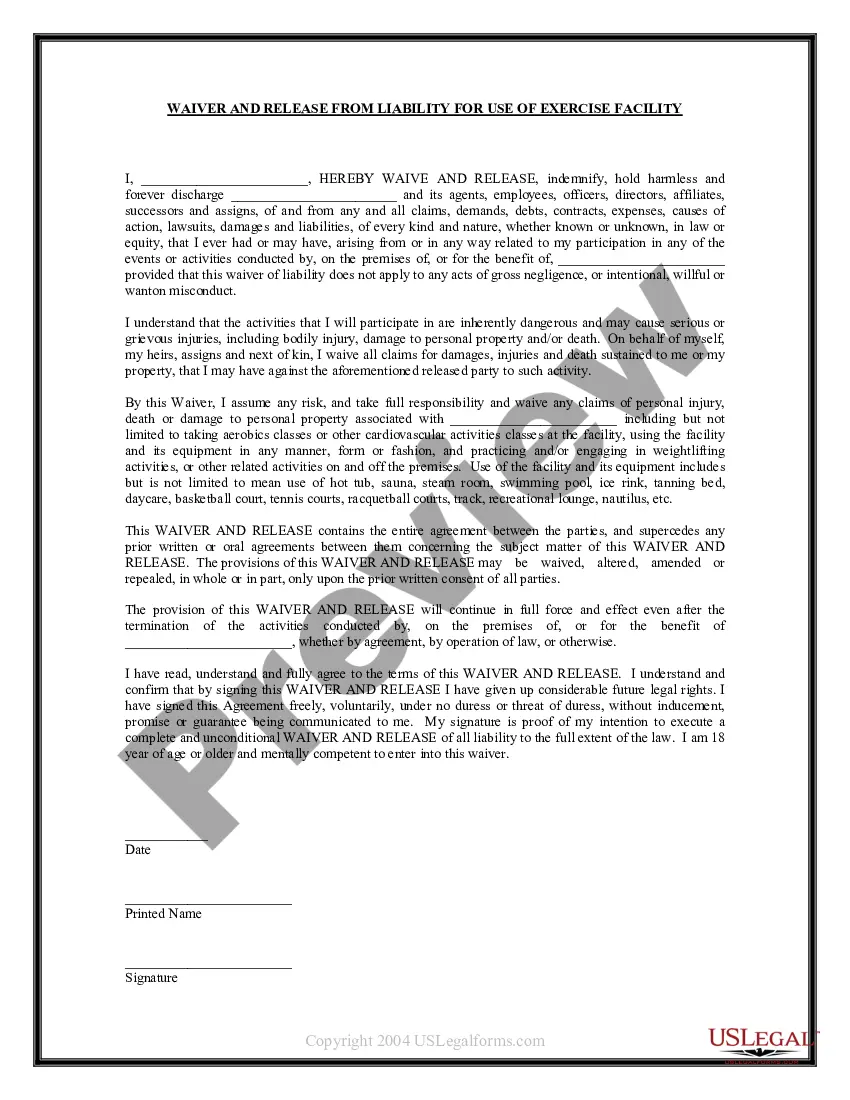
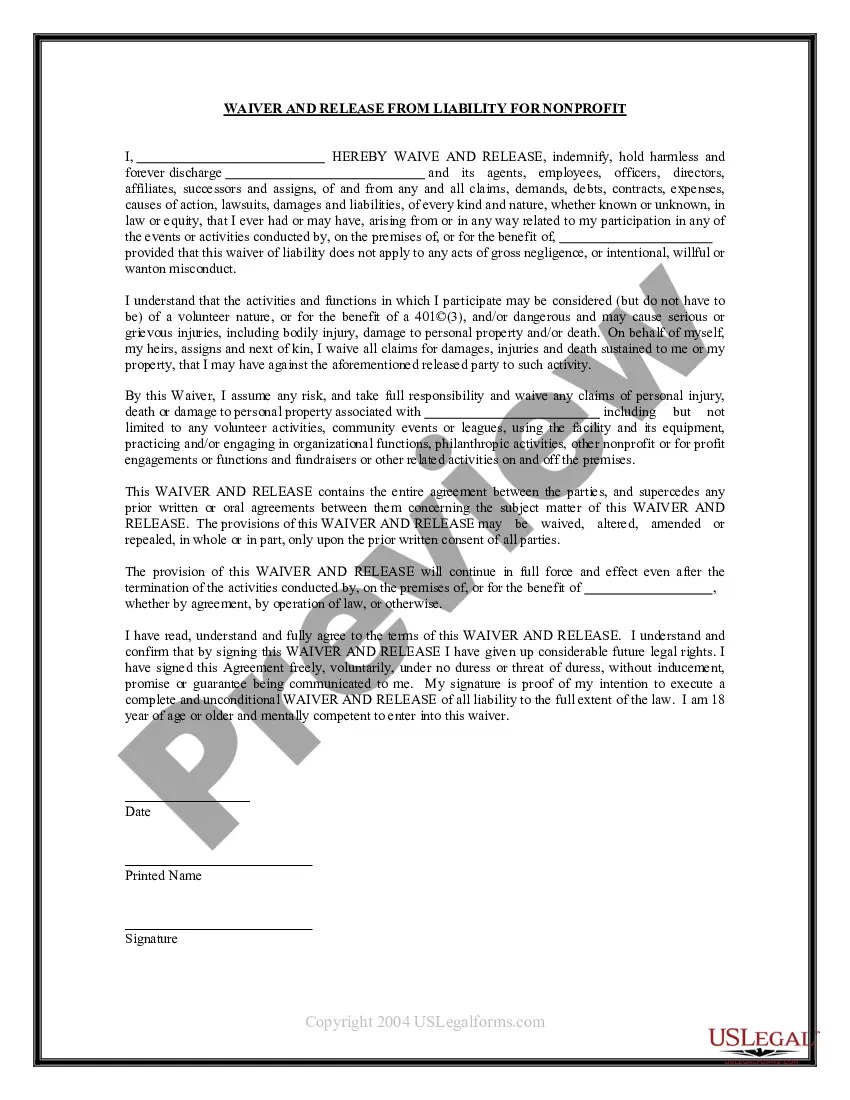



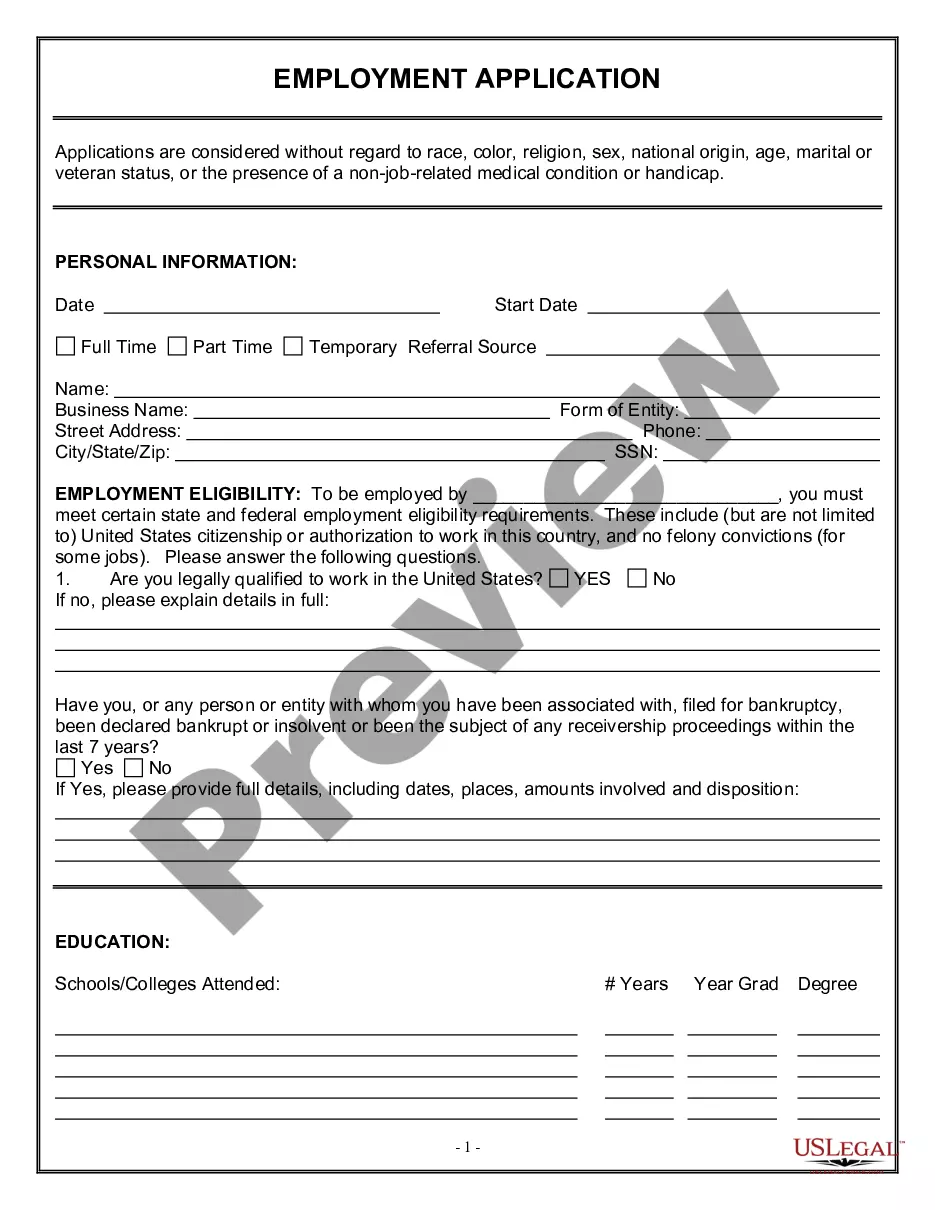
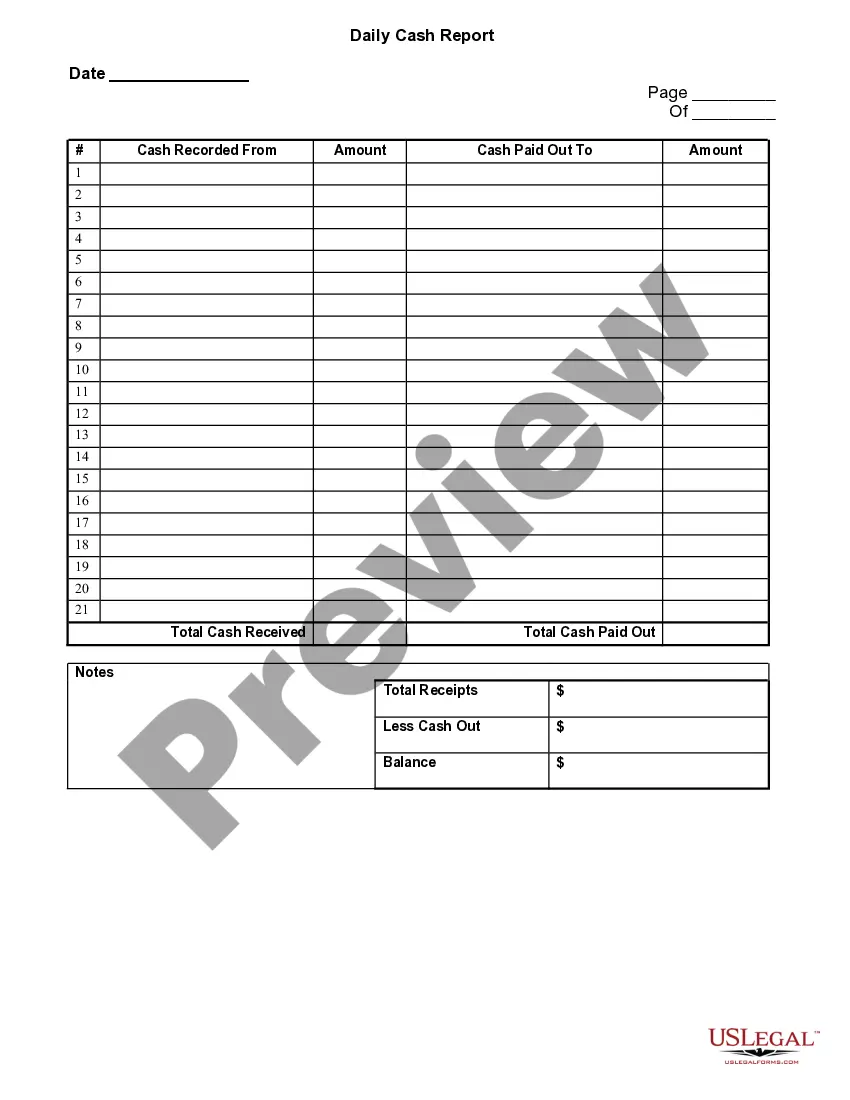
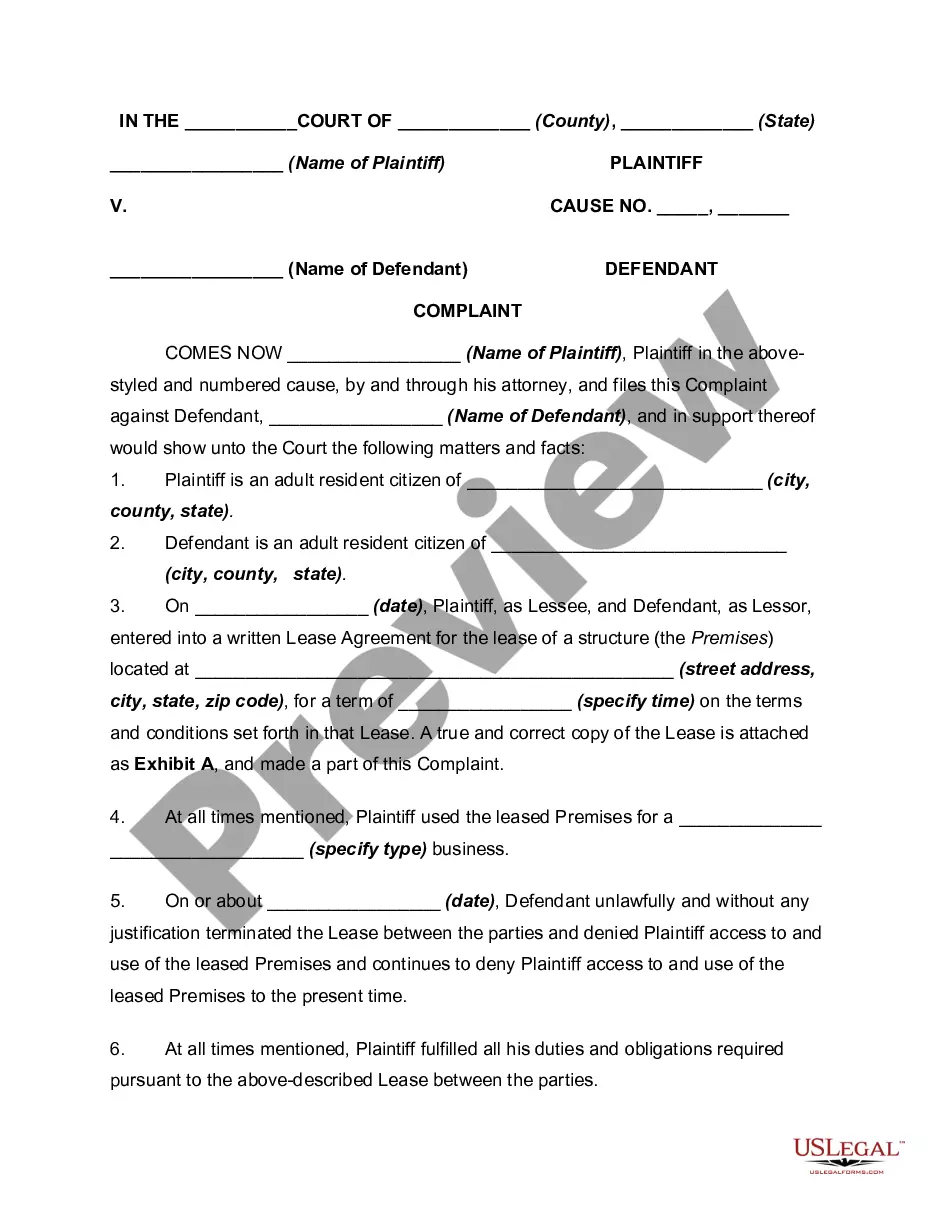
How to fill out Waiver And Release From Liability For Adult For Community Center?
Securing a reliable source for the latest and suitable legal templates is a significant part of navigating bureaucracy.
Finding the appropriate legal documents demands precision and meticulousness, which is why it is essential to obtain samples of the Release Liability Form Template For Business solely from trustworthy providers, such as US Legal Forms. An incorrect template can squander your time and postpone your situation. With US Legal Forms, you have minimal concerns.
Once you have the form on your device, you can edit it using the editor or print it out and complete it by hand. Eliminate the complications associated with your legal documentation. Explore the comprehensive US Legal Forms library where you can locate legal samples, assess their applicability to your situation, and download them instantly.
- Utilize the library navigation or search bar to find your template.
- Examine the form’s details to ensure it aligns with the specifications of your state and locality.
- Check the form preview, if available, to confirm that the form is indeed the one you need.
- Return to the search and find the appropriate document if the Release Liability Form Template For Business does not meet your needs.
- If you are confident about the form’s applicability, download it.
- If you are a registered user, click Log in to verify and access your chosen templates in My documents.
- If you do not have an account yet, click Buy now to acquire the form.
- Select the pricing plan that fits your needs.
- Proceed with the registration to finalize your purchase.
- Complete your transaction by choosing a payment method (credit card or PayPal).
- Choose the file format for downloading the Release Liability Form Template For Business.
Form popularity
FAQ
Creating a release of liability form involves several key steps. Start by selecting a reliable release liability form template for business that suits your specific requirements. Next, fill in the necessary details, such as the names of the parties involved, the activities covered, and any risks associated. Finally, have both parties sign the document to make it legally binding, and consider storing it securely for future reference.
You can write your own release form, and using a release liability form template for business simplifies the process. A template provides the essential components to include, ensuring you address critical legal aspects. While writing your own form allows for customization, it is advisable to review it with a legal expert. This ensures that your form complies with applicable laws and protects your business effectively.
In most cases, a release of liability form does not need to be notarized to be valid. A well-drafted release liability form template for business is often sufficient when signed by the involved parties. However, certain situations or states may have specific requirements, so it's important to check local laws. Notarization can add an extra layer of authenticity but is usually not mandatory.
Yes, you can create your own liability waiver using a release liability form template for business. This template provides a structured format that ensures you include necessary legal language and clauses. By customizing the template, you can tailor the waiver to fit your specific business needs. However, it's wise to consult with a legal professional to ensure your waiver is enforceable.
To build a waiver of liability: Choose a waiver template. Determine the type of activity or service. State the purpose of the waiver. Identify the risks. Include a title. Include customer information. Include waiver terms. Include a statement of understanding.
The document must include a clause in which a signatory states that they participate in the activity/event, as well as sign the waiver, voluntarily. They also have to confirm that they do so at their own risk and that they are aware that all the risks and liability are on their end.
A General Release is often used when one person is broadly giving up all known and unknown claims against another party. This document can cover broad claims that are filed in the most common dispute cases. While this version is the most basic, it is flexible and comprehensive enough to handle most situations.
How Do You Write a Release Form? The first step in writing is identifying all parties involved, including the releaser and the release. Specify the activity or event in detail, such as a photo shoot, a video production, or a performance. Clearly specify what is being released, whether liability, claims, or damages.
The liability release form, also known as the waiver form, contains a legally binding agreement between two parties, stating that one of them (the releasor) promises not to sue the other side (the releasee) for past, current, or future damages, losses, or injuries.