Lemon Law With Travel Trailer
Description
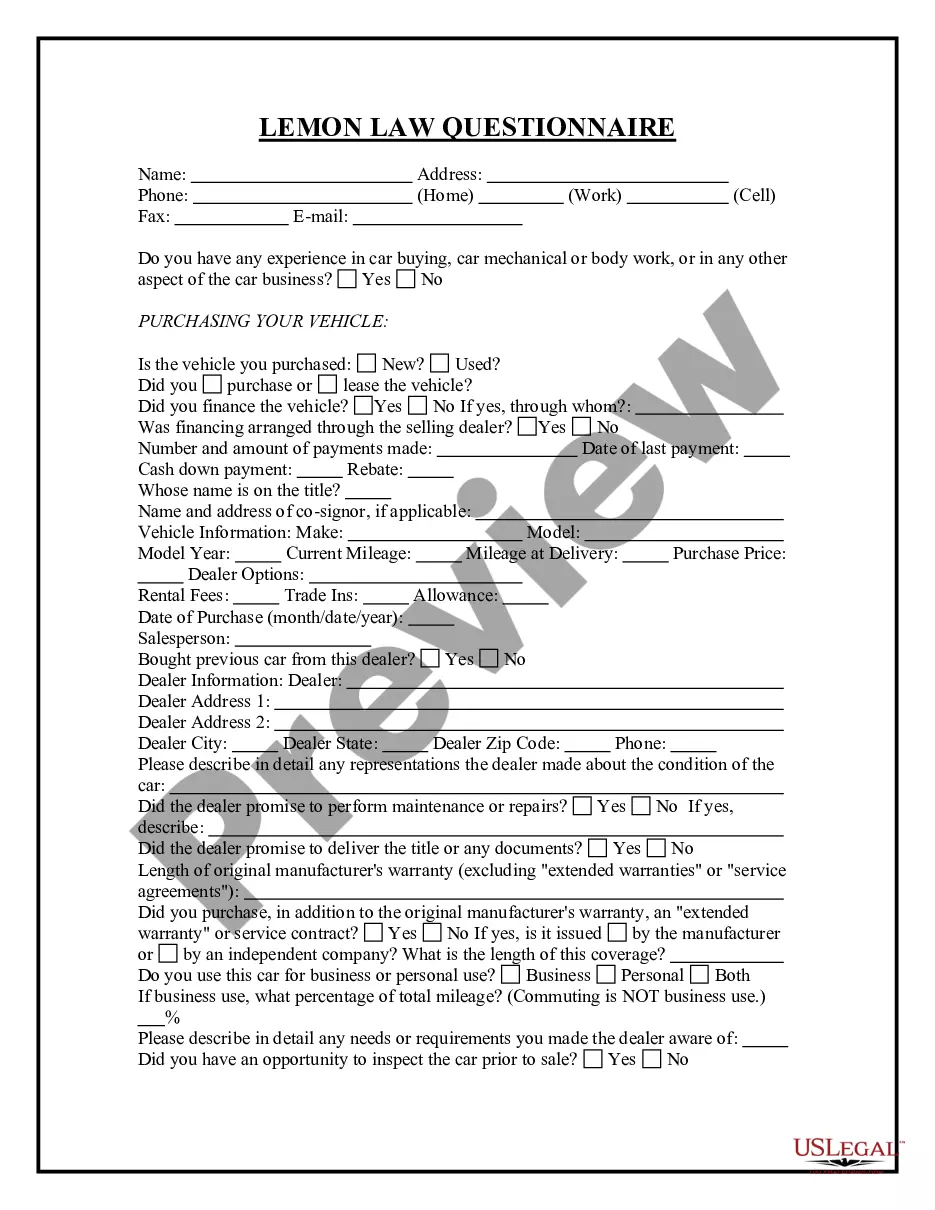
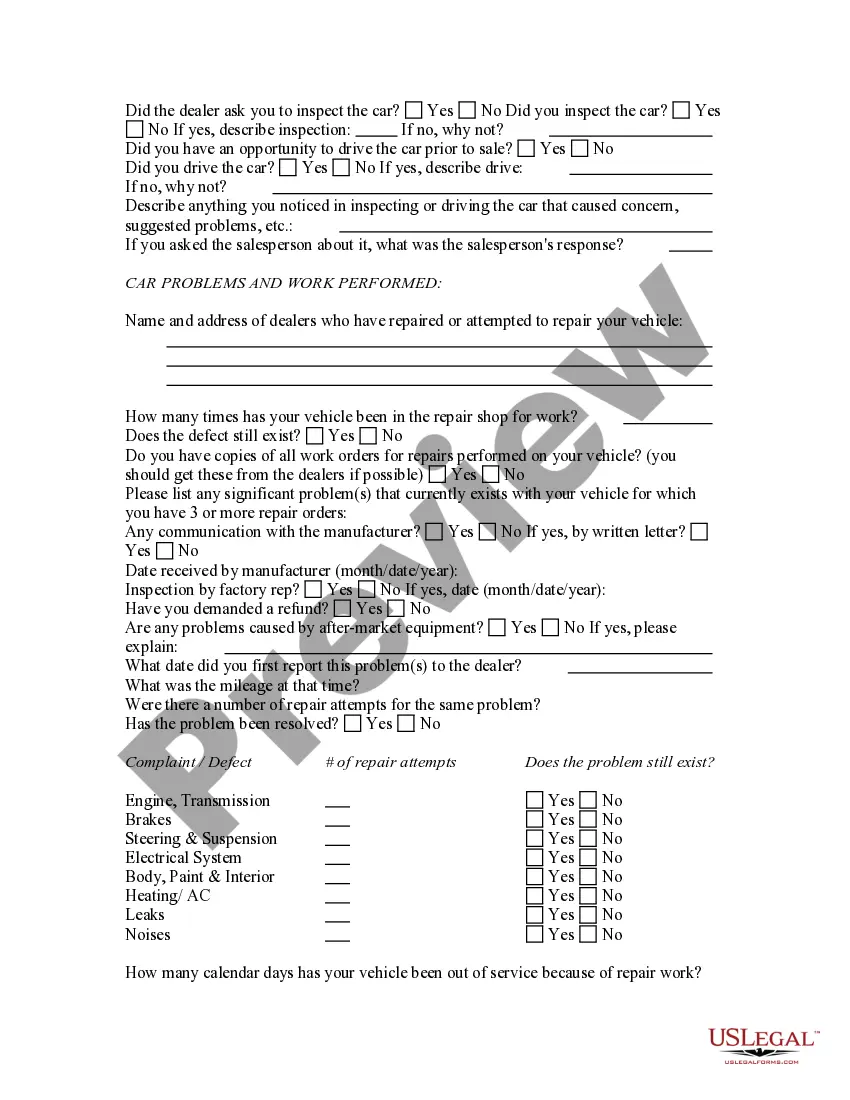
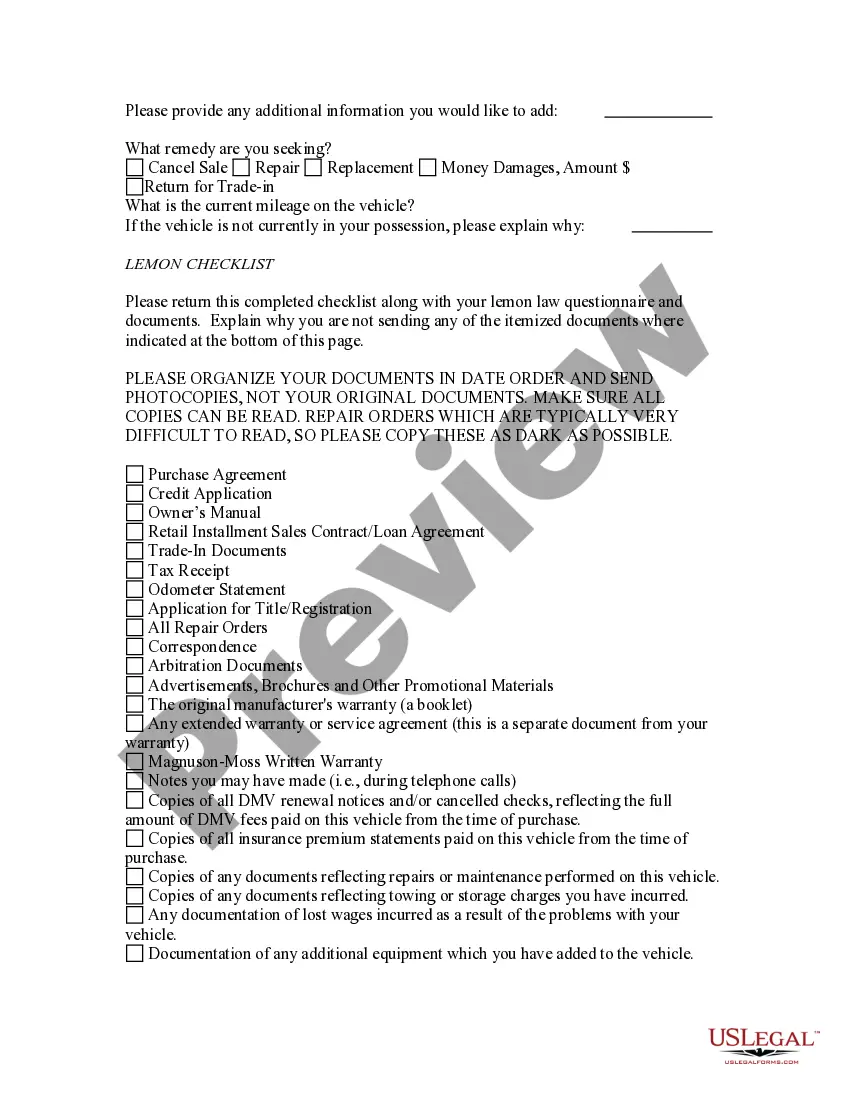
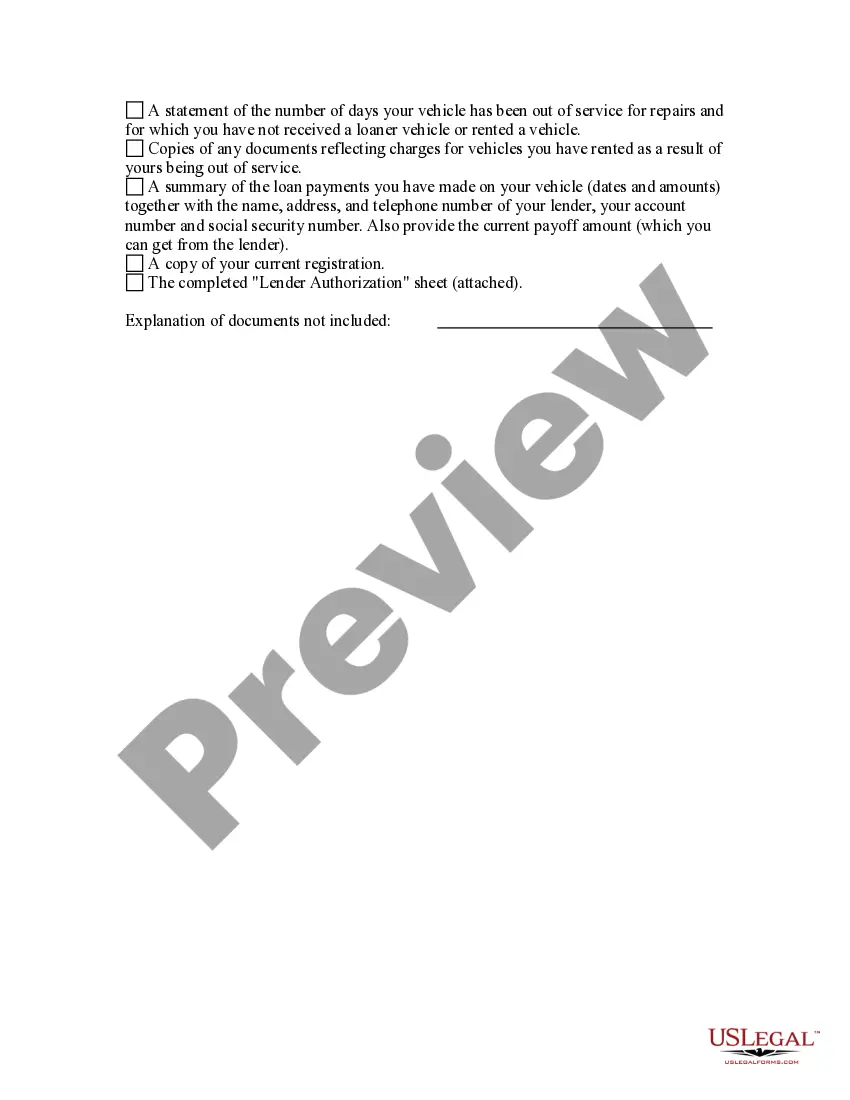
Get your form ready online
Our built-in tools help you complete, sign, share, and store your documents in one place.
Make edits, fill in missing information, and update formatting in US Legal Forms—just like you would in MS Word.
Download a copy, print it, send it by email, or mail it via USPS—whatever works best for your next step.
Sign and collect signatures with our SignNow integration. Send to multiple recipients, set reminders, and more. Go Premium to unlock E-Sign.
If this form requires notarization, complete it online through a secure video call—no need to meet a notary in person or wait for an appointment.
We protect your documents and personal data by following strict security and privacy standards.

Make edits, fill in missing information, and update formatting in US Legal Forms—just like you would in MS Word.

Download a copy, print it, send it by email, or mail it via USPS—whatever works best for your next step.

Sign and collect signatures with our SignNow integration. Send to multiple recipients, set reminders, and more. Go Premium to unlock E-Sign.

If this form requires notarization, complete it online through a secure video call—no need to meet a notary in person or wait for an appointment.

We protect your documents and personal data by following strict security and privacy standards.
Looking for another form?
How to fill out Automobile Lemon Law Questionnaire?
Securing a primary source to obtain the latest and pertinent legal templates is a significant part of managing bureaucracy.
Identifying the appropriate legal documents requires accuracy and carefulness, which is why it’s crucial to source Lemon Law With Travel Trailer templates exclusively from trustworthy providers, such as US Legal Forms.
Eliminate the complications associated with your legal documentation. Explore the comprehensive US Legal Forms collection to discover legal templates, assess their suitability for your case, and download them immediately.
- Utilize the library navigation or search bar to find your template.
- Access the form details to confirm it aligns with the prerequisites of your state and area.
- Review the form preview, if available, to ensure the template is indeed the one you're seeking.
- Continue searching to find the appropriate template if the Lemon Law With Travel Trailer does not fulfill your needs.
- If you are confident the form is applicable, download it.
- If you are an authorized user, click Log in to verify and access your selected forms in My documents.
- If you don’t have an account yet, click Buy now to acquire the form.
- Select the pricing option that suits your needs.
- Proceed with registration to finalize your purchase.
- Complete your transaction by choosing a payment method (credit card or PayPal).
- Choose the file format for downloading Lemon Law With Travel Trailer.
- Once you have the form on your device, you can modify it with the editor or print it and fill it out manually.
Form popularity
FAQ
The determination of whether a vehicle is classified as a lemon typically involves both the manufacturer and the consumer. Often, dealerships and manufacturers are given an opportunity to resolve the issues first. If the problems persist, an intermediary, such as an arbitrator or a court, may ultimately make the final decision. Engaging with platforms like uslegalforms can provide insight into the lemon law with travel trailer cases and support your process.
Yes, you can sue a car dealership for selling you a lemon under the lemon law with travel trailer provisions. If the dealership failed to disclose known defects or sold a vehicle that does not meet consumer standards, you may have grounds for a lawsuit. It's important to gather all related documentation, such as repair records and sales agreements. Additionally, consulting with a qualified attorney can help you understand the best way to proceed.
Winning a lemon law case can vary based on the strength of your evidence and the responsiveness of the manufacturer. If you can demonstrate repeated defects and provide clear documentation, your chances improve significantly. With the right support, such as from platforms like USLegalForms that focus on lemon law with travel trailer, you can enhance your chances of a successful outcome.
To speed up your lemon law case, ensure that you keep thorough records of all repairs, communications, and any related documents. You can also seek the help of legal professionals who specialize in the lemon law with travel trailer, like USLegalForms, to streamline your process and effectively advocate on your behalf. Timely actions and organized documentation often lead to quicker resolutions.
Kansas law defines a lemon as a vehicle that has a substantial defect affecting its use, value, or safety. The manufacturer must also be given a reasonable chance to repair the defect, typically within the warranty timeframe. For travel trailers experiencing such problems, the lemon law with travel trailer could provide necessary relief.
In Wisconsin, a lemon law applies if a vehicle has defects that make it unsafe or unfit for use. For travel trailers, the defect must be addressed within the warranty period, and the manufacturer must have had a reasonable opportunity to fix the problem. If unresolved, this situation may fall under the lemon law with travel trailer protections.
An RV, including a travel trailer, is considered a lemon when it has significant defects that affect its ability to function safely. The problems must persist even after repeated repair attempts, usually within the warranty period. If your travel trailer is facing these issues, you might need to explore options under the lemon law with travel trailer.
The time to settle a lemon lawsuit can vary widely depending on case complexity and negotiations between parties. Typically, it may take several months to over a year to reach a resolution. Factors such as the cooperation level of the manufacturer and the strength of your documentation play a crucial role in expediting the process under the lemon law with travel trailer.
In California, a vehicle, including a travel trailer, must exhibit significant defects that impair its use, value, or safety. If the issues arise within a specified warranty period and cannot be fixed after a reasonable number of attempts, the lemon law may apply. It is essential to document all repair attempts and maintain records to support your case under the lemon law with travel trailer.