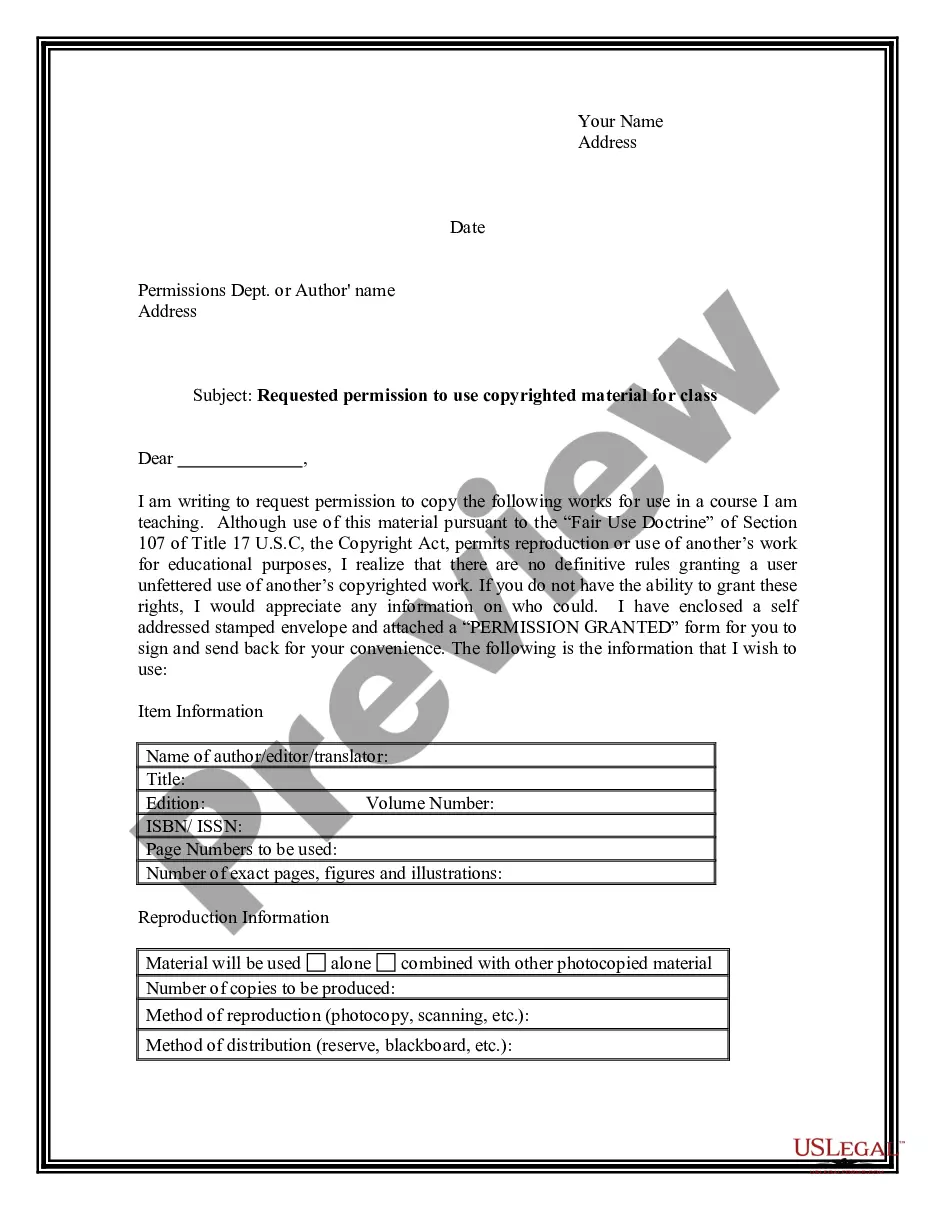
Using Copyrighted Material In Presentations
Description
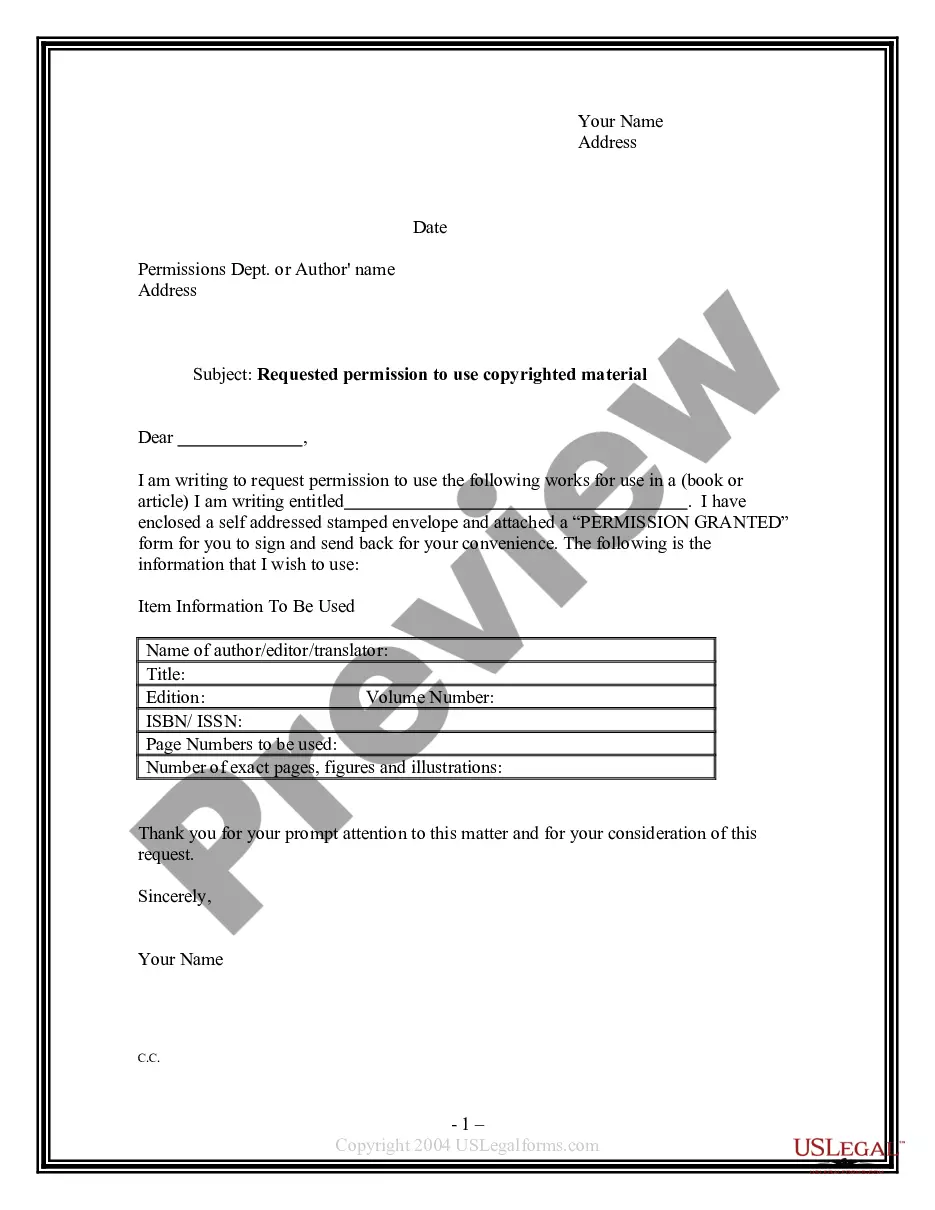
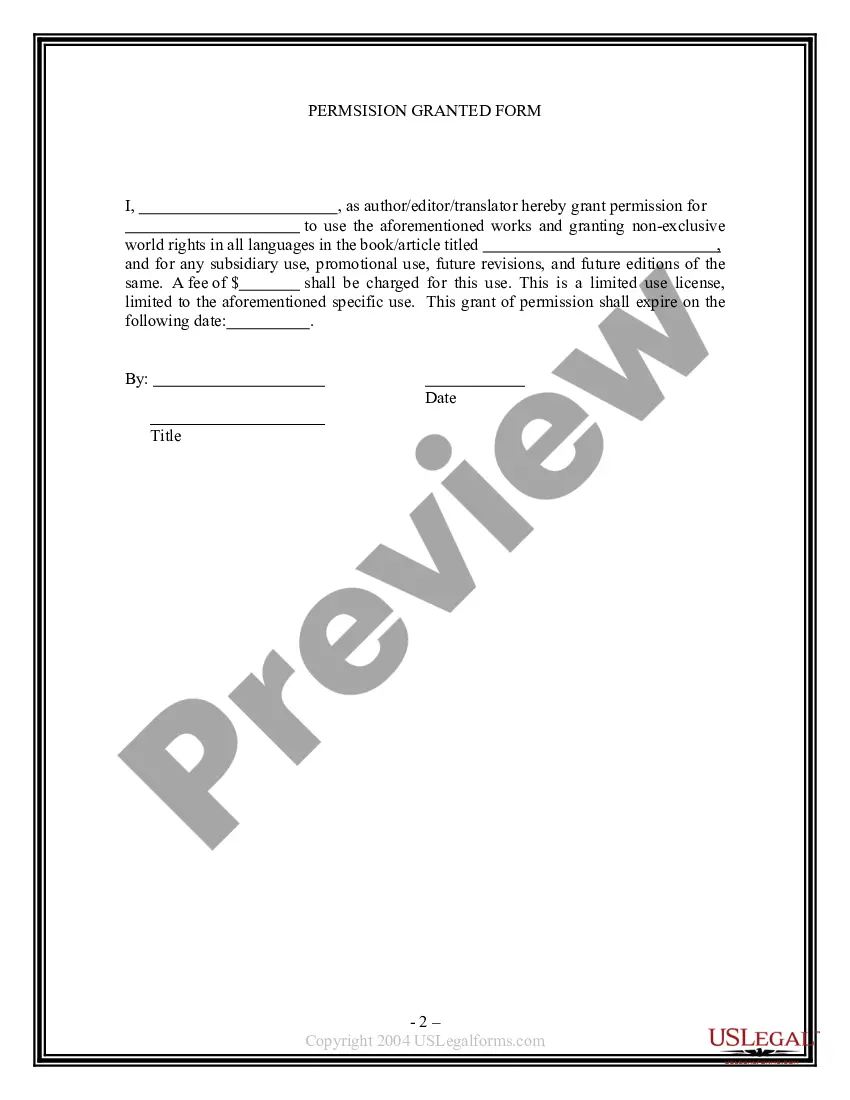
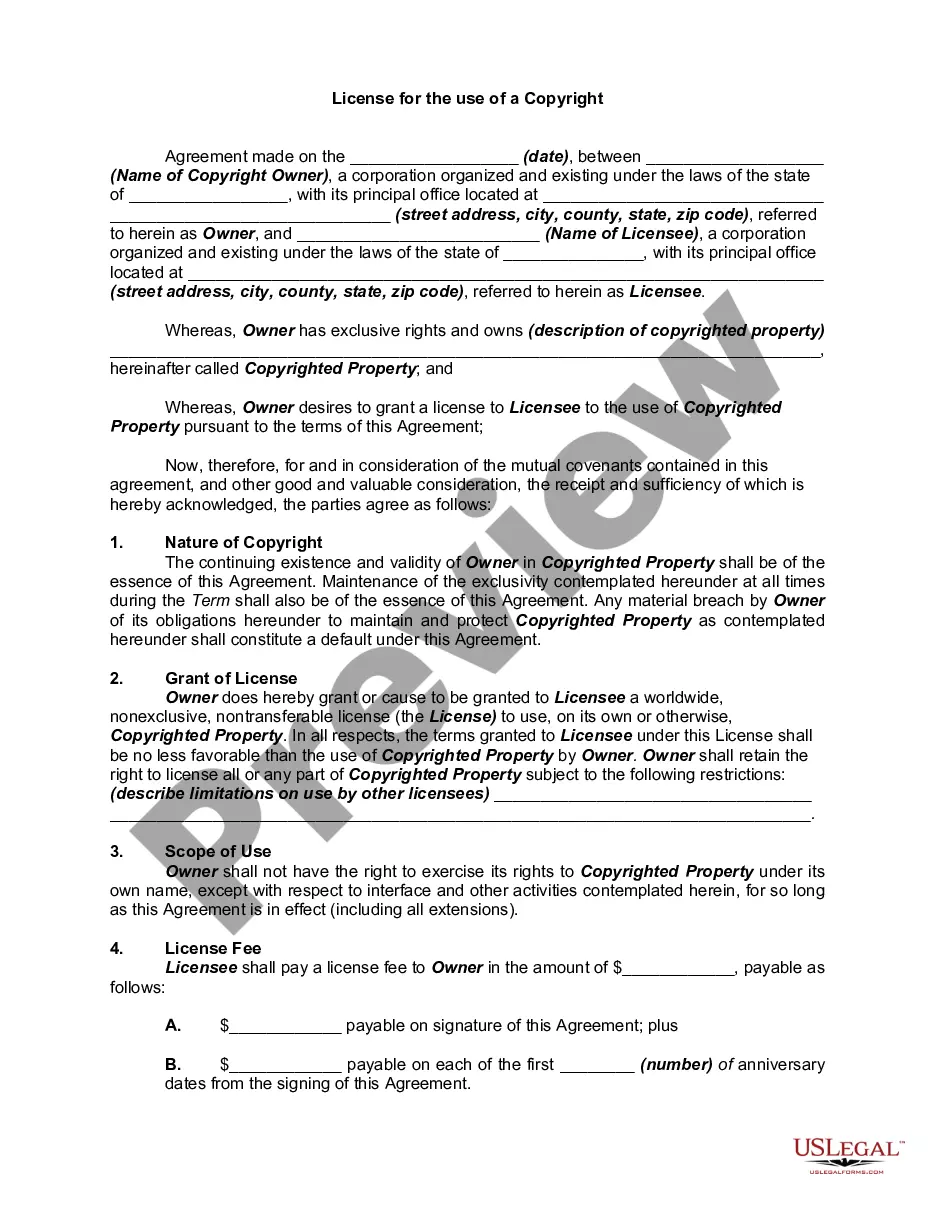
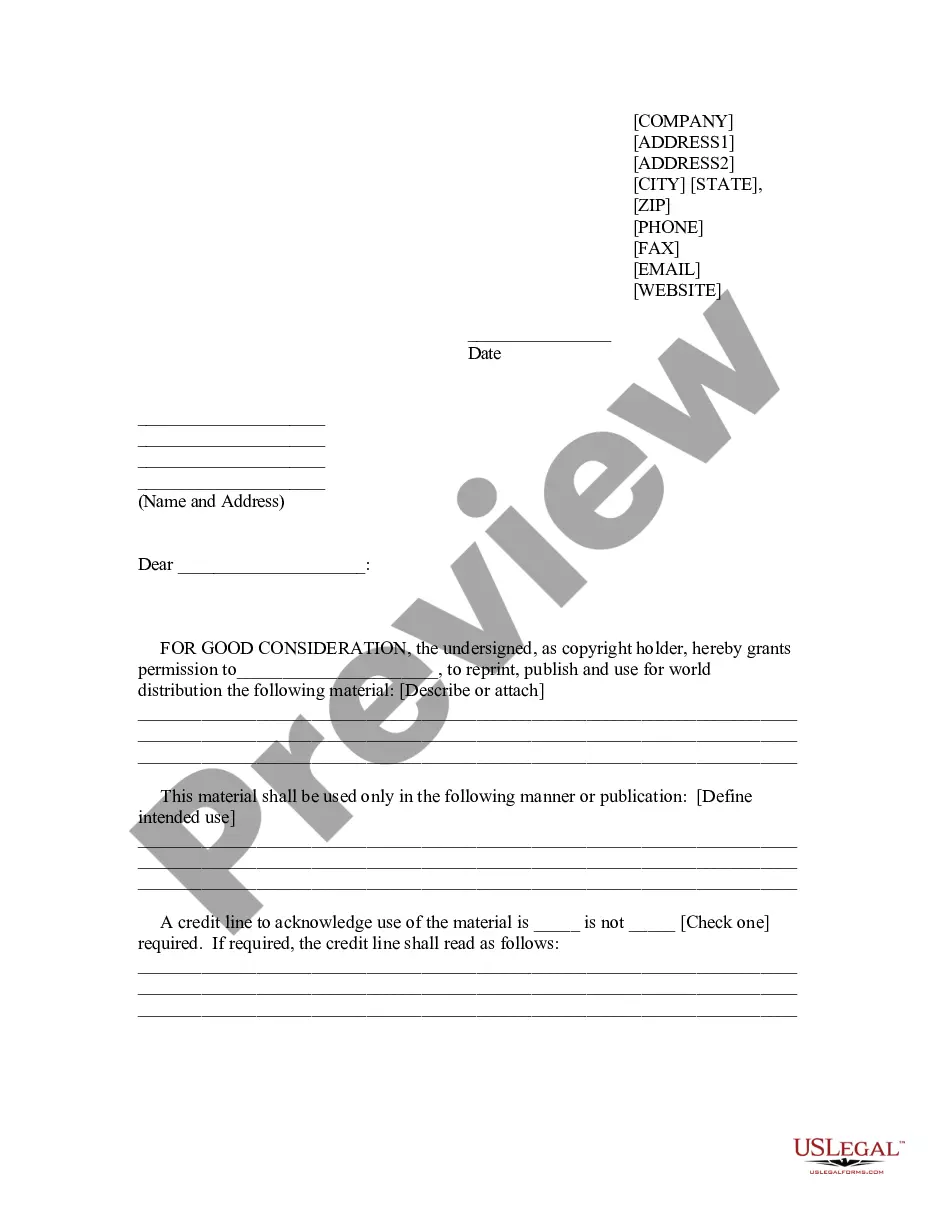
Get your form ready online
Our built-in tools help you complete, sign, share, and store your documents in one place.
Make edits, fill in missing information, and update formatting in US Legal Forms—just like you would in MS Word.
Download a copy, print it, send it by email, or mail it via USPS—whatever works best for your next step.
Sign and collect signatures with our SignNow integration. Send to multiple recipients, set reminders, and more. Go Premium to unlock E-Sign.
If this form requires notarization, complete it online through a secure video call—no need to meet a notary in person or wait for an appointment.
We protect your documents and personal data by following strict security and privacy standards.

Make edits, fill in missing information, and update formatting in US Legal Forms—just like you would in MS Word.

Download a copy, print it, send it by email, or mail it via USPS—whatever works best for your next step.

Sign and collect signatures with our SignNow integration. Send to multiple recipients, set reminders, and more. Go Premium to unlock E-Sign.

If this form requires notarization, complete it online through a secure video call—no need to meet a notary in person or wait for an appointment.

We protect your documents and personal data by following strict security and privacy standards.
Looking for another form?





How to fill out Requested Permission To Use Copyrighted Material?
Regardless of whether for corporate reasons or personal matters, everyone must confront legal circumstances at some stage in their existence.
Completing legal paperwork requires meticulous focus, beginning with choosing the suitable form template. For instance, if you select an incorrect version of the Utilizing Copyrighted Material In Presentations, it will be rejected upon submission. Therefore, it is crucial to obtain a trustworthy source of legal documents like US Legal Forms.
With an extensive US Legal Forms catalog available, you do not need to waste time searching for the correct template online. Utilize the library’s user-friendly navigation to find the suitable form for any circumstance.
- Locate the template you require by using the search bar or catalog browsing.
- Review the form’s details to verify it aligns with your circumstance, state, and locality.
- Click on the form’s preview to view it.
- If it is the wrong form, return to the search tool to find the Utilizing Copyrighted Material In Presentations template you need.
- Download the document when it fits your requirements.
- If you already possess a US Legal Forms account, click Log in to access previously stored documents in My documents.
- If you do not have an account yet, you may acquire the form by clicking Buy now.
- Select the appropriate pricing option.
- Complete the account registration form.
- Choose your payment method: you can utilize a credit card or PayPal account.
- Select the document format you desire and download the Utilizing Copyrighted Material In Presentations.
- Once saved, you can fill out the form using editing software or print it and complete it manually.
Form popularity
FAQ
Select File > Info. Select Protect Presentation, point to Restrict Access, and then select Restricted Access. In the Permission dialog box, select Restrict permission to this presentation, and then select More Options.
Indeed, there are no laws against using copyrighted materials to enhance your presentation but there is certainly at least one against improperly using these without giving the original owner due credit.
The #1 way to legally share copyrighted materials is to ask the copyright owner and obtain permission. You can contact the publisher or author of the book, ask the U.S. Copyright Office who owns the work, or reach out through some other channel.
Typically users are instructed to go to the Insert tab on the PowerPoint ribbon and scroll through and select the copyright symbol.
Choose legal sources The first step to avoid copyright issues is to choose videos and audio that are legally available for your use. This means that you either have the permission of the owner, or that the content is licensed under a Creative Commons or public domain license.