File Dba With Irs
Description
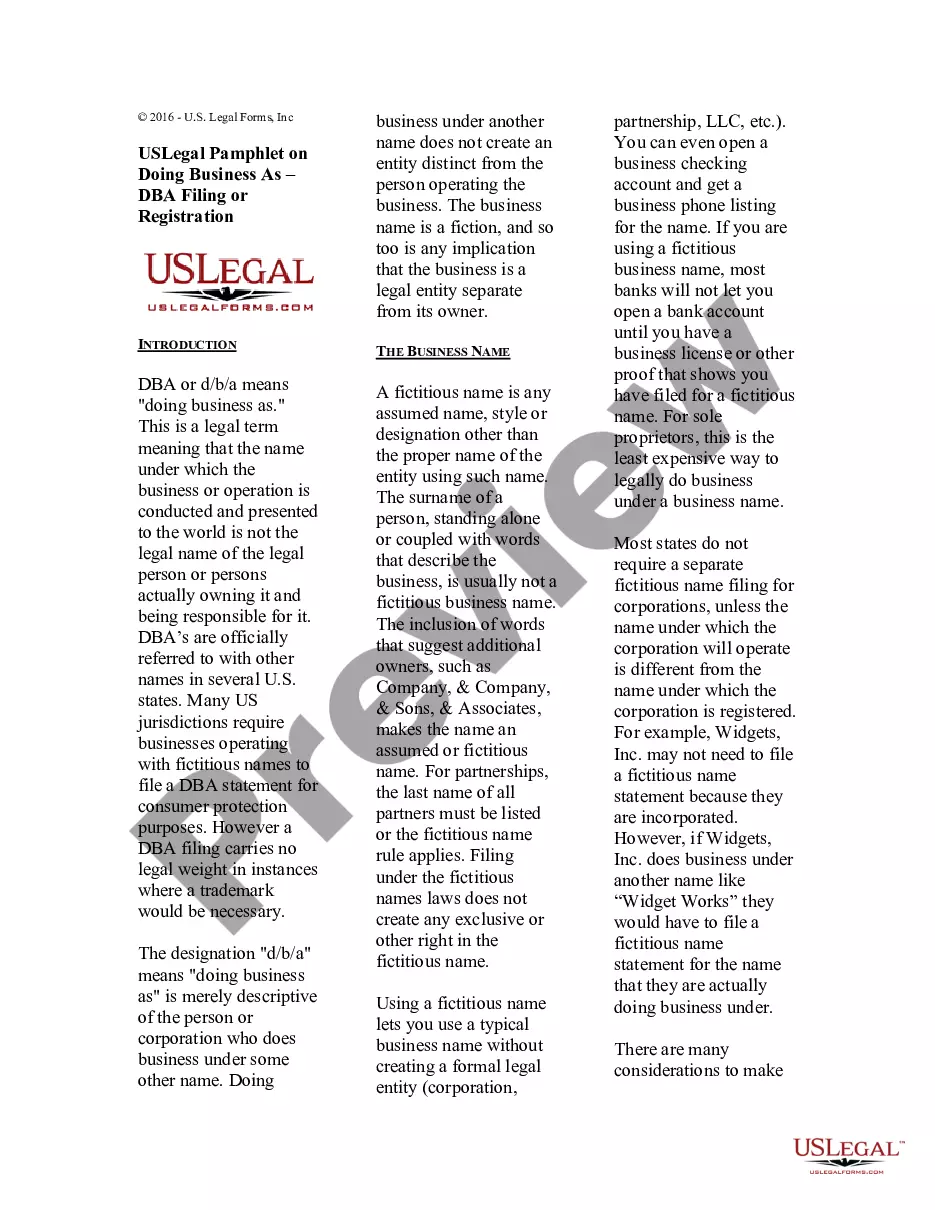
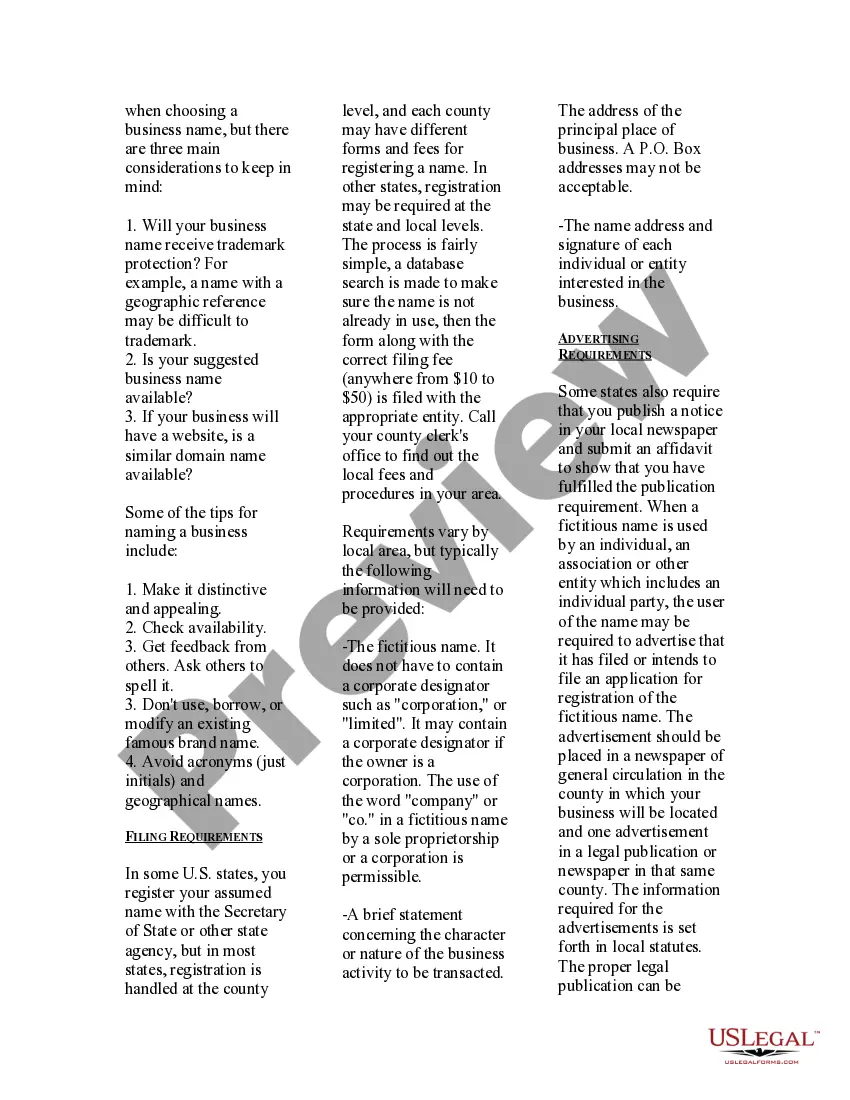
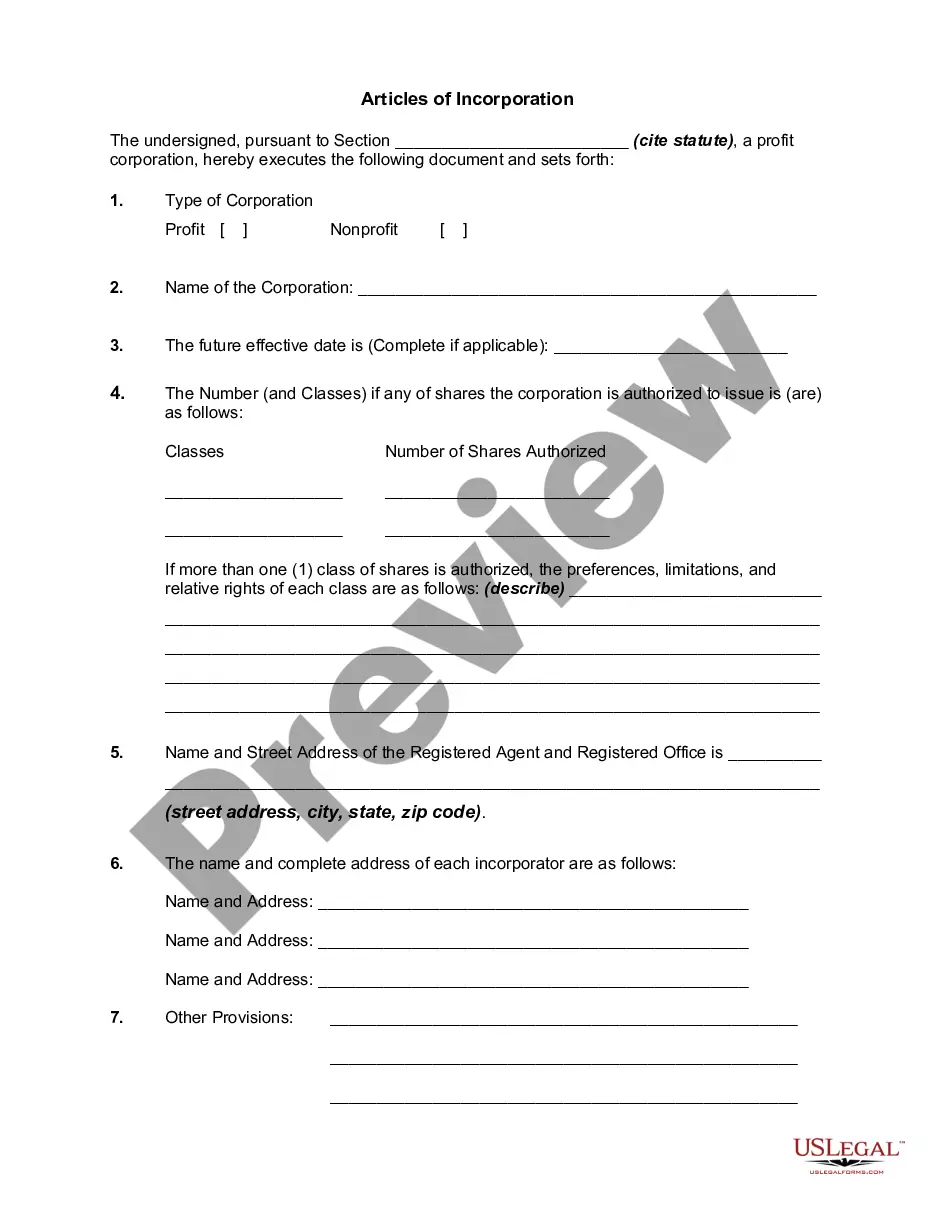
Get your form ready online
Our built-in tools help you complete, sign, share, and store your documents in one place.
Make edits, fill in missing information, and update formatting in US Legal Forms—just like you would in MS Word.
Download a copy, print it, send it by email, or mail it via USPS—whatever works best for your next step.
Sign and collect signatures with our SignNow integration. Send to multiple recipients, set reminders, and more. Go Premium to unlock E-Sign.
If this form requires notarization, complete it online through a secure video call—no need to meet a notary in person or wait for an appointment.
We protect your documents and personal data by following strict security and privacy standards.

Make edits, fill in missing information, and update formatting in US Legal Forms—just like you would in MS Word.

Download a copy, print it, send it by email, or mail it via USPS—whatever works best for your next step.

Sign and collect signatures with our SignNow integration. Send to multiple recipients, set reminders, and more. Go Premium to unlock E-Sign.

If this form requires notarization, complete it online through a secure video call—no need to meet a notary in person or wait for an appointment.

We protect your documents and personal data by following strict security and privacy standards.
Looking for another form?


How to fill out USLegal Pamphlet On Doing Business As DBA Filing Or Registration?
Managing legal documents can be daunting, even for seasoned professionals.
When searching for a File Dba With Irs and unable to dedicate time to find the correct and current version, the procedures can become stressful.
US Legal Forms meets any needs you may have, from personal to business paperwork, all in one location.
Utilize advanced tools to complete and oversee your File Dba With Irs.
Here are the actions to follow after obtaining the form you desire: Validate that this is the correct document by previewing it and reviewing its details. Confirm that the sample is accepted in your jurisdiction. Click Buy Now when you are prepared. Choose a subscription plan. Select the format you want, and Download, complete, sign, print, and submit your documents. Enjoy the US Legal Forms online library, supported by 25 years of experience and reliability. Streamline your daily document management into a seamless and user-friendly process today.
- Access a repository of articles, tutorials, and guides pertinent to your circumstances and requirements.
- Save time and energy searching for the documents you need, and use US Legal Forms’ advanced search and Review tool to find File Dba With Irs and obtain it.
- If you hold a membership, Log In to your US Legal Forms account, search for the form, and download it.
- Check the My documents tab to view the documents you've previously saved and to organize your folders as you see fit.
- If this is your first experience with US Legal Forms, create a free account and gain unlimited access to all the platform's benefits.
- A robust web form library can be transformative for anyone aiming to handle these scenarios efficiently.
- US Legal Forms is a frontrunner in digital legal documents, offering over 85,000 state-specific legal forms at your fingertips.
- With US Legal Forms, you can access state- or county-specific legal and business documents.
Form popularity
FAQ
No, you do not file a DBA with the IRS. Instead, the IRS requires you to report your business income on your tax return using your personal or business tax forms. If you're unsure about the process, consider utilizing platforms like US Legal Forms, which can guide you in managing your DBA and understanding your tax obligations efficiently. Proper preparation can help you avoid unnecessary complications.
You do not need to file a DBA with the IRS because a DBA is not a legal entity; rather, it is a name under which you conduct business. However, if you're operating a business under a DBA, you must still report your income to the IRS. It's important to ensure that you comply with local registration requirements for your DBA while managing your tax filings correctly. US Legal Forms can assist you in understanding these requirements.
A DBA can impact your taxes by requiring you to report business income on your personal tax return. This means your profits and losses will flow through to your individual tax obligations. Additionally, having a DBA can help separate your business and personal finances, which is beneficial for your overall tax strategy. Understanding these implications will help you manage your tax responsibilities more effectively.
A DBA itself does not file a tax return, as it is not a separate legal entity. Instead, the income generated under the DBA is reported on the owner's tax return. For instance, if you file DBA with IRS as a sole proprietor, you will include your business income on your personal tax return. This means you must be diligent about tracking your business finances throughout the year.
To file taxes for a DBA, you must report your business income and expenses on your personal tax return if you're a sole proprietor. You will typically use Schedule C to report your profits and losses. If your DBA is structured as a corporation or partnership, you will file a separate tax return for that entity. It's essential to keep accurate records throughout the year, as this will make the process smoother.
To file taxes for your DBA, you first need to ensure that you have registered your DBA name with the appropriate state or local authorities. Once registered, you will report your business income on your personal tax return using Schedule C, if you are a sole proprietor. It's essential to keep accurate records of all income and expenses related to your DBA for accurate reporting. Additionally, you can seek guidance from platforms like USLegalForms to streamline the process and ensure compliance when you file DBA with IRS.
The company operating under a DBA needs an EIN unless the owner is a sole proprietor or runs a single-person LLC. Do you have to register DBAs through the IRS? While you don't have to register DBAs with the IRS, owners must report DBAs on IRS tax forms.
You don't report a DBA name as the "Recipient" on a Form 1099 because the simple DBA name is not a taxpayer that files an income tax return. You obtain the reportable Name by using IRS Form W-9 (and reviewing W-9s to make certain the vendor has followed instructions).
Open a free IRS online application or print out a copy of Form SS-4. On the form, provide information about your business, including how it is structured, the number of employees, and your principal business activities. Submit your online application on the IRS website.
All earnings made from your DBA will still appear on your personal return and will be subject to regular income taxes and self-employment taxes. Self-employment taxes are where sole proprietors get hit the hardest. That's because they need to pay 15.3% taxes on all net business income before deductions.