Requests For Admissions California
Description
Get your form ready online
Our built-in tools help you complete, sign, share, and store your documents in one place.
Make edits, fill in missing information, and update formatting in US Legal Forms—just like you would in MS Word.
Download a copy, print it, send it by email, or mail it via USPS—whatever works best for your next step.
Sign and collect signatures with our SignNow integration. Send to multiple recipients, set reminders, and more. Go Premium to unlock E-Sign.
If this form requires notarization, complete it online through a secure video call—no need to meet a notary in person or wait for an appointment.
We protect your documents and personal data by following strict security and privacy standards.

Make edits, fill in missing information, and update formatting in US Legal Forms—just like you would in MS Word.

Download a copy, print it, send it by email, or mail it via USPS—whatever works best for your next step.

Sign and collect signatures with our SignNow integration. Send to multiple recipients, set reminders, and more. Go Premium to unlock E-Sign.

If this form requires notarization, complete it online through a secure video call—no need to meet a notary in person or wait for an appointment.

We protect your documents and personal data by following strict security and privacy standards.
Looking for another form?
How to fill out Requests For Admissions?
Obtaining legal document templates that adhere to federal and state regulations is essential, and the web provides numerous choices.
However, what’s the purpose of spending effort searching for the appropriate Requests For Admissions California template online when the US Legal Forms digital library has consolidated such documents in one location.
US Legal Forms is the top online legal library featuring over 85,000 customizable templates created by attorneys for any business and personal circumstance. They are easy to navigate with all documents categorized by state and intended use. Our specialists keep informed about legislative changes, ensuring that your form is current and compliant when you acquire a Requests For Admissions California from our site.
Click Buy Now once you've found the suitable form and select a subscription plan. Create an account or Log In and process payment via PayPal or a credit card. Choose the format for your Requests For Admissions California and download it. All documents obtained through US Legal Forms are reusable. To re-download and complete previously purchased forms, visit the My documents tab in your account. Enjoy the most comprehensive and user-friendly legal documentation service!
- Acquiring a Requests For Admissions California is quick and straightforward for both existing and new users.
- If you already possess an account with an active subscription, Log In and save the document template you require in your desired format.
- If you are a newcomer to our platform, follow the steps outlined below.
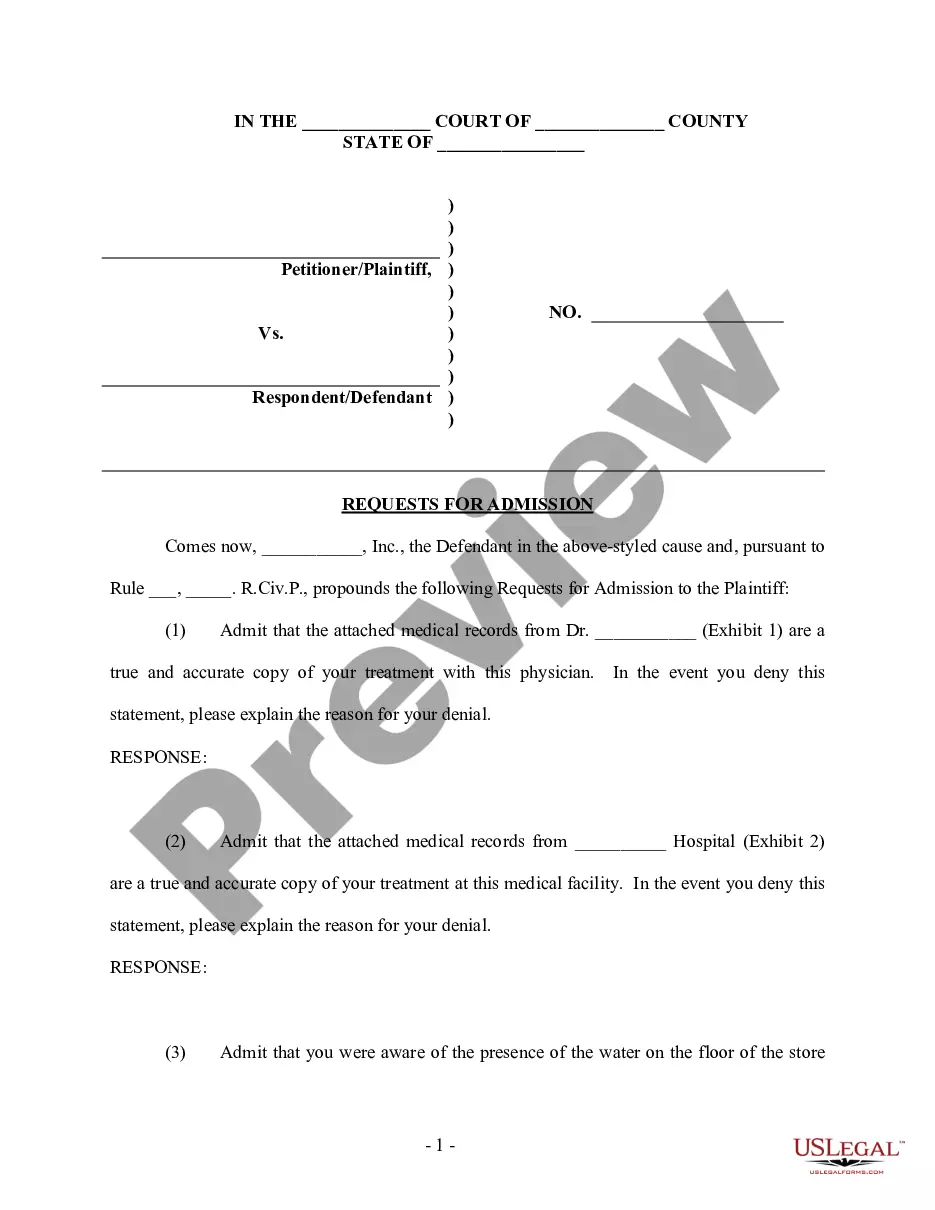
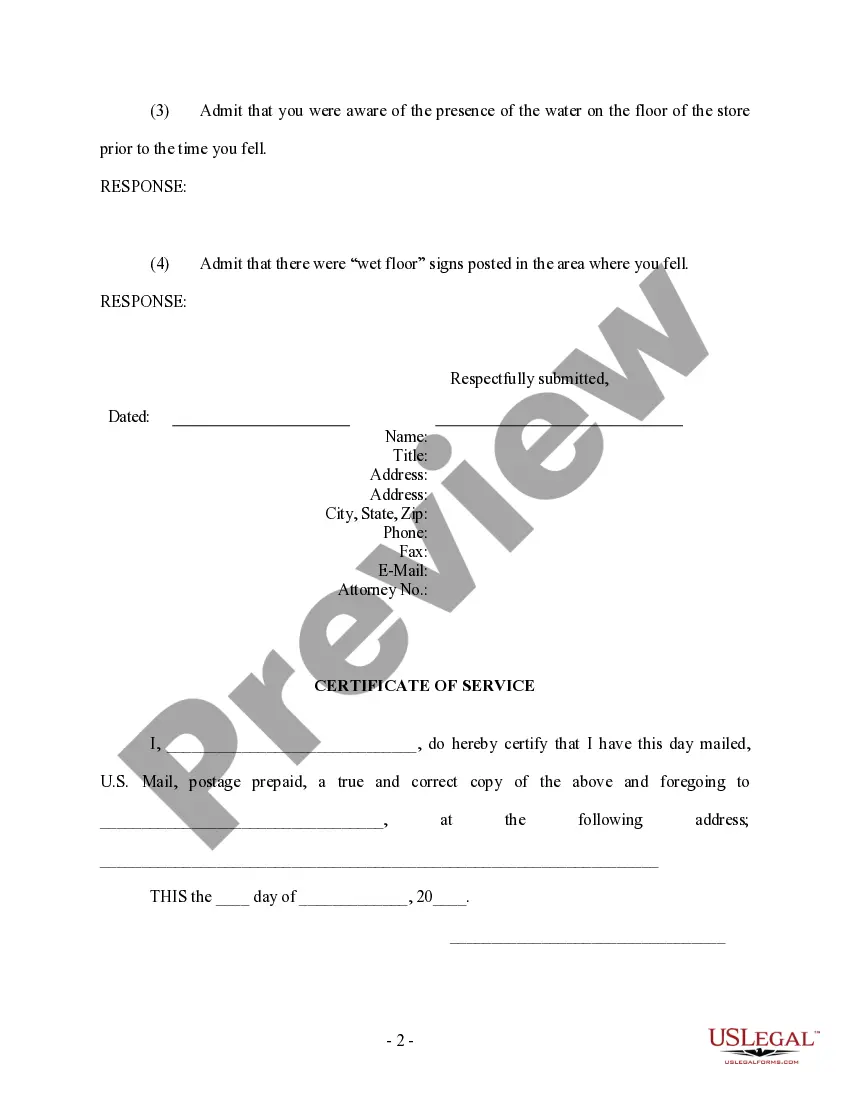
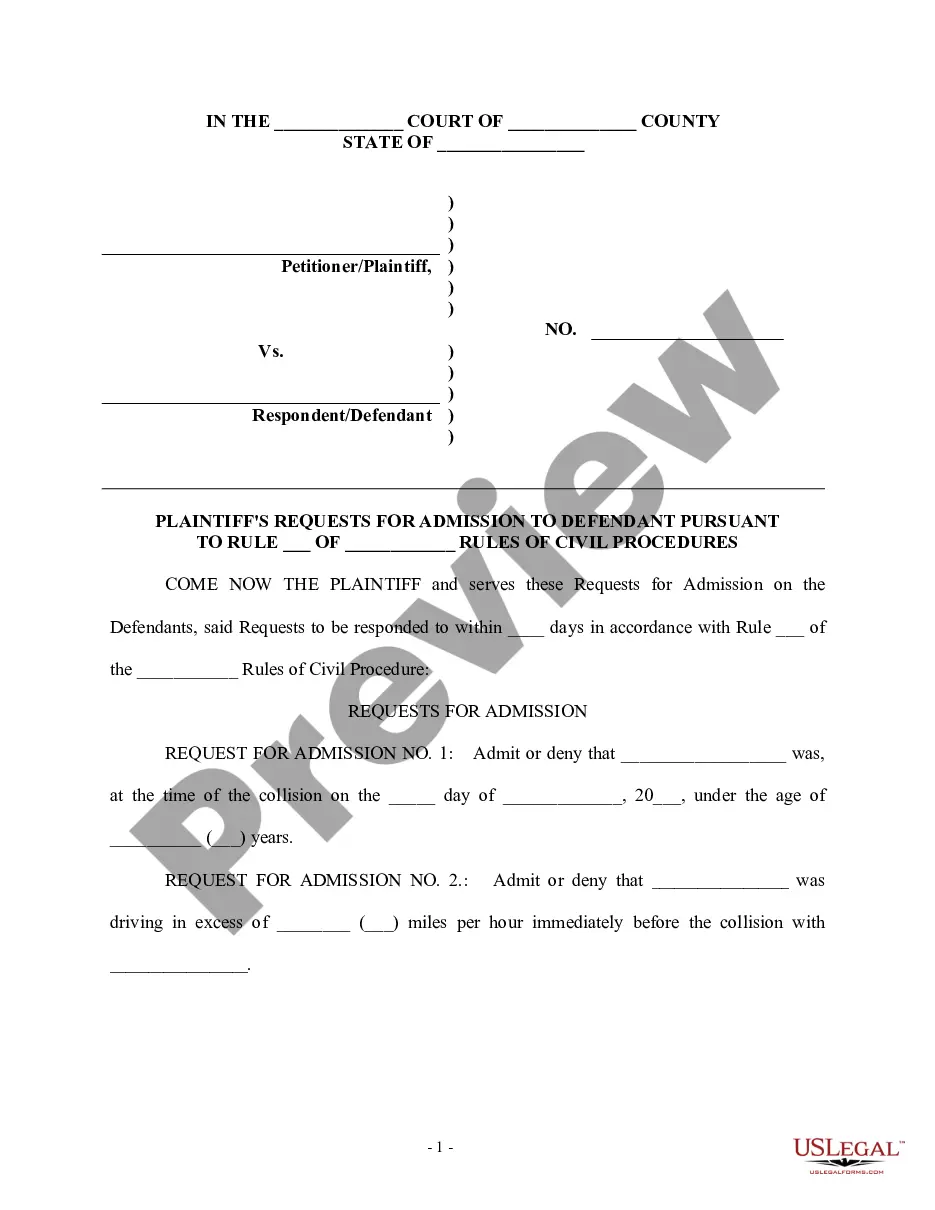
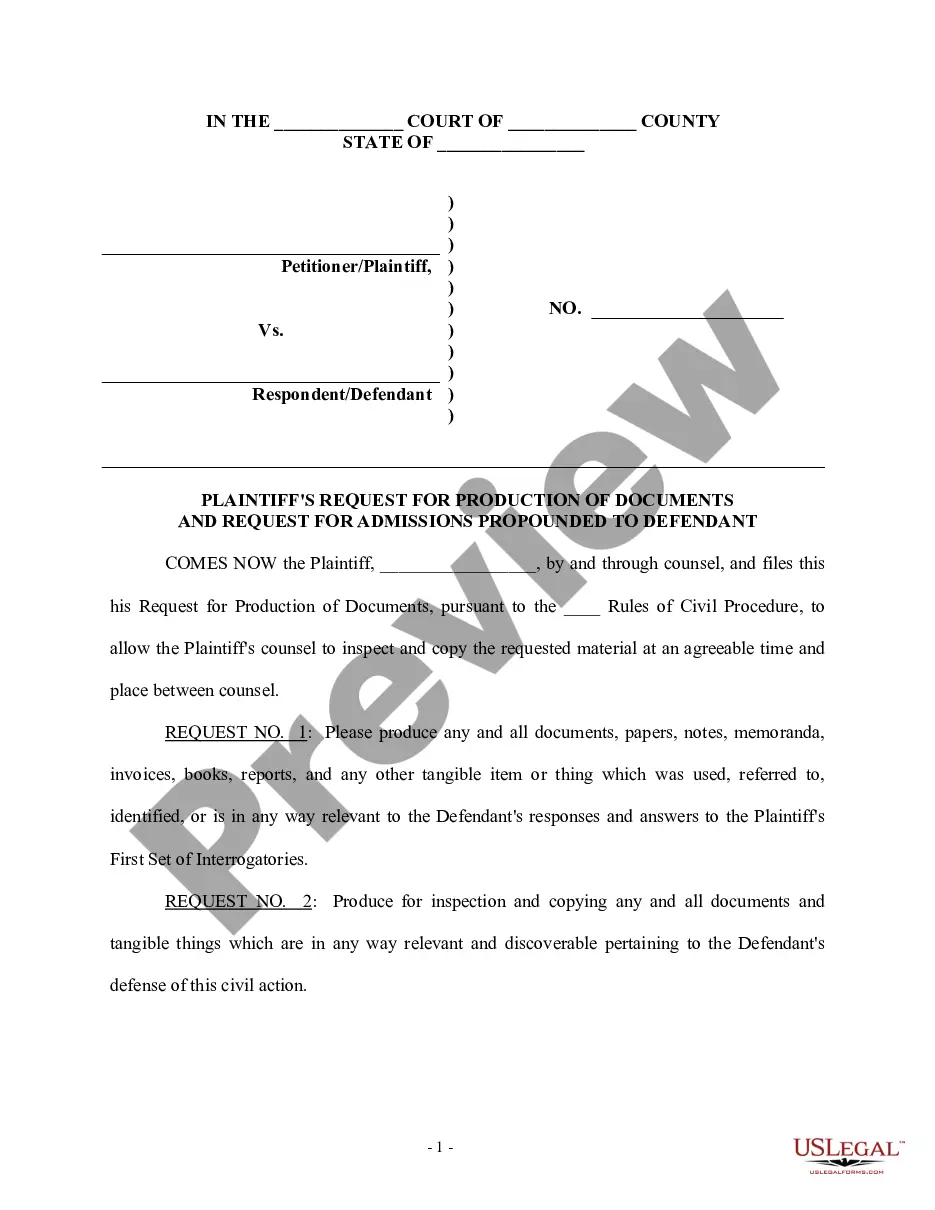
- Examine the template using the Preview feature or through the text outline to confirm it meets your needs.
- Search for another template using the search tool located at the top of the page if necessary.
Form popularity
FAQ
The primary purpose of using requests for admissions is to establish facts that both parties agree on, thereby minimizing misunderstandings. They help create a clearer picture of the case's key elements and can lead to a quicker resolution. This process allows parties to focus on contested matters rather than wasting time on established facts. Incorporating requests for admissions California into your strategy can significantly enhance your case's effectiveness.
The best use of requests for admission in California lies in their ability to narrow the scope of disputes between parties. They serve as a tool to confirm essential facts, which can simplify case management and resolution. By obtaining admissions on key issues, you can strengthen your arguments and reduce the amount of evidence needed at trial. Effective use of requests for admissions California can lead to more efficient litigation.
To effectively use a request for admission in California, start by drafting clear and concise statements that you want the other party to admit or deny. Send these requests to the opposing party, allowing them a specific time frame to respond. If they admit to the statements, it can streamline your case, as these facts will not be disputed during proceedings. Utilizing requests for admissions California can help clarify issues and save time.
To use requests for admission effectively, start by clearly stating the facts you want the opposing party to admit or deny. Draft your requests to be concise, relevant, and straightforward. Use requests to simplify the issues in your case, making it easier to focus on what truly matters during litigation. For creating effective requests, consider leveraging tools from USLegalForms to ensure proper format and compliance with requests for admissions California.
Rule 36, under the Federal Rules of Civil Procedure, provides the guidelines for requests for admission, although California has its own specific rules. Essentially, the rule allows a party to request the other party to admit the truth of facts or the genuineness of documents. Understanding both the federal and state-level rules can enhance your discovery strategy. Resources available from USLegalForms can provide clarity on these regulations regarding requests for admissions California.
In California, you are generally limited to serving 35 requests for admissions on a party unless the court permits more. This limit encourages concise and relevant queries, making it easier to focus on critical issues. If you believe your case requires additional requests, you may file a motion to request this extension. Always consider consulting a platform like USLegalForms when structuring your requests for admissions California.
An interrogatory requires a party to answer questions in writing, whereas a request for admission asks a party to concede or deny the truth of statements. Requests for admissions California are typically used to establish facts, while interrogatories gather more detailed information. Understanding these differences aids in effectively navigating the discovery process in your case.
The rules governing requests for admission in California are outlined in the California Code of Civil Procedure. These rules detail the process for making requests and the obligations of both parties. It’s essential to formulate requests clearly and ensure they are relevant to the case. Utilizing tools from USLegalForms can streamline the creation of compliant requests for admissions California.
Yes, you can refuse to answer a request for admission, but specific criteria must be met. For example, if the request seeks information that is privileged or irrelevant, you may have grounds to deny it. However, you should carefully consider your response, as denying a legitimate request can lead to complications. Consulting resources or professionals experienced in requests for admissions California can help clarify your options.
In California, you typically have 30 days to respond to requests for admissions. This timeframe begins once you receive the request. It is important to meet this deadline to avoid any negative consequences on your case. Keeping track of deadlines helps ensure that your rights are protected in response to requests for admissions California.