Answer For Discovery
Description
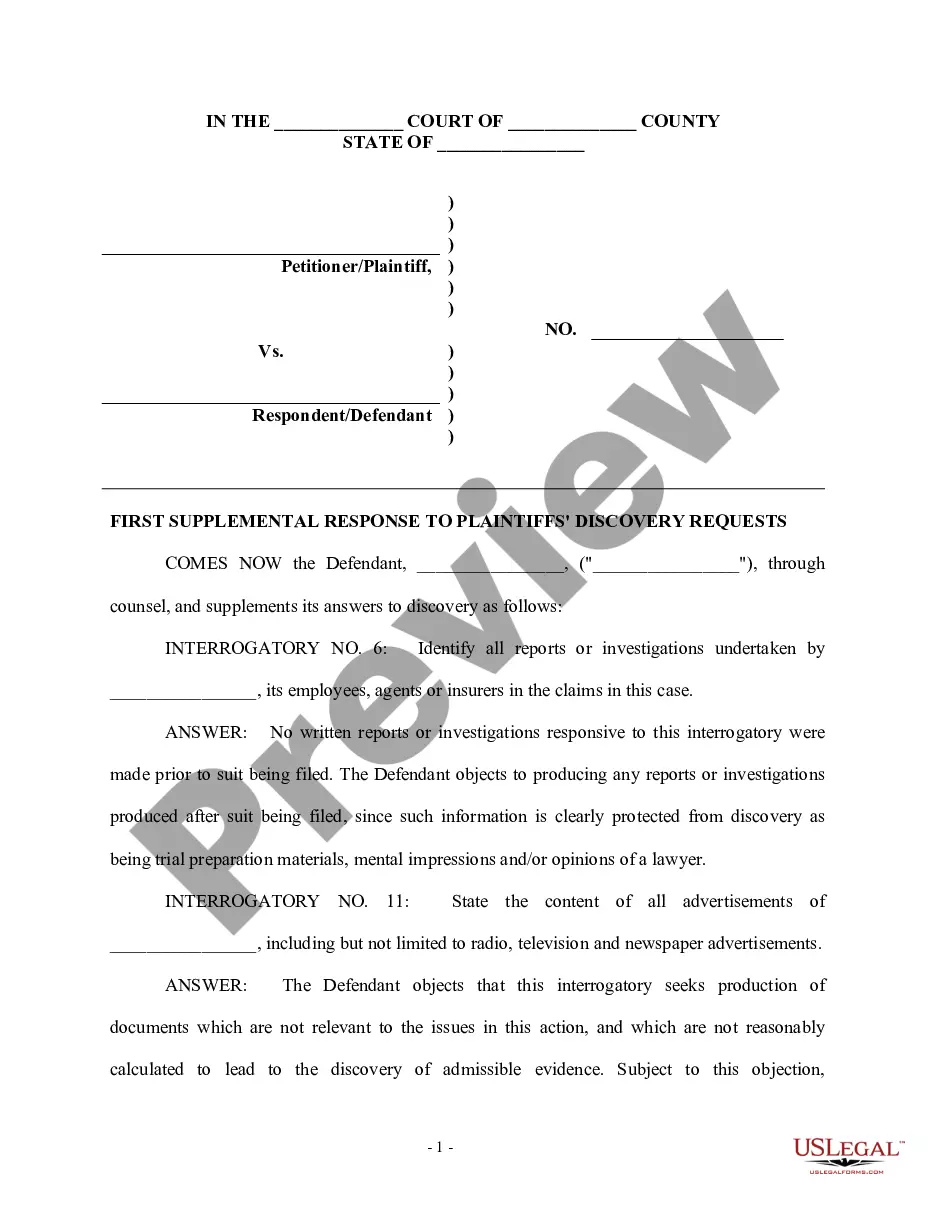
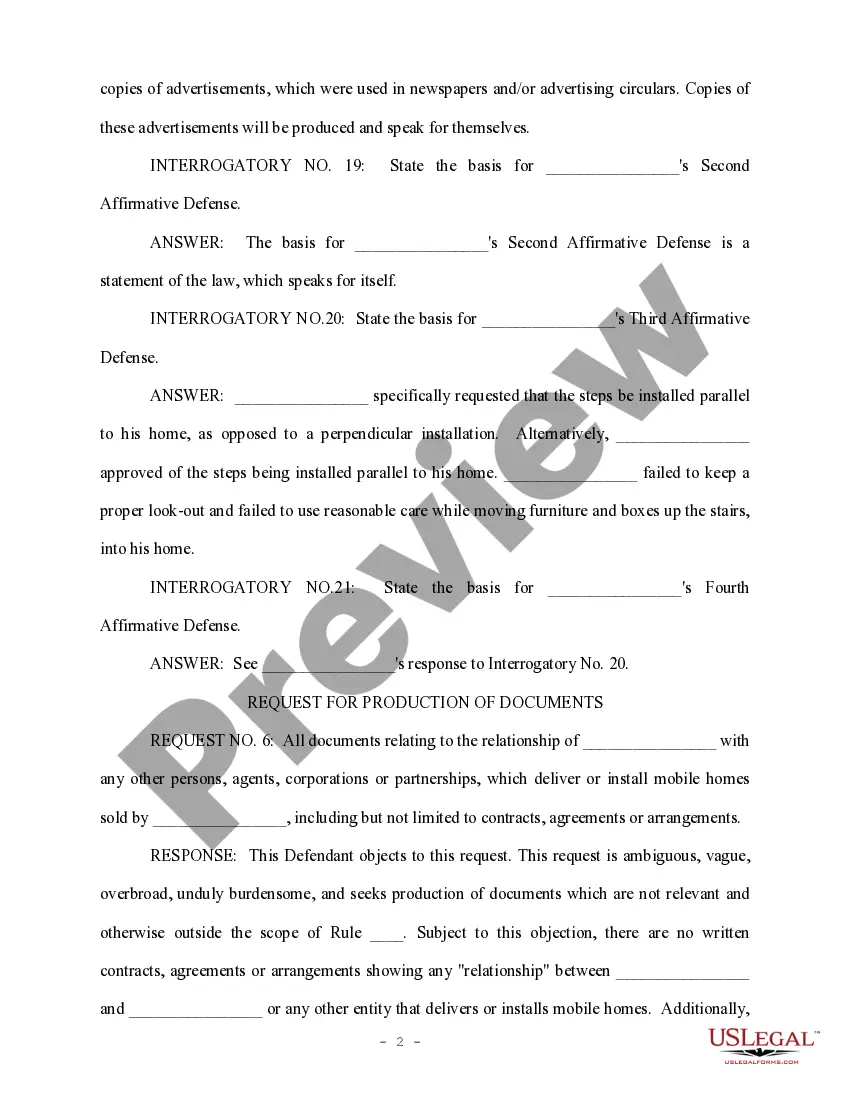
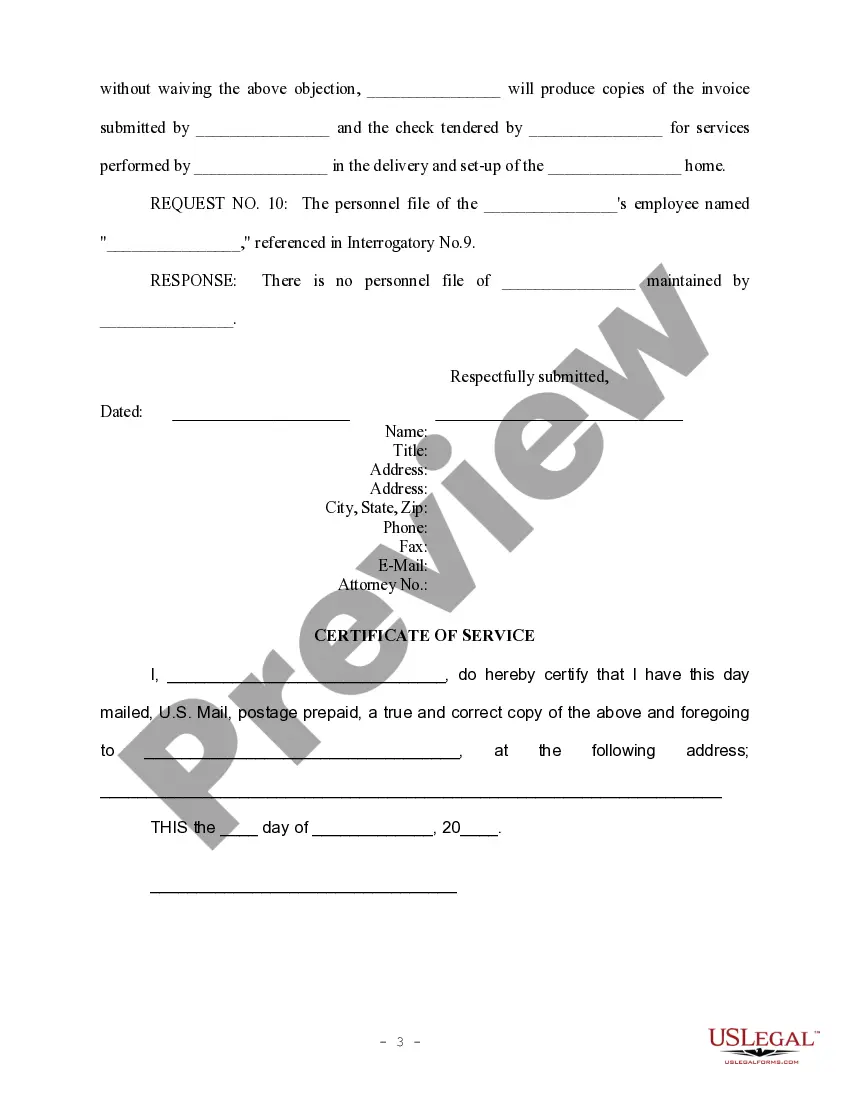
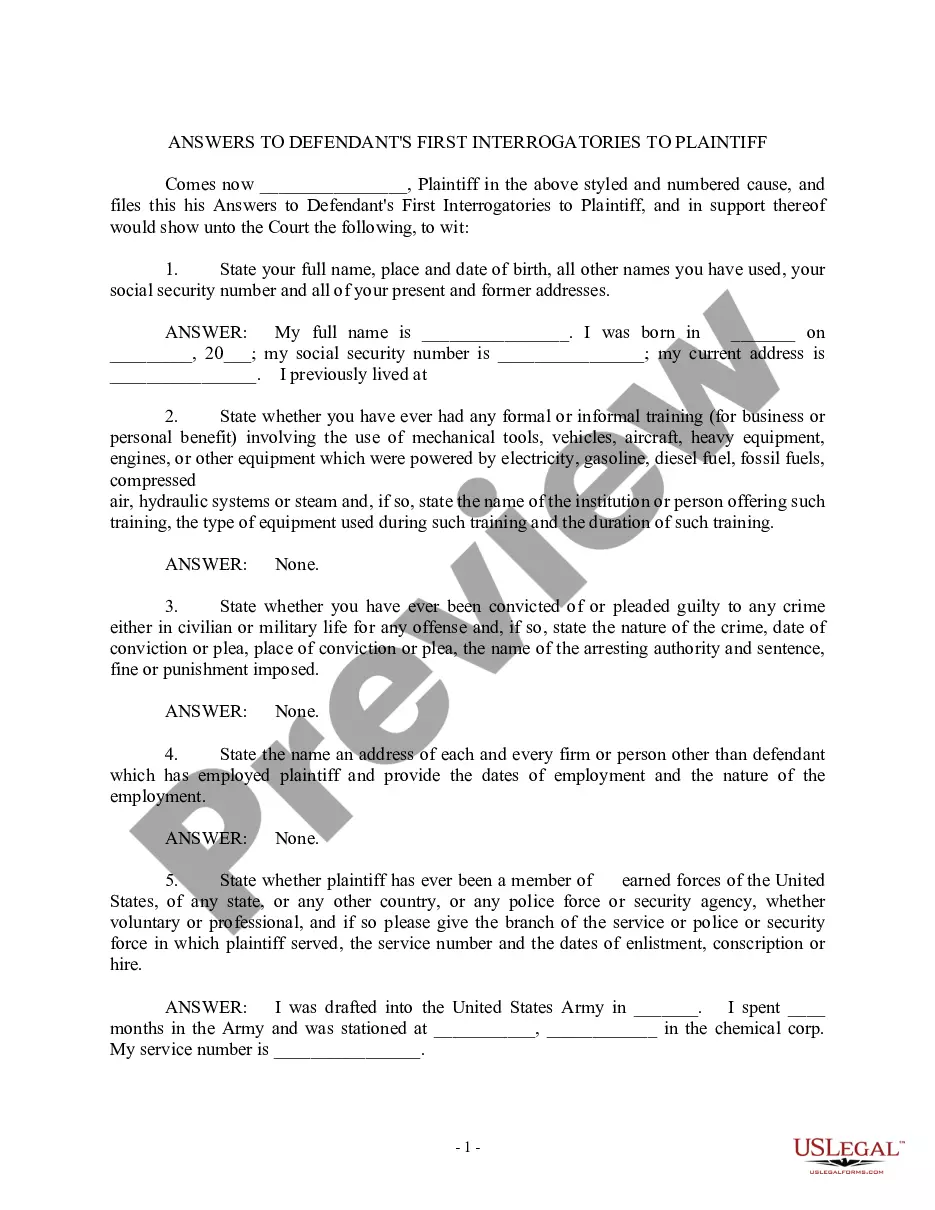
Get your form ready online
Our built-in tools help you complete, sign, share, and store your documents in one place.
Make edits, fill in missing information, and update formatting in US Legal Forms—just like you would in MS Word.
Download a copy, print it, send it by email, or mail it via USPS—whatever works best for your next step.
Sign and collect signatures with our SignNow integration. Send to multiple recipients, set reminders, and more. Go Premium to unlock E-Sign.
If this form requires notarization, complete it online through a secure video call—no need to meet a notary in person or wait for an appointment.
We protect your documents and personal data by following strict security and privacy standards.

Make edits, fill in missing information, and update formatting in US Legal Forms—just like you would in MS Word.

Download a copy, print it, send it by email, or mail it via USPS—whatever works best for your next step.

Sign and collect signatures with our SignNow integration. Send to multiple recipients, set reminders, and more. Go Premium to unlock E-Sign.

If this form requires notarization, complete it online through a secure video call—no need to meet a notary in person or wait for an appointment.

We protect your documents and personal data by following strict security and privacy standards.
Looking for another form?



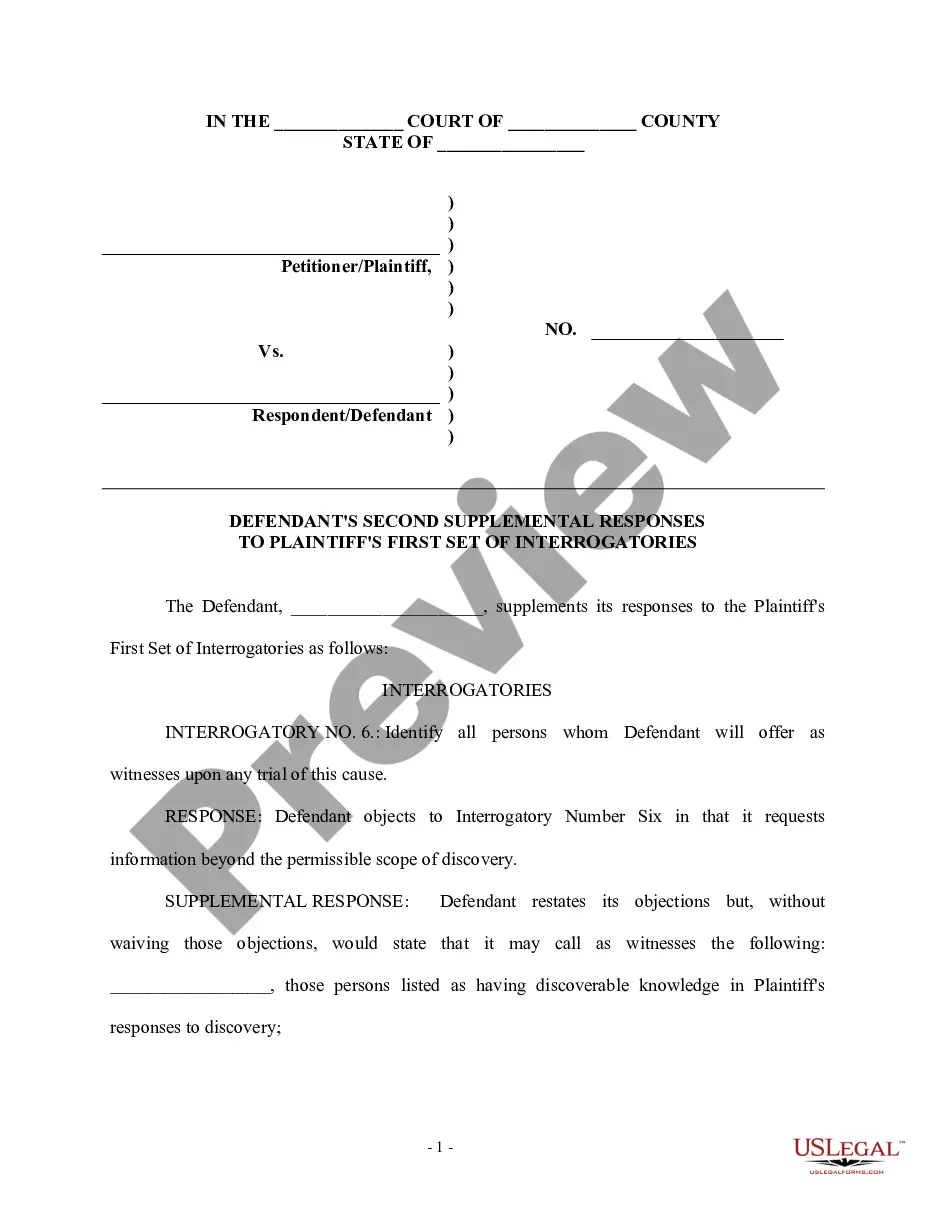
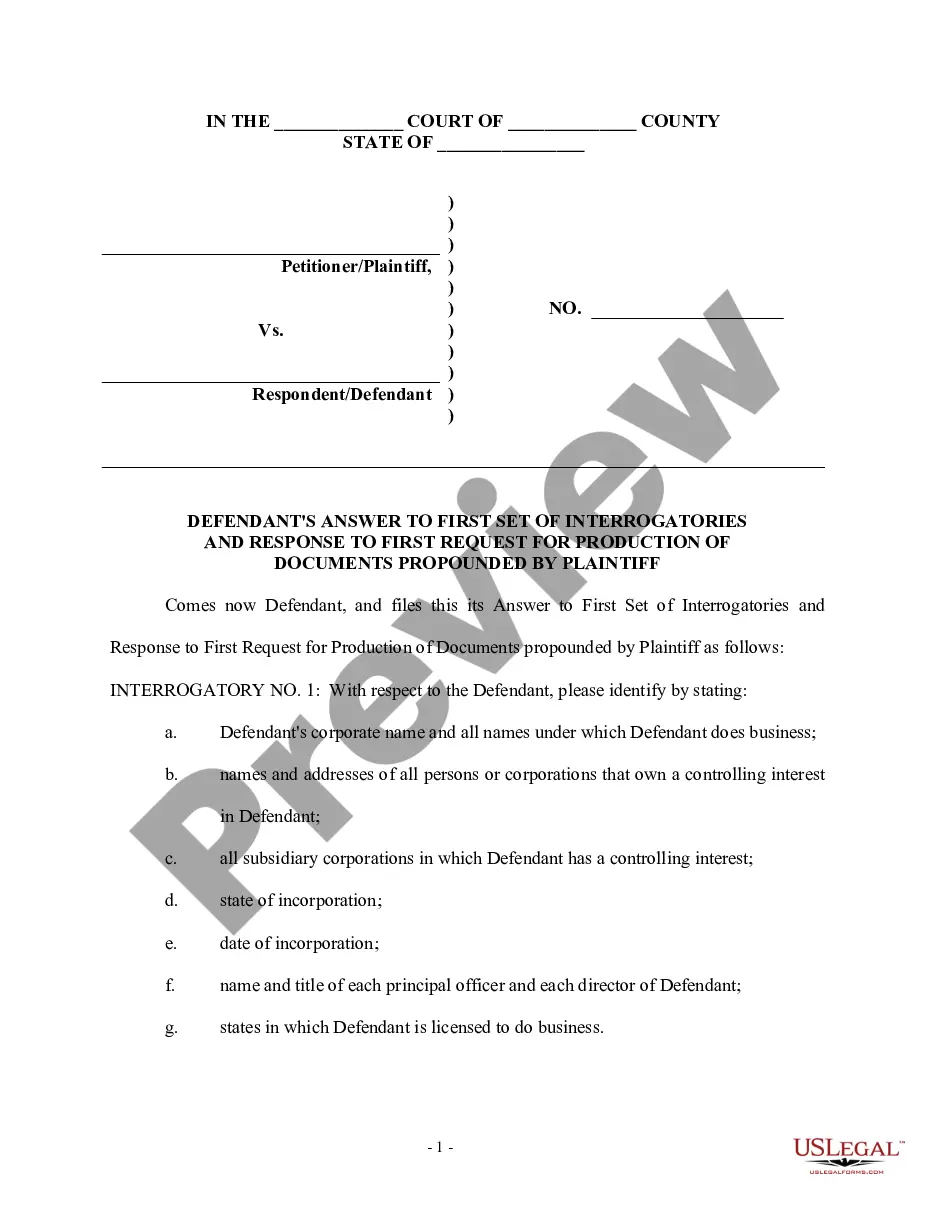
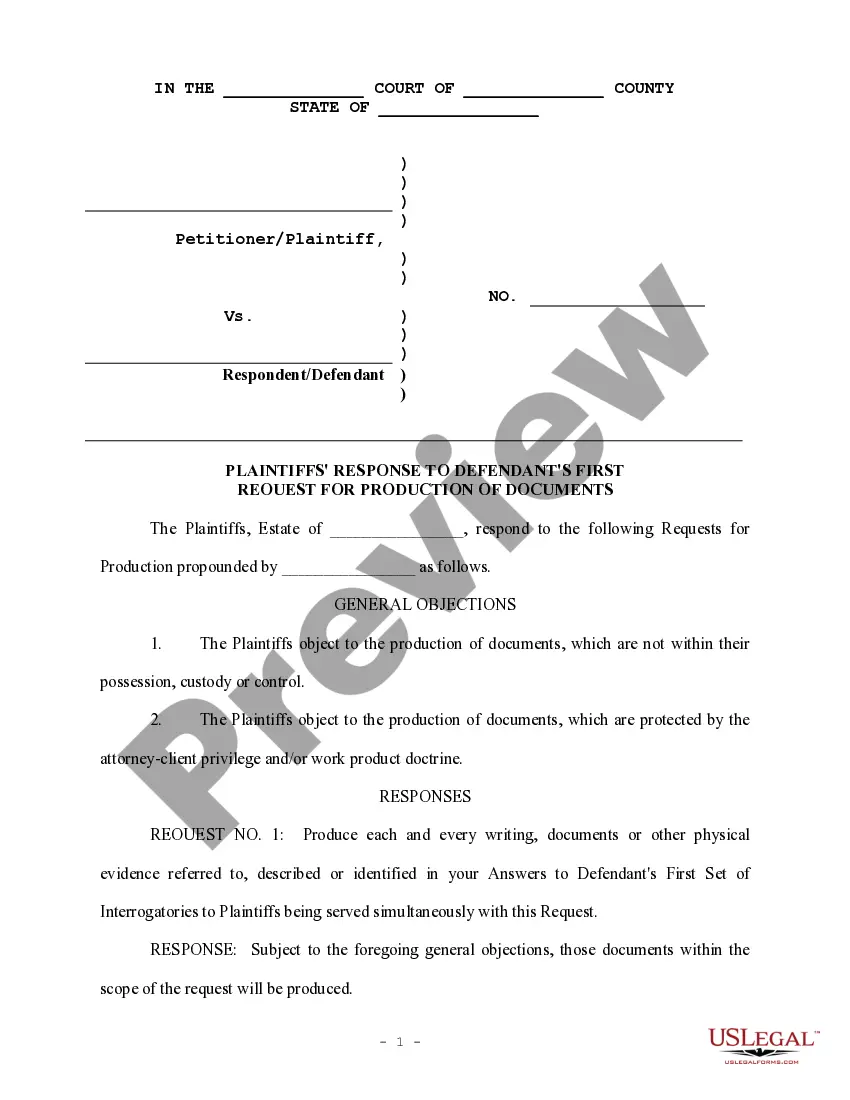
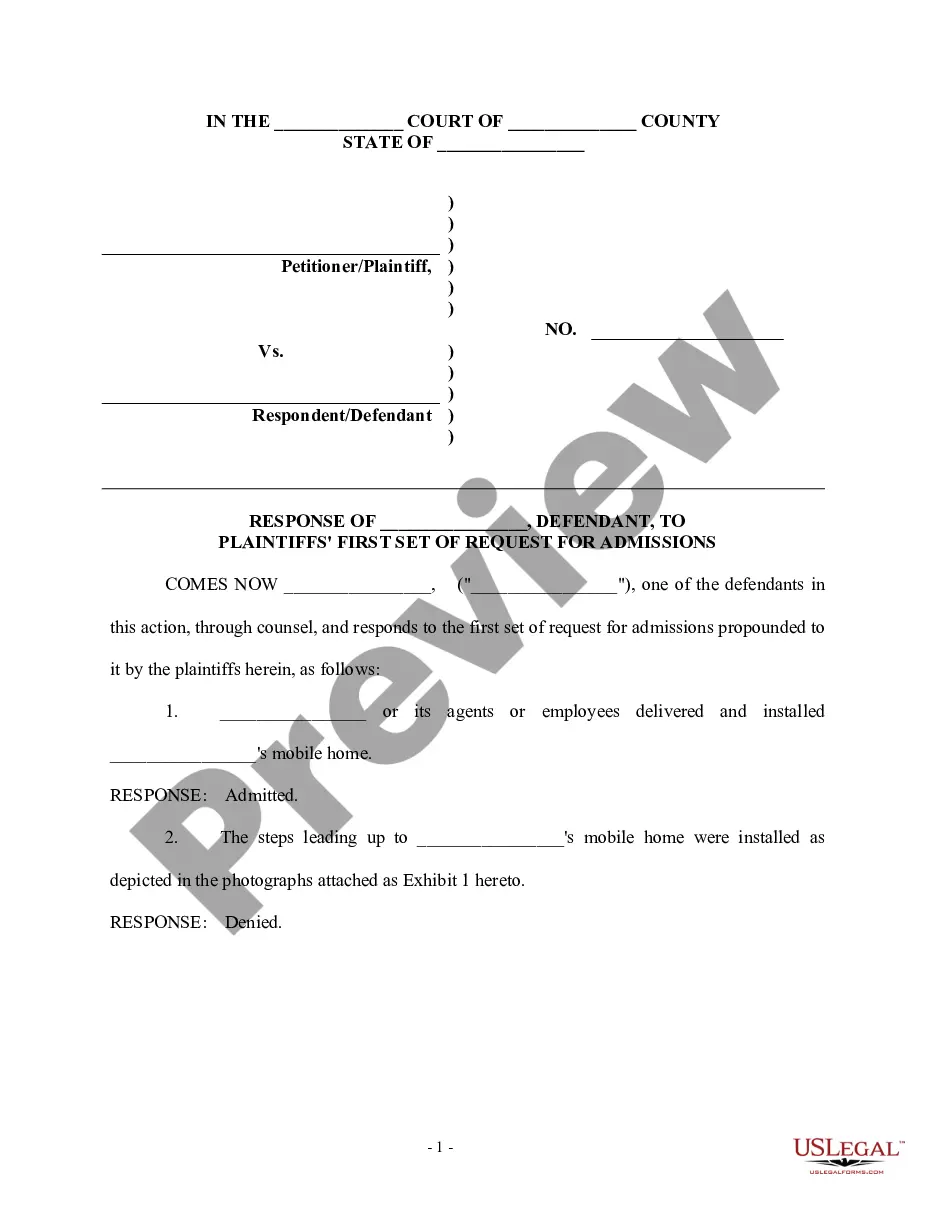
How to fill out Defendant's First Supplemental Response To Plaintiff's Discovery Request?
Whether for professional reasons or personal issues, everyone must handle legal matters sooner or later in their lifetime.
Filling out legal documents requires meticulous attention, starting with selecting the appropriate form template.
Once it is downloaded, you can complete the form using editing software or print it and fill it out manually. With a vast US Legal Forms catalog at your disposal, you won't need to waste time searching for the right sample online. Utilize the library's straightforward navigation to find the correct form for any situation.
- For example, if you select an incorrect version of an Answer For Discovery, it will be rejected when submitted.
- Thus, it is essential to obtain a reliable source of legal documents like US Legal Forms.
- If you need to obtain an Answer For Discovery template, follow these straightforward steps.
- Search for the sample you require using the search box or catalog browsing.
- Review the form’s description to confirm it aligns with your situation, jurisdiction, and county.
- Click on the form’s preview to review it.
- If it is not the correct document, return to the search feature to find the Answer For Discovery sample you need.
- Download the template once it suits your requirements.
- If you already possess a US Legal Forms account, simply click Log in to access previously saved documents in My documents.
- If you do not have an account yet, you can acquire the form by pressing Buy now.
- Choose the appropriate pricing option.
- Fill out the profile registration form.
- Choose your payment method: either a bank card or a PayPal account.
- Select the file format you want and download the Answer For Discovery.
Form popularity
FAQ
Typically, you have a specific timeframe, often around 30 days, to respond to discovery requests. This timeline can vary based on the type of requests and the jurisdiction. It is essential to be mindful of these deadlines to ensure you provide thorough and timely answers for discovery. Using platforms like US Legal Forms can help you navigate these timelines with confidence.
Discovery refers to the legal process where parties exchange information and evidence relevant to a case. This phase is crucial because it allows you to gather necessary facts to build your position. Understanding how to conduct discovery helps you effectively prepare your argument. With resources like US Legal Forms, you can find the tools you need to properly manage your discovery process.
Discovery in civil cases What the other side plans to say about an issue in your case. What facts or witnesses support their side. What facts or witnesses support your side. What information or documents could be used as evidence.
Follow these steps to begin discovery in justice court: Step 1: Prepare and exchange your initial disclosures. Within thirty days after the defendant files his answer, the plaintiff and defendant must exchange: ... Step 2: File the early case conference report. ... Step 3: Ask the court to allow more discovery if you want it.
Prior to the examination the examining party must serve a notice of examination: see Rule 34 (2021 CanLIIDocs 2026). The party who serves a notice of examination first is entitled to examine first and to complete their examination before being examined by the other party.
YOUR INJURIES AND TREATMENT What injury or injuries you claim to have suffered as a result of the incident/accident in question Any pre-existing health conditions that you contend were aggravated as a result of the accident Information regarding all doctors and other medical providers who treated you specifically for ...
You use discovery to get information or evidence from the other side in a lawsuit that will help you make your case. In order to get the information you need, you must make a request using a specific procedure and written format, within a specific timeframe.