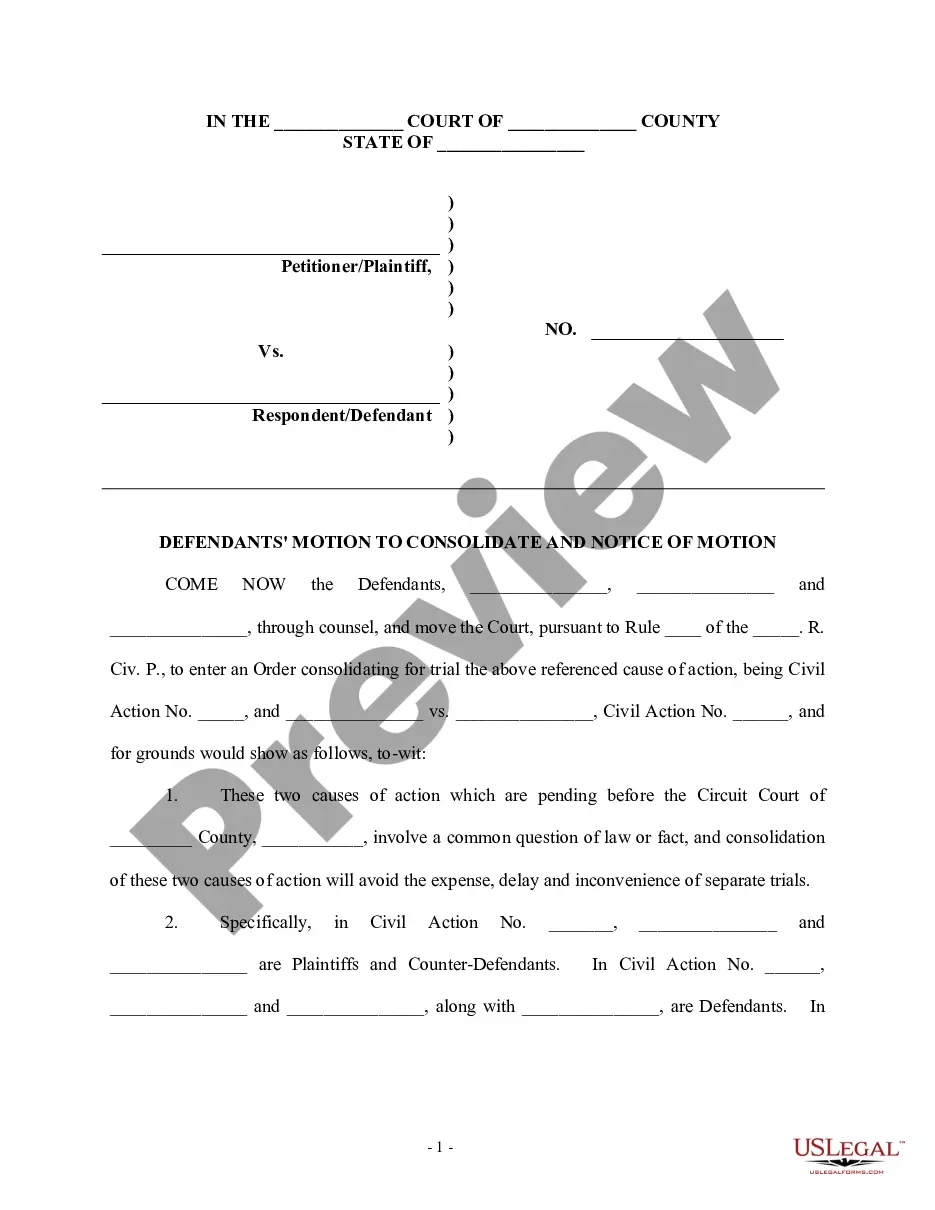
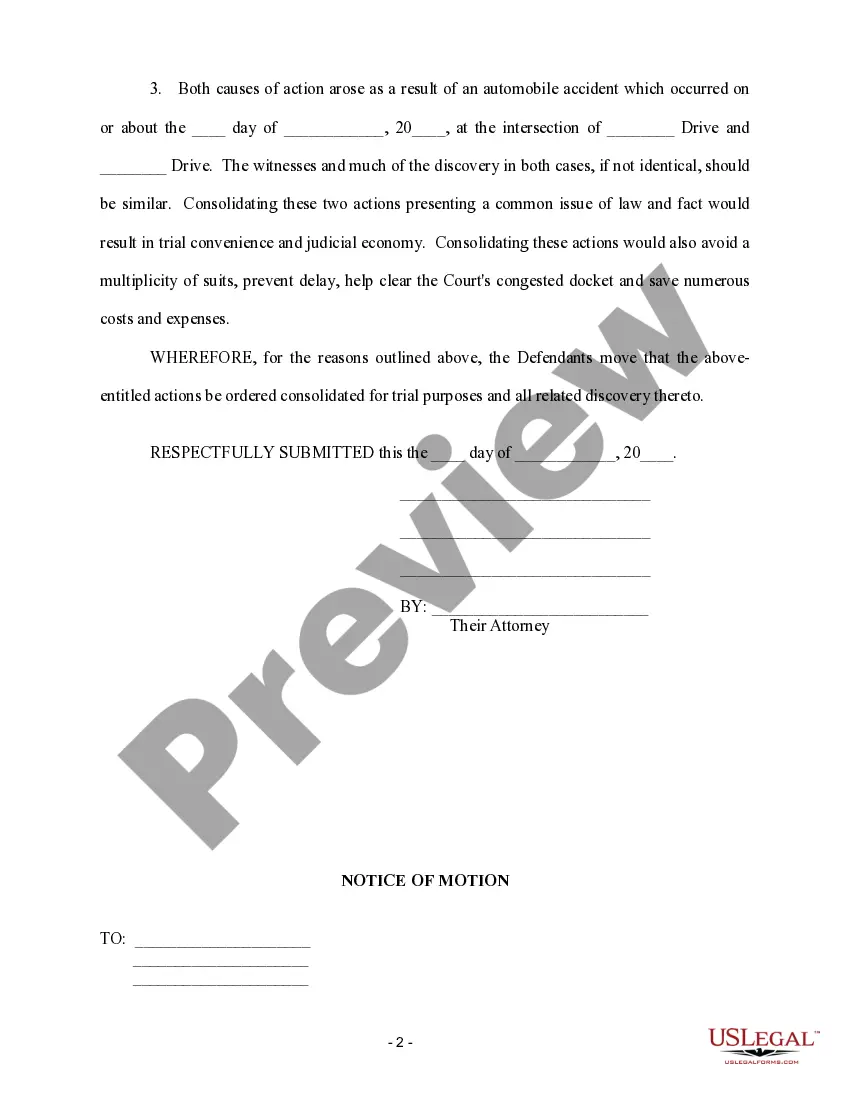
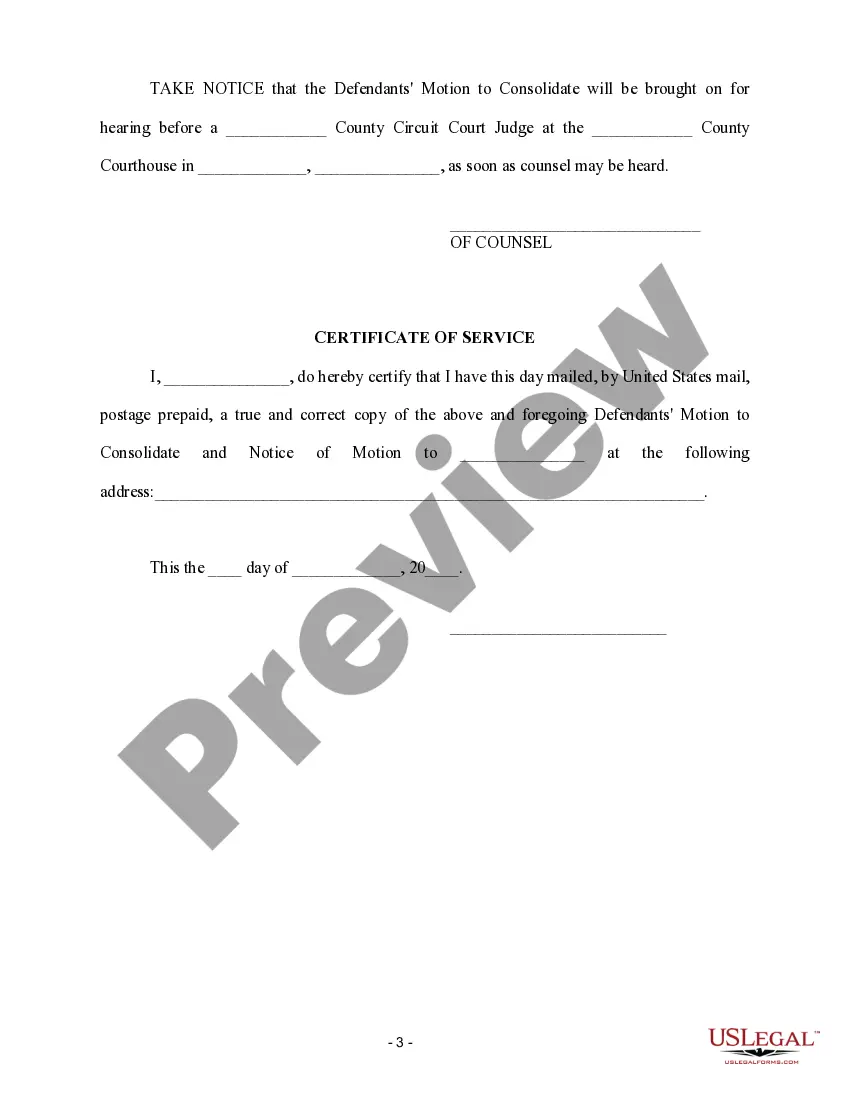
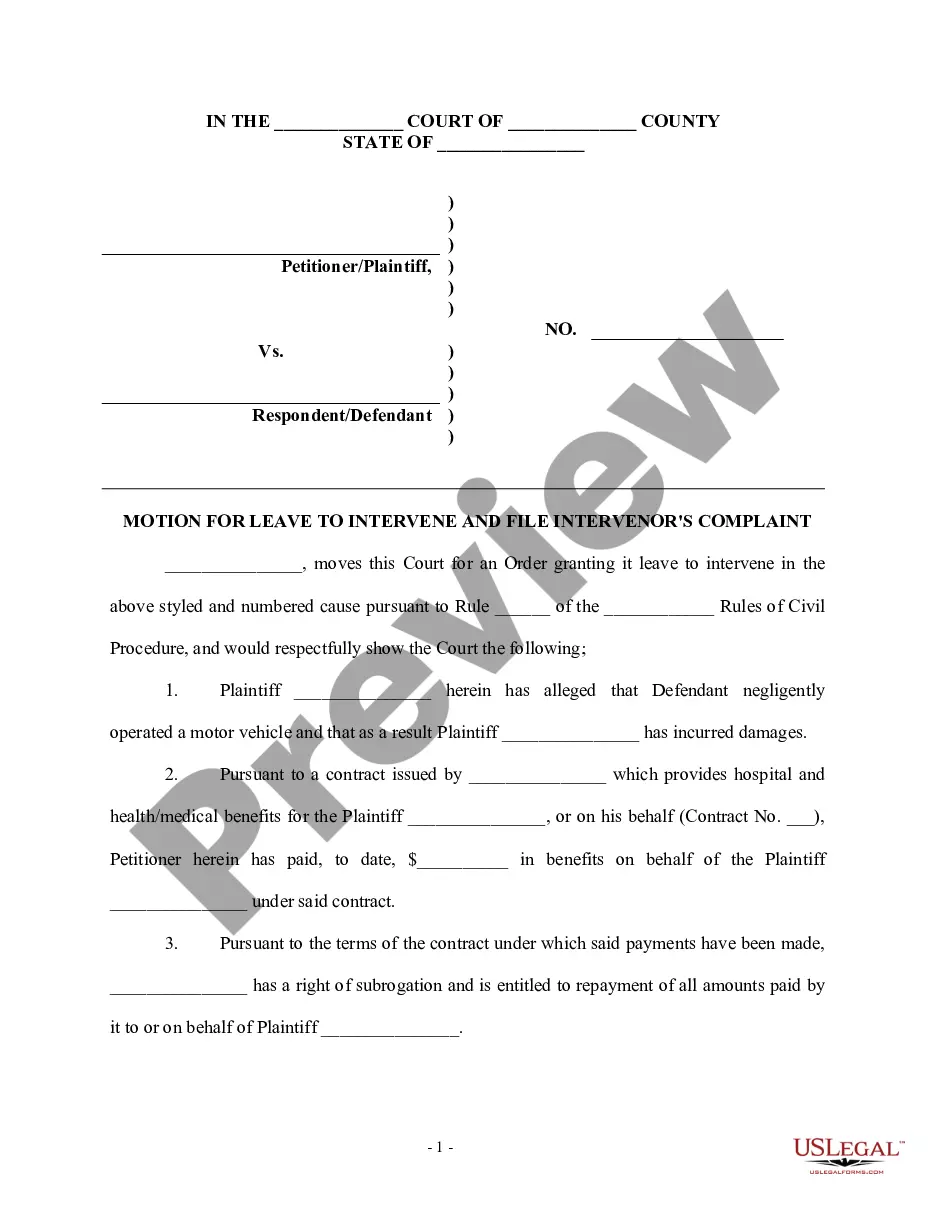
Motion To Consolidate Sample With Federal Court
Description

Get your form ready online
Our built-in tools help you complete, sign, share, and store your documents in one place.
Make edits, fill in missing information, and update formatting in US Legal Forms—just like you would in MS Word.
Download a copy, print it, send it by email, or mail it via USPS—whatever works best for your next step.
Sign and collect signatures with our SignNow integration. Send to multiple recipients, set reminders, and more. Go Premium to unlock E-Sign.
If this form requires notarization, complete it online through a secure video call—no need to meet a notary in person or wait for an appointment.
We protect your documents and personal data by following strict security and privacy standards.

Make edits, fill in missing information, and update formatting in US Legal Forms—just like you would in MS Word.

Download a copy, print it, send it by email, or mail it via USPS—whatever works best for your next step.

Sign and collect signatures with our SignNow integration. Send to multiple recipients, set reminders, and more. Go Premium to unlock E-Sign.

If this form requires notarization, complete it online through a secure video call—no need to meet a notary in person or wait for an appointment.

We protect your documents and personal data by following strict security and privacy standards.
Looking for another form?
How to fill out Motion To Consolidate - Personal Injury?
Creating legal documents from the ground up can frequently feel a bit daunting.
Certain instances may require extensive research and significant financial investment.
If you’re looking for a simpler and more economical method of preparing Motion To Consolidate Sample With Federal Court or any other documentation without the hassle, US Legal Forms is readily accessible.
Our online repository of over 85,000 current legal forms encompasses nearly every facet of your financial, legal, and personal matters.
Before diving directly into downloading Motion To Consolidate Sample With Federal Court, consider these recommendations: Review the form preview and descriptions to ensure you have located the form you need. Verify if the form you select complies with the statutes and regulations of your state and county. Choose the correct subscription plan to acquire the Motion To Consolidate Sample With Federal Court. Download the document and then fill it out, certify it, and print it. US Legal Forms has an excellent reputation and over 25 years of expertise. Join us today and make document completion a straightforward and efficient process!
- With just a few clicks, you can promptly acquire state- and county-specific forms meticulously compiled for you by our legal specialists.
- Utilize our platform whenever you require trusted and dependable services through which you can swiftly find and download the Motion To Consolidate Sample With Federal Court.
- If you’re already familiar with our services and have previously established an account with us, simply Log In to your account, choose the template, and download it or redownload it anytime in the My documents section.
- Not signed up yet? No worries. It takes mere minutes to register and browse the collection.
Form popularity
FAQ
The rule for consolidation generally allows related cases to be combined to promote efficiency in the judicial process. This ensures that similar issues are resolved together, saving time and resources for both the court and involved parties. If you consider a motion to consolidate sample with federal court, knowing these rules can streamline your request. USLegalForms offers guidance and resources to help you navigate the consolidation process smoothly.
A Rule 27 motion is a request for a pre-judgment discovery process, mainly to secure testimony or evidence before a lawsuit is filed. This motion is relevant in situations where a party needs to gather crucial information to support their case. When considering a motion to consolidate sample with federal court, understanding how Rule 27 works can aid in your strategic planning. Seek legal advice if you’re unsure about how to use this rule effectively.
To file a motion, start by drafting your motion to consolidate sample with federal court, ensuring it's clear and concise. Next, file the motion with the clerk's office of the court where your case is pending. Remember to serve the motion on all parties involved, providing them with appropriate notice. Finally, prepare to argue your motion at the scheduled hearing, supported by relevant facts and legal precedents.
Filling out a motion for court involves providing specific information such as the case number, party names, and the relief requested. Ensure you follow the court's formatting guidelines to avoid any issues. Include supporting statements and evidence where necessary. Utilizing a motion to consolidate sample with federal court can simplify this process and ensure no critical details are overlooked.
Starting a motion effectively requires a clear and direct introduction. Begin with the case name, followed by a title that states the type of motion you are filing. Next, provide a brief statement summarizing the purpose of the motion. For inspiration, consult a motion to consolidate sample with federal court to see how to create a compelling opening.
You should file a motion to consolidate when multiple cases share similar legal issues or facts, and it would benefit the court and parties involved. Timing is important; ideally, file the motion early in the litigation process to minimize complications later. If you're uncertain about when to file, reviewing a motion to consolidate sample with federal court can offer insights and examples.
Rule 42 of the Federal Rules of Civil Procedure allows a party to request the consolidation of multiple cases that share common questions of law or fact. This rule promotes judicial efficiency and helps prevent unnecessary costs and delays. When filing this motion, it’s crucial to articulate how the cases are related. Referencing a motion to consolidate sample with federal court can clarify the requirements of Rule 42.
A motion for consolidation is a request to combine two or more cases into one. This can streamline the legal process, reduce duplication of effort, and create efficiency in managing similar cases. By consolidating cases, courts can avoid conflicting decisions and provide consistent outcomes. For effective guidance, consider using a motion to consolidate sample with federal court.
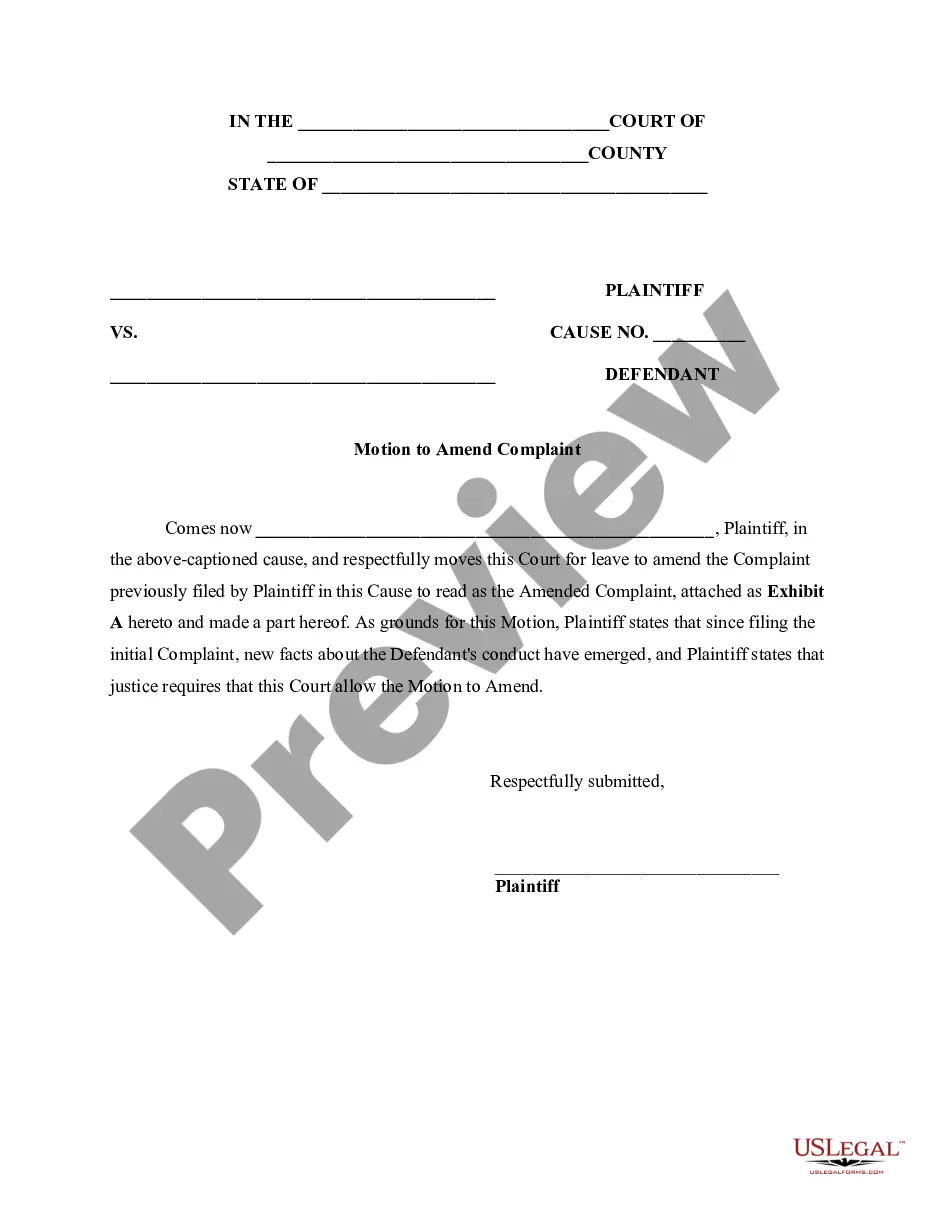
Writing a motion involves stating your case clearly and concisely. Begin with a title that reflects your request, followed by a statement of facts related to your case. Present your argument logically, and conclude with a request for the relief you seek. Reviewing a motion to consolidate sample with federal court can help you structure your motion correctly.