Stud Dog Breed Contracts With One Testicle
Description
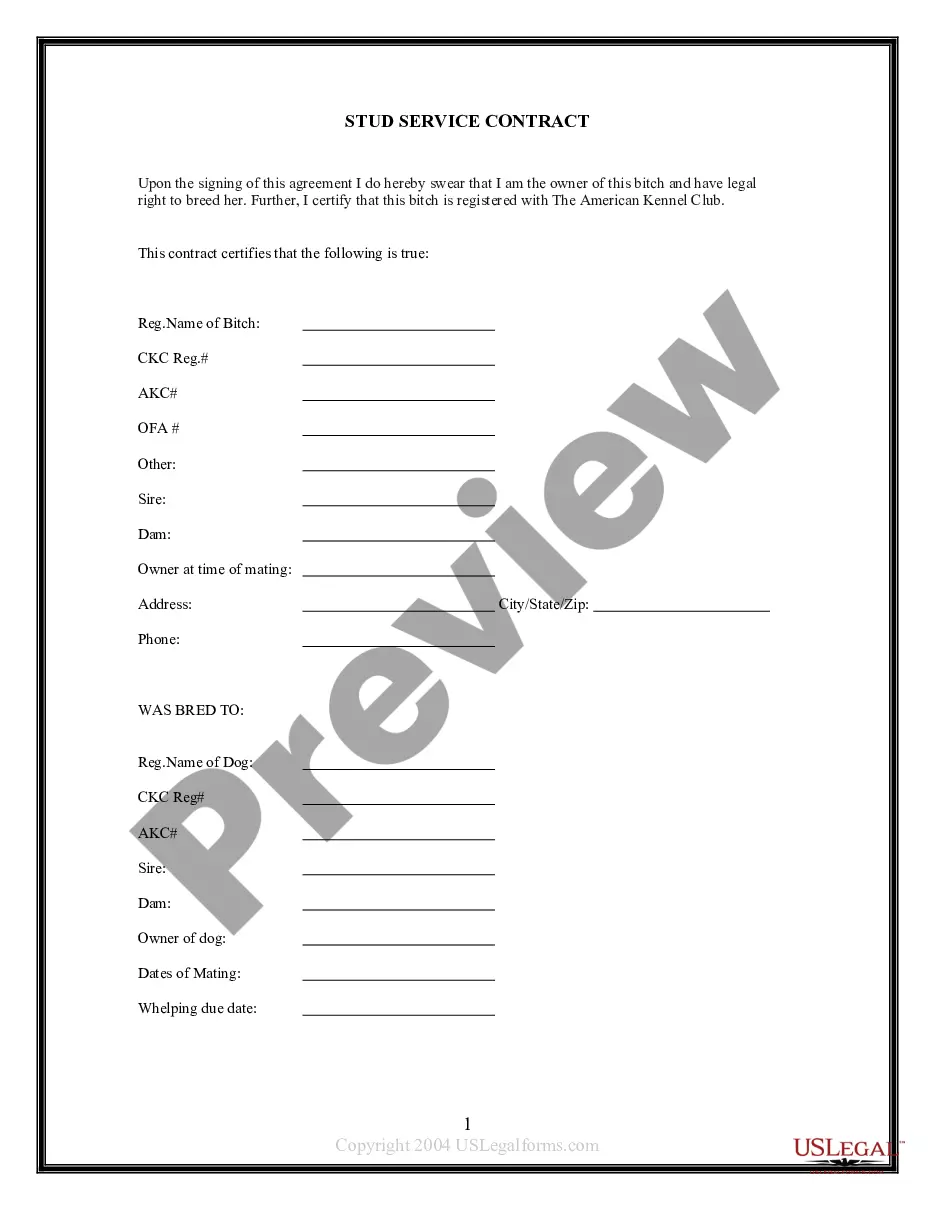
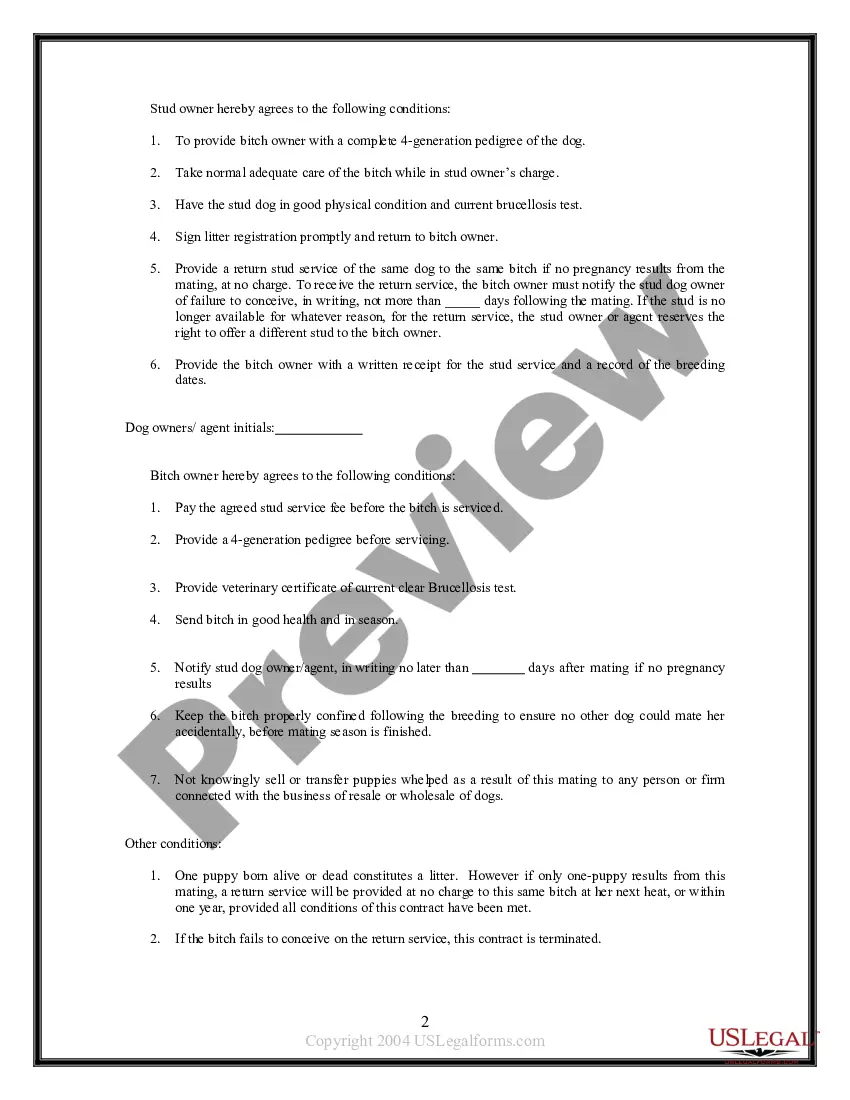
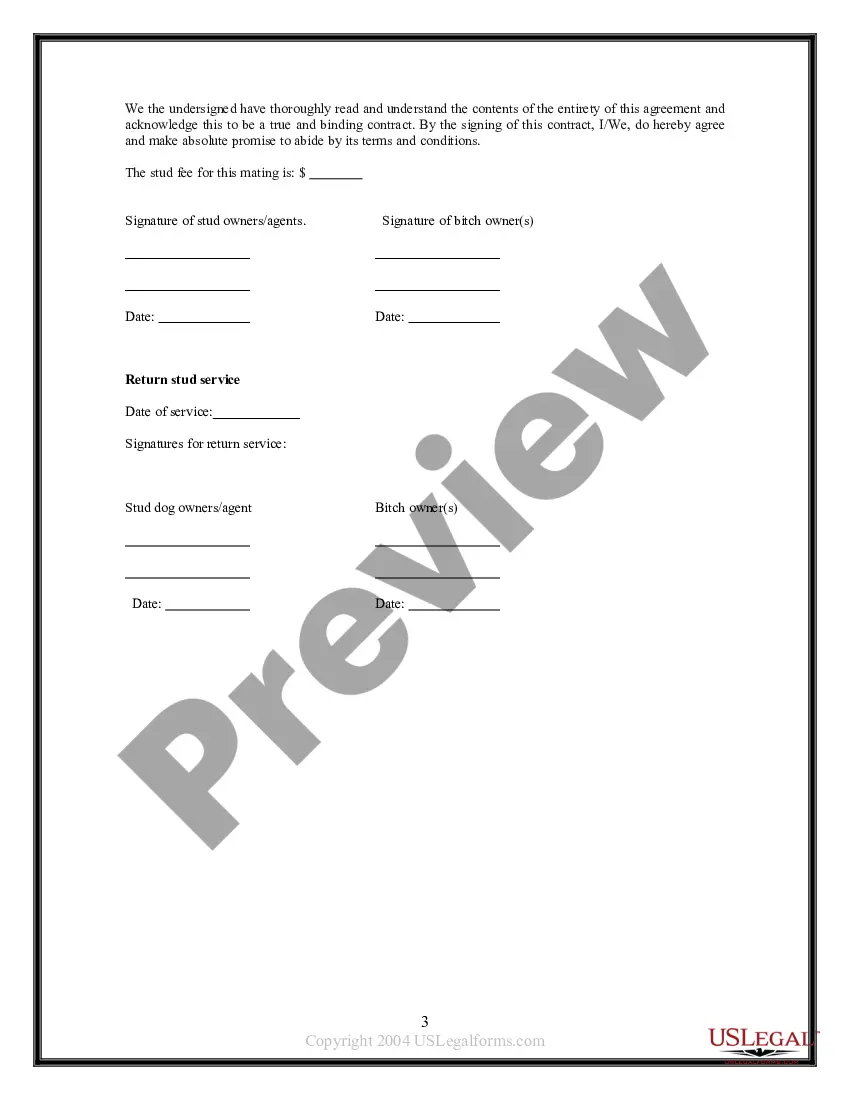
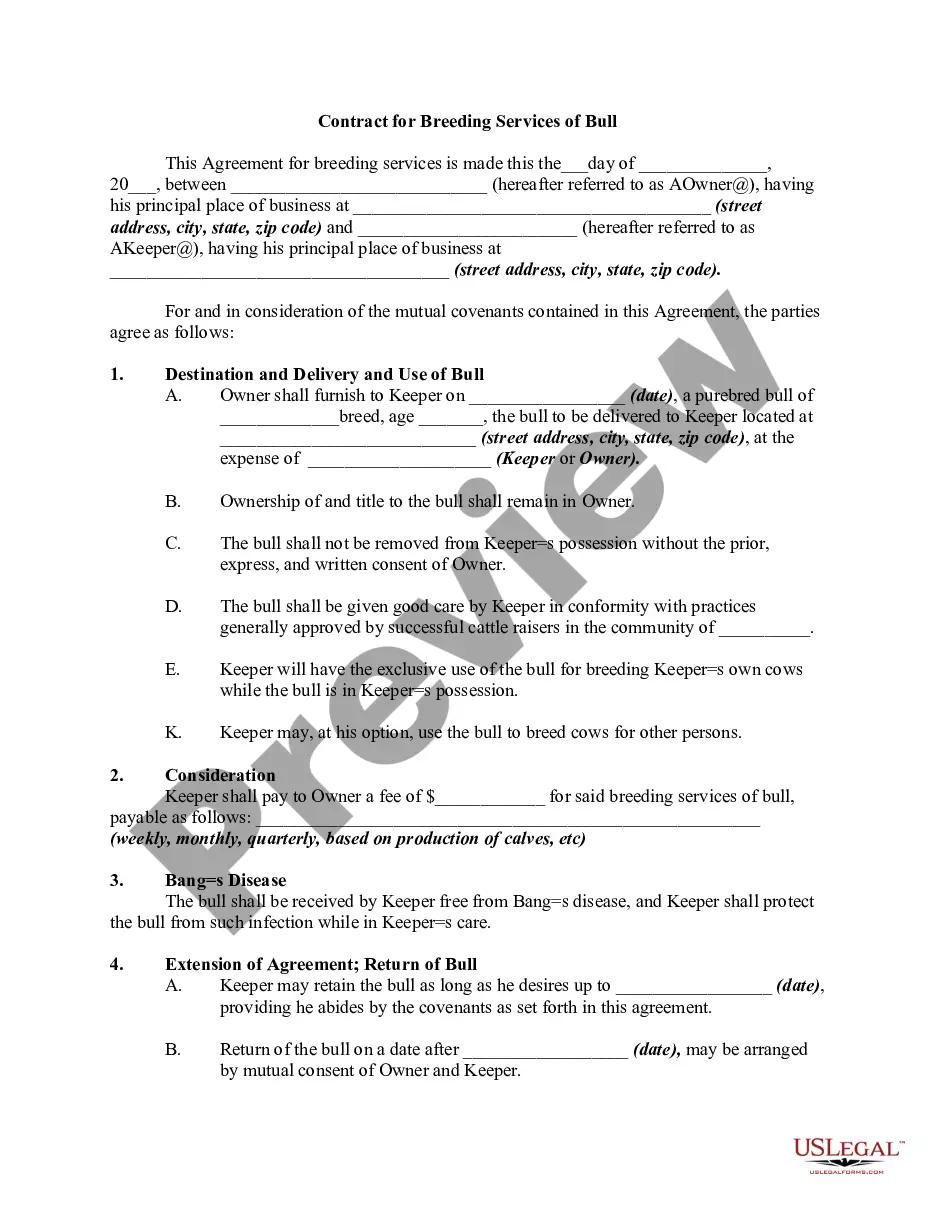
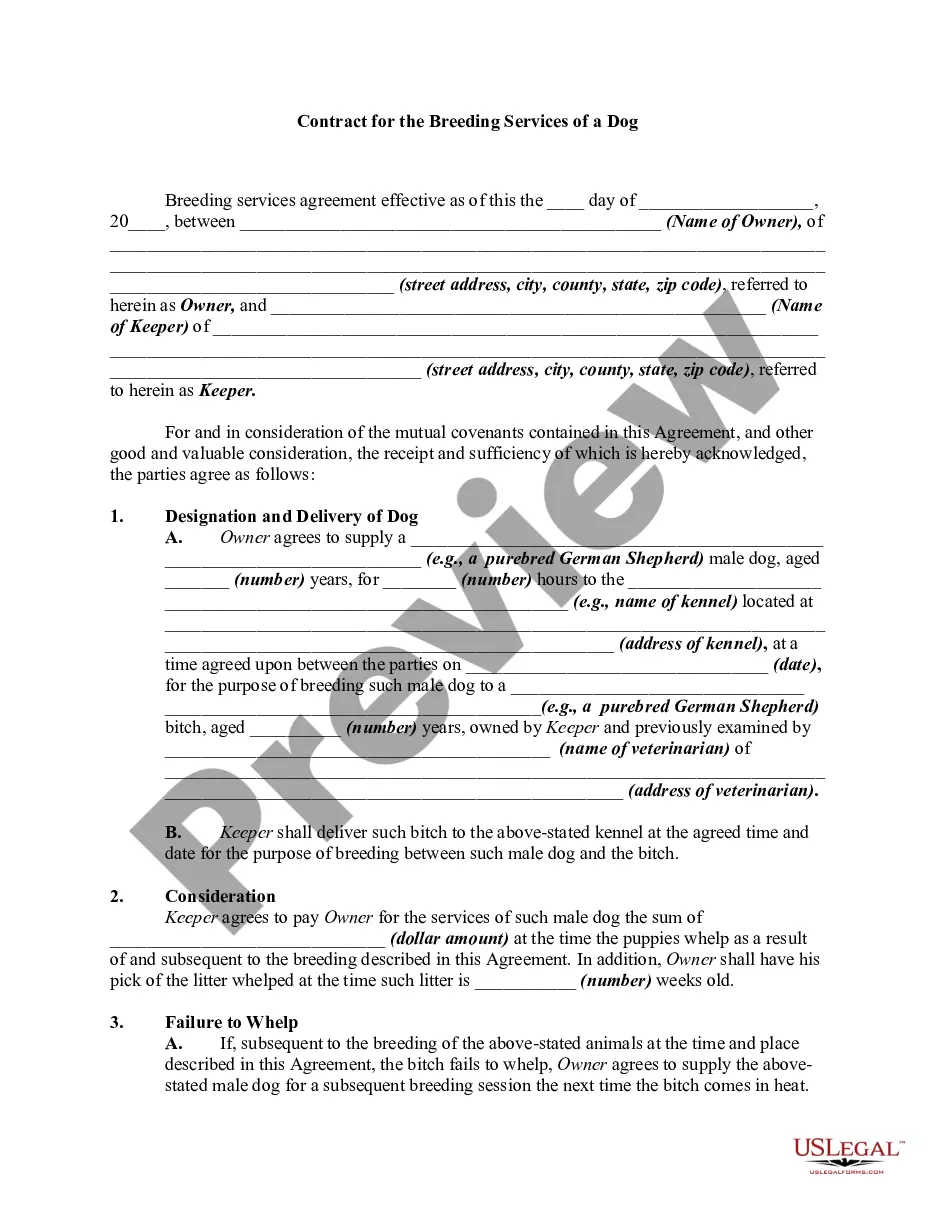
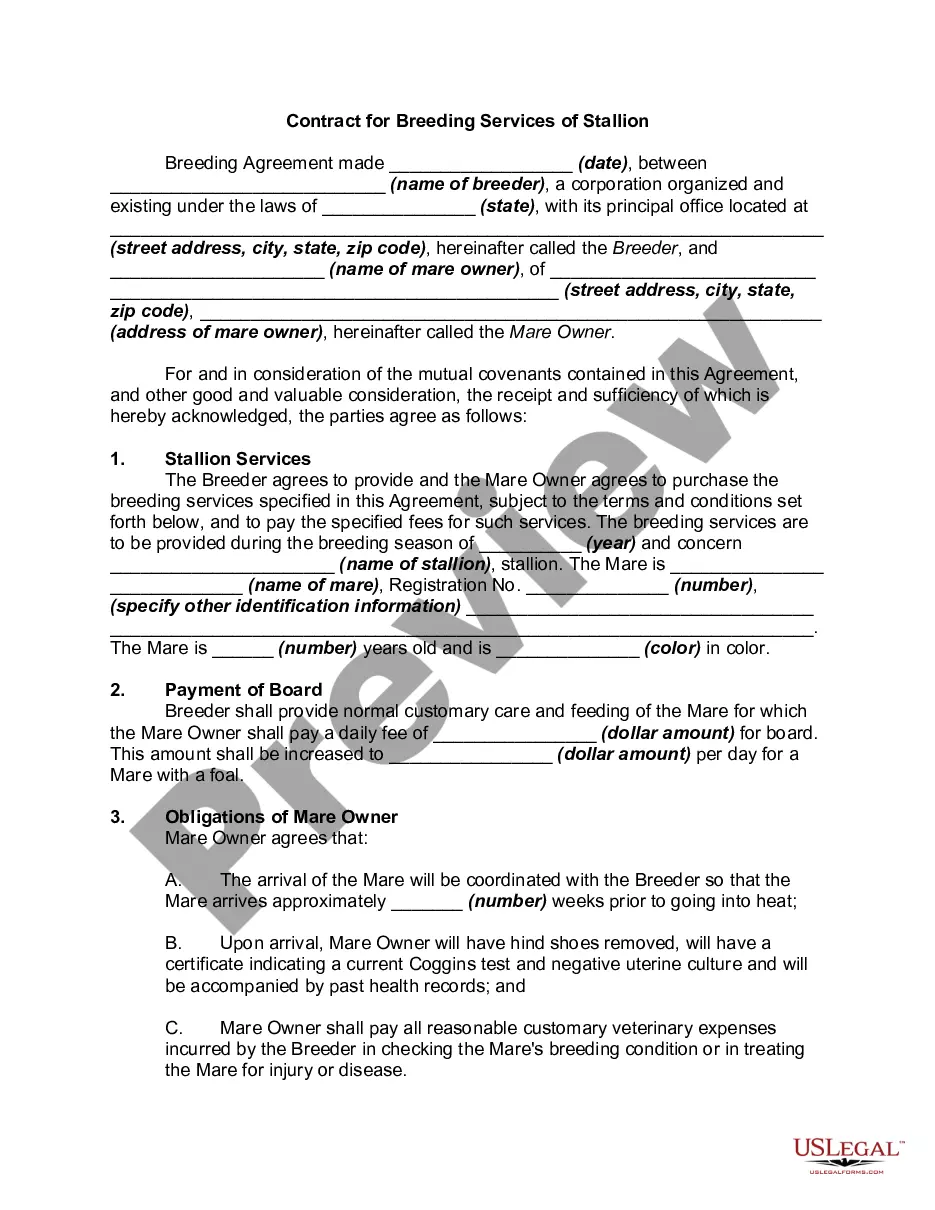
Get your form ready online
Our built-in tools help you complete, sign, share, and store your documents in one place.
Make edits, fill in missing information, and update formatting in US Legal Forms—just like you would in MS Word.
Download a copy, print it, send it by email, or mail it via USPS—whatever works best for your next step.
Sign and collect signatures with our SignNow integration. Send to multiple recipients, set reminders, and more. Go Premium to unlock E-Sign.
If this form requires notarization, complete it online through a secure video call—no need to meet a notary in person or wait for an appointment.
We protect your documents and personal data by following strict security and privacy standards.

Make edits, fill in missing information, and update formatting in US Legal Forms—just like you would in MS Word.

Download a copy, print it, send it by email, or mail it via USPS—whatever works best for your next step.

Sign and collect signatures with our SignNow integration. Send to multiple recipients, set reminders, and more. Go Premium to unlock E-Sign.

If this form requires notarization, complete it online through a secure video call—no need to meet a notary in person or wait for an appointment.

We protect your documents and personal data by following strict security and privacy standards.
Looking for another form?




How to fill out Pet Breeding - Canine Stud Contract?
Regardless of whether it is for corporate endeavors or personal matters, everyone must encounter legal challenges at some stage in their lives. Completing legal documentation requires meticulous focus, starting from selecting the appropriate form template.
For example, if you select an incorrect version of a Stud Dog Breed Contracts With One Testicle, it will be declined once you submit it. Hence, it is vital to procure a reliable source of legal documents like US Legal Forms.
With a comprehensive US Legal Forms catalog available, you no longer need to waste time searching for the suitable template across the internet. Utilize the library’s user-friendly navigation to discover the right template for any situation.
- Obtain the template you require by utilizing the search bar or browsing through the catalog.
- Review the form’s details to ensure it aligns with your circumstances, state, and county.
- Click on the form’s preview to inspect it.
- If it is the incorrect document, return to the search feature to find the Stud Dog Breed Contracts With One Testicle template you need.
- Download the file when it suits your requirements.
- If you already have a US Legal Forms account, simply click Log in to access your previously saved documents in My documents.
- If you do not possess an account yet, you can acquire the form by clicking Buy now.
- Select the proper pricing option.
- Complete the profile registration form.
- Choose your payment method: either a credit card or PayPal account.
- Select the desired file format and download the Stud Dog Breed Contracts With One Testicle.
- Once saved, you can fill out the form using editing software or print it and complete it by hand.
Form popularity
FAQ
Generally, one stud dog is sufficient for a female dog to become pregnant, assuming the timing is right and the breeding process is done correctly. However, multiple mating sessions can increase the chances of successful conception. When navigating stud dog breed contracts with one testicle, consider the implications on breeding success and the terms of your agreement. Working with experienced breeders can provide valuable insights for optimal breeding outcomes.
If your dog has only one testicle, it’s important to consult a veterinarian. They can assess whether the testicle is properly developed or if there are underlying health concerns. Additionally, understanding the implications for breeding is crucial, especially regarding stud dog breed contracts with one testicle. Always prioritize your dog's health and well-being before making any breeding decisions.
Yes, a male dog with one descended testicle can still be fertile. The descended testicle can produce sperm, allowing the dog to breed successfully. However, fertility levels can vary based on a range of factors, including the dog’s health and genetics. If you are exploring stud dog breed contracts with one testicle, understanding fertility is essential to your decisions.
You can still stud a dog with one testicle, but it typically depends on the breeder's preferences and the specific stud dog breed contracts with one testicle. Many breeders consider the overall health and genetic background when making this decision. If the dog has shown fertility in the past, this may open doors for breeding opportunities, provided all health checks are satisfactory.
Yes, a dog with one testicle can potentially be fertile. This condition is known as cryptorchidism, and while it may affect fertility levels, it does not completely eliminate the possibility of reproduction. However, it is important to keep in mind that many breeders prefer stud dog breed contracts with one testicle to ensure overall health and genetic quality. Consulting a veterinarian can help clarify the reproductive capabilities of such dogs.
Retained testicles is an inherited condition, and affected dogs should not be bred. It is possible that both testicles will drop, but it is possible that they won't. Whether you decide to purchase this dog is up to you, but you would need to do so with the possibility that he will need to be neutered.
Undescended testicles can become cancerous and/or twisted, so it's important to have them removed while your dog is young. Contact your vet if your dog's testicles aren't both in the scrotum by the time they are 6 months old. It's likely that they will recommend an operation to remove them.
As the testicle is not visible it can be quite difficult to work out what the problem is. Dogs with both testicles retained are usually sterile (unable to father puppies). Those with one normal testicle can still be fertile, although the quality of their sperm is reduced.
If both testicles are cryptorchid, the dog is sterile. Dogs with one cryptorchid testicle are usually still fertile from the scrotal testicle, although they will have less sperm than a normal male.