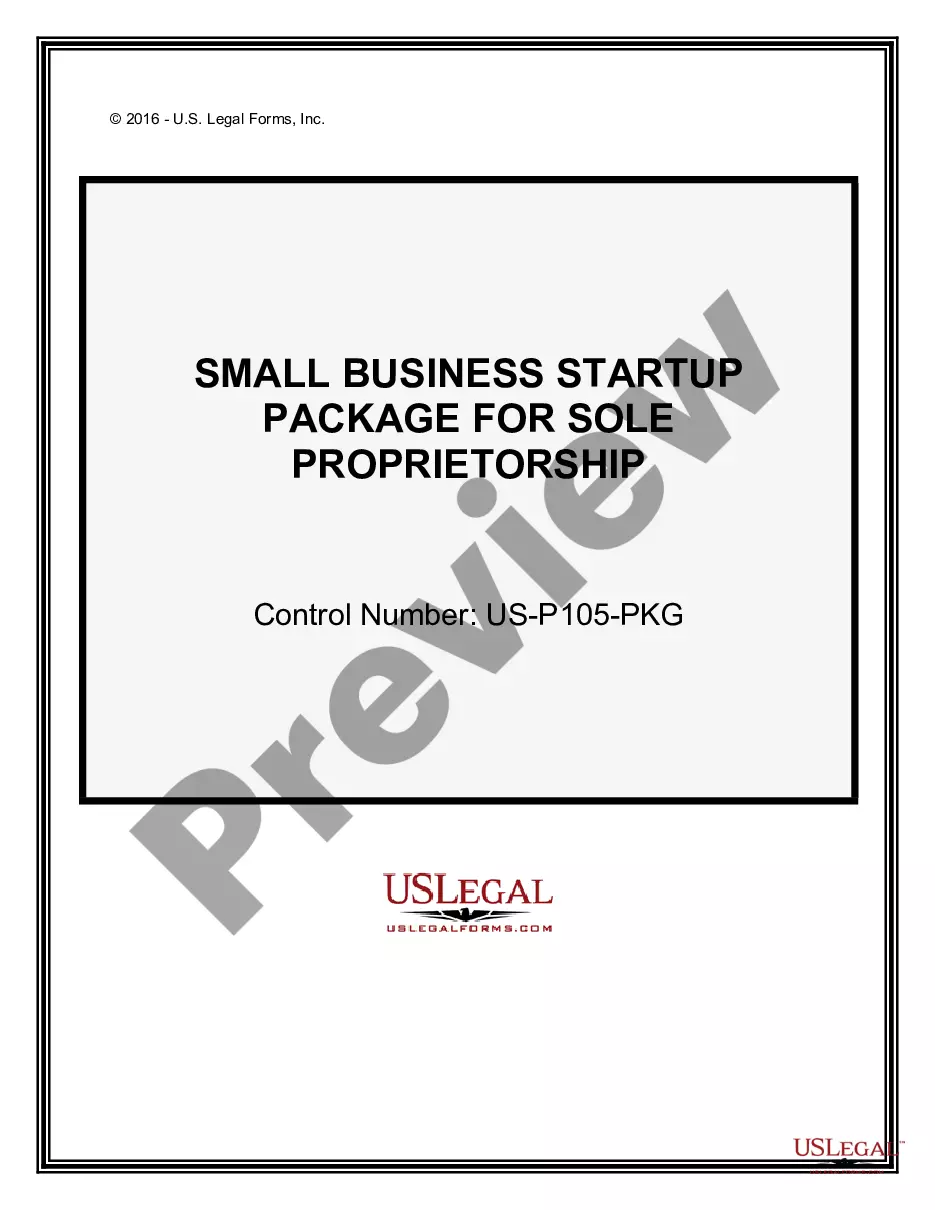
Proprietorship Document With Tax Id
Description
Get your form ready online
Our built-in tools help you complete, sign, share, and store your documents in one place.
Make edits, fill in missing information, and update formatting in US Legal Forms—just like you would in MS Word.
Download a copy, print it, send it by email, or mail it via USPS—whatever works best for your next step.
Sign and collect signatures with our SignNow integration. Send to multiple recipients, set reminders, and more. Go Premium to unlock E-Sign.
If this form requires notarization, complete it online through a secure video call—no need to meet a notary in person or wait for an appointment.
We protect your documents and personal data by following strict security and privacy standards.

Make edits, fill in missing information, and update formatting in US Legal Forms—just like you would in MS Word.

Download a copy, print it, send it by email, or mail it via USPS—whatever works best for your next step.

Sign and collect signatures with our SignNow integration. Send to multiple recipients, set reminders, and more. Go Premium to unlock E-Sign.

If this form requires notarization, complete it online through a secure video call—no need to meet a notary in person or wait for an appointment.

We protect your documents and personal data by following strict security and privacy standards.
Looking for another form?









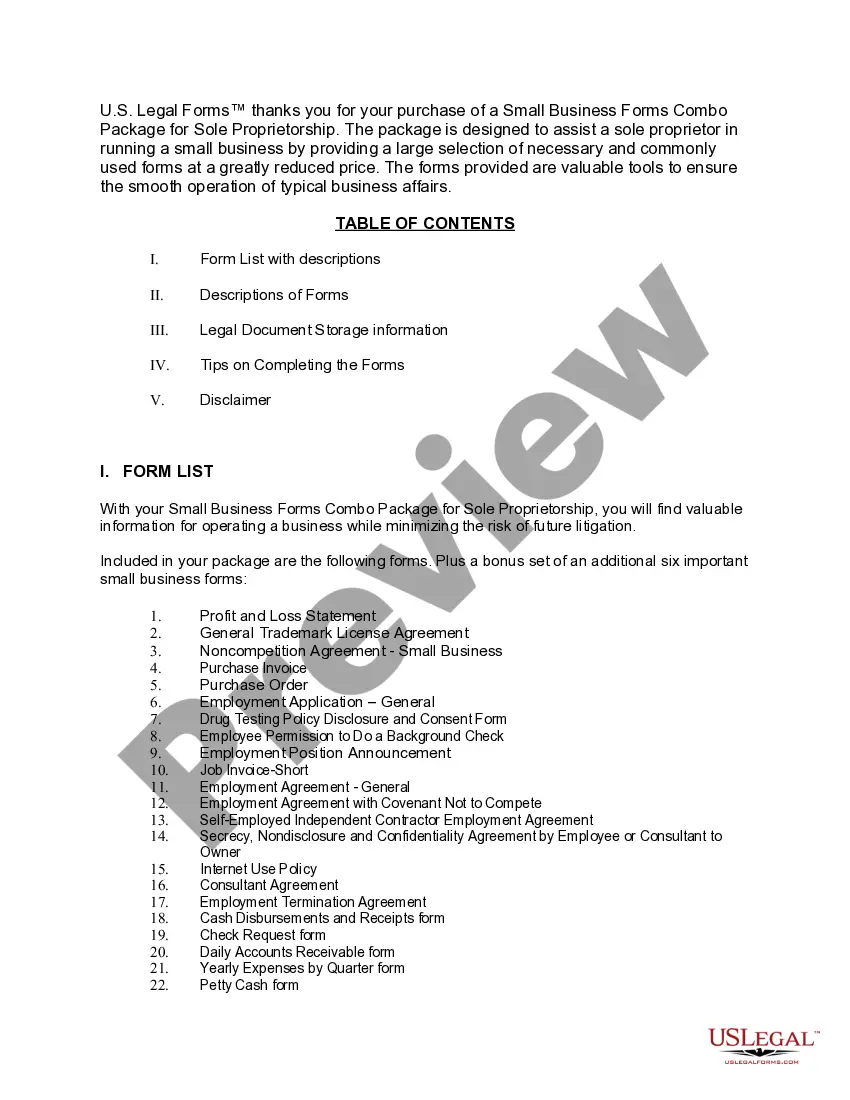
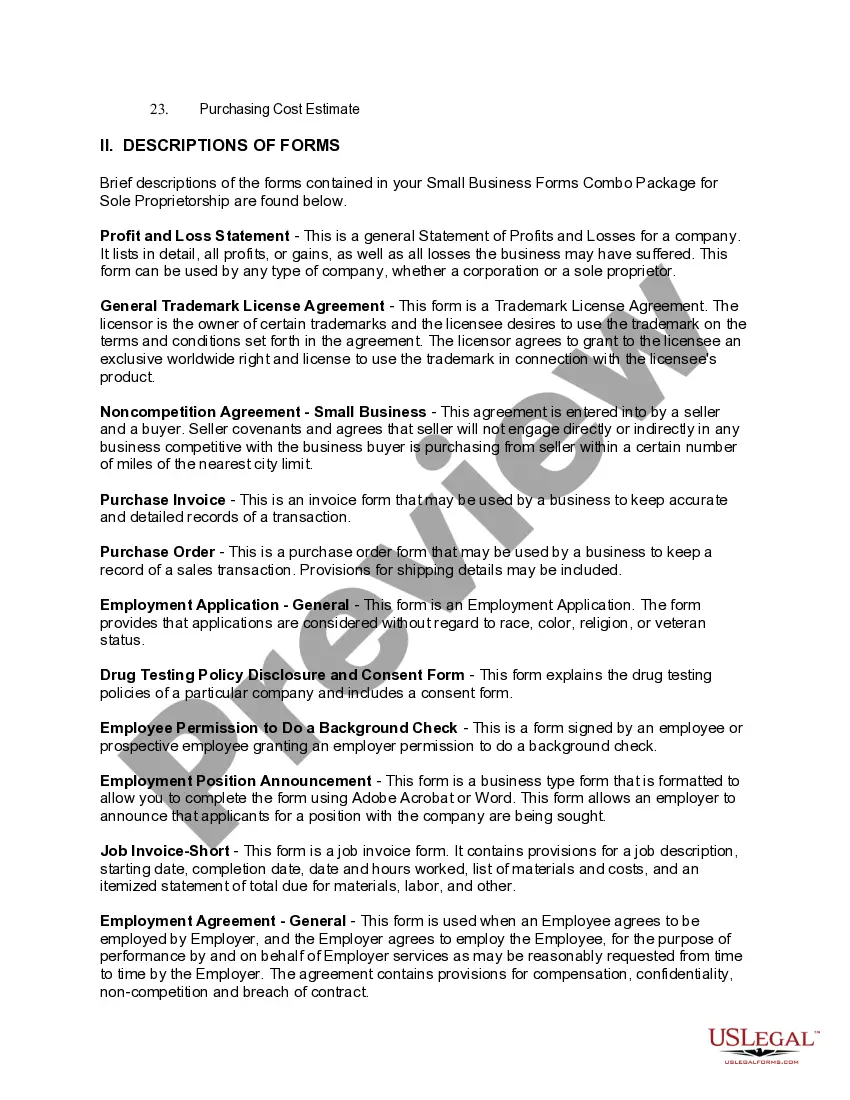
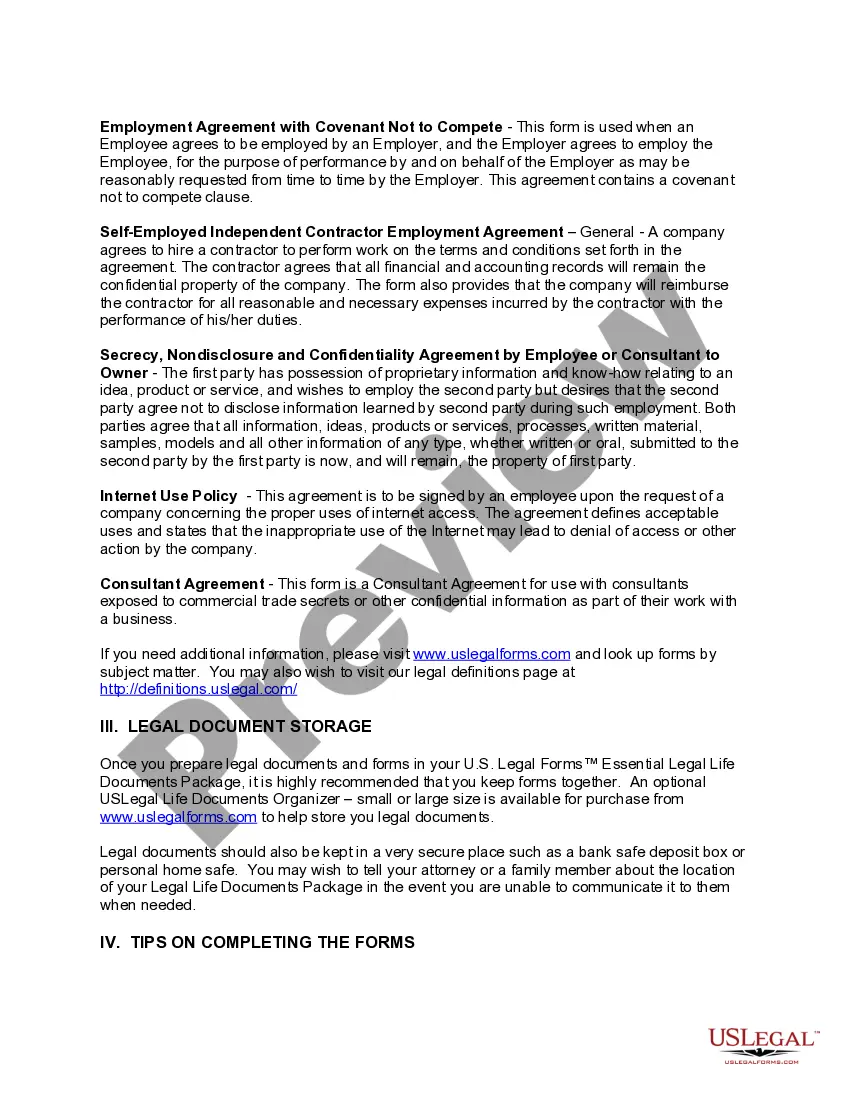
How to fill out Small Business Startup Package For Sole Proprietorship?
Whether for corporate interests or personal matters, everyone must deal with legal situations at some stage in their lives.
Filling out legal paperwork requires meticulous care, beginning with selecting the correct form template.
With an extensive catalog from US Legal Forms available, you won't have to waste time looking for the right template online. Utilize the library’s user-friendly navigation to find the correct form for any circumstance.
- Locate the form you require by using the search bar or the catalog navigation.
- Review the description of the form to confirm it is suitable for your circumstances, jurisdiction, and locality.
- Click on the form’s preview to review it.
- If it is not the correct document, return to the search option to find the Proprietorship Document With Tax Id template you need.
- Download the file if it aligns with your specifications.
- If you possess a profile with US Legal Forms, simply click Log in to retrieve previously stored documents in My documents.
- In case you do not have an account yet, you can obtain the form by clicking Buy now.
- Choose the appropriate pricing option.
- Fill out the profile registration form.
- Select your mode of payment: you can utilize a credit card or PayPal account.
- Choose the desired file format and download the Proprietorship Document With Tax Id.
- Once saved, you can fill out the form using editing software or print it and complete it by hand.
Form popularity
FAQ
Yes, an EIN is essentially a type of tax ID number. An EIN serves as a unique identifier for your business entity in tax-related matters, just like other forms of tax identification. Using an EIN can provide advantages, particularly for sole proprietors looking to streamline their tax processes. If you need help obtaining an EIN or understanding its use in your proprietorship document with tax ID, USLegalForms can provide you with the necessary resources.
A sole proprietor should consider using an EIN rather than an SSN. Using an EIN helps protect personal information, especially when dealing with clients or financial institutions. Furthermore, an EIN is often required for specific business banking accounts and tax returns. When you obtain a proprietorship document with tax ID, opting for an EIN can enhance your business's legitimacy and privacy.
What is an EIN? An Employer Identification Number (EIN) is a nine-digit number that IRS assigns in the following format: XX-X.
An Employer Identification Number (EIN) is also known as a federal tax identification number, and is used to identify a business entity. It is also used by estates and trusts which have income which is required to be reported on Form 1041, U.S. Income Tax Return for Estates and Trusts.
When filling out forms for your business, use its EIN wherever an individual would normally use an ITIN or SSN. For example, when applying for a business bank account or loan, you can apply with the business' EIN instead of the business owner's SSN or ITIN.
A sole proprietor without employees and who doesn't file any excise or pension plan tax returns doesn't need an EIN (but can get one). In this instance, the sole proprietor uses his or her social security number (instead of an EIN) as the taxpayer identification number.
When filling out forms for your business, use its EIN wherever an individual would normally use an ITIN or SSN. For example, when applying for a business bank account or loan, you can apply with the business' EIN instead of the business owner's SSN or ITIN.