Legal Student
Description

Get your form ready online
Our built-in tools help you complete, sign, share, and store your documents in one place.
Make edits, fill in missing information, and update formatting in US Legal Forms—just like you would in MS Word.
Download a copy, print it, send it by email, or mail it via USPS—whatever works best for your next step.
Sign and collect signatures with our SignNow integration. Send to multiple recipients, set reminders, and more. Go Premium to unlock E-Sign.
If this form requires notarization, complete it online through a secure video call—no need to meet a notary in person or wait for an appointment.
We protect your documents and personal data by following strict security and privacy standards.

Make edits, fill in missing information, and update formatting in US Legal Forms—just like you would in MS Word.

Download a copy, print it, send it by email, or mail it via USPS—whatever works best for your next step.

Sign and collect signatures with our SignNow integration. Send to multiple recipients, set reminders, and more. Go Premium to unlock E-Sign.

If this form requires notarization, complete it online through a secure video call—no need to meet a notary in person or wait for an appointment.

We protect your documents and personal data by following strict security and privacy standards.
Looking for another form?







How to fill out Sports & Athletics Legal Documents Package For Trainers Or Training, Agents, Schools & More?
- Log in to your account if you're a returning user, or create a new account to begin your journey with US Legal Forms.
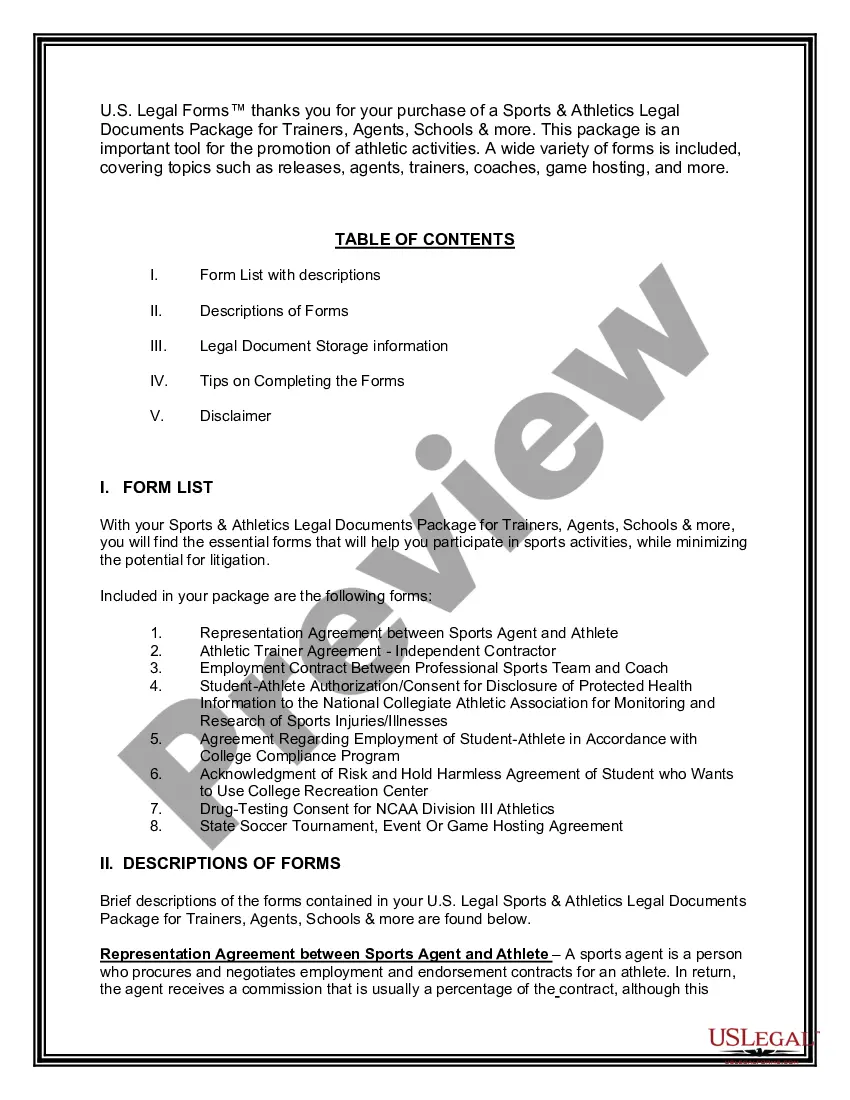
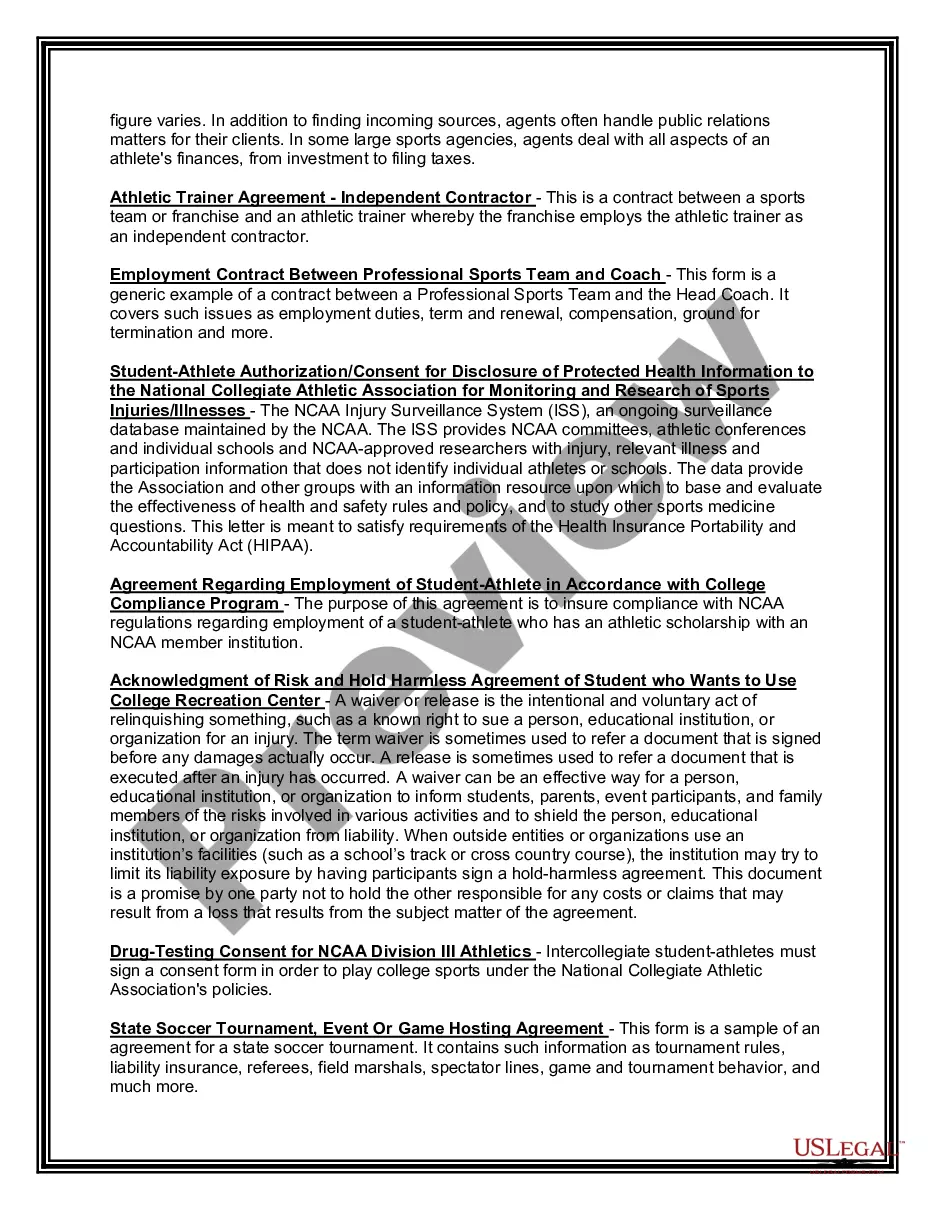
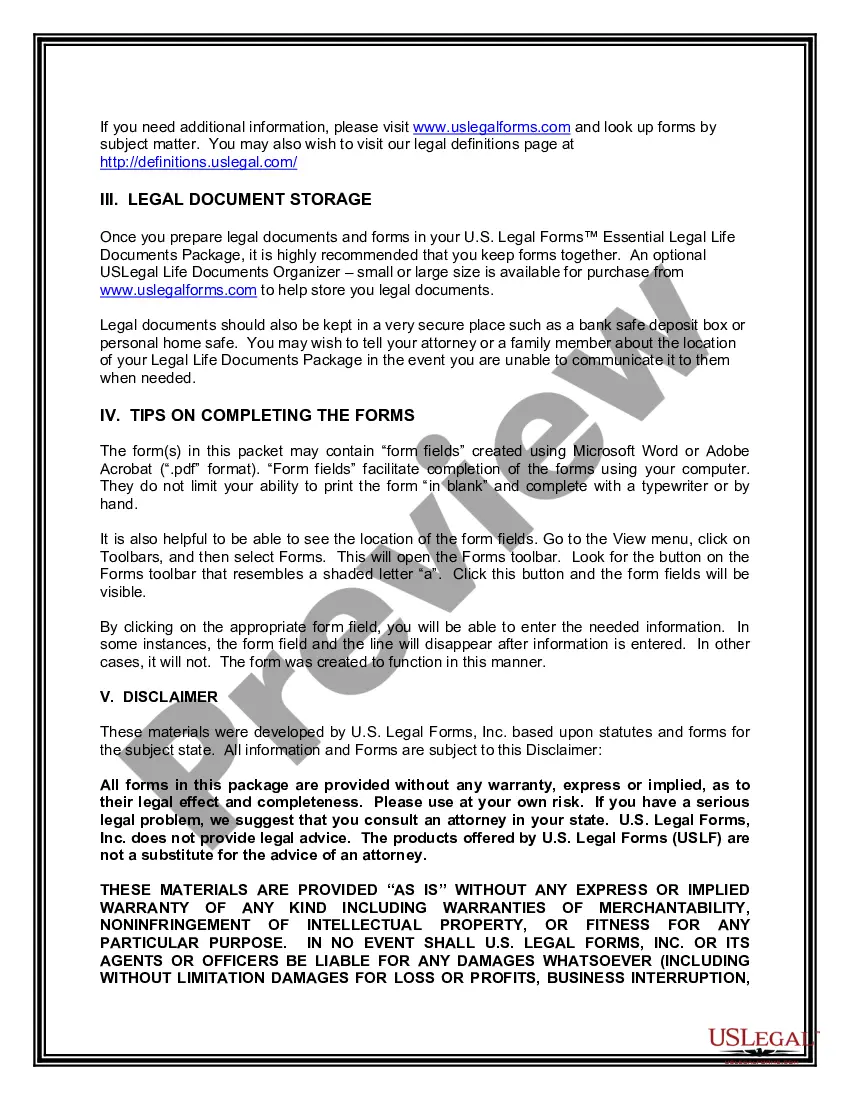
- Use the Preview mode to inspect the form options and read the descriptions to ensure you select the template that fits your requirements and jurisdiction.
- If you need to search for a different form, utilize the search feature to identify the right document.
- Once you've found the correct form, click the Buy Now button and choose your preferred subscription plan, ensuring you register to access the complete library.
- Proceed to input your payment details using a credit card or PayPal to finalize your subscription.
- After purchasing, download the form to your device. You can always revisit the document later through the My Forms section in your profile.
Utilizing US Legal Forms ensures that you have access to robust legal documentation resources and expert assistance when needed. This user-friendly platform not only streamlines the form-filling process but also helps you maintain legal accuracy.
Start your journey today with US Legal Forms and equip yourself with the legal tools necessary for success. Don't wait—sign up now!
Form popularity
FAQ
Without a lawyer, you may be missing out on crucial legal support and expertise. This can result in a lack of understanding of your rights and options in legal disputes. For legal students, it's important to remember that while self-representation is possible, having a knowledgeable advocate can make a significant difference in outcomes. For guidance, consider platforms like uslegalforms that assist individuals with legal documents and procedures.
While each law school has different criteria, a competitive GPA is typically around 3.0 or higher. A stronger GPA improves your chances, especially when combined with a good LSAT score and compelling application materials. If you are a legal student aiming for law school, focus on maintaining a solid academic record and seek opportunities to enhance your profile.
Not necessarily; a legal advisor does not have to be a lawyer, but their effectiveness relies on their expertise. Many organizations hire knowledgeable individuals for advisory roles who understand laws and regulations. However, for complex legal situations requiring court representation, a licensed attorney is essential. As a legal student, this distinction is vital for your future career decisions.
Recruiting law students involves showcasing the benefits of joining your program or firm. Highlight opportunities for mentorship, hands-on experience, and professional development. Utilize channels like job fairs, online platforms, and networking events to reach potential legal students. Engaging with student organizations can also enhance your recruitment efforts.
Generally, you cannot provide legal advice if you are not a lawyer. The practice of giving legal advice often requires a law degree and a license to practice law. However, non-lawyers can offer information based on their knowledge, but this should not be confused with legal counsel. If you are a legal student, understanding the boundaries of legal advice will be crucial in your education.
Getting into law school as an adult often involves demonstrating your commitment and capability as a legal student. Many law schools value diverse backgrounds, so work experience can be a strong asset. You should prepare a strong personal statement, secure good letters of recommendation, and perform well on the LSAT. Additionally, consider online resources that support adult learners in this journey.
Legal advice refers to recommendations or counsel relating to legal rights and obligations. It often involves interpreting laws, statutes, and precedents to guide individuals or organizations in legal matters. If you are a legal student, grasping the nuances of legal advice will help you in your studies and future practice. Remember, providing legal advice generally requires a licensed lawyer.
Yes, a legal advisor can be someone who is not a lawyer. While lawyers provide legal representation, a legal advisor may offer guidance based on knowledge of laws and regulations. However, legal advice that involves representation in court or complex legal strategies typically requires a licensed attorney. If you are a legal student, understanding these distinctions can help you navigate your career path.
When your child turns 18, essential legal documents include a power of attorney and a healthcare proxy. These documents ensure that you can act on their behalf if necessary. Additionally, consider drafting a release form for educational records to allow access for academic purposes. This preparation supports a transition to independence for a legal student while maintaining necessary protections.
issued document is any official paperwork provided by an educational institution. This can include transcripts, diplomas, and financial aid letters. These documents often have significant implications for a legal student, especially when applying for jobs or further education. Keeping track of these crucial documents can safeguard future opportunities.