Legal Requirements For Schools
Description


Get your form ready online
Our built-in tools help you complete, sign, share, and store your documents in one place.
Make edits, fill in missing information, and update formatting in US Legal Forms—just like you would in MS Word.
Download a copy, print it, send it by email, or mail it via USPS—whatever works best for your next step.
Sign and collect signatures with our SignNow integration. Send to multiple recipients, set reminders, and more. Go Premium to unlock E-Sign.
If this form requires notarization, complete it online through a secure video call—no need to meet a notary in person or wait for an appointment.
We protect your documents and personal data by following strict security and privacy standards.

Make edits, fill in missing information, and update formatting in US Legal Forms—just like you would in MS Word.

Download a copy, print it, send it by email, or mail it via USPS—whatever works best for your next step.

Sign and collect signatures with our SignNow integration. Send to multiple recipients, set reminders, and more. Go Premium to unlock E-Sign.

If this form requires notarization, complete it online through a secure video call—no need to meet a notary in person or wait for an appointment.

We protect your documents and personal data by following strict security and privacy standards.
Looking for another form?








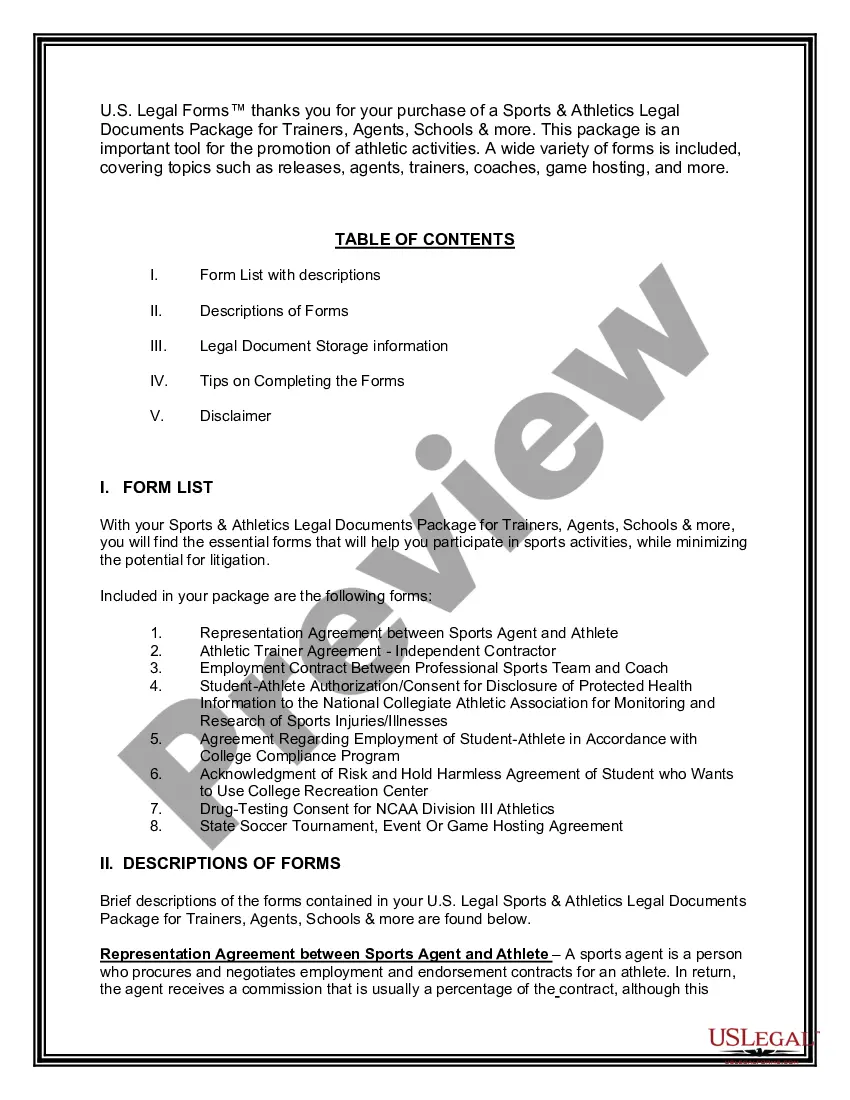
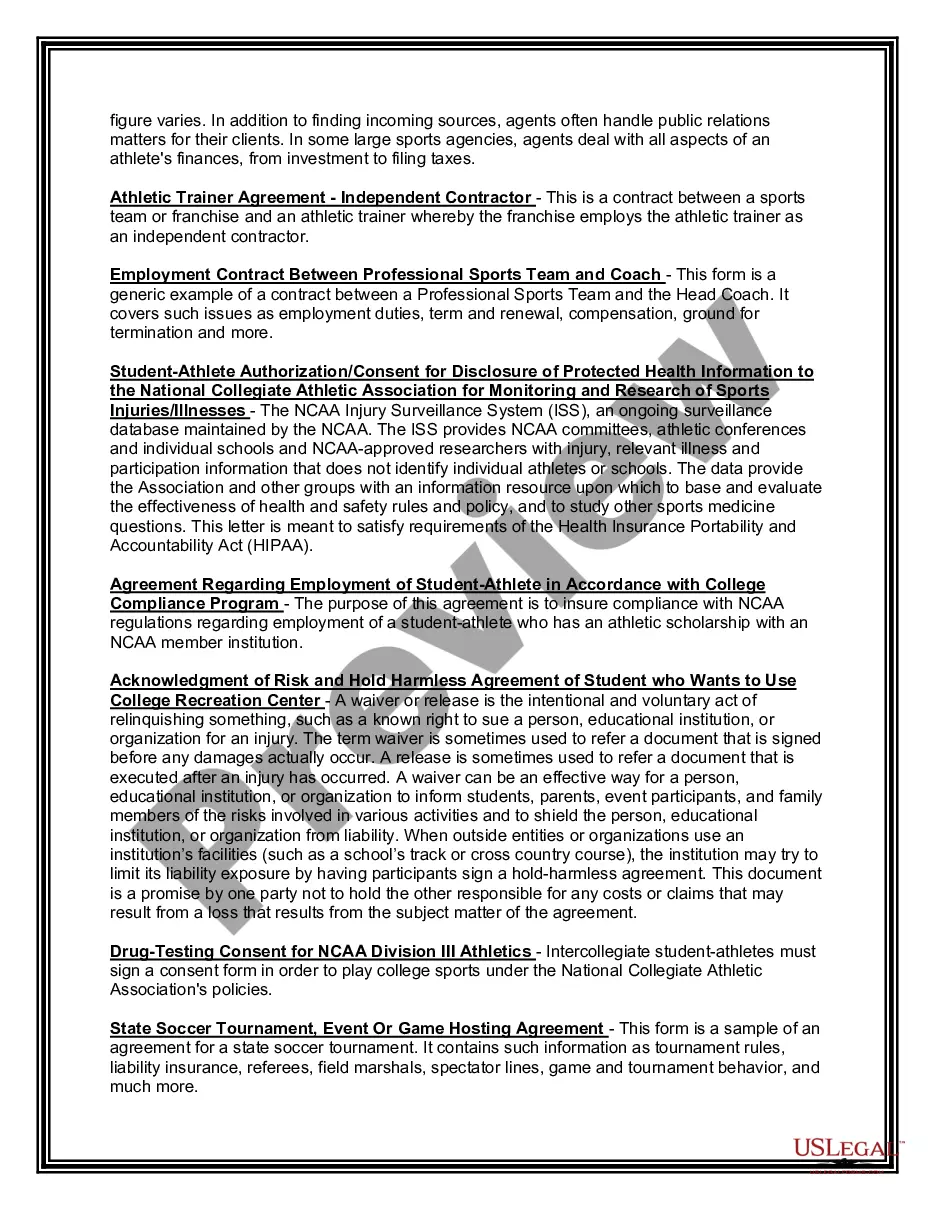
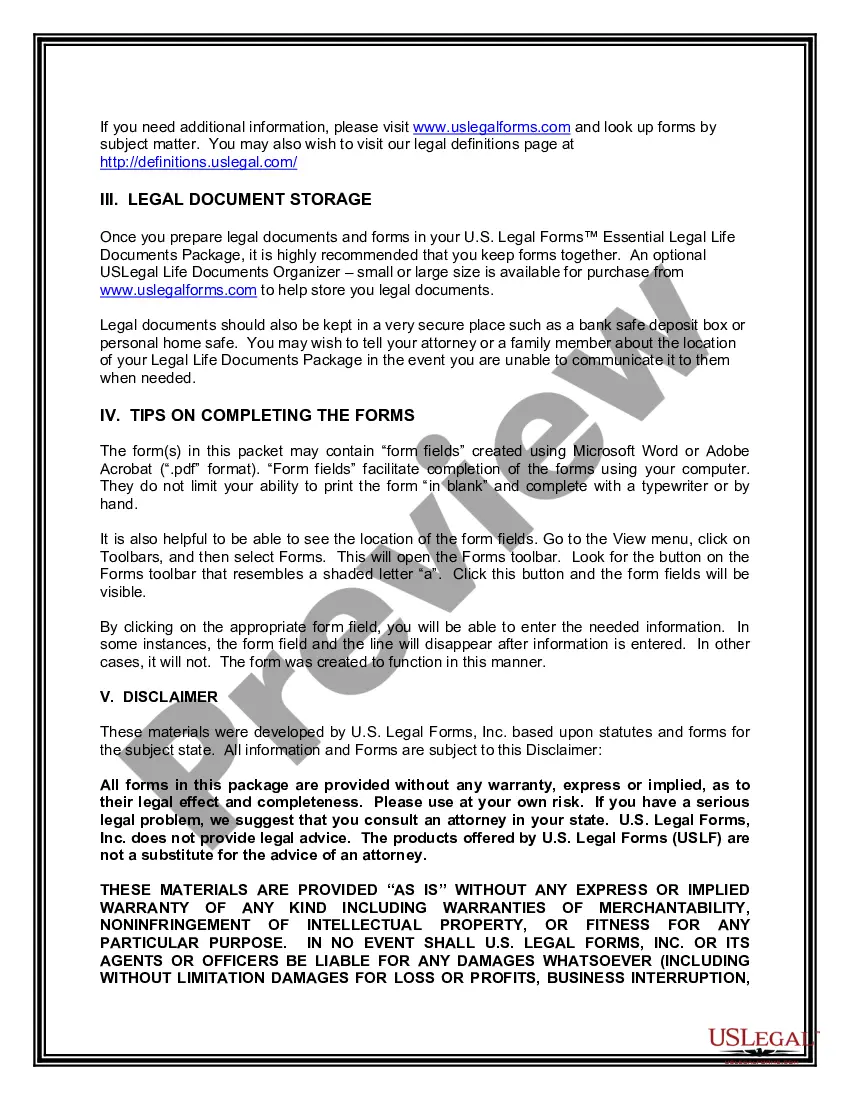
How to fill out Sports & Athletics Legal Documents Package For Trainers Or Training, Agents, Schools & More?
- Log into your US Legal Forms account if you have one, ensuring your subscription is active. If you need to renew, follow the prompts for renewal based on your payment plan.
- Preview the available forms and their descriptions to select the appropriate one that meets your specific legal needs and adheres to local jurisdiction standards.
- If necessary, utilize the Search function to find any other relevant templates that may better fit your requirements.
- Select the desired form by clicking the 'Buy Now' option, then choose a subscription plan that suits your needs, and create an account to unlock access to the full library.
- Complete your purchase by providing payment information via credit card or PayPal to finalize your subscription.
- Download the completed form template to your device for immediate use. You can also revisit and manage your documents anytime through the 'My Forms' section of your account.
By following these steps, you can efficiently obtain the legal forms you need to meet the compliance requirements for schools. US Legal Forms not only provides an extensive library but also ensures you have expert advice, making the process straightforward and reliable.
Don't leave your school's legal documentation to chance—get started with US Legal Forms today!
Form popularity
FAQ
Statute 15 507 in Arizona details the legal requirements for schools regarding student attendance and accountability. This statute mandates that each student must be accounted for daily, reinforcing the importance of attendance in the educational process. Understanding these legal requirements for schools is crucial for administrators to effectively manage student records and ensure compliance. USLegalForms offers tools that simplify tracking and reporting attendance, helping you stay compliant with state laws.
Law 815 828 in Arizona outlines specific legal requirements for schools pertaining to various aspects of education and safety. This legislation emphasizes the importance of maintaining a secure environment for students, addressing issues such as facility maintenance and student health standards. As you navigate these legal requirements for schools, it's essential to understand your obligations to ensure compliance. Our platform can provide resources to help you meet these standards efficiently.
The federal law that mandates schools to find, evaluate, and develop educational plans for students with disabilities is the Individuals with Disabilities Education Act (IDEA). This act outlines the legal requirements for schools to ensure that these students receive tailored education and necessary support. Schools must adhere to this law to create inclusive environments that prioritize the needs of all students.
California laws regarding education include state-specific regulations that align with federal guidelines, ensuring that all students receive appropriate educational opportunities and services. These laws cover areas such as special education, school funding, and student rights under the legal requirements for schools. Staying informed about these regulations is vital for educators, administrators, and families.
The law around education encompasses a variety of federal, state, and local regulations designed to protect the rights of students and ensure quality educational opportunities. Key legislation establishes the legal requirements for schools, including the Americans with Disabilities Act (ADA) and Title IX. These laws aim to create equitable and safe learning environments for all students.
School regulations comprise guidelines and policies established to govern the operations of educational institutions. These rules ensure that schools adhere to legal requirements for schools, such as safety standards, curriculum regulations, and student rights. Compliance with these regulations allows schools to function effectively and provide a quality education.
The child find mandate was first established under the Education for All Handicapped Children Act of 1975, which has evolved into the Individuals with Disabilities Education Act (IDEA). This landmark legislation set forth the legal requirements for schools to actively seek and support students with disabilities. Schools have been obligated to comply with these requirements since the inception of the act.
Federal laws for education include various statutes that ensure equity, access, and quality in education for all students. Key laws such as the Individuals with Disabilities Education Act (IDEA) and the Every Student Succeeds Act (ESSA) outline the legal requirements for schools. These laws emphasize the importance of providing a safe, supportive, and inclusive learning environment.
Federal child find requirements stipulate that schools must take appropriate actions to identify students who might need special education services. This means implementing procedures for referring, evaluating, and assessing students. Understanding and adhering to these federal standards is crucial for fulfilling the legal requirements for schools.
The federal child find law requires schools to identify, locate, and evaluate all children who may have disabilities. This obligation ensures that all eligible students receive the necessary services and support according to the legal requirements for schools. By proactively searching for these students, schools maintain compliance and promote inclusive education.