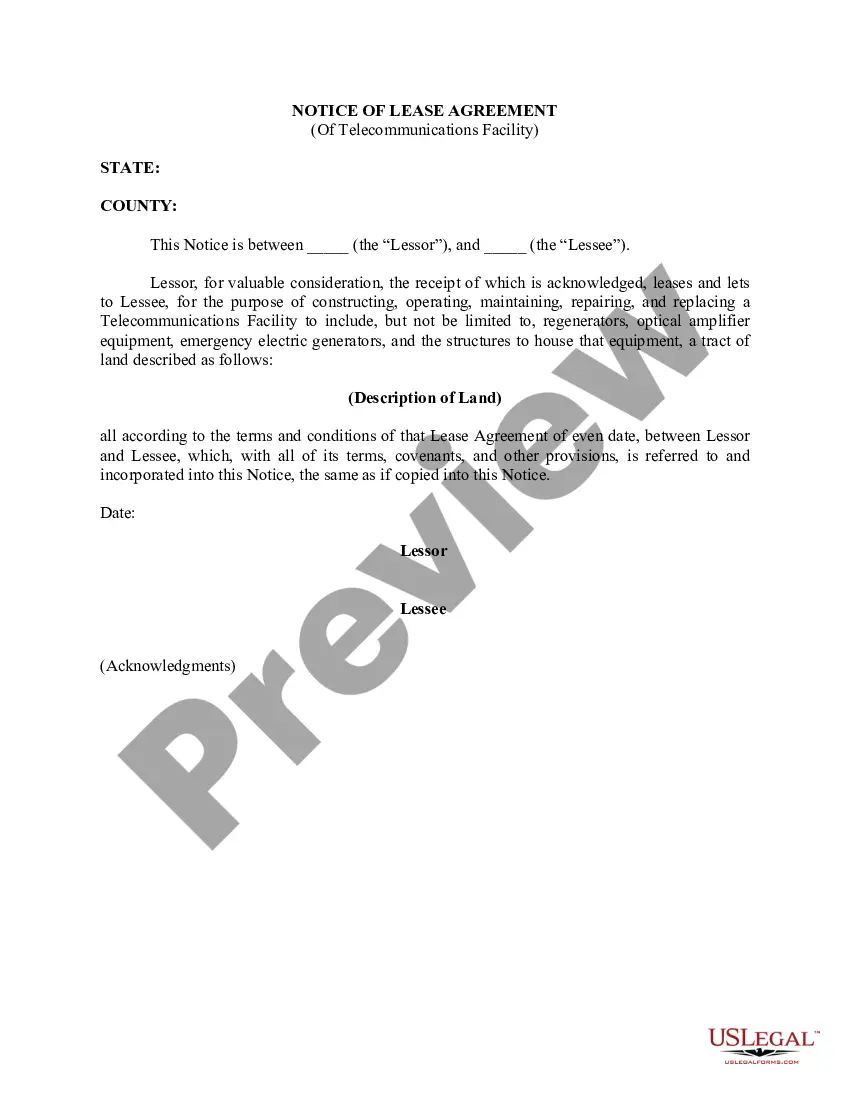
Lease Agreement Facility With Cosigner
Description
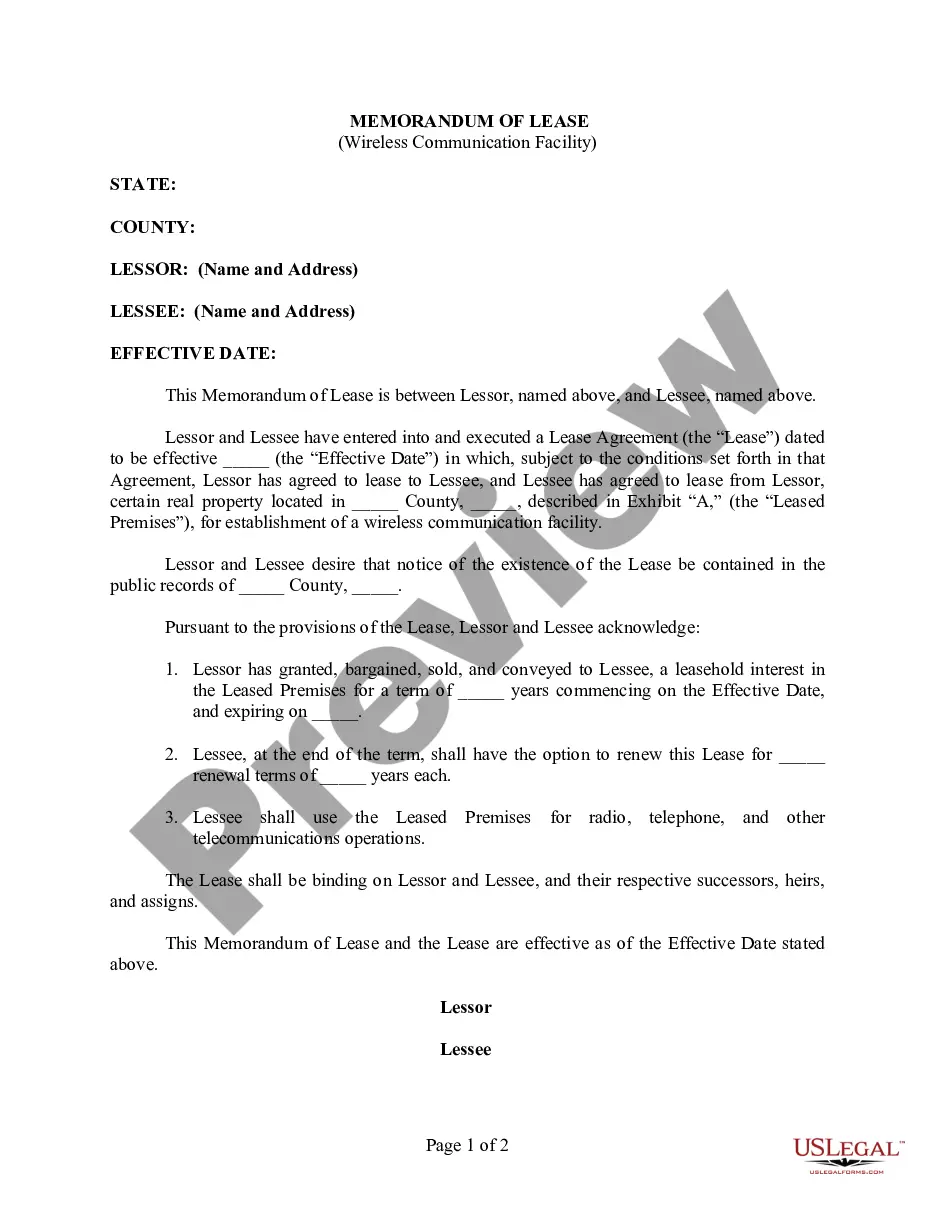
Get your form ready online
Our built-in tools help you complete, sign, share, and store your documents in one place.
Make edits, fill in missing information, and update formatting in US Legal Forms—just like you would in MS Word.
Download a copy, print it, send it by email, or mail it via USPS—whatever works best for your next step.
Sign and collect signatures with our SignNow integration. Send to multiple recipients, set reminders, and more. Go Premium to unlock E-Sign.
If this form requires notarization, complete it online through a secure video call—no need to meet a notary in person or wait for an appointment.
We protect your documents and personal data by following strict security and privacy standards.

Make edits, fill in missing information, and update formatting in US Legal Forms—just like you would in MS Word.

Download a copy, print it, send it by email, or mail it via USPS—whatever works best for your next step.

Sign and collect signatures with our SignNow integration. Send to multiple recipients, set reminders, and more. Go Premium to unlock E-Sign.

If this form requires notarization, complete it online through a secure video call—no need to meet a notary in person or wait for an appointment.

We protect your documents and personal data by following strict security and privacy standards.
Looking for another form?
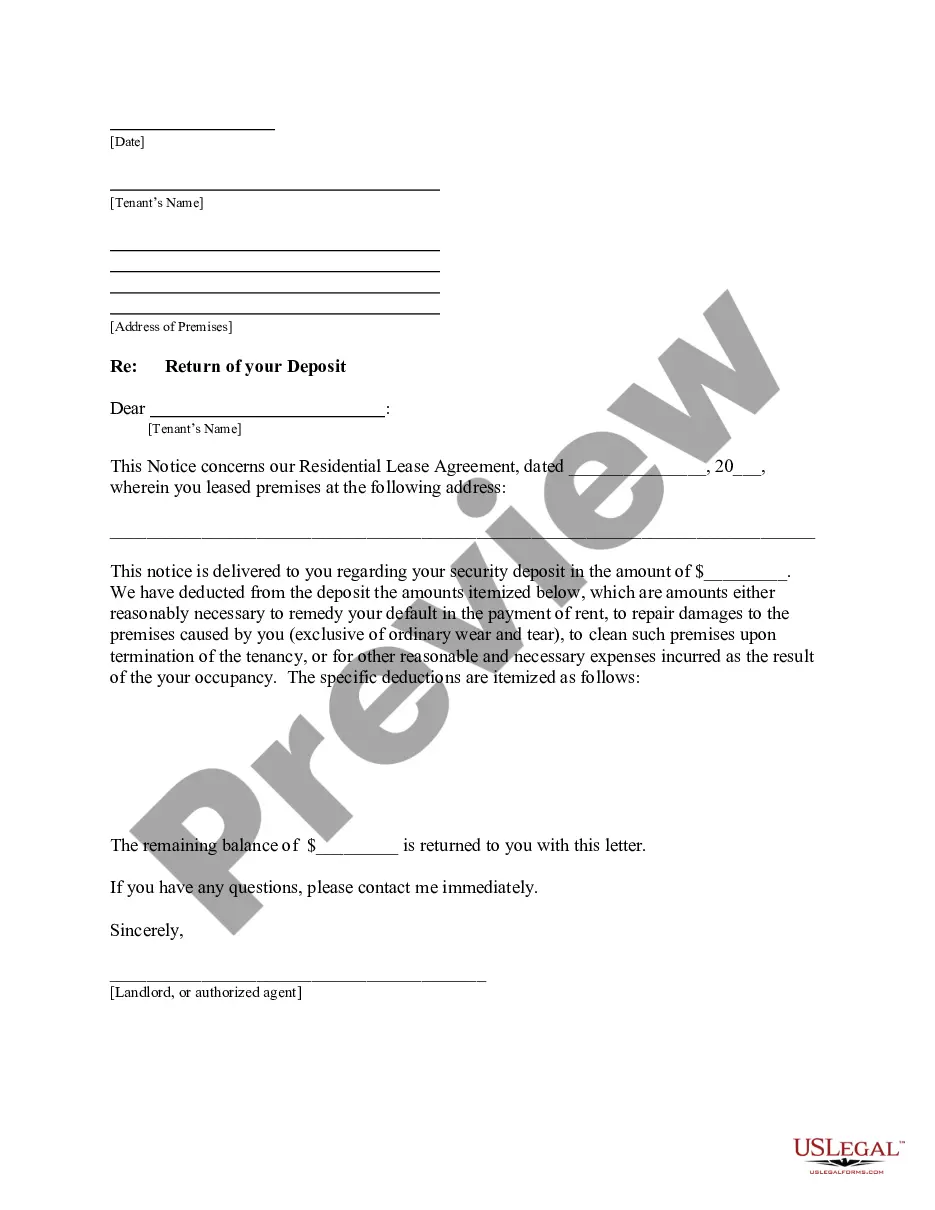
How to fill out Notice Of Lease Agreement (Of Telecommunications Facility)?
There's no longer a necessity to squander hours hunting for legal documents to comply with your local state laws.
US Legal Forms has gathered all of them in one location and optimized their availability.
Our platform presents over 85,000 templates for any business and personal legal situations organized by state and area of application.
Utilize the Search field above to find another sample if the current one did not meet your expectations.
- All forms are properly drafted and verified for accuracy, so you can be assured of acquiring a current Lease Agreement Facility With Cosigner.
- If you are acquainted with our service and already possess an account, ensure your subscription is active before accessing any templates.
- Log In to your account, choose the document, and click Download.
- You can also revisit all retrieved documents at any time needed by navigating to the My documents tab in your profile.
- If you've never interacted with our service before, the procedure will require a few additional steps.
- Here's how new users can access the Lease Agreement Facility With Cosigner in our catalog.
- Examine the page content closely to confirm it contains the sample you need.
- To accomplish this, use the form description and preview options if available.
Form popularity
FAQ
"The most common reason landlords require a guarantor is because of insufficient income," says Dennis Hughes, a broker with Corcoran. "If this is the case, prospective tenants should, if possible, offer additional security, or offer prepaid rent of several months or moreeven up to a year."
Create your state-specific lease agreement outlining the terms of the cosigner and the responsibility of each party and add both parties to the lease agreement. Get all parties to sign so the lease agreement is legally binding. Make sure they both understand when and how rent should be paid every month.
When you cosign on a lease, you're making a legal promise to uphold the terms of the lease and to pay rent if the lessee does not. As a cosigner, your credit could be affected whether or not the person you're cosigning with pays their rent.
A cosigner signs the lease agreement like the tenant does; therefore, you must screen cosigners as thoroughly as you screen your tenants. All potential cosigners should fill out a rental application, provide proof of income, and agree to submit a credit and background check if your state allows.
If a potential renter has a low income, zero rental history or bad credit, the landlord might require them to have a co-signer on the apartment lease. As a co-signer, you don't have to live in the apartment but your name will be on the lease and you'll be legally obligated to follow the terms of the lease.