Joint Tenancy With Unequal Shares
Description

Get your form ready online
Our built-in tools help you complete, sign, share, and store your documents in one place.
Make edits, fill in missing information, and update formatting in US Legal Forms—just like you would in MS Word.
Download a copy, print it, send it by email, or mail it via USPS—whatever works best for your next step.
Sign and collect signatures with our SignNow integration. Send to multiple recipients, set reminders, and more. Go Premium to unlock E-Sign.
If this form requires notarization, complete it online through a secure video call—no need to meet a notary in person or wait for an appointment.
We protect your documents and personal data by following strict security and privacy standards.

Make edits, fill in missing information, and update formatting in US Legal Forms—just like you would in MS Word.

Download a copy, print it, send it by email, or mail it via USPS—whatever works best for your next step.

Sign and collect signatures with our SignNow integration. Send to multiple recipients, set reminders, and more. Go Premium to unlock E-Sign.

If this form requires notarization, complete it online through a secure video call—no need to meet a notary in person or wait for an appointment.

We protect your documents and personal data by following strict security and privacy standards.
Looking for another form?


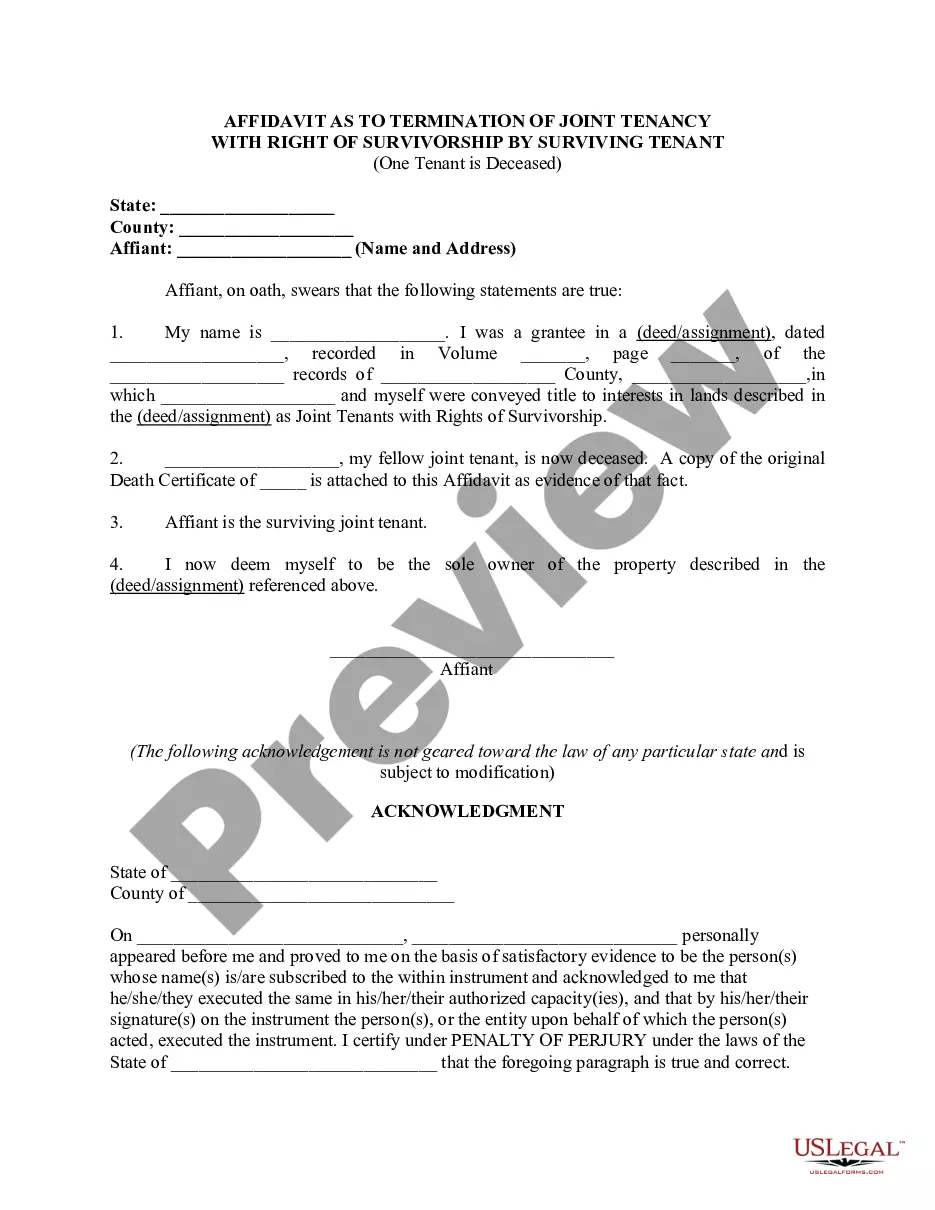
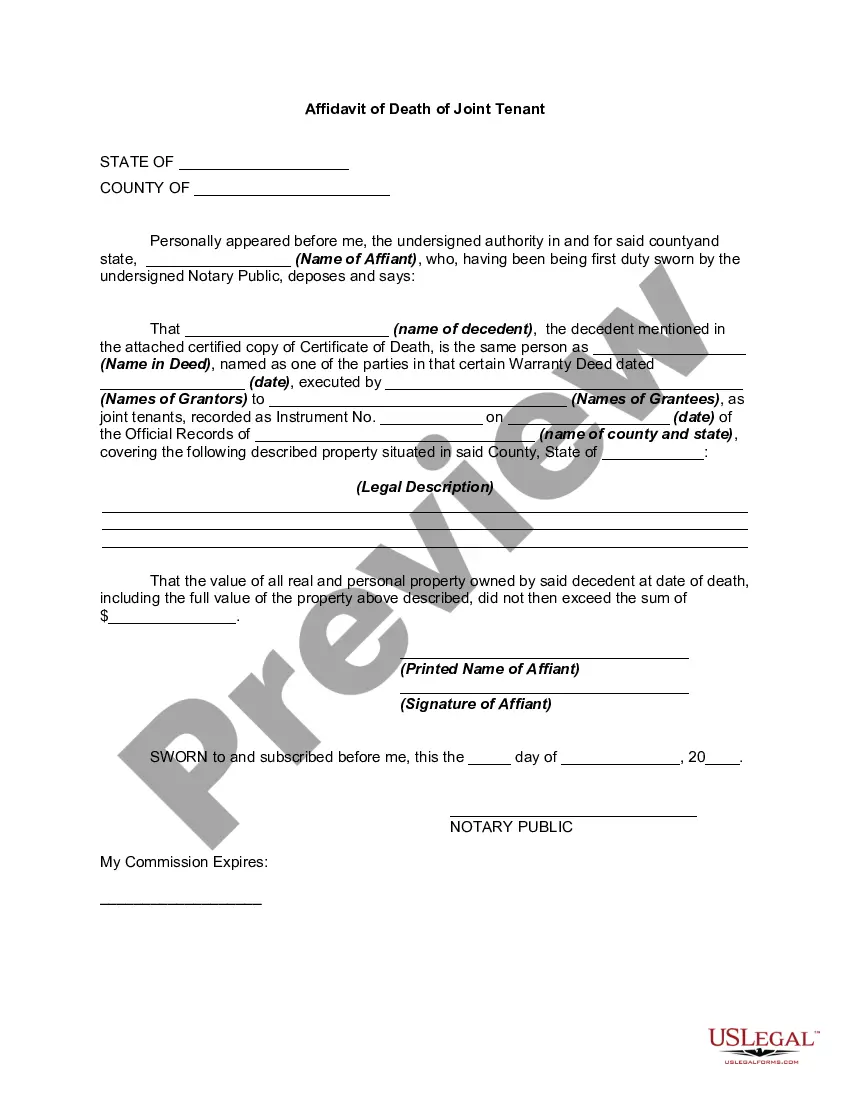
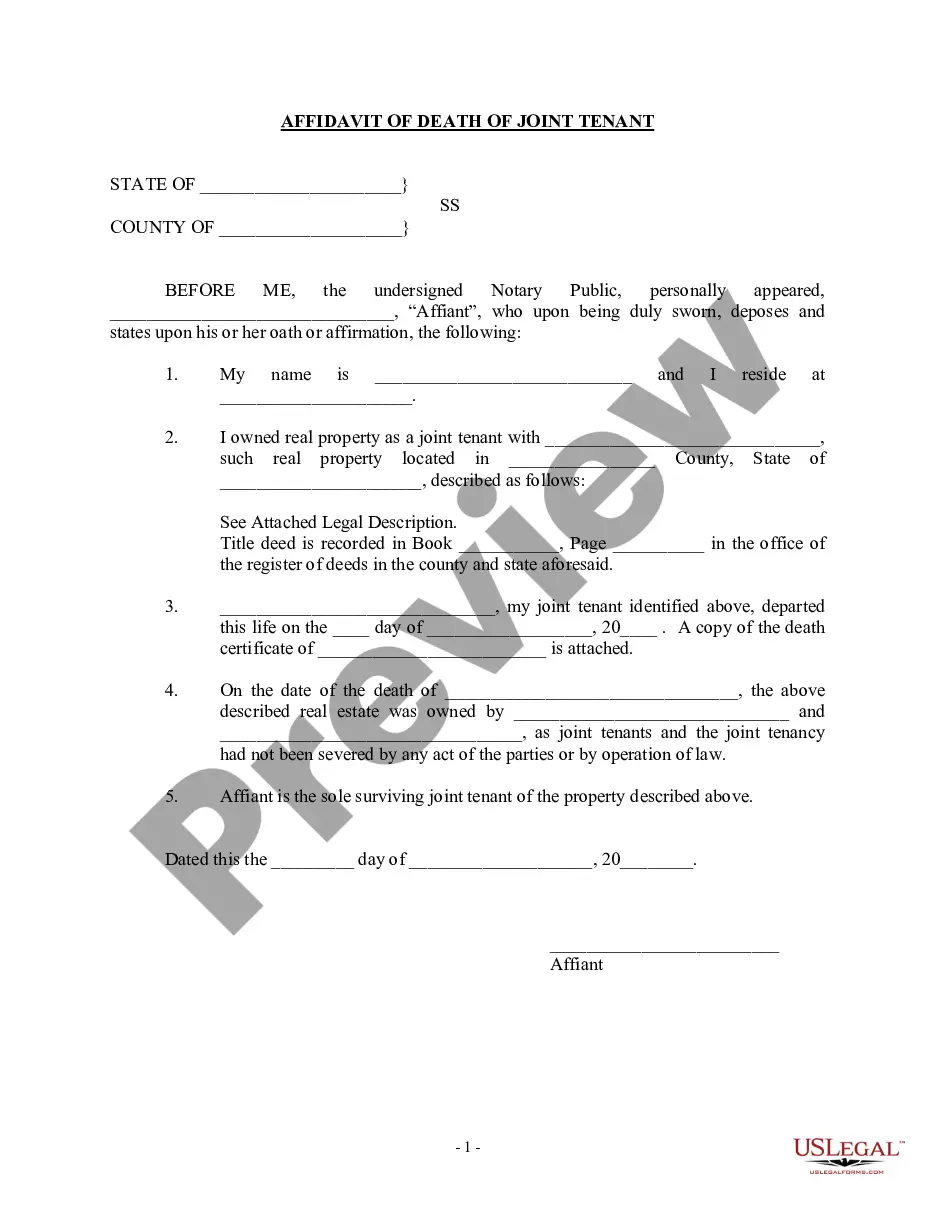
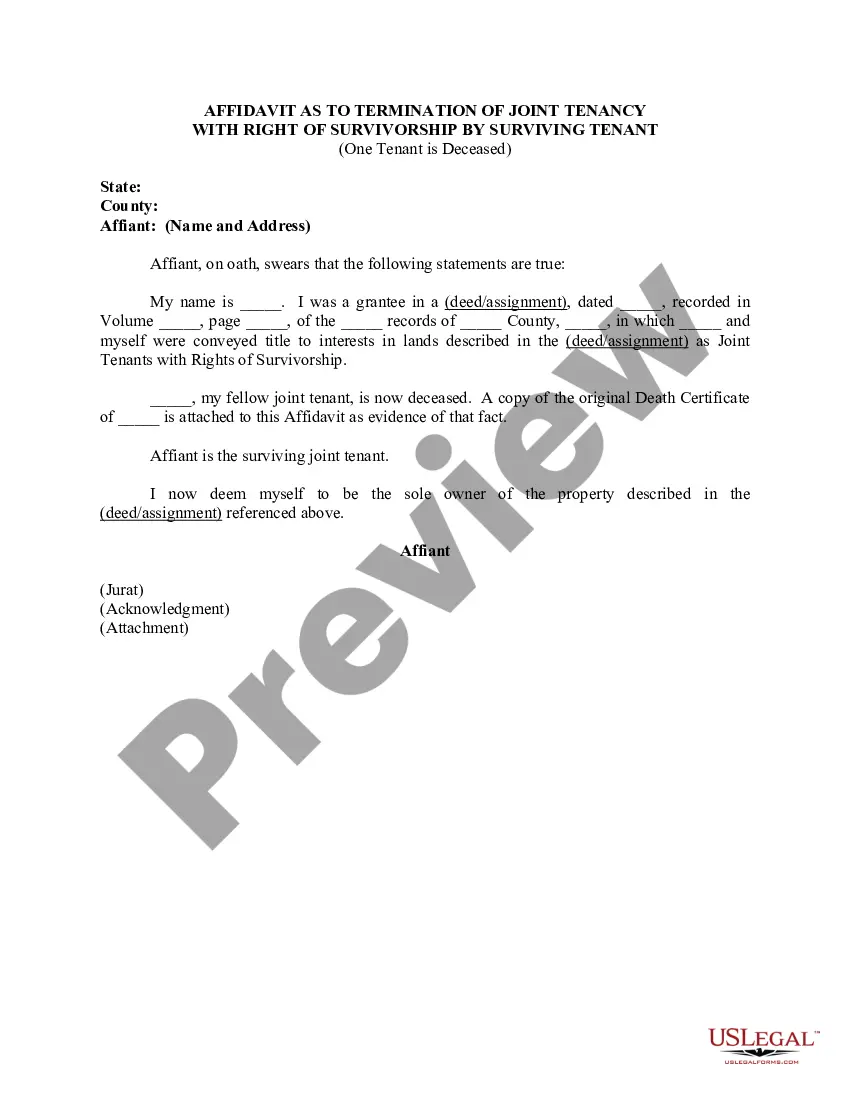
How to fill out Affidavit For Transferring Property After Death In Joint Tenancy With Right Of Survivorship By Surviving Tenant When One Tenant Is Deceased?
- Log in to your US Legal Forms account if you're an existing user, and verify the validity of your subscription.
- If this is your first time, start by browsing through the available template collections until you find one that aligns with your needs.
- Use the Preview mode to review the form's specifics and ensure compliance with your local regulations.
- In case of discrepancies or if you need a different document, utilize the Search tool to find an alternative.
- Select your preferred form and click the Buy Now button to choose your subscription plan.
- Complete the payment process by entering your credit card information or using PayPal.
- Download the completed template to your device, and access it anytime from the My Forms section of your profile.
By following these straightforward steps, you can efficiently secure the legal documentation you need.
Start your journey with US Legal Forms today and experience the convenience of accessing a vast array of legal forms with expert assistance!
Form popularity
FAQ
Yes, tenants in common are generally considered jointly and severally liable for obligations related to the property. This means each tenant can be held accountable for the entire debt, not just their share. Therefore, it's essential to understand that even in a joint tenancy with unequal shares, financial responsibilities may affect all co-owners. Using tools from platforms like uslegalforms can further clarify these responsibilities for your peace of mind.
Both joint tenancy and tenancy in common are legal ways to own property, but they differ in key aspects. Joint tenancy typically includes the right of survivorship, meaning if one owner passes away, their share is automatically transferred to the remaining owner. In contrast, tenants in common can leave their shares to heirs or other parties as per their will. Understanding these differences can help you choose the right option for your situation.
Not necessarily. While traditional joint tenancy requires equal shares among owners, tenants in common have the flexibility to hold different percentages of ownership. This means you can establish a joint tenancy with unequal shares if you choose this arrangement. It's often beneficial for individuals who want to specify their ownership portions clearly.
The terms 'tenancy in common' and 'common tenancy' are often confused, but they hold different meanings. In a tenancy in common, each owner holds a distinct share of the property, which may not be equal. This structure allows for joint tenancy with unequal shares, providing flexibility in ownership distribution. On the other hand, a common tenancy usually implies equal ownership among all parties involved.
Individuals who are legally incapacitated or minors cannot take title as joint tenants with right of survivorship. Additionally, entities like trusts or estates also cannot qualify for this type of ownership. It is essential for all parties involved in joint tenancy with unequal shares to have the legal capacity to enter into such agreements.
Tenancy in common is a type of ownership that does not include the right of survivorship. In this arrangement, each owner can have different shares in the property and can transfer their share without the consent of other owners. This is a significant distinction from joint tenancy with unequal shares, where the right of survivorship plays a crucial role.
A common example of joint tenancy with unequal shares is when two siblings inherit property from their parents. One sibling might own 60% while the other owns 40%. In this situation, the right of survivorship ensures that if one sibling passes away, their share automatically transfers to the surviving sibling.
In joint tenancy with unequal shares, certain entities like corporations or partnerships cannot take title as joint tenants. This type of ownership is reserved for individuals who can hold a shared interest. Thus, personal ownership is essential for this arrangement, ensuring that all parties have equal claim to rights and responsibilities.
Yes, shares can be held in joint tenancy, but typically all owners must hold equal shares. This type of ownership includes the right of survivorship, meaning if one co-owner dies, their share passes to the surviving owner. However, if you're looking specifically for joint tenancy with unequal shares, it's important to understand that traditional joint tenancy doesn't accommodate this structure. Exploring alternatives can lead to better outcomes for your property ownership needs.
In tenancy in common, the shares can be unequal with no right of survivorship. This means that each owner can dictate what happens to their share upon death, allowing for personalized estate planning. This flexibility can greatly suit individuals who want to ensure their share goes to specific beneficiaries. Thus, if you’re exploring joint tenancy with unequal shares, consider the advantages of tenancy in common as well.