Joint Tenancy With Right Of Survivorship Example
Description
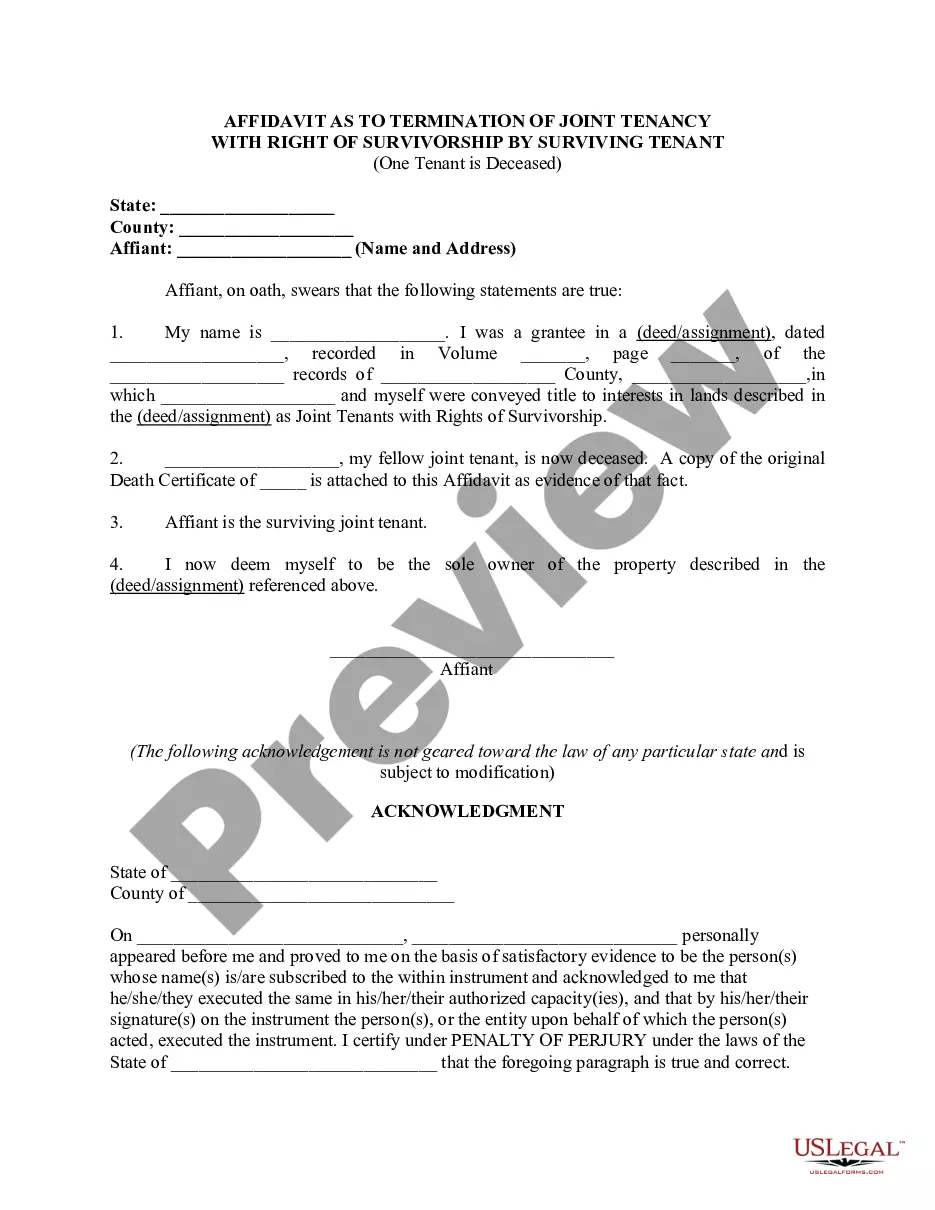

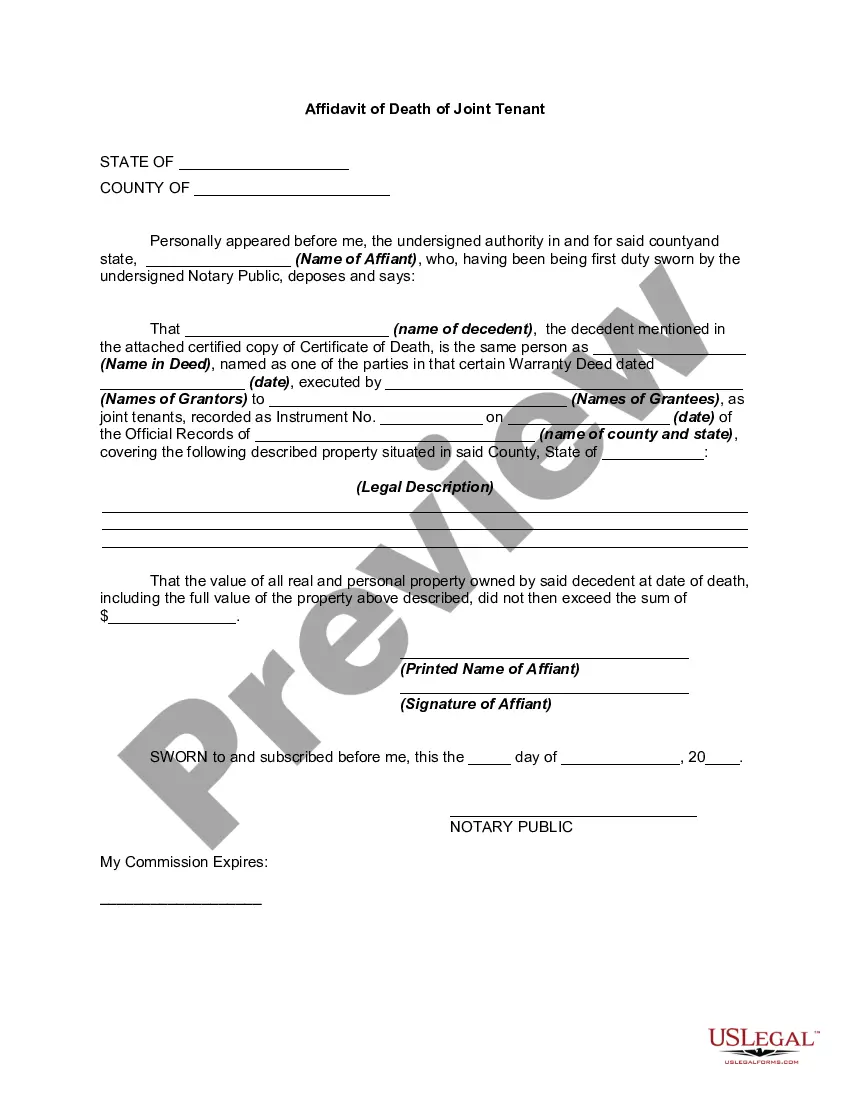
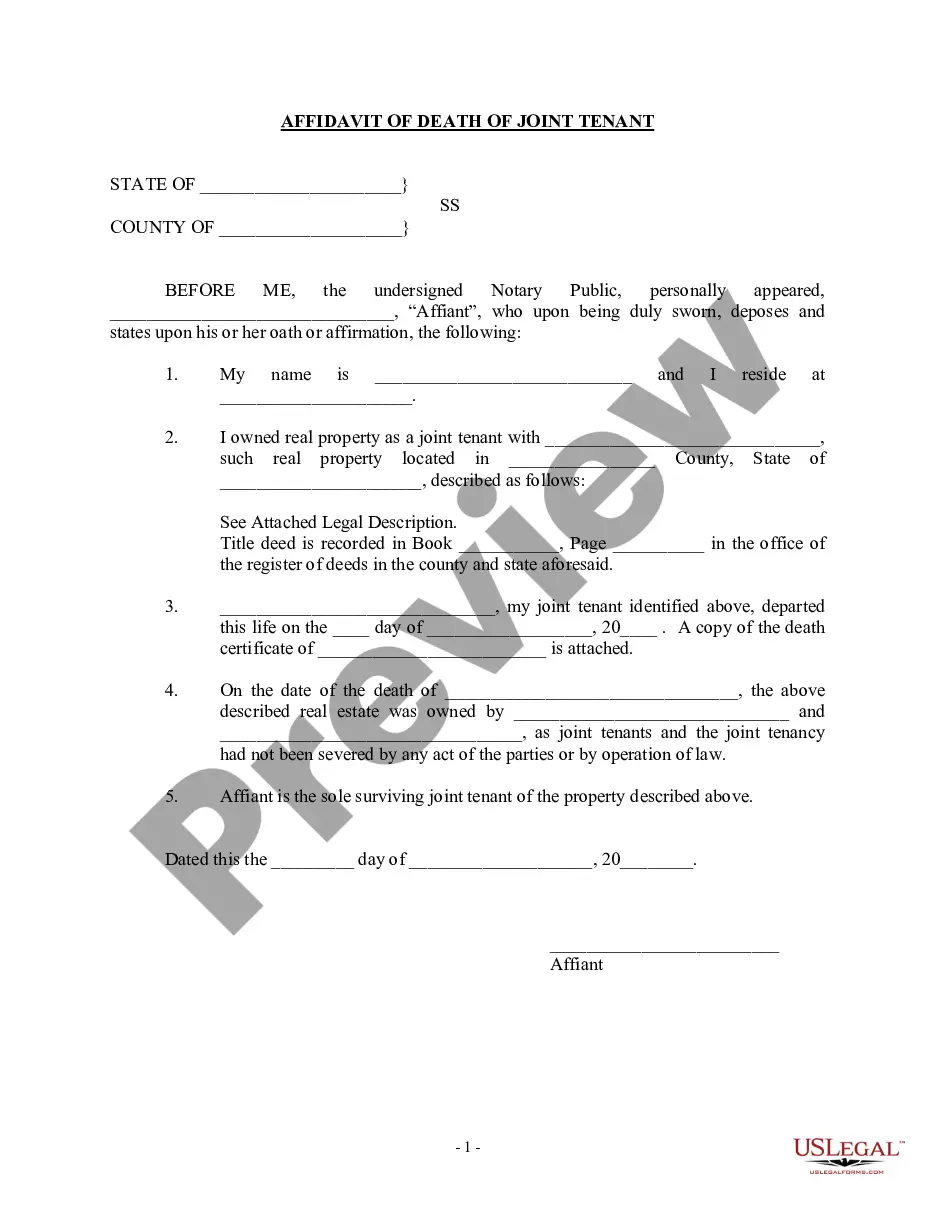
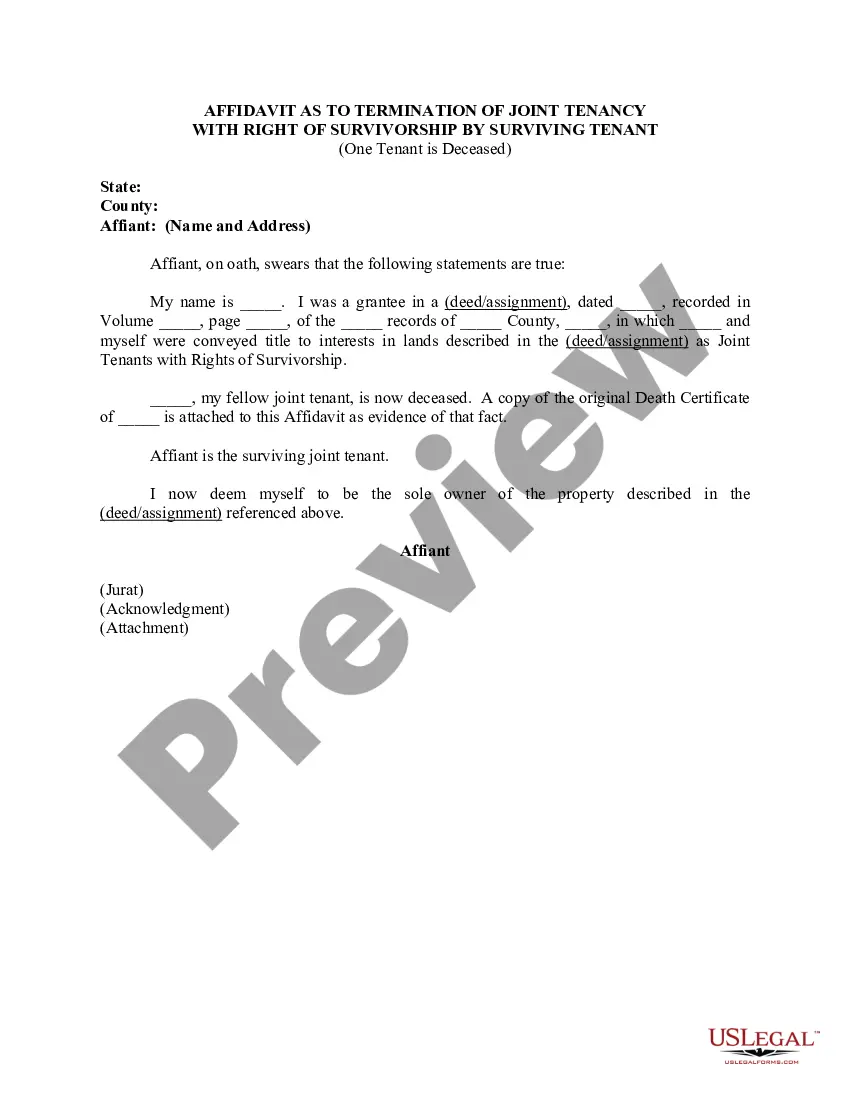
Get your form ready online
Our built-in tools help you complete, sign, share, and store your documents in one place.
Make edits, fill in missing information, and update formatting in US Legal Forms—just like you would in MS Word.
Download a copy, print it, send it by email, or mail it via USPS—whatever works best for your next step.
Sign and collect signatures with our SignNow integration. Send to multiple recipients, set reminders, and more. Go Premium to unlock E-Sign.
If this form requires notarization, complete it online through a secure video call—no need to meet a notary in person or wait for an appointment.
We protect your documents and personal data by following strict security and privacy standards.

Make edits, fill in missing information, and update formatting in US Legal Forms—just like you would in MS Word.

Download a copy, print it, send it by email, or mail it via USPS—whatever works best for your next step.

Sign and collect signatures with our SignNow integration. Send to multiple recipients, set reminders, and more. Go Premium to unlock E-Sign.

If this form requires notarization, complete it online through a secure video call—no need to meet a notary in person or wait for an appointment.

We protect your documents and personal data by following strict security and privacy standards.
Looking for another form?
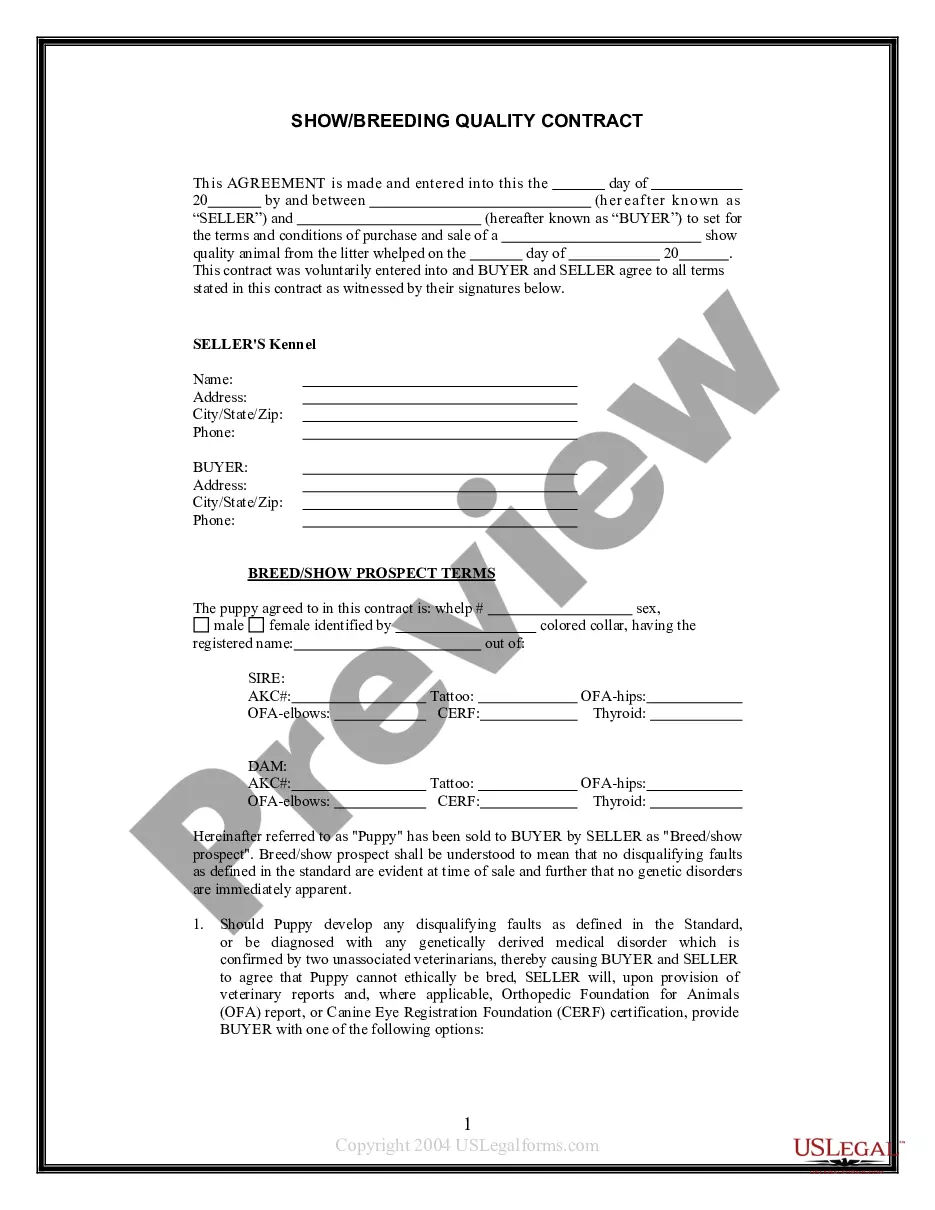


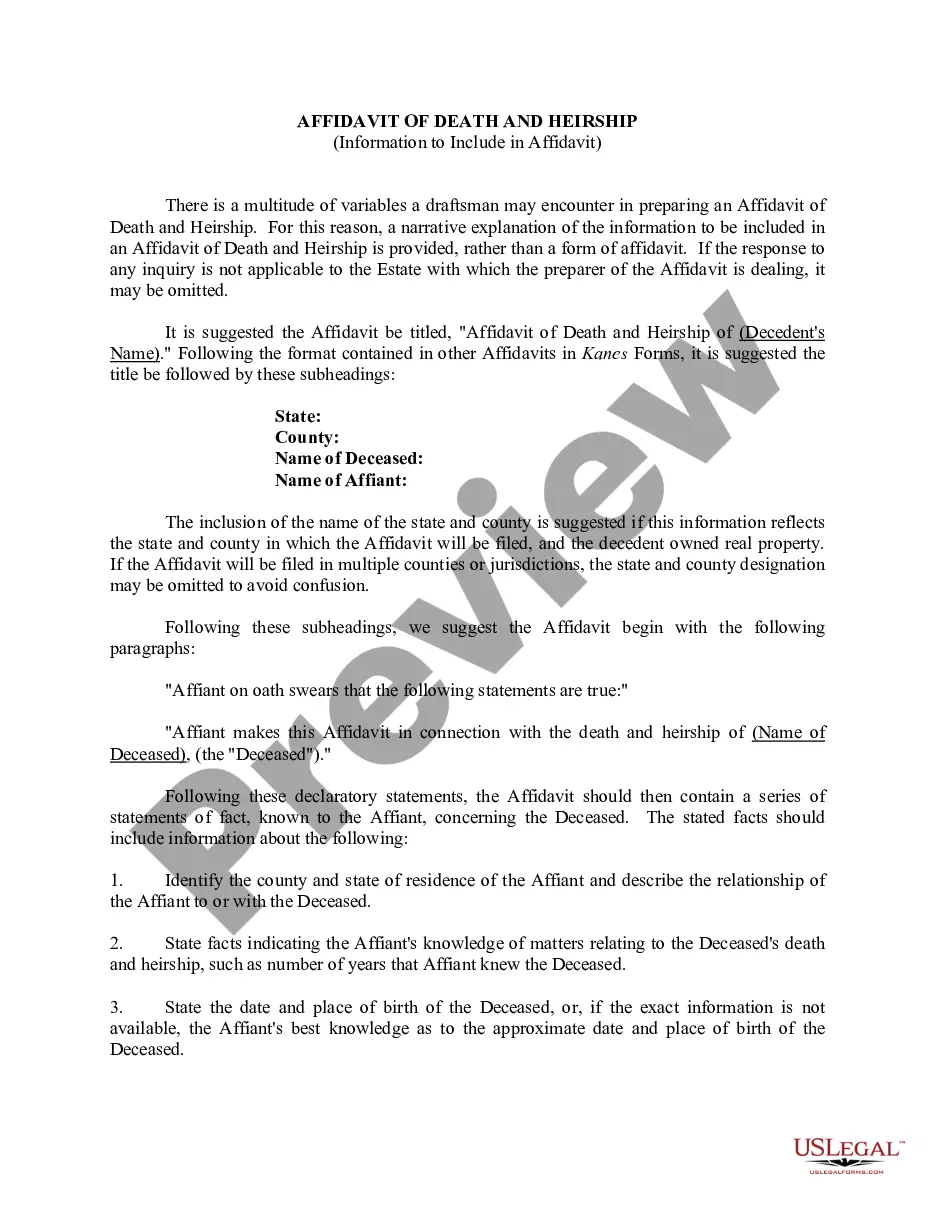
How to fill out Affidavit For Transferring Property After Death In Joint Tenancy With Right Of Survivorship By Surviving Tenant When One Tenant Is Deceased?
- Visit the US Legal Forms website and sign in to your account. If you are a new user, create an account to access the forms.
- Search for the specific joint tenancy with right of survivorship form using the search bar, ensuring it matches your jurisdiction's requirements.
- Once you locate the correct form, review the details and click on the 'Buy Now' button to select your subscription plan.
- Complete the purchase by providing your payment details. You can use a credit card or PayPal to process the payment.
- After the transaction, log in to your account and download the legal form to your device. You can find it in the 'My Forms' section for easy access in the future.
The process of obtaining legal forms doesn’t have to be complicated. With US Legal Forms, individuals and attorneys can quickly and efficiently create legally binding documents.
Start your journey towards ensuring your property is protected today by visiting US Legal Forms and browsing their extensive library of legal resources.
Form popularity
FAQ
To establish joint tenancy with right of survivorship, you must hold the property title in a way that clearly indicates this arrangement. This usually involves including specific language in the deed or title documents, such as stating 'joint tenants with right of survivorship.' It’s advisable to consult legal professionals or use platforms like US Legal Forms for accurate document templates and guidance. Taking these steps ensures that your ownership structure reflects your intentions, especially when considering a joint tenancy with right of survivorship example.
Yes, the right of survivorship typically overrides the provisions of a will. This means that if one joint tenant passes away, their share of the property automatically transfers to the surviving joint tenant, regardless of what a will states. This can lead to unintended consequences if not properly planned, as the deceased's intended beneficiaries might not receive the property. It is vital to understand this aspect when exploring a joint tenancy with right of survivorship example, to ensure your estate planning aligns with your wishes.
One notable disadvantage of joint tenancy with right of survivorship is that it can lead to conflicts between joint owners, particularly if one party wants to sell their share. Additionally, creditors can claim the property if one joint tenant faces financial issues, potentially putting all owners at risk. It's also important to note that making changes to ownership, such as converting to tenants in common, can be a complicated process. Understanding these aspects can help you make a more informed decision, especially when considering a joint tenancy with right of survivorship example.
An effective example of joint tenancy with the right of survivorship is when two friends buy a rental property together. They both hold an equal share, and if one friend dies, the other automatically inherits the entire property. This arrangement not only simplifies the transfer of ownership but also strengthens their partnership, allowing for shared investment in real estate without complex legal proceedings.
The step-up basis for joint tenants with right of survivorship refers to the adjustment of the property's tax basis to its fair market value at the time of a joint tenant's death. This means that if one owner dies, the surviving tenant receives a stepped-up basis on the deceased's share of the property. As a result, the surviving owner may save on capital gains taxes when selling the property, making it a valuable feature of joint tenancy with right of survivorship.
Certain individuals, such as minors or those deemed legally incompetent, cannot take title as joint tenants with right of survivorship. Additionally, entities like corporations or partnerships may face restrictions based on legal considerations. It’s wise to consult with a professional to navigate these legal complexities effectively.
Yes, joint tenancy with right of survivorship typically overrides a will concerning the property held in joint tenancy. If you have stated in your will that certain property should go to a specific person, joint tenancy means that the property will go to the surviving joint tenant, not necessarily as outlined in your will. Understanding this distinction is crucial for proper estate planning.
The right of survivorship in a joint account works similarly to joint tenancy in property ownership. When one account holder dies, the surviving holder assumes full control of the account without going through probate. Therefore, this arrangement simplifies financial matters during emotionally challenging times, as funds immediately pass to the remaining account holder.
When property is held jointly with right of survivorship, it means that if one owner passes away, their share automatically transfers to the surviving owner(s). This process eliminates the need for probate, making the transfer of property smoother and quicker. It’s a popular choice among couples and family members for this very reason.
Joint tenancy with right of survivorship can limit your control over the property. For instance, if one tenant wants to sell their share, the other tenants must agree, which may create complications. Additionally, this arrangement could expose your property to the debts of any joint tenant. Thus, it’s essential to weigh these factors carefully when making decisions.