Estate Property Transfer With Tax
Description

Get your form ready online
Our built-in tools help you complete, sign, share, and store your documents in one place.
Make edits, fill in missing information, and update formatting in US Legal Forms—just like you would in MS Word.
Download a copy, print it, send it by email, or mail it via USPS—whatever works best for your next step.
Sign and collect signatures with our SignNow integration. Send to multiple recipients, set reminders, and more. Go Premium to unlock E-Sign.
If this form requires notarization, complete it online through a secure video call—no need to meet a notary in person or wait for an appointment.
We protect your documents and personal data by following strict security and privacy standards.

Make edits, fill in missing information, and update formatting in US Legal Forms—just like you would in MS Word.

Download a copy, print it, send it by email, or mail it via USPS—whatever works best for your next step.

Sign and collect signatures with our SignNow integration. Send to multiple recipients, set reminders, and more. Go Premium to unlock E-Sign.

If this form requires notarization, complete it online through a secure video call—no need to meet a notary in person or wait for an appointment.

We protect your documents and personal data by following strict security and privacy standards.
Looking for another form?









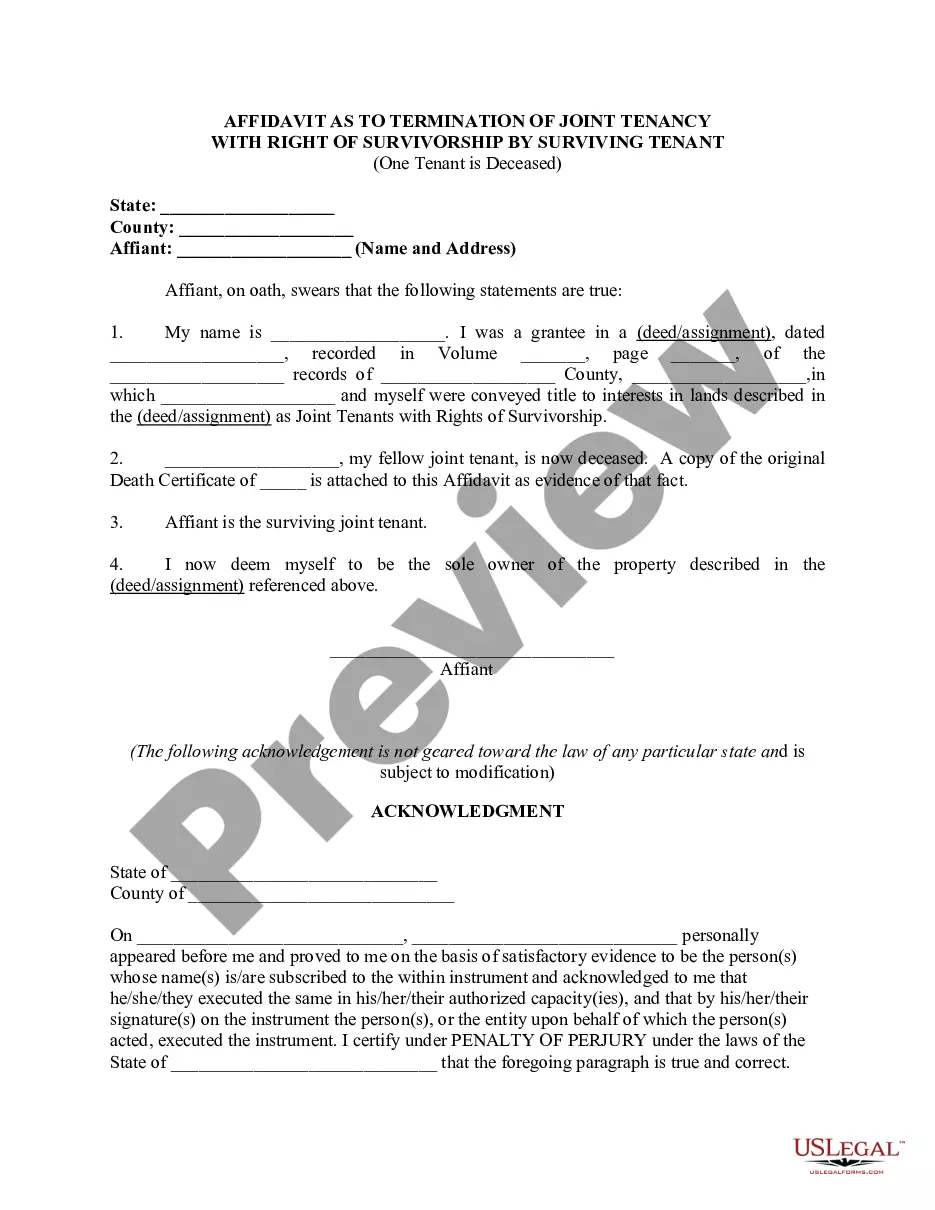
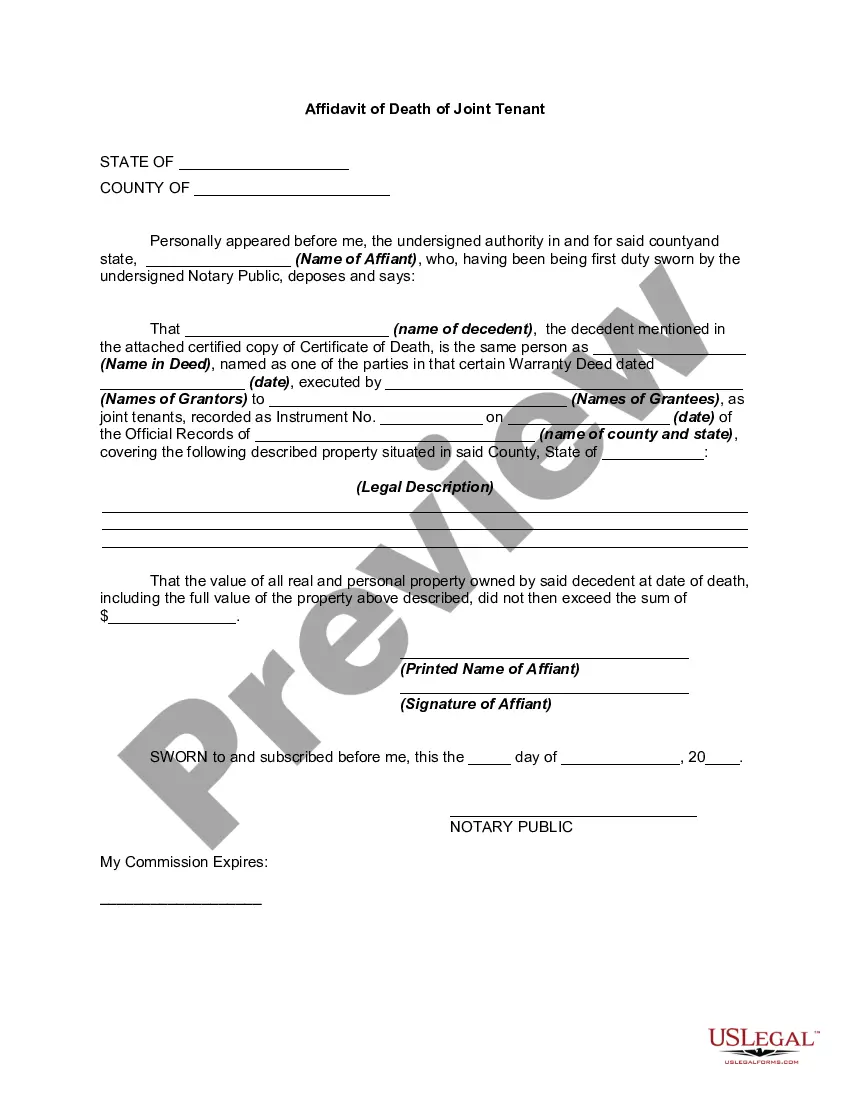
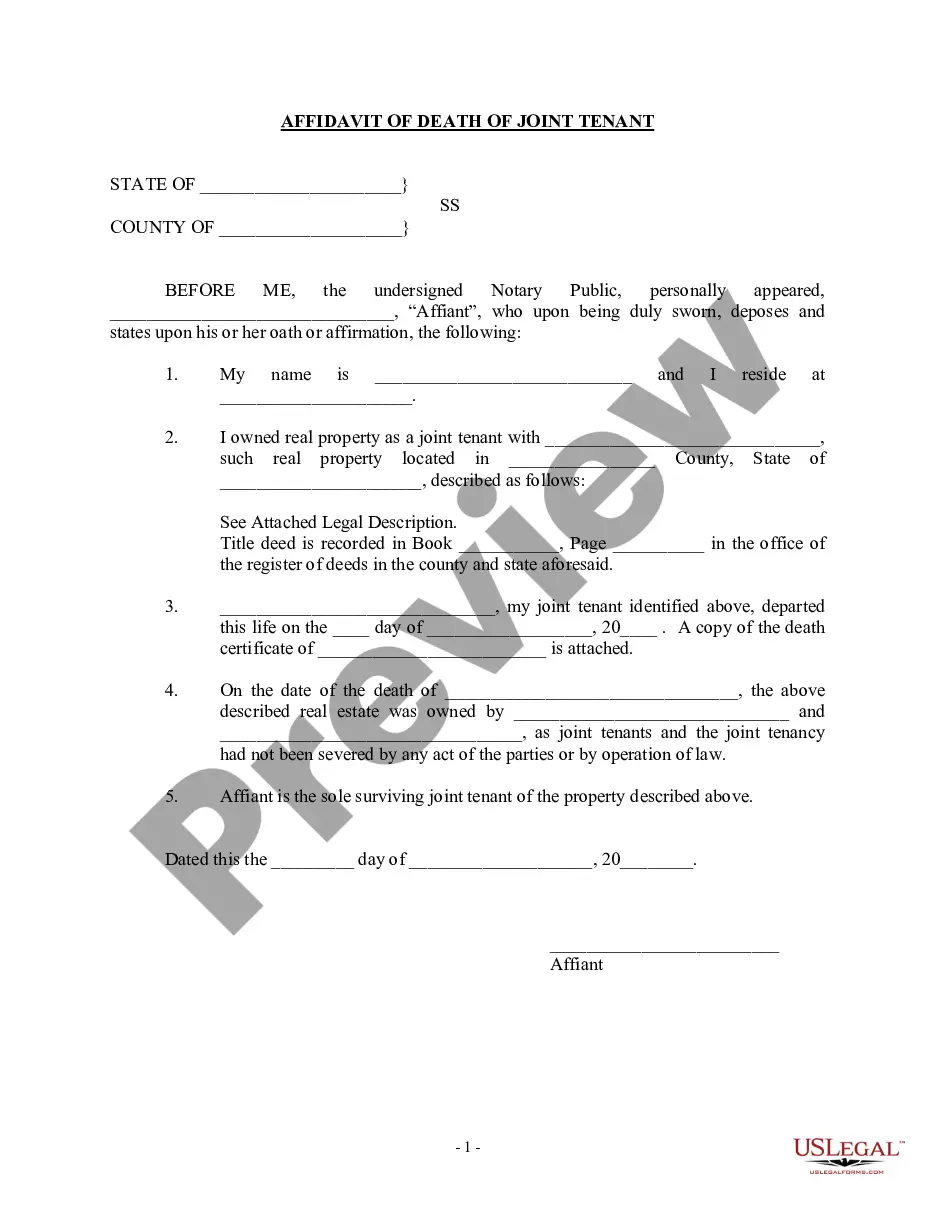
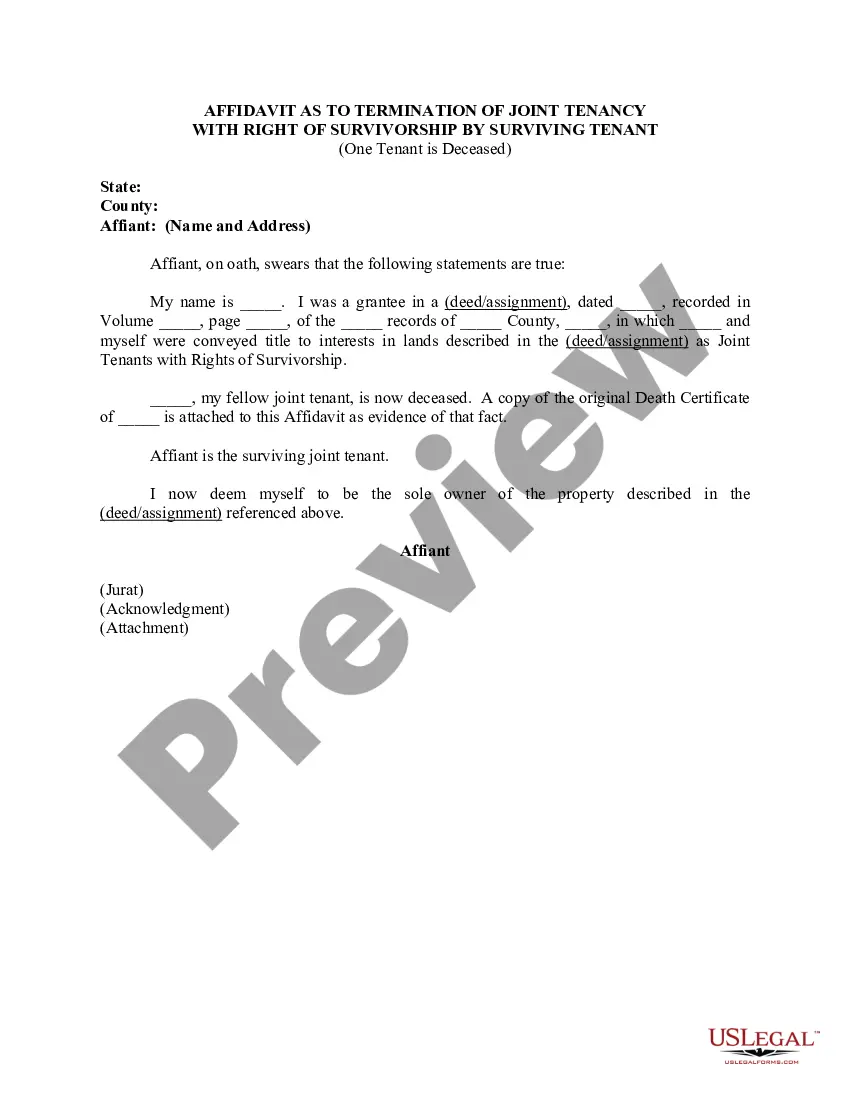
How to fill out Affidavit For Transferring Property After Death In Joint Tenancy With Right Of Survivorship By Surviving Tenant When One Tenant Is Deceased?
Legal papers managing may be frustrating, even for the most skilled experts. When you are searching for a Estate Property Transfer With Tax and don’t have the a chance to commit searching for the appropriate and up-to-date version, the operations could be stressful. A strong web form catalogue can be a gamechanger for anybody who wants to handle these situations successfully. US Legal Forms is a market leader in web legal forms, with more than 85,000 state-specific legal forms accessible to you anytime.
With US Legal Forms, you can:
- Access state- or county-specific legal and organization forms. US Legal Forms covers any requirements you could have, from individual to organization paperwork, all-in-one place.
- Utilize innovative tools to complete and control your Estate Property Transfer With Tax
- Access a useful resource base of articles, tutorials and handbooks and resources connected to your situation and needs
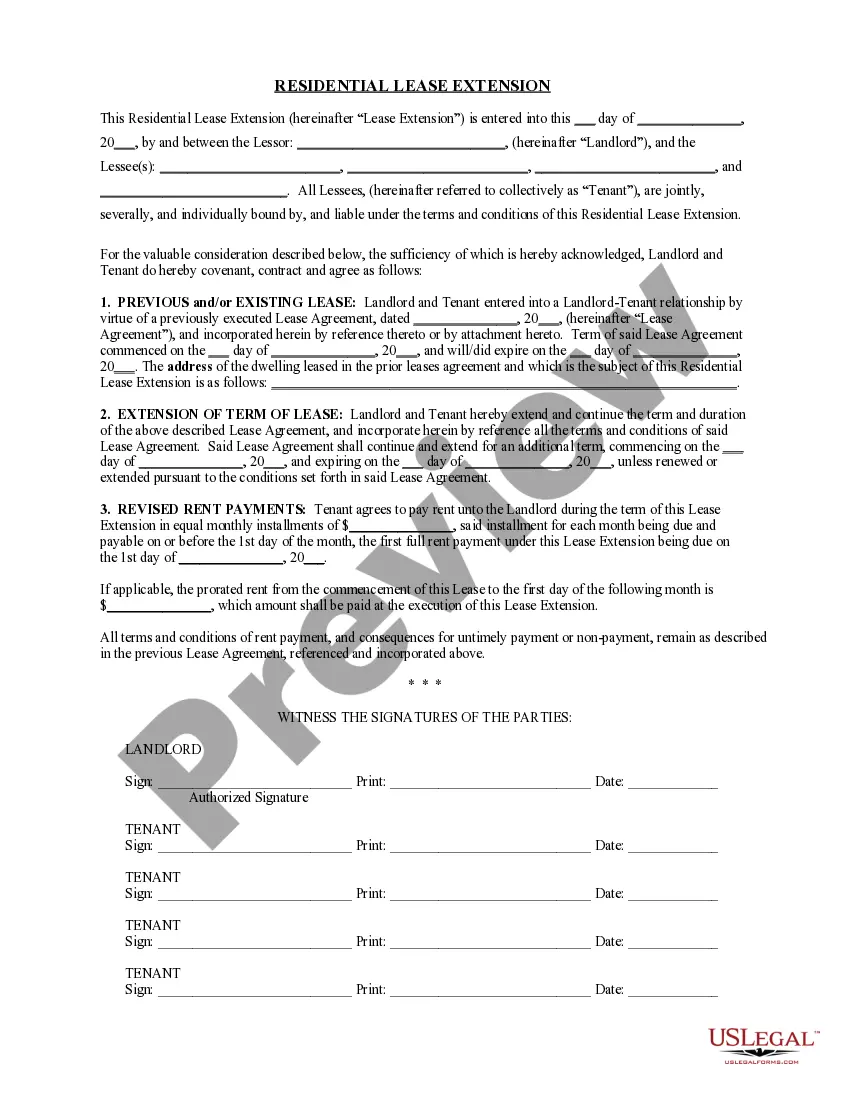
Help save time and effort searching for the paperwork you need, and make use of US Legal Forms’ advanced search and Preview tool to discover Estate Property Transfer With Tax and acquire it. In case you have a membership, log in in your US Legal Forms profile, search for the form, and acquire it. Take a look at My Forms tab to see the paperwork you previously downloaded and to control your folders as you can see fit.
Should it be your first time with US Legal Forms, register an account and obtain limitless use of all advantages of the platform. Here are the steps to take after getting the form you want:
- Verify it is the correct form by previewing it and reading through its description.
- Ensure that the sample is acknowledged in your state or county.
- Pick Buy Now once you are ready.
- Choose a monthly subscription plan.
- Pick the format you want, and Download, complete, sign, print out and send out your papers.
Take advantage of the US Legal Forms web catalogue, supported with 25 years of experience and stability. Transform your everyday papers managing in to a smooth and user-friendly process today.
Form popularity
FAQ
Here are 4 ways to protect your inheritance from taxes: See if the alternate valuation date will help. For tax purposes, the estates are evaluated based on their fair market value at the time of the decedent's death. ... Transfer your assets into a trust. ... Minimize IRA distributions. ... Make charitable gifts.
Family members can transfer property to one another without estate tax penalties by putting the property into a trust. When placed into an irrevocable trust, the property is no longer considered part of your estate after you die.
The Estate Tax is a tax on your right to transfer property at your death.
Report the sale on Schedule D (Form 1040), Capital Gains and Losses and on Form 8949, Sales and Other Dispositions of Capital Assets: If you sell the property for more than your basis, you have a taxable gain.
The Treasury Department and IRS understand that executors, local probate courts, state tax departments, and others have come to rely on estate tax closing letters for confirmation that the IRS examination of the estate tax return has been completed and the IRS file has been closed.