Wrongful Single Actions Fill With Evidence
Description
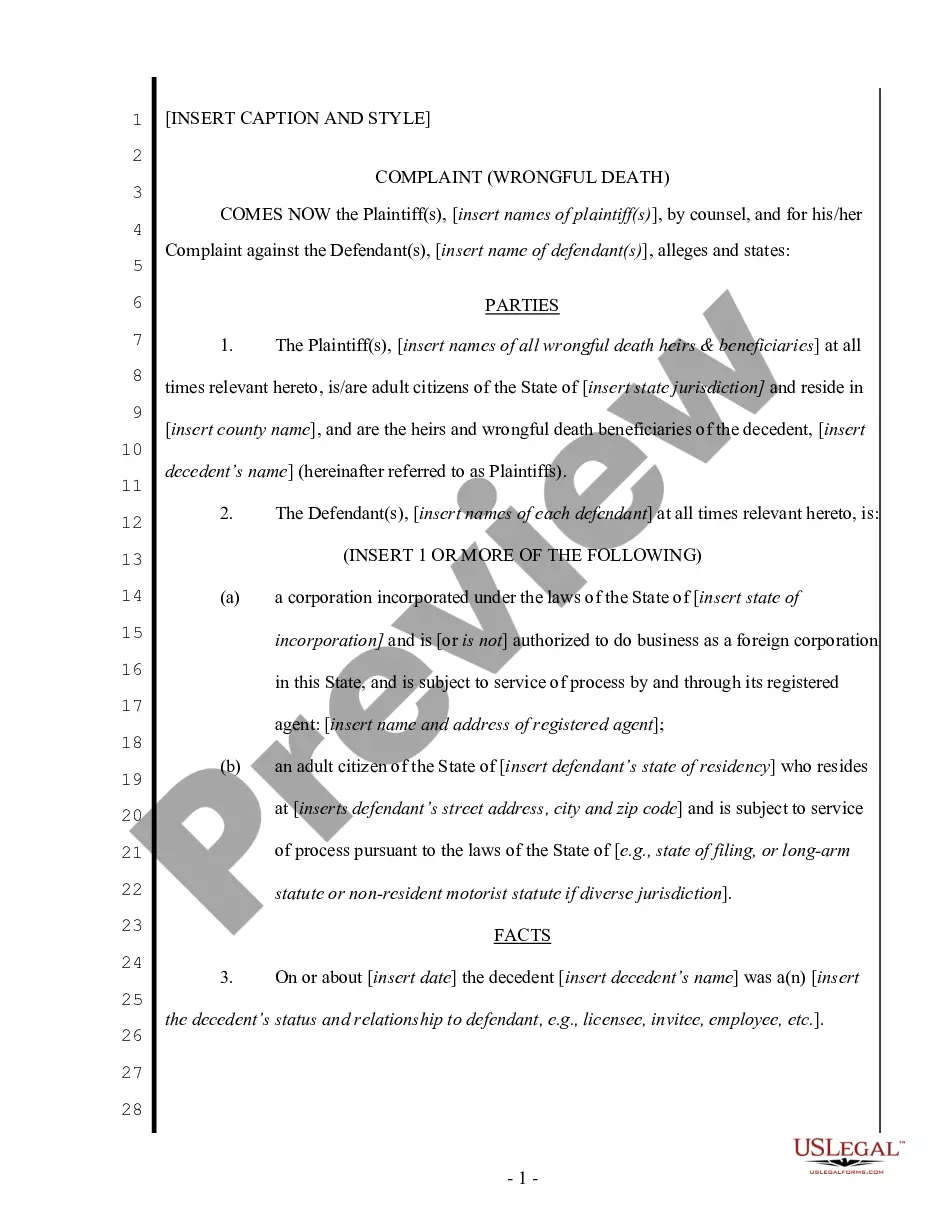

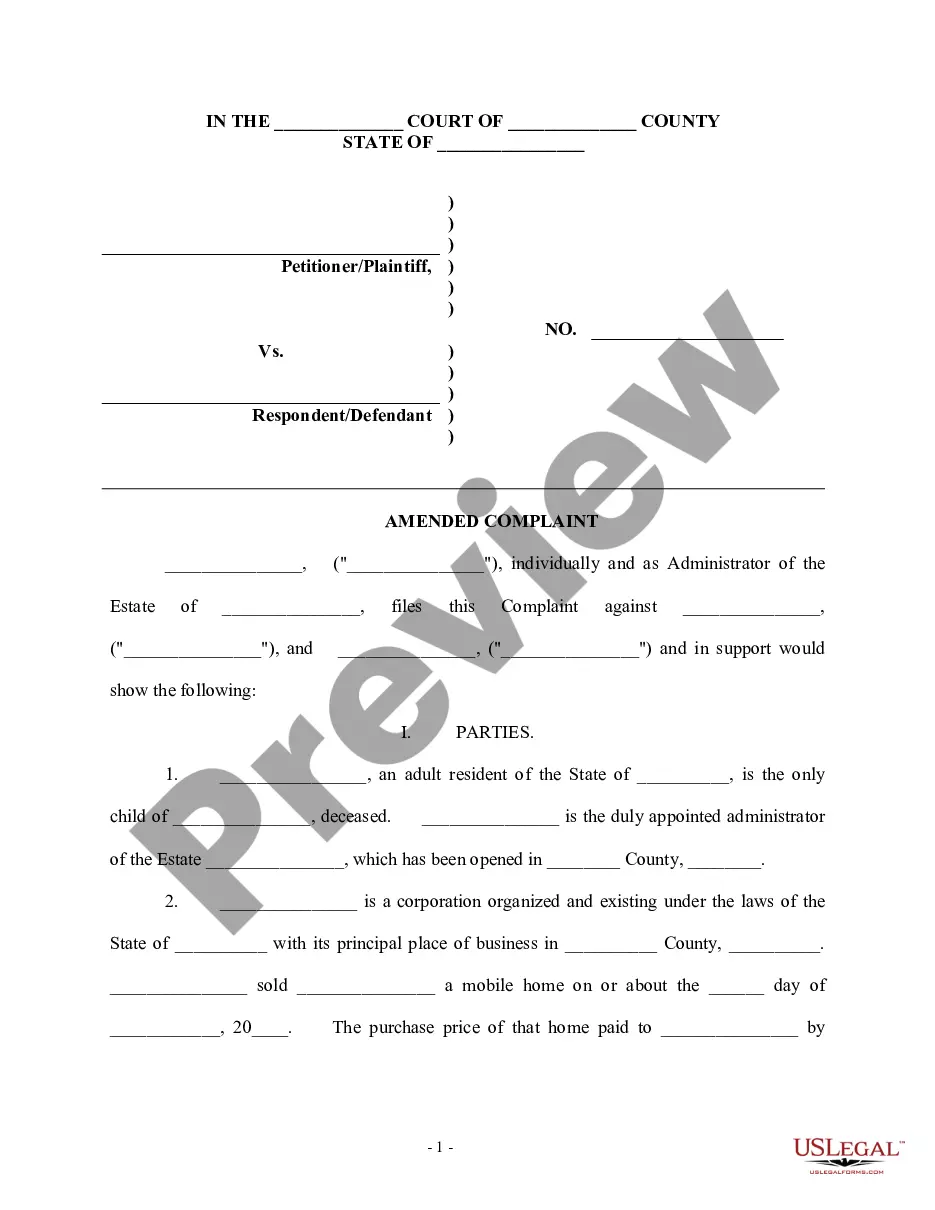
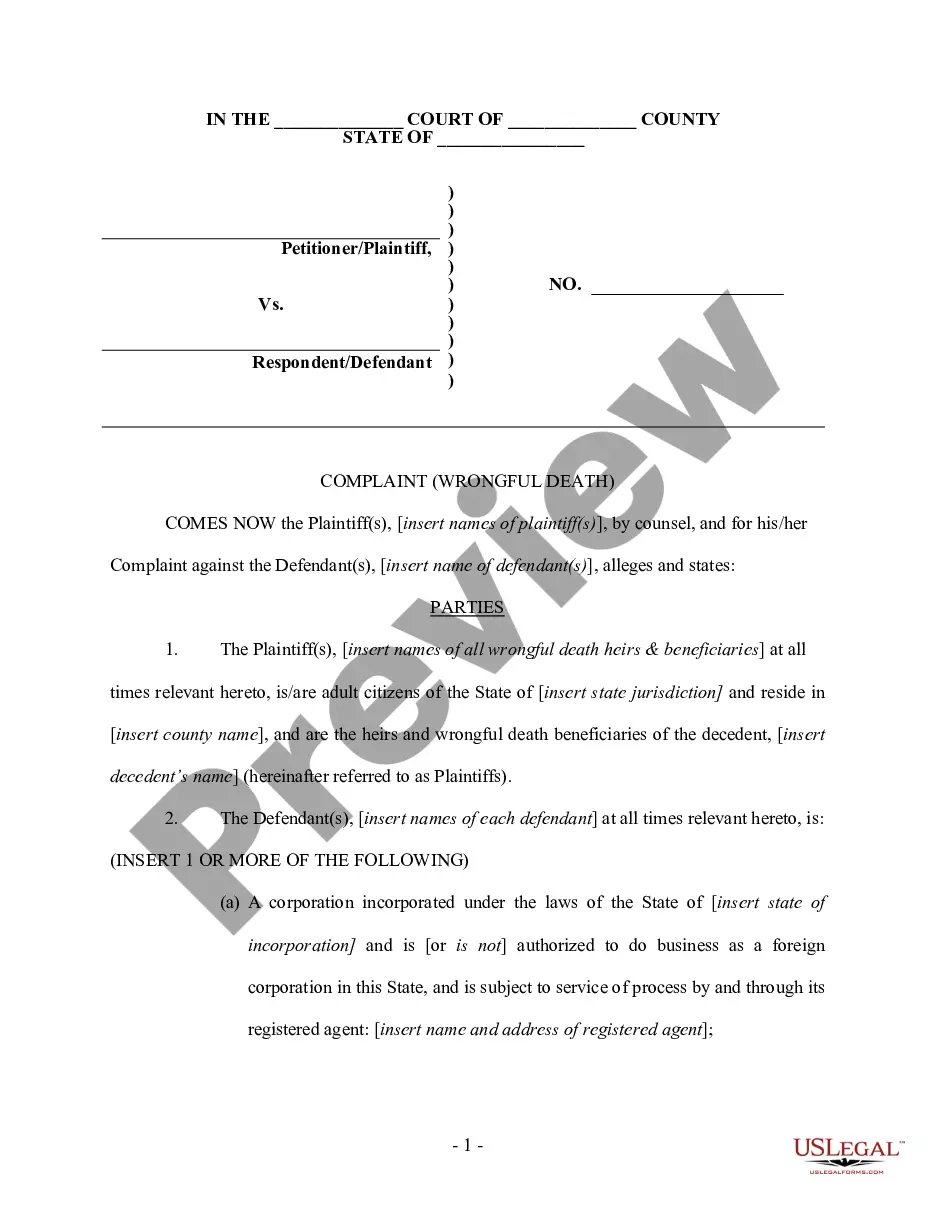
Get your form ready online
Our built-in tools help you complete, sign, share, and store your documents in one place.
Make edits, fill in missing information, and update formatting in US Legal Forms—just like you would in MS Word.
Download a copy, print it, send it by email, or mail it via USPS—whatever works best for your next step.
Sign and collect signatures with our SignNow integration. Send to multiple recipients, set reminders, and more. Go Premium to unlock E-Sign.
If this form requires notarization, complete it online through a secure video call—no need to meet a notary in person or wait for an appointment.
We protect your documents and personal data by following strict security and privacy standards.

Make edits, fill in missing information, and update formatting in US Legal Forms—just like you would in MS Word.

Download a copy, print it, send it by email, or mail it via USPS—whatever works best for your next step.

Sign and collect signatures with our SignNow integration. Send to multiple recipients, set reminders, and more. Go Premium to unlock E-Sign.

If this form requires notarization, complete it online through a secure video call—no need to meet a notary in person or wait for an appointment.

We protect your documents and personal data by following strict security and privacy standards.
Looking for another form?





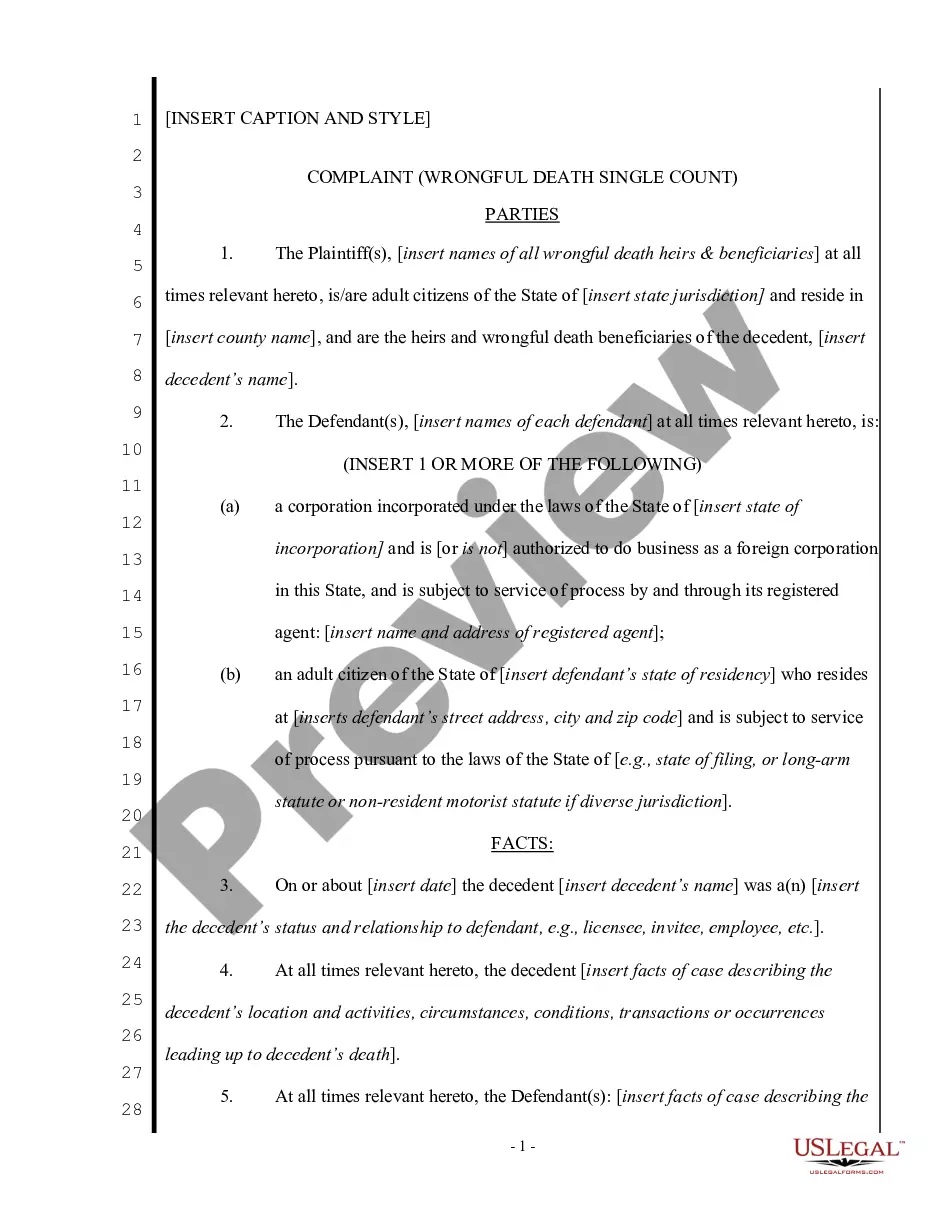
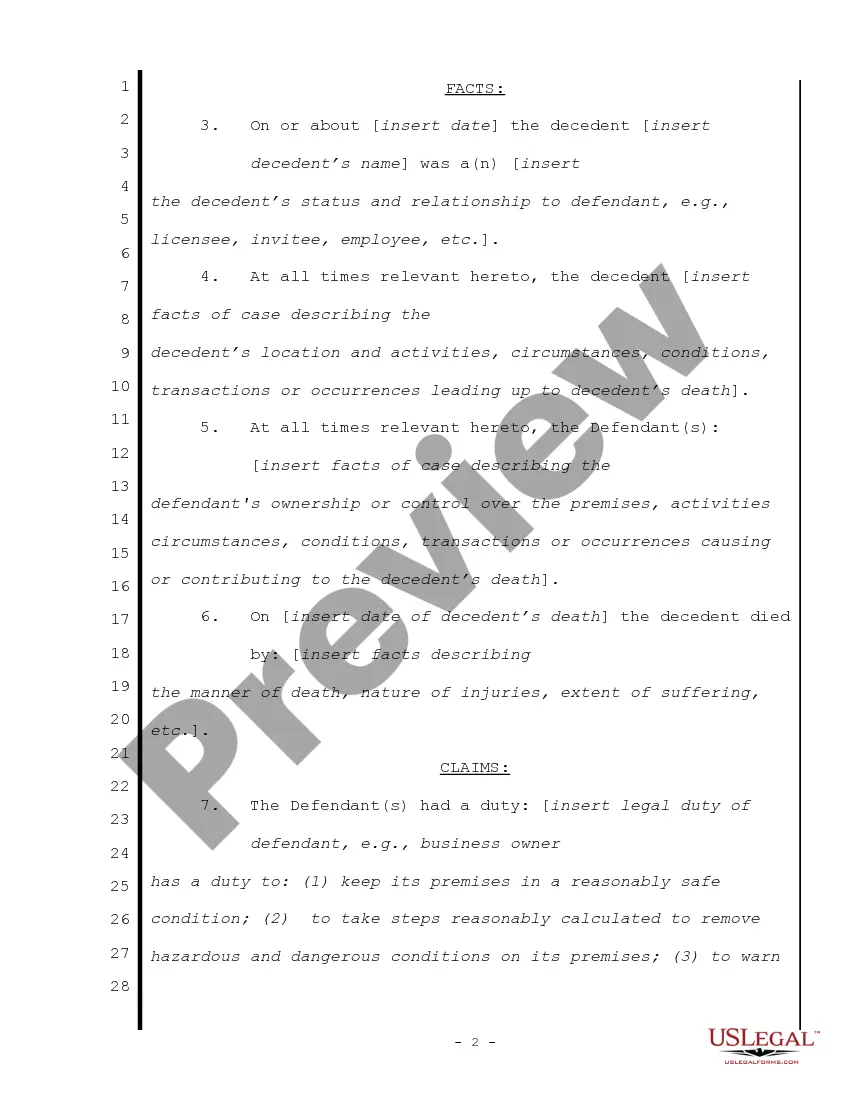
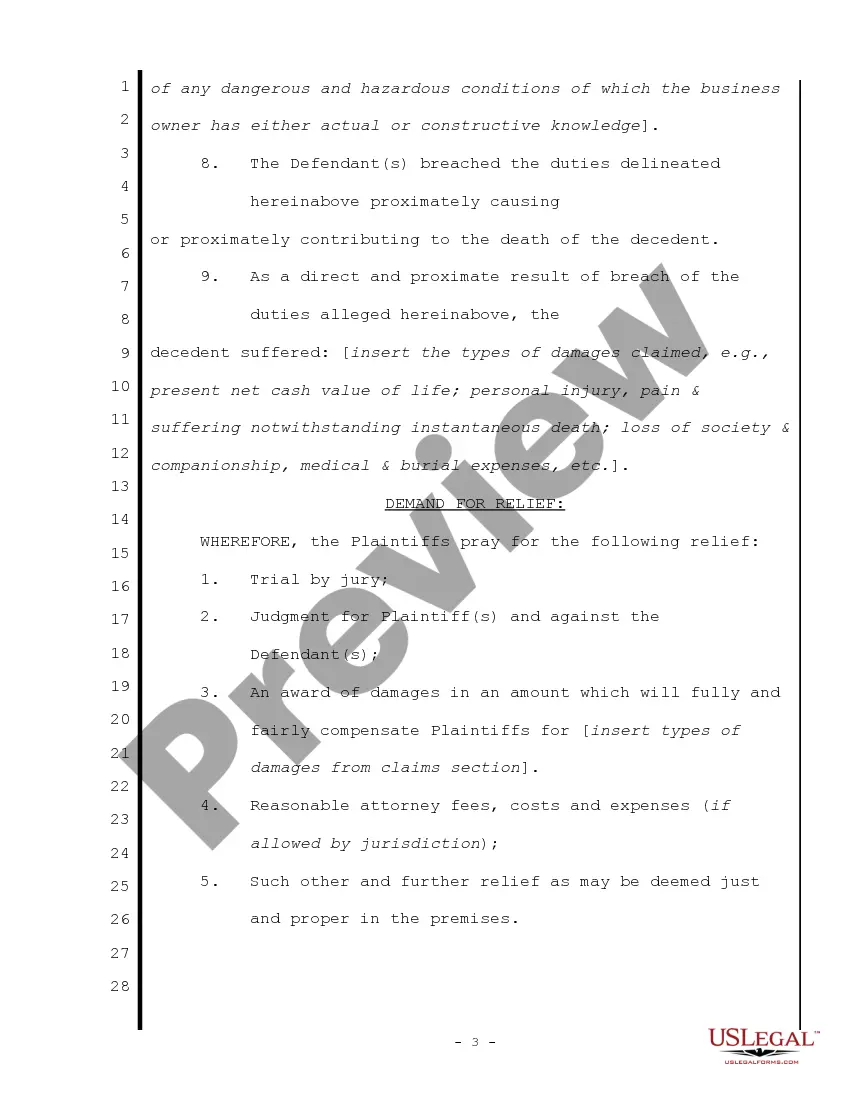
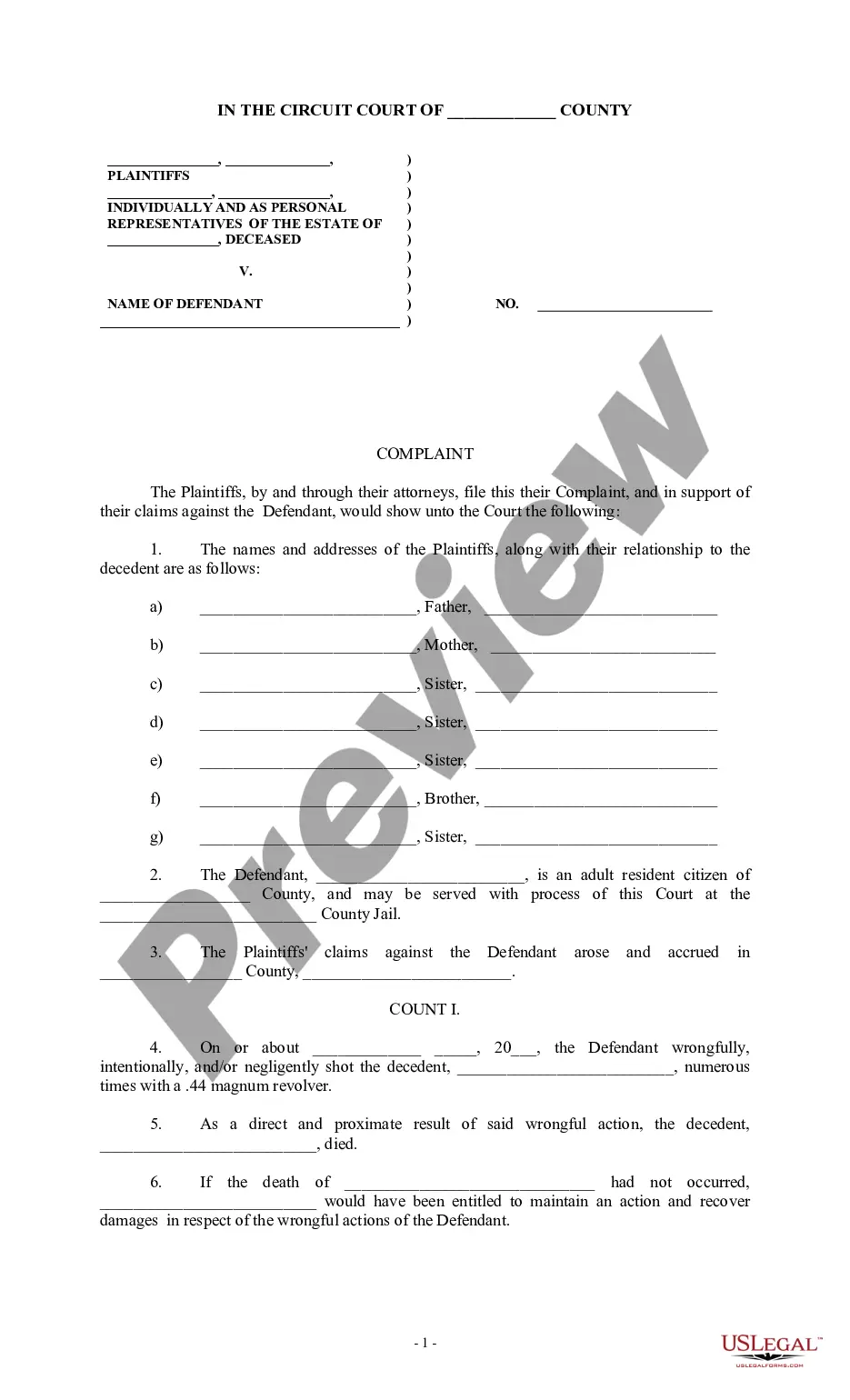
How to fill out Complaint For Wrongful Death - Single Count?
- If you are a returning user, log in to your account. Ensure your subscription is active to download necessary form templates.
- For first-time users, start by checking the Preview mode and description of the forms. Verify that you've selected one that aligns with your needs and adheres to your local jurisdiction's requirements.
- If the selected template doesn't meet your criteria, utilize the Search tab to explore additional options until you find a suitable alternative.
- Once you identify the right document, click on the Buy Now button, and select your preferred subscription plan. Registration is required for full access.
- Finalize your purchase by entering your credit card information or opting for PayPal to complete the transaction.
- After successfully purchasing, download your form. You can easily access it anytime from the My Forms section of your profile.
By following these steps, you can leverage the benefits of US Legal Forms. With an extensive collection of over 85,000 legal forms, users can find exactly what they need.
Take control of your legal journey today and discover the ease of accessing accurate legal documents with US Legal Forms!
Form popularity
FAQ
A Rule 52 motion is a request for the court to amend or make findings on a judgment after a trial. This motion can clarify the court's intentions or correct any legal errors that have occurred. In cases involving wrongful single actions filled with evidence, a Rule 52 motion can serve as an essential tool to ensure that the facts align with the court’s final decision.
Rule 804 of evidence addresses hearsay exceptions, particularly when a declarant is unavailable to testify. This rule allows certain statements, deemed reliable, to be admissible in court even though they are hearsay. In wrongful single actions filled with evidence, understanding this rule is crucial, as it helps determine which statements may support your case when witnesses cannot appear.
Rule 37 sanctions are imposed when a party fails to comply with discovery requests in court-related processes. This rule serves to encourage cooperation and ensure all relevant evidence is available for consideration. If you're facing wrongful single actions filled with evidence, being aware of these sanctions can help you understand the importance of complying with all discovery rules.
Three common examples of inadmissible evidence include hearsay, irrelevant evidence, and evidence obtained unlawfully. Hearsay refers to statements made outside the courtroom intended to prove the truth of the matter asserted. It’s critical to focus on gathering direct evidence, especially in wrongful single actions filled with evidence, where admissibility can greatly sway the outcome.
Various kinds of evidence are restricted under different amendments, affecting what can be presented in court. Under the Fourth Amendment, for instance, evidence obtained through unreasonable searches and seizures is inadmissible. Understanding these amendments is vital for anyone dealing with wrongful single actions filled with evidence, as it impacts the legal strategy you should develop.
Evidence not allowed in court typically includes anything that does not follow legal standards for admissibility. For example, evidence that is overly prejudicial – meaning it might unfairly sway the jury – can be excluded. It's important for individuals involved in wrongful single actions filled with evidence to work with legal experts to ensure they present admissible material.
Evidence that cannot be used in court includes irrelevant information that does not contribute to proving your case. Examples are personal opinions, speculation, and even certain prior convictions can be ruled out in specific circumstances. When preparing for a case, it is crucial to identify what falls under wrongful single actions filled with evidence to strengthen your legal position.
In court, certain types of evidence are not permissible. For instance, hearsay is often excluded because it relies on the statements of someone not present in court. Additionally, any evidence obtained illegally, such as through an unlawful search, cannot be used. Understanding what constitutes admissible evidence is essential, especially in wrongful single actions filled with evidence.
To write a motion to dismiss evidence, clearly outline the grounds for your request. Present reasons why the evidence is irrelevant or inadmissible, supporting your claims with legal references if possible. This can significantly impact the case, especially if your wrongful single actions fill with evidence are being challenged. Ensure your motion is concise and well-supported to enhance its effectiveness.
A motion to include evidence is a request to the court to accept certain materials or information into the case record. When submitting this motion, it’s vital to explain the relevance and significance of the evidence. This is especially important when your wrongful single actions fill with evidence need to be validated in court. Utilizing platforms like uslegalforms can help streamline this process.