Wrongful Count Civil For Theft
Description

Get your form ready online
Our built-in tools help you complete, sign, share, and store your documents in one place.
Make edits, fill in missing information, and update formatting in US Legal Forms—just like you would in MS Word.
Download a copy, print it, send it by email, or mail it via USPS—whatever works best for your next step.
Sign and collect signatures with our SignNow integration. Send to multiple recipients, set reminders, and more. Go Premium to unlock E-Sign.
If this form requires notarization, complete it online through a secure video call—no need to meet a notary in person or wait for an appointment.
We protect your documents and personal data by following strict security and privacy standards.

Make edits, fill in missing information, and update formatting in US Legal Forms—just like you would in MS Word.

Download a copy, print it, send it by email, or mail it via USPS—whatever works best for your next step.

Sign and collect signatures with our SignNow integration. Send to multiple recipients, set reminders, and more. Go Premium to unlock E-Sign.

If this form requires notarization, complete it online through a secure video call—no need to meet a notary in person or wait for an appointment.

We protect your documents and personal data by following strict security and privacy standards.
Looking for another form?







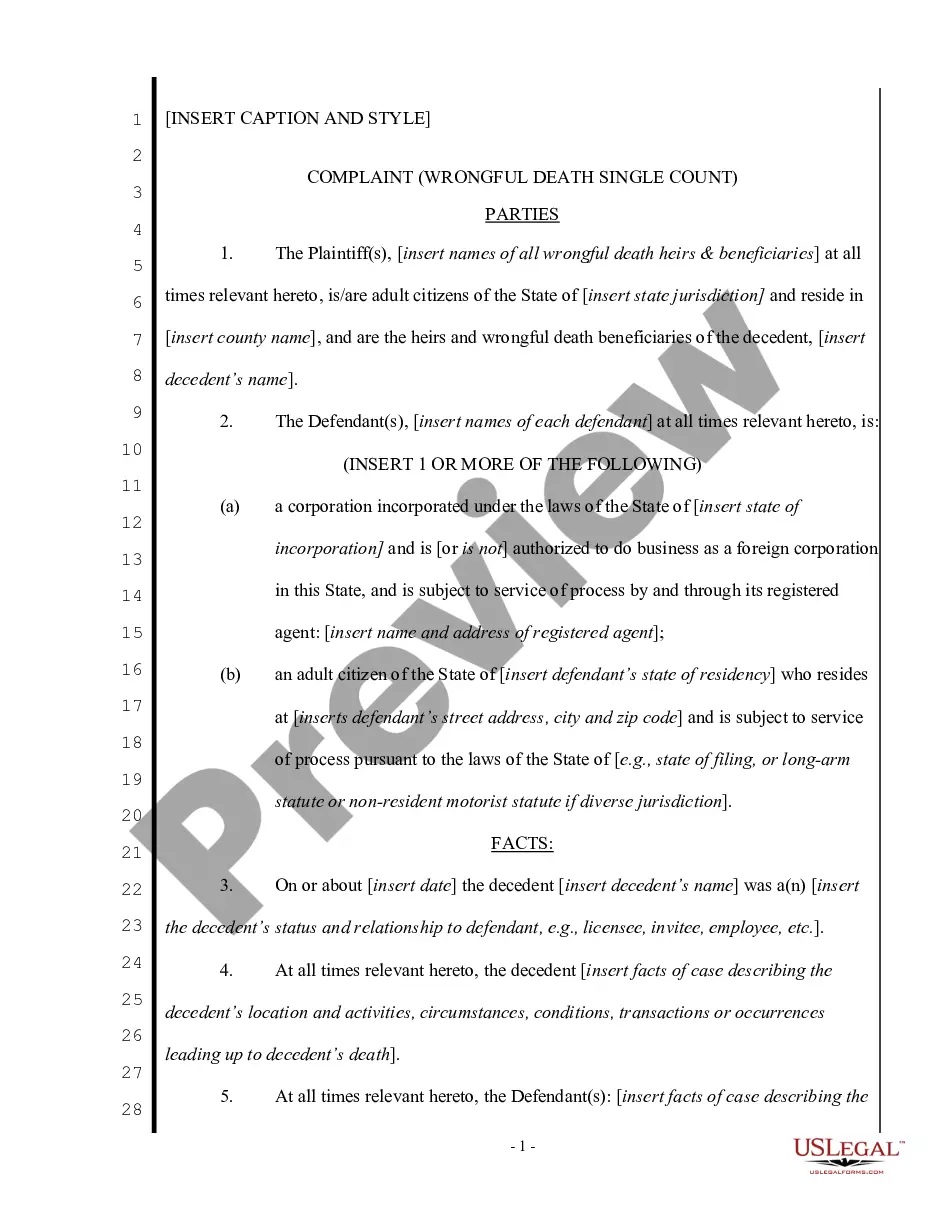
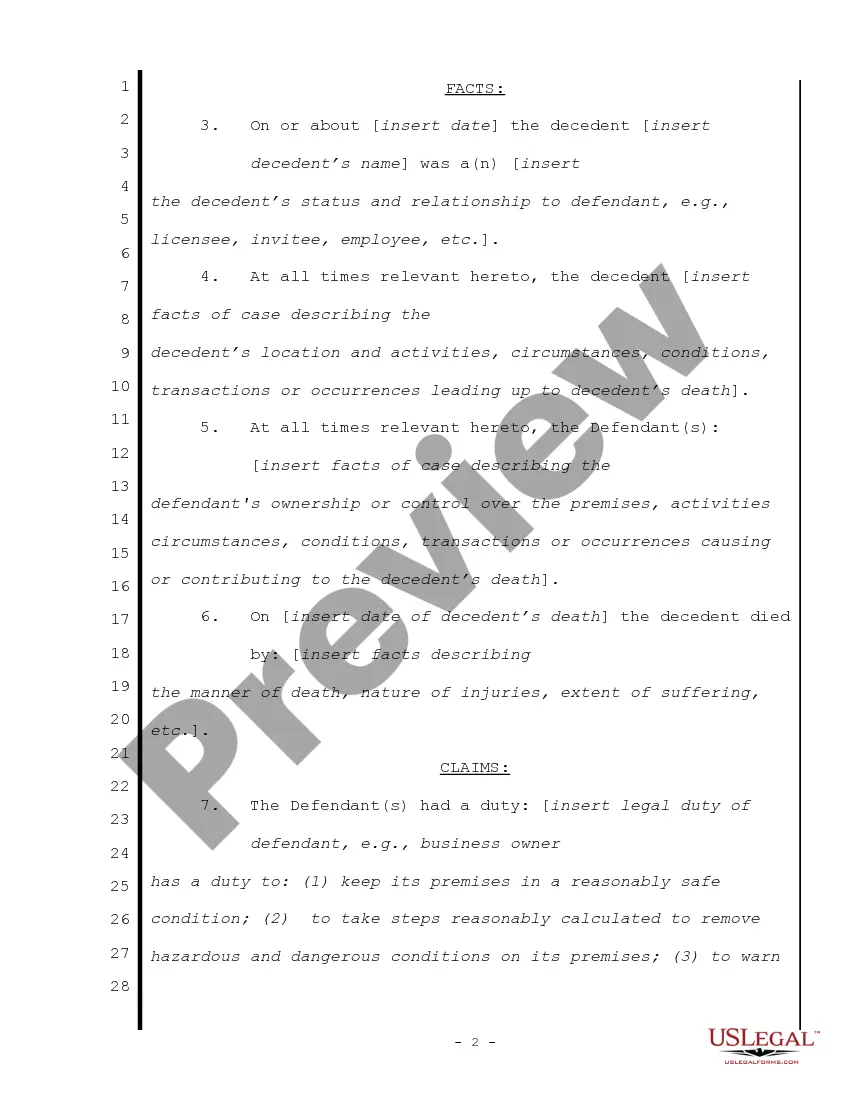
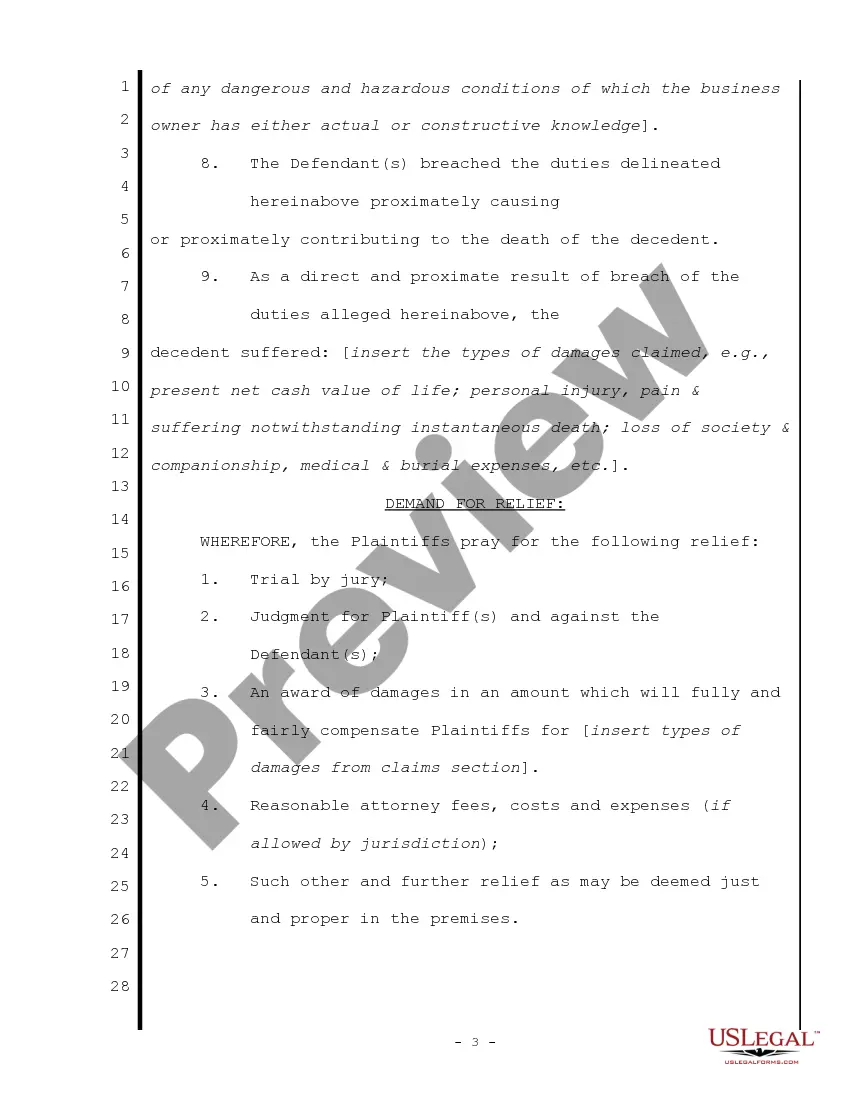
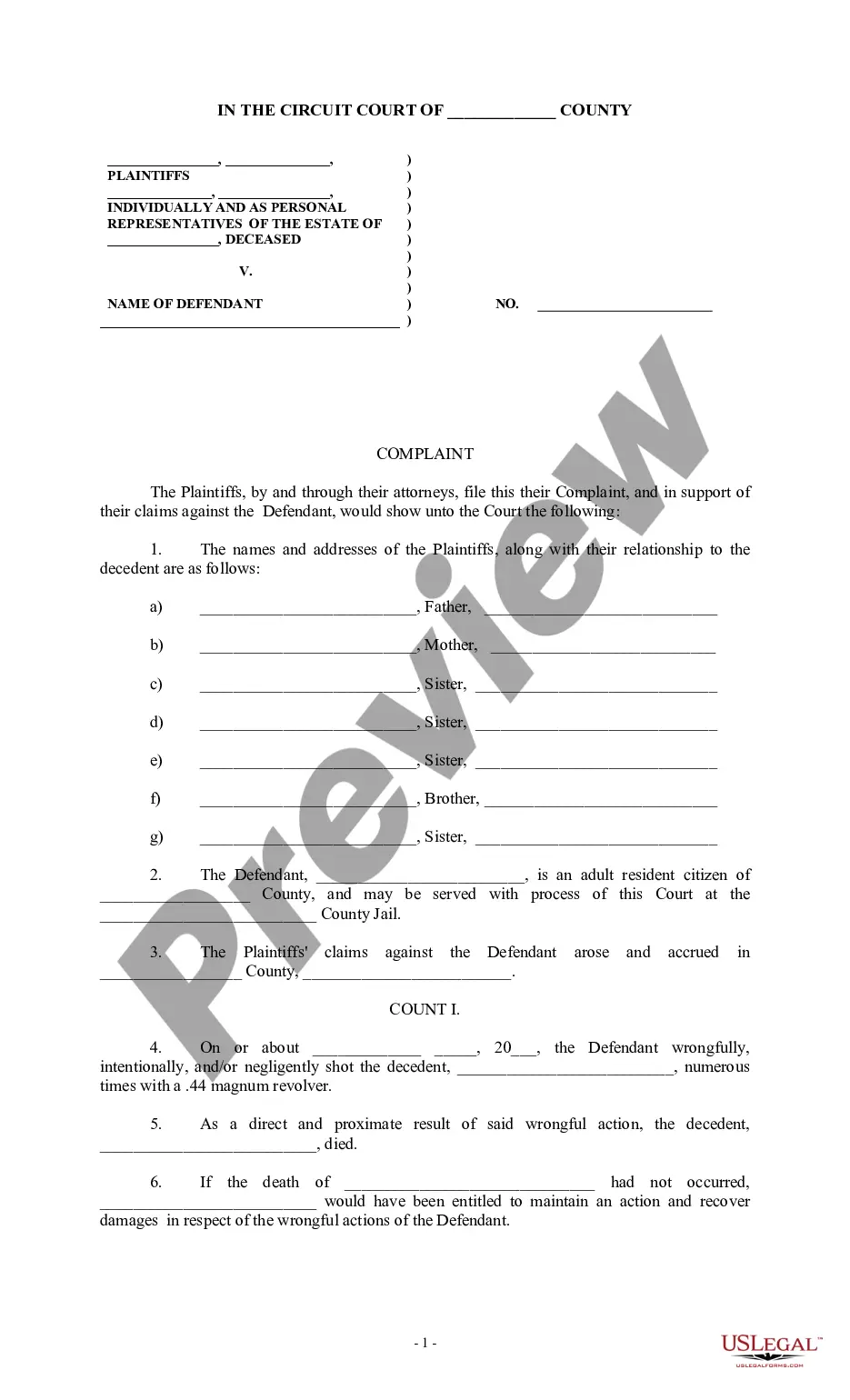
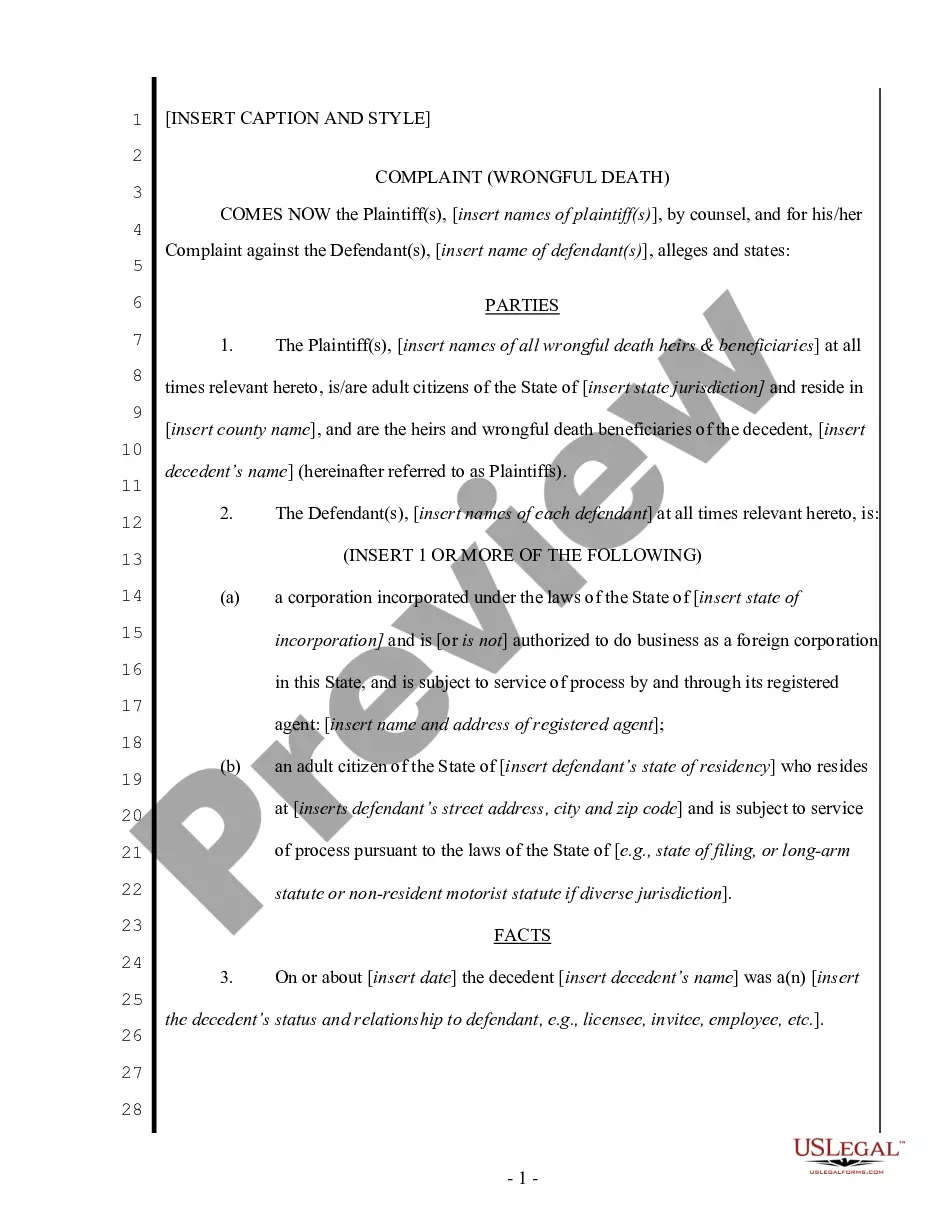
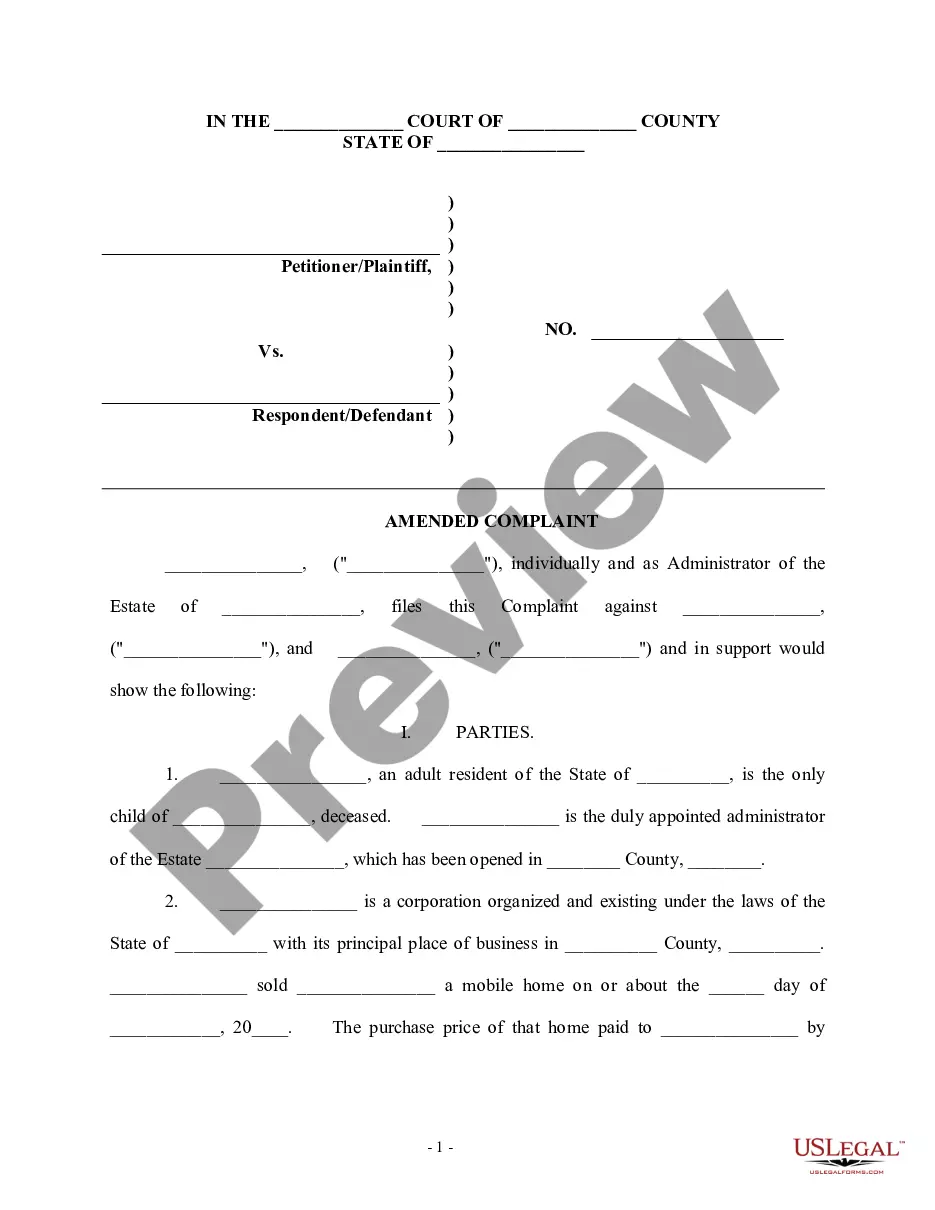
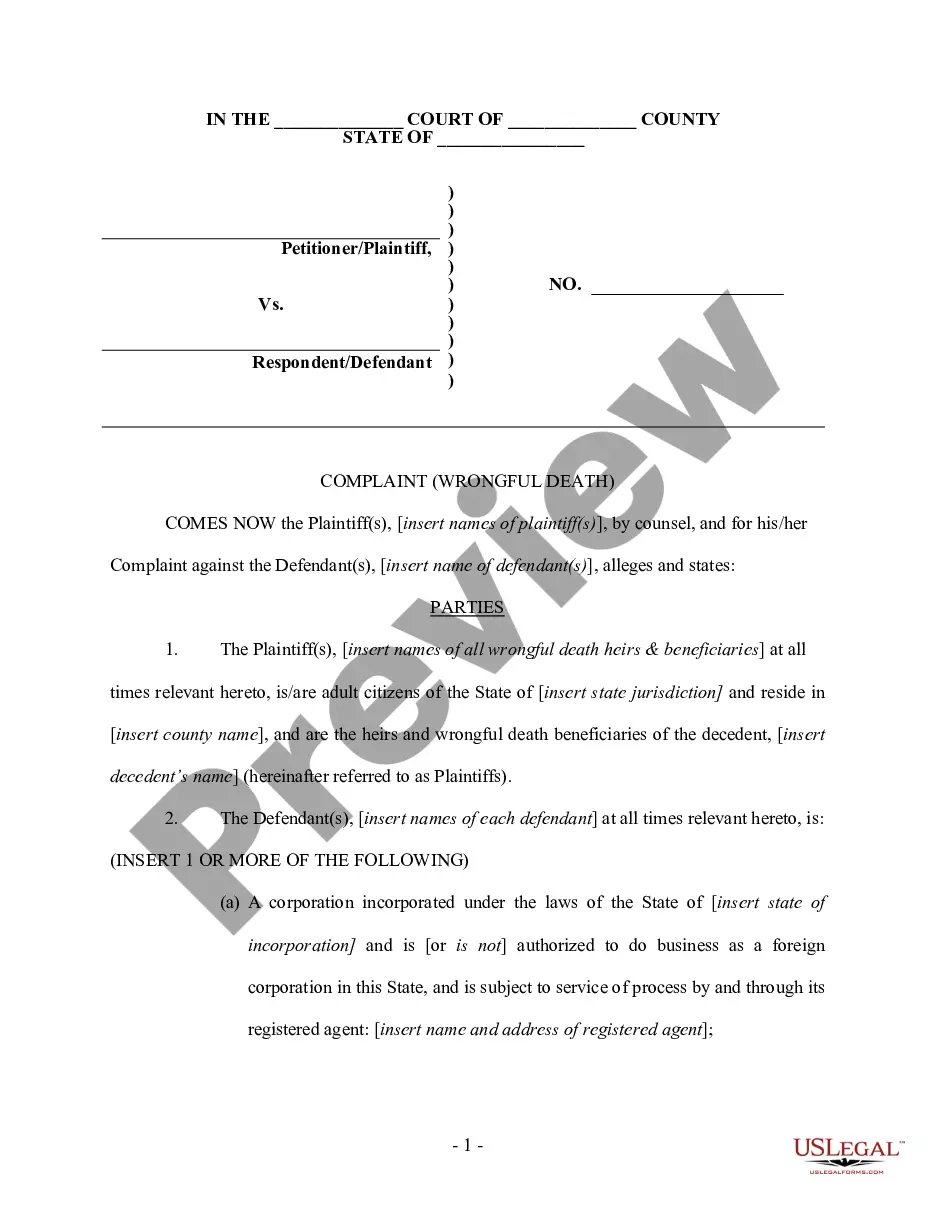
How to fill out Complaint For Wrongful Death - Single Count?
- If you're a returning user, log in to your account. Ensure your subscription is active; if it’s expired, renew your plan.
- For first-time users, start by checking the preview mode and description to confirm the form suits your needs and complies with local regulations.
- If you need a different template, utilize the Search tab to locate the appropriate document. Move on if you find the correct form.
- Proceed by clicking the Buy Now button. Choose a subscription plan that fits you; registration is necessary to access the forms.
- Complete the purchase by entering your payment information, either through credit card or PayPal.
- Finally, download your form and save it on your device. You can access it anytime from the My Forms section of your profile.
In conclusion, US Legal Forms empowers users to efficiently create legal documents with its extensive library and user-friendly interface. With over 85,000 forms available, you're sure to find what you need.
Take the first step in resolving your legal issues today by visiting US Legal Forms.
Form popularity
FAQ
Theft becomes a civil matter when it involves private disputes over property, rather than criminal charges. In cases of wrongful count civil for theft, individuals seek compensation or restitution rather than jail time for the alleged offender. Civil cases focus on the harm caused to the victim and can include financial reparations. Understanding this distinction can help you navigate the legal landscape more effectively.
To prove a wrongful count civil for theft, you typically need clear and convincing evidence. This can include eyewitness testimony, surveillance footage, receipts, and any relevant documents. Strong evidence establishes a link between the accused and the alleged theft, making your case more solid. Collecting and organizing this evidence early can significantly strengthen your position within a legal dispute.
The legal term for stealing is generally 'theft.' It encompasses various forms of taking property unlawfully. In civil cases, the focus shifts towards recovering damages rather than criminal penalties. You can access services like uslegalforms to help guide you through the process of establishing a wrongful count civil for theft.
In civil law, theft is often referred to as 'theft by conversion' or simply 'conversion.' This term highlights the act of wrongfully taking or using another person's property. Victims can initiate legal action to seek restitution for their losses. By using resources such as uslegalforms, affected individuals can navigate the process of claiming wrongful count civil for theft.
Yes, theft can be considered a civil matter, especially when it results in damages that require compensation. Civil law allows victims of theft to pursue claims separate from criminal prosecution. This approach helps individuals recover their losses while holding the offender accountable. Programs like uslegalforms empower victims to take legal action through wrongful count civil for theft.
The civil term for stealing is often termed as 'conversion.' This refers specifically to the unauthorized taking or use of someone else's property. It provides the basis for legal action to recover damages in civil court. Engaging with uslegalforms can offer the necessary forms and resources to pursue a wrongful count civil for theft effectively.
The civil side of theft is typically referred to as a civil theft claim. This claim allows the victim to pursue compensation for the losses incurred due to the theft. In these cases, individuals can file a lawsuit against the thief to recover damages. Utilizing uslegalforms can help streamline the process of filing a wrongful count civil for theft claim.
The proper term for stealing is theft. This term encompasses various actions that involve taking someone else's property without their permission. Theft can lead to both criminal charges and civil claims against the offender. In the context of wrongful count civil for theft, individuals affected may seek compensation through the legal system.
Civil theft typically does not result in jail time, as it deals primarily with financial restitution. However, criminal charges can arise if the actions constitute theft under criminal law, potentially leading to jail time. A wrongful count civil for theft aims to recover losses rather than impose criminal penalties. Understanding the distinctions between civil and criminal cases is essential for anyone involved in such disputes.
Yes, you can sue someone civilly for theft under the tort of conversion or similar legal principles. This process involves filing a claim to recover the value of your property or damages resulting from its loss. A wrongful count civil for theft allows victims to seek compensation for their losses in a civil court. Many individuals find resources, such as those offered by US Legal Forms, helpful when pursuing these claims.