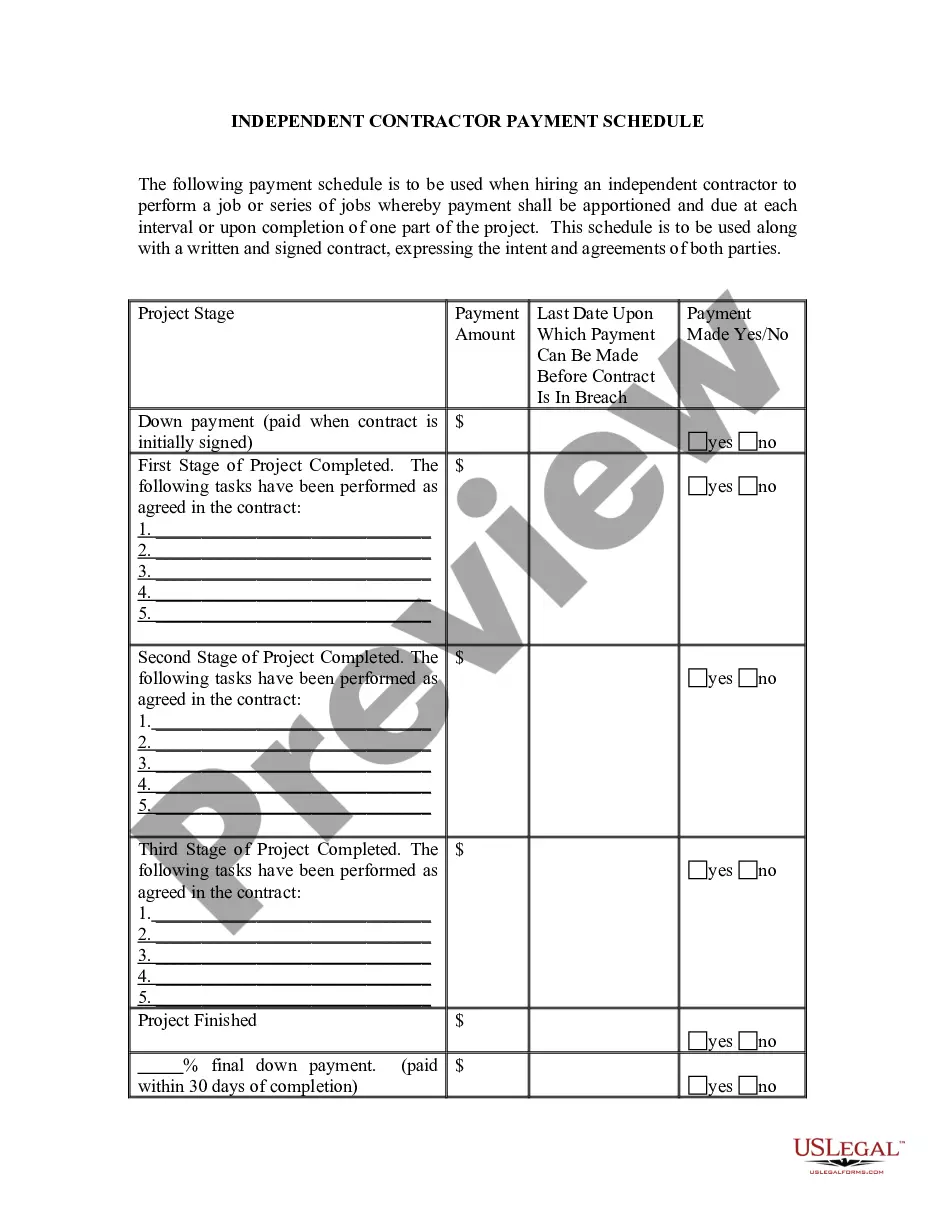
Typical Payment Schedule For Contractors
Description

Get your form ready online
Our built-in tools help you complete, sign, share, and store your documents in one place.
Make edits, fill in missing information, and update formatting in US Legal Forms—just like you would in MS Word.
Download a copy, print it, send it by email, or mail it via USPS—whatever works best for your next step.
Sign and collect signatures with our SignNow integration. Send to multiple recipients, set reminders, and more. Go Premium to unlock E-Sign.
If this form requires notarization, complete it online through a secure video call—no need to meet a notary in person or wait for an appointment.
We protect your documents and personal data by following strict security and privacy standards.

Make edits, fill in missing information, and update formatting in US Legal Forms—just like you would in MS Word.

Download a copy, print it, send it by email, or mail it via USPS—whatever works best for your next step.

Sign and collect signatures with our SignNow integration. Send to multiple recipients, set reminders, and more. Go Premium to unlock E-Sign.

If this form requires notarization, complete it online through a secure video call—no need to meet a notary in person or wait for an appointment.

We protect your documents and personal data by following strict security and privacy standards.
Looking for another form?

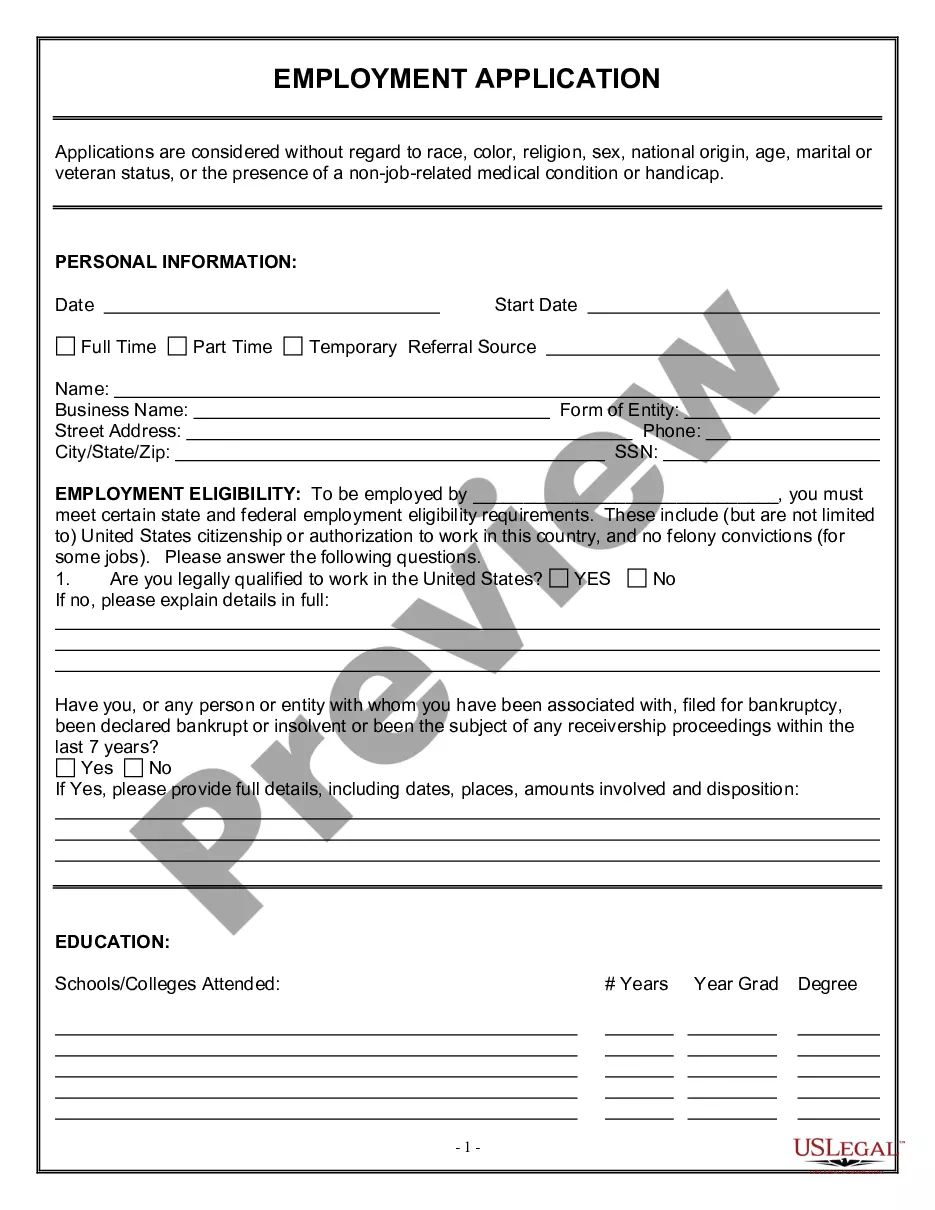






How to fill out Self-Employed Independent Contractor Payment Schedule?
It’s common knowledge that you cannot become a legal authority in an instant, nor can you swiftly master how to effectively draft a Typical Payment Schedule For Contractors without possessing a specific range of expertise.
Drafting legal documents is a prolonged endeavor that demands particular education and competencies. Therefore, why not entrust the development of the Typical Payment Schedule For Contractors to the experts.
With US Legal Forms, one of the most extensive libraries of legal templates available, you can find everything from court documentation to templates for internal business communication. We understand how crucial compliance and adherence to national and local regulations are. That’s why, on our platform, all documents are region-specific and current.
- Start by visiting our website and quickly obtain the document you require.
- Utilize the search bar located at the top of the page to find the document you need.
- If available, preview it and review the accompanying description to decide if the Typical Payment Schedule For Contractors aligns with your needs.
- If you require another document, begin your search anew.
- Create a free account and choose a subscription option to purchase the form.
Form popularity
FAQ
To create a typical payment schedule for contractors, start by defining the project's scope and timeline. Break down the work into milestones or specific deliverables, and assign corresponding payment terms. You can then use a contract template from US Legal Forms to formalize the schedule, ensuring clarity and legal enforceability. With a well-structured payment schedule, you protect both yourself and the contractor, fostering a smoother working relationship.
To write up a payment schedule for contractors, start by outlining the project milestones. Clearly define each stage of the work and link it to specific payment dates. Specify the total amount, payment methods, and any conditions that must be met for payment. This approach helps establish clear expectations and facilitates timely payments.
In construction, a typical payment schedule often includes milestone payments tied to project phases, such as completion of foundation, framing, and finishing work. This arrangement protects both the contractor and the client by ensuring that contractors receive timely payments for work completed. Many prefer this method as it aligns financial exchanges with tangible progress. Establishing a typical payment schedule for contractors helps avoid disputes and promotes smoother project flow.
A typical contractor payment schedule may involve an initial deposit followed by payments at agreed milestones throughout the project. For example, a common structure includes an upfront payment, followed by installments based on completed work phases. This structure helps ensure that contractors receive fair compensation while maintaining trust with clients. Utilizing a typical payment schedule for contractors fosters clear expectations on both sides.
Yes, 30-day payment terms are quite common in the contracting industry. Many clients and contractors agree to this timeframe, allowing sufficient time for invoice processing and project evaluation. This standard supports effective financial planning and ensures timely payments for completed work. Understanding these terms can foster smoother business transactions and help you manage expectations effectively.
A reasonable payment schedule for a contractor typically involves milestone payments. For instance, contractors may receive partial payments at key project phases—such as start, mid-project milestones, and completion. This approach not only guarantees some income over time but also aligns the contractor’s payment with project progress. Ultimately, establishing a clear payment schedule helps in maintaining strong client relationships.
A payment schedule template typically includes the following information: Name of your contractors or vendors. Descriptions of the services or products being provided. Total amount agreed upon with the vendor or contractor. Total amount due date. First payment. Last payment.
The most common type of construction payment is a net payment, meaning the invoice is due a set amount of days from the issue date. For longer projects, it's typical to pay an upfront deposit and then to pay the contractor monthly until the job is finished.
A payment schedule must[2]: Identify the payment claim to which it relates; Indicate the amount of the payment that the respondent proposes to make; and. State the respondent's reasons for withholding payment.
Net 10, Net 30, or Net 60 (found on the invoice) simply indicates that the contractor's payment is due 10, 30, or 60 days from the date of the invoice, respectively. Risks: This is the most common payment term for independent contractors, and there are few risks associated with it.