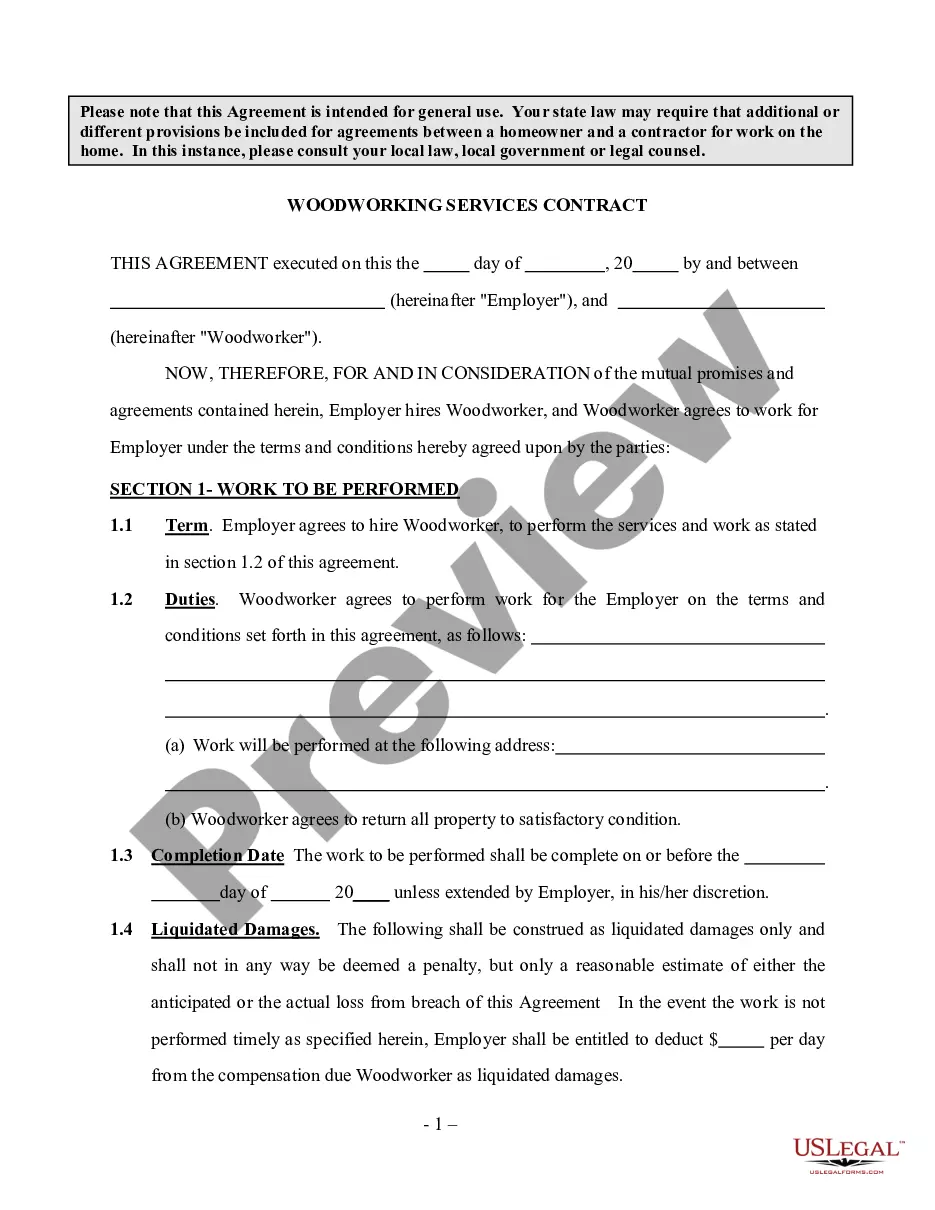
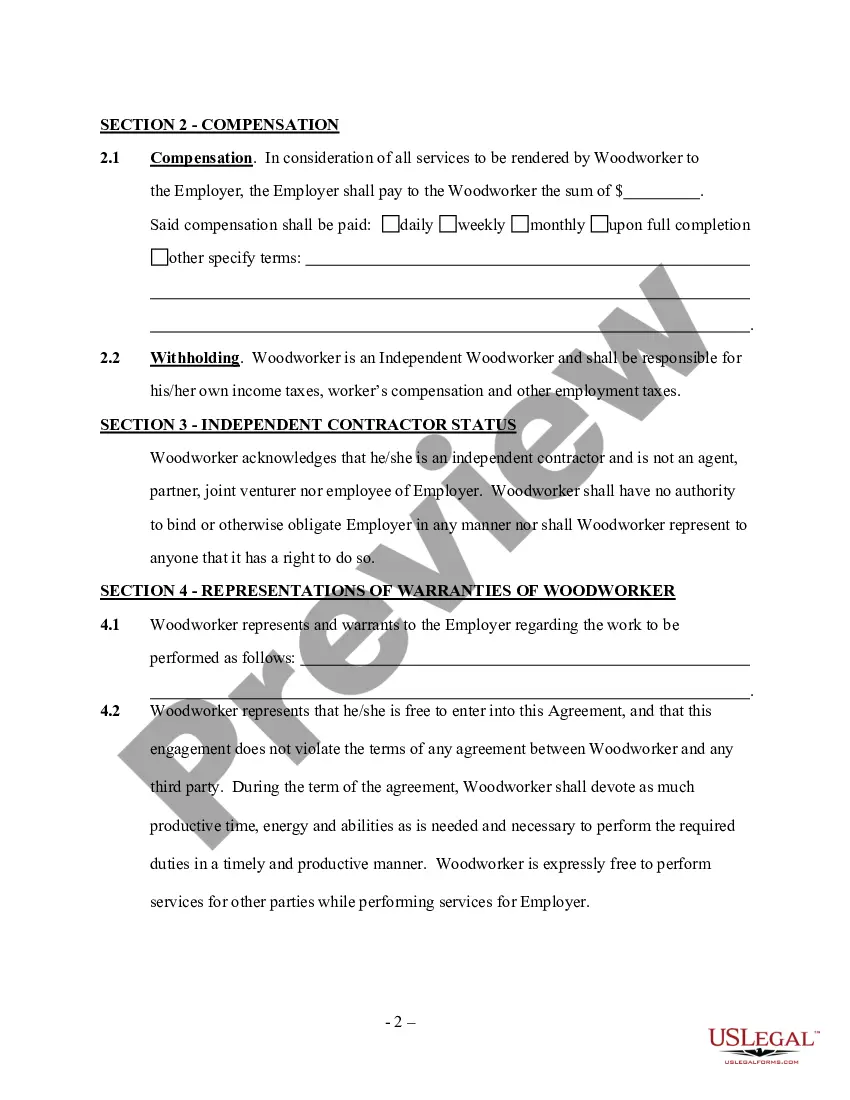
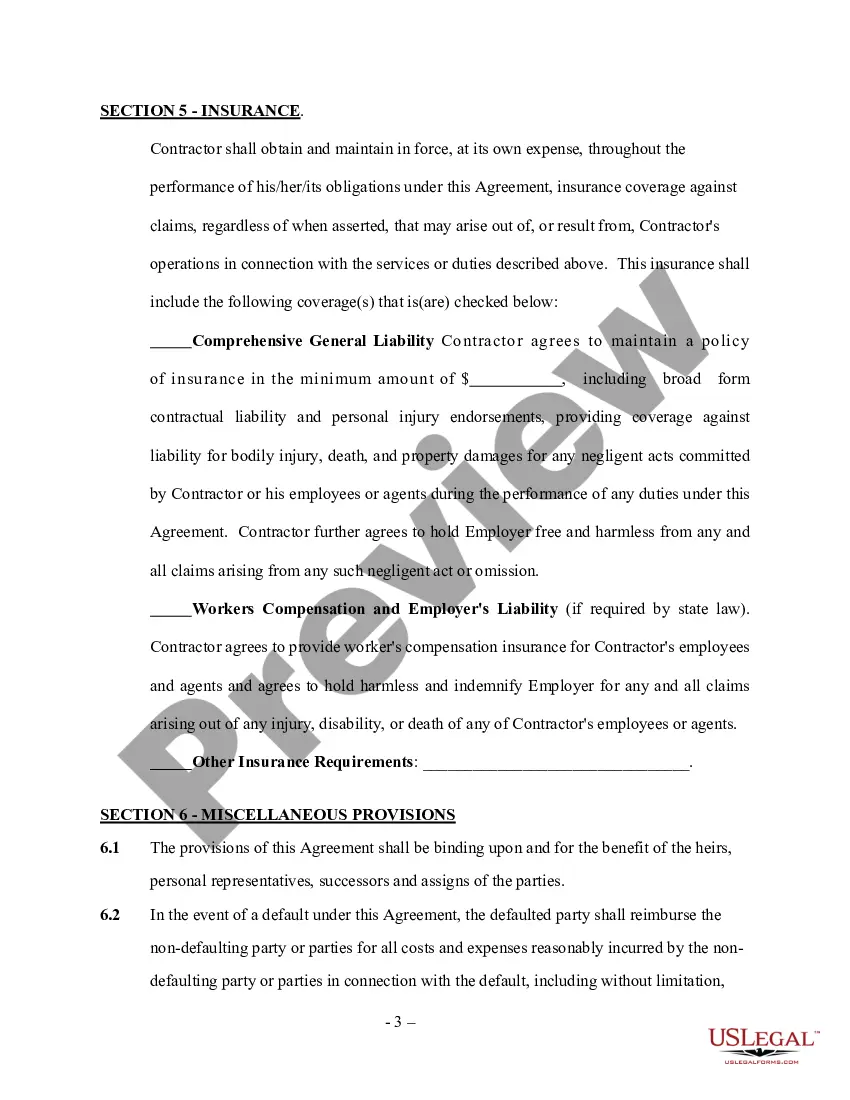
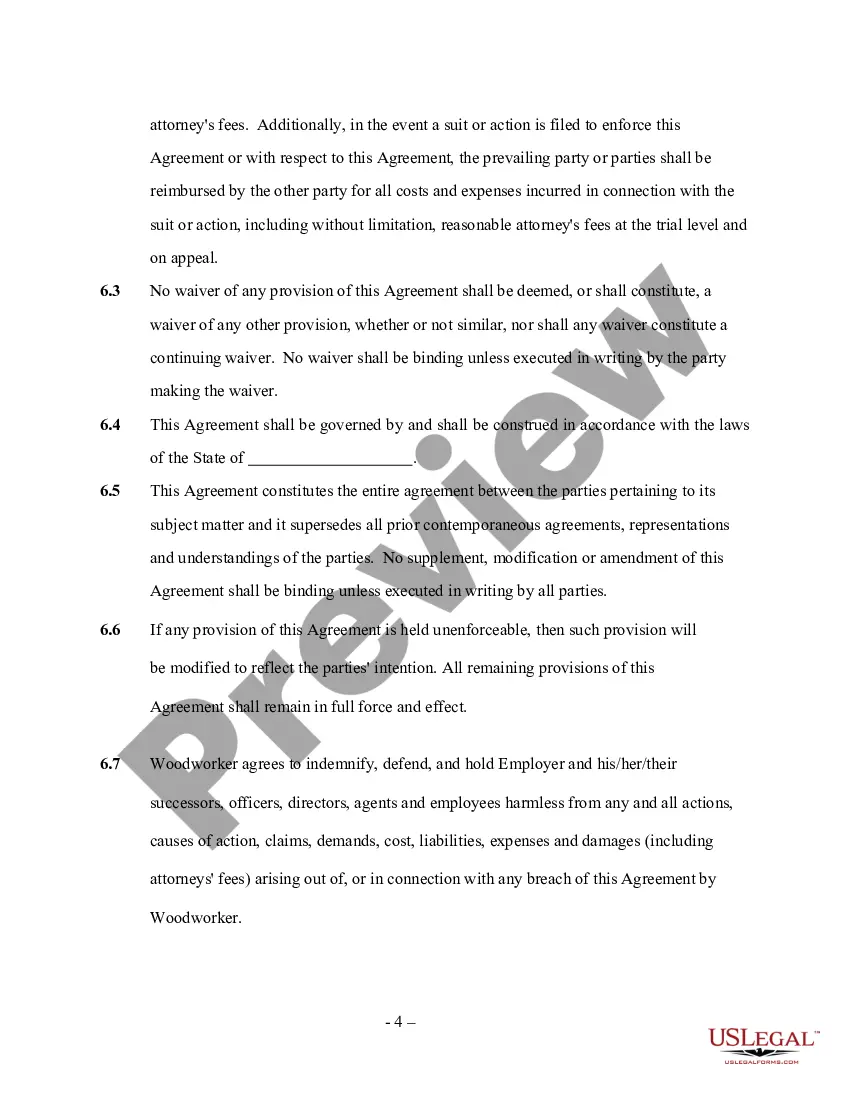
Woodworking Contracts With Companies
Description
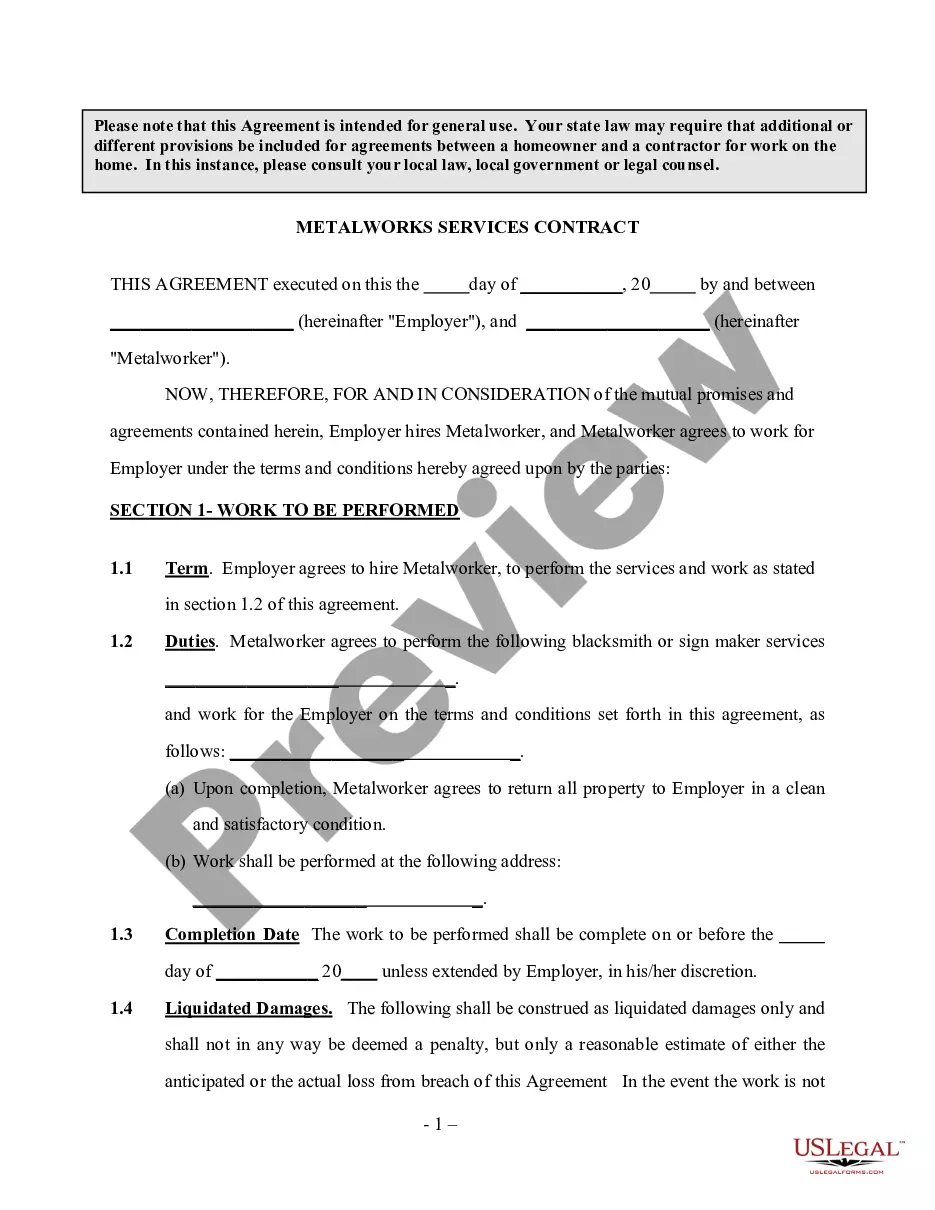
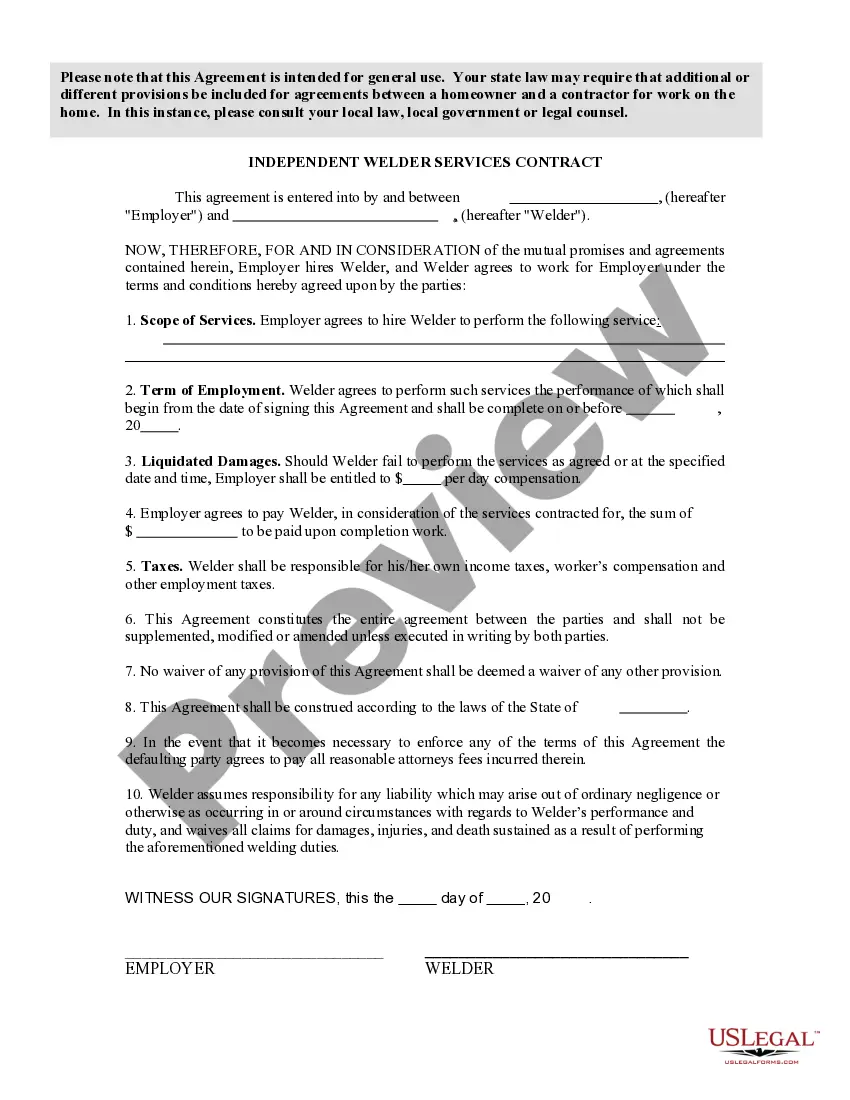
Get your form ready online
Our built-in tools help you complete, sign, share, and store your documents in one place.
Make edits, fill in missing information, and update formatting in US Legal Forms—just like you would in MS Word.
Download a copy, print it, send it by email, or mail it via USPS—whatever works best for your next step.
Sign and collect signatures with our SignNow integration. Send to multiple recipients, set reminders, and more. Go Premium to unlock E-Sign.
If this form requires notarization, complete it online through a secure video call—no need to meet a notary in person or wait for an appointment.
We protect your documents and personal data by following strict security and privacy standards.

Make edits, fill in missing information, and update formatting in US Legal Forms—just like you would in MS Word.

Download a copy, print it, send it by email, or mail it via USPS—whatever works best for your next step.

Sign and collect signatures with our SignNow integration. Send to multiple recipients, set reminders, and more. Go Premium to unlock E-Sign.

If this form requires notarization, complete it online through a secure video call—no need to meet a notary in person or wait for an appointment.

We protect your documents and personal data by following strict security and privacy standards.
Looking for another form?









How to fill out Woodworking Services Contract - Self-Employed?
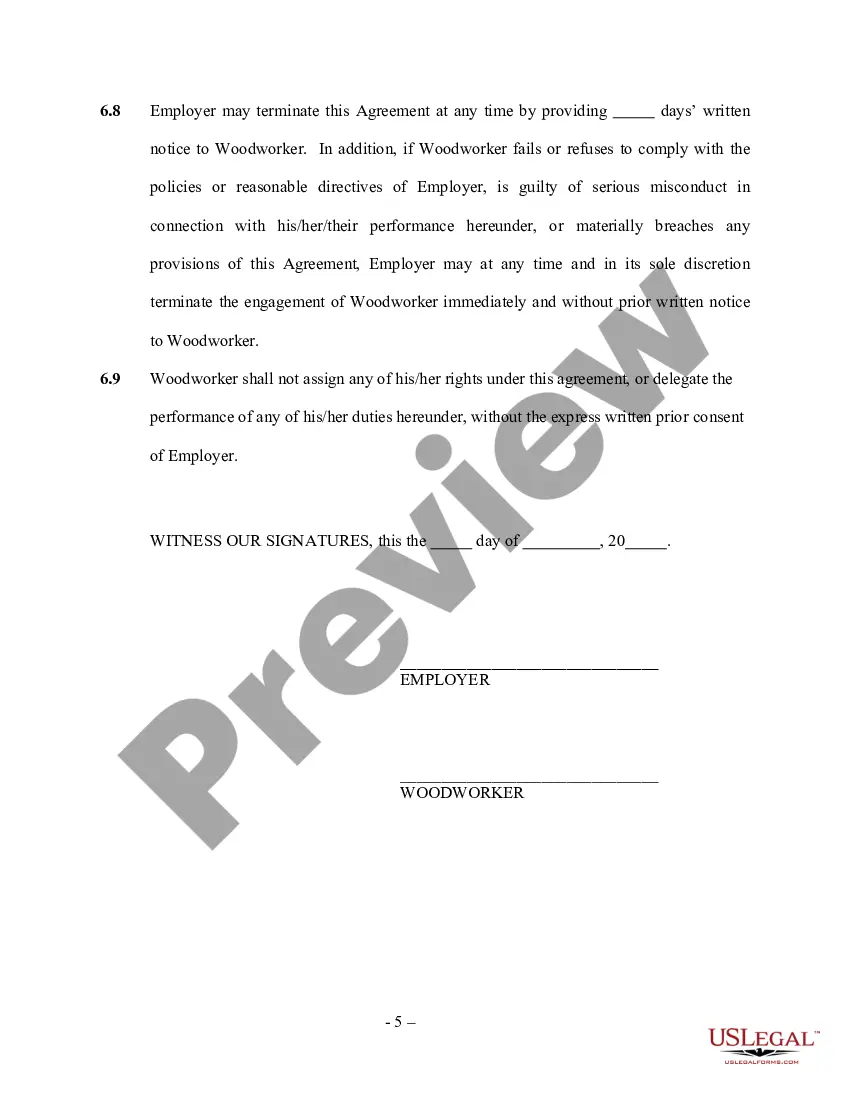
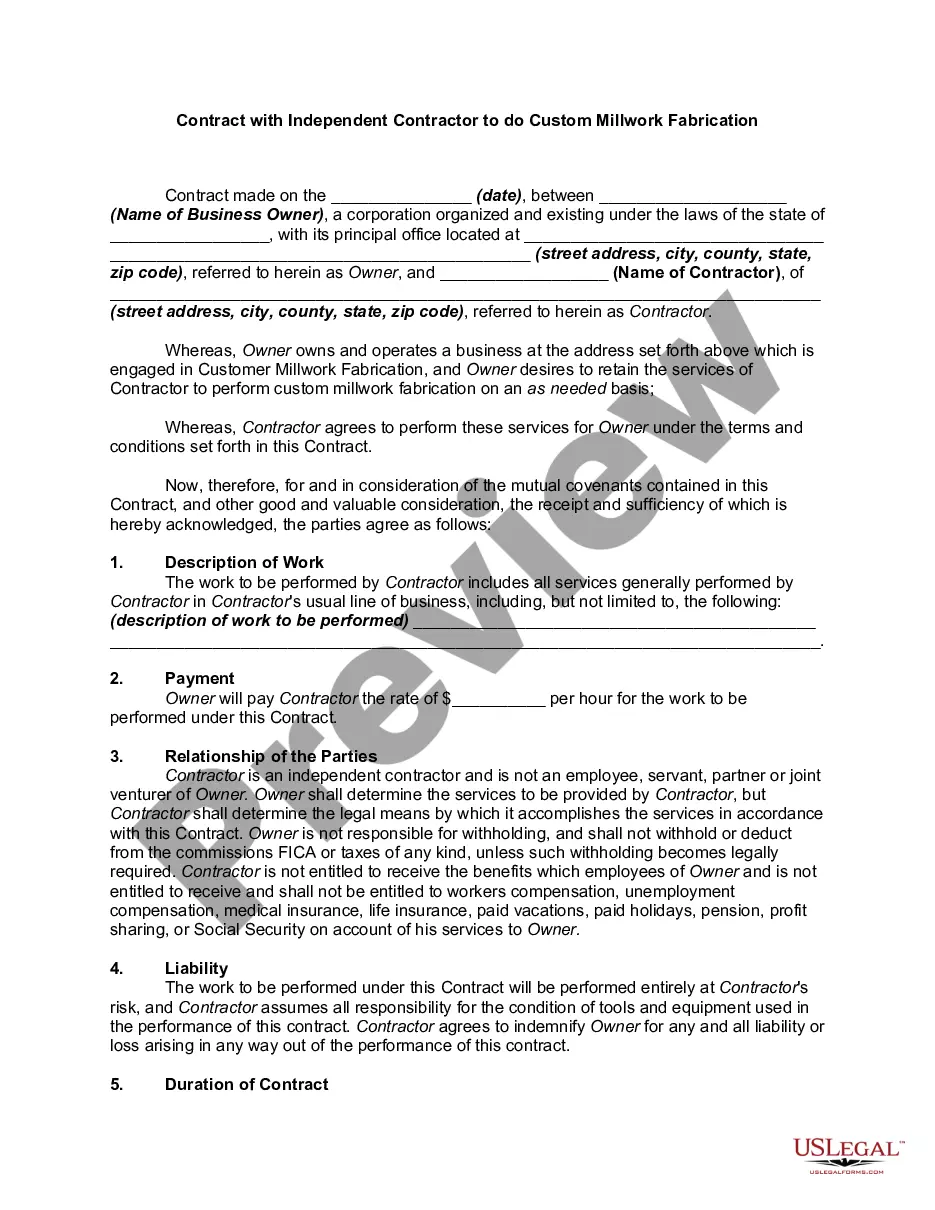
The Woodworking Agreements With Firms you observe on this page is a reusable formal template crafted by experienced attorneys in accordance with federal and state laws.
For over 25 years, US Legal Forms has supplied individuals, organizations, and legal professionals with upwards of 85,000 authenticated, state-specific documents for any business and personal situation. It’s the quickest, simplest, and most reliable method to obtain the documents you require, as the service ensures the utmost level of data security and anti-malware safeguards.
Subscribe to US Legal Forms to have verified legal templates for all of life's situations at your fingertips.
- Search for the document you require and review it.
- Browse the sample you retrieved and preview it or examine the form details to confirm it meets your needs. If it doesn’t, use the search tool to find the correct one. Click Buy Now when you discover the template you need.
- Subscribe and Log In.
- Choose the pricing option that fits you and create an account. Use PayPal or a credit card to complete a quick transaction. If you already possess an account, Log In and review your subscription to proceed.
- Obtain the fillable template.
- Select the format you prefer for your Woodworking Agreements With Firms (PDF, Word, RTF) and save the sample on your device.
- Finish and sign the document.
- Print the template to fill it out by hand. Alternatively, use an online multifunctional PDF editor to swiftly and accurately complete and sign your form with a valid signature.
- Download your documents again.
- Utilize the same document again whenever necessary. Access the My documents tab in your profile to redownload any forms you have previously acquired.
Form popularity
FAQ
A contract should contain everything agreed upon by you and your licensed contractor. It should detail the work, price, when payments will be made, who gets the necessary building permits, and when the job will be finished. The contract also must identify the contractor, and give their address and license number.
How to write a client contract Include contact information of both parties. ... Outline project terms and scope. ... Create payment terms. ... Set a schedule. ... Decide what to do if a contract is terminated. ... Determine who owns final copyrights. ... Clarify the working relationship. ... Choose your law and venue.
Steps to Writing a Contract Cover page - Use this to outline the basic information like the names of the parties, the offer, and the exchange. Introduction of the parties involved - Mention each party's legal name. Beginning and end dates - State how long the contract lasts and if it is renewable.
Your contract service agreement should include information on services being provided, compensation, taxes, terms and conditions of service, confidentiality clauses, warranties, force majeure clauses, indemnification clauses, limitation of liability clauses, and governing law and dispute resolution clauses.
Lesson Summary. A contract is a legal agreement between two or more parties in which they agree to each other's rights and responsibilities. Offer, acceptance, awareness, consideration, and capacity are the five elements of an enforceable contract.