Common Law Requirements In Colorado
Description

Get your form ready online
Our built-in tools help you complete, sign, share, and store your documents in one place.
Make edits, fill in missing information, and update formatting in US Legal Forms—just like you would in MS Word.
Download a copy, print it, send it by email, or mail it via USPS—whatever works best for your next step.
Sign and collect signatures with our SignNow integration. Send to multiple recipients, set reminders, and more. Go Premium to unlock E-Sign.
If this form requires notarization, complete it online through a secure video call—no need to meet a notary in person or wait for an appointment.
We protect your documents and personal data by following strict security and privacy standards.

Make edits, fill in missing information, and update formatting in US Legal Forms—just like you would in MS Word.

Download a copy, print it, send it by email, or mail it via USPS—whatever works best for your next step.

Sign and collect signatures with our SignNow integration. Send to multiple recipients, set reminders, and more. Go Premium to unlock E-Sign.

If this form requires notarization, complete it online through a secure video call—no need to meet a notary in person or wait for an appointment.

We protect your documents and personal data by following strict security and privacy standards.
Looking for another form?










How to fill out USLegal Guide To Common Law Marriage?
Obtaining legal templates that comply with federal and state laws is crucial, and the web provides numerous alternatives to select from.
However, what is the benefit of spending time looking for the suitable Common Law Requirements In Colorado example online when the US Legal Forms digital library already has such templates amassed in one location.
US Legal Forms is the largest internet legal repository with over 85,000 editable templates created by lawyers for any business and personal circumstance.
Review the template using the Preview option or via the text outline to confirm it satisfies your needs.
- They are user-friendly with all documents categorized by state and intended use.
- Our experts stay informed on legal updates, so you can always trust that your documentation is current and compliant when obtaining a Common Law Requirements In Colorado from our site.
- Acquiring a Common Law Requirements In Colorado is quick and straightforward for both existing and new users.
- If you already possess an account with a valid subscription, Log In and download the document sample you need in the desired format.
- If you are new to our site, follow the steps below.
Form popularity
FAQ
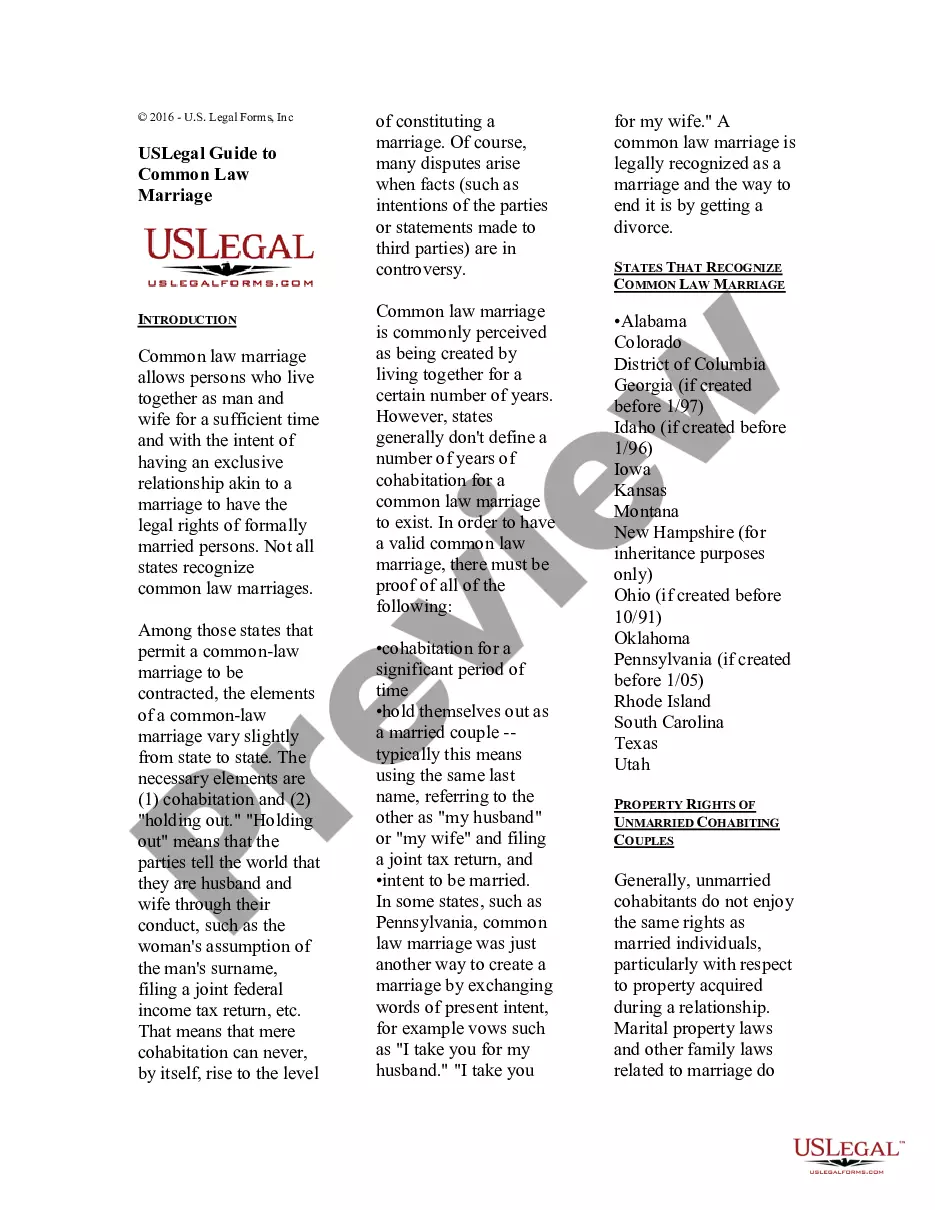
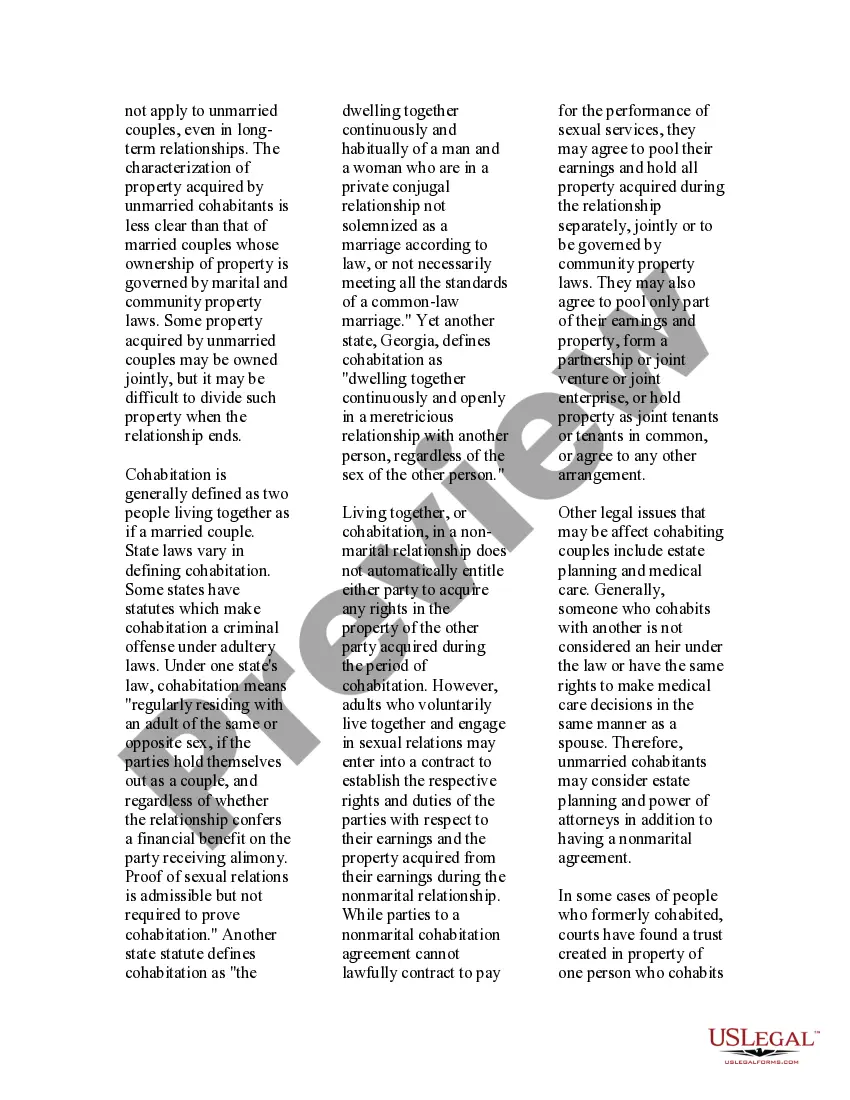
To prove common law marriage in Colorado, you must show that you and your partner meet specific criteria, including cohabitation, mutual agreement to be married, and public recognition of your marriage. Collecting evidence such as shared financial responsibilities, joint leases, or testimonies from friends and family can bolster your claim. If you need assistance navigating this process, US Legal Forms offers resources to help you understand the common law requirements in Colorado.
In Colorado, you do not have to fill out formal paperwork to establish a common law marriage. However, if you want to provide clear evidence of your relationship, creating a written agreement or filing for a marriage license can be beneficial. This step may ease any legal complexities in the future. Familiarizing yourself with the common law requirements in Colorado is essential for clarity.
To prove common law marriage in Colorado, you need to demonstrate that you and your partner have lived together for a significant period, intend to be married, and hold yourselves out as a married couple. This can include sharing a home, having joint bank accounts, or using the same last name. Gathering supporting documents or witness statements can also help establish your relationship. Understanding the common law requirements in Colorado can clarify your situation.
Common law marriage in Colorado requires two individuals to agree to marry and to live together in a mutual relationship, appearing as a married couple to the public. Key elements include demonstrating intent, cohabitation, and public acknowledgment of the relationship. Understanding the common law requirements in Colorado can be complex, so utilizing platforms like US Legal Forms can help clarify your situation and provide necessary documents.
In Colorado, there is no specific duration for cohabitation required to establish a common law marriage. Instead, the relationship must demonstrate mutual consent and a commitment to being seen as a married couple. Factors such as shared finances, joint property ownership, and presenting yourselves as married can contribute to fulfilling the common law requirements in Colorado. If you are unsure about your status, consider consulting resources like US Legal Forms for guidance.
The duration of living together does not strictly determine common law marriage in Colorado; it is more about the nature of the relationship. Therefore, it is not confined to 12 months or 3 years. Instead, the key common law requirements in Colorado focus on mutual consent and cohabitation. For further assistance regarding your specific circumstances, USLegalForms can provide valuable information and tools.
To qualify as a common law marriage in Colorado, both partners must agree to be married and live together as a couple. Additionally, they must present themselves to others as a married couple. Understanding these common law requirements in Colorado is crucial to ensure that your relationship meets legal standards. Utilizing platforms like USLegalForms can guide you through the necessary steps to establish your common law marriage.
In Colorado, there is no specific time frame that defines how long a couple must live together to establish a common law marriage. Instead, the relationship must demonstrate mutual consent to be married and cohabitation. Many factors contribute to meeting the common law requirements in Colorado, such as shared finances and public acknowledgment of the relationship. If you seek clarity on your situation, USLegalForms provides resources to help.
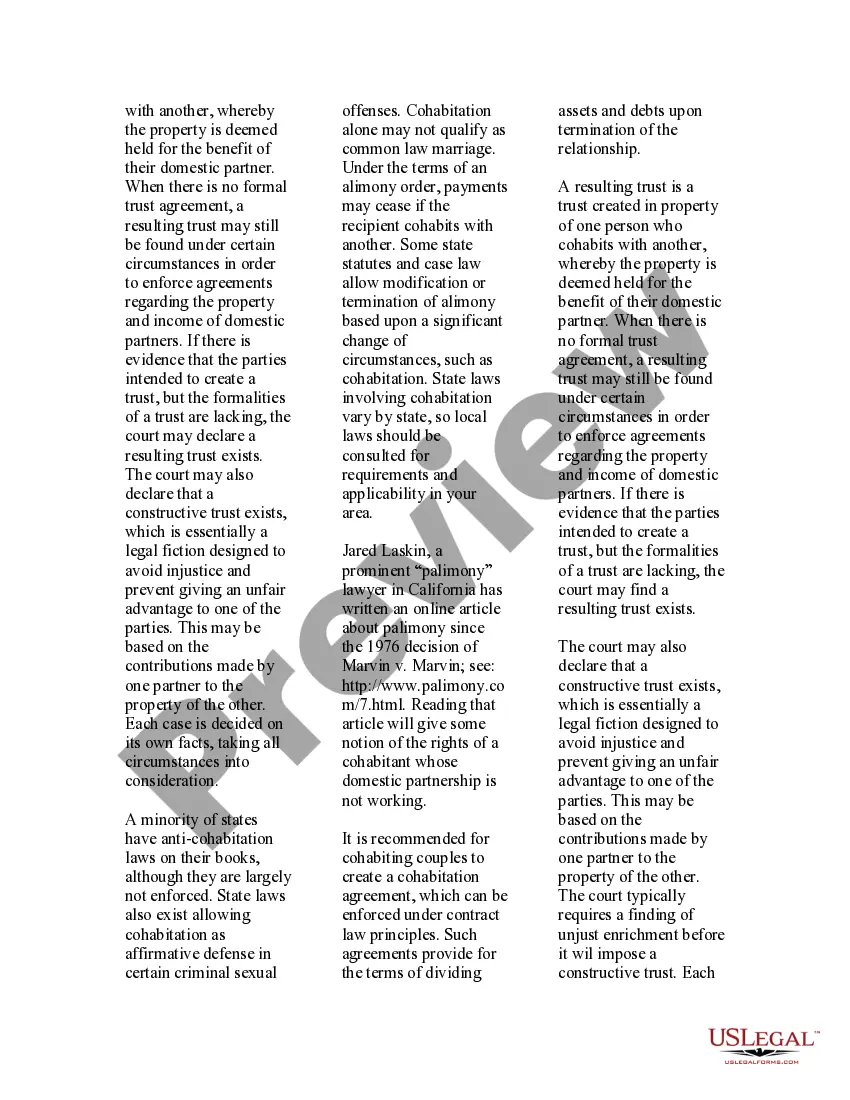
In Colorado, a common law spouse has rights similar to those of a formally married spouse. This includes rights to property acquired during the relationship and potential spousal support in the event of separation. Understanding these common law requirements in Colorado is essential for individuals in such relationships. For legal assistance, consider using USLegalForms to navigate the complexities of common law rights.