Employee Accommodation Disability With A Lawyer
Description
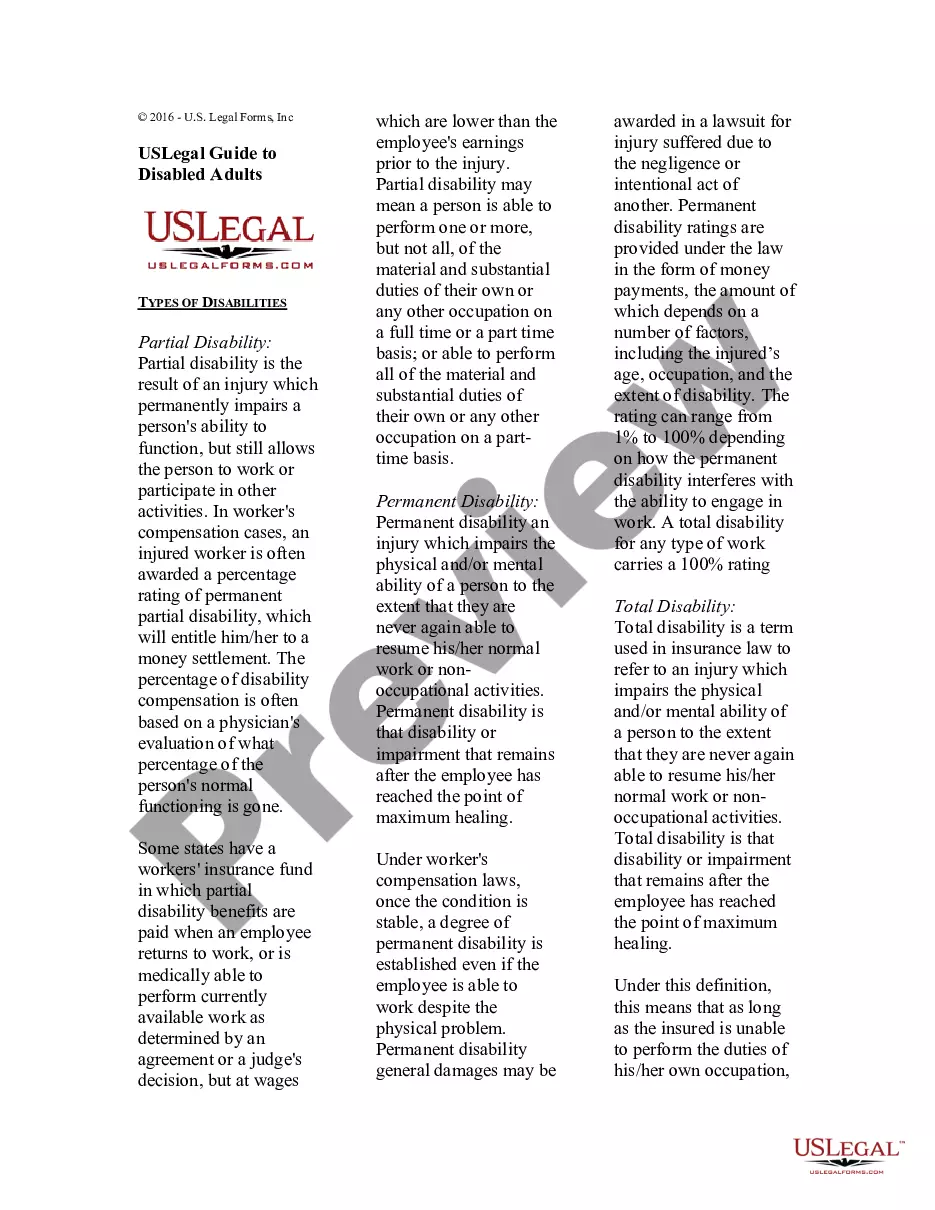
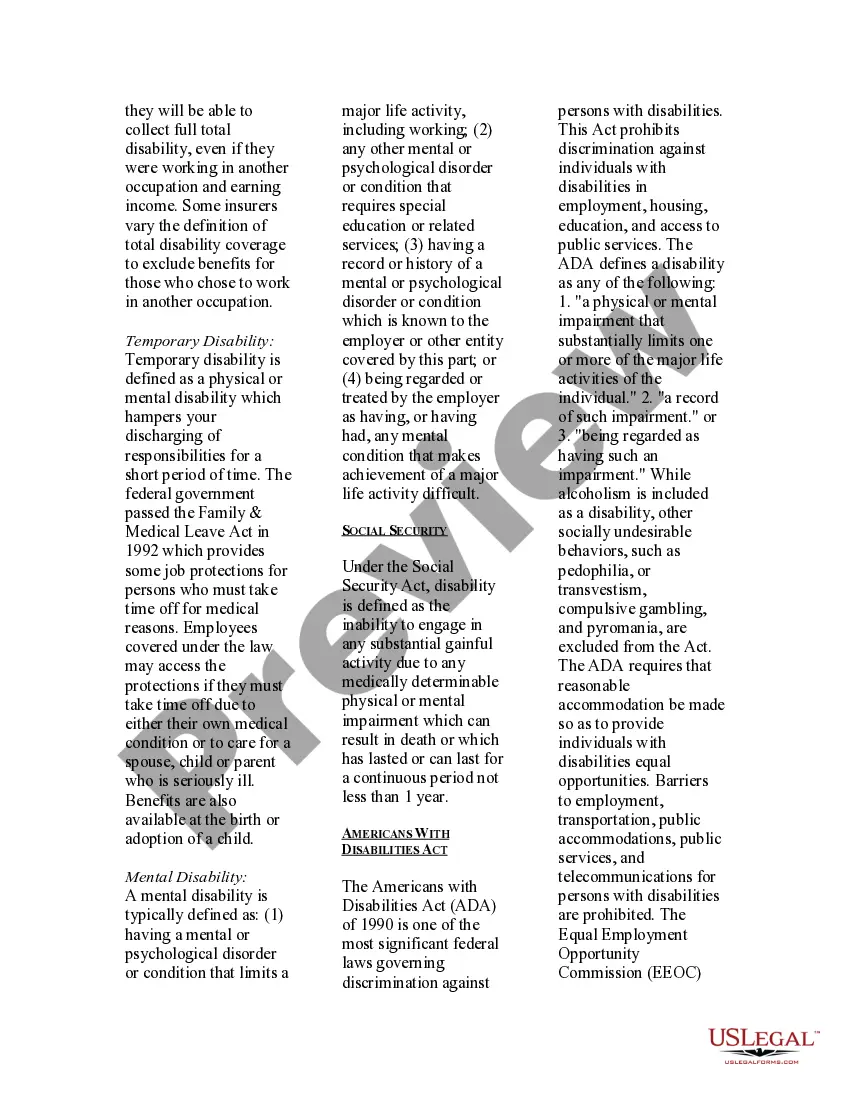
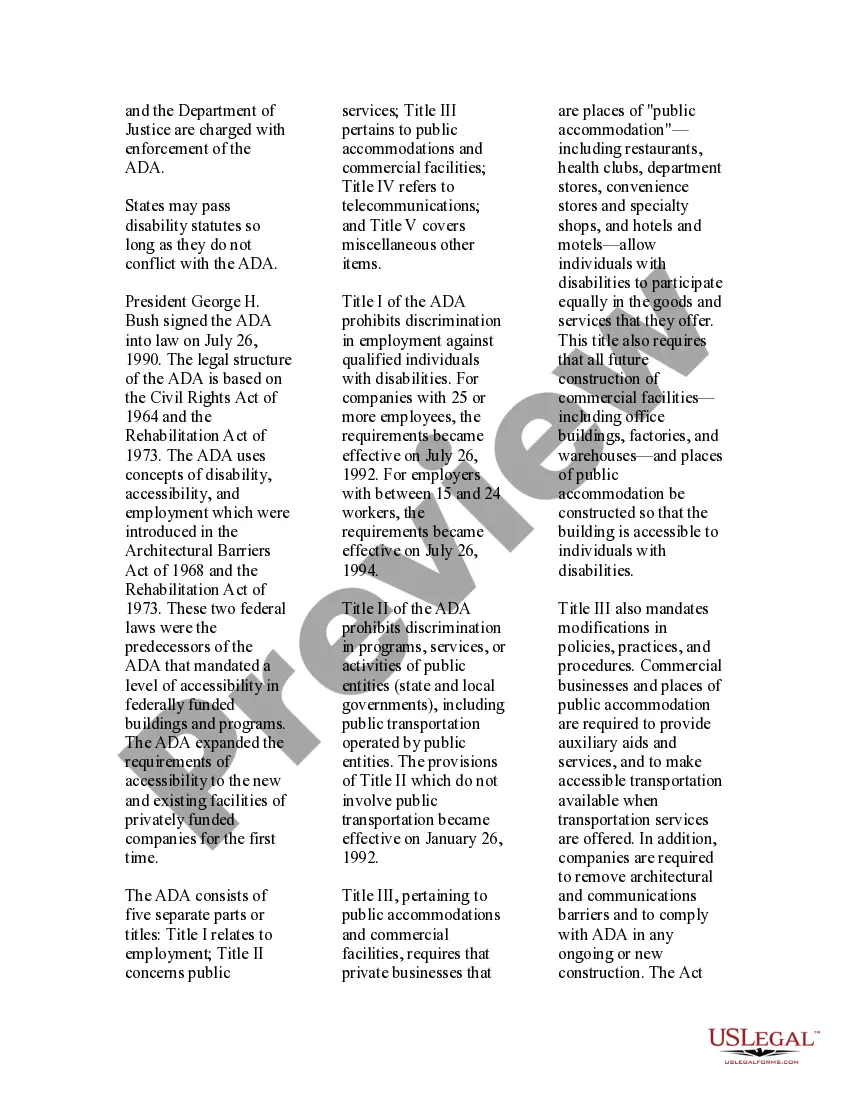
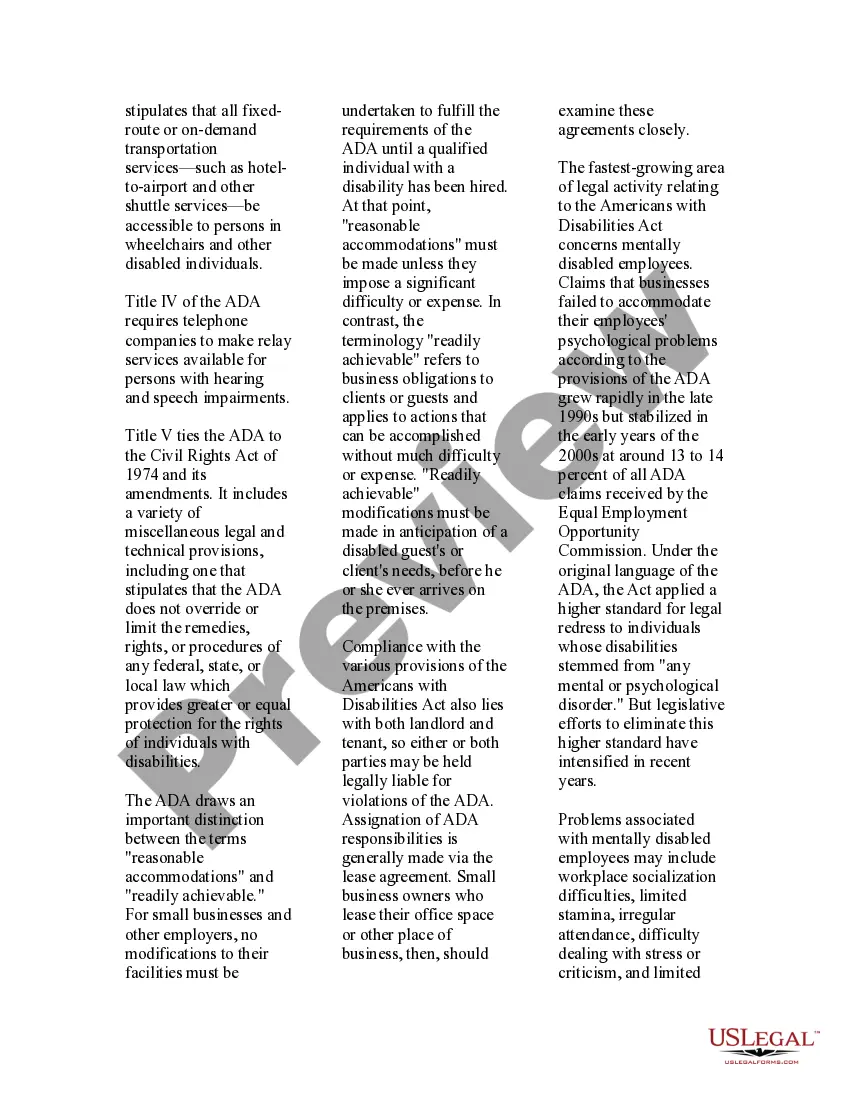
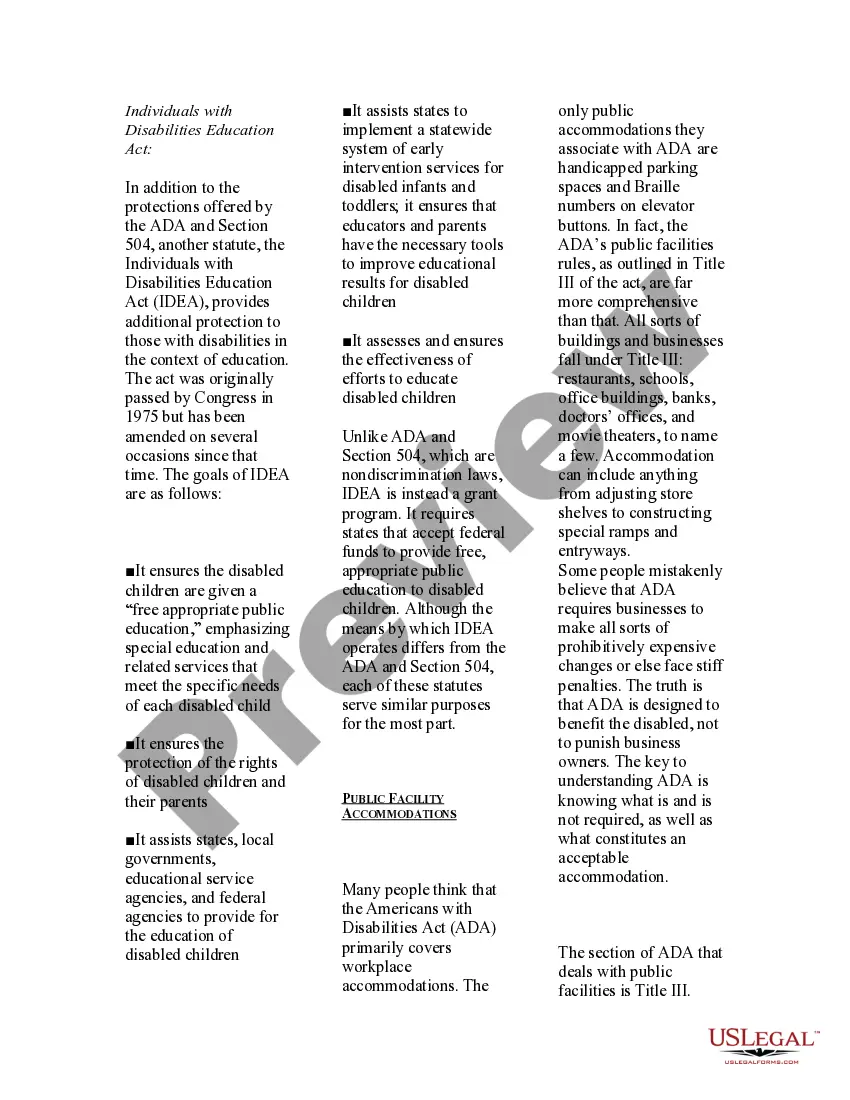
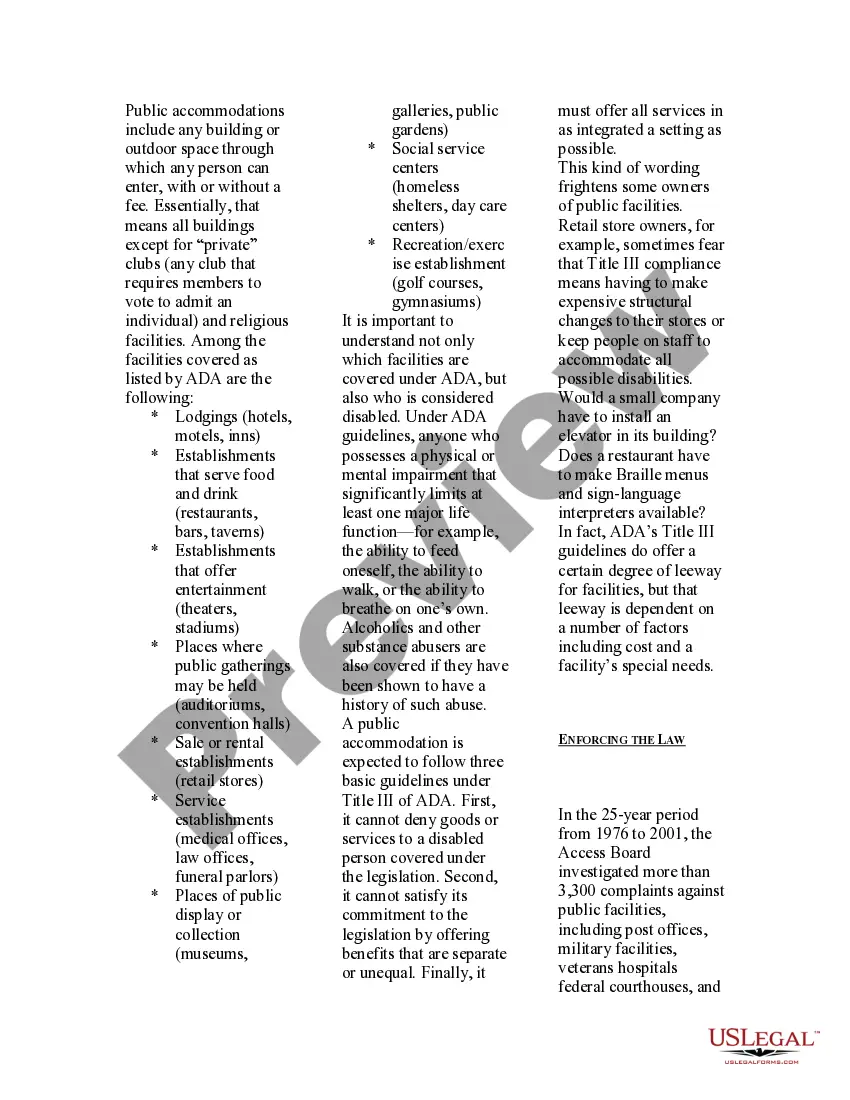






How to fill out USLegal Guide To Disabled Adults?
- If you are an existing user, log in to your account on the US Legal Forms website and ensure your subscription is active.
- Browse or search for the specific employee accommodation form you need, checking the preview and description for accuracy.
- Should you find discrepancies, utilize the search functionality to locate a suitable alternative.
- Purchase the document by selecting 'Buy Now' and choose your preferred subscription plan.
- Complete your transaction by entering your payment details via credit card or PayPal.
- Download the form to your device and access it anytime from the 'My Forms' section in your account.
US Legal Forms not only provides an extensive array of legal documents but also empowers users with expert support, ensuring your forms are complete and compliant with legal standards.
Don't wait to get your employee accommodations sorted—visit US Legal Forms today and simplify your legal journey!
Form popularity
FAQ
For a reasonable accommodation request, you typically need to provide medical documentation supporting your disability. This documentation should outline your limitations and the accommodations you believe would help you perform your job effectively. Additionally, it's helpful to include any correspondence with your employer regarding your request. Engaging with a lawyer can further ensure that your documentation meets legal requirements and strengthens your case.
To advocate for accommodations at work, start by discussing your needs with your supervisor or HR. Clearly explain how your disability affects your job and what specific accommodations you require. Document your conversations and keep records of any agreements made. If needed, consult a lawyer specializing in employee accommodation disability to help ensure your rights are protected.
Engaging a lawyer can increase your chances of receiving employee accommodation disability. Lawyers understand the legal requirements and can help you navigate the complexities of the claims process. They can assess your situation, gather necessary evidence, and represent your interests effectively. Their expertise ensures you meet all criteria set by the law, which can lead to a favorable outcome.
To accommodate disability in the workplace, it is crucial to first assess the specific needs of the employee. This may involve adjusting tasks, modifying equipment, or enhancing accessibility throughout the office. Open communication is key to understanding these needs. Engaging with an employee accommodation disability with a lawyer allows employers to implement effective solutions that comply with legal requirements while fostering a supportive work atmosphere.
Employee accommodation disability with a lawyer often involves various methods to support workers with disabilities. Common means include modifying work schedules, providing assistive technologies, ensuring accessibility to facilities, offering flexible job duties, and facilitating remote work options. Each accommodation aims to create a more inclusive workplace environment. Consulting a lawyer can help navigate the complexities of these accommodations effectively.
Filling out a reasonable accommodation form starts with providing accurate information about your disability and how it affects your job performance. Clearly indicate the specific adjustments you are requesting and any supporting documentation, if necessary. Utilizing the expertise of an employee accommodation disability with a lawyer can streamline this process and help you submit a strong request.
Examples of reasonable accommodations include providing assistive technologies, adjusting work schedules, or altering job duties. Each accommodation should be tailored to the individual's needs and the specific nature of their disability. Engaging with an employee accommodation disability with a lawyer can provide you with tailored advice on suitable accommodations for your workplace.
A reasonable accommodation statement articulates the adjustments that will allow an employee to perform their job. For instance, 'I need a modified schedule to attend medical appointments regularly related to my disability.' Consulting an employee accommodation disability with a lawyer can help create a compelling statement that aligns with legal protections.
An accommodation statement typically outlines the specific adjustments being requested by an employee. For example, 'I am requesting to work from home two days a week to better manage my disability symptoms.' Using an employee accommodation disability with a lawyer can help you draft a statement that meets all necessary requirements.
Accommodating disability in the workplace involves making adjustments that enable employees to perform their duties effectively. This may include modifying workspaces, providing specialized equipment, or offering flexible work hours. Consult with an employee accommodation disability with a lawyer to understand your obligations and ensure compliance with relevant laws.