Framework Agreement Proz
Description

Get your form ready online
Our built-in tools help you complete, sign, share, and store your documents in one place.
Make edits, fill in missing information, and update formatting in US Legal Forms—just like you would in MS Word.
Download a copy, print it, send it by email, or mail it via USPS—whatever works best for your next step.
Sign and collect signatures with our SignNow integration. Send to multiple recipients, set reminders, and more. Go Premium to unlock E-Sign.
If this form requires notarization, complete it online through a secure video call—no need to meet a notary in person or wait for an appointment.
We protect your documents and personal data by following strict security and privacy standards.

Make edits, fill in missing information, and update formatting in US Legal Forms—just like you would in MS Word.

Download a copy, print it, send it by email, or mail it via USPS—whatever works best for your next step.

Sign and collect signatures with our SignNow integration. Send to multiple recipients, set reminders, and more. Go Premium to unlock E-Sign.

If this form requires notarization, complete it online through a secure video call—no need to meet a notary in person or wait for an appointment.

We protect your documents and personal data by following strict security and privacy standards.
Looking for another form?

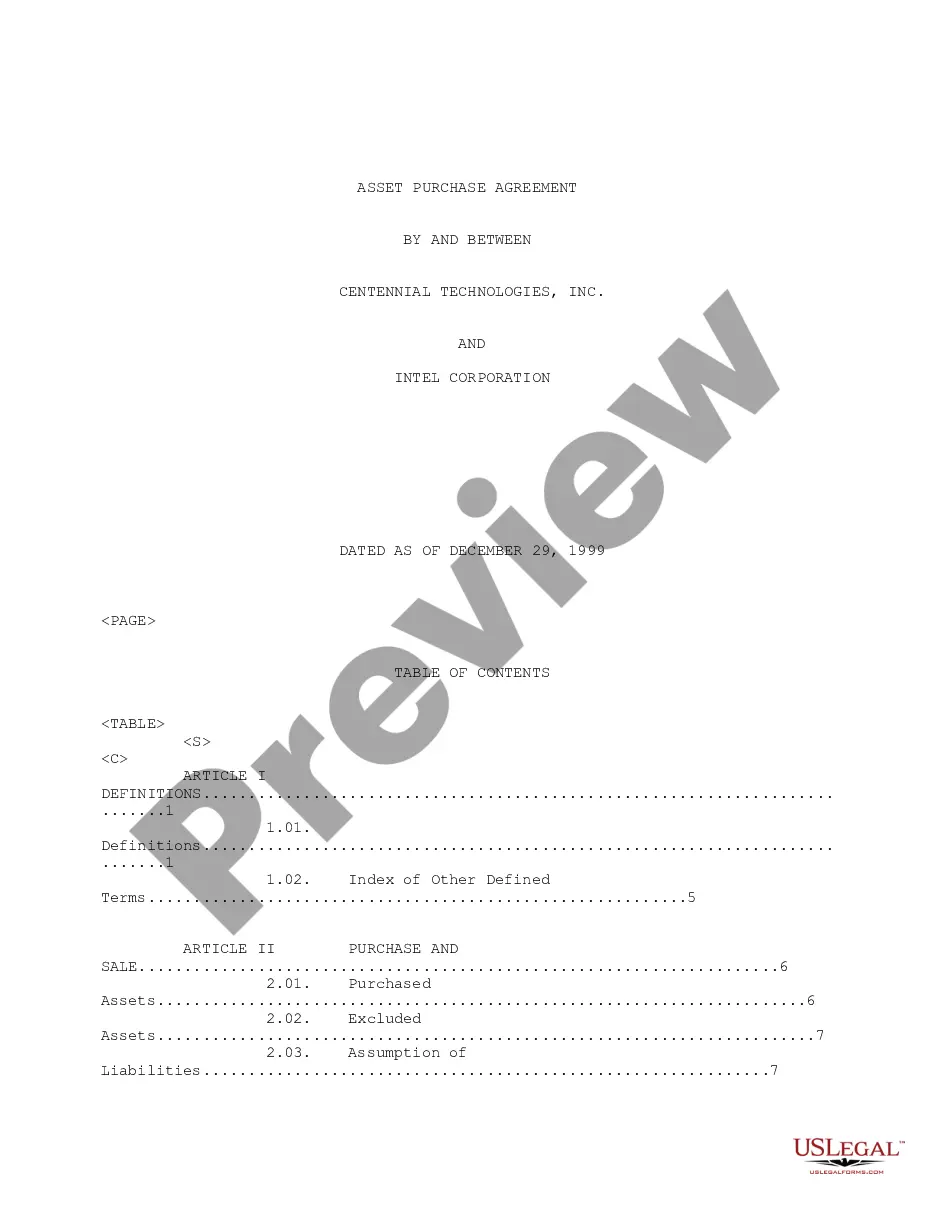
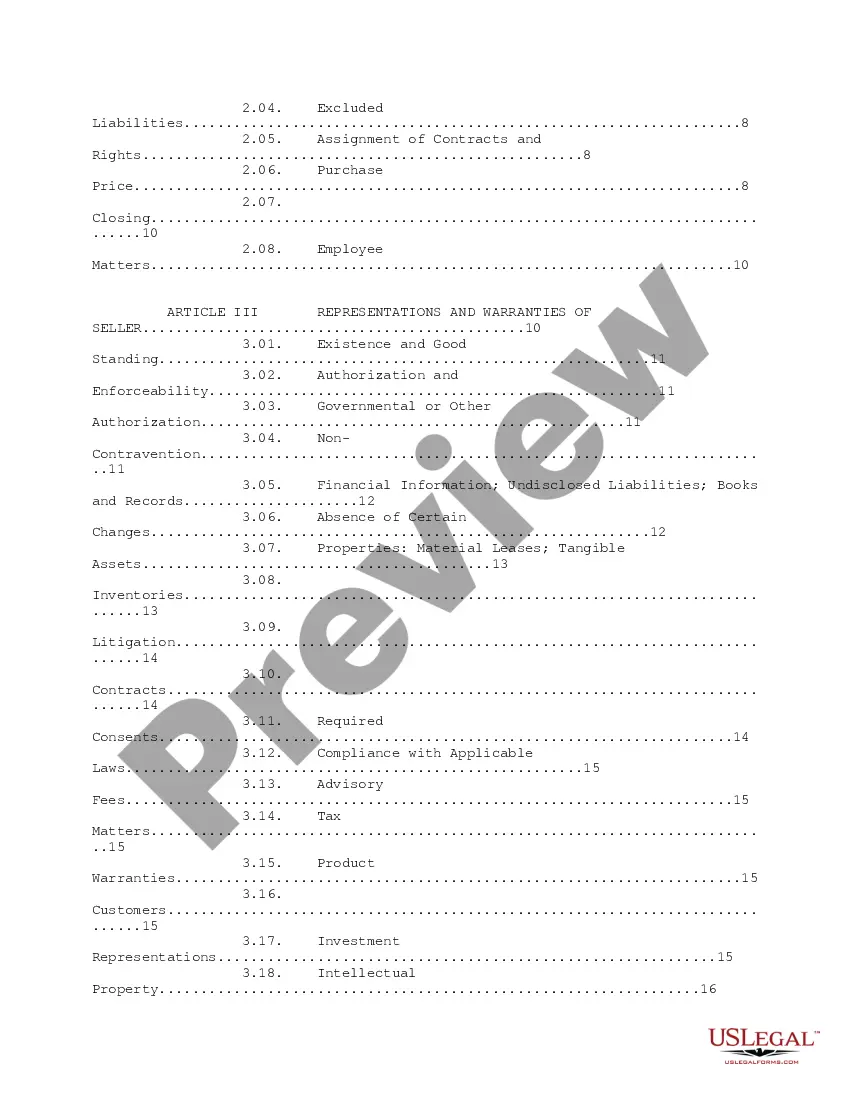
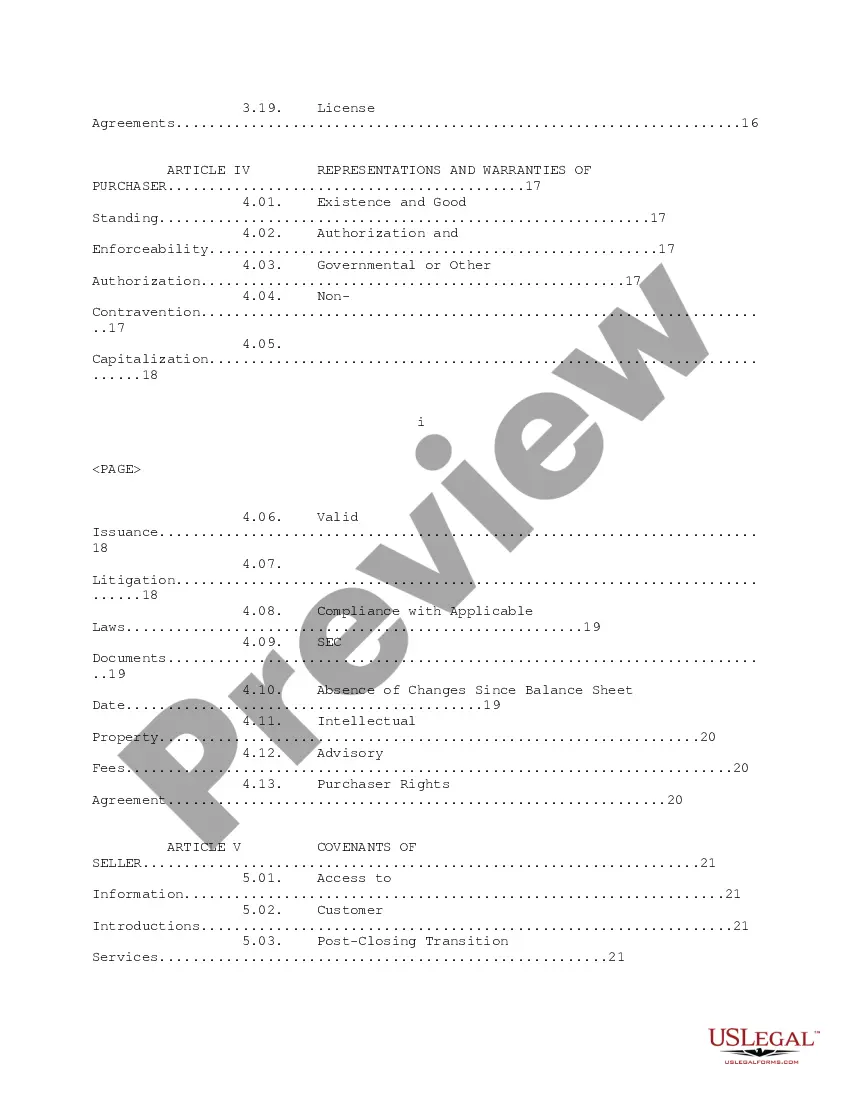
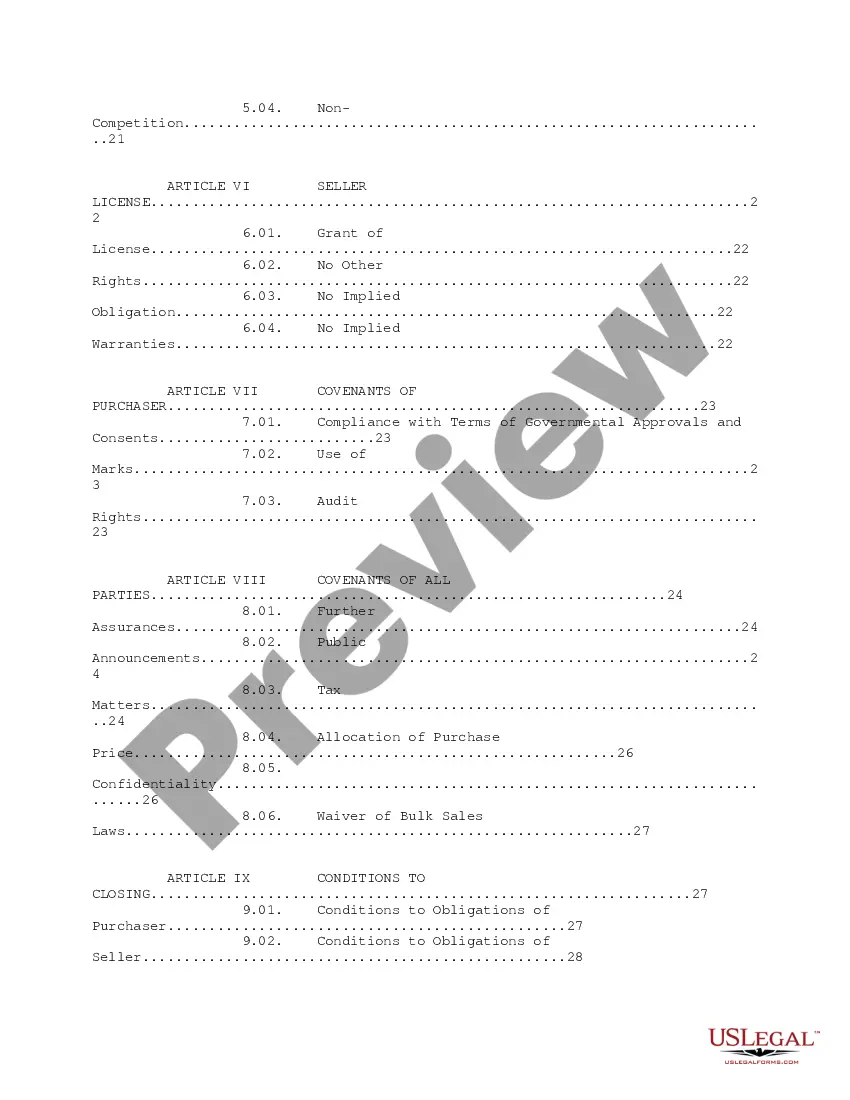
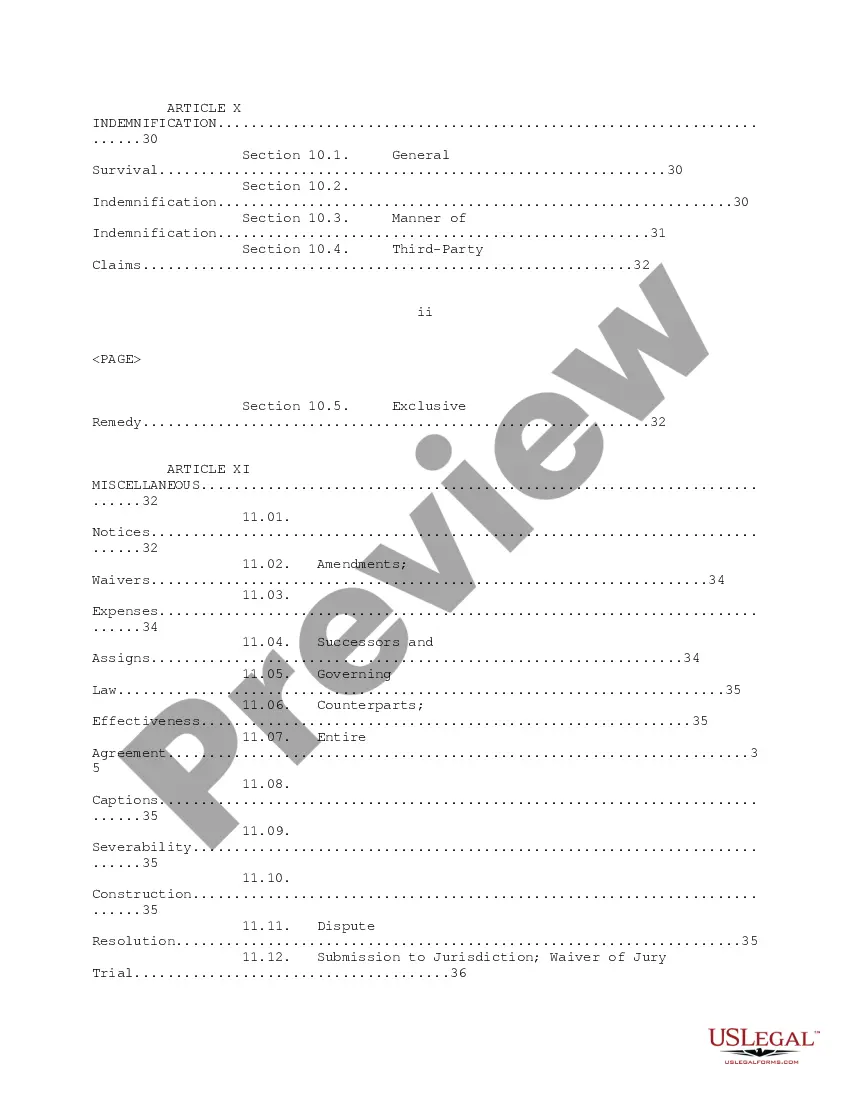
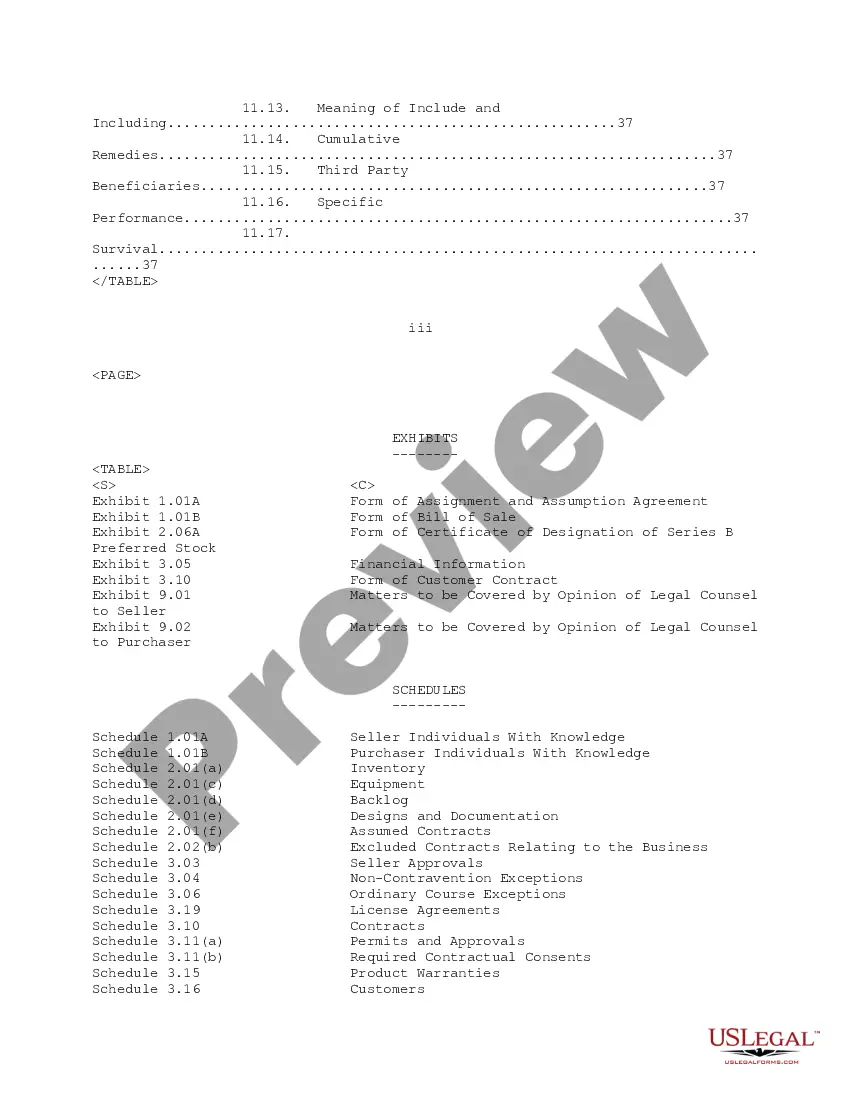
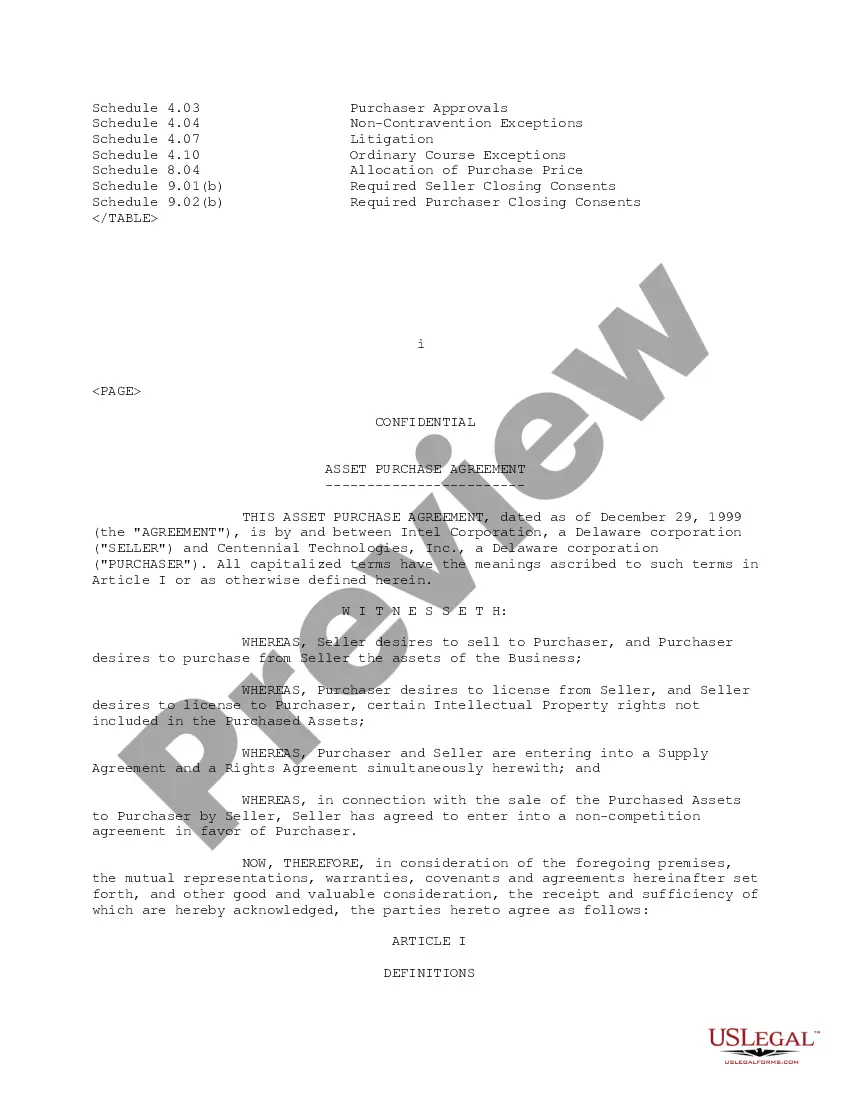
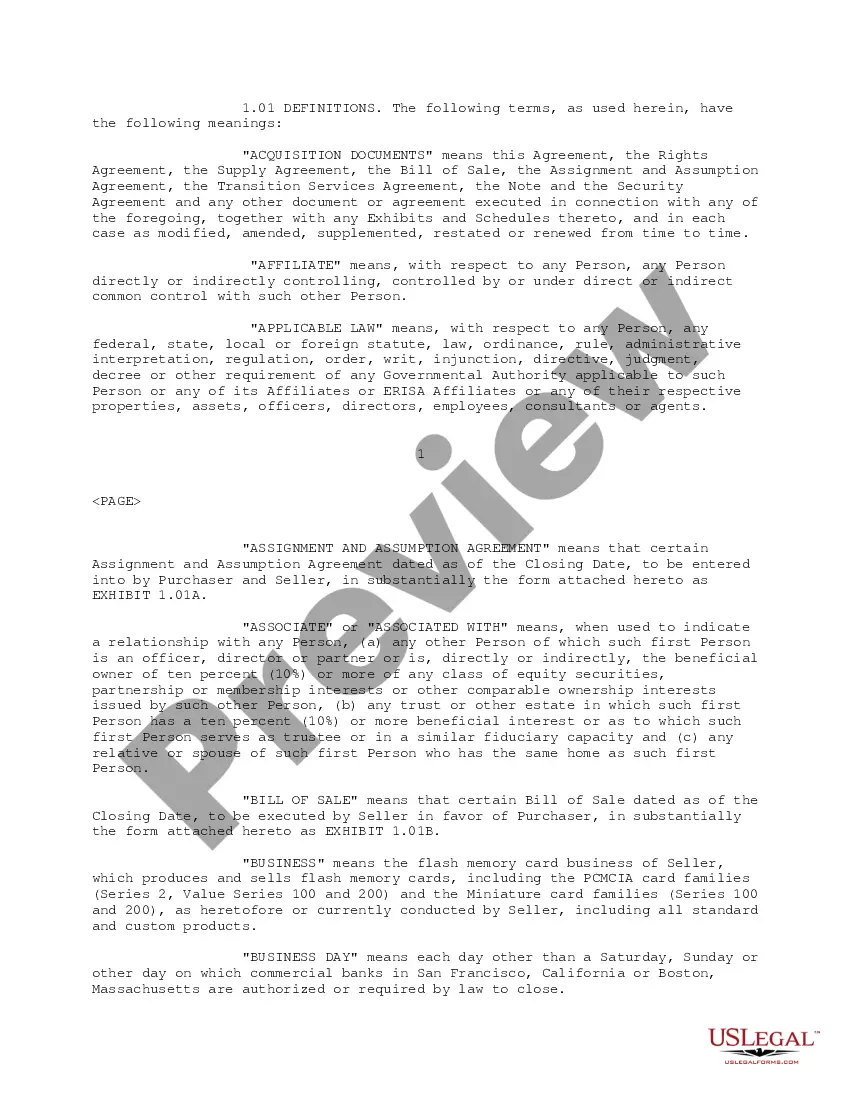
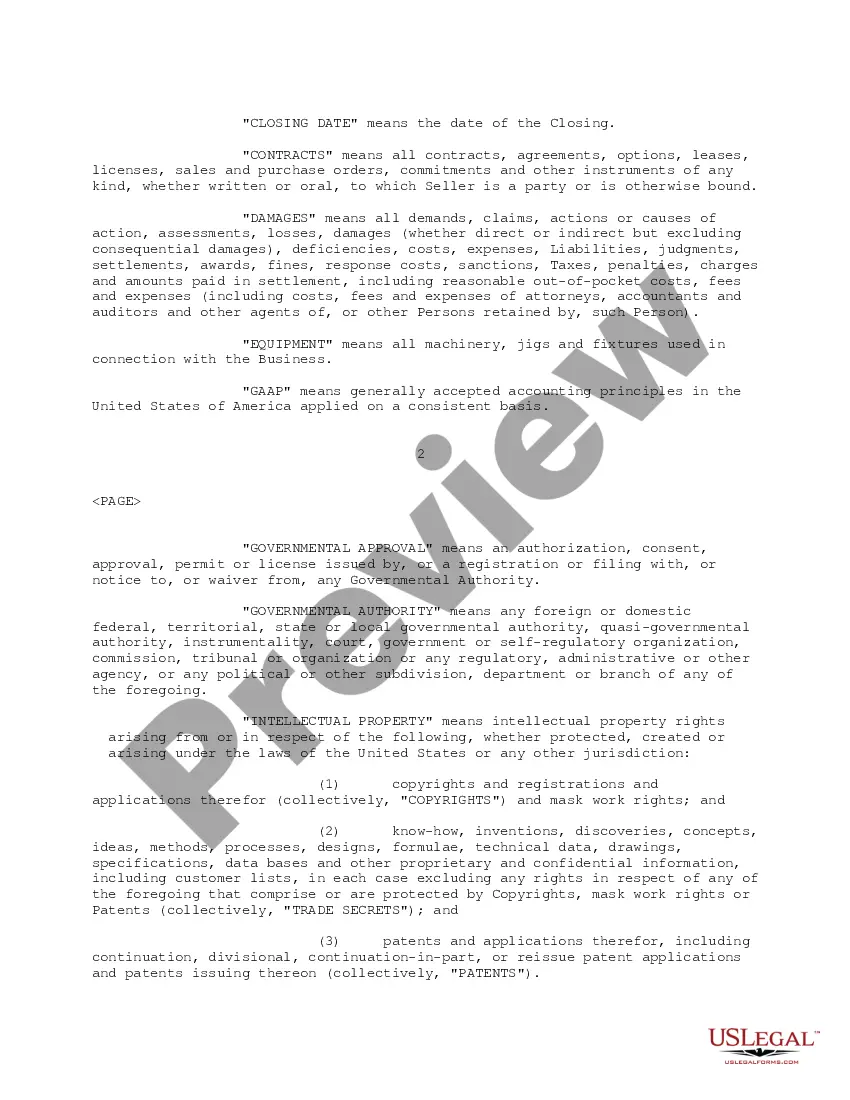
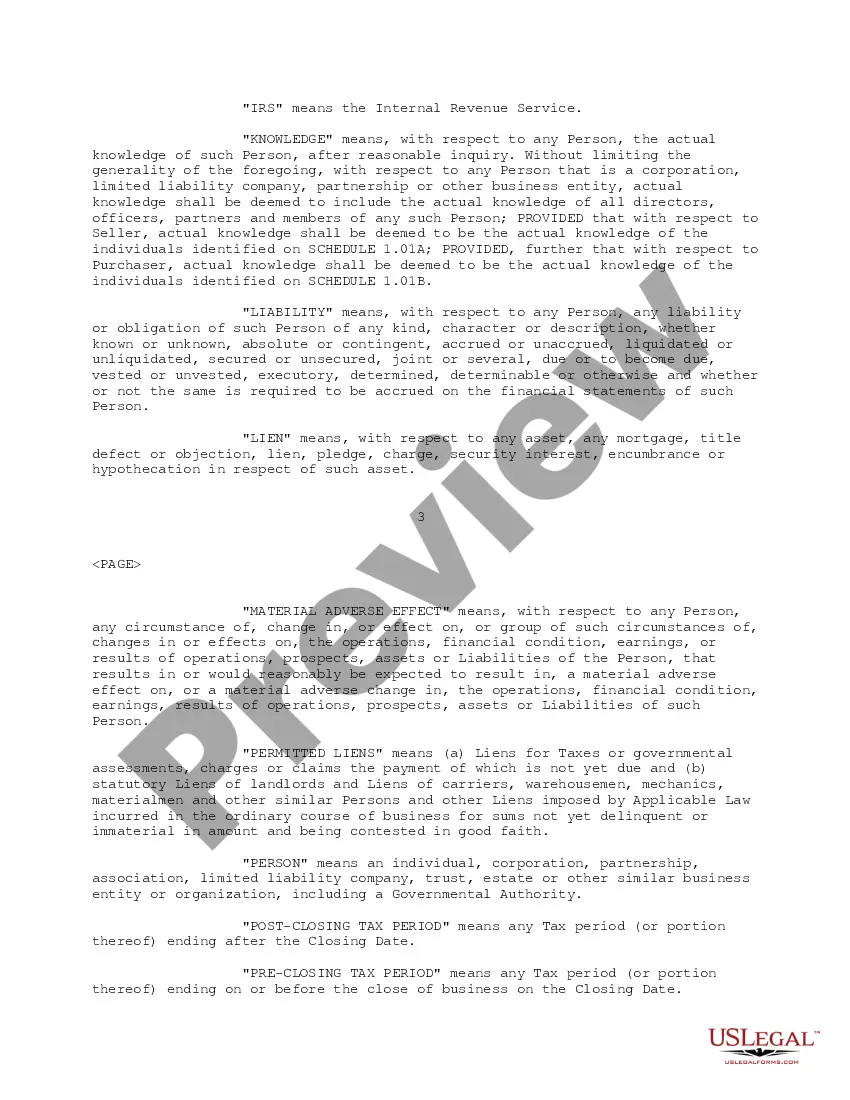
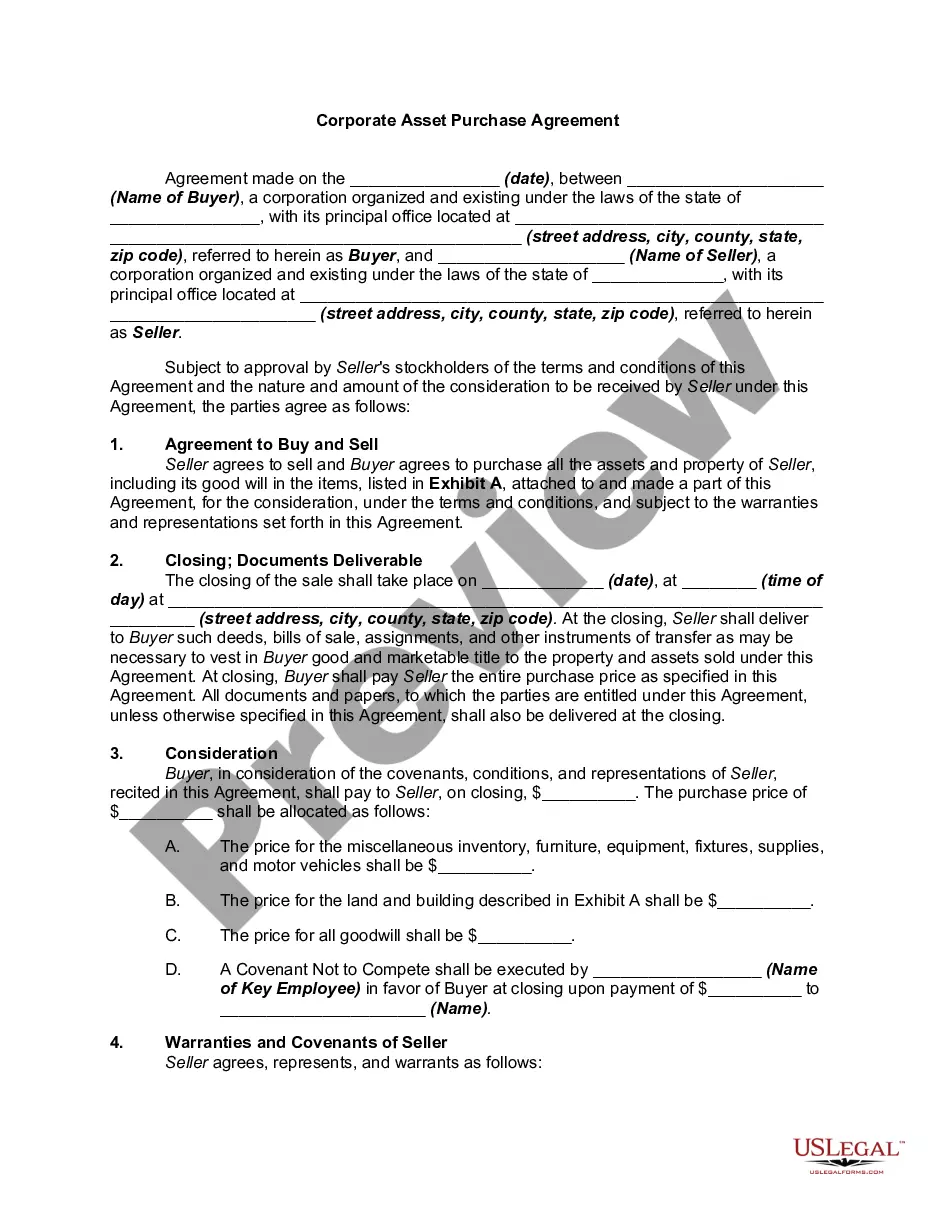
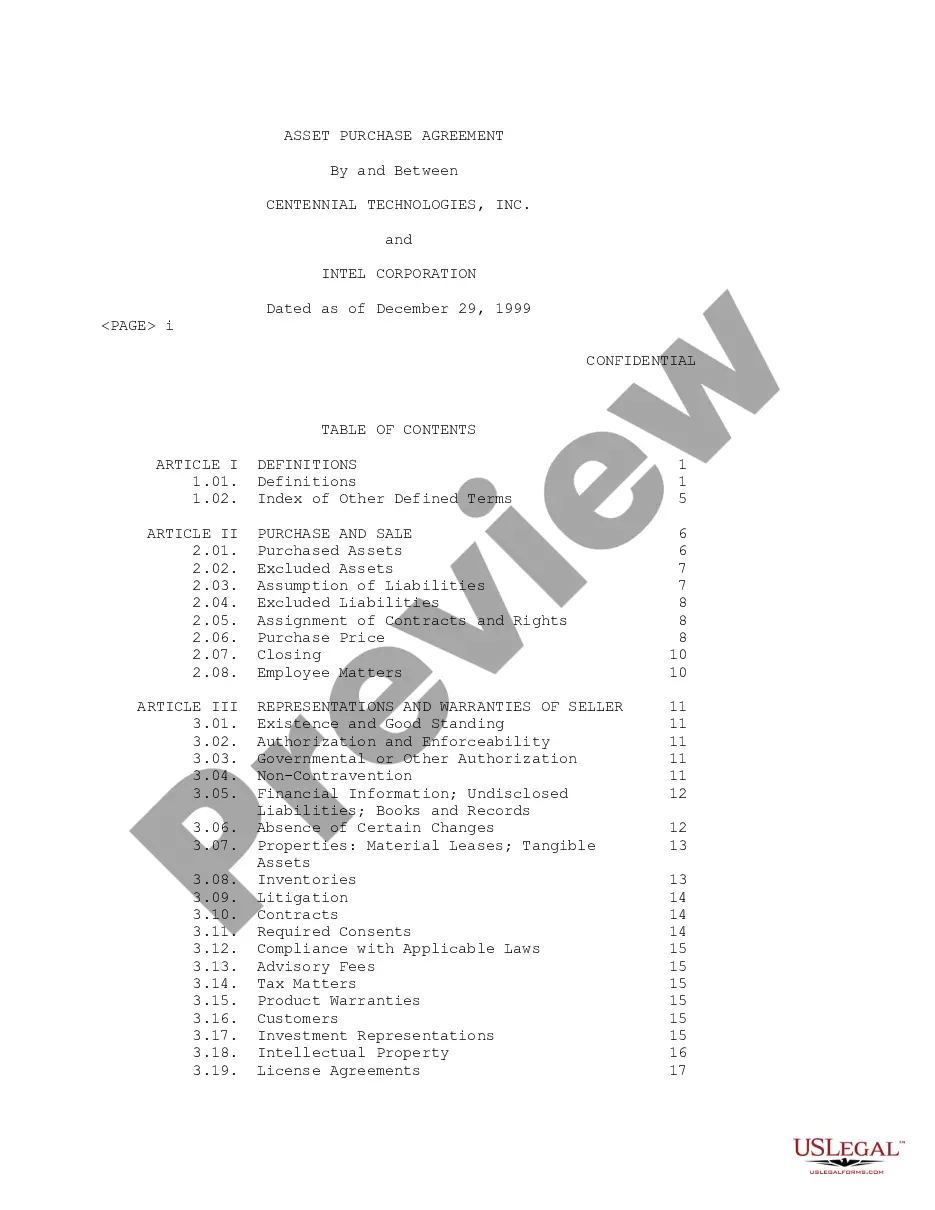
How to fill out Sample Asset Purchase Agreement Between Centennial Technologies, Inc. And Intel Corporation - Sample?
- Log into your account if you're a returning user. Ensure your subscription is active; renew if necessary.
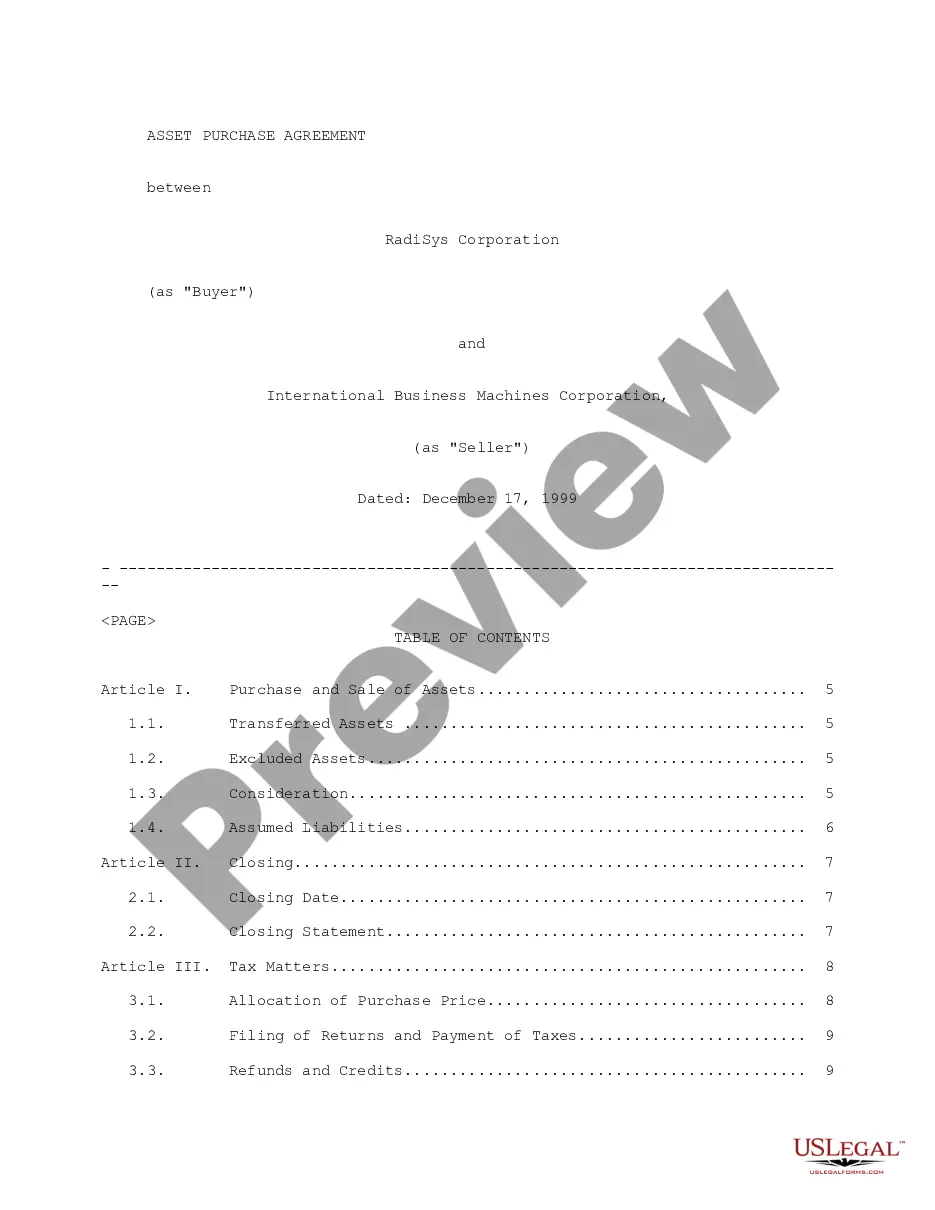
- For new users, start by previewing the framework agreement proz. Confirm it matches your requirements and complies with your local regulations.
- If you find any discrepancies or need a different form, utilize the search function above to locate the appropriate document.
- Once satisfied with your selection, click on the 'Buy Now' button and choose your preferred subscription plan. You will need to create an account to access the full library.
- Complete your purchase using your credit card or PayPal. Ensure all information is accurate for a smooth transaction.
- Download your framework agreement proz and save it on your device. You can also find it in 'My Forms' in your profile for future reference.
US Legal Forms not only provides a robust collection of legal templates but also offers access to premium experts who can assist in form completion, ensuring your documents are precise and legally sound.
Take control of your legal needs today with US Legal Forms. Start your journey towards hassle-free document management now!
Form popularity
FAQ
When entering a framework agreement proz, it is essential to understand the key conditions involved. Generally, these agreements outline the obligations and rights of the parties, specifying the scope of work and the duration of the agreement. They also detail payment terms, delivery timelines, and dispute resolution processes. By clearly defining these conditions, a framework agreement proz provides a structured approach that benefits both parties, ensuring transparency and collaboration.
A framework agreement serves as an overarching structure that governs multiple future purchases, whereas a call-off contract specifies an immediate order based on the terms set within that framework. Essentially, a call-off contract allows for specific transactions to occur under the established guidelines of the framework agreement proz. Understanding this difference can help businesses effectively manage their procurement strategies and ensure compliance.
A frame agreement sets the foundation for future transactions, outlining general terms without specifying exact quantities or timelines, while a contract usually details specific obligations and deliverables. In essence, a framework agreement proz provides a flexible structure that allows for multiple contracts under its umbrella. This distinction enables organizations to adapt to changing needs without renegotiating the fundamental terms each time.
While framework agreements offer numerous benefits, they can also present some drawbacks. One potential issue is the risk of reduced flexibility, as organizations may feel committed to certain suppliers over time. Additionally, if not managed correctly, a framework agreement proz can lead to complacency, where parties might not seek better deals or alternatives as the agreement progresses.
A framework agreement is a type of contract that establishes the terms and conditions under which specific purchases can be made over a set period. This arrangement allows organizations to streamline their procurement processes, ensuring consistency and efficiency. With a focus on framework agreement proz, businesses can utilize this method to maintain quality and manage costs effectively.
An MSA, or Master Services Agreement, is more comprehensive in nature compared to a standard agreement. It covers the entire relationship between the parties, including various aspects such as services, responsibilities, and payment terms. In contrast, an agreement might address specific terms tied to a single project rather than the broader relationship, making an MSA a crucial document for ongoing work.
The primary difference lies in the scope and flexibility. A standard agreement typically outlines specific terms for a single transaction, while a framework agreement provides a structure for multiple transactions over time. This makes a framework agreement proz a preferred choice for businesses looking to establish ongoing relationships with suppliers or partners.
A framework services agreement outlines the specific terms under which services will be provided over a defined period. It sets the groundwork for the quality, scope, and frequency of services, allowing for a clear understanding between parties. Utilizing a framework services agreement proz can help businesses optimize their service delivery and maintain consistent experiences.
A framework agreement is a versatile contract that provides the groundwork for future agreements and interactions between parties. It establishes the terms and conditions under which future contracts can be formed, allowing for quick and easy transactions. Businesses often use a framework agreement proz to streamline their processes and enhance collaboration.
A frame agreement is essentially a long-term agreement that sets the terms for future transactions between parties. It simplifies the negotiation process for each new contract by providing a pre-established framework. This approach can lead to increased efficiency and better relationships, as parties can quickly engage in transactions without starting from scratch.