Holding Company For Property
Description







Get your form ready online
Our built-in tools help you complete, sign, share, and store your documents in one place.
Make edits, fill in missing information, and update formatting in US Legal Forms—just like you would in MS Word.
Download a copy, print it, send it by email, or mail it via USPS—whatever works best for your next step.
Sign and collect signatures with our SignNow integration. Send to multiple recipients, set reminders, and more. Go Premium to unlock E-Sign.
If this form requires notarization, complete it online through a secure video call—no need to meet a notary in person or wait for an appointment.
We protect your documents and personal data by following strict security and privacy standards.

Make edits, fill in missing information, and update formatting in US Legal Forms—just like you would in MS Word.

Download a copy, print it, send it by email, or mail it via USPS—whatever works best for your next step.

Sign and collect signatures with our SignNow integration. Send to multiple recipients, set reminders, and more. Go Premium to unlock E-Sign.

If this form requires notarization, complete it online through a secure video call—no need to meet a notary in person or wait for an appointment.

We protect your documents and personal data by following strict security and privacy standards.
Looking for another form?






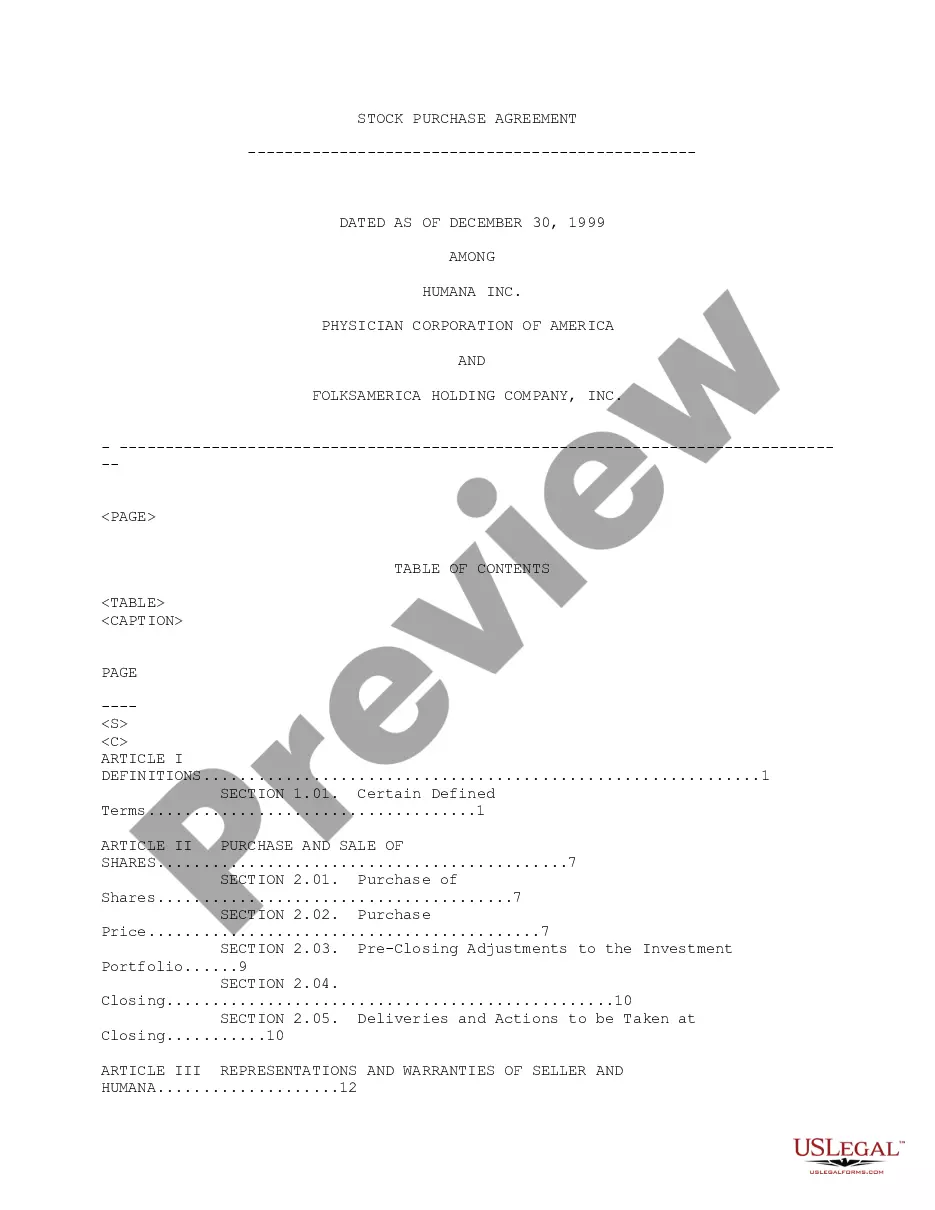
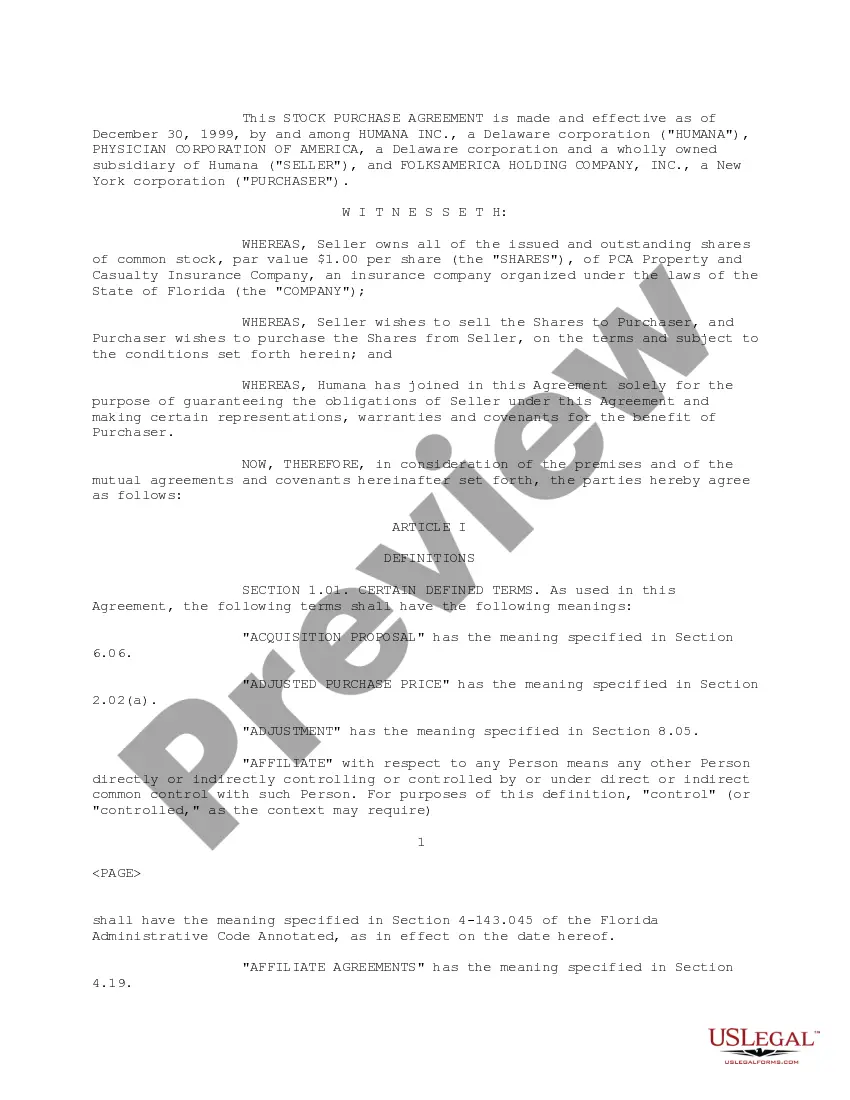
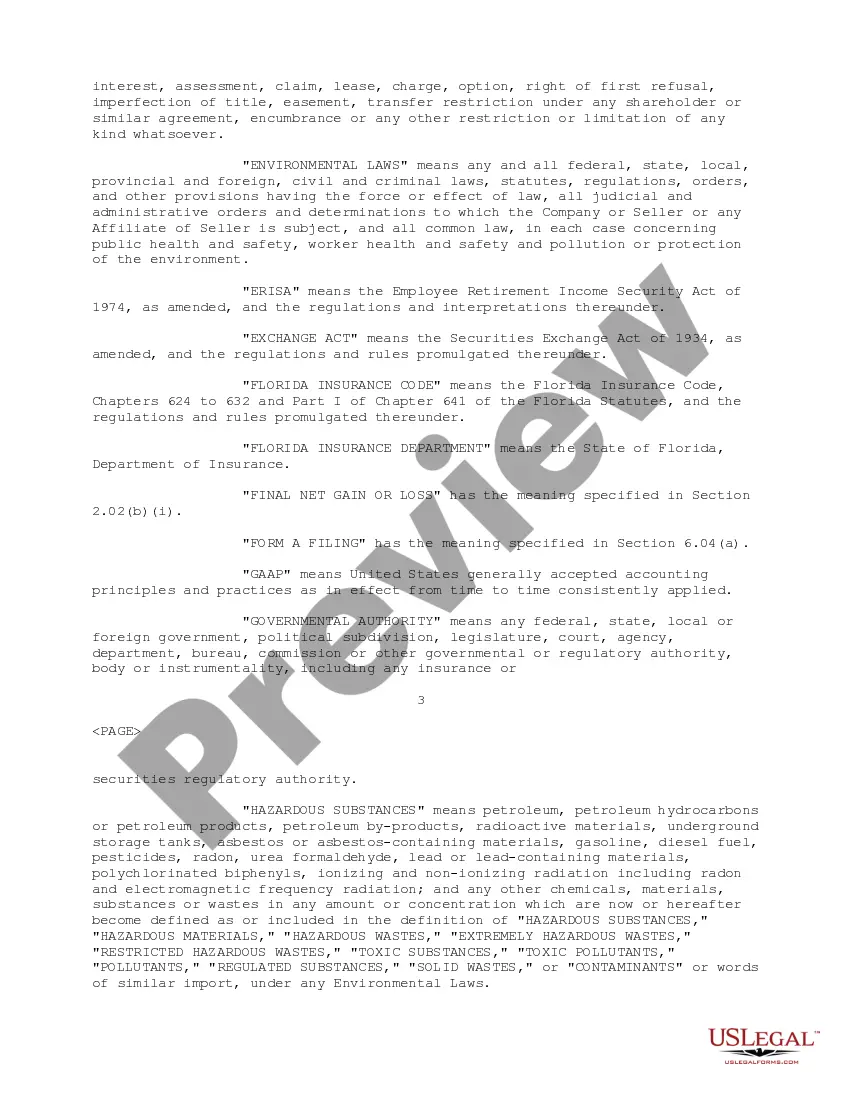
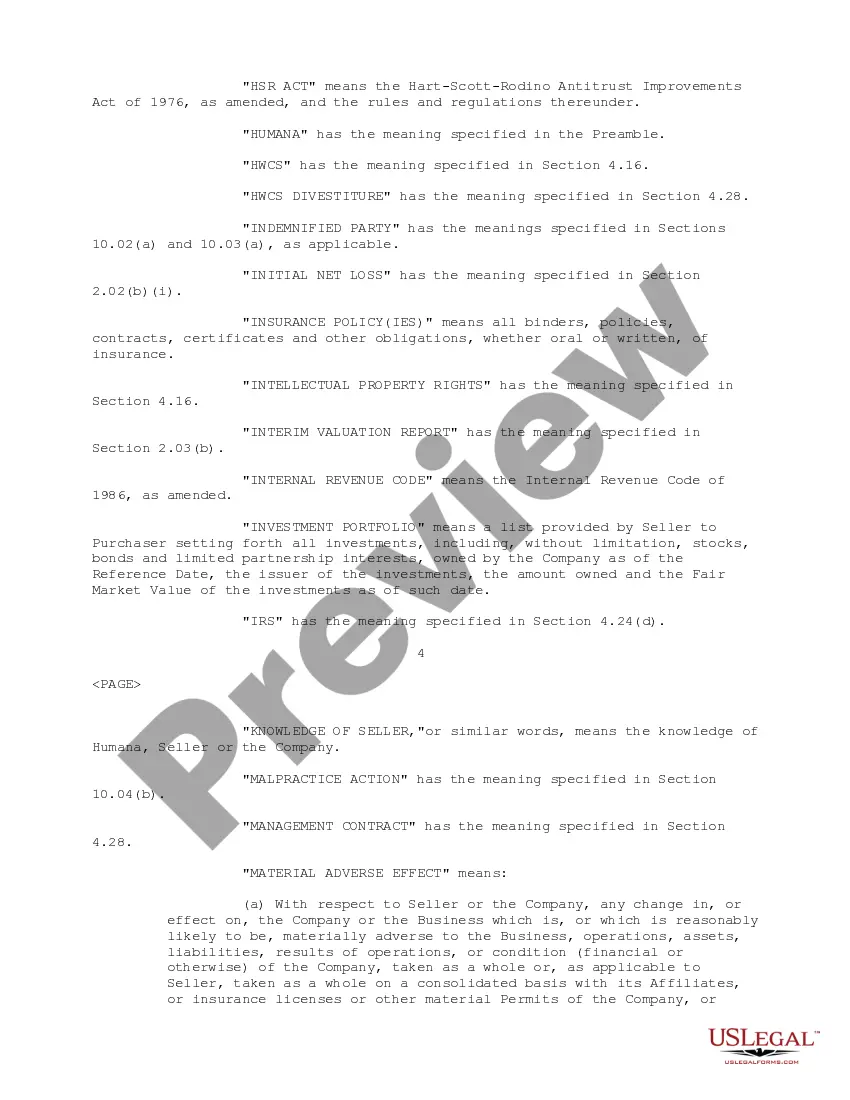
How to fill out Sample Stock Purchase Agreement Between Humana, Inc., Physician Corporation Of America And Folksamerica Holding Company, Inc?
The Holding Corporation For Property you observe on this page is a versatile formal template prepared by expert attorneys in compliance with federal and local statutes and regulations.
For over 25 years, US Legal Forms has supplied individuals, businesses, and legal practitioners with more than 85,000 authenticated, state-specific forms for any commercial and personal situation. It’s the quickest, easiest, and most reliable method to acquire the documents you require, as the service ensures the utmost level of data protection and malware defense.
Subscribe to US Legal Forms to have authenticated legal templates for all of life’s situations at your fingertips.
- Search for the document you need and review it.
- Browse through the file you searched and preview it or assess the form description to confirm it meets your needs. If it doesn’t, use the search function to find the correct one. Click Buy Now when you have located the template you require.
- Subscribe and Log In.
- Choose the payment plan that best fits you and create an account. Use PayPal or a credit card to make a swift payment. If you already possess an account, Log In and verify your subscription to proceed.
- Acquire the editable template.
- Select the format you desire for your Holding Corporation For Property (PDF, Word, RTF) and download the sample onto your device.
- Fill out and sign the document.
- Print the template to fill it out by hand. Alternatively, use an online versatile PDF editor to swiftly and accurately complete and sign your form with an electronic signature.
- Retrieve your documents once more.
- Utilize the same document again whenever necessary. Access the My documents tab in your account to redownload any previously saved forms.
Form popularity
FAQ
A property holding company primarily manages real estate investments and assets. It allows owners to hold, operate, and develop properties while providing legal protections. Essentially, this structure enables investors to streamline operations and make informed decisions regarding their real estate ventures.
Considering a holding company for your rental property depends on your investment goals. If you plan to expand your portfolio or seek liability protection, establishing a holding company is wise. This setup also provides a clear boundary between personal and investment assets, benefiting your long-term strategy.
Using a holding company for real estate can simplify management and enhance overall investment strategy. This structure allows for better control over your assets, as you can pool properties together under one entity. Moreover, it creates a more professional appearance, attracting potential partners or investors.
A holding company for property can provide several tax advantages. You may find opportunities to deduct operating expenses, which can reduce your overall taxable income. Furthermore, structuring your investments through a holding company may allow for more favorable tax treatment on capital gains and pass-through income.
Investors and landlords primarily benefit from a holding company for property. This structure allows them to separate personal finances from their real estate investments, minimizing risk. Additionally, it helps professionals in managing properties in a streamlined manner, ultimately facilitating growth and stability.
A real estate holding company offers multiple benefits, including liability protection and ease of property management. By holding properties within a separate entity, you shield your personal assets from legal issues related to your rental properties. This structure also simplifies estate planning and potential business transitions.
One disadvantage of a holding company for property is the complexity of management. You will need to keep up with legal requirements and ensure compliance with regulations. Additionally, setting up a holding company can incur initial costs that may not be immediately beneficial, especially if your property portfolio is small.
Setting up a holding company for real estate involves several straightforward steps. First, choose a suitable business structure, often an LLC, to protect your assets. Next, accumulate the necessary documents, including a business plan and operating agreement. Finally, consider using US Legal Forms to access forms and templates that can simplify the entire setup, ensuring compliance with state regulations.
A limited liability company (LLC) is often the best structure for a holding company for property. An LLC provides liability protection, which safeguards your personal assets from potential lawsuits related to your rental properties. This structure also offers flexibility in managing profits and losses, making it an attractive option for real estate investors.
When managing rental properties, a business bank account specifically for your holding company is highly recommended. This account helps maintain clear financial separation between personal and business finances, which is crucial for accounting and tax purposes. Additionally, having a dedicated account makes it easier to track income and expenses related to your rental properties, enhancing your financial organization.