Stock Options For Dummies
Description
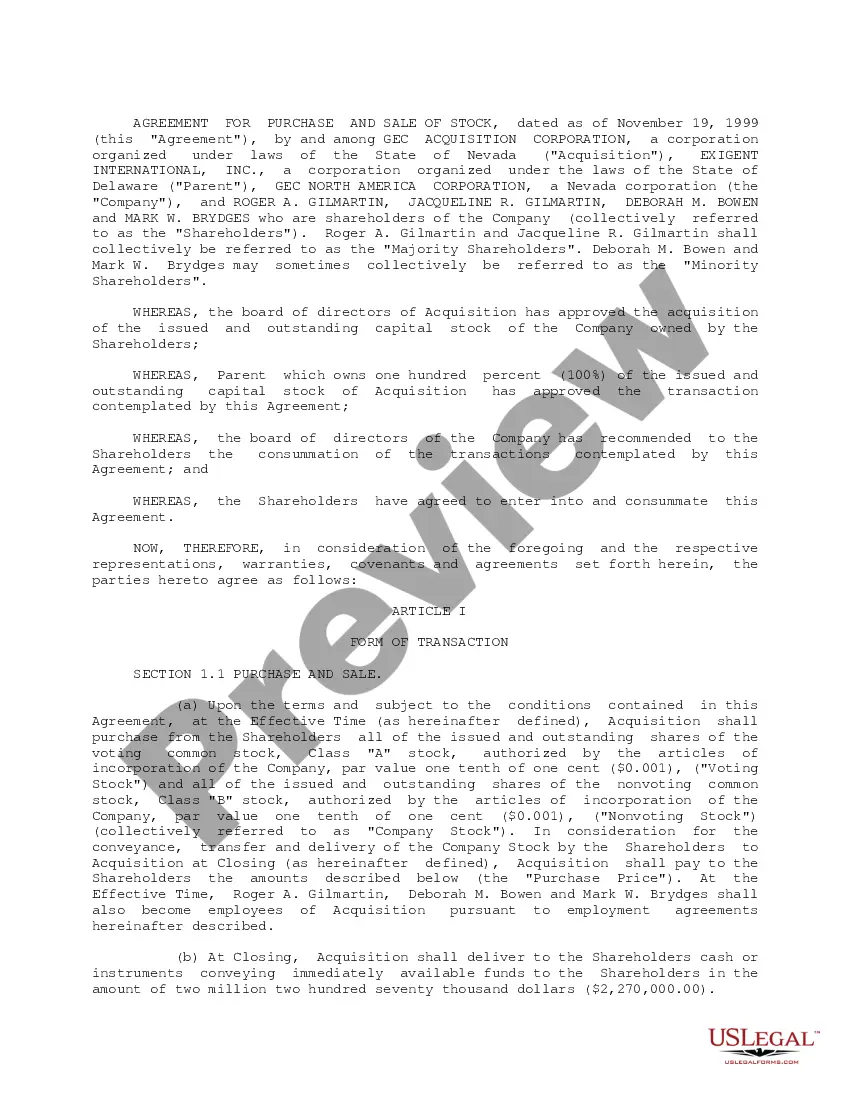
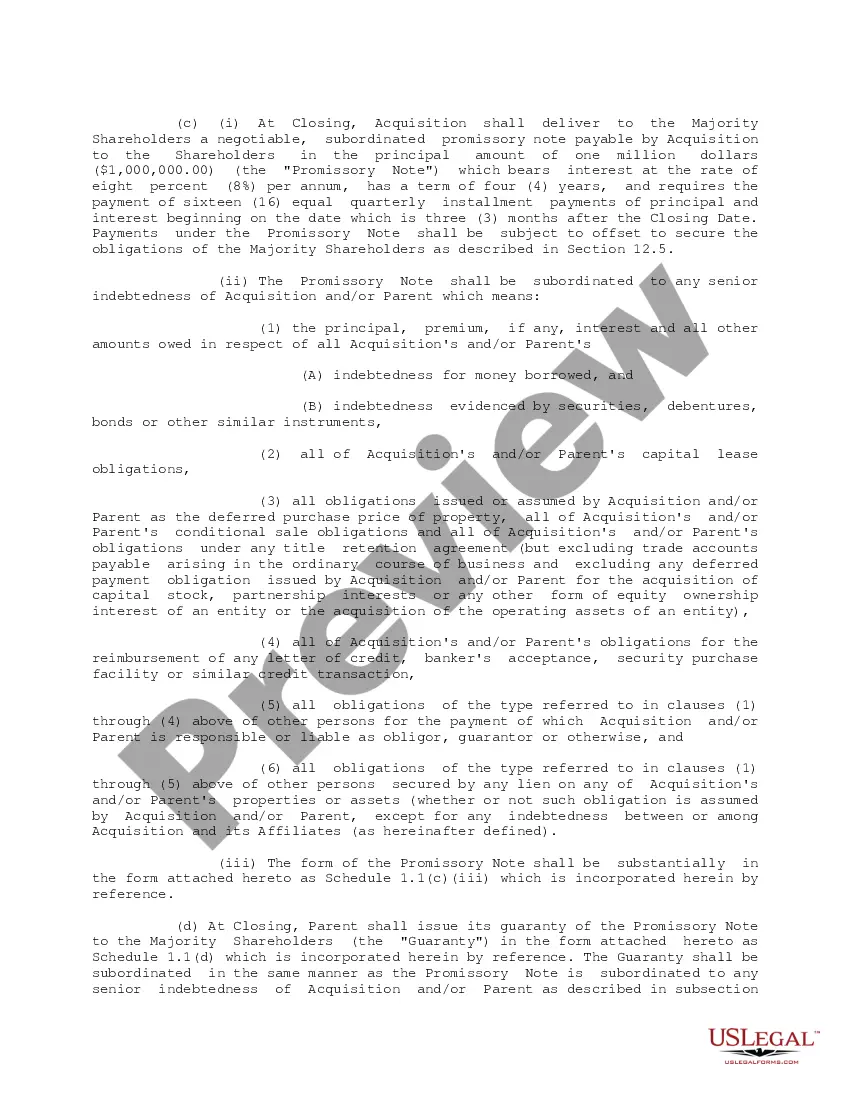
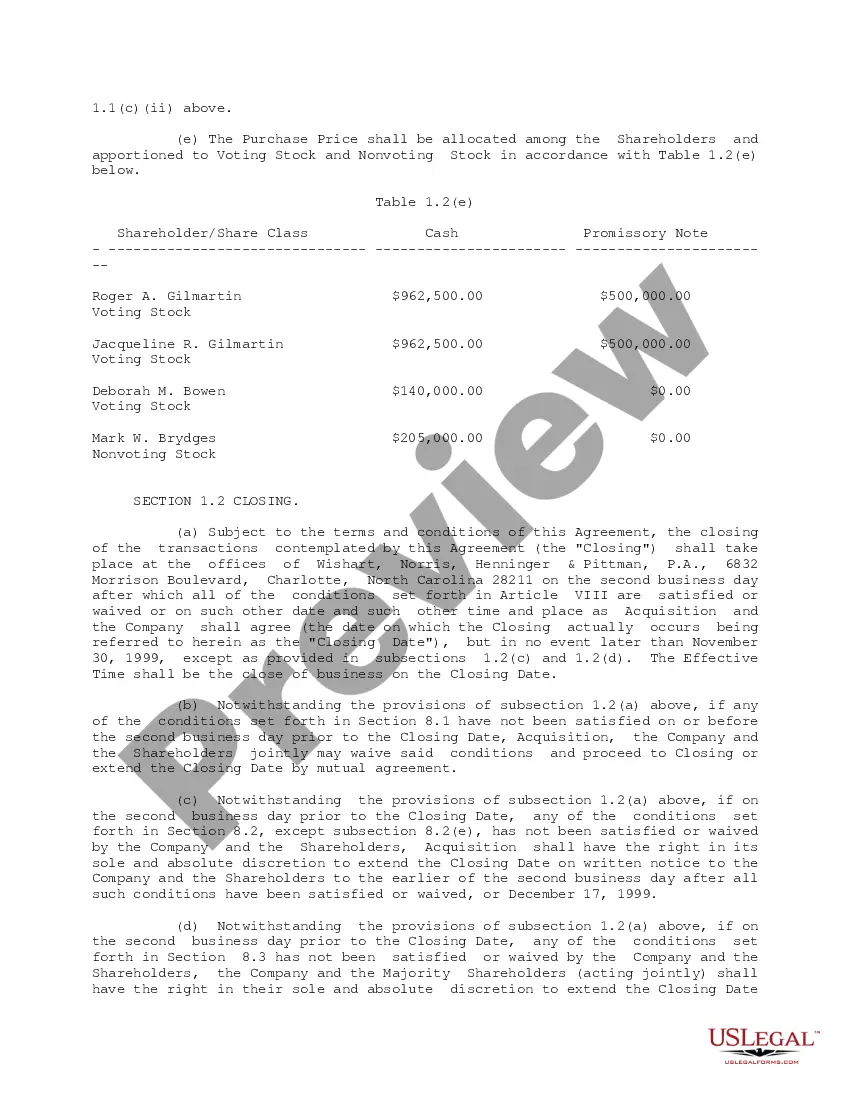
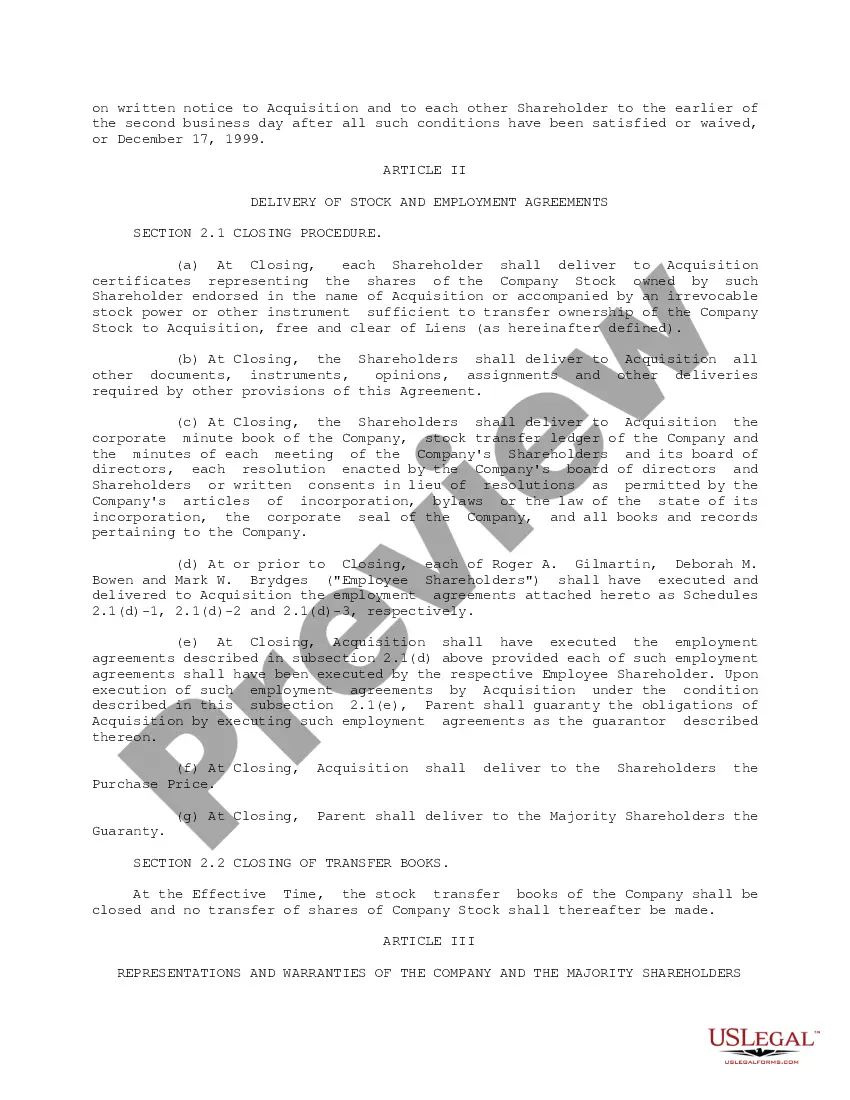


Get your form ready online
Our built-in tools help you complete, sign, share, and store your documents in one place.
Make edits, fill in missing information, and update formatting in US Legal Forms—just like you would in MS Word.
Download a copy, print it, send it by email, or mail it via USPS—whatever works best for your next step.
Sign and collect signatures with our SignNow integration. Send to multiple recipients, set reminders, and more. Go Premium to unlock E-Sign.
If this form requires notarization, complete it online through a secure video call—no need to meet a notary in person or wait for an appointment.
We protect your documents and personal data by following strict security and privacy standards.

Make edits, fill in missing information, and update formatting in US Legal Forms—just like you would in MS Word.

Download a copy, print it, send it by email, or mail it via USPS—whatever works best for your next step.

Sign and collect signatures with our SignNow integration. Send to multiple recipients, set reminders, and more. Go Premium to unlock E-Sign.

If this form requires notarization, complete it online through a secure video call—no need to meet a notary in person or wait for an appointment.

We protect your documents and personal data by following strict security and privacy standards.
Looking for another form?



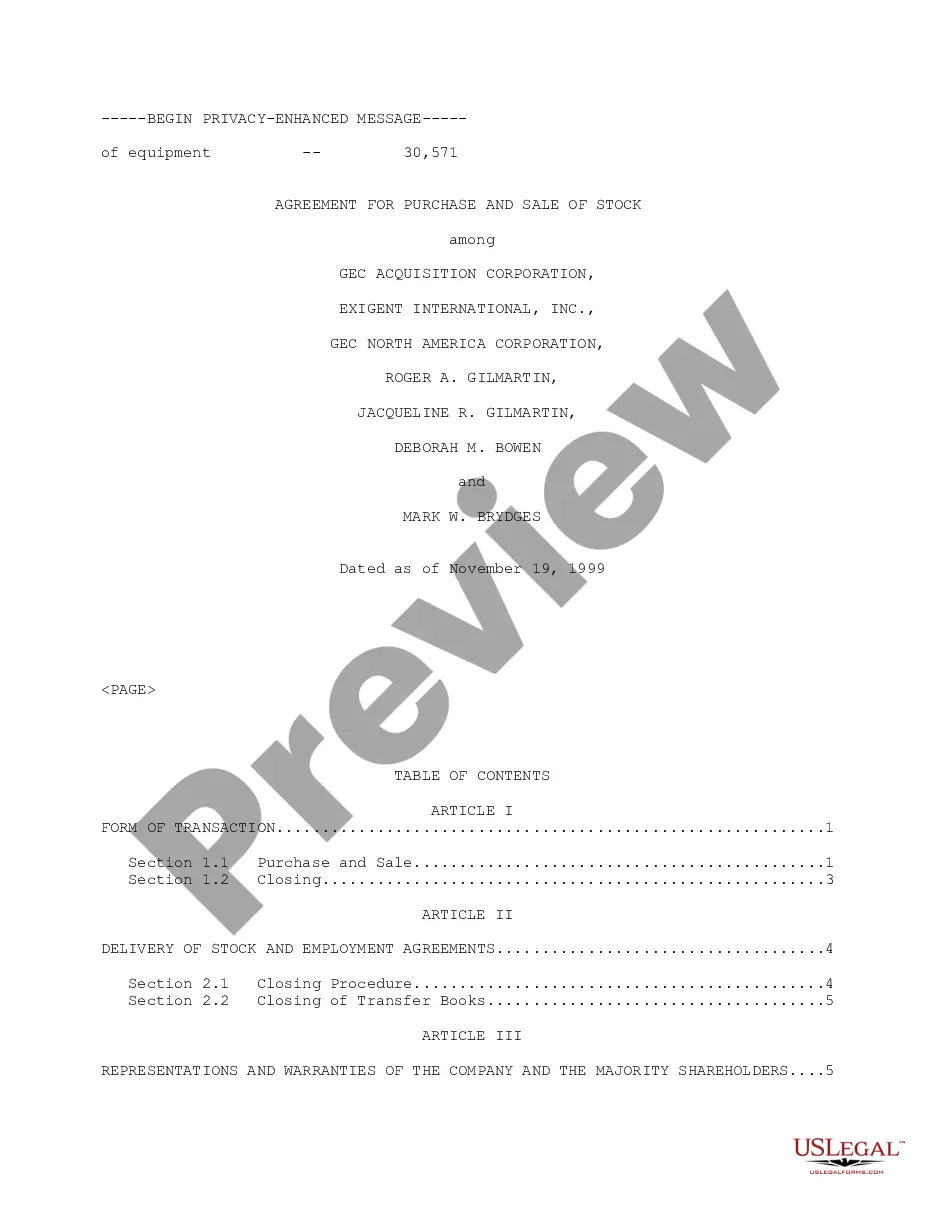
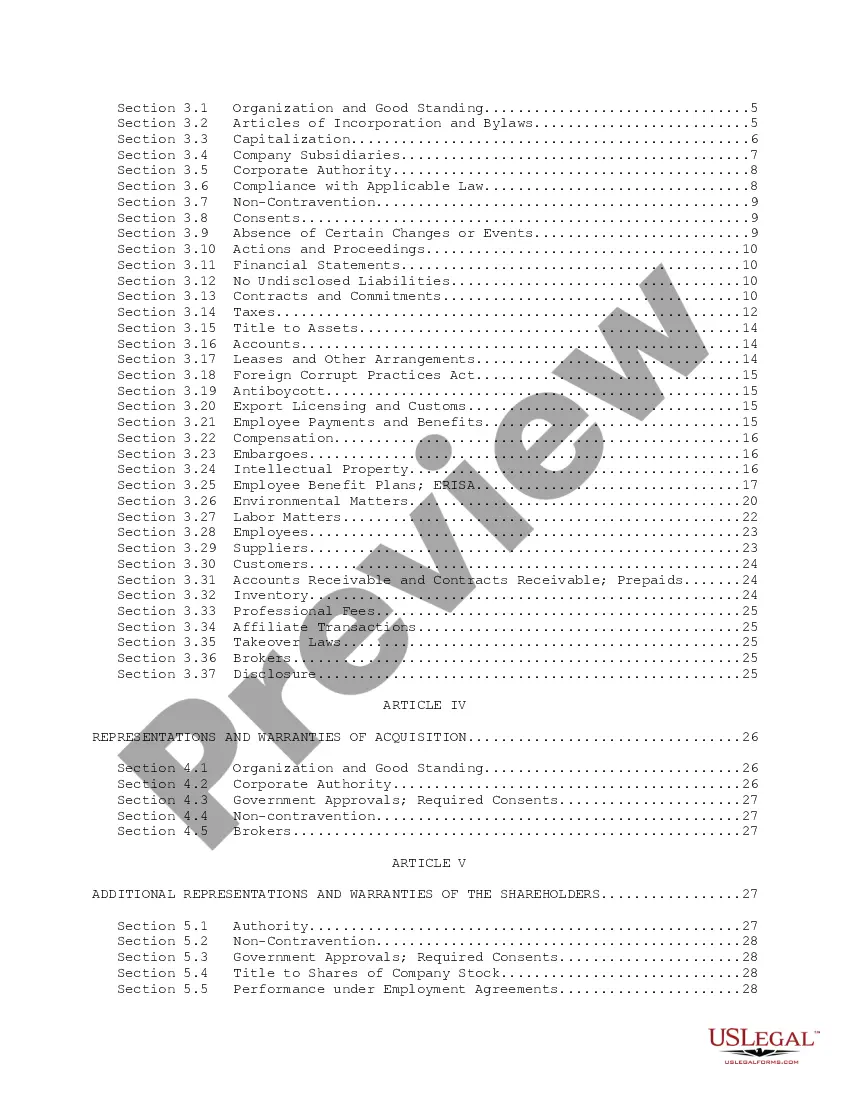
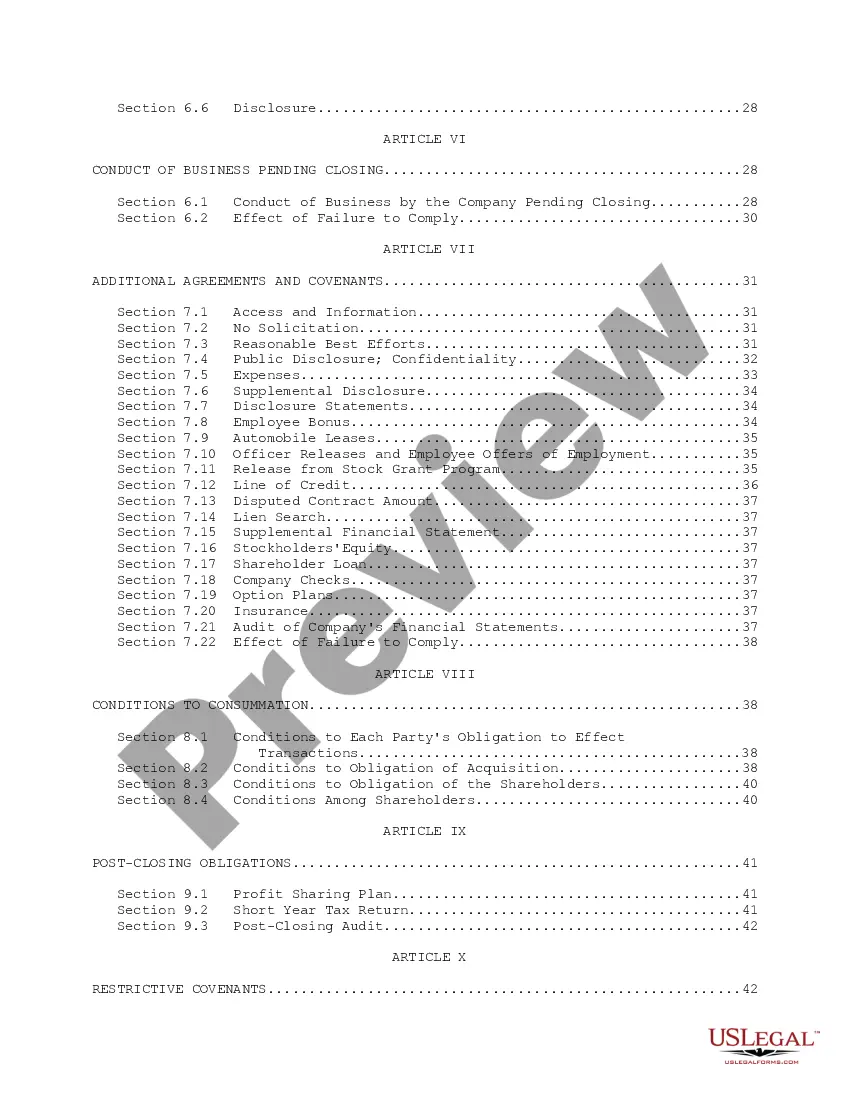
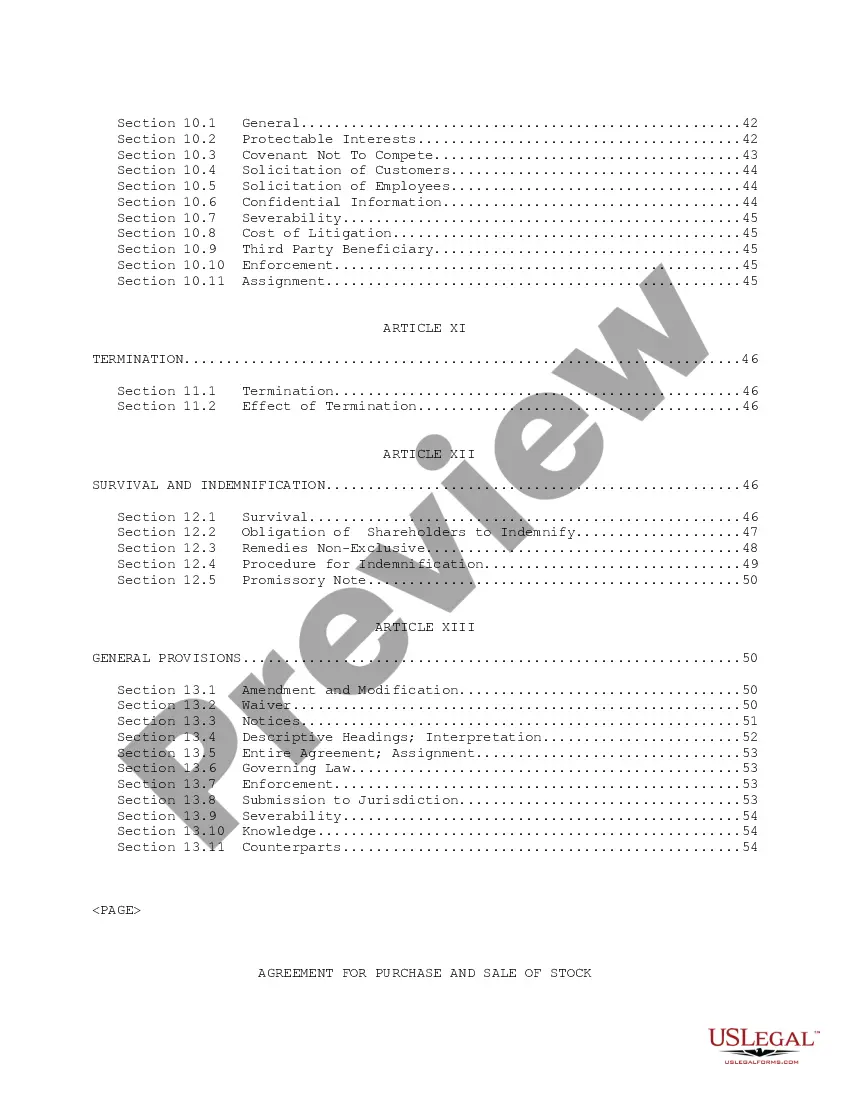
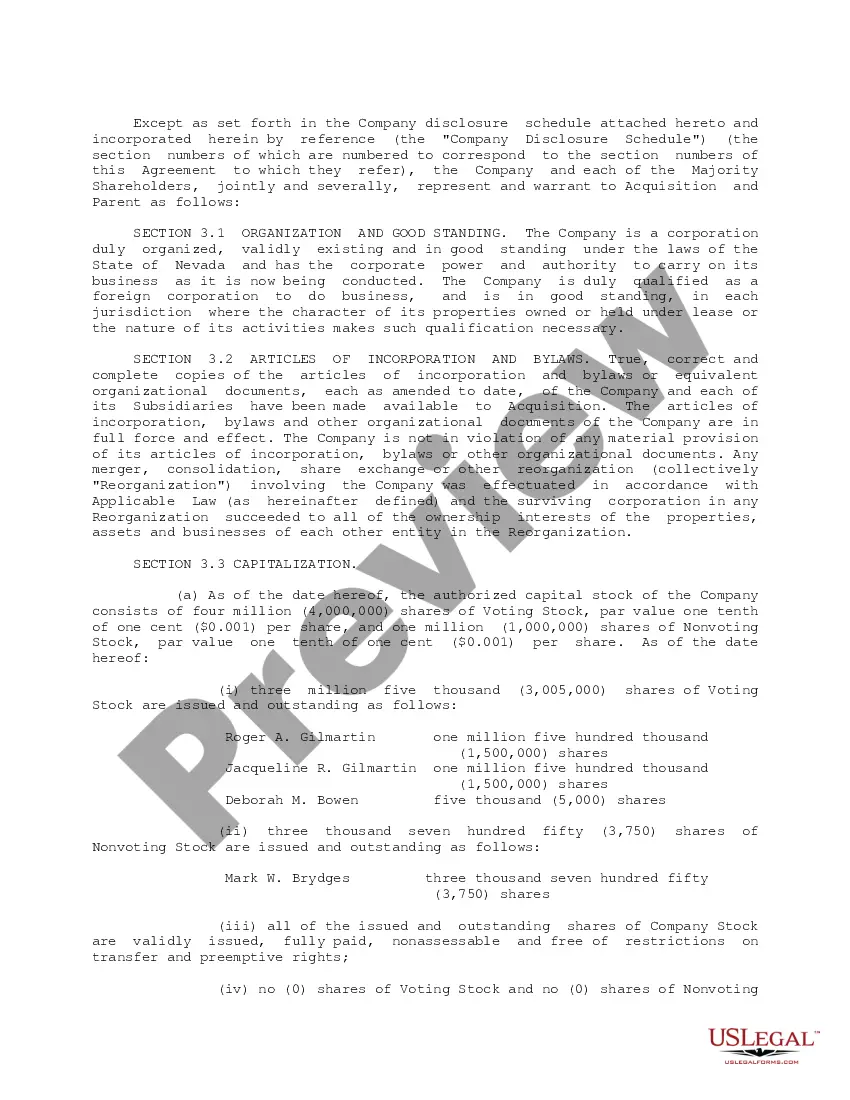
How to fill out Sample Purchase And Sale Agreement Purchase And Sale Of Stock Between GEC Acquisition Corp., Exigent International, Inc., GEC North America Corp.?
- If you're an existing user, log in to your account to access and download your form template. Ensure your subscription is current to avoid any interruptions.
- For first-time users, start by reviewing the form descriptions and preview modes. Confirm that you have selected the correct document that meets your needs and is compliant with your local regulations.
- In case you need a different form, utilize the Search tab to locate another template that fits your requirements.
- Once you've identified the right document, proceed to purchase it by clicking the Buy Now button and selecting your desired subscription plan. A user account registration is required to access the full library.
- Complete your transaction by entering your payment details, either through credit card or PayPal, to finalize your subscription.
- After purchasing, you can easily download your form to your device. Access your document anytime via the My Forms section of your profile.
US Legal Forms is designed to empower users by providing a robust collection of over 85,000 easily fillable and editable legal forms. This extensive online library not only saves you time but also ensures that you have the most accurate documents.
Take control of your legal needs today by exploring the benefits of US Legal Forms. Don't hesitate—start your journey to easier legal documentation now!
Form popularity
FAQ
The 70/20/10 rule in stocks is a portfolio allocation strategy. It advises that 70% of your investments should be in stable, low-risk stocks, 20% in moderate-risk stocks, and 10% in high-risk stocks. This diversified approach can help optimize returns while managing risk. Grasping the nuances of stock options for dummies can make this strategy easier to implement.
Yes, it is legal to buy and sell the same stock repeatedly. This practice is known as 'day trading.' However, frequent trading may result in different tax regulations and fees. To understand the implications better, familiarize yourself with stock options for dummies to navigate these rules effectively.
You typically receive a 1099 form if you sell stock obtained through stock options. This form reports any income generated from the sale, and understanding it is vital for grasping stock options for dummies. If you're unsure about the details, using uslegalforms can help simplify the filing process for you.
Yes, stock options can count as income depending on when you exercise them and sell the stocks. Understanding the taxation of stock options for dummies is crucial, as different types of options may be treated differently by the IRS. It's advisable to keep accurate records to ensure you report this income correctly.
Filing stock options requires attention to detail, especially if you're learning about them for the first time. Start by gathering all relevant documents, including any Form 1099. Next, use the appropriate tax forms to report your stock options, and consider using uslegalforms for step-by-step guidance to make the process smoother.
Writing off stock option losses is possible, but it depends on your overall tax situation. As you navigate the world of stock options for dummies, be mindful that only certain types of losses might be deductible. It's critical to consult with a tax professional to understand your specific circumstances and how they apply to your tax return.
The $100,000 rule of Code 422(d) addresses the maximum value of incentive stock options that can qualify for beneficial tax treatment in any given year. Specifically, it limits these options to the fair market value of $100,000 when exercised. This regulation is essential for anyone dealing with stock options for dummies, as it ensures you’re aware of tax implications and maintains compliance with IRS guidelines. Planning with this rule in mind can protect your financial interests.
The 100,000 incentive stock option limit indicates that only the first $100,000 in value of ISOs can qualify for favorable tax rates in a single tax year. Any stock options above this limit may lose their special tax treatment and be subject to regular income tax rates. Understanding this limit is crucial for those entering the world of stock options for dummies, as it greatly impacts your tax strategy. Proper planning can help you navigate these limitations successfully.
100K stock options typically refer to incentive stock options (ISOs) with a value limit of $100,000 that can be exercised within a single calendar year while retaining favorable tax treatment. If your options exceed this value, any excess will not qualify for ISO status and may be taxed at higher rates. Being aware of this limit is essential for financial planning around stock options for dummies who want to maximize their incentives efficiently.
The rule of 100,000 refers specifically to the limit for incentive stock options concerning their tax treatment. According to this rule, when the total value of ISOs that can be exercised in a single year exceeds $100,000, the excess options will be taxed differently. This emphasizes the need for careful planning around stock options for dummies to ensure that you maintain the favorable tax status when exercising your options.