Preferred Stock Purchase Agreement Formula
Description

Get your form ready online
Our built-in tools help you complete, sign, share, and store your documents in one place.
Make edits, fill in missing information, and update formatting in US Legal Forms—just like you would in MS Word.
Download a copy, print it, send it by email, or mail it via USPS—whatever works best for your next step.
Sign and collect signatures with our SignNow integration. Send to multiple recipients, set reminders, and more. Go Premium to unlock E-Sign.
If this form requires notarization, complete it online through a secure video call—no need to meet a notary in person or wait for an appointment.
We protect your documents and personal data by following strict security and privacy standards.

Make edits, fill in missing information, and update formatting in US Legal Forms—just like you would in MS Word.

Download a copy, print it, send it by email, or mail it via USPS—whatever works best for your next step.

Sign and collect signatures with our SignNow integration. Send to multiple recipients, set reminders, and more. Go Premium to unlock E-Sign.

If this form requires notarization, complete it online through a secure video call—no need to meet a notary in person or wait for an appointment.

We protect your documents and personal data by following strict security and privacy standards.
Looking for another form?



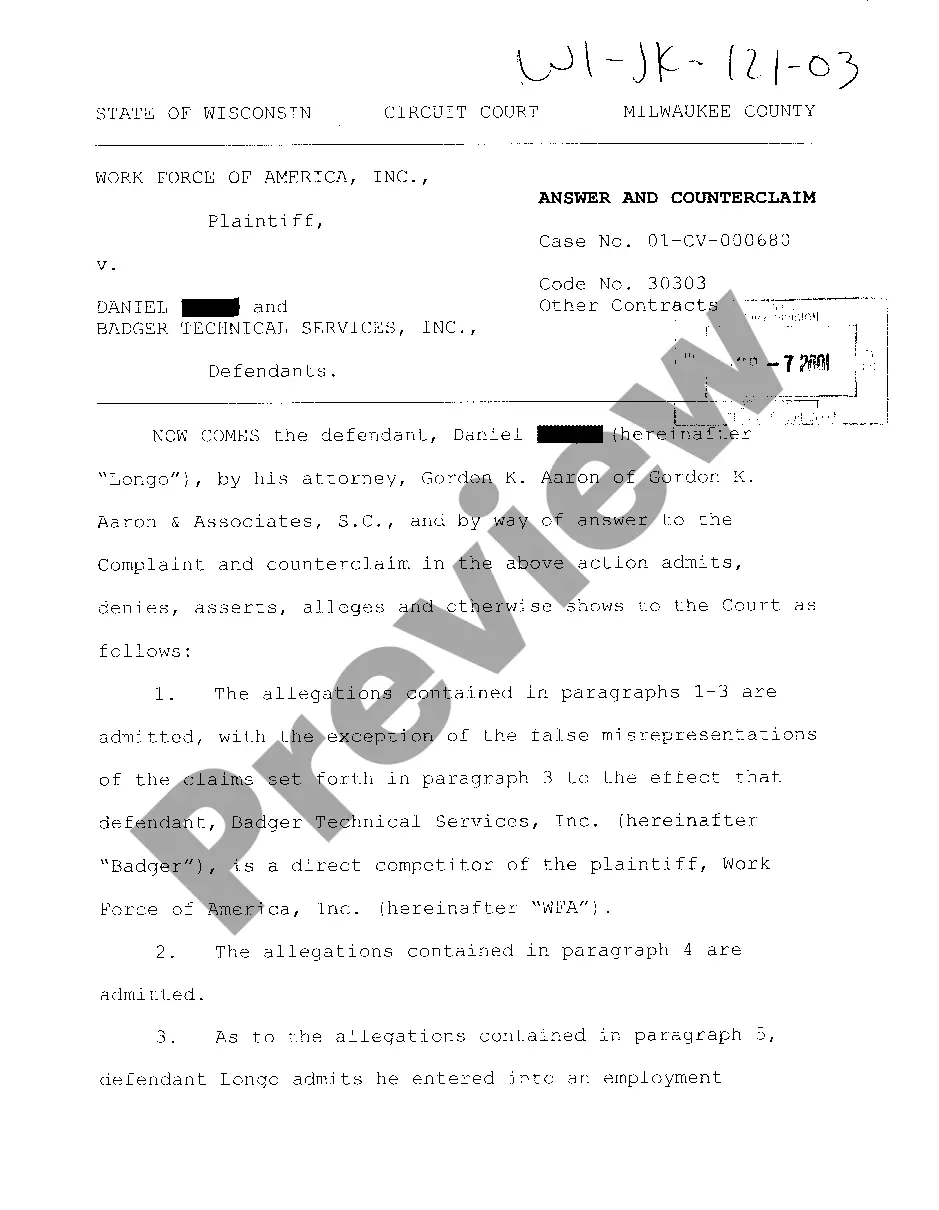



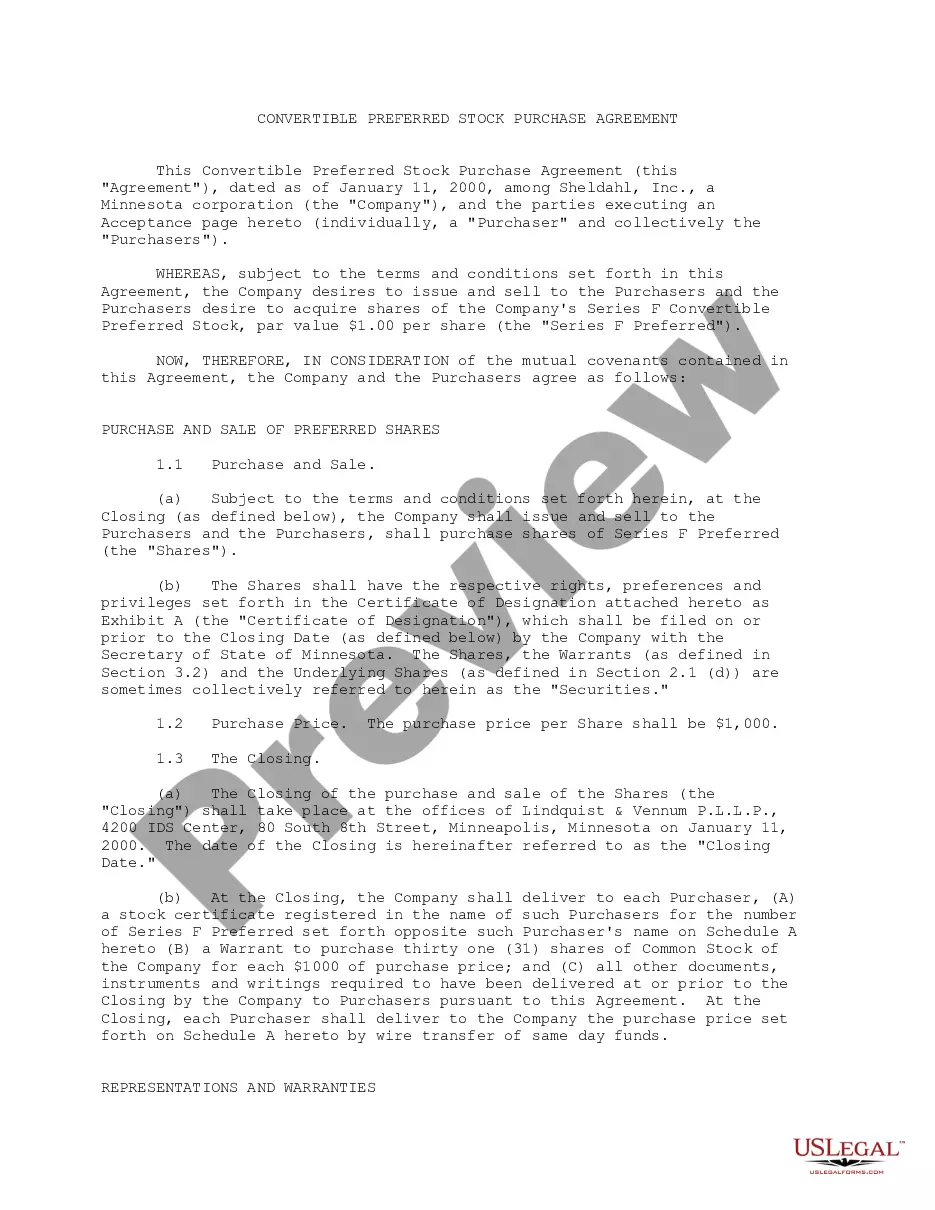
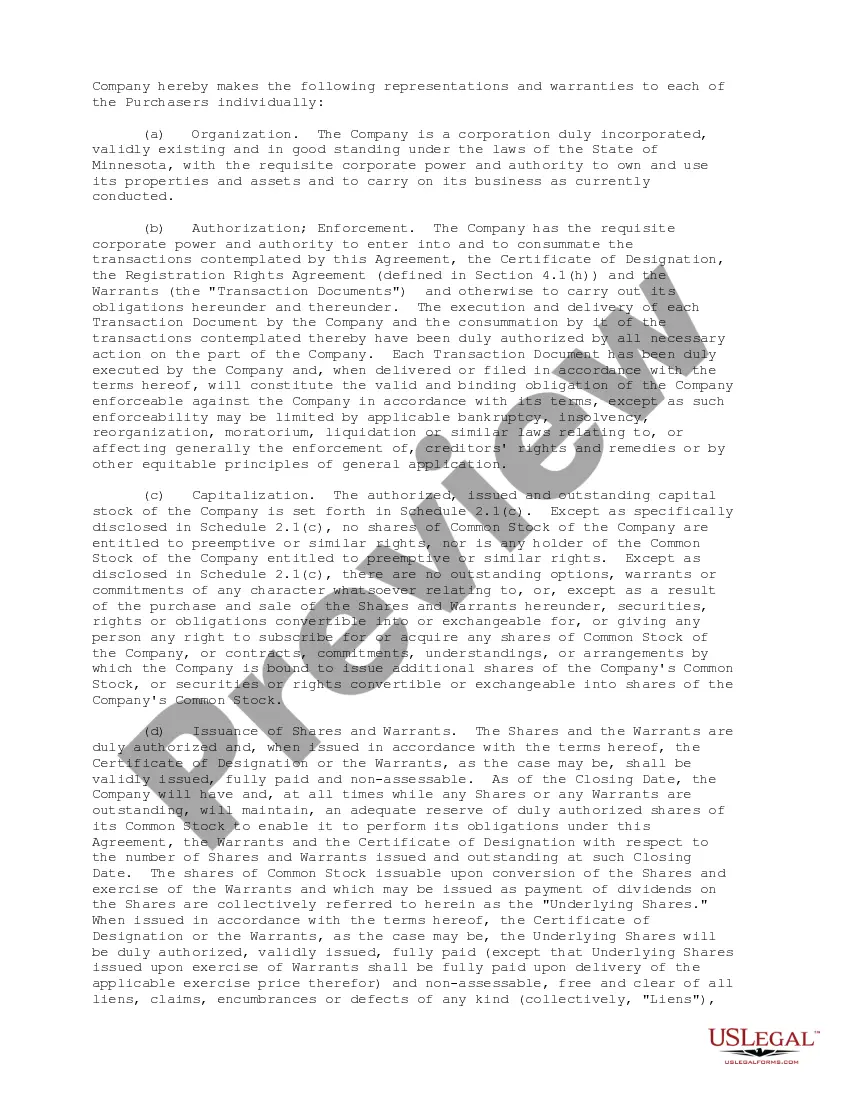
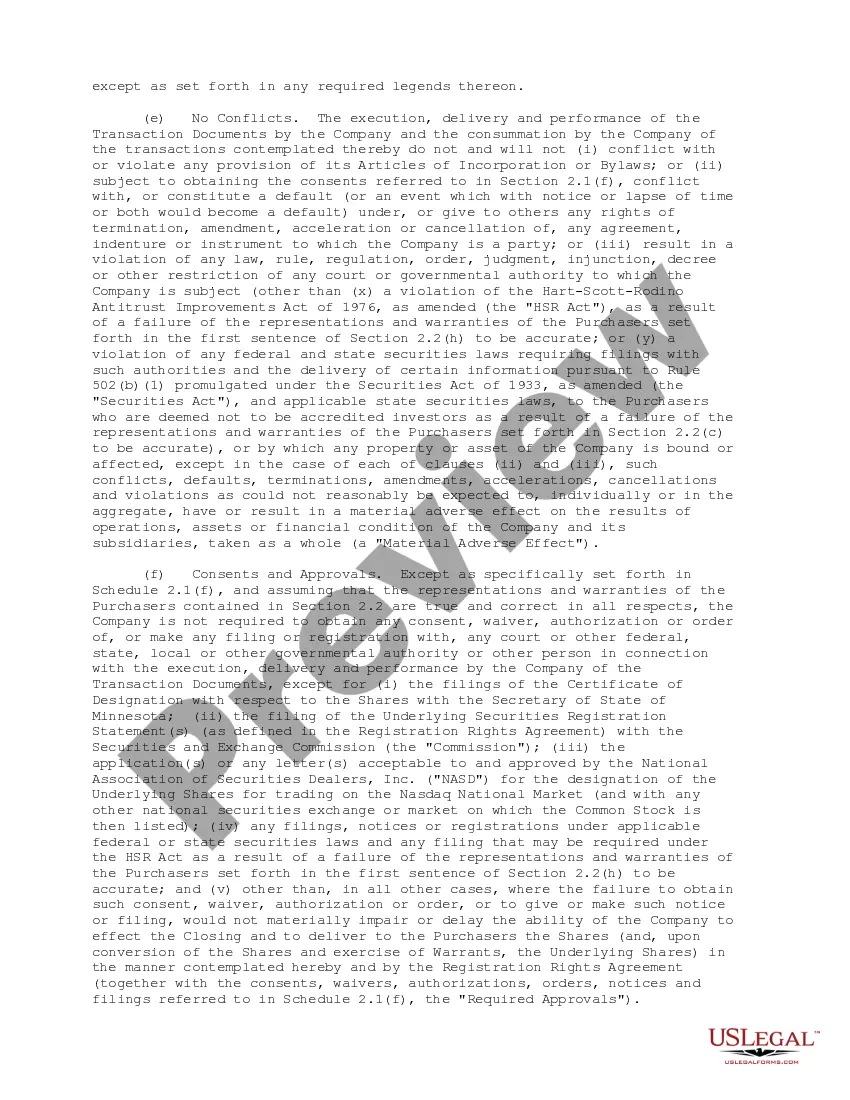
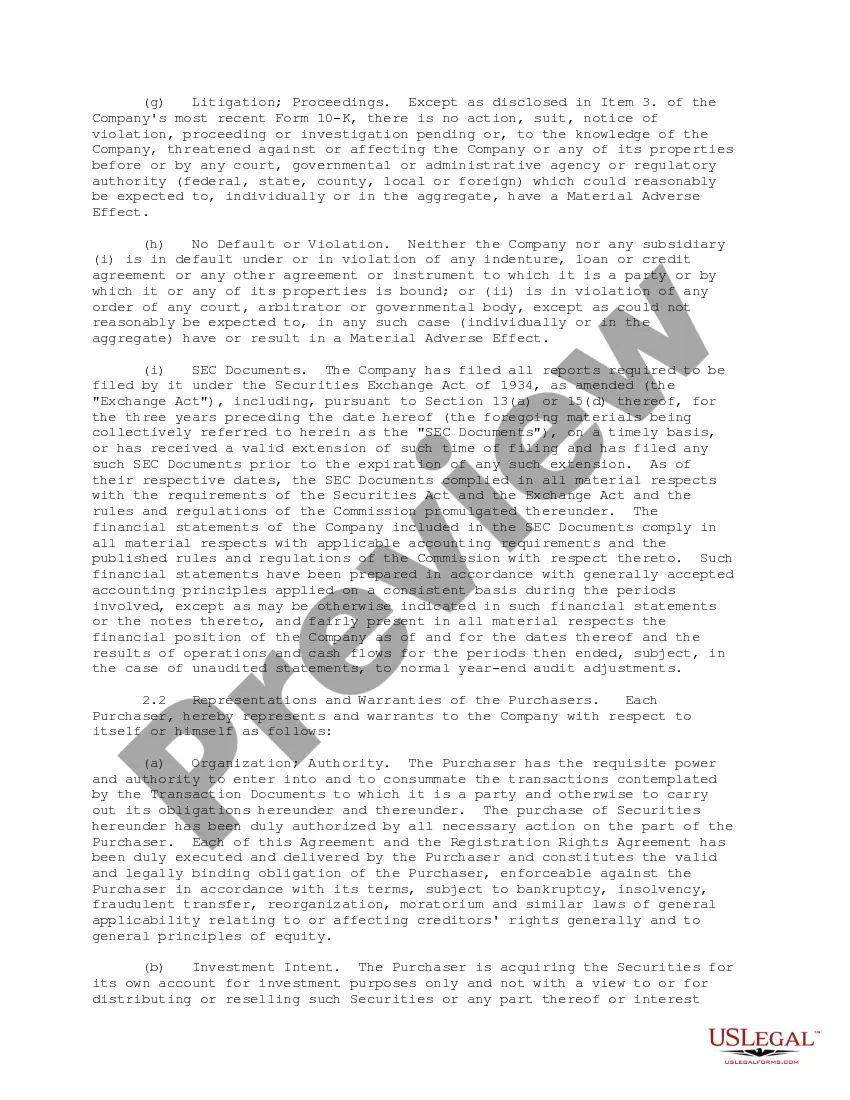
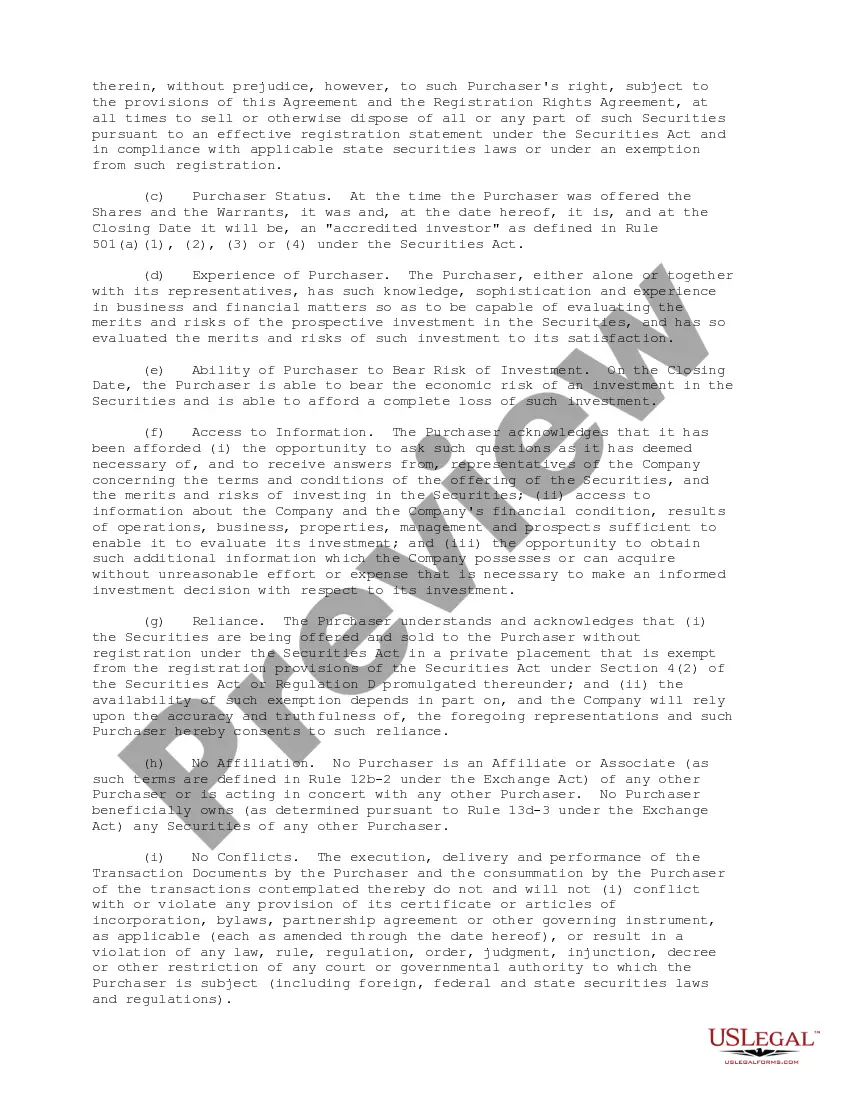
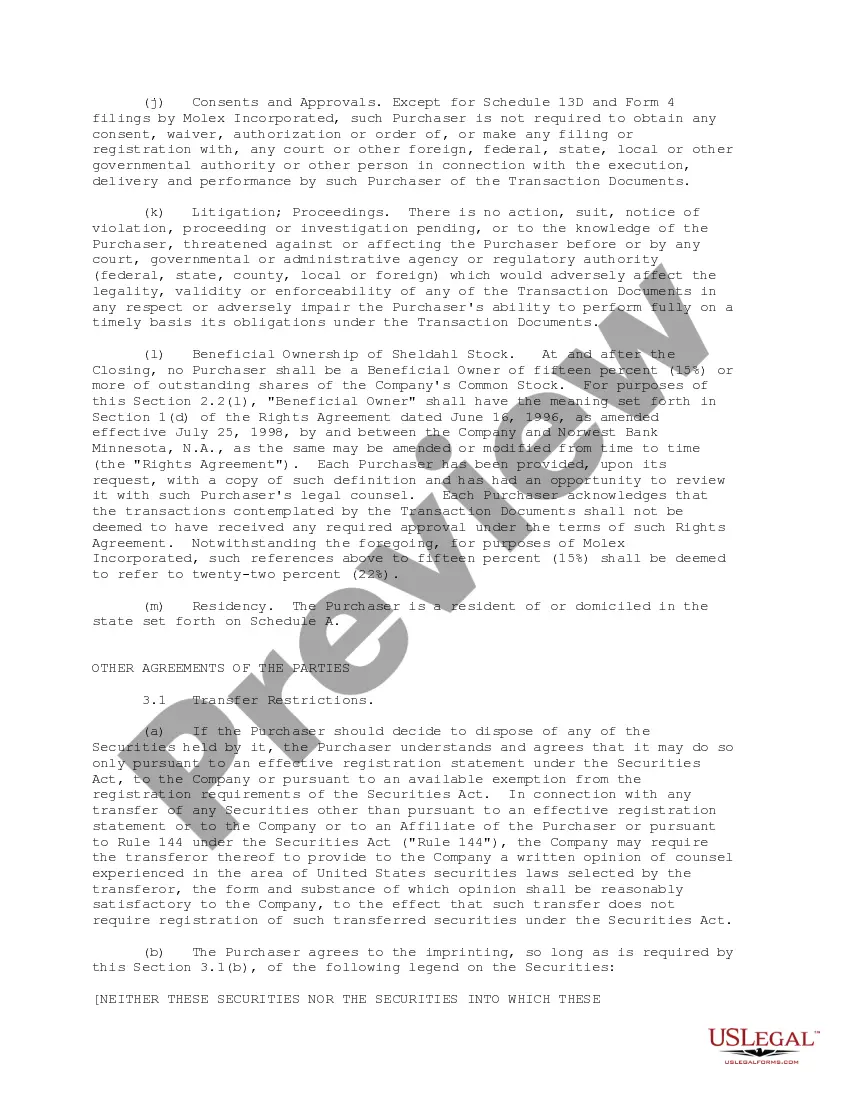
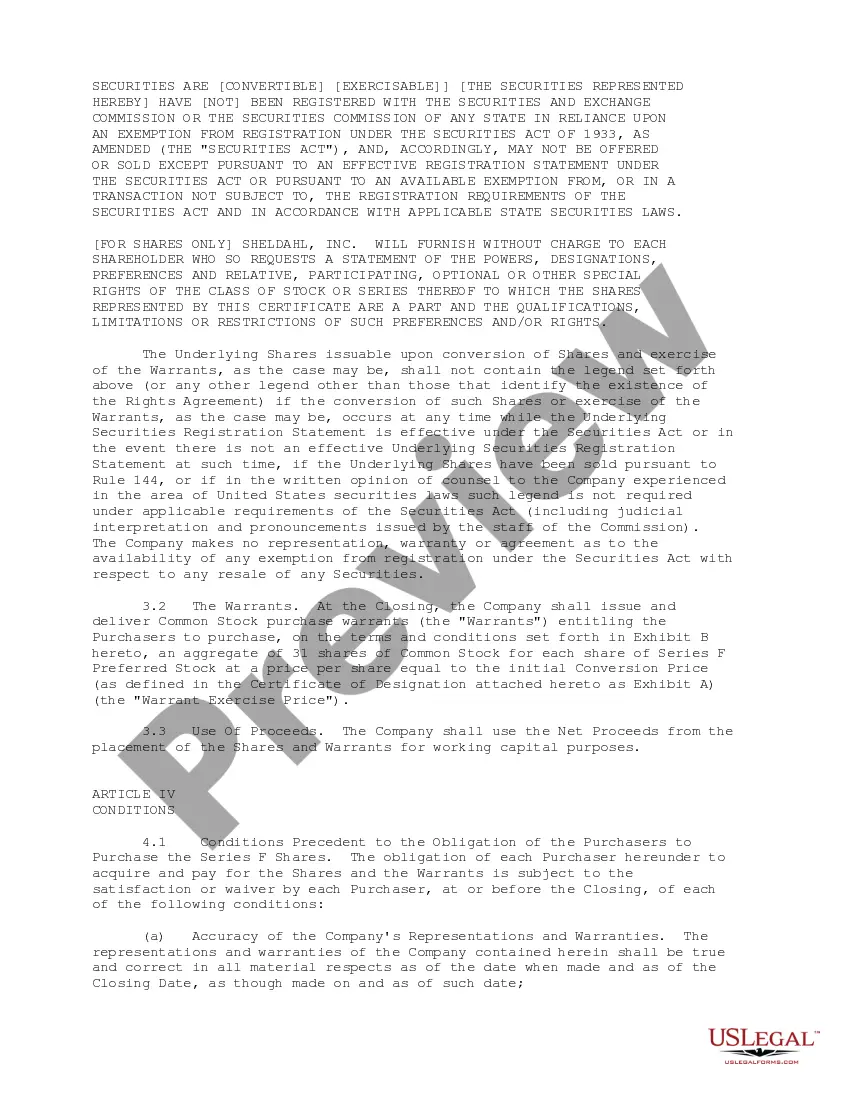
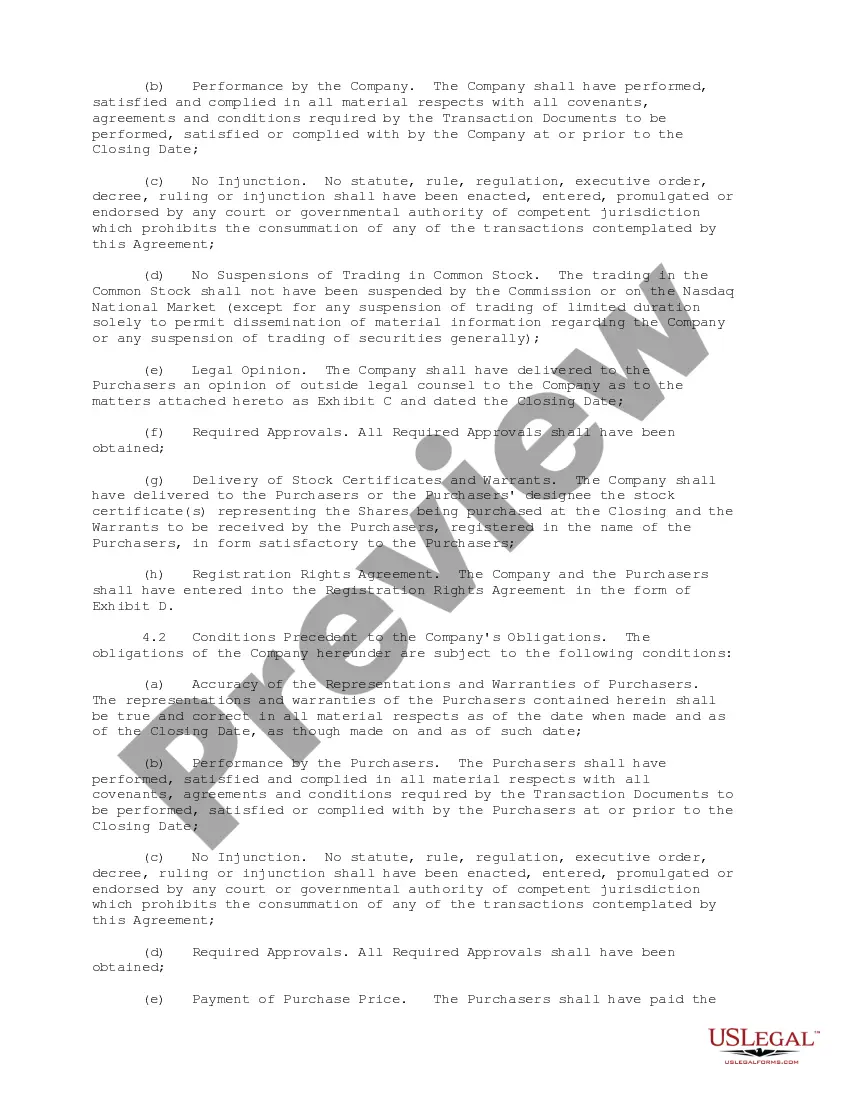
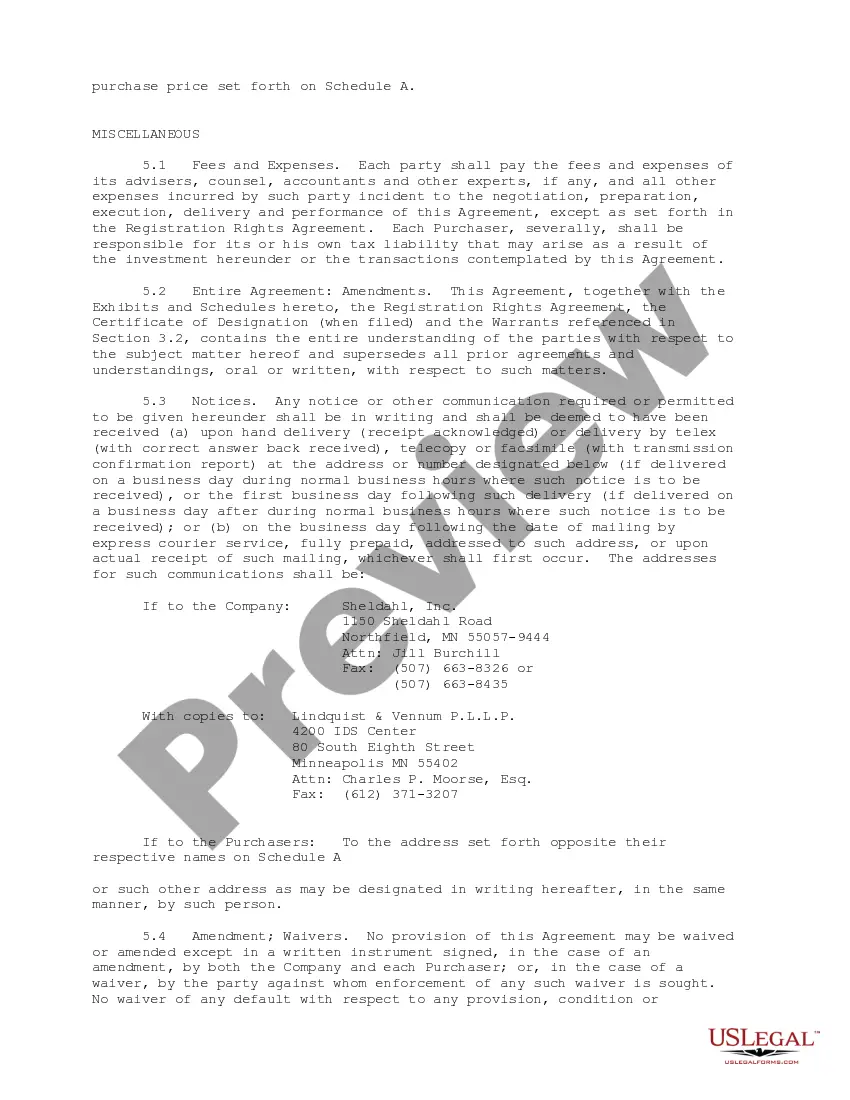
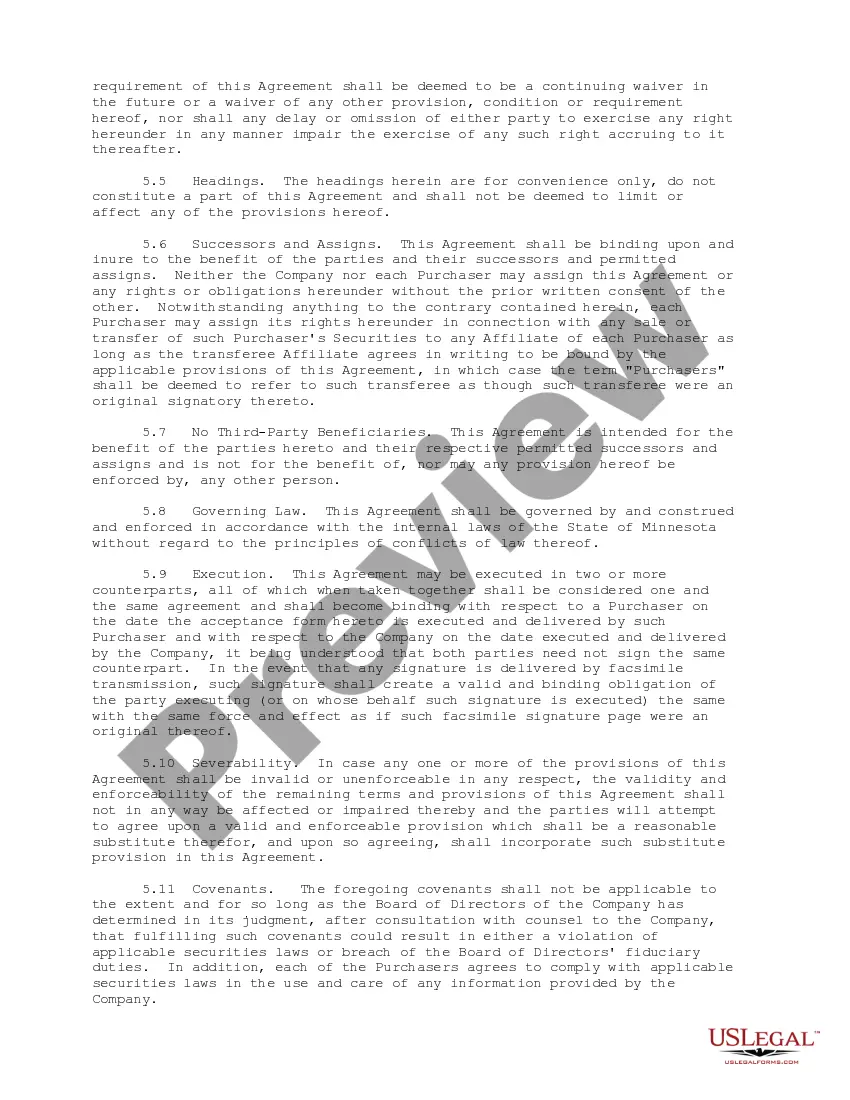
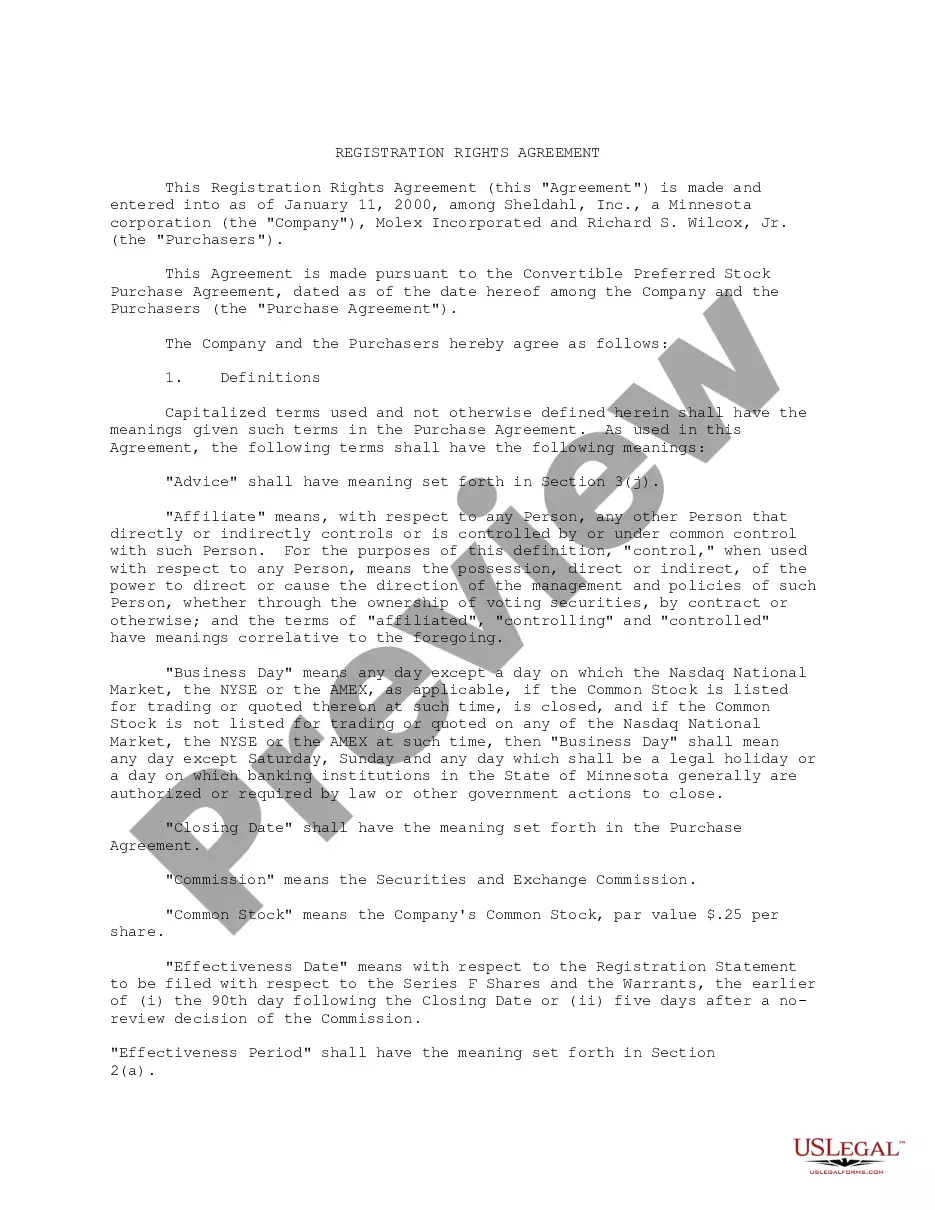
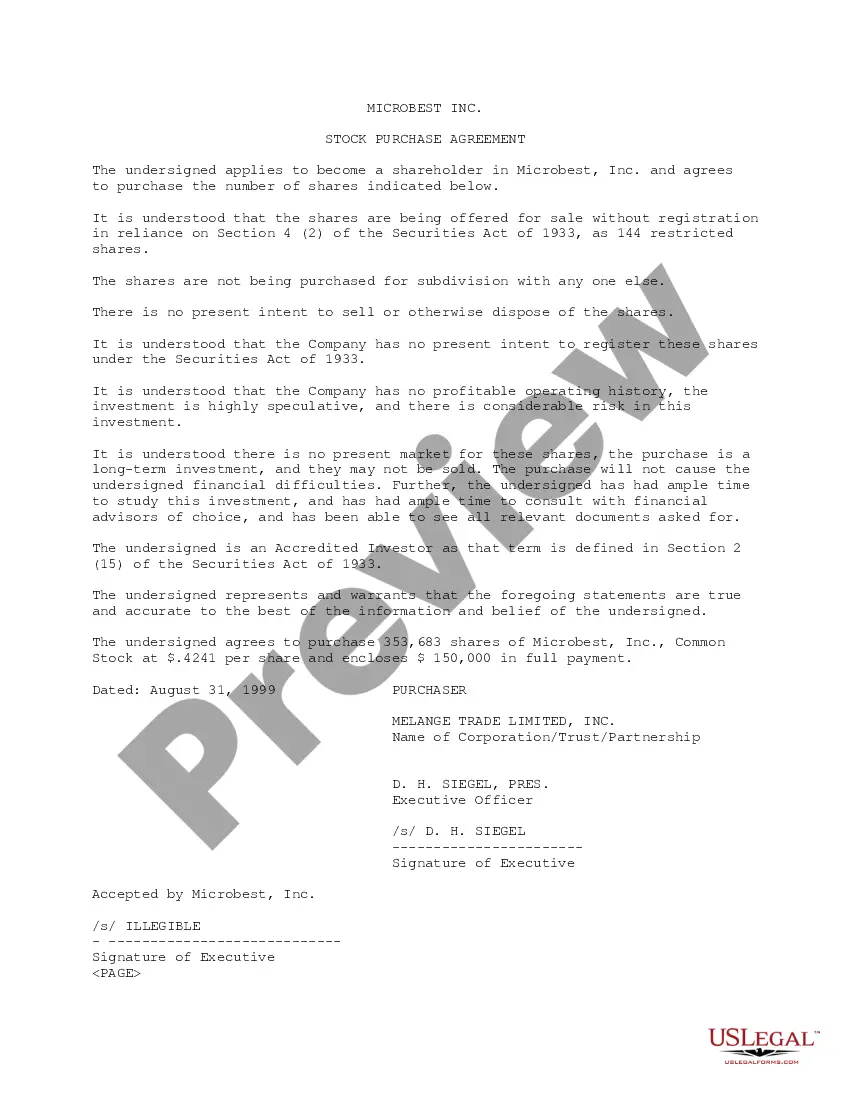
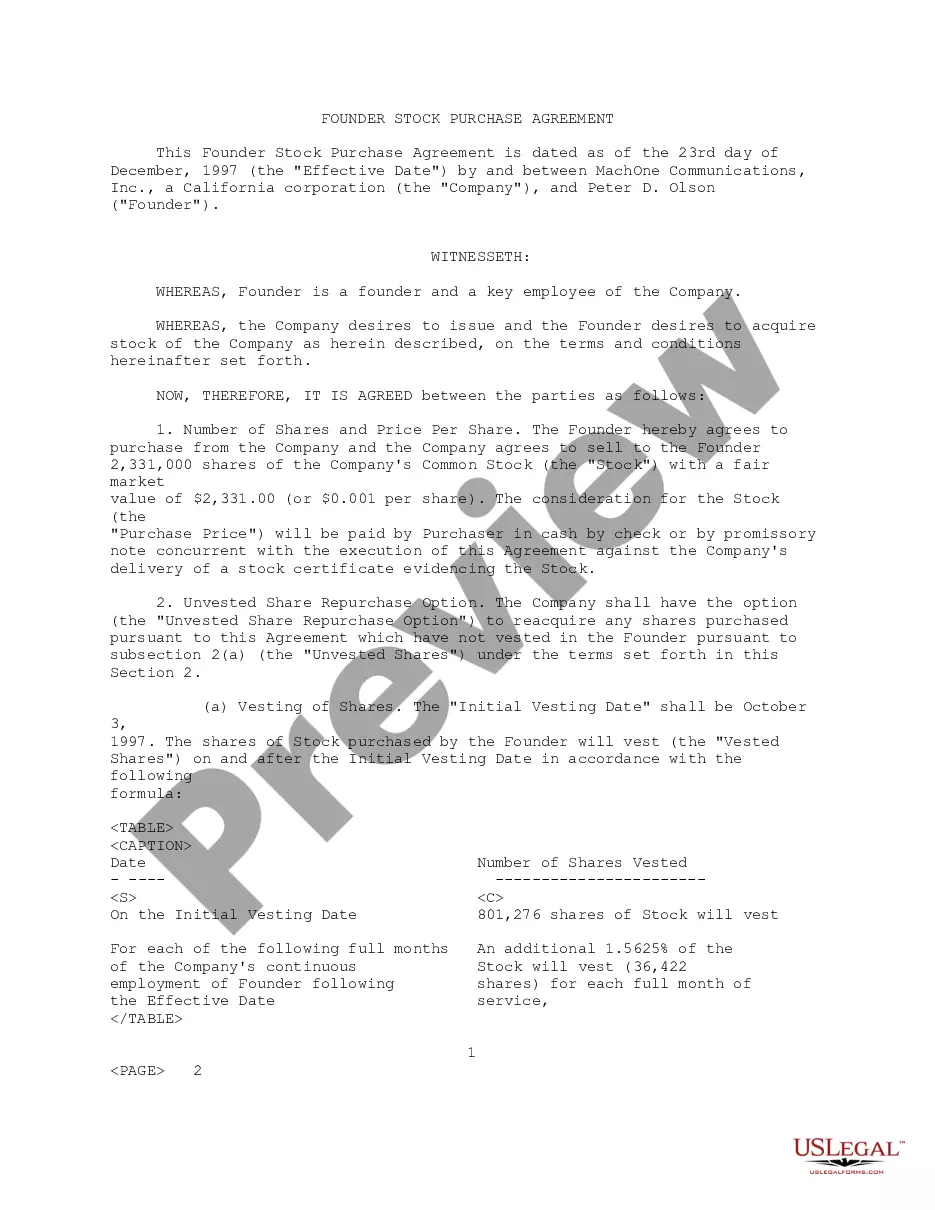
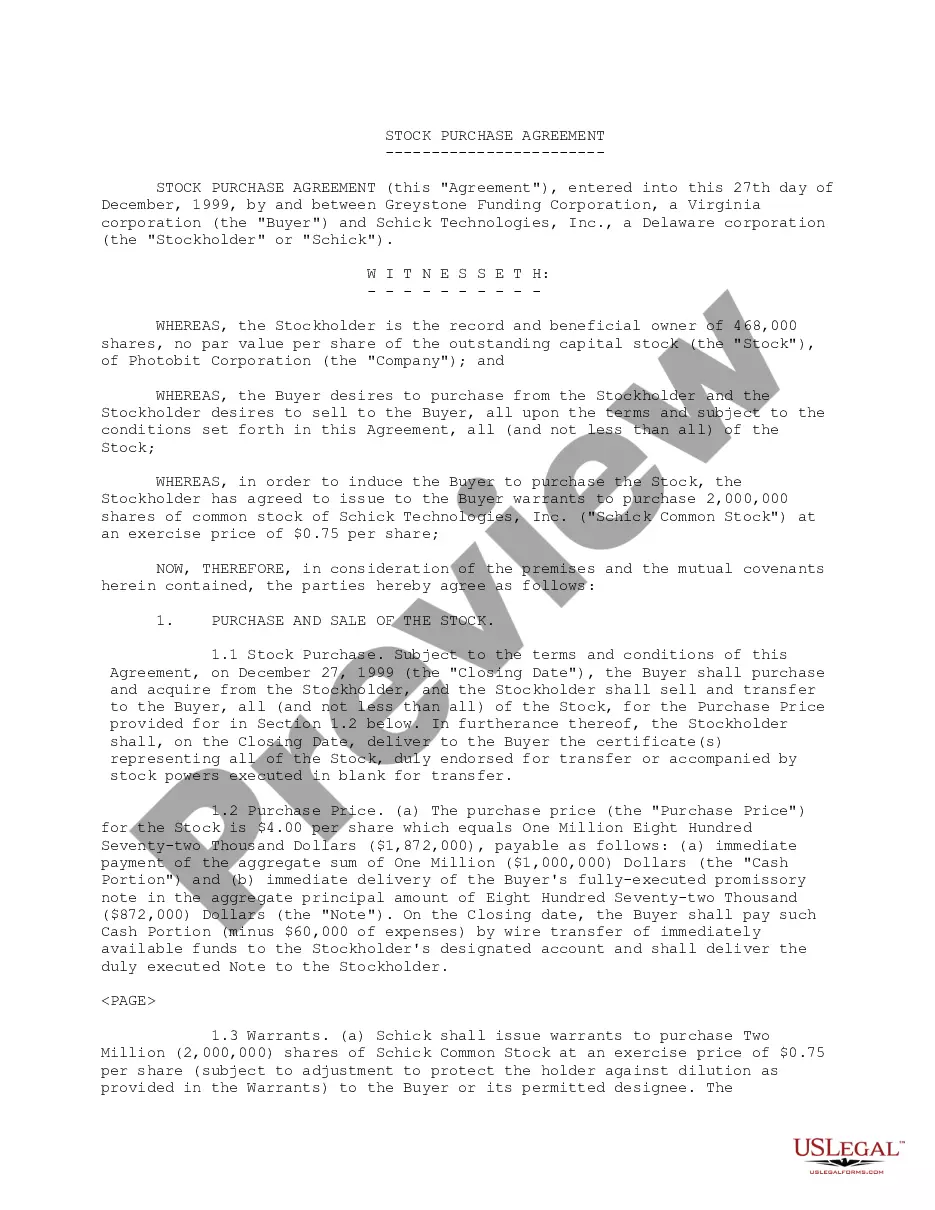
How to fill out Sample Convertible Preferred Stock Purchase Agreement Between Sheldahl, Inc., Molex Incorporated And Richard C. Wilcox, Jr.?
It’s widely recognized that becoming a legal authority cannot happen instantly, nor can you swiftly understand how to efficiently formulate a Preferred Stock Purchase Agreement without possessing a particular skill set.
The development of legal documents is a lengthy endeavor that necessitates specific education and expertise. So why not let the professionals handle the formulation of the Preferred Stock Purchase Agreement.
With US Legal Forms, boasting one of the most comprehensive libraries of legal templates, you can find everything from judicial documents to internal communication templates.
You can retrieve your documents from the My documents section at any time. If you are a returning client, you can easily Log In and find and download the template from the same section.
No matter the objective of your documents—be it financial, legal, or personal—our platform is here to assist. Give US Legal Forms a try today!
- Search for the document you need using the search feature at the top of the page.
- Preview it (if this option is available) and examine the supporting description to determine if the Preferred Stock Purchase Agreement is suitable for your needs.
- Restart your search if you require a different template.
- Sign up for a free account and select a subscription plan to acquire the template.
- Select Buy now. Once the purchase is finalized, you can access the Preferred Stock Purchase Agreement, complete it, print it, and deliver it to the relevant individuals or organizations.
Form popularity
FAQ
A 5% preferred stock represents a type of equity security that pays a fixed dividend of 5% on its face value. Investors receive their dividend payments before common stockholders during distributions. Using the preferred stock purchase agreement formula, you can evaluate the potential returns and assess whether this investment aligns with your financial goals.
To calculate preferred stock, first identify the dividend rate and the nominal value of the stock. Then, multiply the nominal value by the dividend rate percentage. This approach will guide you through the preferred stock purchase agreement formula, helping you understand how to determine the annual dividend income from your investment.
The formula for calculating preferred stock involves dividing the annual dividend by the market interest rate for similar investments. This straightforward calculation can help determine the stock's fair value. Investors typically rely on the preferred stock purchase agreement formula when engaging with these transactions. Clear understanding leads to wiser investment decisions.
Preferred stock with a $100 par value and an 8% rate means that shareholders receive $8 in dividends each year for each share owned. This type of stock provides a predictable income stream, appealing to many investors. Understanding the terms is vital for making proper investment choices. The preferred stock purchase agreement formula can aid you in assessing the potential benefits.
Calculating preferred stock conversion requires knowing the conversion ratio, which indicates how many shares of common stock an investor receives. Typically, the terms are outlined in the preferred stock purchase agreement. You can apply the formula by dividing the number of preferred shares by this ratio. This gives you the total number of common shares received upon conversion.
A 7% preferred stock indicates that the shareholder receives annual dividends equal to 7% of the stock's par value. This rate establishes the predictable income that investors can expect. Companies typically maintain this rate unless they face financial issues. The preferred stock purchase agreement formula can help clarify how these rates impact overall investment returns.
A Share Purchase Agreement generally includes information about: The person selling the shares. The person buying the shares. The number of shares being sold and their value. The company the shares are being transferred from. The number of shares being sold and their value.
There are four types of preferred stock - cumulative (guaranteed), non-cumulative, participating and convertible. Preference shares are ideal for risk-averse investors and they are callable (the issuer can redeem them at any time).
What Is an Example of a Preferred Stock? Consider a company is issuing a 7% preferred stock at a $1,000 par value. In turn, the investor would receive a $70 annual dividend, or $17.50 quarterly. Typically, this preferred stock will trade around its par value, behaving more similarly to a bond.