Power Of Attorney For Military Families
Description
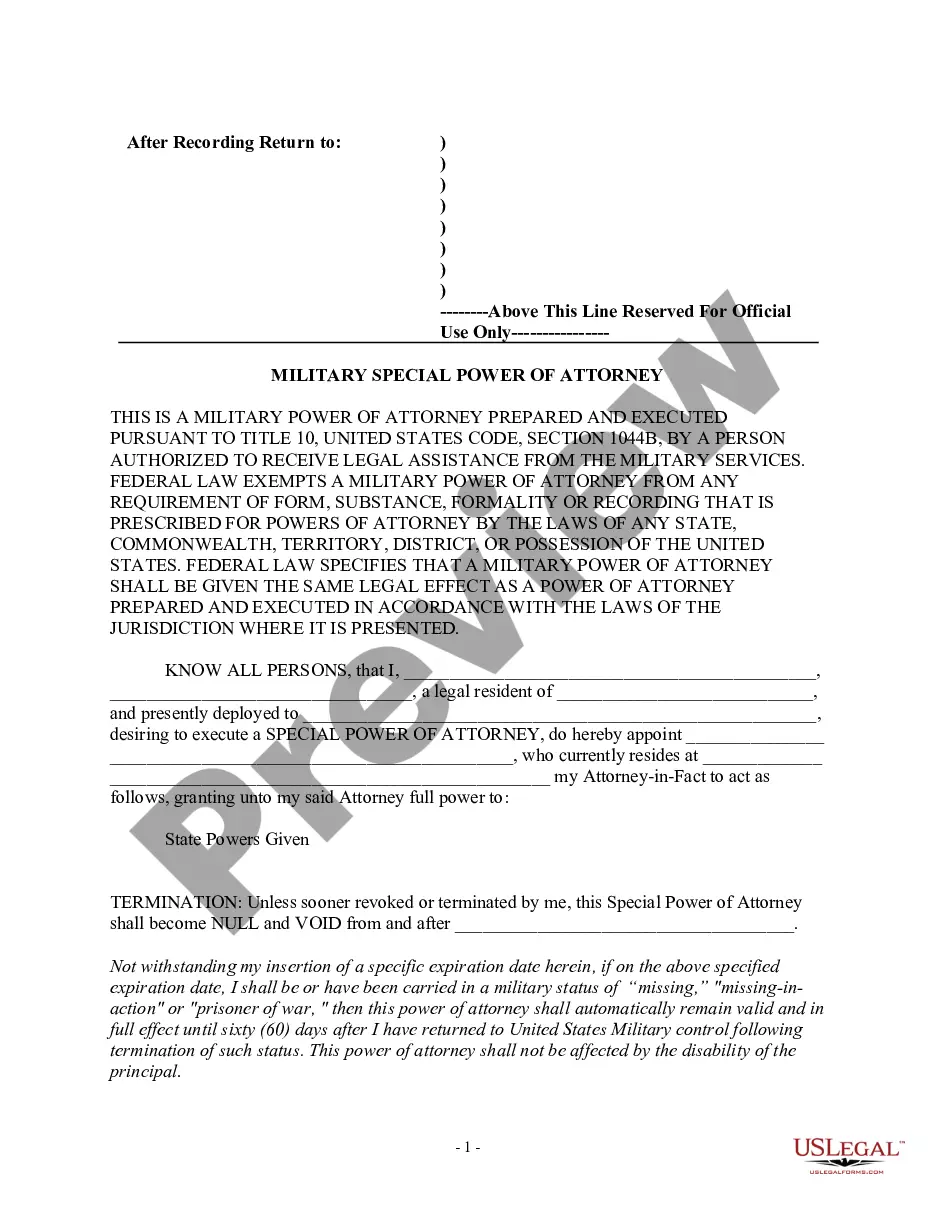
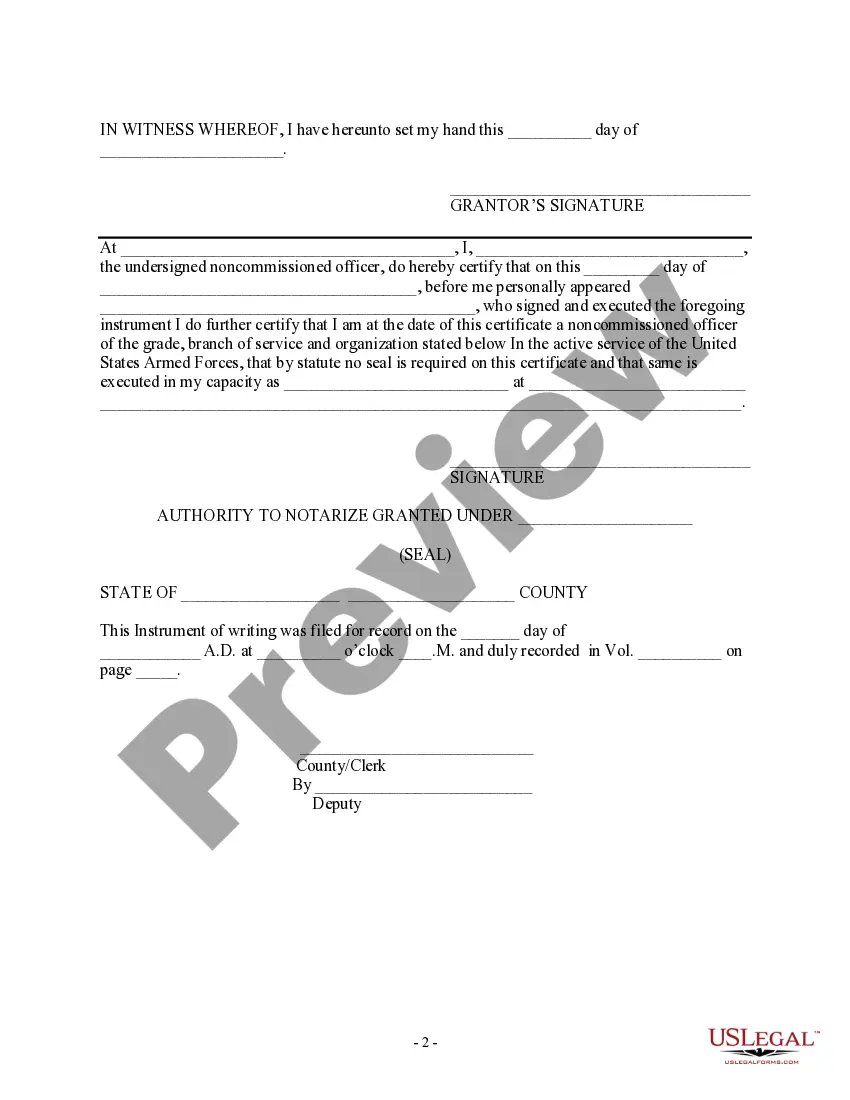
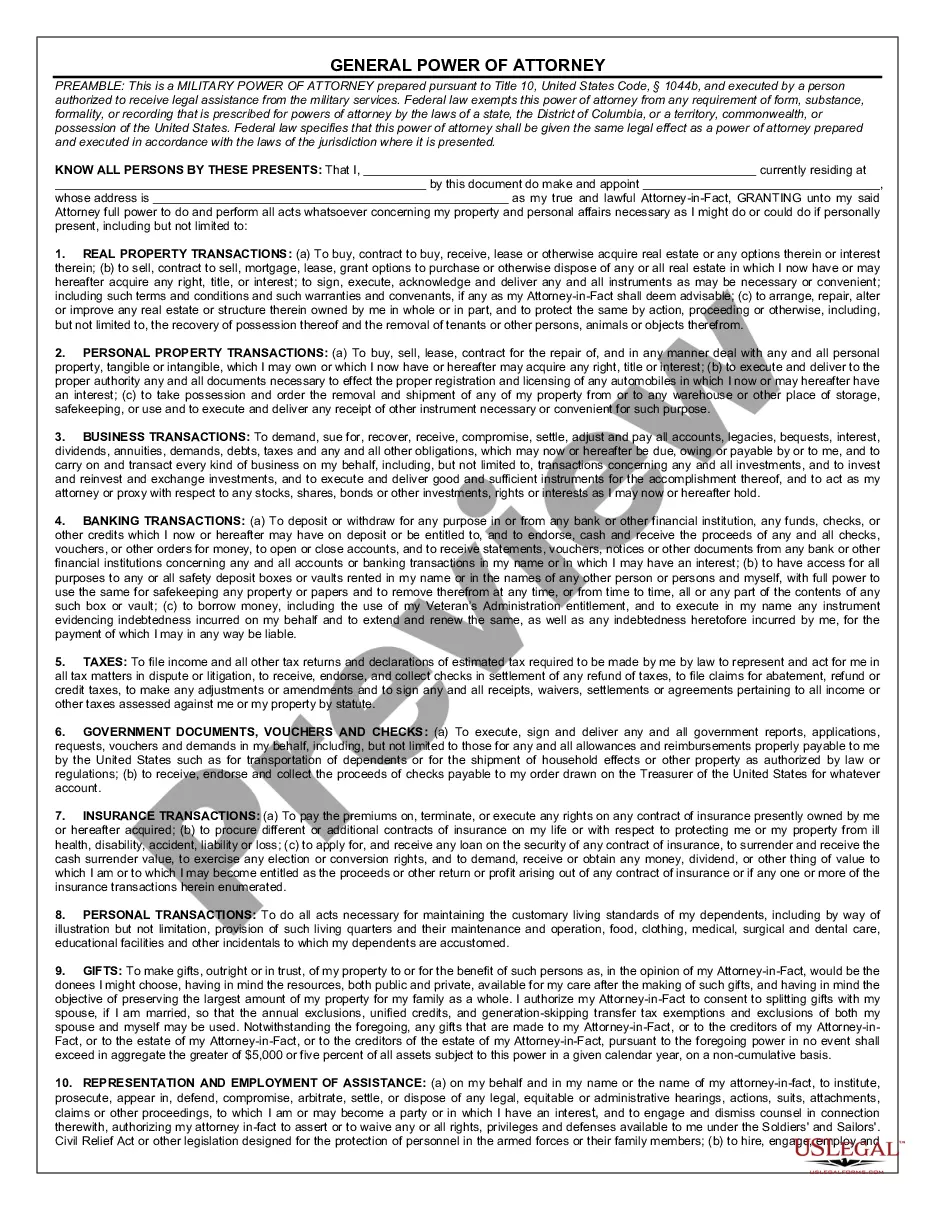
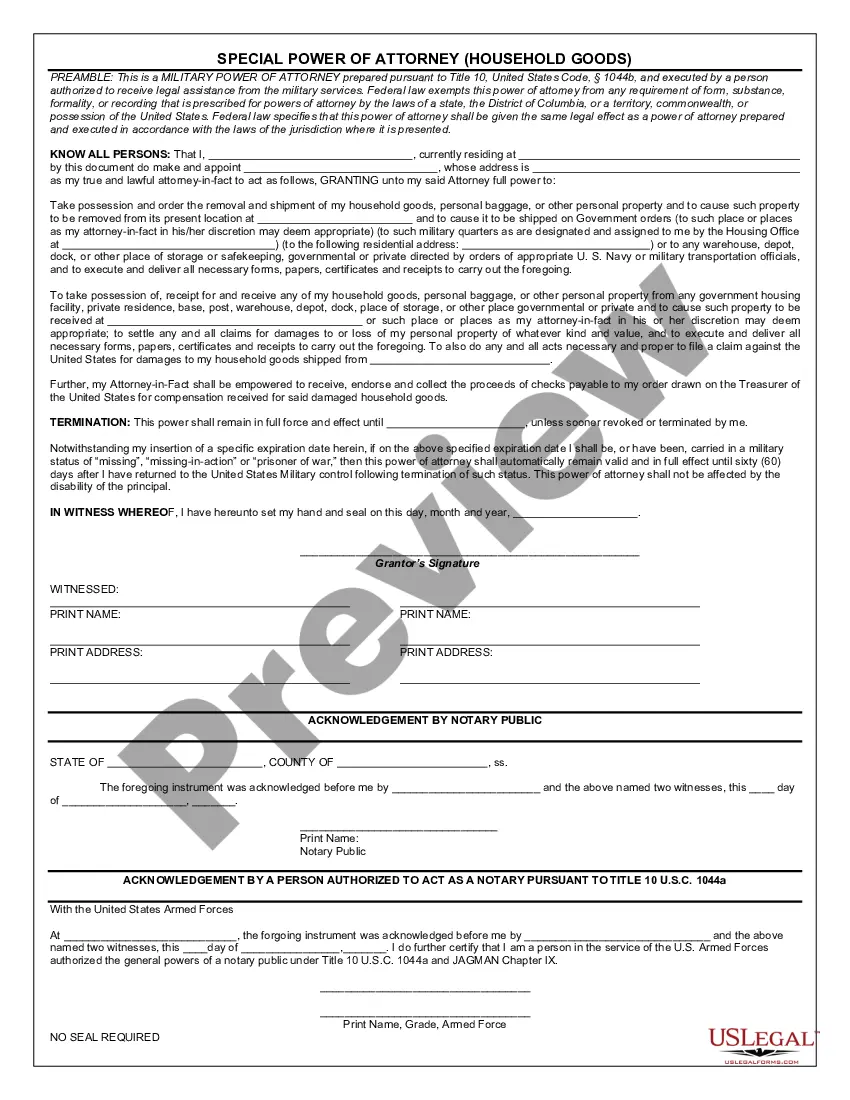
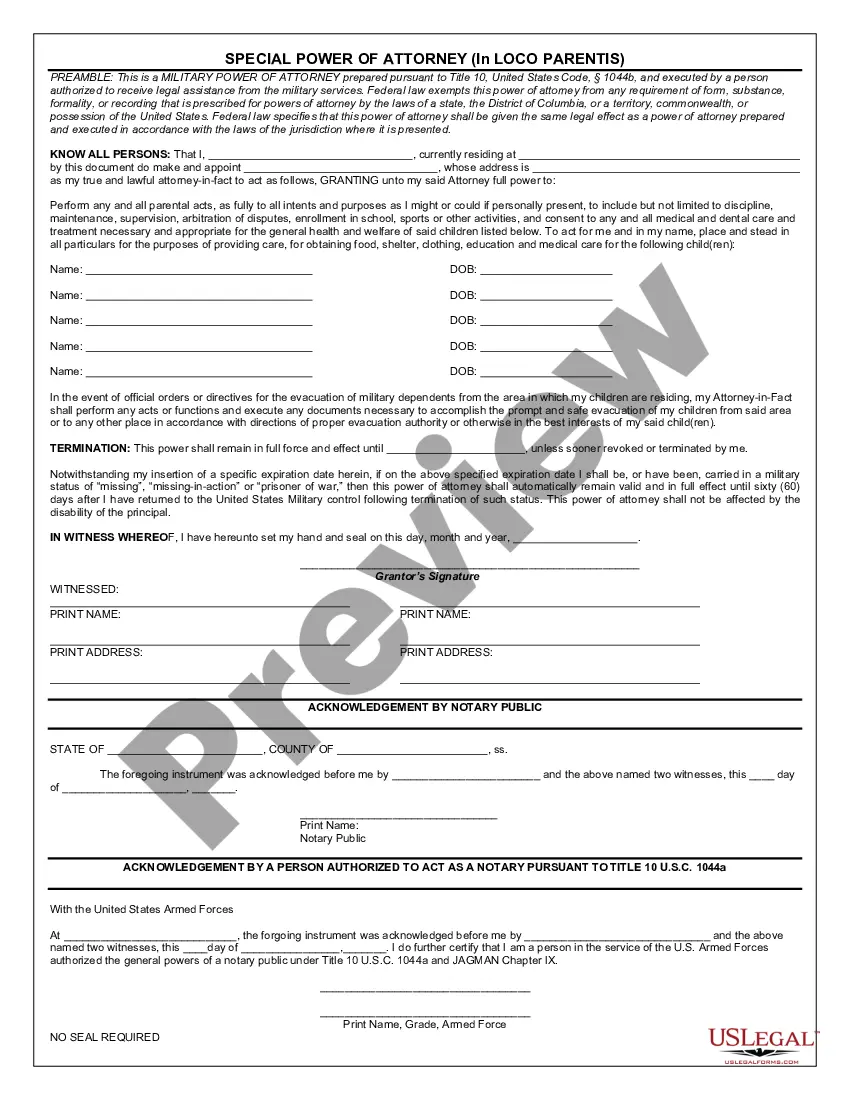
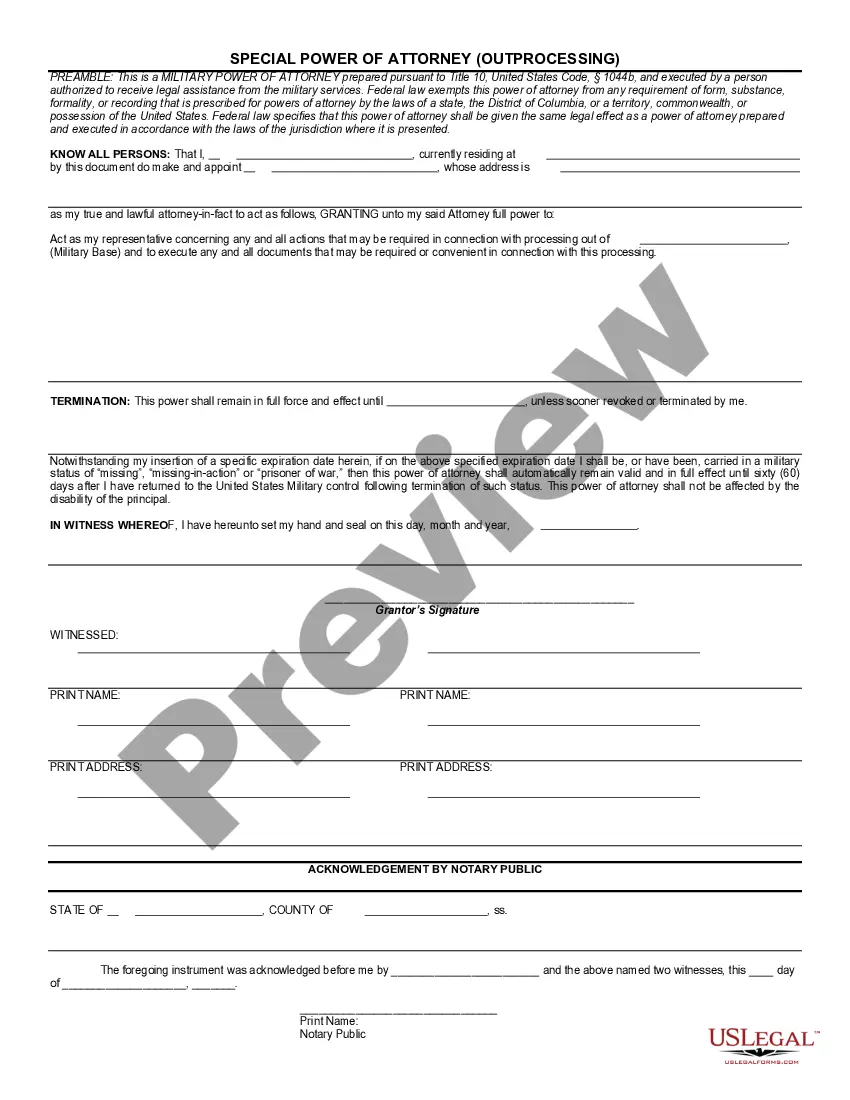

How to fill out Special Military Power Of Attorney?
- If you are a returning user, log in to your account to access your previously saved forms. Ensure that your subscription is still active; if not, consider renewing it.
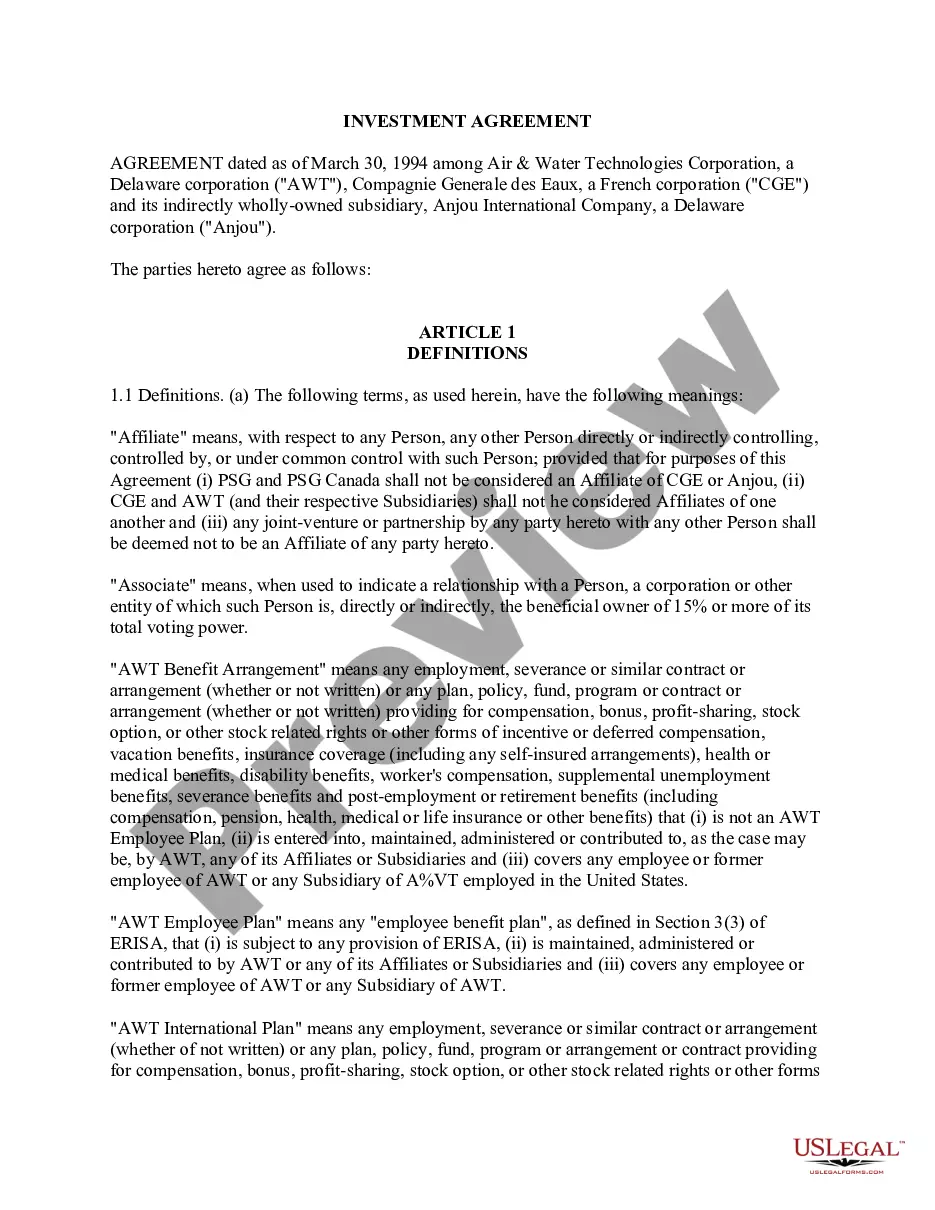
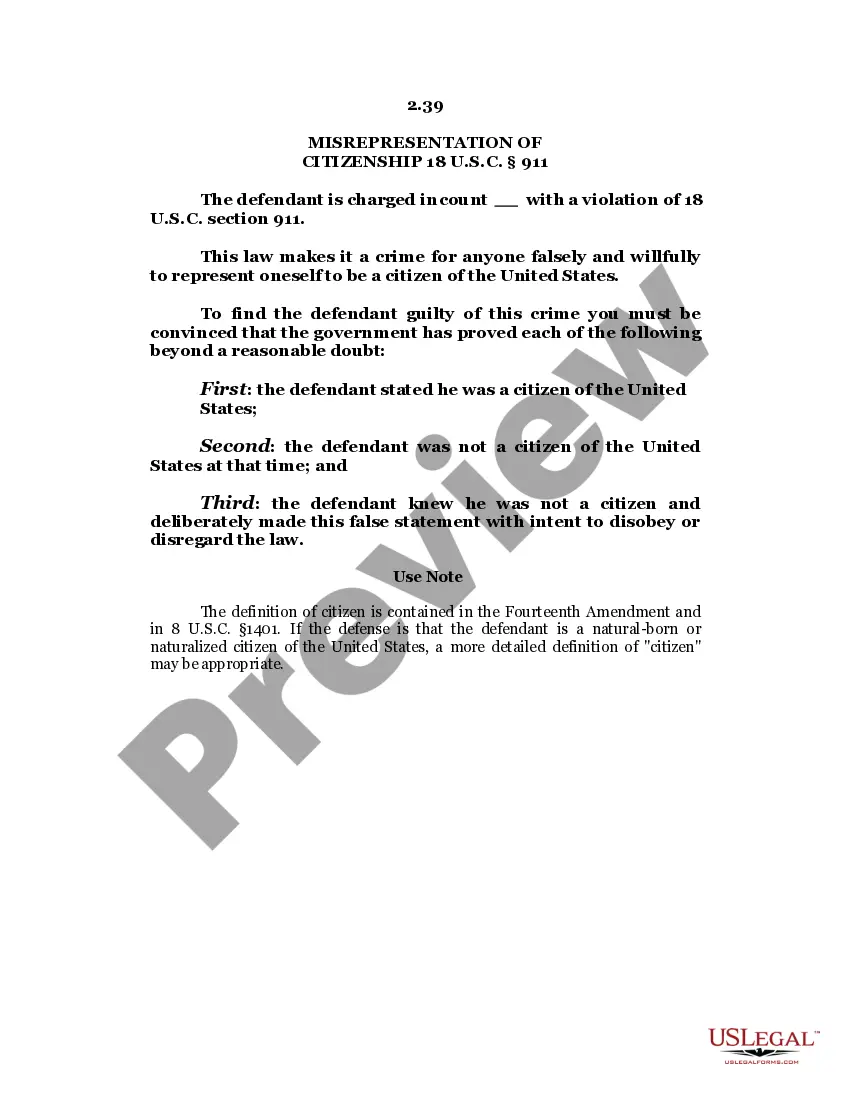
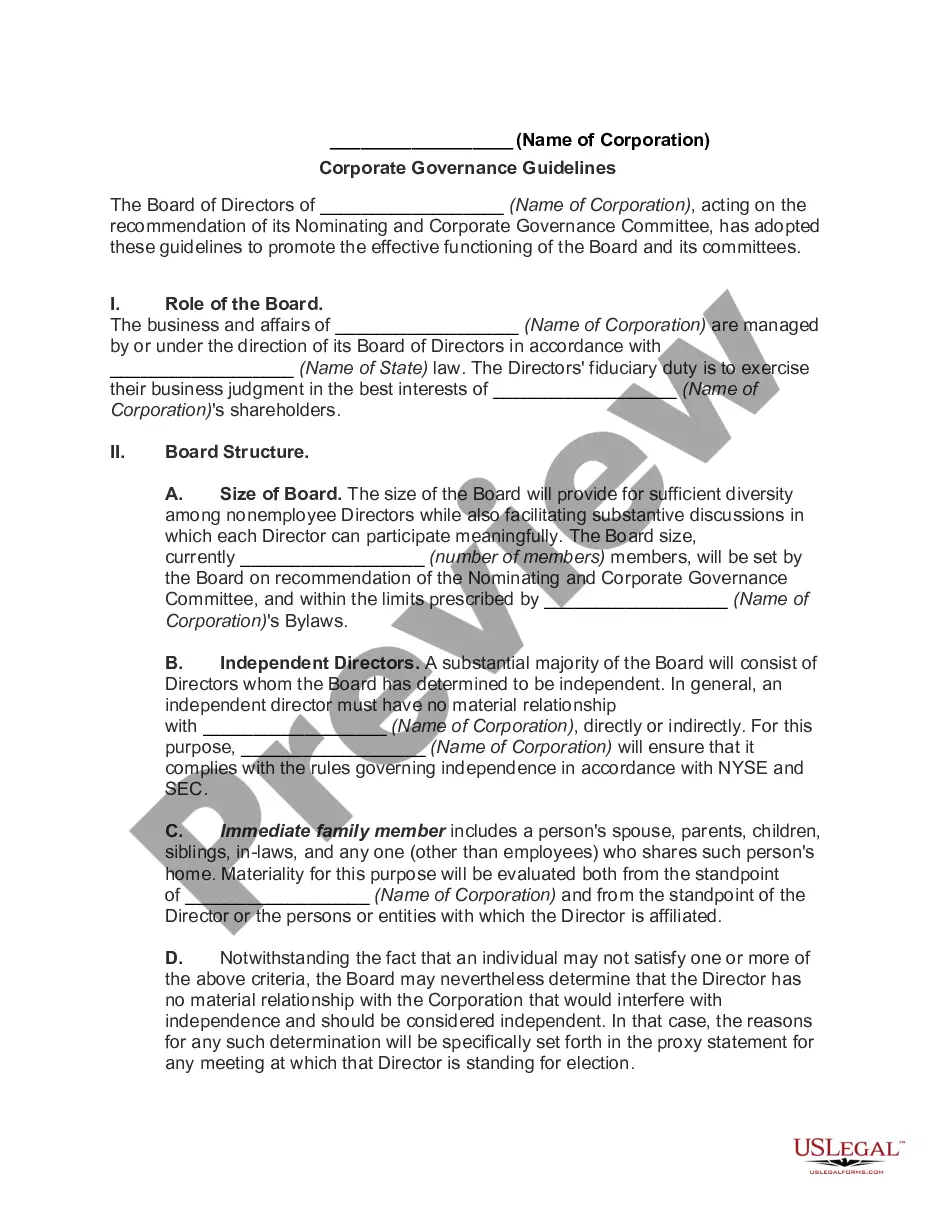
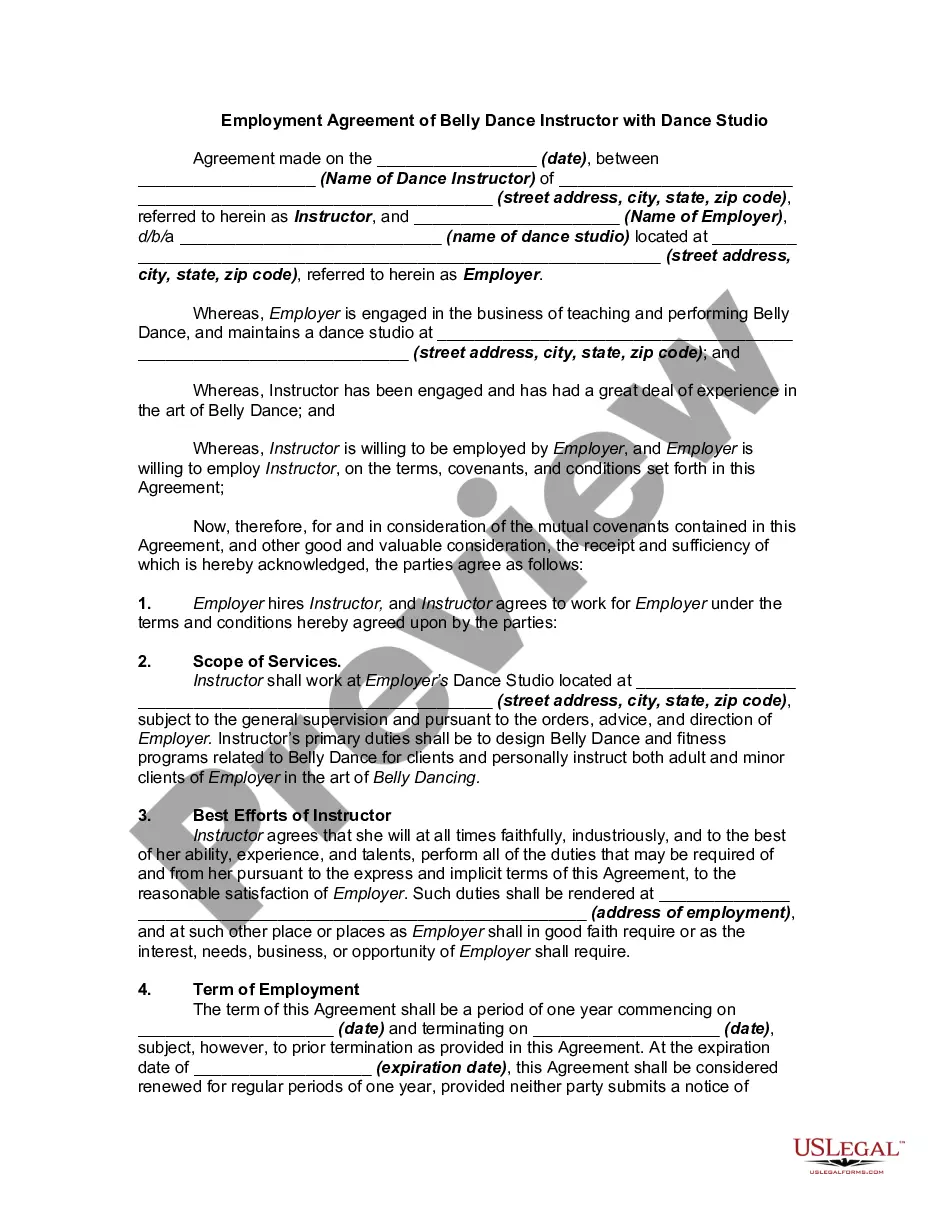
- For new users, start by browsing the preview mode and descriptions to select the right power of attorney form that aligns with your local jurisdiction and specific needs.
- If your first choice isn't a perfect fit, utilize the Search feature above to explore other available templates until you find one that suits your situation.
- Click the Buy Now button next to the chosen document and select your preferred subscription plan. Remember to create an account for seamless access to additional library resources.
- Process your payment by entering your credit card information, or opt for PayPal to secure your purchase.
- Once your payment is confirmed, download your power of attorney document to your device. You can also retrieve it anytime from the My Forms section of your profile.
In conclusion, US Legal Forms provides a robust resource for military families needing legal forms quickly and efficiently. With over 85,000 editable documents and access to expert guidance, you can ensure your legal needs are met accurately.
Don’t wait—start using US Legal Forms today to easily manage your legal documentation!
Form popularity
FAQ
In the military, POA stands for power of attorney. It is a legal document that empowers someone to act on behalf of a service member. This designation is critical for ensuring that military families maintain control over personal and financial matters, especially during deployment.
A power of attorney gives you authority to make decisions on behalf of another person regarding financial and legal matters. This includes managing bank accounts, properties, and making decisions in legal situations. For military families, this authority is essential for effectively managing affairs when a member is deployed.
A military power of attorney is a specific type designed for active service members. It allows them to designate someone to act on their behalf regarding financial and legal matters while they serve. This is especially valuable for military families needing immediate assistance during deployments.
A power of attorney cannot make decisions that are outside the scope of the powers granted. This means a POA cannot change a will or make medical decisions if not specified. Understanding these limits is crucial for military families to avoid potential overreach and complications.
The best type of power of attorney for military families is often the durable power of attorney. This option allows for continuity of decision-making during unexpected situations or deployment. It ensures that your loved ones maintain control while you are away, providing peace of mind.
A statutory POA is a type mandated by state law that provides specific powers, whereas a durable POA remains effective even if the principal cannot make decisions. For military families, having a durable power of attorney is beneficial to ensure that decisions can be made during times of deployment or incapacity. Both types serve their purposes depending on the situation.
The three kinds of power of attorneys include general, durable, and special, each serving unique needs. General POA gives broad authority, durable POA remains effective if the person becomes incapacitated, and special POA limits authority to specific tasks. Understanding these differences is crucial, especially for military families needing flexibility.
Becoming a power of attorney for military families comes with serious responsibilities. You must act in the best interest of the person you represent. If you misuse this power, you could face legal consequences. Always consider the weight of your decisions.
The federal code that outlines military powers of attorney is located in Title 10, United States Code, Section 1044b. This code establishes the legal framework for service members to grant powers of attorney while addressing specific provisions applicable to military families. It's important for military families to understand this code, as it offers protections and guidance on the use of power of attorney. For more information, accessing resources on platforms like US Legal Forms can be highly beneficial.
Yes, a military power of attorney generally needs to be notarized to be considered valid. Notarization adds an extra layer of security, confirming that the signatures are genuine and that the document was executed in accordance with the law. Military families should ensure this step is completed to avoid potential issues in the future. Consider using services from the US Legal Forms platform to manage this task conveniently.