Debt Collection Agency For Business
Description
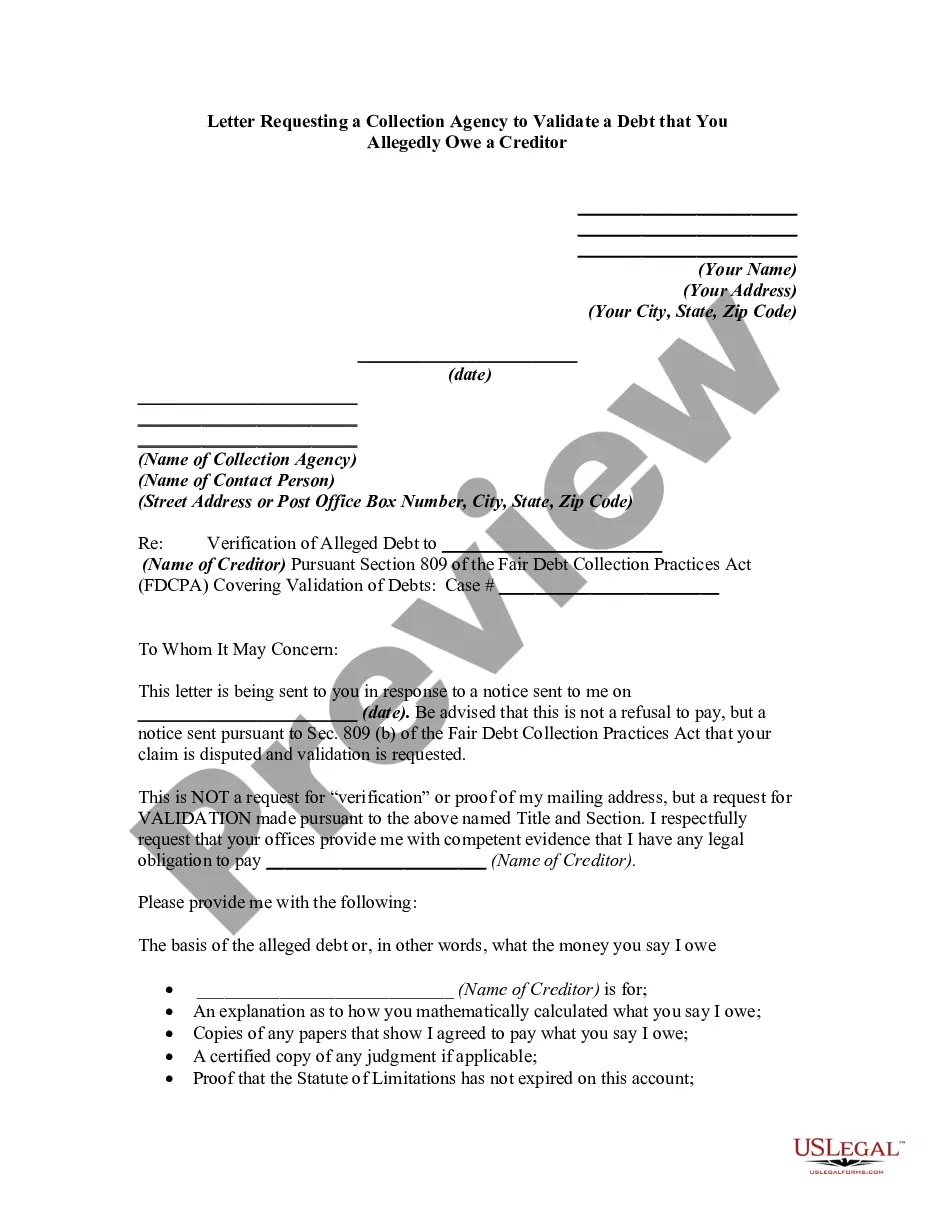
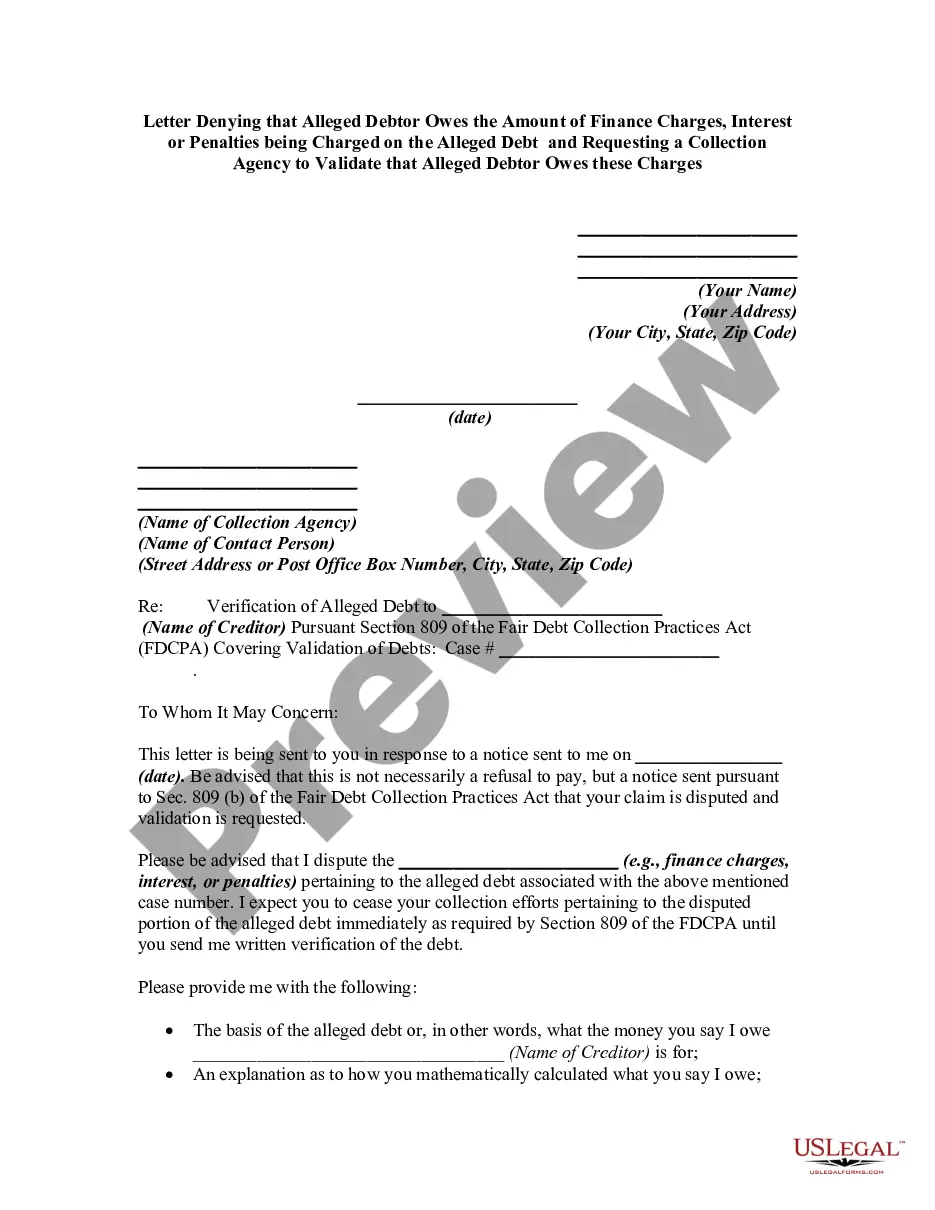
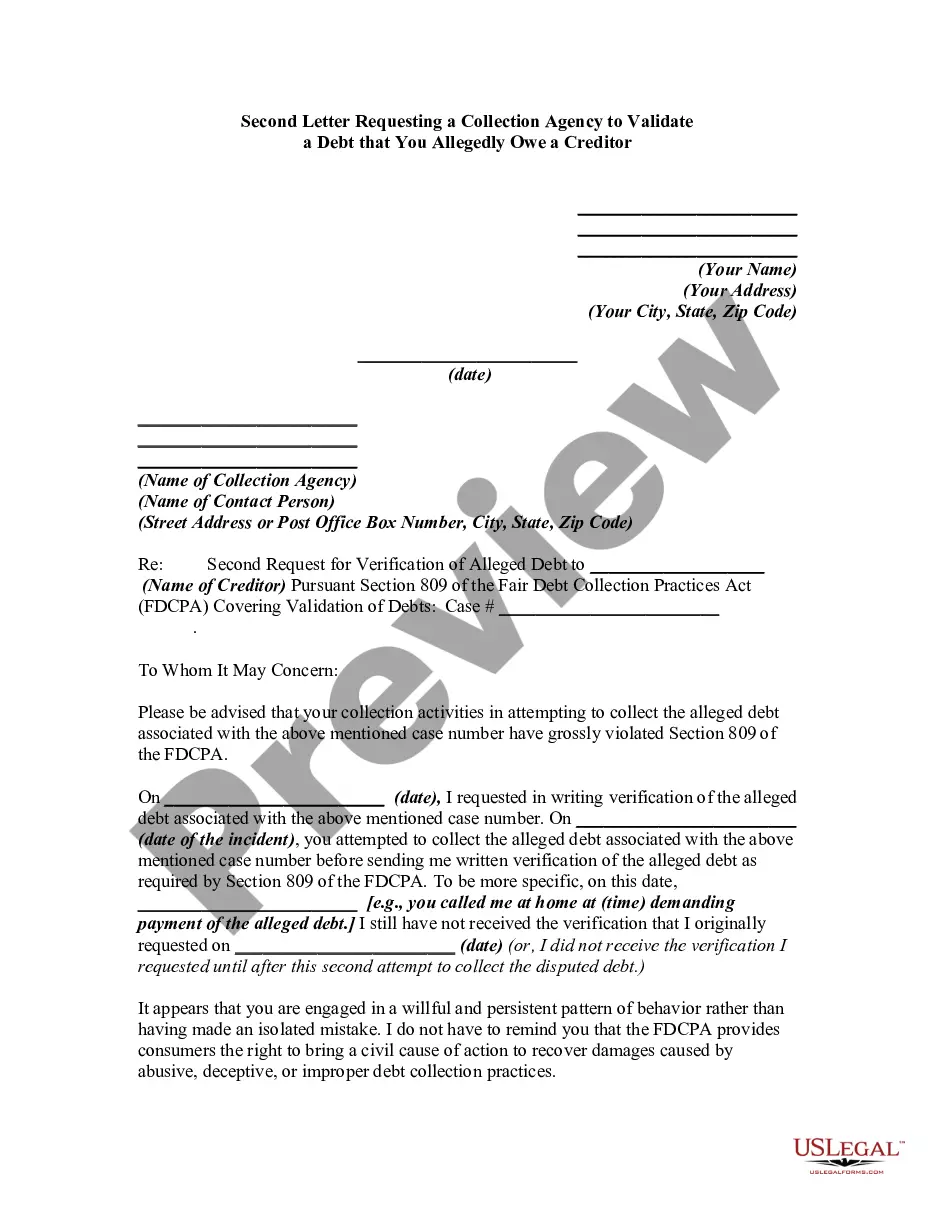
Get your form ready online
Our built-in tools help you complete, sign, share, and store your documents in one place.
Make edits, fill in missing information, and update formatting in US Legal Forms—just like you would in MS Word.
Download a copy, print it, send it by email, or mail it via USPS—whatever works best for your next step.
Sign and collect signatures with our SignNow integration. Send to multiple recipients, set reminders, and more. Go Premium to unlock E-Sign.
If this form requires notarization, complete it online through a secure video call—no need to meet a notary in person or wait for an appointment.
We protect your documents and personal data by following strict security and privacy standards.

Make edits, fill in missing information, and update formatting in US Legal Forms—just like you would in MS Word.

Download a copy, print it, send it by email, or mail it via USPS—whatever works best for your next step.

Sign and collect signatures with our SignNow integration. Send to multiple recipients, set reminders, and more. Go Premium to unlock E-Sign.

If this form requires notarization, complete it online through a secure video call—no need to meet a notary in person or wait for an appointment.

We protect your documents and personal data by following strict security and privacy standards.
Looking for another form?
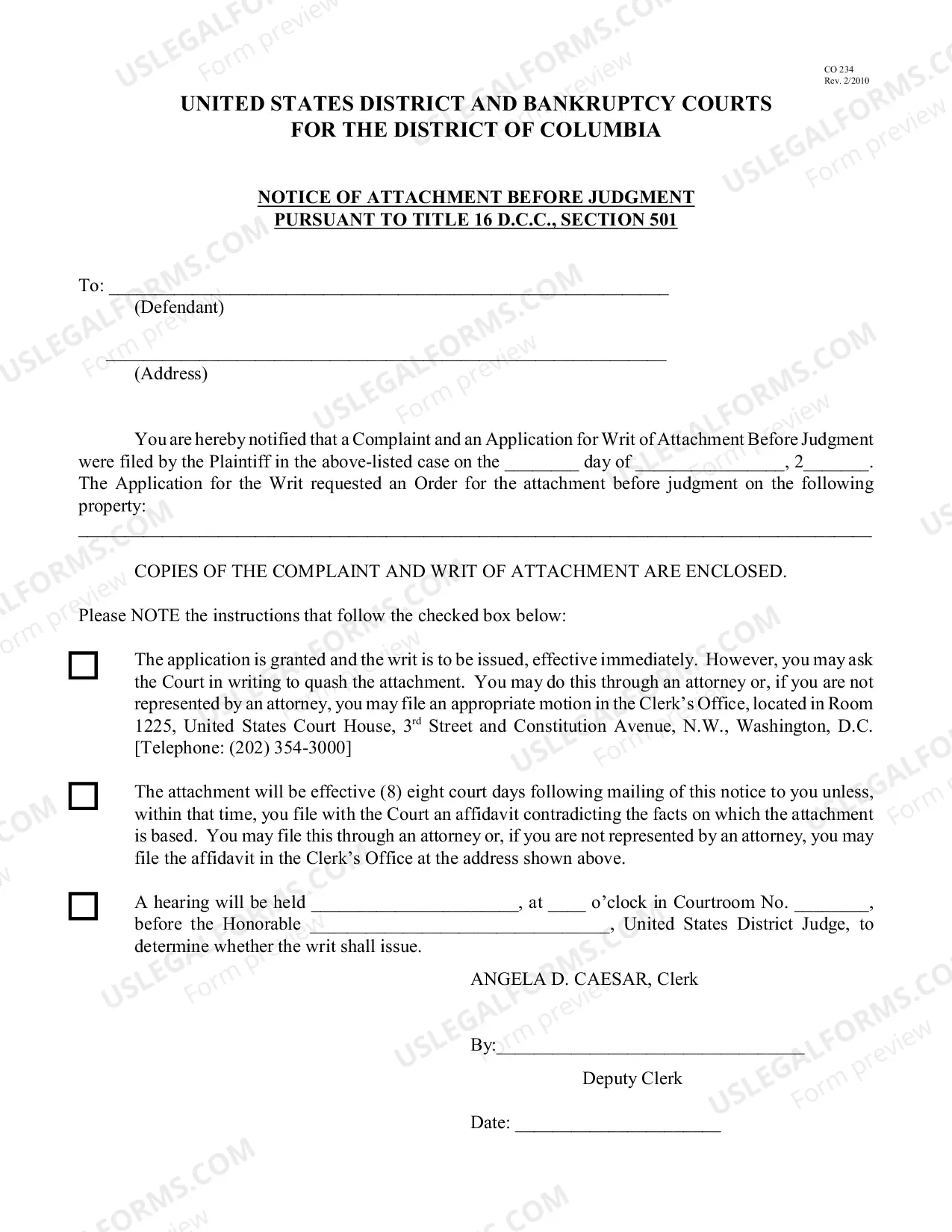




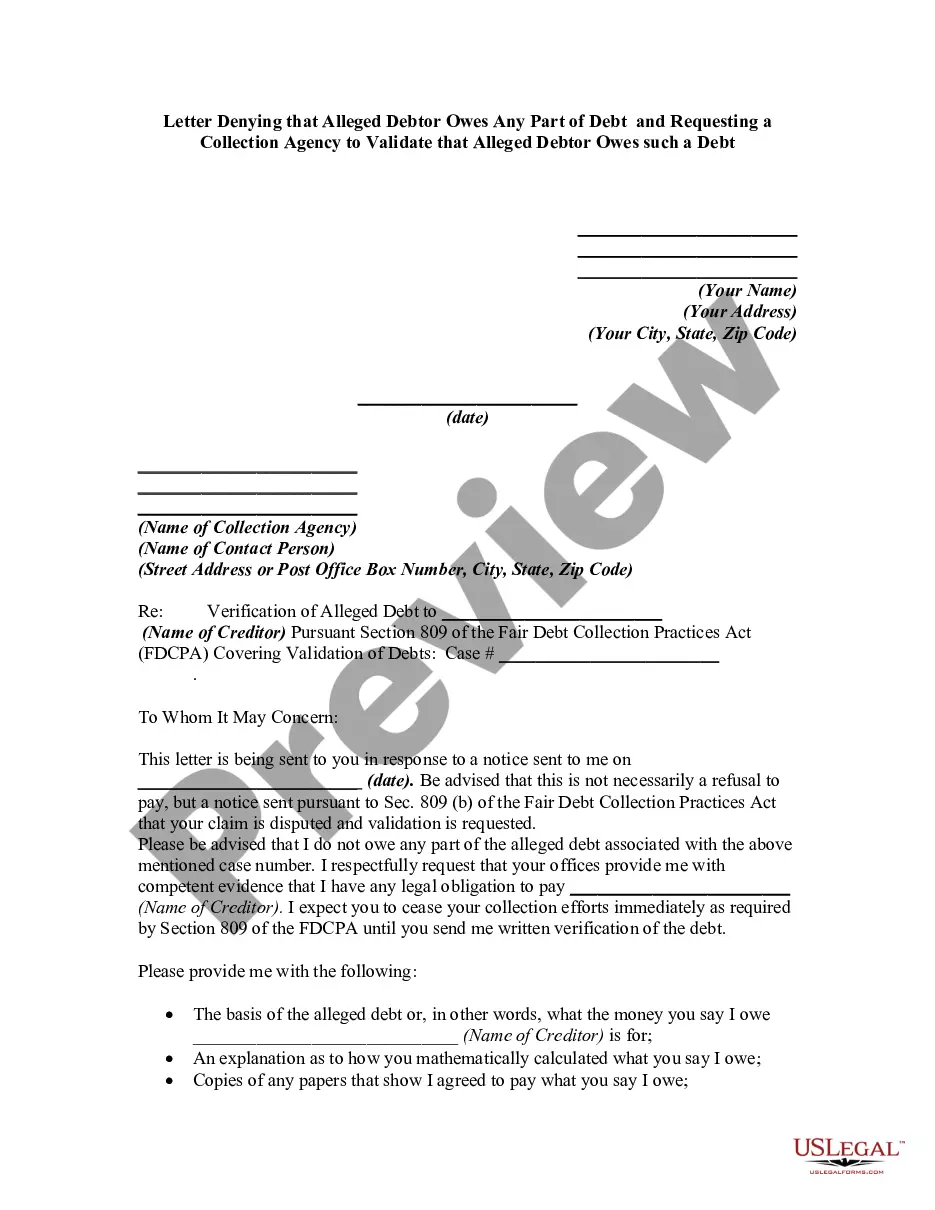
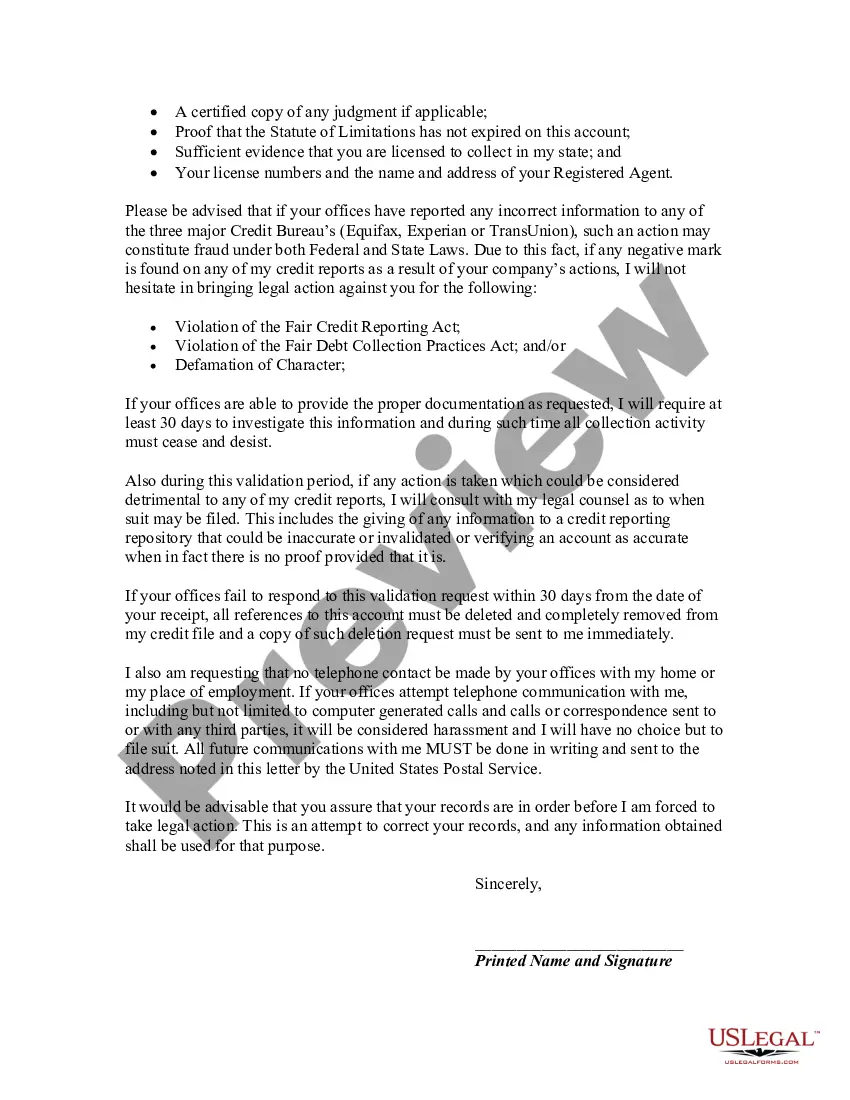
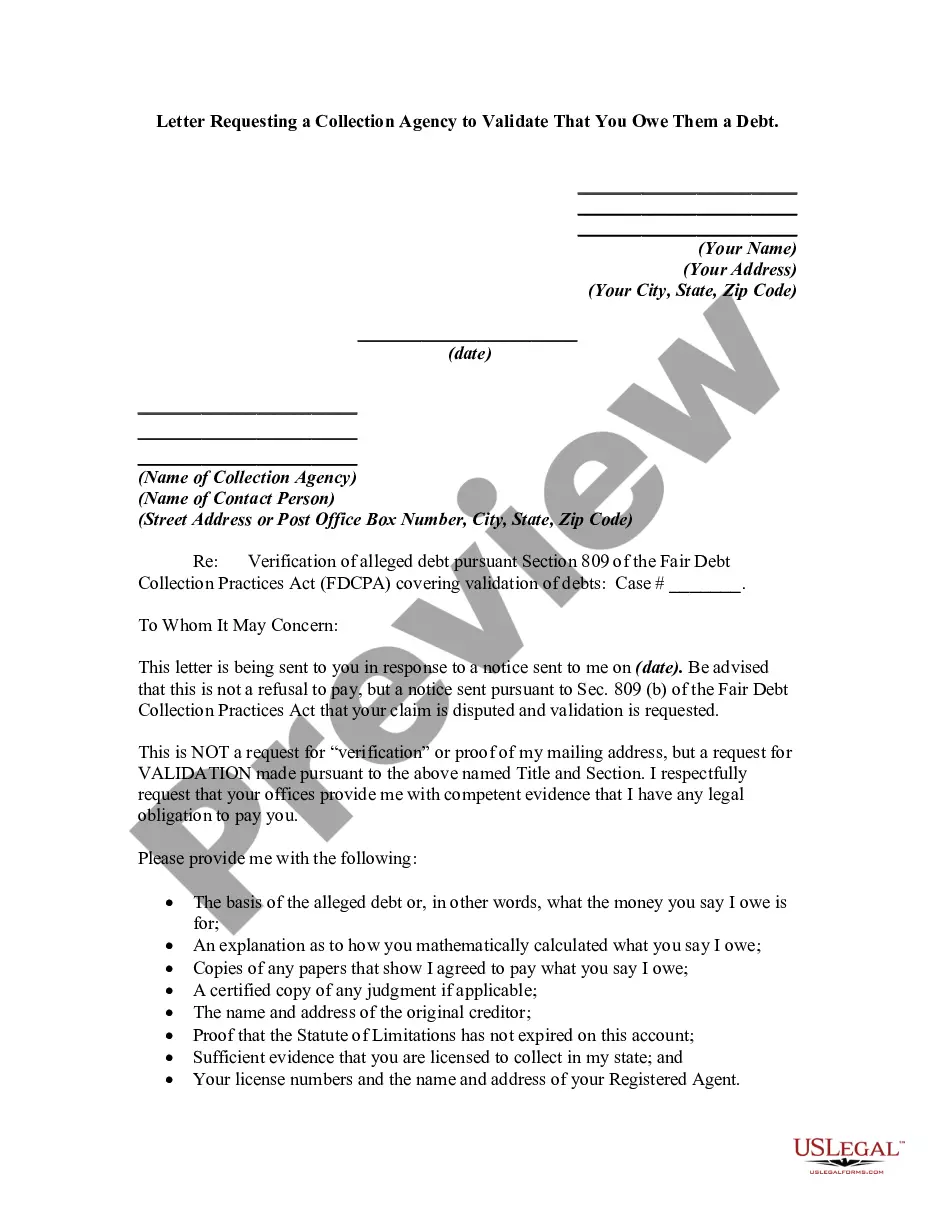
How to fill out Letter Denying That Alleged Debtor Owes Any Part Of Debt And Requesting A Collection Agency To Validate That Alleged Debtor Owes Such A Debt?
The Debt Recovery Agency For Business displayed on this page is a reusable formal document created by expert attorneys in accordance with federal and state regulations.
For over 25 years, US Legal Forms has offered individuals, enterprises, and legal practitioners more than 85,000 authenticated, state-specific documents for any business and personal situation. It’s the fastest, simplest, and most dependable method to acquire the paperwork you require, as the service ensures the utmost level of data security and anti-malware safeguards.
Subscribe to US Legal Forms to have authenticated legal templates for all of life’s situations readily available.
- Search for the document you need and examine it. Browse through the file you sought and preview it or check the form description to ensure it meets your requirements. If it doesn’t, utilize the search bar to find the correct one. Click Purchase Now once you have located the template you need.
- Register and Log In. Select the pricing option that fits you and create an account. Use PayPal or a credit card for a swift transaction. If you already possess an account, Log In and verify your subscription to proceed.
- Acquire the fillable document. Choose the format you prefer for your Debt Recovery Agency For Business (PDF, Word, RTF) and download the template onto your device.
- Complete and sign the documents. Print the template to fill it out manually. Alternatively, use an online multifunctional PDF editor to quickly and precisely complete and sign your form with an eSignature.
- Download your documents again. Reuse the same document whenever necessary. Access the My documents section in your profile to redownload any forms you previously saved.
Form popularity
FAQ
The Process of Debt Collection for Small Businesses Explained in 8 Simple Steps Sending the invoice. Contacting the debtor by yourself. Negotiate. Issuing dunning letters. Discontinuing the services. Going to small claims court. Hiring a debt collection agency. Filing a lawsuit.
On the other hand, here's what you shouldn't do. Don't give a collector any personal financial information, make a "good faith" payment, make promises to pay, or admit the debt is valid.
In the new changes to Regulation F, the frequency at which a collections agency can contact a consumer has changed. This change, presented in Section 1006.14B21A, addresses telephone call frequency and restricts agencies to contacting a consumer seven times within seven consecutive days.
Debt collectors cannot harass or abuse you. They cannot swear, threaten to illegally harm you or your property, threaten you with illegal actions, or falsely threaten you with actions they do not intend to take. They also cannot make repeated calls over a short period to annoy or harass you.
For businesses looking to collect debts from unpaid invoices, a collection agency will use databases to track nonpaying customers and contact them for payment. Then, the agency will reach out to your customers via written notices, phone calls, and in-person visits if necessary to obtain the money you are owed.