False Imprisonment For Assault And Battery
Description
Get your form ready online
Our built-in tools help you complete, sign, share, and store your documents in one place.
Make edits, fill in missing information, and update formatting in US Legal Forms—just like you would in MS Word.
Download a copy, print it, send it by email, or mail it via USPS—whatever works best for your next step.
Sign and collect signatures with our SignNow integration. Send to multiple recipients, set reminders, and more. Go Premium to unlock E-Sign.
If this form requires notarization, complete it online through a secure video call—no need to meet a notary in person or wait for an appointment.
We protect your documents and personal data by following strict security and privacy standards.

Make edits, fill in missing information, and update formatting in US Legal Forms—just like you would in MS Word.

Download a copy, print it, send it by email, or mail it via USPS—whatever works best for your next step.

Sign and collect signatures with our SignNow integration. Send to multiple recipients, set reminders, and more. Go Premium to unlock E-Sign.

If this form requires notarization, complete it online through a secure video call—no need to meet a notary in person or wait for an appointment.

We protect your documents and personal data by following strict security and privacy standards.
Looking for another form?


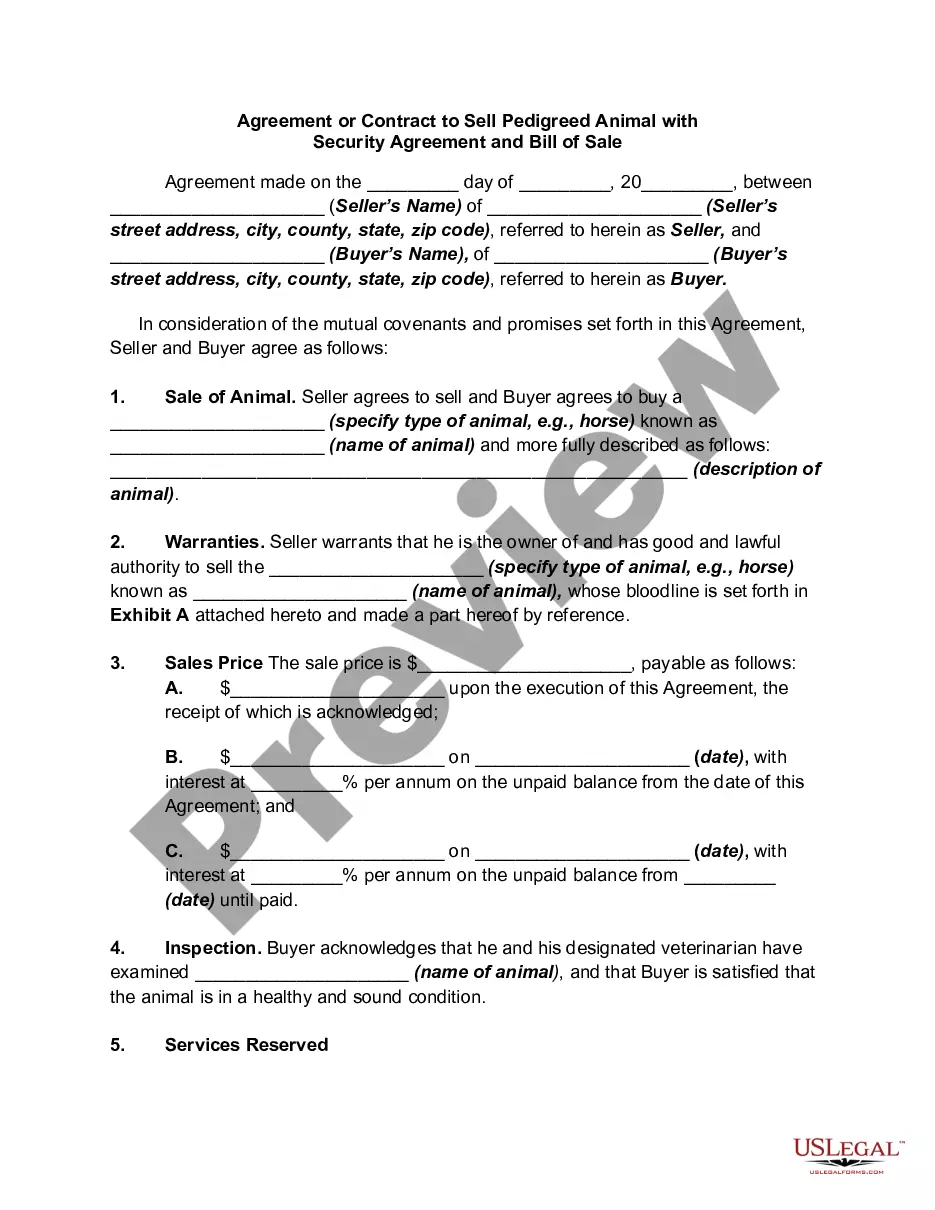






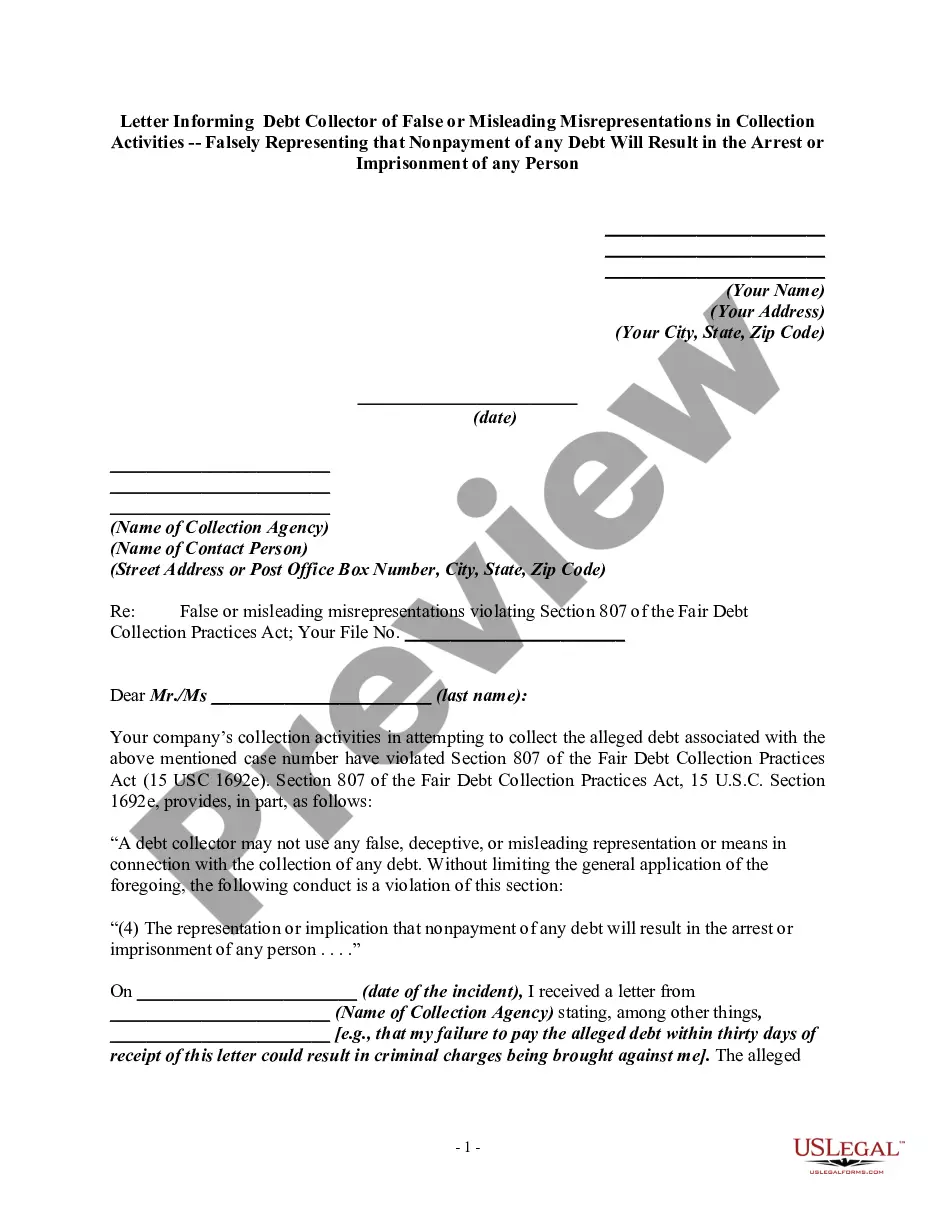
How to fill out Letter Informing Debt Collector Of False Or Misleading Misrepresentations In Collection Activities - Falsely Representing That Nonpayment Of Any Debt Will Result In The Arrest Or Imprisonment Of Any Person?
Acquiring legal document samples that comply with federal and state regulations is essential, and the internet provides many choices to consider.
However, what’s the benefit of spending time searching for the appropriate False Imprisonment For Assault And Battery template online if the US Legal Forms digital library already has such documents gathered in one location.
US Legal Forms is the largest online legal repository with over 85,000 editable templates created by lawyers for any business and personal situation.
Review the template using the Preview function or through the text description to confirm it satisfies your needs.
- They are simple to navigate with all documents organized by state and purpose of use.
- Our specialists keep up with legislative updates, ensuring your form is always current and compliant when obtaining a False Imprisonment For Assault And Battery from our site.
- Acquiring a False Imprisonment For Assault And Battery is straightforward and fast for both existing and new users.
- If you already possess an account with an active subscription, Log In and save the document sample you need in your desired format.
- If you are new to our site, follow the steps outlined below.
Form popularity
FAQ
The sentence for false imprisonment can vary significantly based on the circumstances and jurisdiction. Generally, it may result in civil liability, including compensatory damages for the victim. In some cases, criminal charges may apply, leading to imprisonment or fines. It’s essential to consult legal experts to understand the potential consequences related to false imprisonment for assault and battery.
False imprisonment occurs when an individual is confined or restrained against their will without legal justification. This could involve physical barriers, verbal threats, or coercion. Importantly, false imprisonment for assault and battery may arise in various scenarios, such as unlawful detentions or deceptive practices. If you believe you have experienced this, consider seeking legal advice.
False imprisonment is neither assault nor battery, but it can relate to both. Assault involves the threat of harm, while battery refers to actual physical contact. False imprisonment for assault and battery occurs when someone unlawfully restricts another person's freedom of movement. Understanding these distinctions is crucial for anyone facing legal issues related to false imprisonment.
A person commits false imprisonment when they engage in the act of restraint on another person which confines that person in a restricted area. False imprisonment is an act punishable under criminal law as well as under tort law.
Consent. Consent to restraint is a defense to a charge of false imprisonment. If a person gives express or implied consent to the violation of their liberty, no false imprisonment occurs. To consent, a person must assent freely and voluntarily and know the nature of the act they are or will be experiencing.
Battery is when a person uses force against another without his or her consent. Physical contact is required for this tort. False imprisonment is when a person prevents another from moving without consent. The confinement must be non-consensual and must be intentional on behalf of the wrongdoer.
To prove a false imprisonment claim as a tort in a civil lawsuit, the following elements must be present: There was a willful detention; The detention was without consent; and. The detention was unlawful.