Letter Debt Using For A Reason
Description
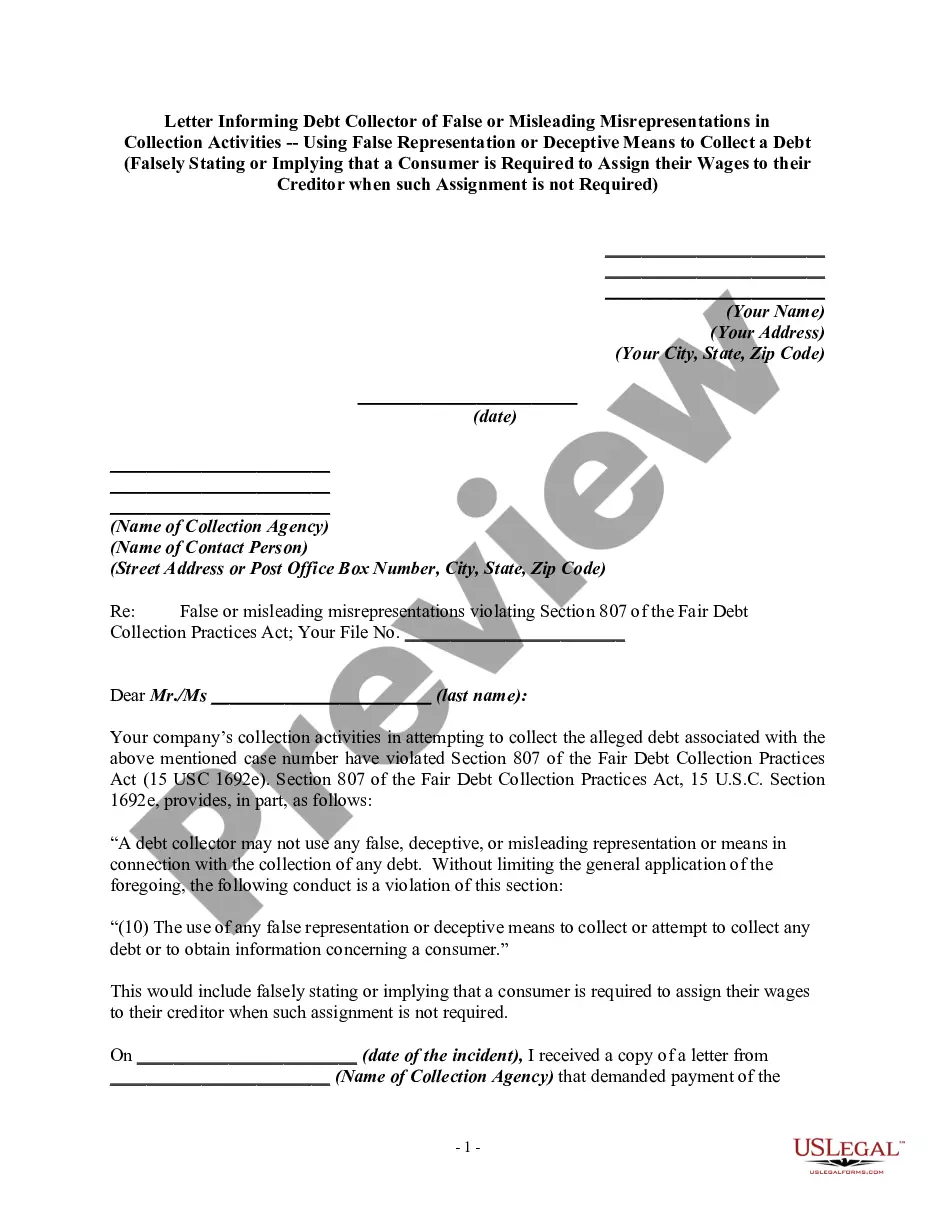
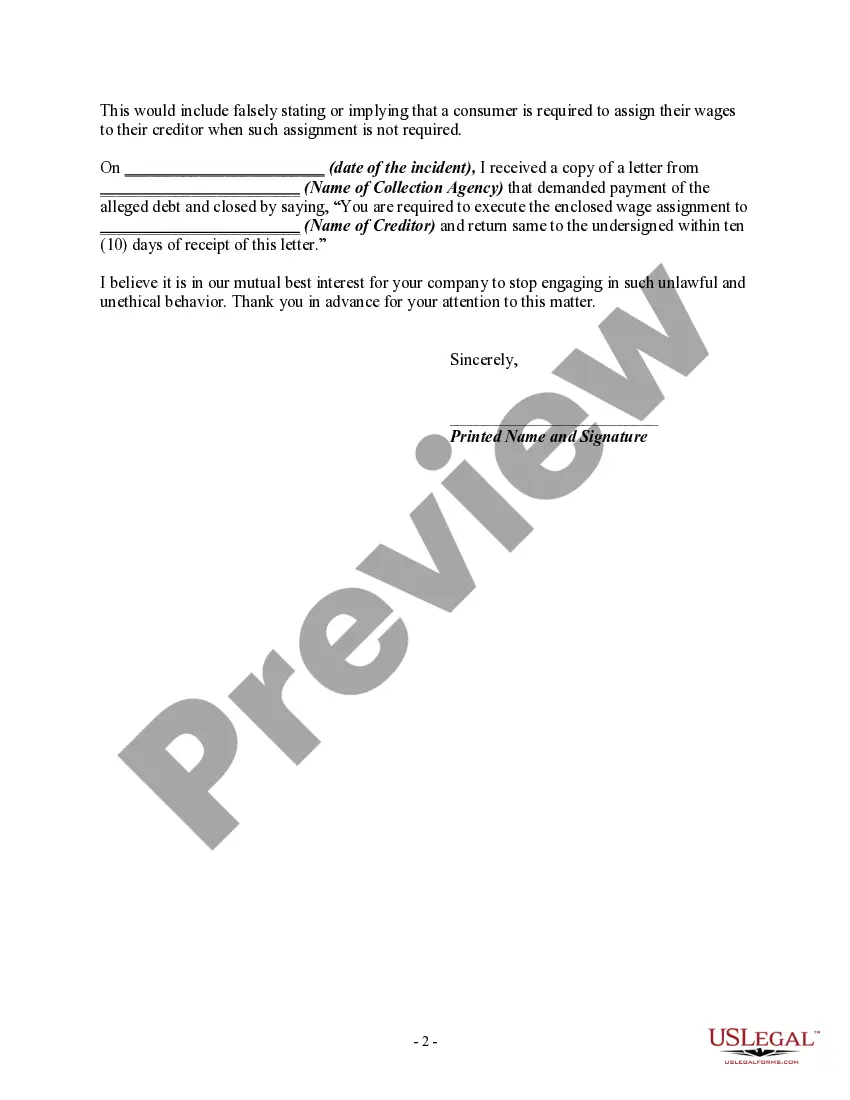
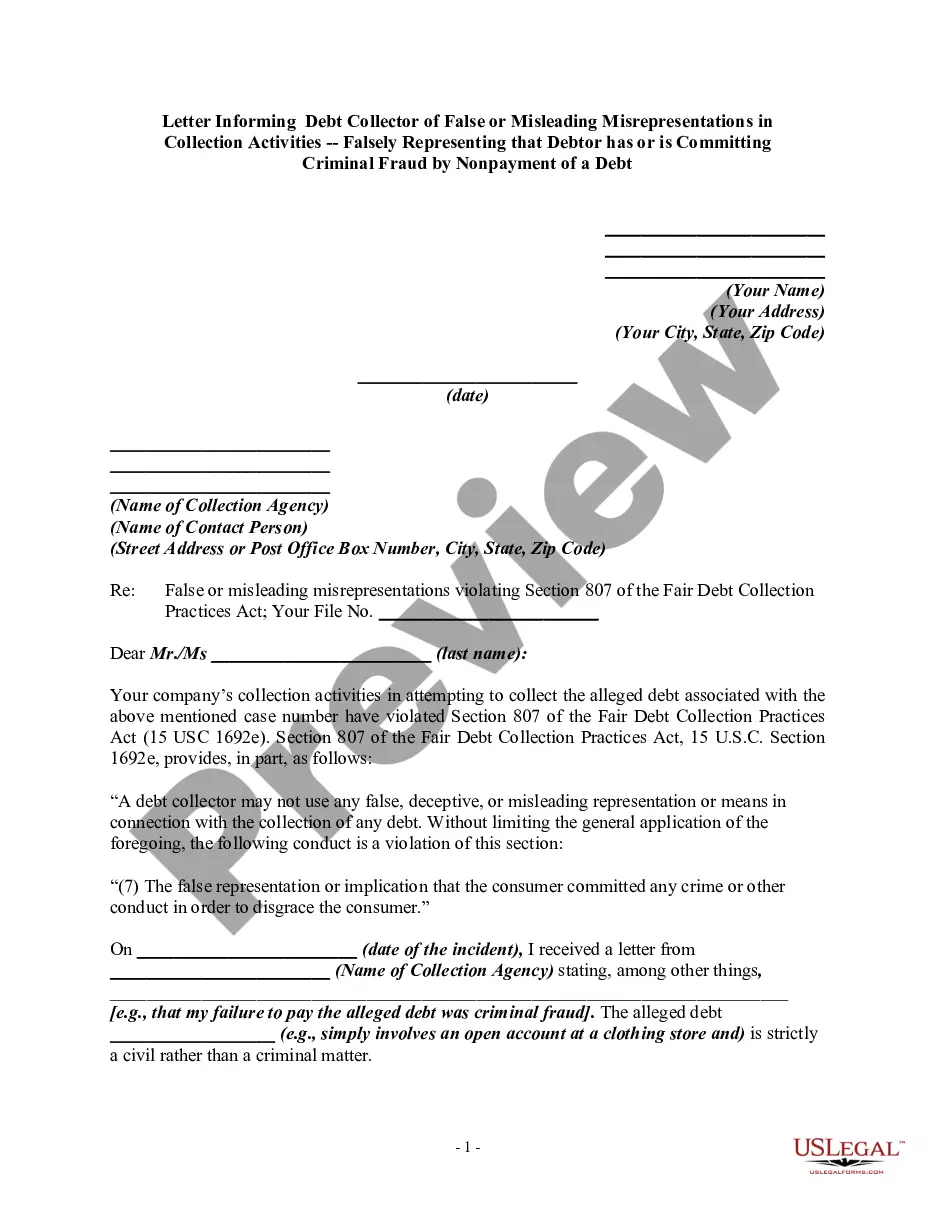
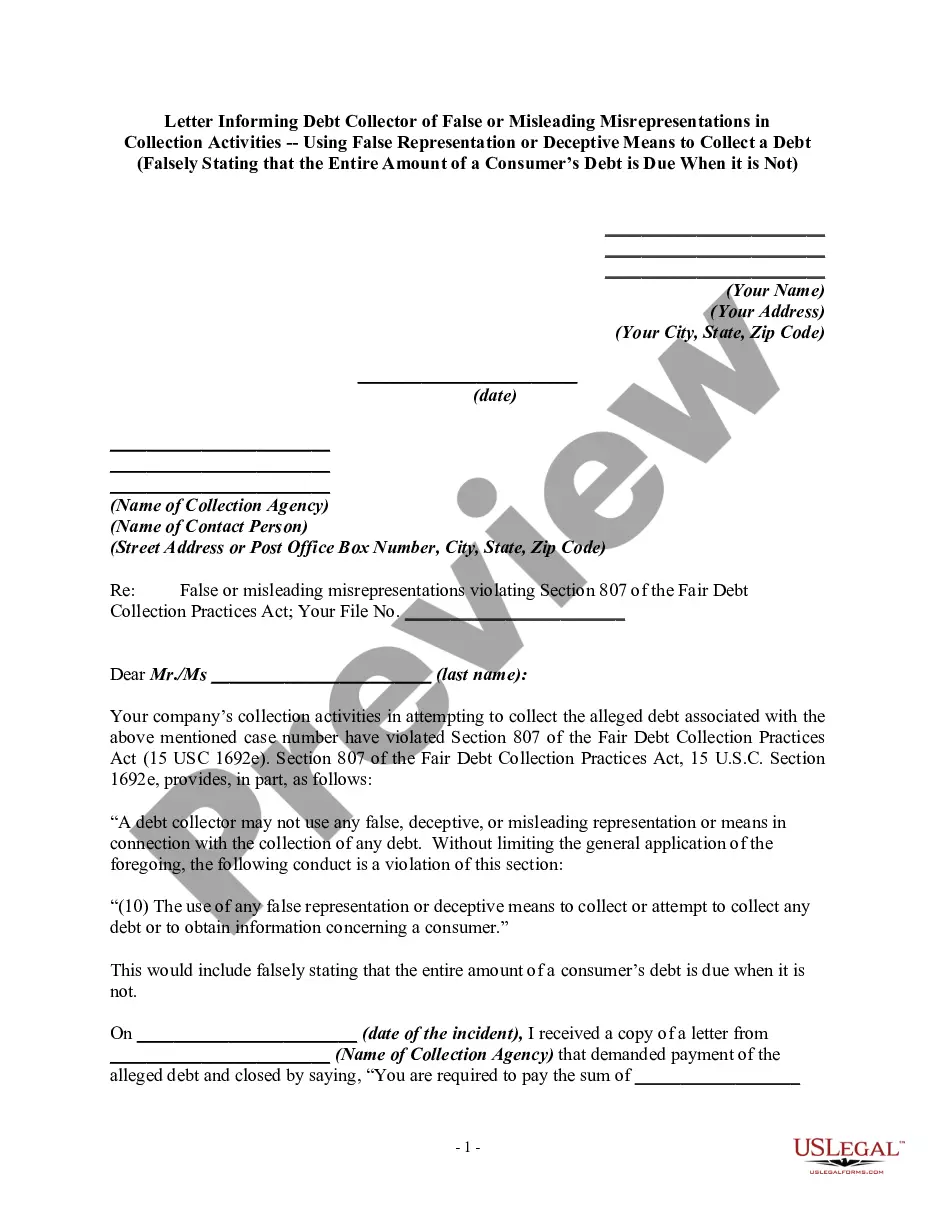
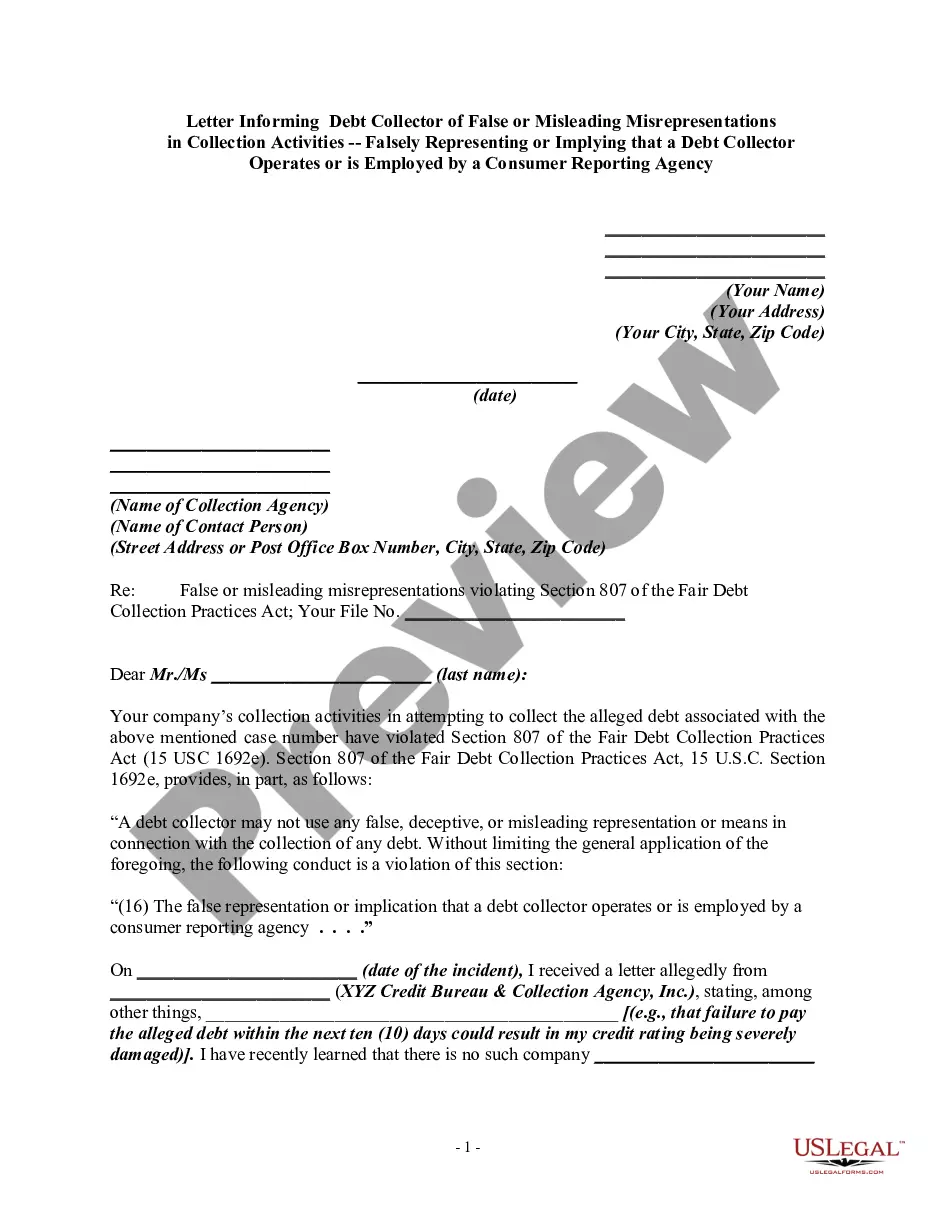

How to fill out Letter Informing Debt Collector Of False Or Misleading Misrepresentations In Collection Activities - Using False Representation Or Deceptive Means To Collect A Debt?
- If you are a returning user, log into your account and download the required form template by selecting the Download button. Ensure your subscription status is active; if not, renew it based on your chosen payment plan.
- For first-time users, begin by exploring the Preview mode and form description to verify that you have selected the appropriate template that aligns with your needs and local jurisdiction criteria.
- If you require a different template, utilize the Search feature at the top to find the right one. Once satisfied, proceed to the following step.
- Purchase the document by clicking the Buy Now button and selecting your desired subscription plan. Registration is necessary to access the form library.
- Finalize your purchase by entering your credit card information or logging into your PayPal account for payment.
- Download your form to your device. You can access it later in the My Forms section of your profile.
In conclusion, with US Legal Forms, accessing, creating, and managing your legal documents has never been easier. Their robust library, combined with expert assistance, ensures you can produce high-quality documents efficiently.
Start taking control of your debt today by accessing US Legal Forms!
Form popularity
FAQ
A sample letter for a settlement offer would typically start with your contact information and a polite greeting, followed by a brief introduction of your debt situation. Then, you would outline the specifics of your proposed settlement and how it benefits both you and the creditor. Incorporating a letter debt using for a reason in this format can create a professional tone, increasing the chances of acceptance by the creditor.
Writing a letter to clear debt involves clearly stating your intention to settle the obligation while providing context for your offer. Start with a greeting, followed by your debt details and the amount you wish to settle. Using a well-crafted letter debt using for a reason can facilitate a more collaborative discussion with the creditor, helping you move toward debt resolution.
To write a letter of intent to collect a debt, start by addressing the creditor and stating your intention to recover the owed amount. Include vital information such as the total debt, reasons for collection, and any supporting evidence. This letter should serve as a formal communication, aiming to prompt the debtor to address their obligation with a strong letter debt using for a reason.
A debt settlement letter should clearly outline the terms you are proposing to resolve the outstanding debt. Include essential details such as the total amount owed, the proposed settlement amount, and the deadline for acceptance. By drafting a compelling letter debt using for a reason, you can enhance your chances of reaching a favorable agreement.
The 7 7 7 rule for debt collection encompasses key timeframes to manage debt effectively. It suggests contacting the debtor within seven days of the missed payment, making seven attempts to reach them, and expecting resolution within seven weeks. Understanding this rule can help you structure your communication, including a letter debt using for a reason, to encourage prompt action from the debtor.
The 7 and 7 rule refers to the timeline that debt collectors must follow before they can make any further attempts to collect on a debt. After seven days of not being able to contact you, they must cease communication for another seven days. This rule helps ensure that you have time to respond and gather necessary documents. You might consider utilizing a 'Letter debt using for a reason' to inform them of your position during this time.
Debt collectors are prohibited from using false or misleading information when communicating with you. They cannot threaten you with violence or harm, nor can they use abusive language. Understanding these protections is vital while managing your finances. A 'Letter debt using for a reason' can help you establish clear communication with collectors.
Writing a letter to settle a debt involves outlining the debt amount and proposing a reduced settlement figure. Clearly express your reasons for proposing the settlement and include a timeline for payment. Remember, using a letter debt using for a reason not only formalizes your agreement but also serves as documentation if you need to reference this in future discussions.
To write a letter to write off debt, begin with a straightforward introduction that states your intent. Include details about the debt, such as the amount and the reason it cannot be collected. Use a letter debt using for a reason to communicate your need for the write-off clearly, and conclude by requesting acknowledgment of the letter and the write-off decision.
An example of a debt write-off letter includes a clear statement of the amount owed, the reason for the write-off, and any supporting evidence of your collection efforts. By utilizing a letter debt using for a reason, you create a formal record which can be beneficial for both parties. Make sure to include your contact information and a request for confirmation of the write-off, maintaining transparency in the process.