Vehicle Complaints For The Customer
Description

Get your form ready online
Our built-in tools help you complete, sign, share, and store your documents in one place.
Make edits, fill in missing information, and update formatting in US Legal Forms—just like you would in MS Word.
Download a copy, print it, send it by email, or mail it via USPS—whatever works best for your next step.
Sign and collect signatures with our SignNow integration. Send to multiple recipients, set reminders, and more. Go Premium to unlock E-Sign.
If this form requires notarization, complete it online through a secure video call—no need to meet a notary in person or wait for an appointment.
We protect your documents and personal data by following strict security and privacy standards.

Make edits, fill in missing information, and update formatting in US Legal Forms—just like you would in MS Word.

Download a copy, print it, send it by email, or mail it via USPS—whatever works best for your next step.

Sign and collect signatures with our SignNow integration. Send to multiple recipients, set reminders, and more. Go Premium to unlock E-Sign.

If this form requires notarization, complete it online through a secure video call—no need to meet a notary in person or wait for an appointment.

We protect your documents and personal data by following strict security and privacy standards.
Looking for another form?



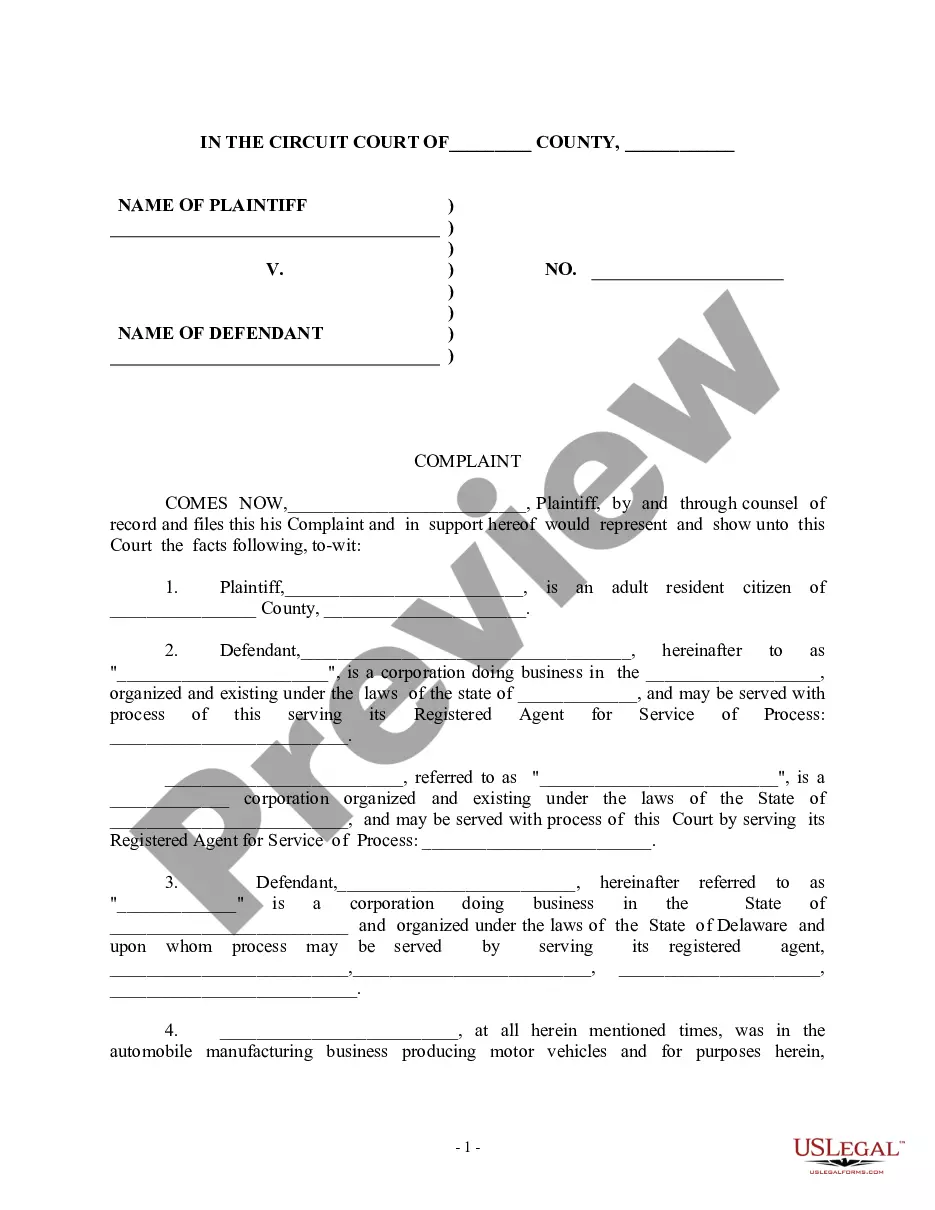
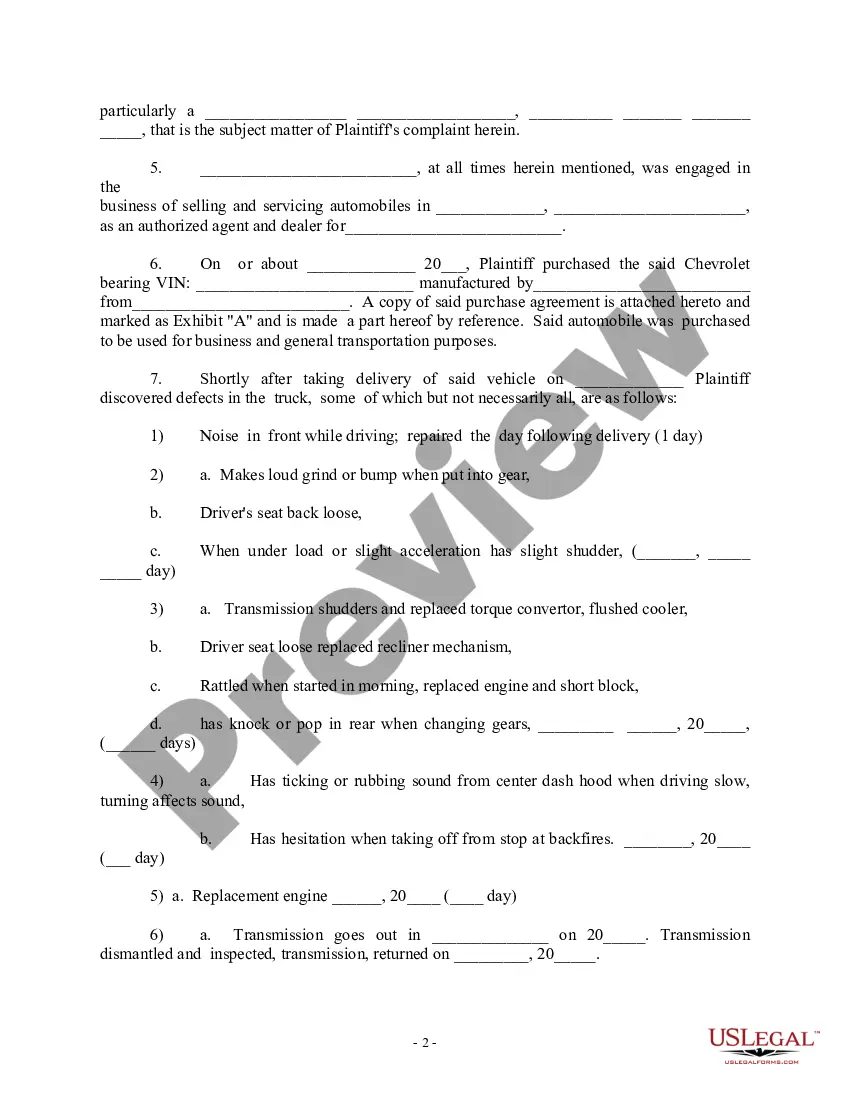
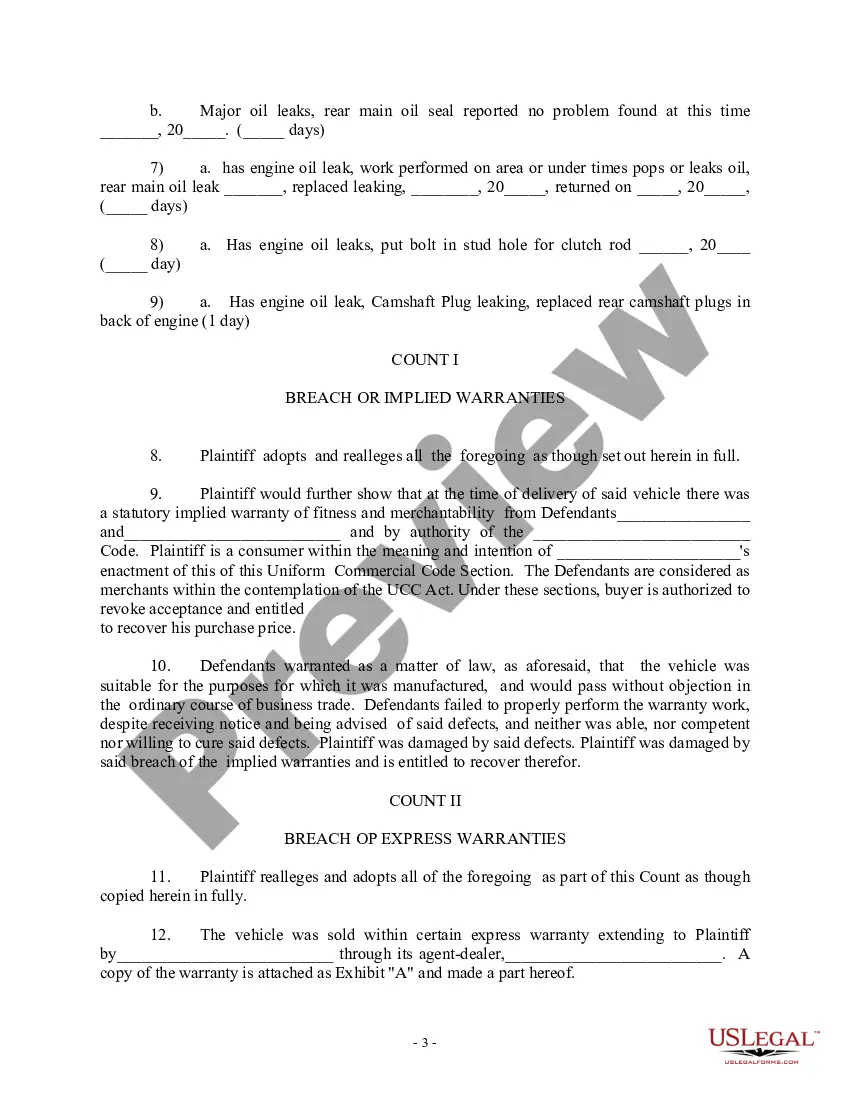
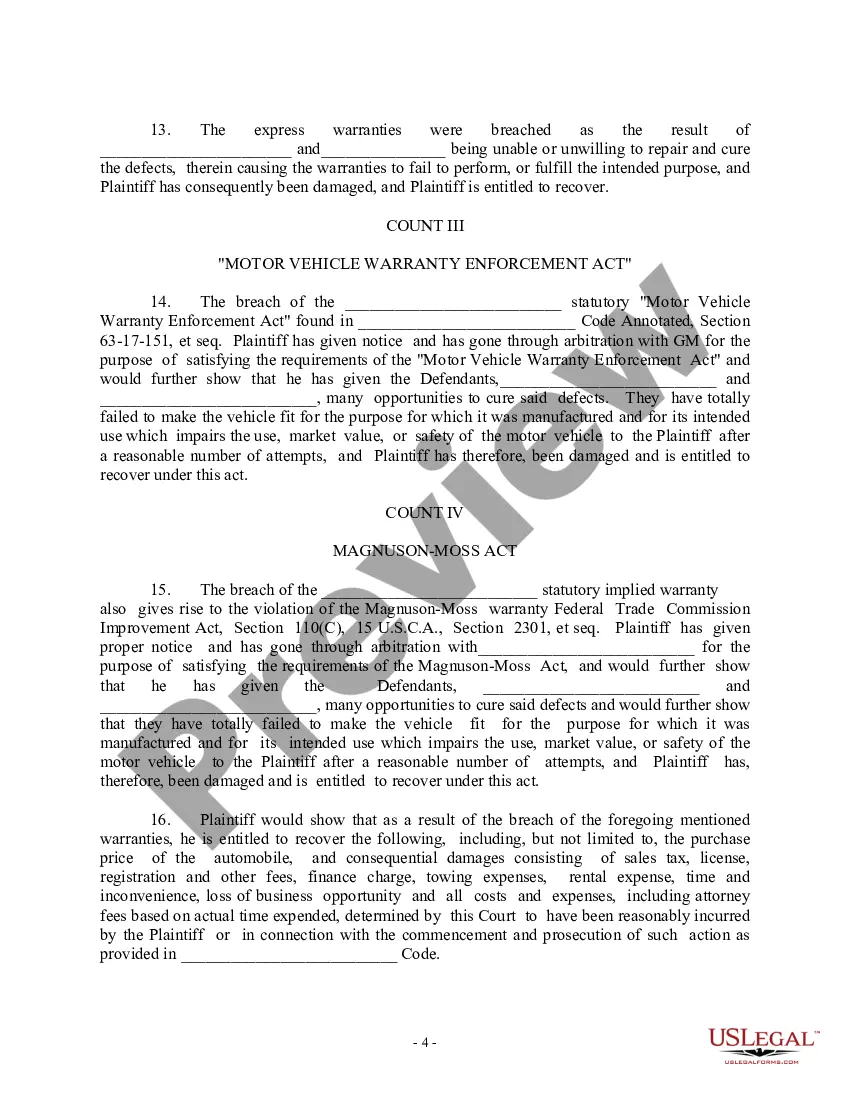
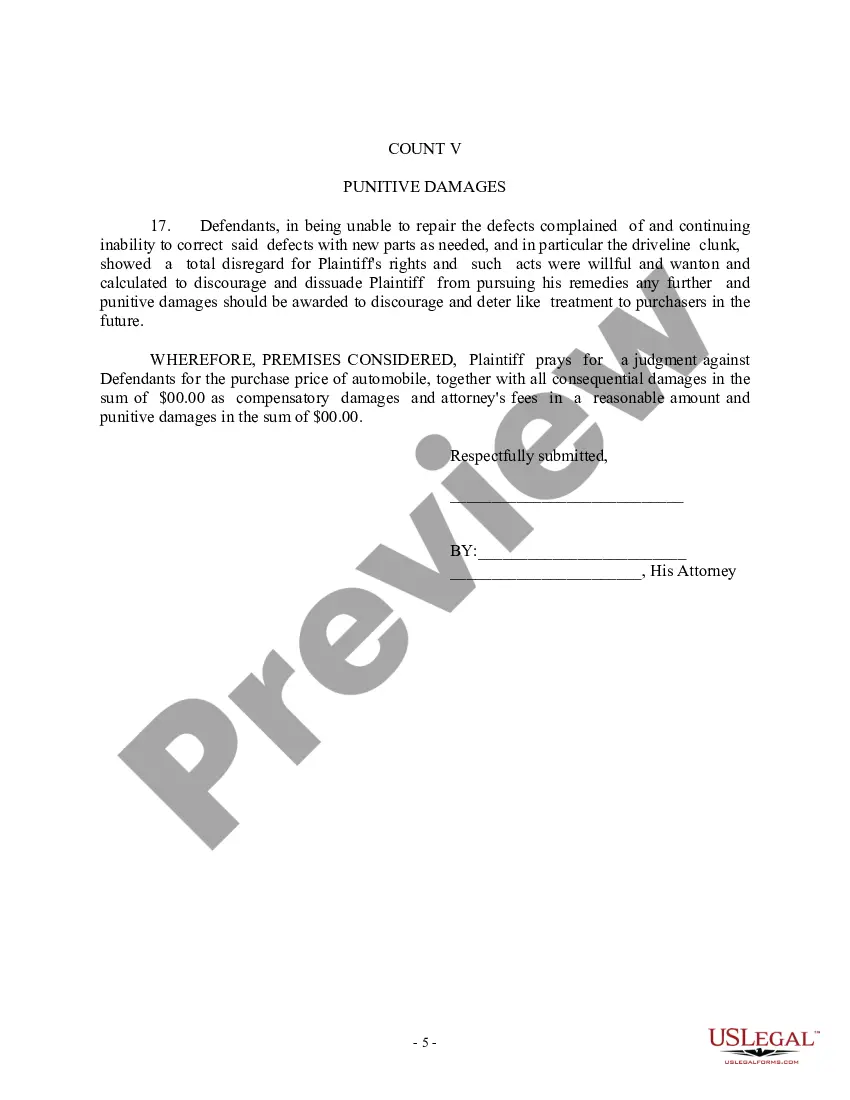
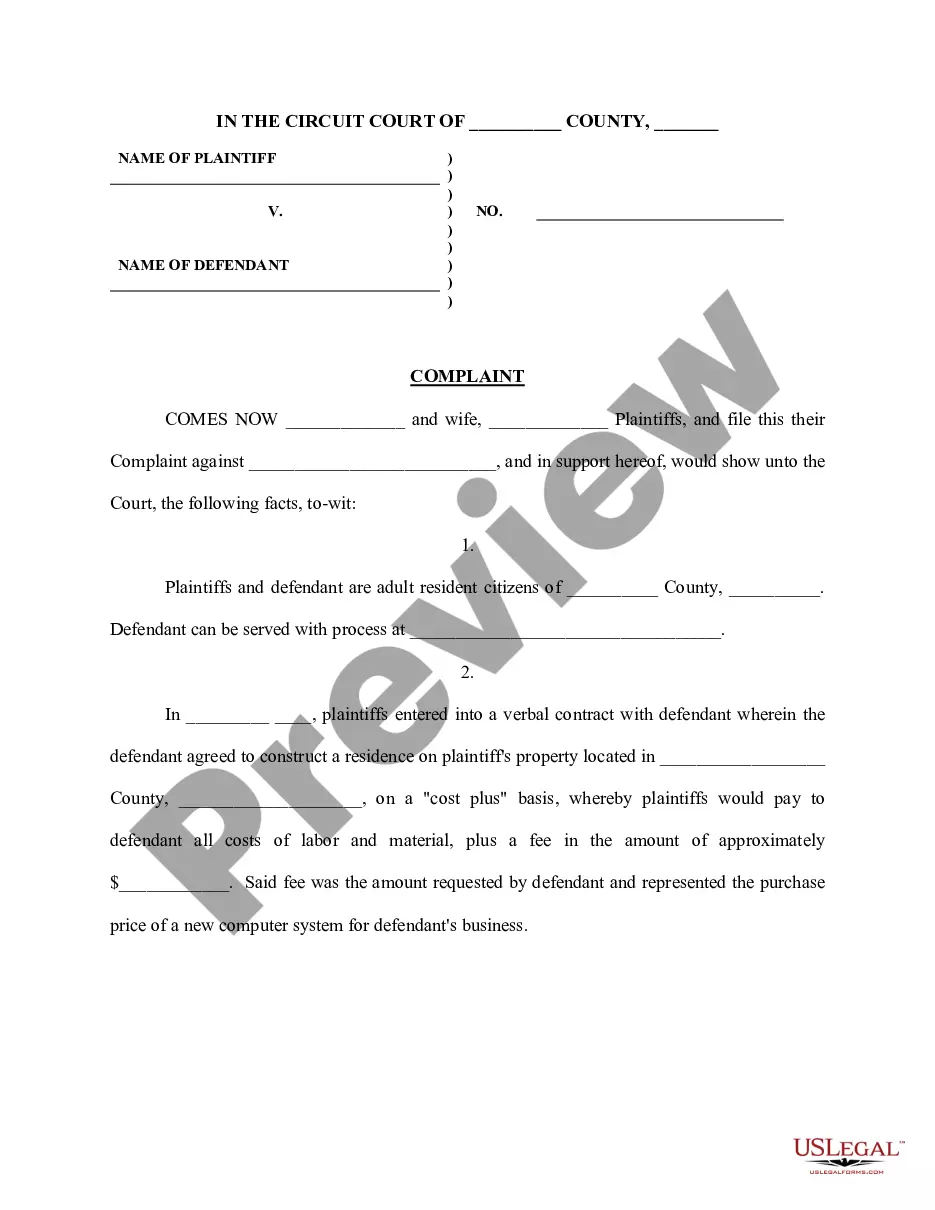
How to fill out Complaint Regarding Defective Auto, Breach Of Warranty, Motor Vehicle Warranty Act, And Magnuson Moss Act, Punitive Damages?
- If you're a returning user, log in and download your required form template directly from your dashboard. Ensure your subscription is active, and renew if necessary.
- For new users, begin by browsing the vast collection of legal documents. Use the Preview mode to confirm the selected form fits your needs and complies with your local regulations.
- If you can't find the right form, utilize the Search feature at the top of the page to discover additional templates tailored to your requirements.
- Once you've found your document, click the Buy Now button, select your desired subscription plan, and create an account to unlock the extensive library.
- Finalize your purchase by entering your payment details, whether via credit card or PayPal, to complete the subscription process.
- Download your form to your device, and access it anytime through the My Forms section of your profile.
In conclusion, US Legal Forms streamlines the complicated process of filing vehicle complaints, empowering you to focus on what matters. With an extensive library and expert assistance, you can confidently document your concerns.
Don’t wait any longer; explore US Legal Forms today and make your legal documentation a breeze!
Form popularity
FAQ
You can file a complaint about various issues such as deceptive advertising, misrepresentation of a vehicle's condition, or failure to honor warranties. Other examples include disputes over trade-in values or unexpected fees during the sale process. Understanding the range of vehicle complaints for the customer enables you to identify and address your specific concerns appropriately.
Start your complaint letter by clearly stating the problem and including relevant details such as dates, vehicle information, and previous communications. Be concise and direct in your expression of dissatisfaction, while welcoming a response from the dealership. Using a structured approach to vehicle complaints for the customer can help ensure your concerns are taken seriously.
Winning against a car dealership requires thorough preparation, including gathering evidence of any misrepresentation or warranty violations. Engage in clear communication, and do not hesitate to leverage consumer protection laws. Ultimately, being informed about vehicle complaints for the customer gives you the upper hand in negotiations with the dealership.
As a consumer, you have several options available when dealing with a used car dealer. You can file a formal complaint with state consumer protection agencies, or seek legal advice if you believe the dealership has violated consumer rights. Exploring the landscape of vehicle complaints for the customer can provide you with additional insights into possible actions you can take.
To file a consumer complaint in New York, you can visit the New York State Department of State's Division of Consumer Protection website and complete their online complaint form. It is also advisable to keep a detailed record of all interactions with the dealership involved. Remember, vehicle complaints for the customer can be addressed through proper channels, enhancing your chances for a resolution.
Yes, car complaints are legitimate and provide valuable insights into vehicle quality and safety issues. They reflect real experiences from drivers, which can help prospective buyers make informed choices. Platforms like US Legal Forms can assist customers in understanding their rights regarding vehicle complaints for the customer. Therefore, taking these complaints seriously can lead to safer driving conditions.
Certain brands and models consistently receive fewer vehicle complaints for the customer, generally indicating better reliability. Research shows that brands known for high customer satisfaction rates often have fewer reported issues. To identify these models, consider looking at consumer reports or reliability ratings from trusted sources. Remember, a lower complaint rate can enhance your overall ownership experience.
Reporting a car malfunction is straightforward and crucial for ensuring vehicle safety. You can start by contacting the dealership where you purchased the car, or you may file a complaint with the manufacturer directly. Additionally, you can report specific issues to the National Highway Traffic Safety Administration, which keeps track of vehicle complaints for the customer. Taking these steps helps other drivers and supports necessary recalls.
There are four main types of complaints related to vehicle complaints for the customer. These include product complaints, which pertain to issues with the item itself; service complaints, regarding the quality of service provided; billing complaints, focusing on inaccuracies in charges; and support complaints, related to poor customer service experience. Understanding these can help you tailor your approach when addressing complaints.
Dealing with customer complaints effectively requires a few strategies. First, actively listen to the customer's concerns regarding vehicle complaints for the customer, demonstrating empathy. Second, provide a clear path to resolution, ensuring the customer knows their options. Lastly, follow up after resolving the issue to ensure customer satisfaction and build trust.