Rights On Stock
Description


Get your form ready online
Our built-in tools help you complete, sign, share, and store your documents in one place.
Make edits, fill in missing information, and update formatting in US Legal Forms—just like you would in MS Word.
Download a copy, print it, send it by email, or mail it via USPS—whatever works best for your next step.
Sign and collect signatures with our SignNow integration. Send to multiple recipients, set reminders, and more. Go Premium to unlock E-Sign.
If this form requires notarization, complete it online through a secure video call—no need to meet a notary in person or wait for an appointment.
We protect your documents and personal data by following strict security and privacy standards.

Make edits, fill in missing information, and update formatting in US Legal Forms—just like you would in MS Word.

Download a copy, print it, send it by email, or mail it via USPS—whatever works best for your next step.

Sign and collect signatures with our SignNow integration. Send to multiple recipients, set reminders, and more. Go Premium to unlock E-Sign.

If this form requires notarization, complete it online through a secure video call—no need to meet a notary in person or wait for an appointment.

We protect your documents and personal data by following strict security and privacy standards.
Looking for another form?










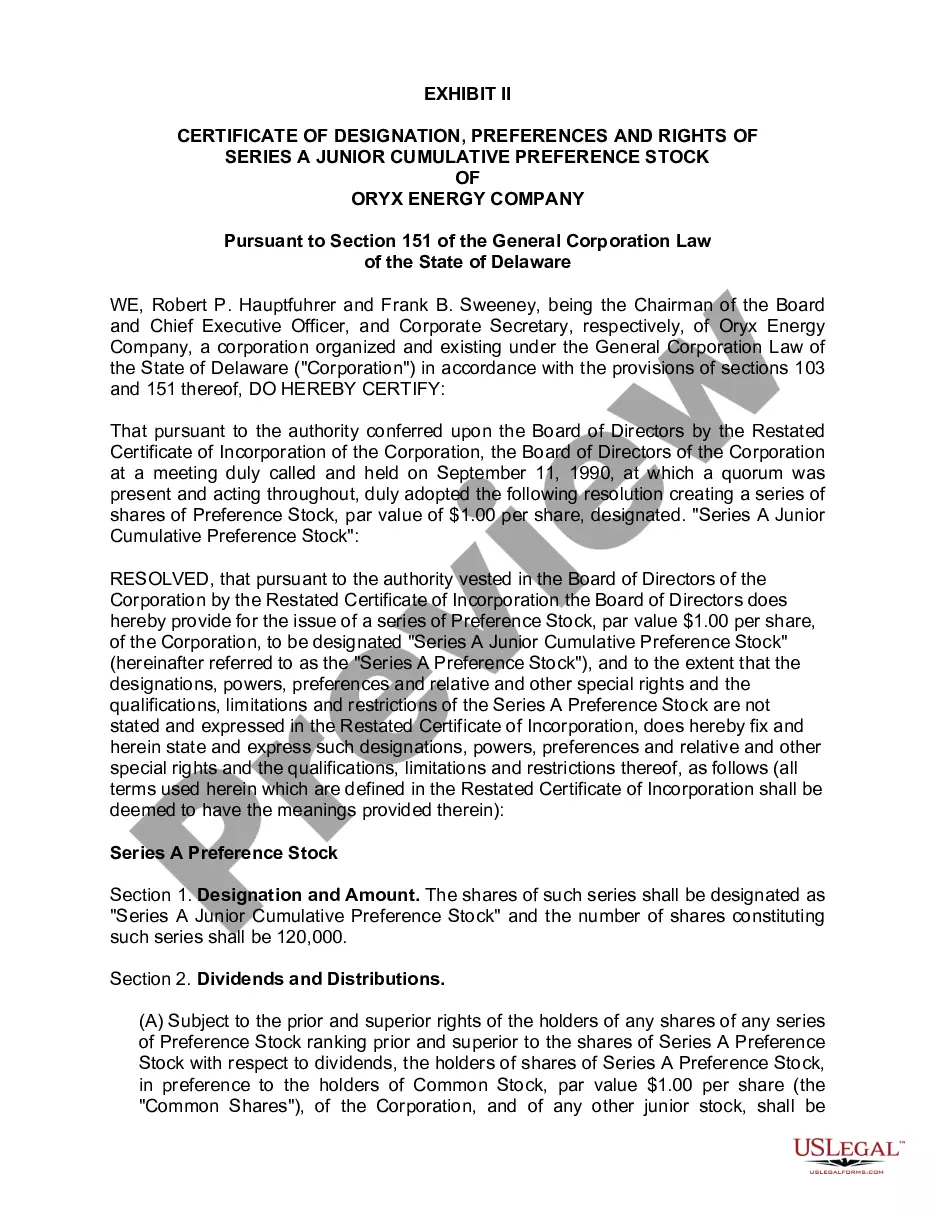
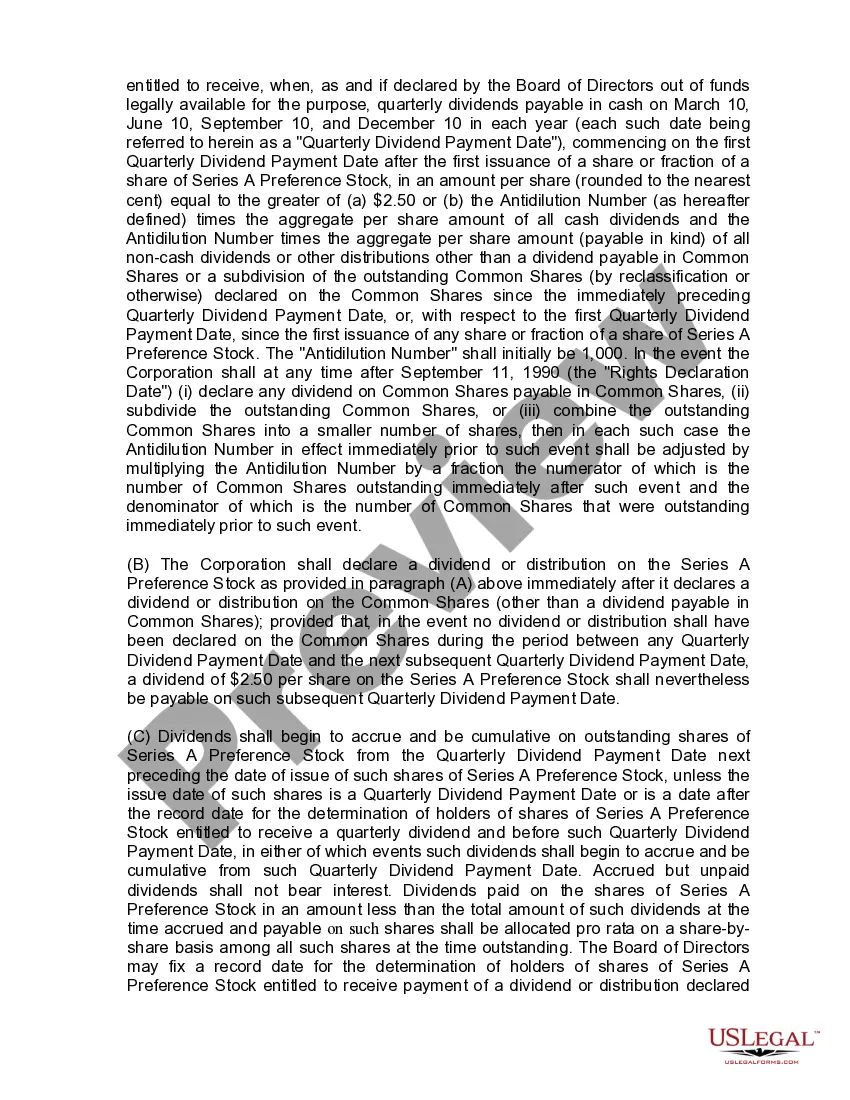
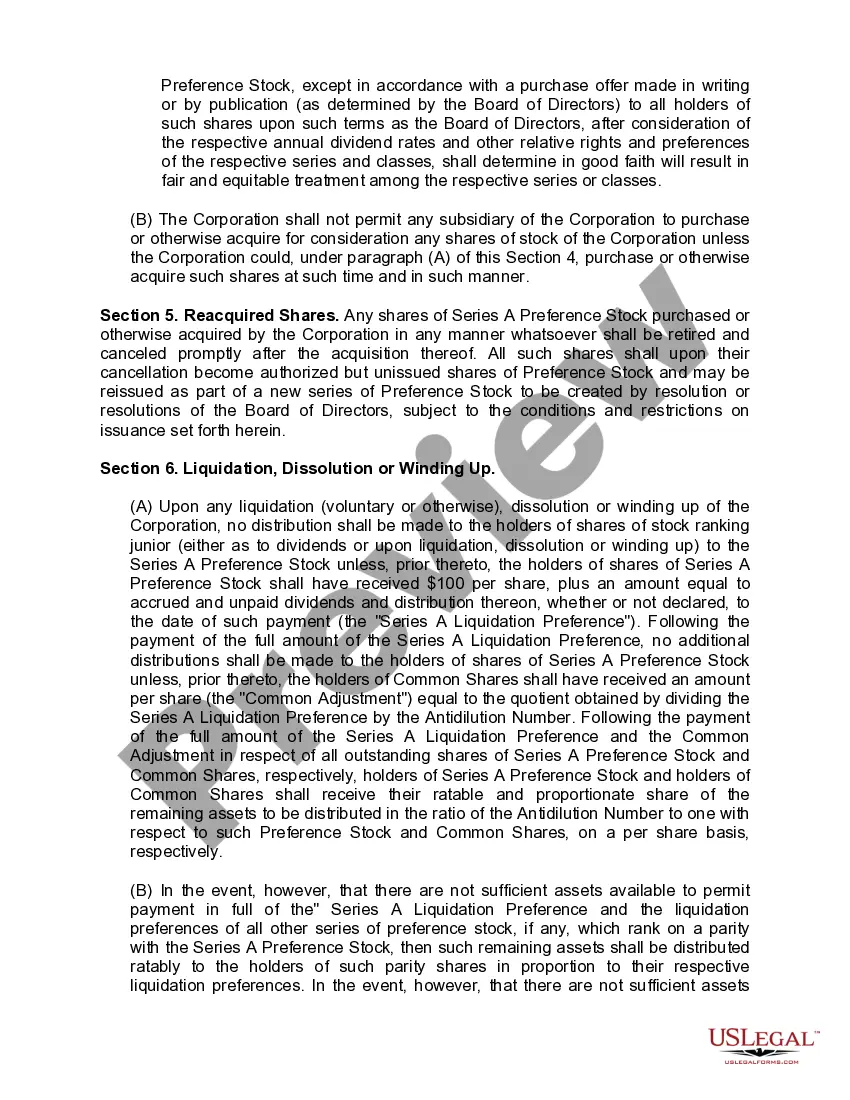
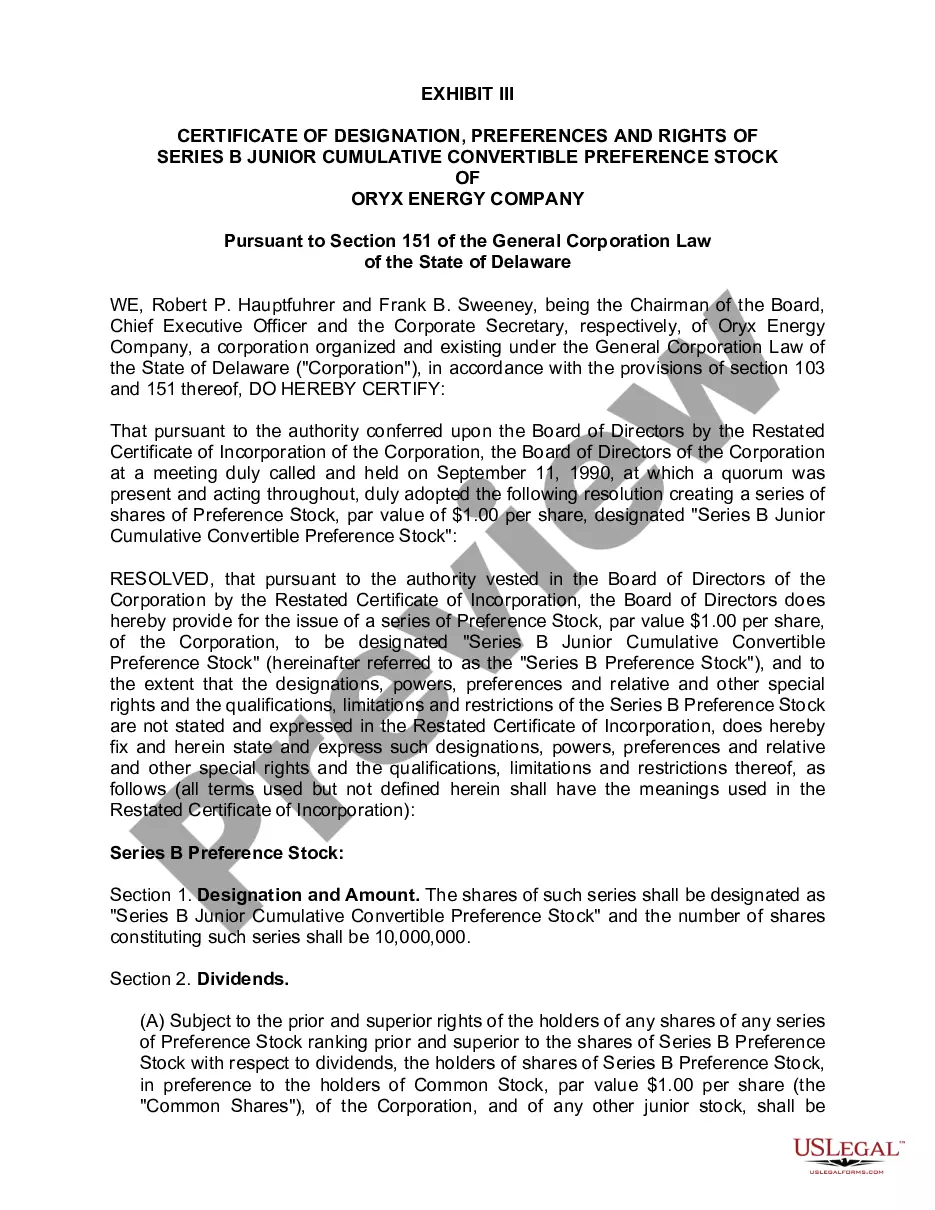
How to fill out Certificate Of Designation, Preferences And Rights Of Series A Junior Cumulative Preference Stock Of Oryx Energy Company?
Legal management can be overpowering, even for the most skilled experts. When you are interested in a Rights On Stock and don’t have the a chance to commit in search of the right and up-to-date version, the processes may be stress filled. A robust web form catalogue can be a gamechanger for anyone who wants to take care of these situations efficiently. US Legal Forms is a market leader in web legal forms, with more than 85,000 state-specific legal forms accessible to you whenever you want.
With US Legal Forms, you may:
- Access state- or county-specific legal and business forms. US Legal Forms covers any demands you may have, from individual to business documents, all-in-one spot.
- Employ innovative tools to finish and handle your Rights On Stock
- Access a resource base of articles, tutorials and handbooks and resources highly relevant to your situation and requirements
Help save time and effort in search of the documents you need, and employ US Legal Forms’ advanced search and Preview tool to discover Rights On Stock and acquire it. In case you have a monthly subscription, log in in your US Legal Forms profile, look for the form, and acquire it. Review your My Forms tab to find out the documents you previously saved and to handle your folders as you see fit.
Should it be your first time with US Legal Forms, make an account and get limitless access to all advantages of the platform. Here are the steps to consider after downloading the form you need:
- Verify this is the right form by previewing it and reading through its information.
- Be sure that the sample is recognized in your state or county.
- Select Buy Now once you are ready.
- Select a monthly subscription plan.
- Find the formatting you need, and Download, complete, sign, print out and send out your document.
Enjoy the US Legal Forms web catalogue, supported with 25 years of experience and trustworthiness. Enhance your day-to-day document administration in a easy and user-friendly process right now.
Form popularity
FAQ
The stock rights option gives a stockholder the choice of (1) buying additional stock at a price below the current market price for a specified period of time, usually briefer than the life span of stock purchase warrants, or (2) selling the rights on the market.?
To apply for a rights issue, shareholders can use the Applications Supported by Blocked Amount (ASBA) process if their bank supports it. Alternatively, the company's Registrar and Transfer Agent (RTA) will send a Composite Application Form (CAF) via courier to those who cannot apply online.
The calculation for the value during the exercise of rights period is: (Stock price - Right subscription price) / Number of rights needed to buy a share.
Let's say an investor owns 100 shares of Arcelor Mittal and the shares are trading at $10 each. The company announces a rights issue in the ratio of 2 for 5, i.e., each investor holding 5 shares will be eligible to buy 2 new shares. The company announces a discounted price of, for example, $6 per share.
For example, suppose Corporation XYZ has 100 shares held equally by 10 shareholders. Each shareholder is given the right to purchase five more shares. Before the rights offering, each shareholder owned 10% of the company. If each shareholder buys the five new shares, they'll still each own 10%.