Stock Grants Application With Clsid
Description
Get your form ready online
Our built-in tools help you complete, sign, share, and store your documents in one place.
Make edits, fill in missing information, and update formatting in US Legal Forms—just like you would in MS Word.
Download a copy, print it, send it by email, or mail it via USPS—whatever works best for your next step.
Sign and collect signatures with our SignNow integration. Send to multiple recipients, set reminders, and more. Go Premium to unlock E-Sign.
If this form requires notarization, complete it online through a secure video call—no need to meet a notary in person or wait for an appointment.
We protect your documents and personal data by following strict security and privacy standards.

Make edits, fill in missing information, and update formatting in US Legal Forms—just like you would in MS Word.

Download a copy, print it, send it by email, or mail it via USPS—whatever works best for your next step.

Sign and collect signatures with our SignNow integration. Send to multiple recipients, set reminders, and more. Go Premium to unlock E-Sign.

If this form requires notarization, complete it online through a secure video call—no need to meet a notary in person or wait for an appointment.

We protect your documents and personal data by following strict security and privacy standards.
Looking for another form?



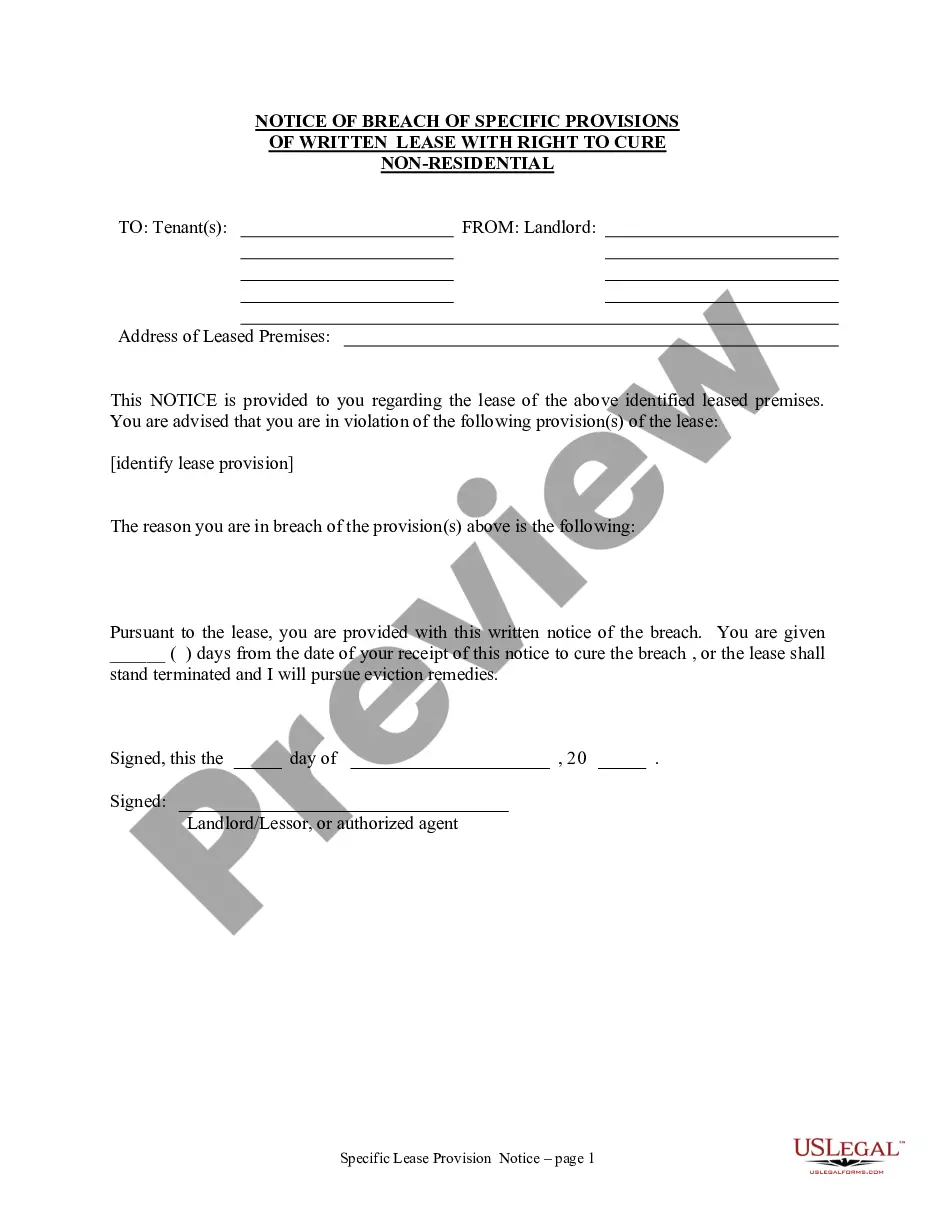





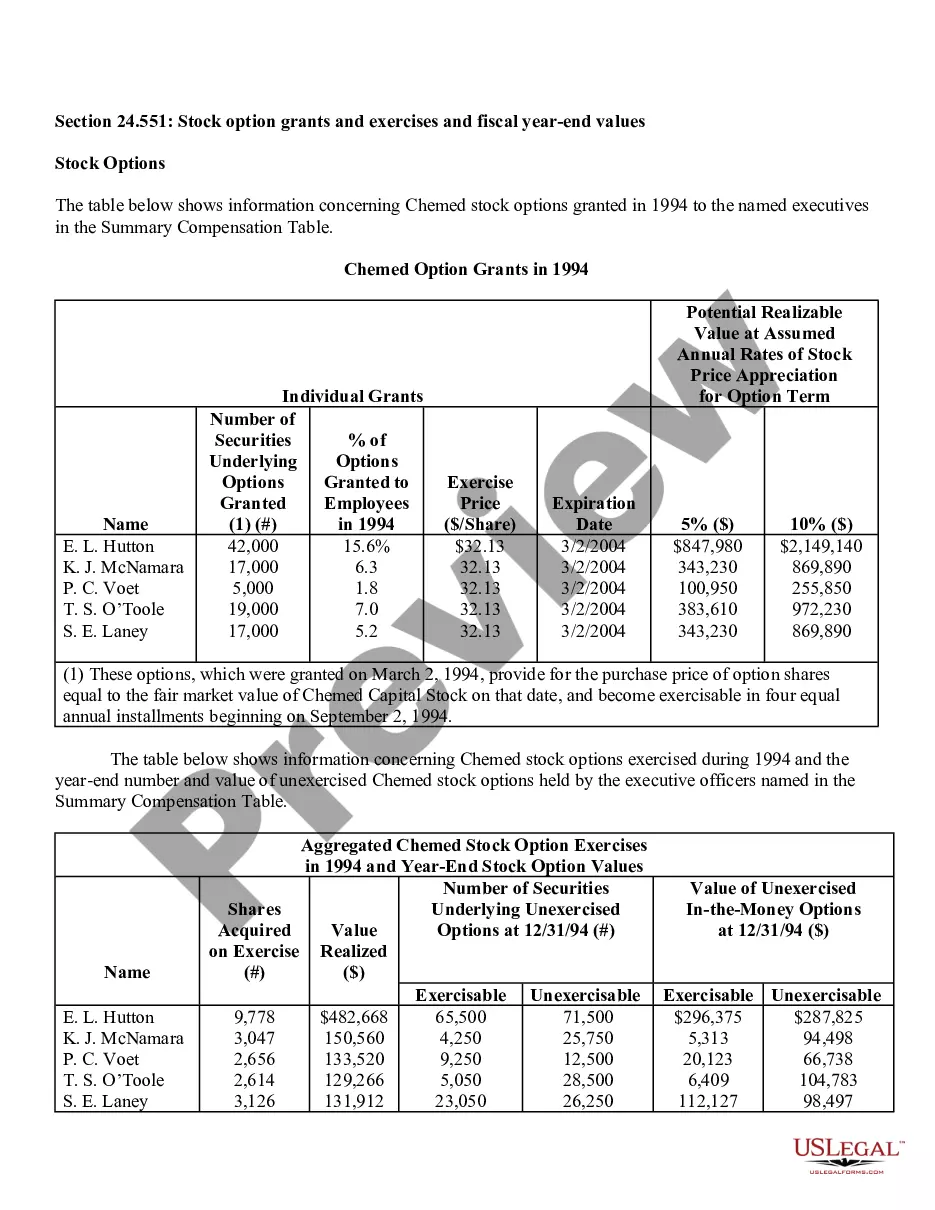
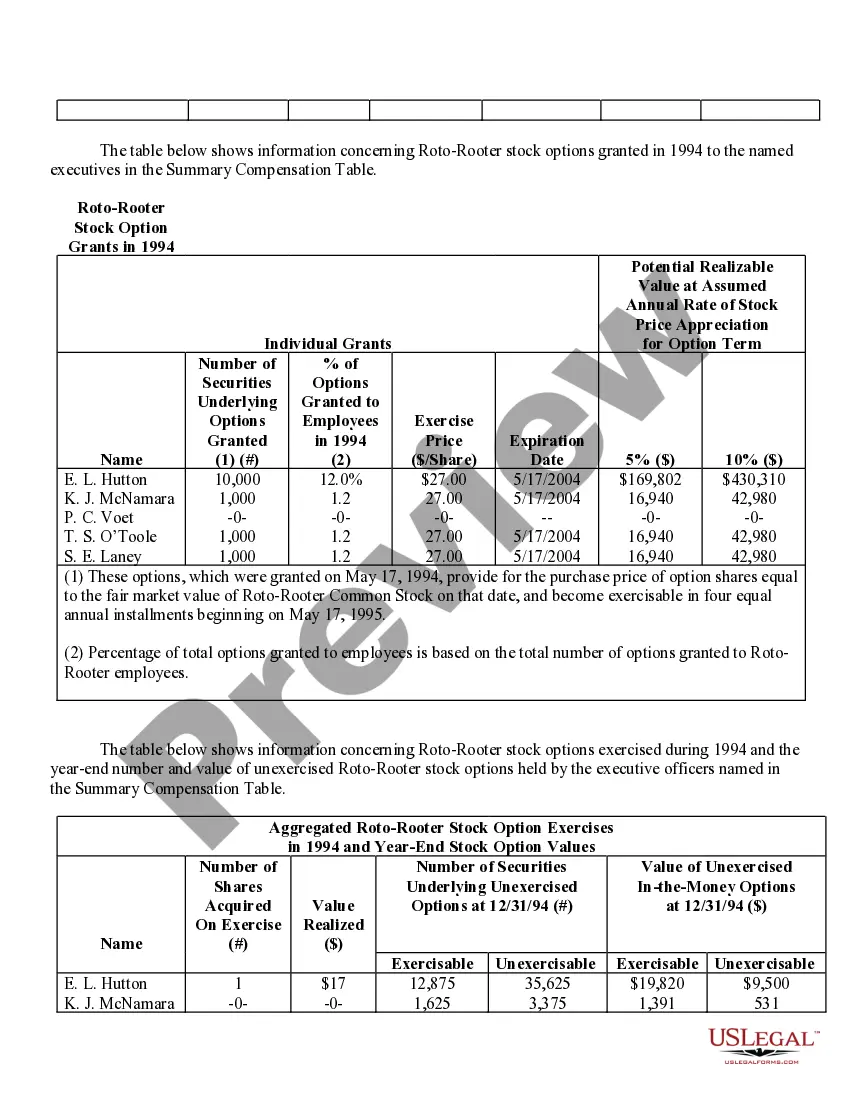
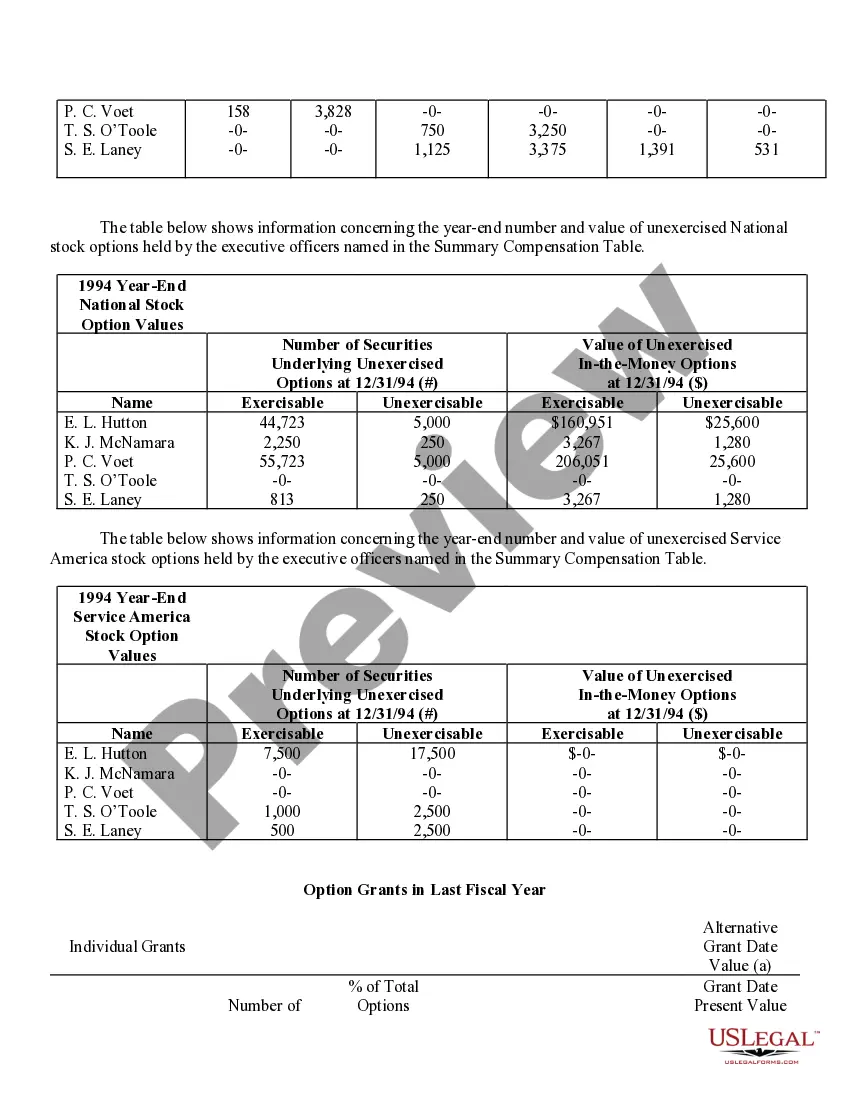
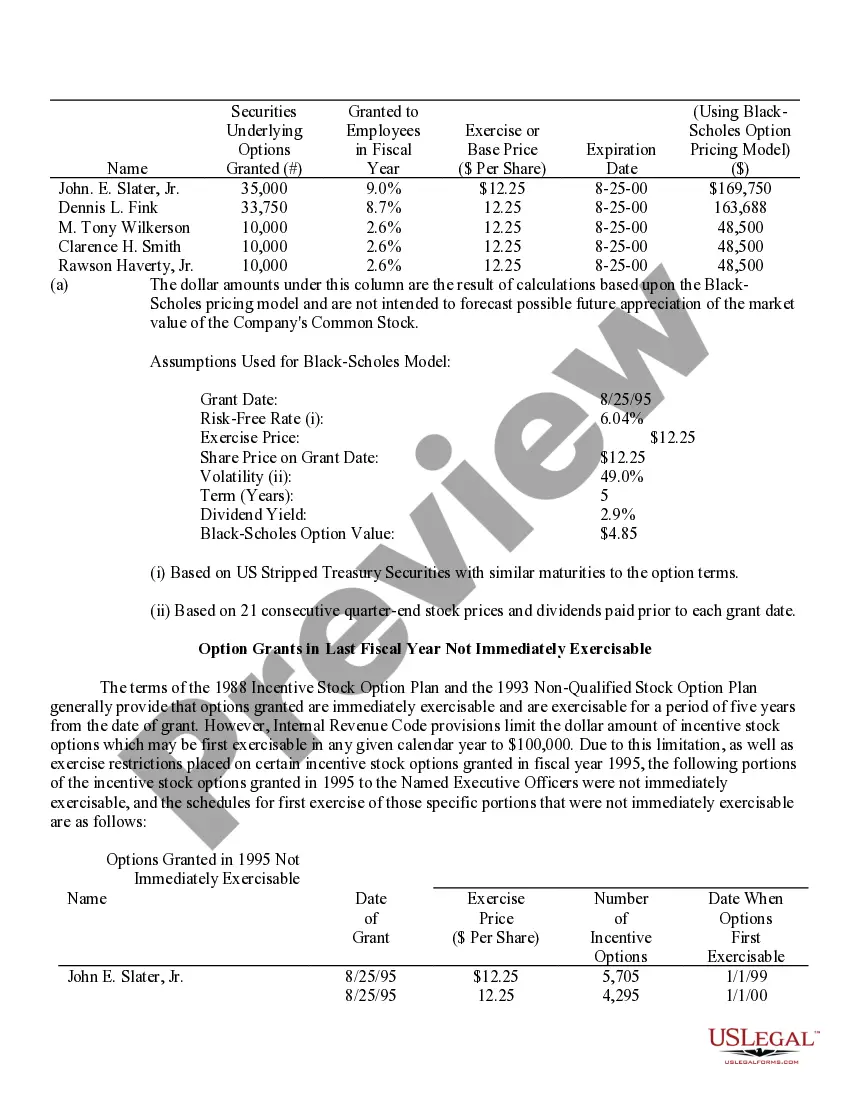
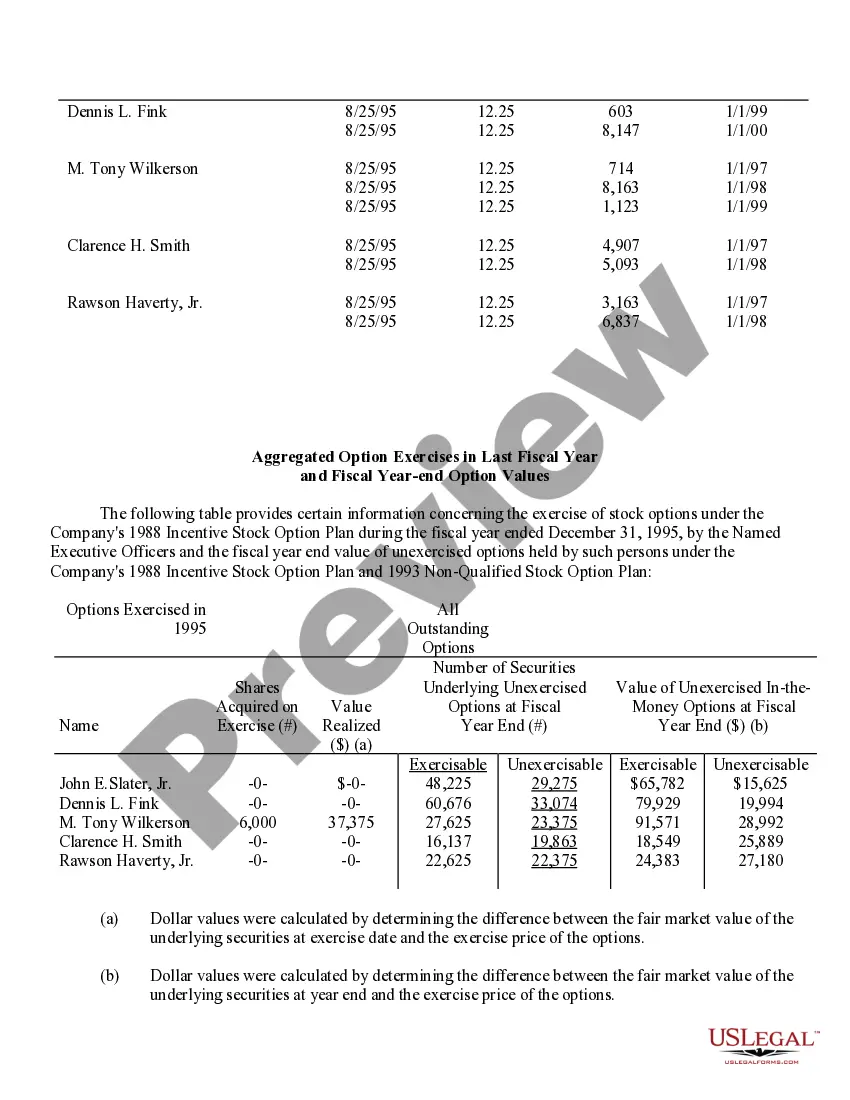
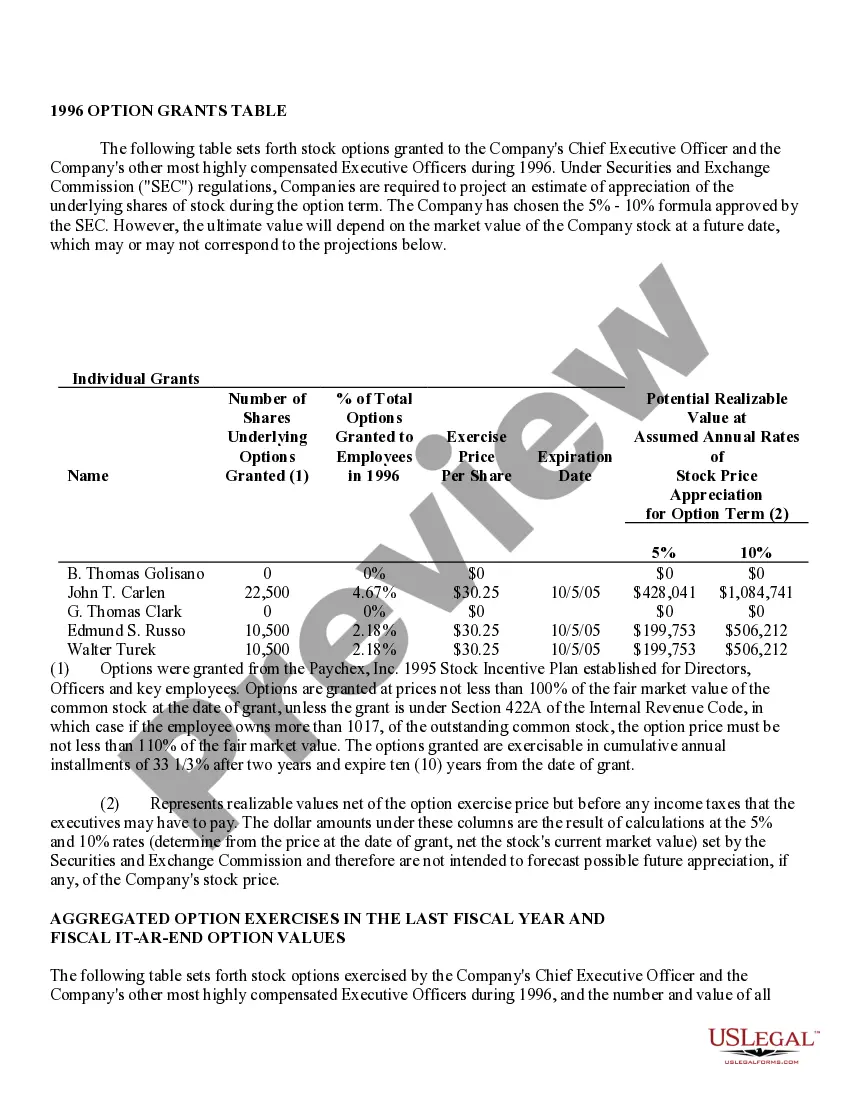
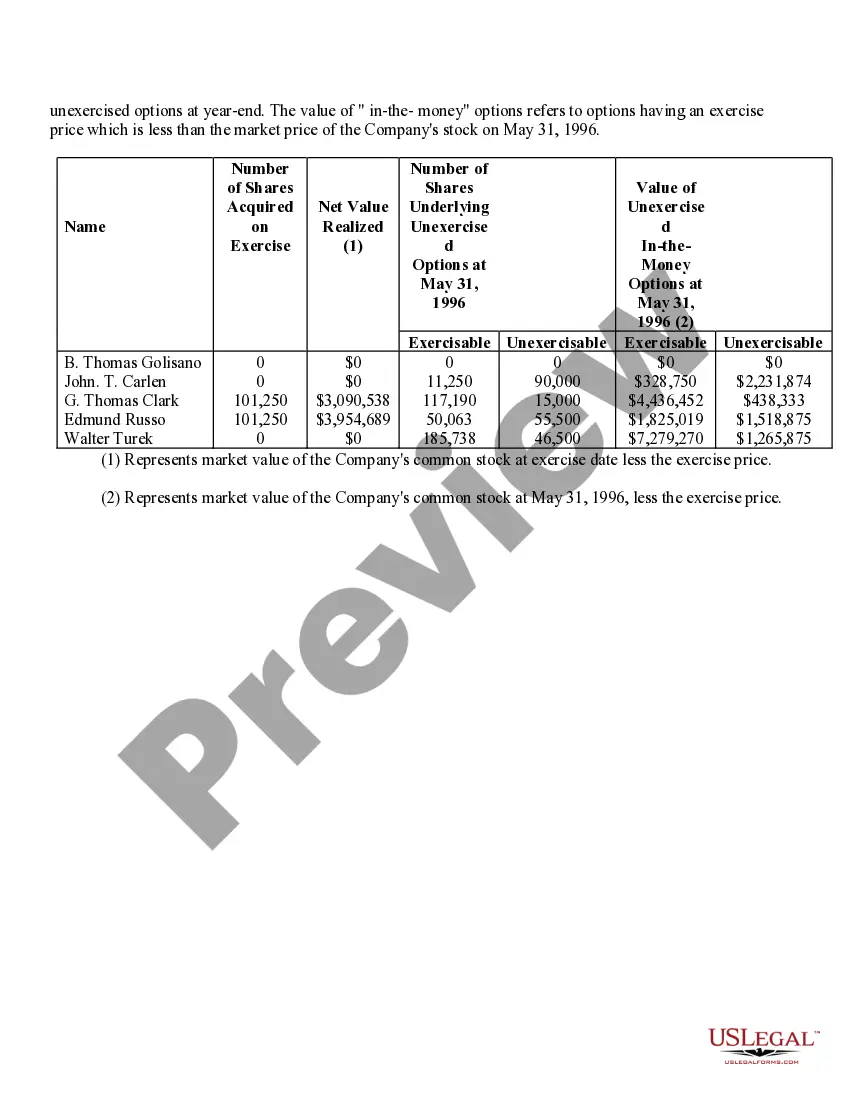
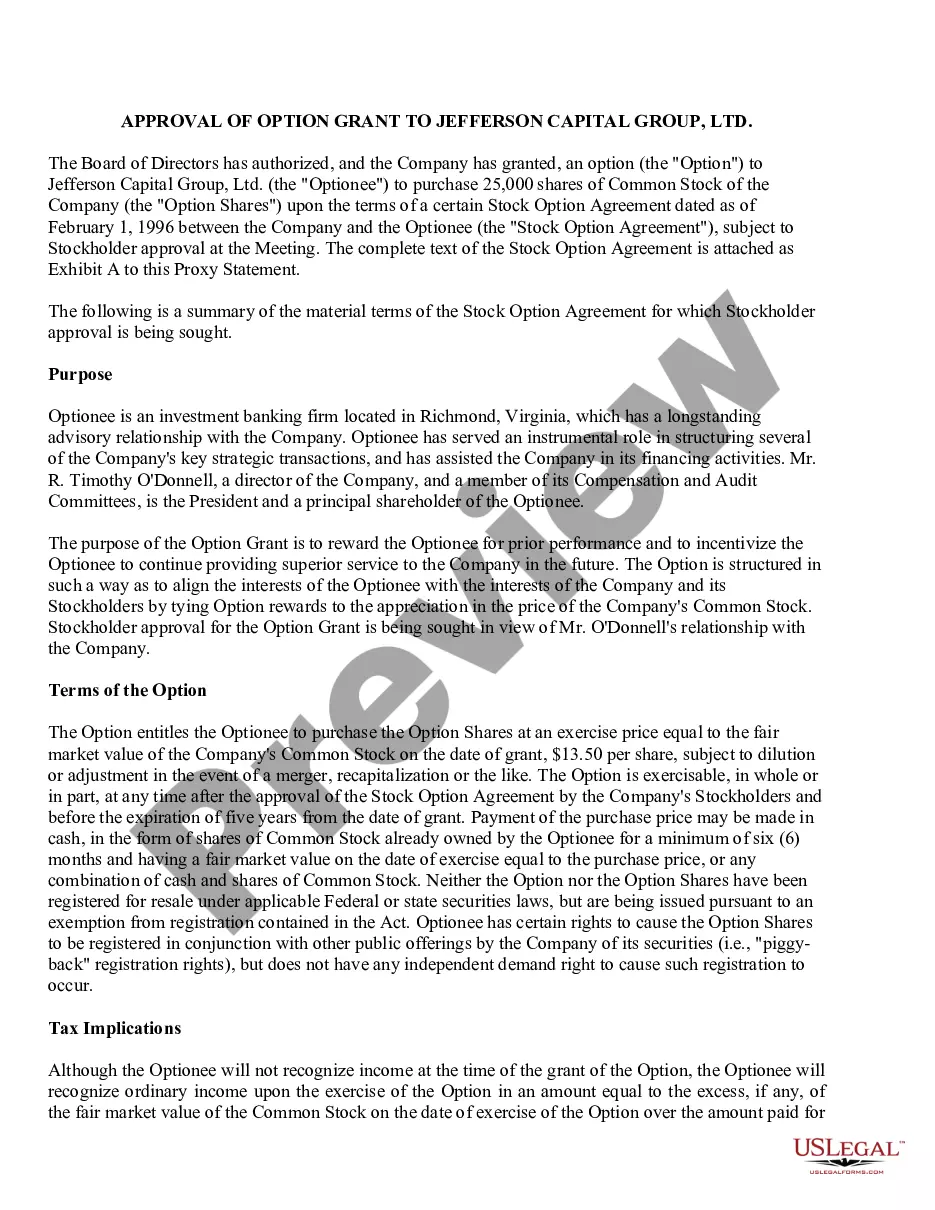
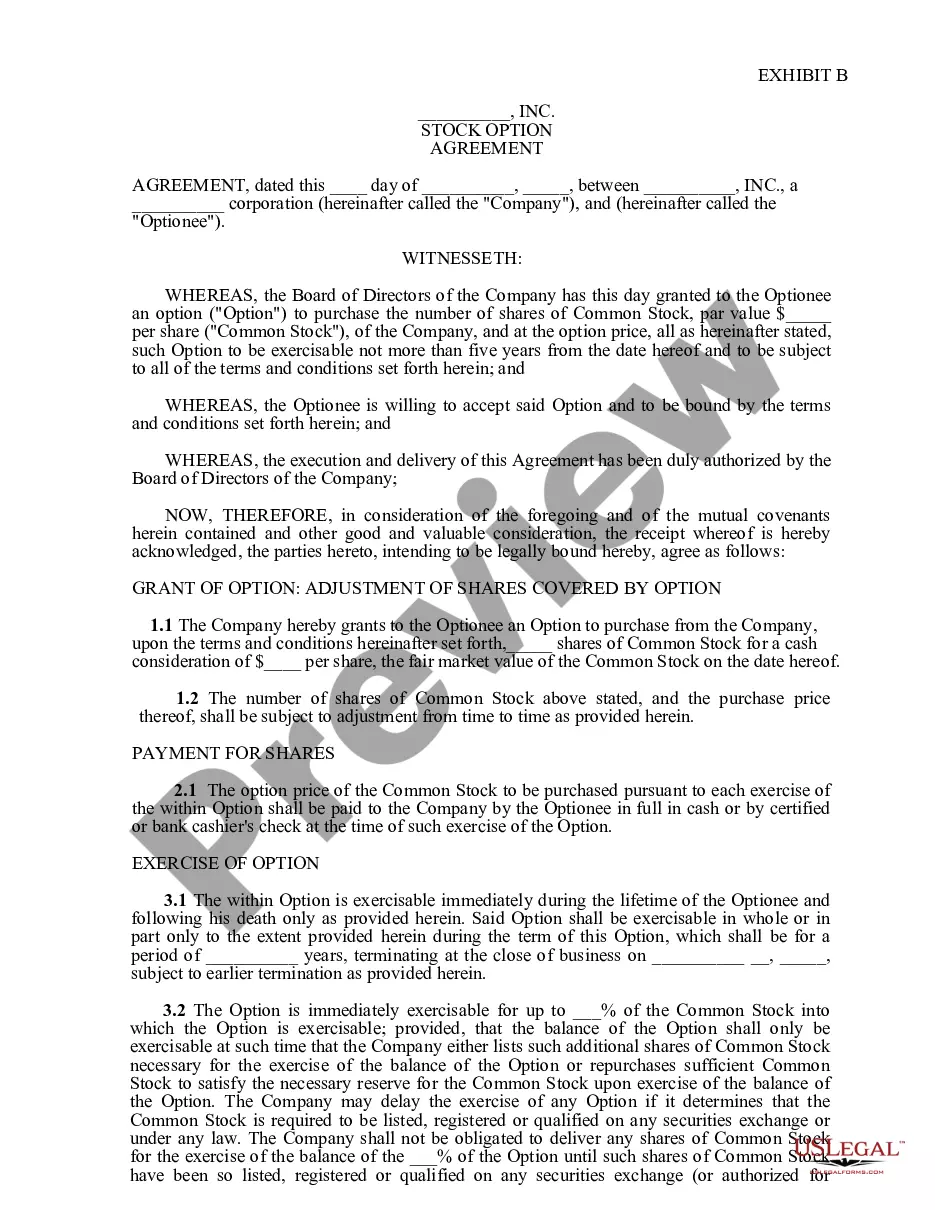
How to fill out Stock Option Grants And Exercises And Fiscal Year-End Values?
Acquiring legal document examples that adhere to federal and local regulations is essential, and the internet presents a multitude of choices.
However, what is the use of spending time searching for the appropriate Stock Grants Application With Clsid template online when the US Legal Forms digital library has already compiled such formats in one location.
US Legal Forms is the largest online legal repository with more than 85,000 editable templates created by lawyers for any professional and personal scenario. They are simple to navigate with all documents categorized by state and intended use. Our experts stay updated with legal modifications, ensuring that your form is current and compliant when you obtain a Stock Grants Application With Clsid from our site.
All documents accessible through US Legal Forms are reusable. To re-download and complete previously saved forms, navigate to the My documents section in your account. Make the most of the largest and easiest-to-use legal documentation service!
- Acquiring a Stock Grants Application With Clsid is straightforward and quick for both existing and new users.
- If you already possess an account with an active subscription, Log In and store the document sample you require in the appropriate format.
- If you are new to our site, follow the instructions provided below.
- Review the template using the Preview feature or through the text outline to confirm it fulfills your needs.
- Search for an alternative sample using the search tool at the top of the page if needed.
- Press Buy Now once you have found the correct form and choose a subscription plan.
- Create an account or Log In, and complete a payment via PayPal or credit card.
- Choose the optimal format for your Stock Grants Application With Clsid and download it.
Form popularity
FAQ
Stock grants are reported on your W-2 form in the year they vest. The value of the stock at the time of vesting is included in your total income, which affects your overall tax liability. It's essential to keep track of these grants for accurate tax reporting. Utilizing the stock grants application with clsid on the US Legal Forms platform can help streamline this process.
Yes, stock grants are typically counted as income when they vest. This means that once the restrictions on the stock grants are lifted, the value of the shares is considered taxable income. Therefore, it is important to understand how this affects your taxes. For a comprehensive understanding, you might consider using the stock grants application with clsid on the US Legal Forms platform.
A stock grant refers to shares of a company's stock given to an employee, while a Restricted Stock Unit (RSU) represents a promise to deliver shares at a future date. Both serve as incentives, but stock grants often require less vesting time compared to RSUs. When considering your stock grants application with clsid, understanding these differences can help you make informed choices about your compensation.
You're not liable for income tax until your stock grant vests, at which point you must report income equal to the value of the stock you received.
To receive the incentive, you must hold (keep) ISOs for at least one year after exercise and two years after the grant date. If you hold your stock for at least a year after purchase, you will pay the lower capital gains tax rate on the increase in value.
Here's an example: You can purchase 1,000 shares of company stock at $20 a share with your vested ISO. Shares are trading for $40 in the market. If you already own 500 company shares, you can swap those shares (500 shares x $40 market price = $20,000) for the 1,000 new shares, rather than paying $20,000 in cash.
Since stock you receive through stock grants and RSUs is essentially compensation, you'll usually see it reported automatically on your W-2. Typically, income taxes are withheld to go against what you might owe when you do your taxes.
How is a Stock Grant Taxed? Stock grants do not trigger any tax consequences when they are first received. Rather, they must be fully vested. At the time the stocks are fully vested, the employee will be liable to pay taxes on the stock.