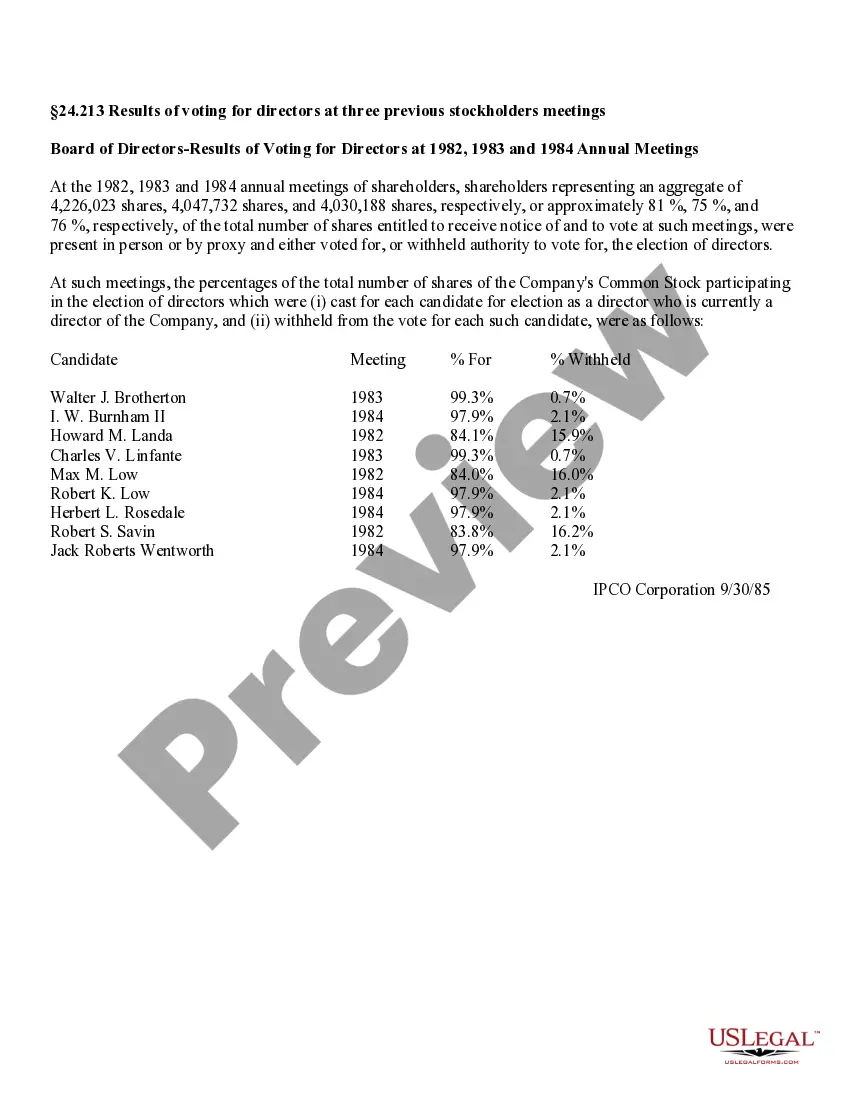
Shareholder Voting For Directors
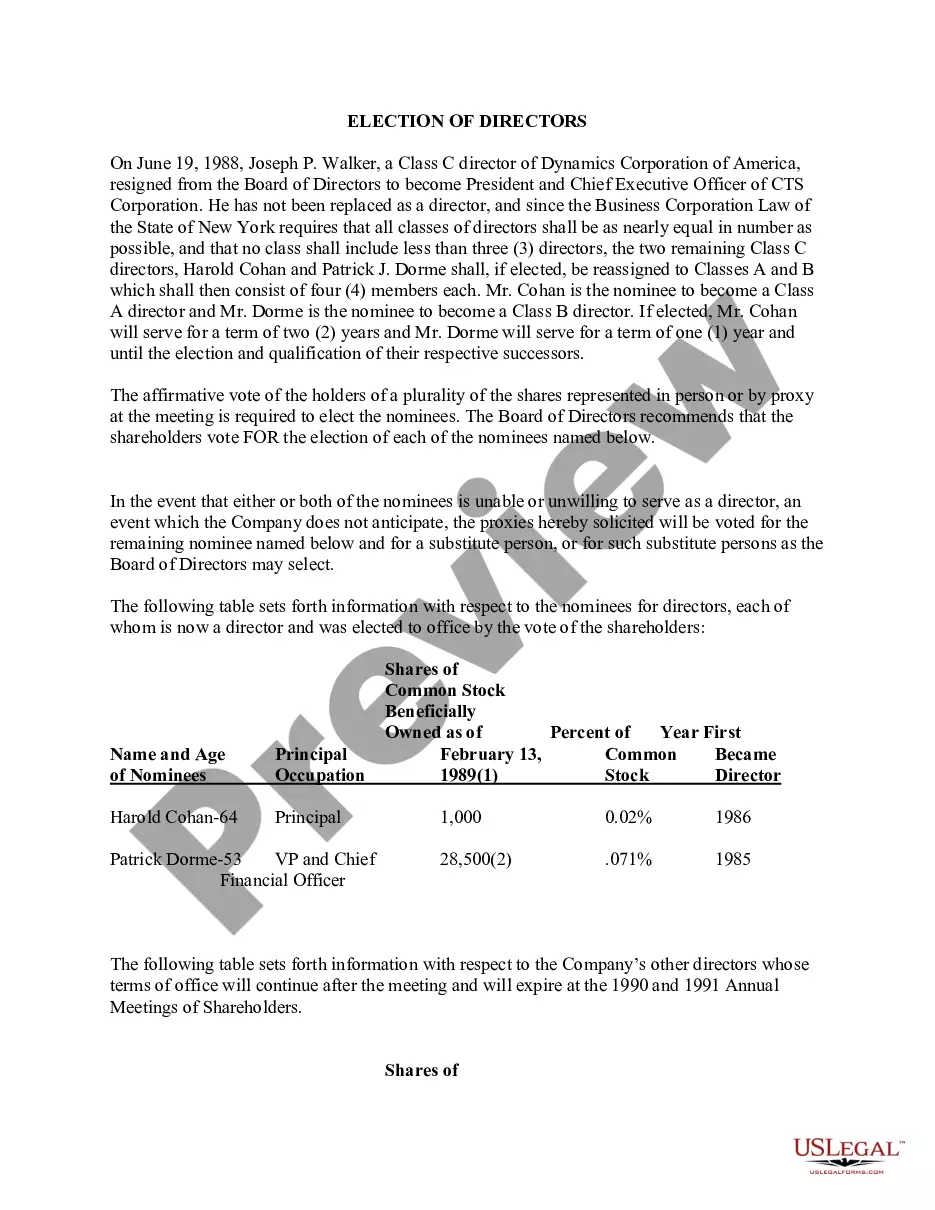
Description
Get your form ready online
Our built-in tools help you complete, sign, share, and store your documents in one place.
Make edits, fill in missing information, and update formatting in US Legal Forms—just like you would in MS Word.
Download a copy, print it, send it by email, or mail it via USPS—whatever works best for your next step.
Sign and collect signatures with our SignNow integration. Send to multiple recipients, set reminders, and more. Go Premium to unlock E-Sign.
If this form requires notarization, complete it online through a secure video call—no need to meet a notary in person or wait for an appointment.
We protect your documents and personal data by following strict security and privacy standards.

Make edits, fill in missing information, and update formatting in US Legal Forms—just like you would in MS Word.

Download a copy, print it, send it by email, or mail it via USPS—whatever works best for your next step.

Sign and collect signatures with our SignNow integration. Send to multiple recipients, set reminders, and more. Go Premium to unlock E-Sign.

If this form requires notarization, complete it online through a secure video call—no need to meet a notary in person or wait for an appointment.

We protect your documents and personal data by following strict security and privacy standards.
Looking for another form?

How to fill out Results Of Voting For Directors At Three Previous Stockholders Meetings?
Dealing with legal documents and processes can be a tedious addition to your schedule.
Documents like Shareholder Voting For Directors typically necessitate that you seek them out and comprehend how to fill them out properly.
Therefore, whether addressing financial, legal, or personal issues, having access to a comprehensive and user-friendly online library of forms will greatly assist you.
US Legal Forms is the leading online resource for legal templates, featuring over 85,000 state-specific documents and a range of tools to facilitate quick completion of your forms.
Is it your first time using US Legal Forms? Register and create a complimentary account within minutes to access the form library including Shareholder Voting For Directors. Then, follow the steps below to fill out your form.
- Browse the collection of relevant documents available with a single click.
- US Legal Forms provides state- and county-specific forms that are available for download at any time.
- Protect your document management processes by utilizing a premium service that allows you to create any form in moments with no extra or hidden charges.
- Simply Log In to your account, search for Shareholder Voting For Directors and obtain it instantly in the My documents section.
- You can also access previously saved forms.
Form popularity
FAQ
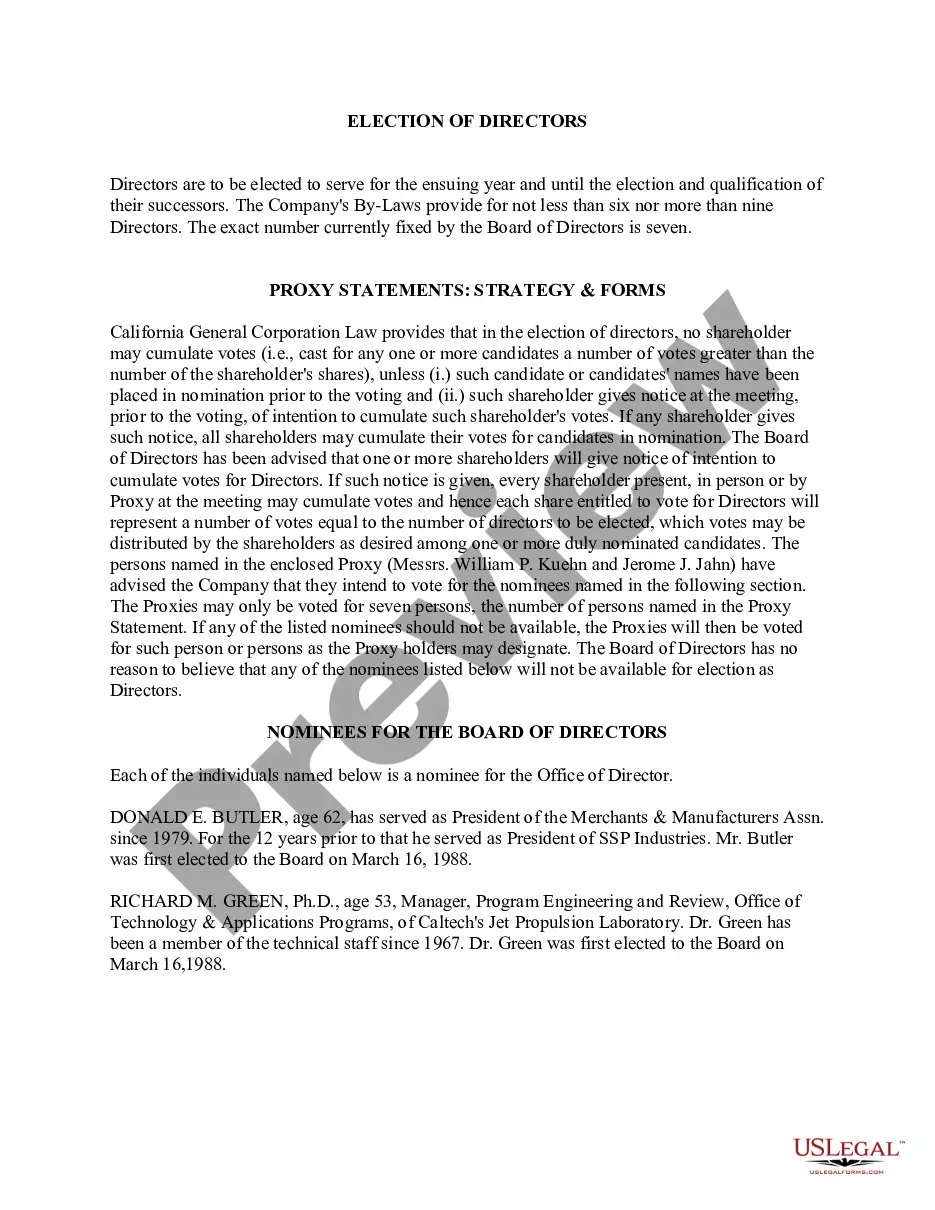
Companies have one of two voting structures for the BOD: statutory or cumulative. Each stockholder gains one vote for every share they own, but the way votes are cast depends on the company's voting structure. Stockholders can vote on various items, from the BOD to dilutive actions (covered later).
Shareholders typically vote for the board of directors at the annual meeting of shareholders. In most cases, shareholders can vote in person at the meeting or by proxy, which allows them to appoint someone else to vote on their behalf. Some companies may also allow shareholders to vote by mail or online.
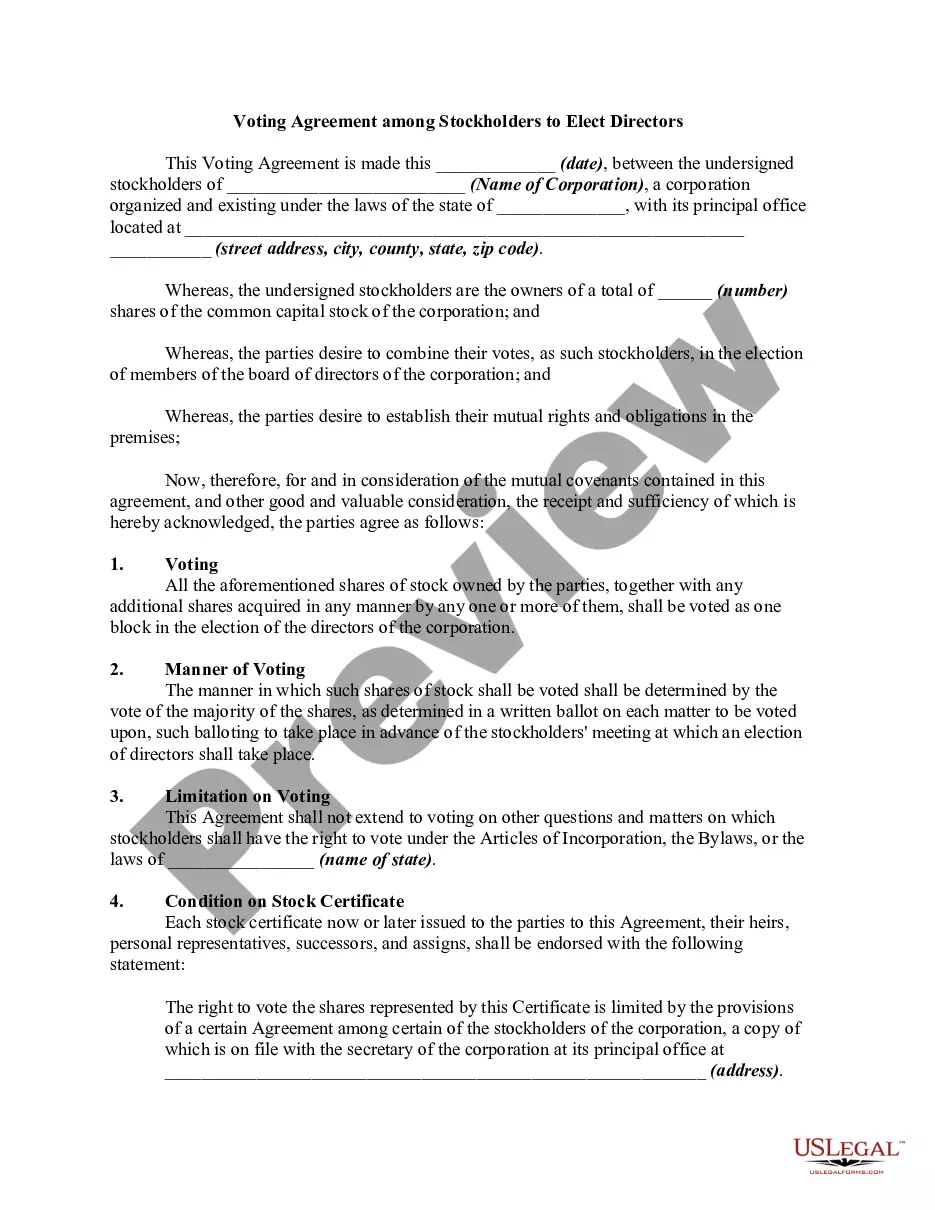
There are two main ways to elect directors: by plurality vote or majority vote. A "plurality vote" means that the winning candidate only needs to get more votes than a competing candidate. If a director runs unopposed, he or she only needs one vote to be elected, so an "against" vote is meaningless.
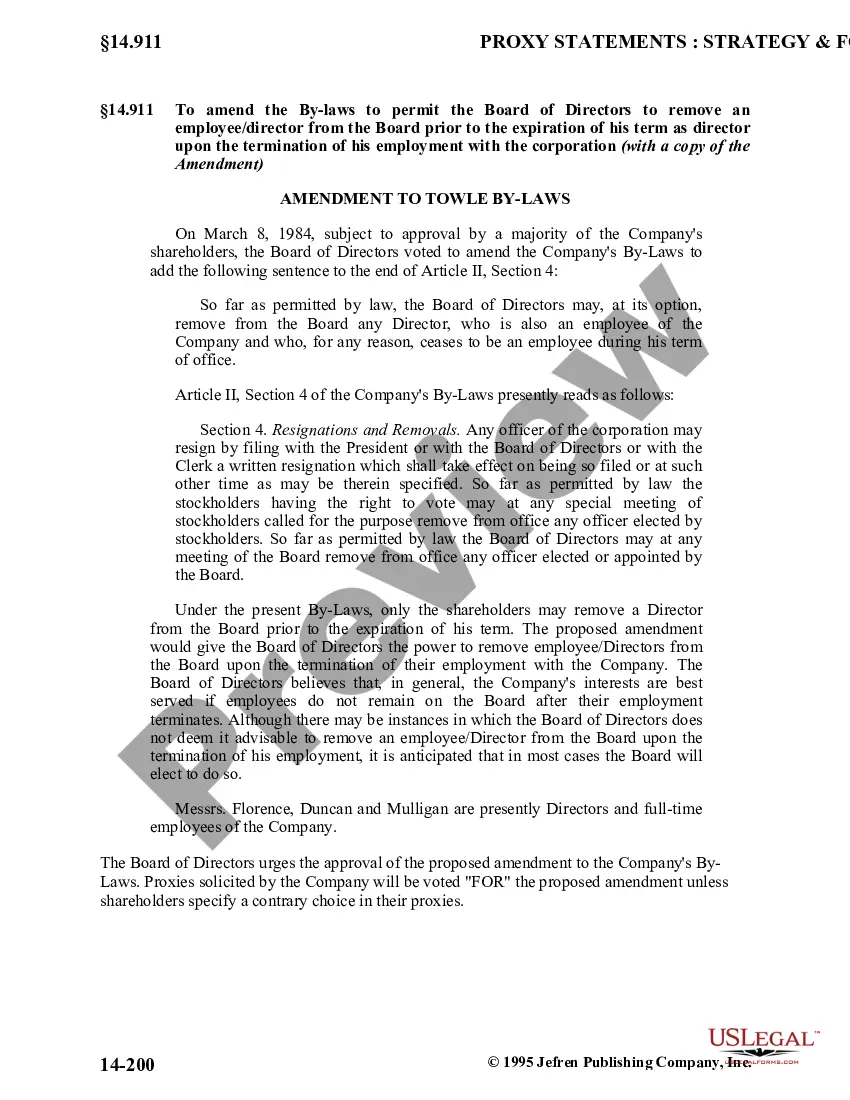
Shareholders typically have the right to vote in elections for the board of directors and on proposed operational alterations such as shifts of corporate aims and goals or fundamental structural changes.
Shareholder have the right to vote on corporate actions, policies, board members, and other issues, often at the company's annual shareholder meeting.