Phantom Stock Agreement For The Future
Description
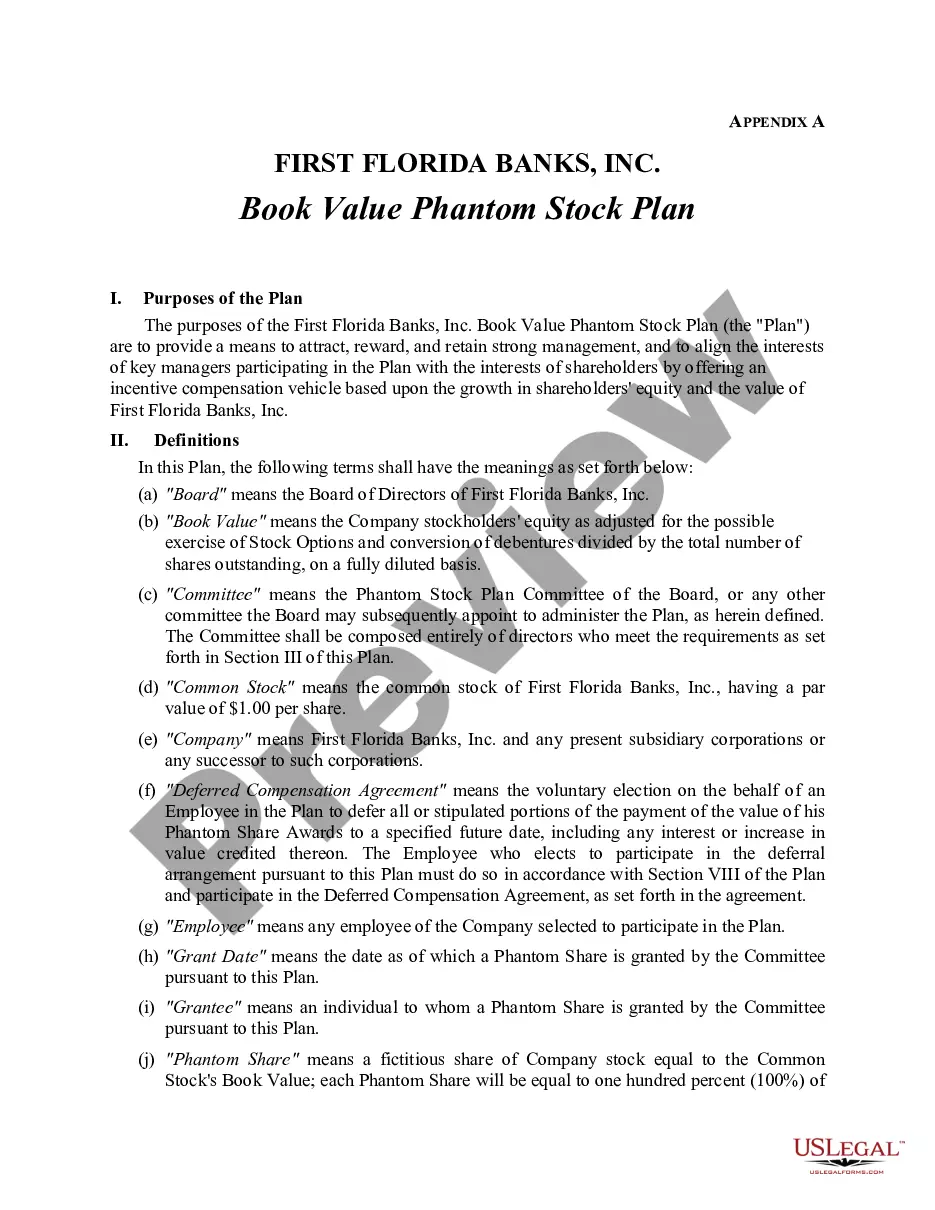
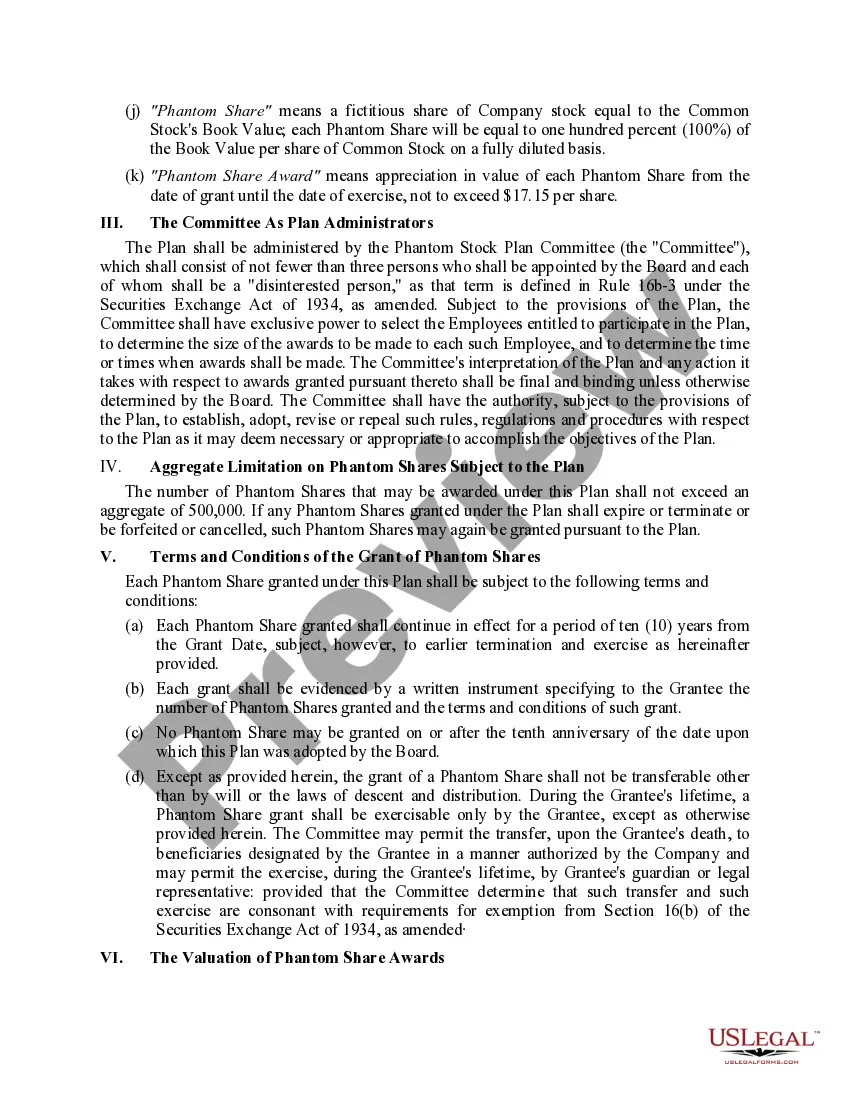
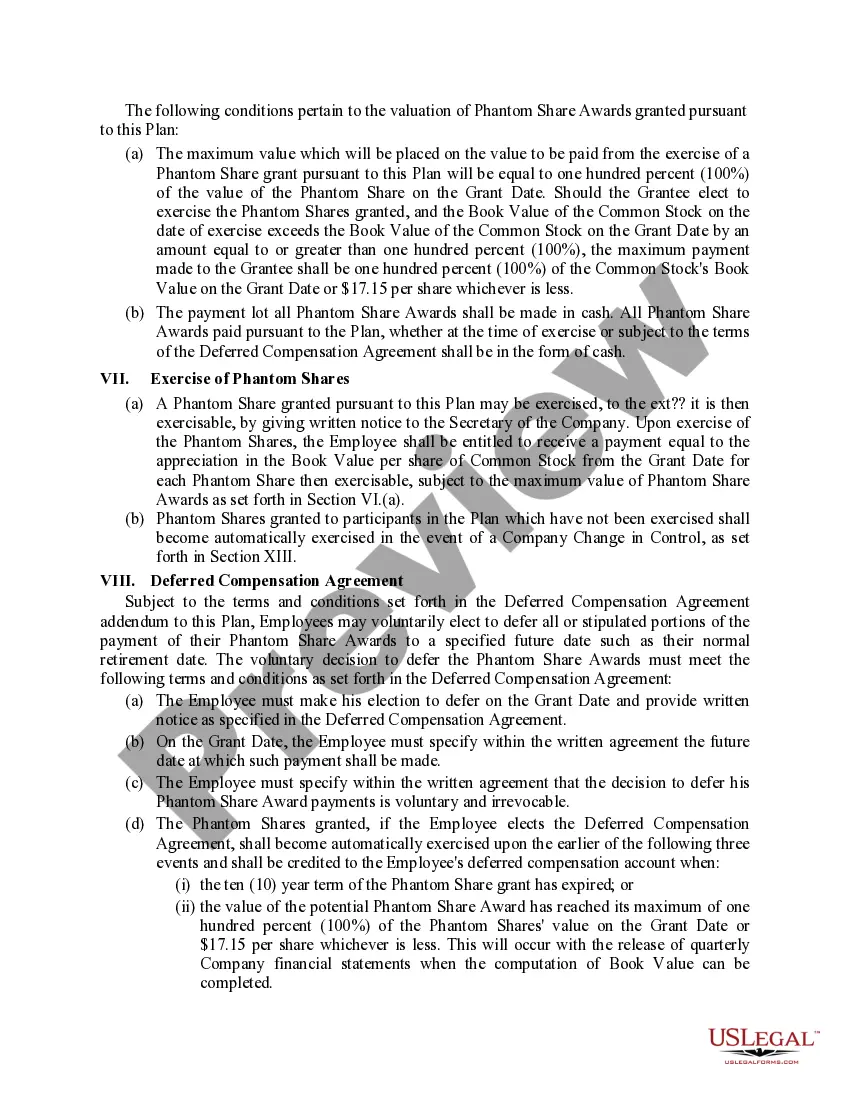
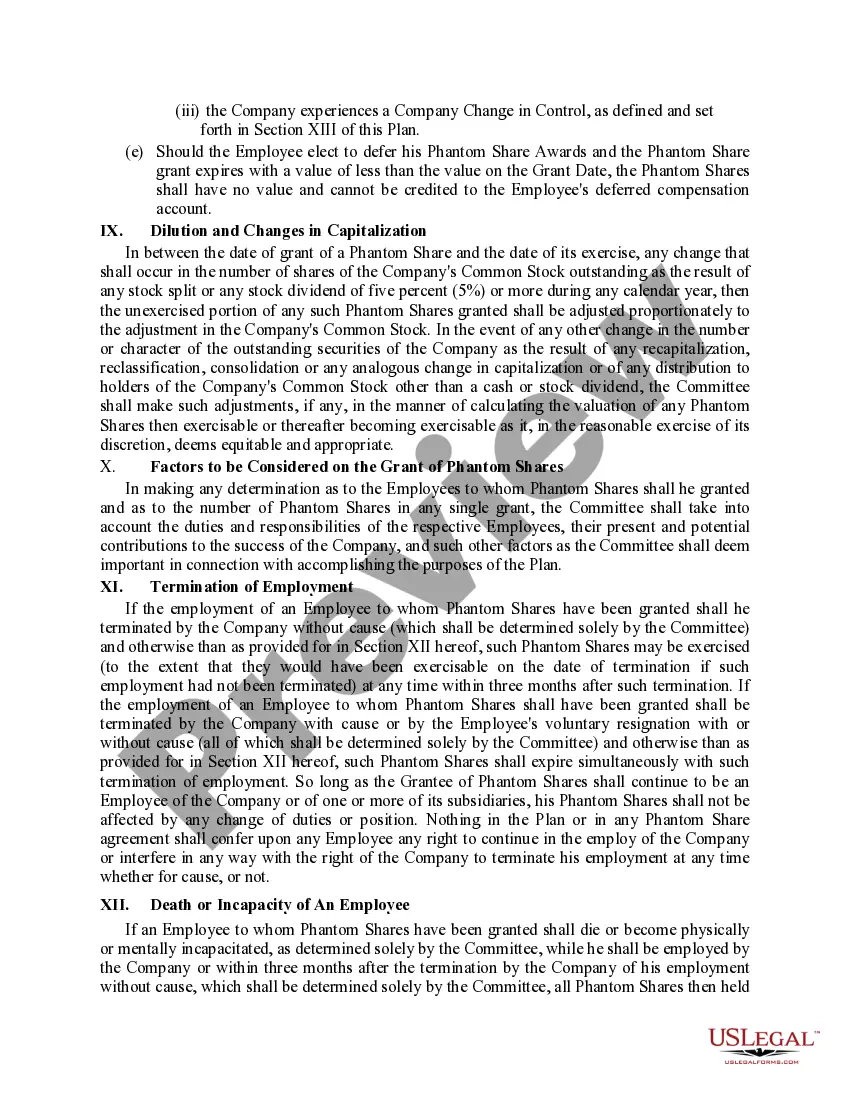
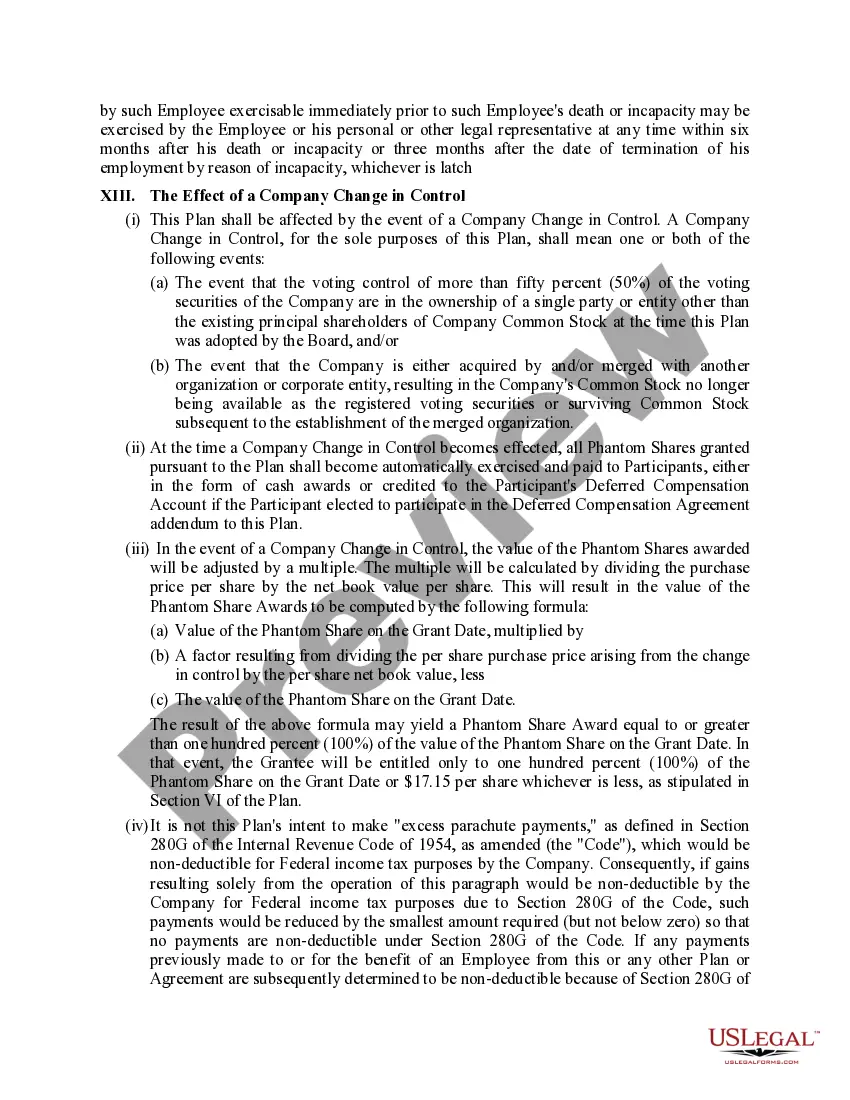
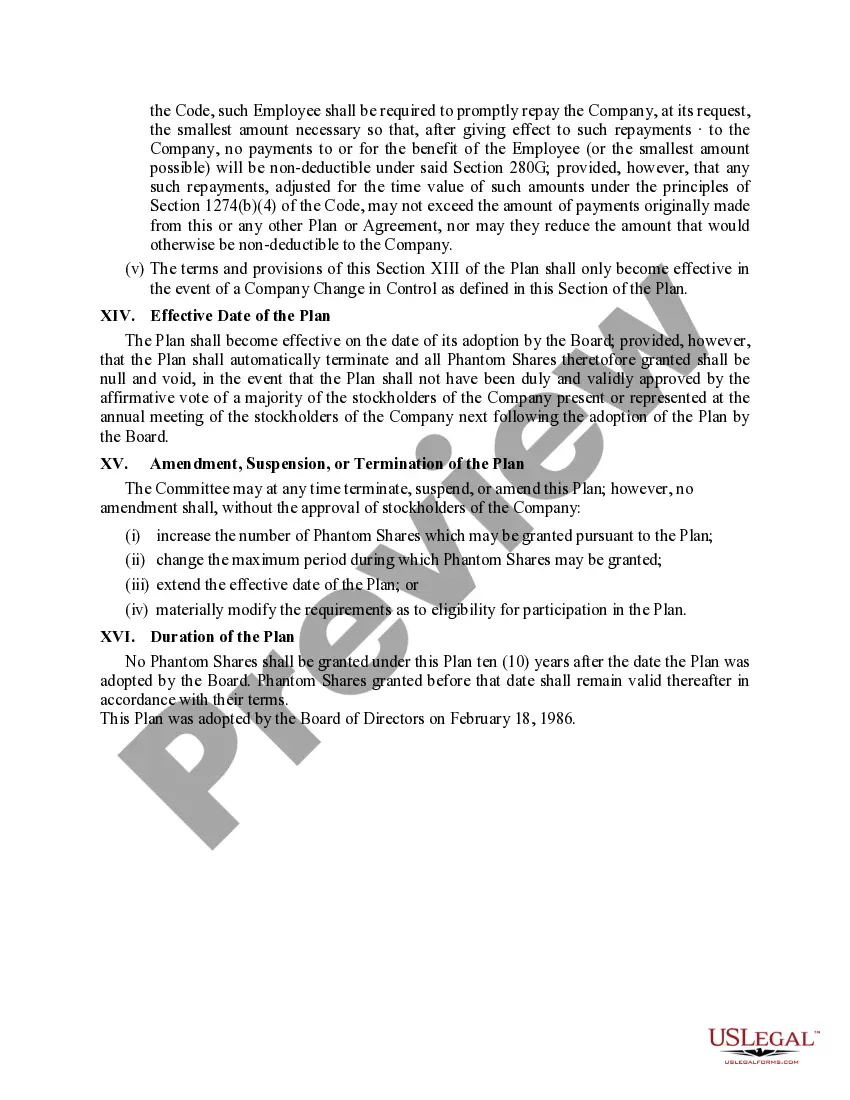
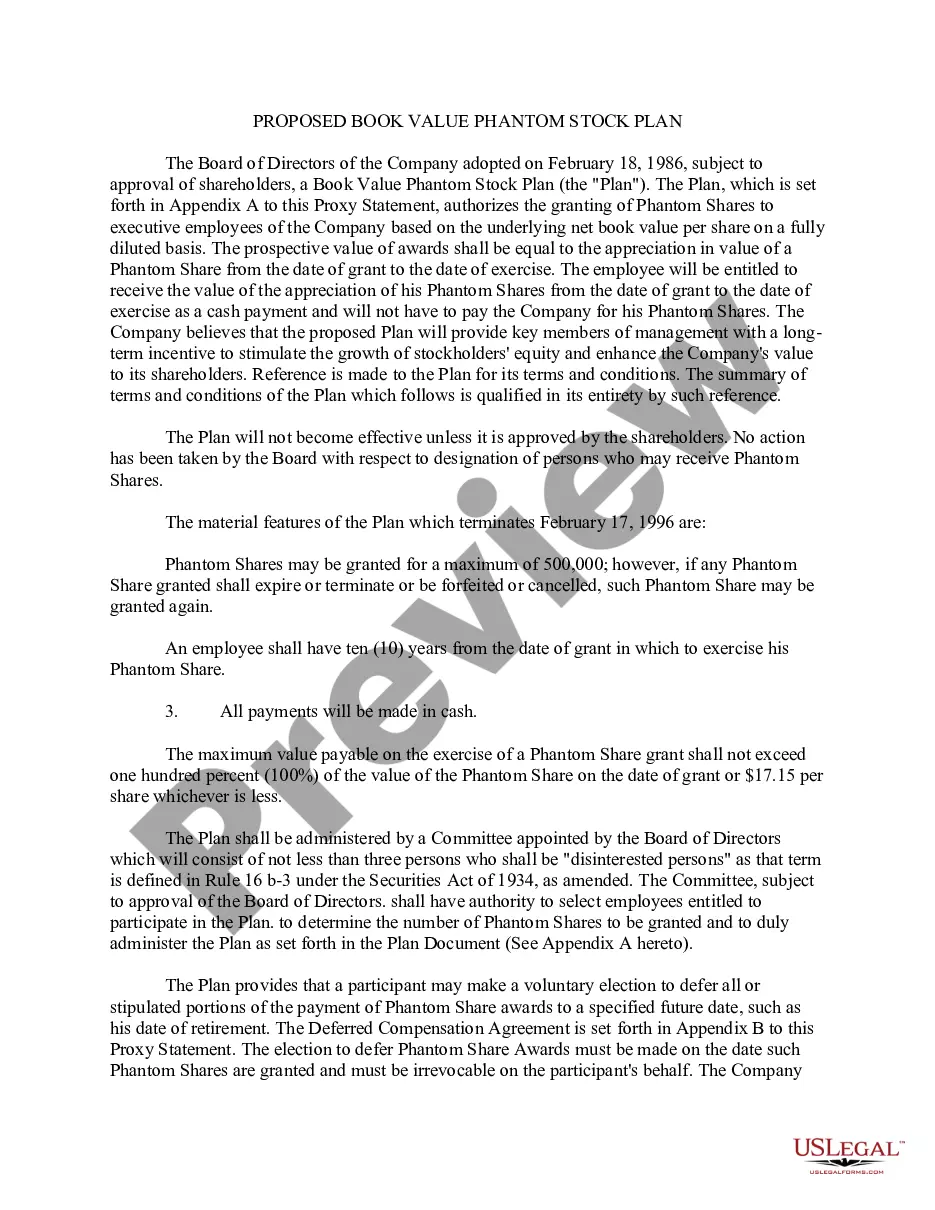
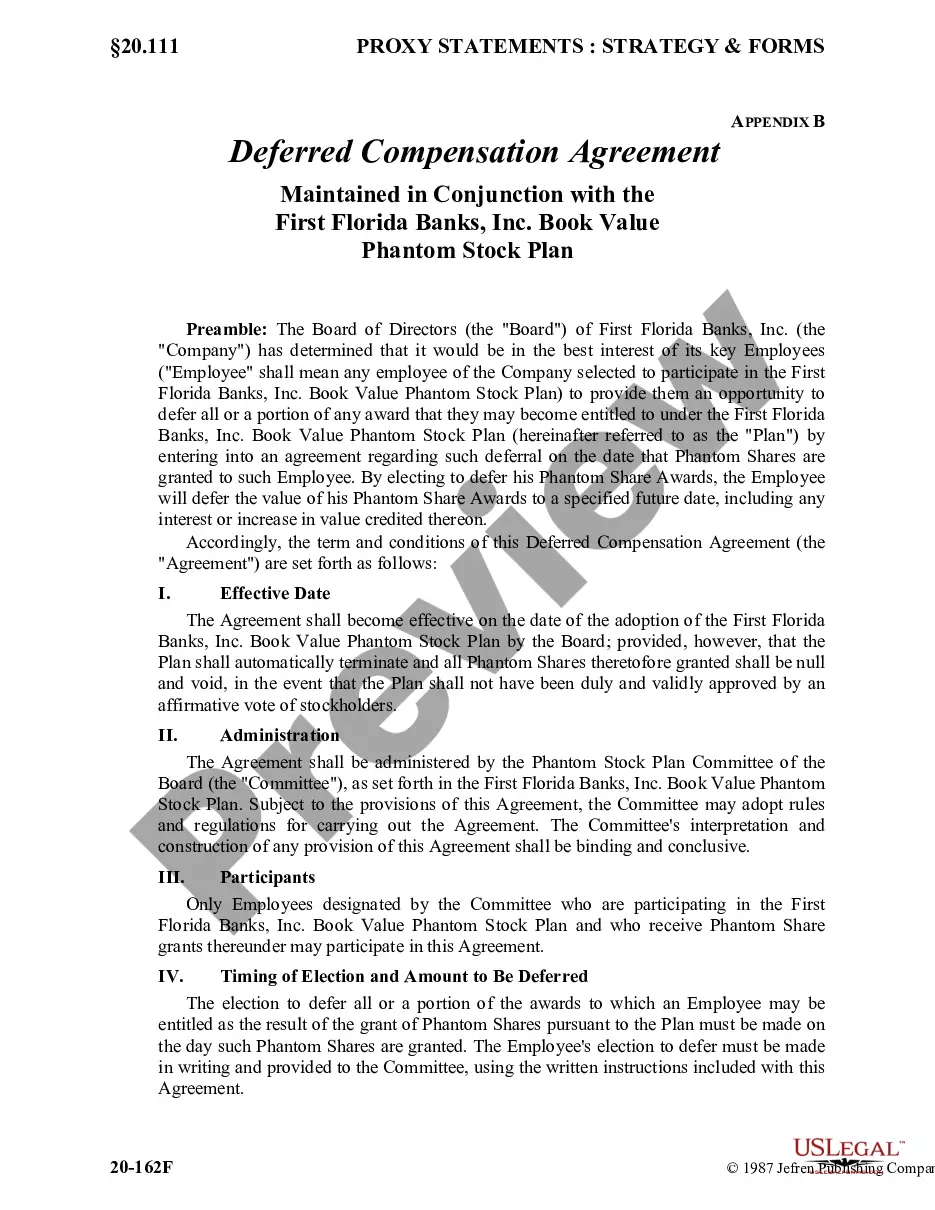
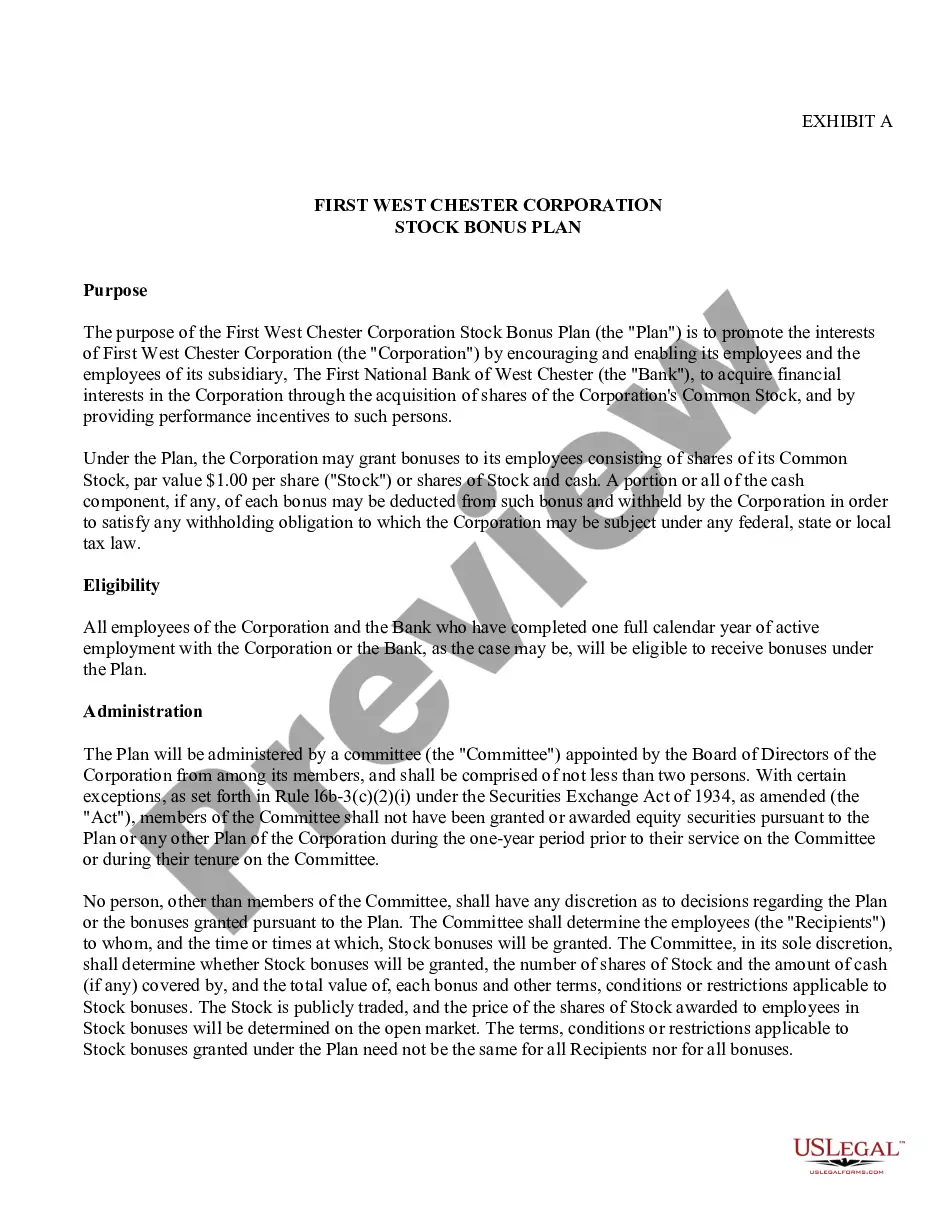
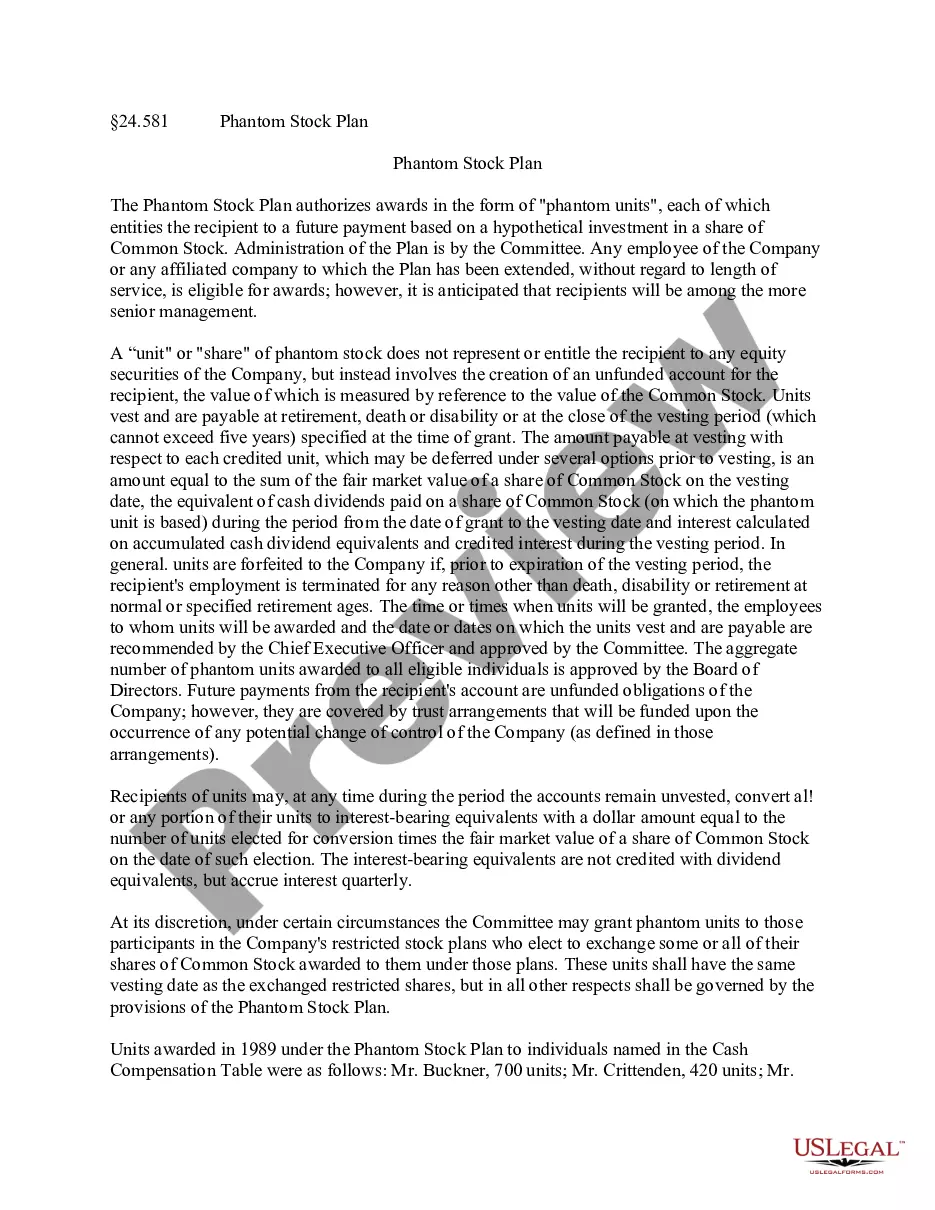

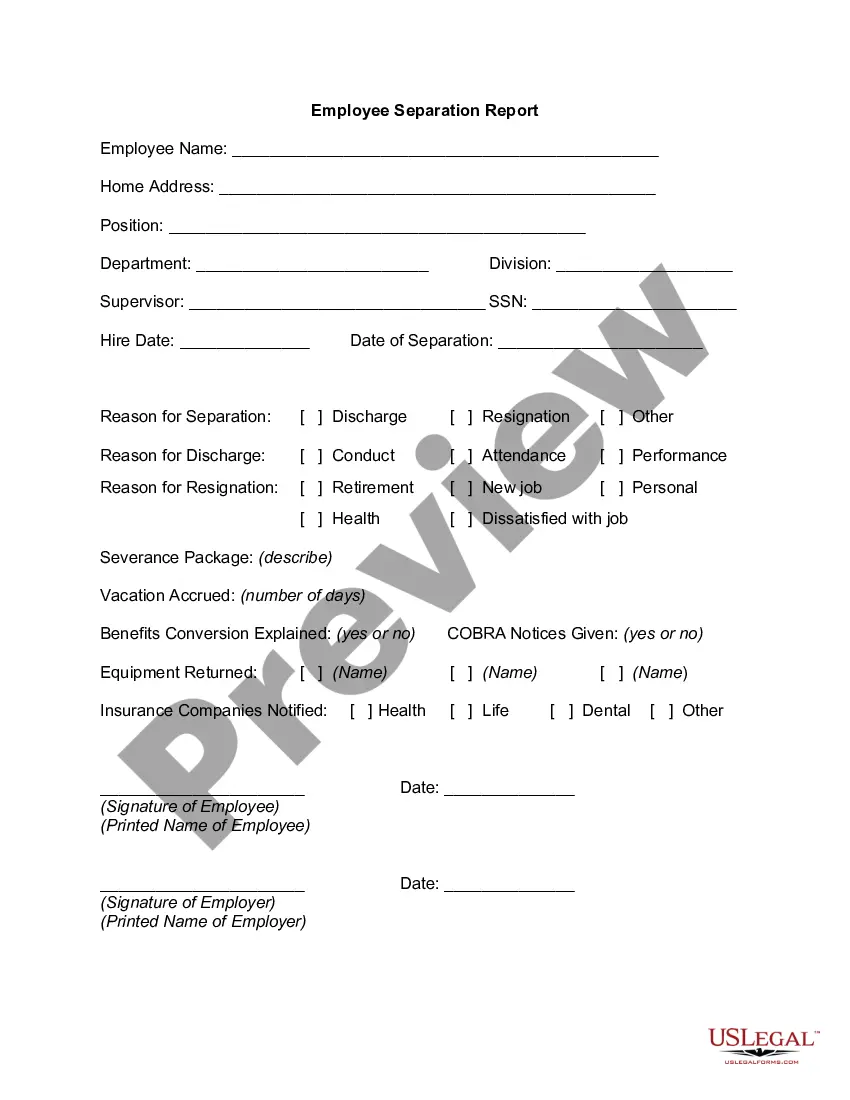


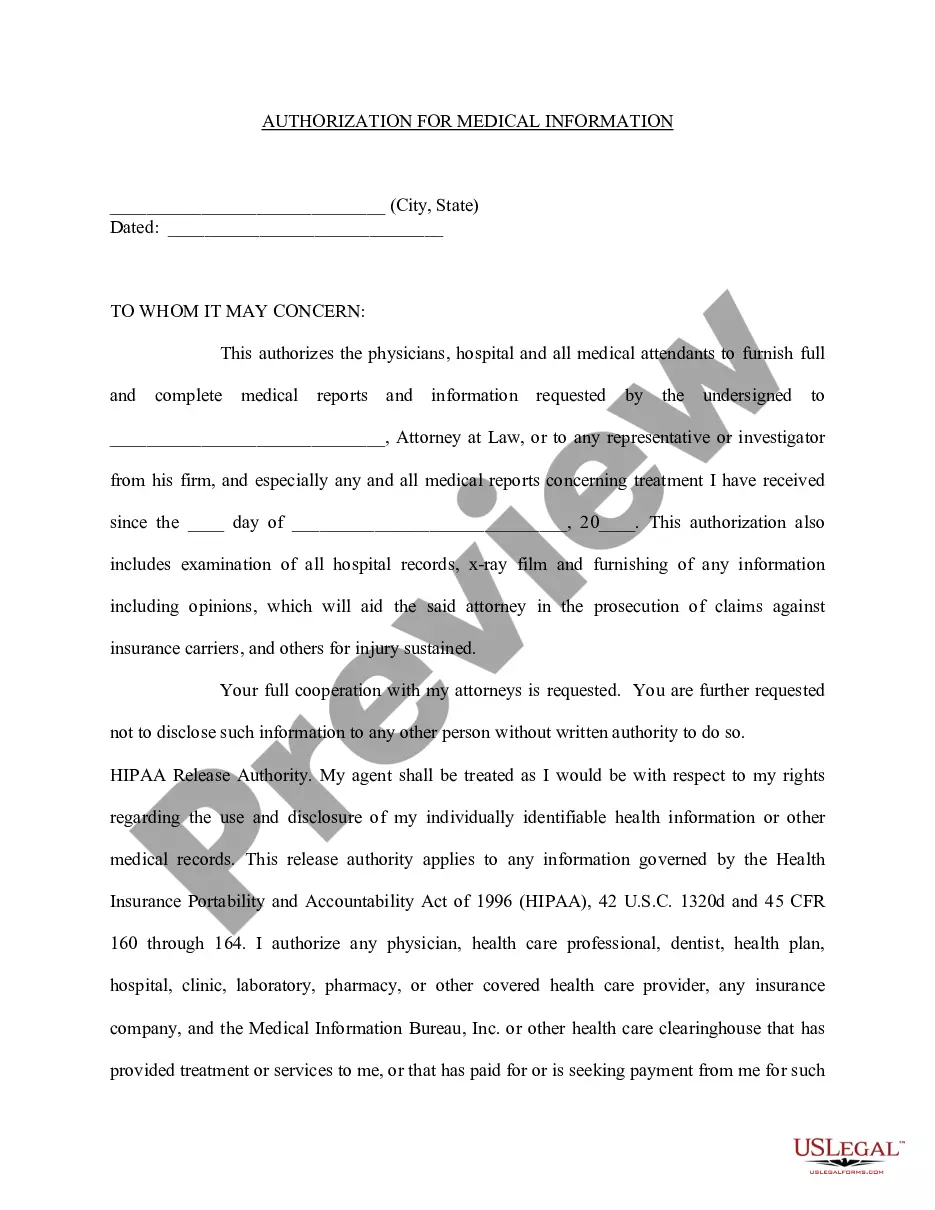


How to fill out Book Value Phantom Stock Plan Of First Florida Banks, Inc.?
- If you are a returning user, log in to your account and navigate to your dashboard to locate and download the required form template. Confirm that your subscription is active or renew it as per your payment plan.
- For new users, start by exploring the Preview mode and form description to ensure you select the Phantom stock agreement that aligns with your needs and local jurisdiction requirements.
- If the initial form doesn’t meet your needs, utilize the Search tab above to find a different template that fits your requirements.
- Proceed by clicking the Buy Now button and selecting your preferred subscription plan. You’ll need to create an account to tap into the library’s extensive resources.
- Finalize your purchase by entering your credit card details or opting for PayPal to complete the subscription payment.
- Once the transaction is confirmed, download your form and save it on your device. You can also find it later in the My Forms section of your profile.
The benefits of using US Legal Forms are clear: a vast collection of over 85,000 editable legal forms, user-friendly access, and support from premium experts for ensuring the accuracy and legality of your documents.
Don’t let legal complexities hold you back. Begin your journey today and simplify your legal process with US Legal Forms!
Form popularity
FAQ
Phantom shares can be an attractive part of compensation, particularly since they offer a way to share in the company's success without diluting actual equity. They provide a financial incentive that encourages employee retention and performance. Ultimately, the value of phantom shares comes down to the company's growth and future stock performance discussed in the phantom stock agreement for the future.
The vesting period for phantom stock varies by company policy but often lasts from three to five years. During this time, employees must remain with the company to earn the rights to their phantom shares fully. This structure within a phantom stock agreement for the future encourages retention and loyalty. Having clear guidelines in your agreement can help manage expectations for all parties involved.
Phantom shares typically cannot be transferred as they are a type of benefit tied to an employee's ongoing relationship with the company. This means that the phantom stock agreement for the future usually specifies that these shares are non-transferable. If an employee leaves the company, their rights to these phantom shares often expire. Always consult your phantom stock agreement for the specific terms related to transfers.
Yes, an LLC can establish a phantom stock plan to reward its employees effectively. This plan works through a phantom stock agreement for the future, enabling employees to benefit financially based on the company's success without actually granting them ownership. This solution is appealing for many LLCs seeking to enhance employee engagement and retention.
An LLC can implement a stock option plan, although it is less common than in corporations. However, using a phantom stock agreement for the future is often more advantageous, as it avoids the complexities associated with actual stock issuance. This arrangement allows for similar incentives while maintaining the desired operational flexibility.
Absolutely, an LLC can issue phantom stock as part of its compensation strategy. A phantom stock agreement for the future provides employees with rights to benefits that mimic equity ownership, ensuring they have a vested interest in the company's growth. This option is increasingly popular, as it keeps the LLC structure intact while still offering attractive incentives.
Yes, an LLC can have an equity incentive plan, making it a valuable tool for attracting and retaining talent. By utilizing a phantom stock agreement for the future, LLCs can offer their employees a stake in the company without issuing actual shares. This approach allows for flexibility and preserves the ownership structure while rewarding employees based on performance.
Setting up a phantom stock plan involves defining the plan’s objectives, selecting eligible participants, and drafting a comprehensive phantom stock agreement for the future. Consider factors like vesting schedules and performance metrics. Consulting with legal and financial experts can streamline this process to create a successful, well-structured plan.
One downside of a phantom stock agreement for the future is that employees do not receive actual shares, which may limit their sense of ownership. Additionally, if the company faces financial challenges, the anticipated value of phantom stocks may diminish, leading to dissatisfaction among employees. Companies must effectively communicate these risks to ensure understanding.
Many companies find a phantom stock agreement for the future valuable because it can motivate employees without diluting ownership. It provides employees a financial stake in the company's growth, fostering dedication and alignment with business objectives. However, whether it is worth it depends on the individual employee's financial goals and the company's performance.