Stock Option Exchange For Beginners
Description
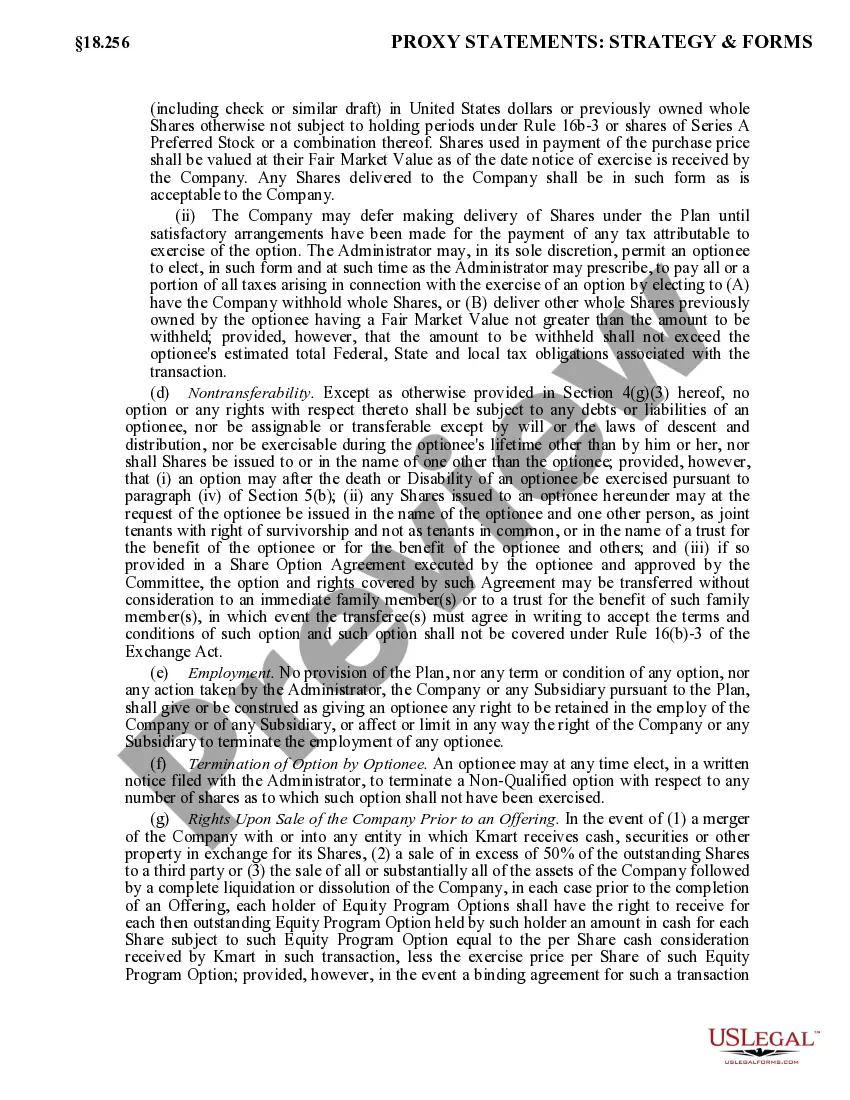
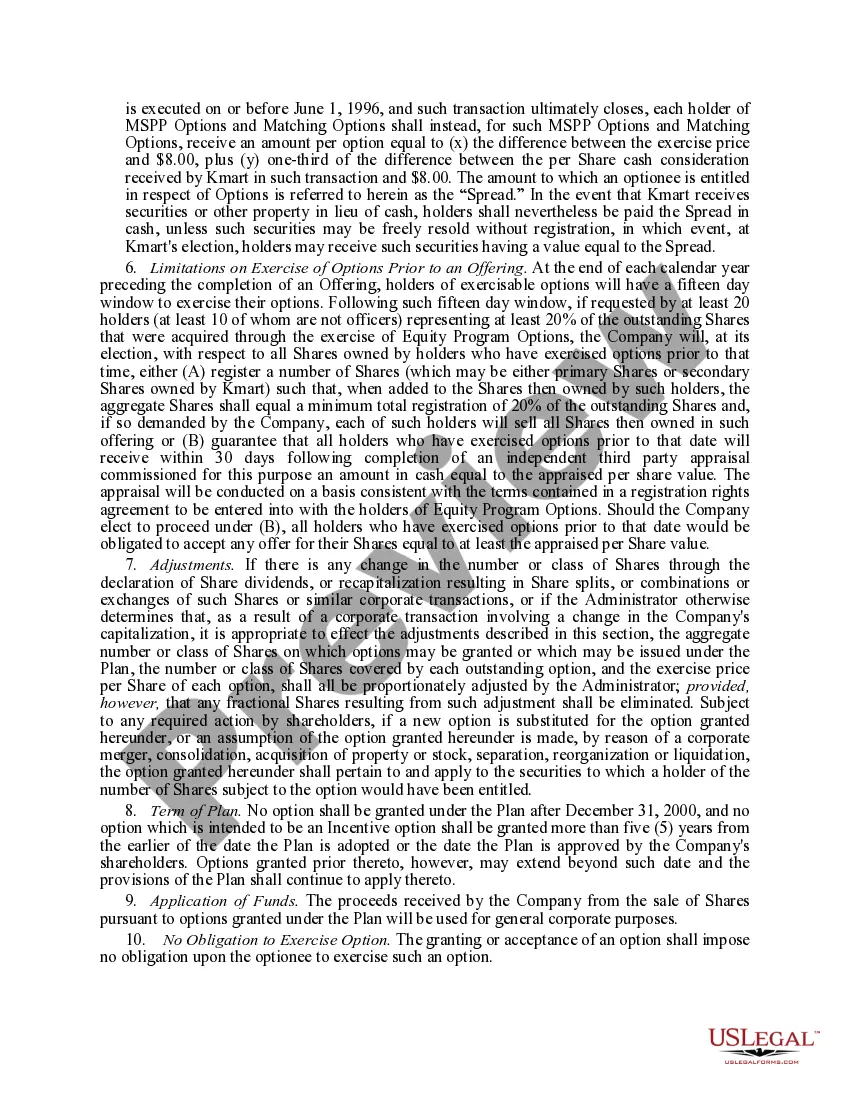

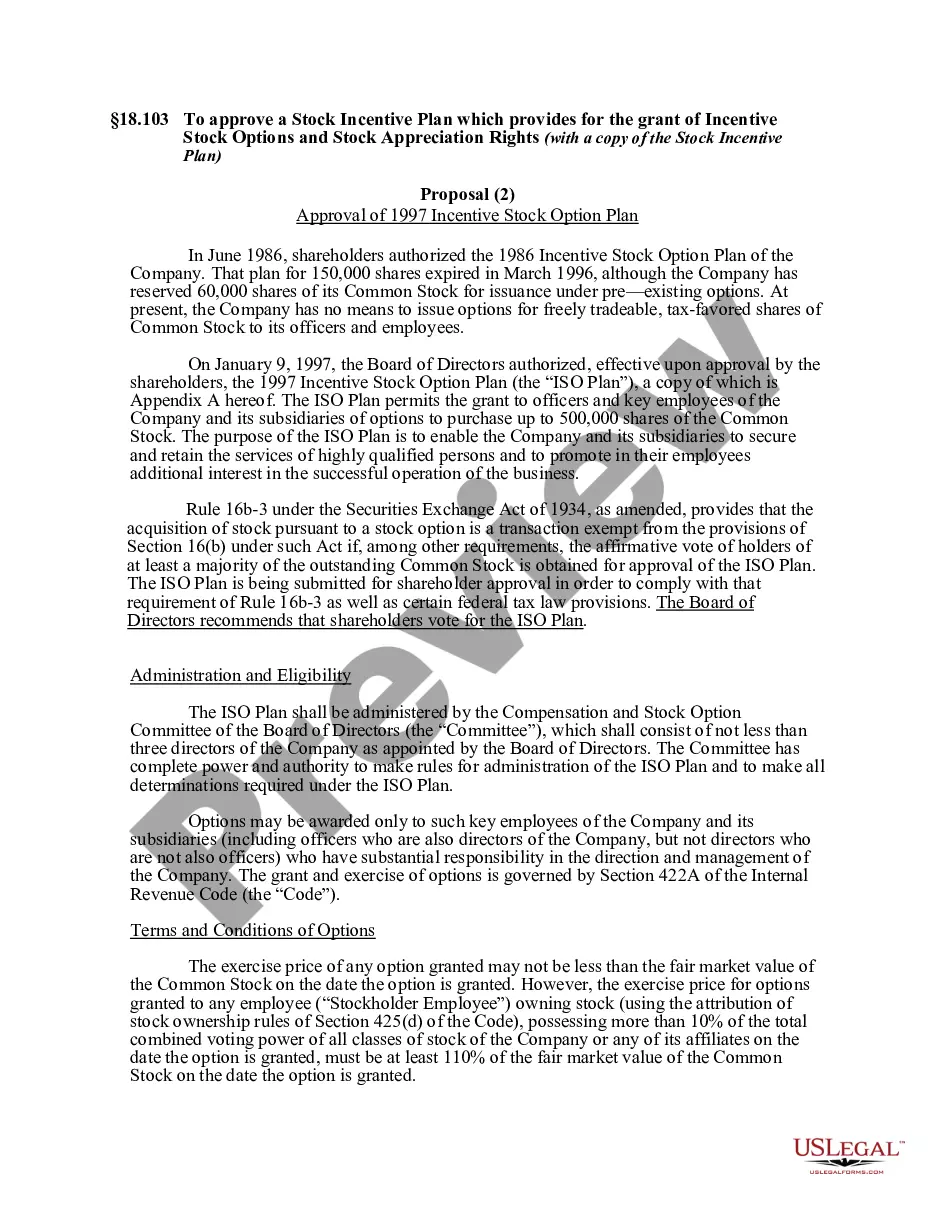
Get your form ready online
Our built-in tools help you complete, sign, share, and store your documents in one place.
Make edits, fill in missing information, and update formatting in US Legal Forms—just like you would in MS Word.
Download a copy, print it, send it by email, or mail it via USPS—whatever works best for your next step.
Sign and collect signatures with our SignNow integration. Send to multiple recipients, set reminders, and more. Go Premium to unlock E-Sign.
If this form requires notarization, complete it online through a secure video call—no need to meet a notary in person or wait for an appointment.
We protect your documents and personal data by following strict security and privacy standards.

Make edits, fill in missing information, and update formatting in US Legal Forms—just like you would in MS Word.

Download a copy, print it, send it by email, or mail it via USPS—whatever works best for your next step.

Sign and collect signatures with our SignNow integration. Send to multiple recipients, set reminders, and more. Go Premium to unlock E-Sign.

If this form requires notarization, complete it online through a secure video call—no need to meet a notary in person or wait for an appointment.

We protect your documents and personal data by following strict security and privacy standards.
Looking for another form?
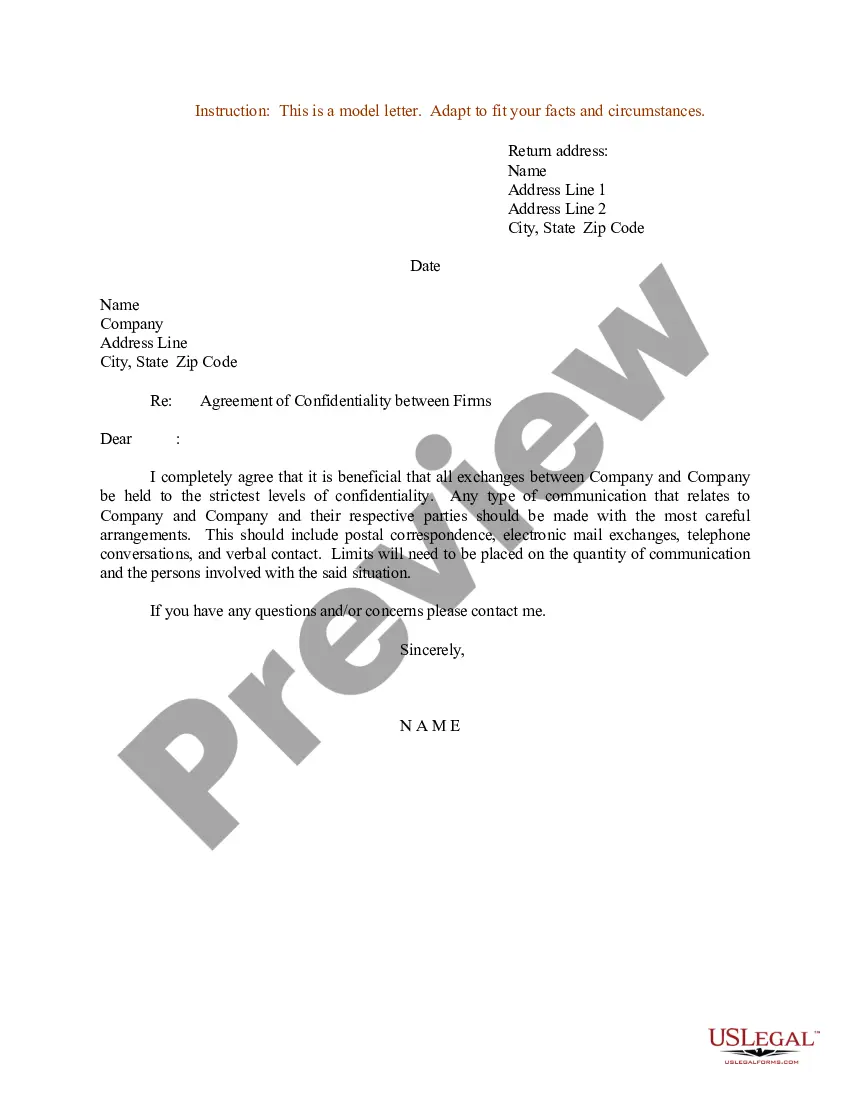





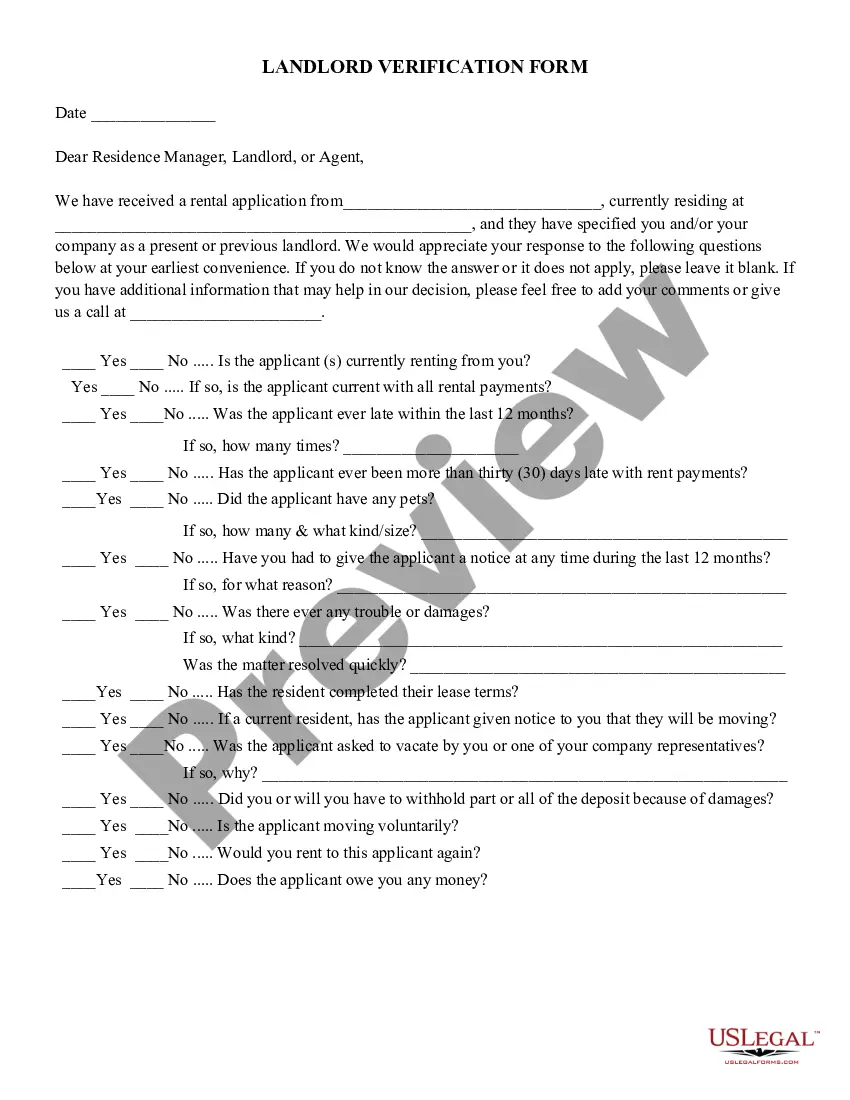


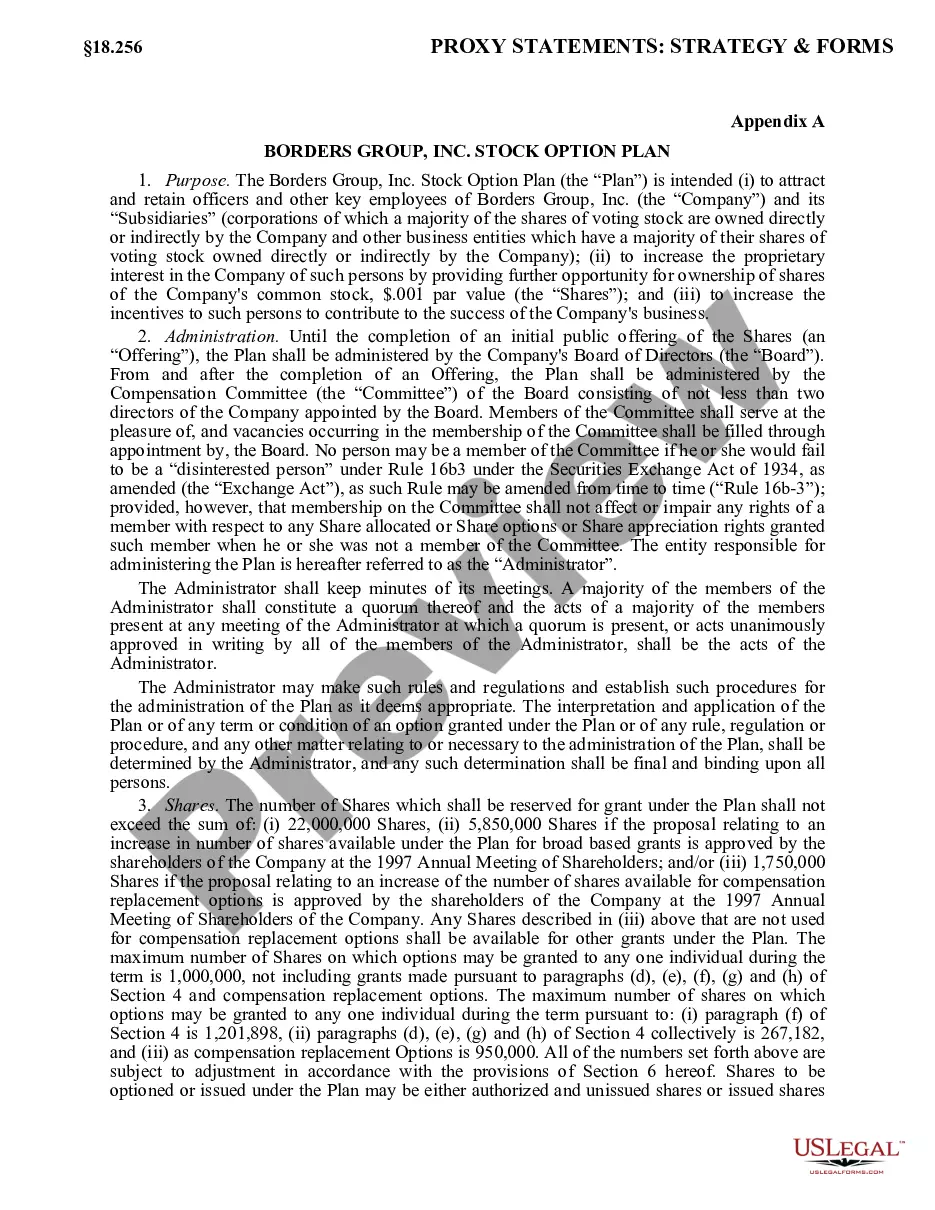
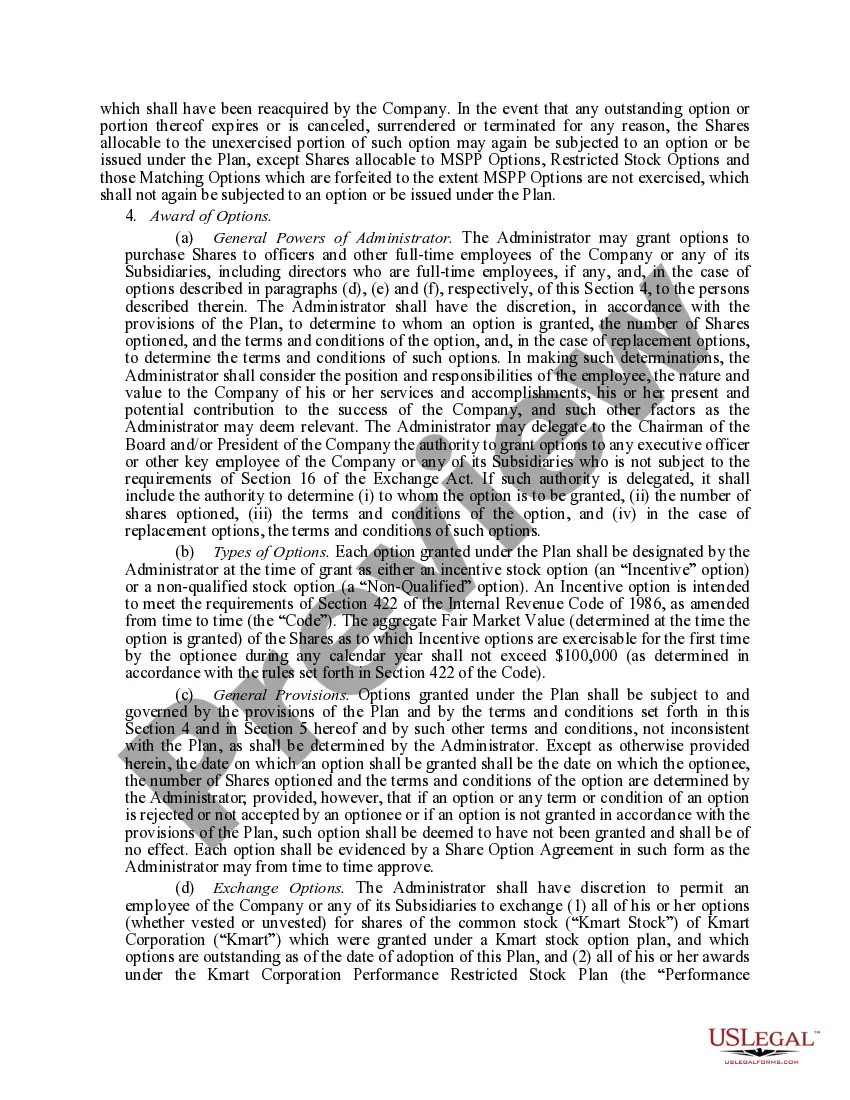
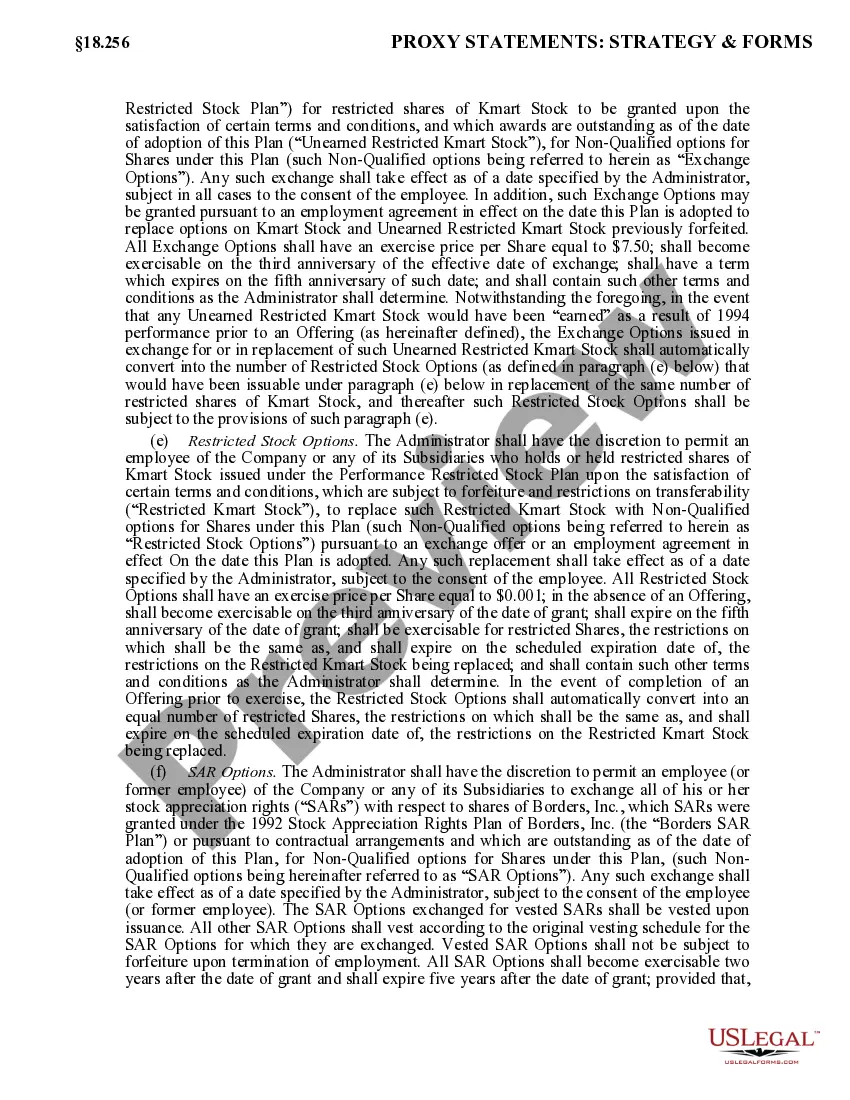
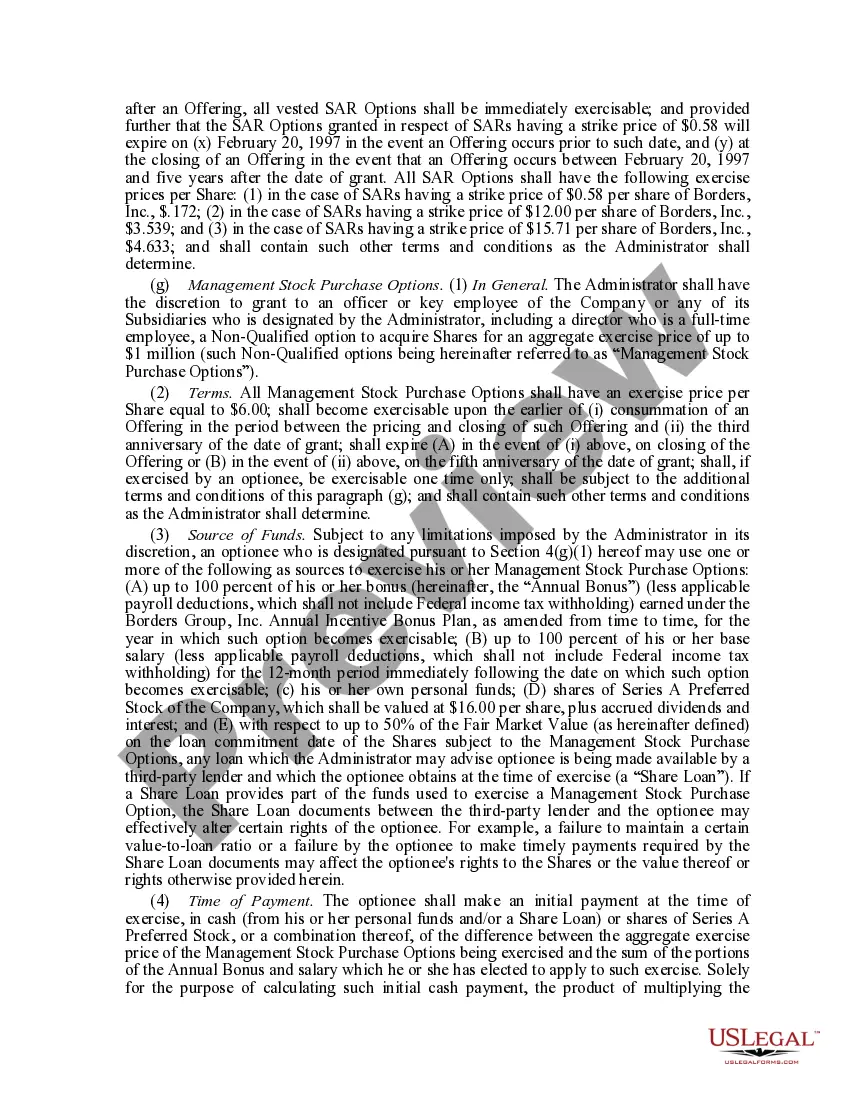
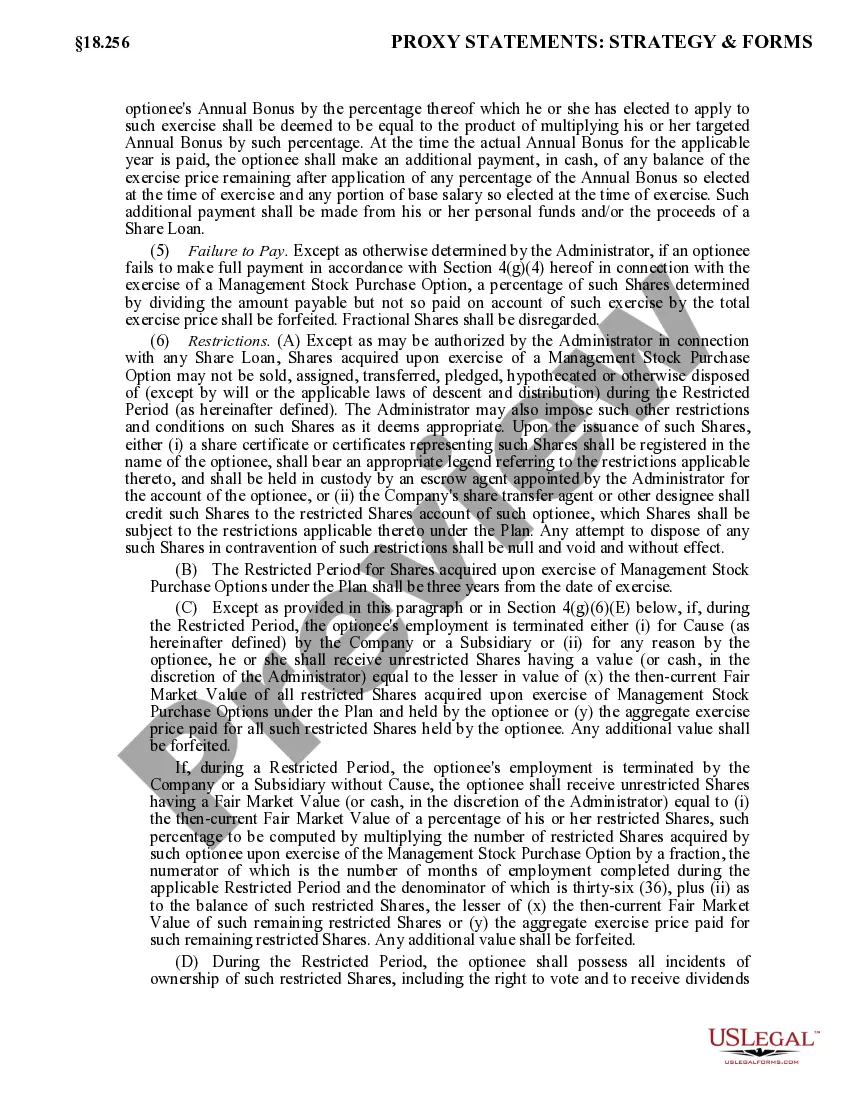
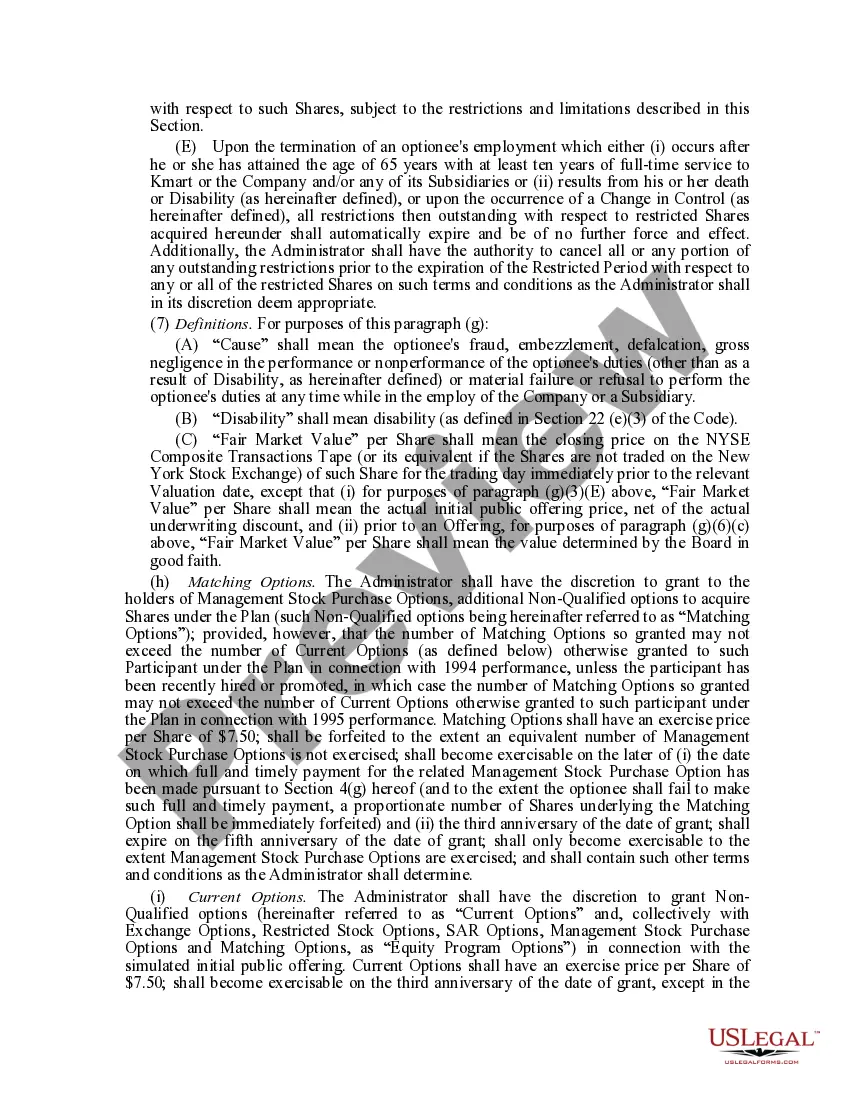
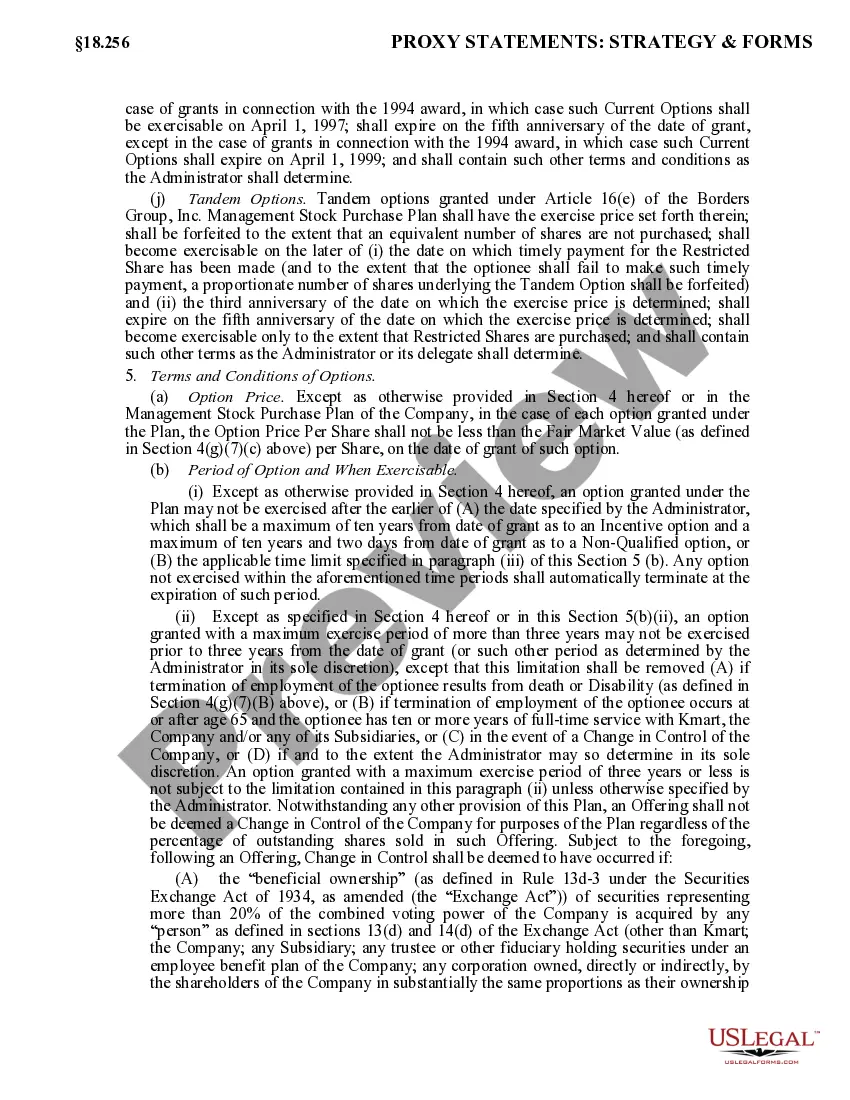
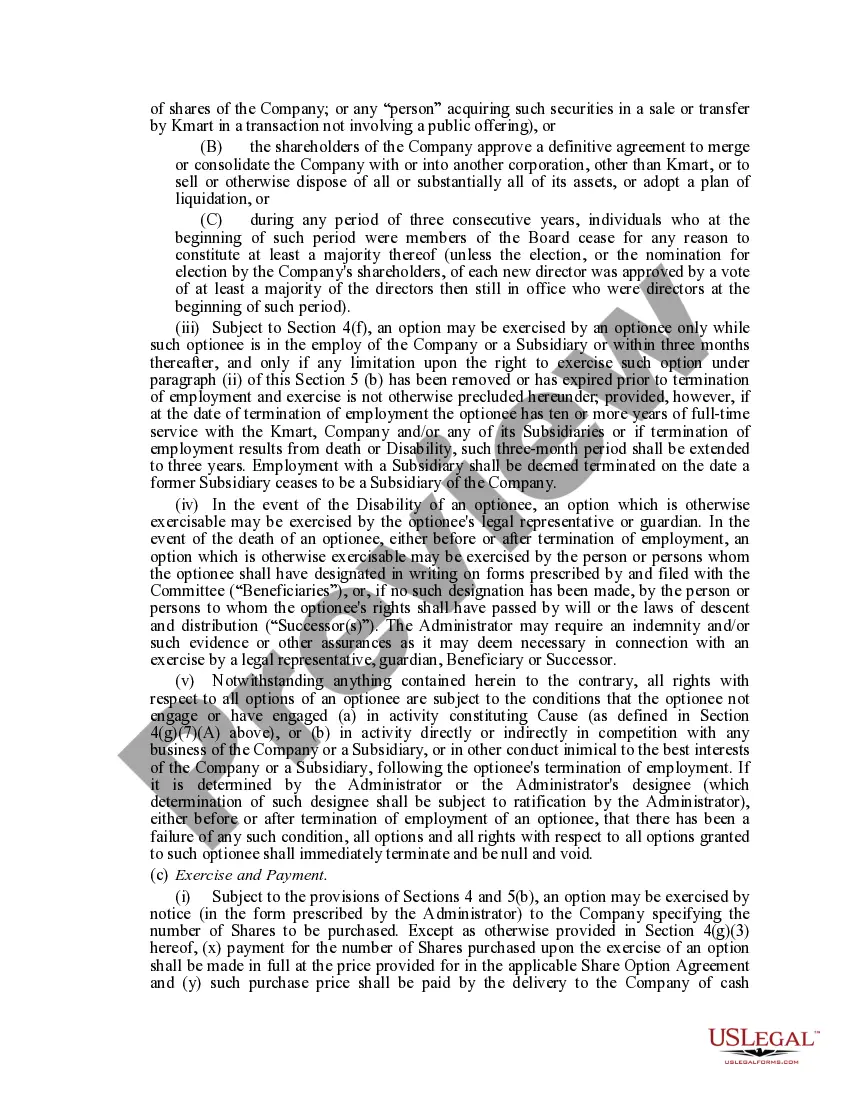
How to fill out Stock Option Plan Stock Option Plan Which Provides For Grant Of Incentive Stock Options, Nonqualified Stock Options, And Exchange Options?
- Access your US Legal Forms account. If you are returning, log in and ensure your subscription is active.
- Search for the required stock option form. Use the Preview mode and read the form description to confirm it meets your needs.
- Explore alternative templates if necessary. If the chosen form isn't suitable, utilize the Search tab to find the correct one.
- Make your purchase. Click on the Buy Now button and select your preferred subscription plan.
- Complete your transaction. Enter your payment details, either through credit card or PayPal, to finalize your purchase.
- Download the form. Once payment is successful, save the template to your device and access it anytime through the My Forms section in your profile.
US Legal Forms empowers users with an extensive collection of over 85,000 legal templates, making it easier to find the right document. Each form is designed for ease of use, ensuring that users can fill them out quickly and accurately.
In conclusion, utilizing US Legal Forms for stock option exchanges allows beginners to harness the power of legal documentation with ease. Start your journey with us today and secure the necessary forms for your success!
Form popularity
FAQ
The downsides of stock options include the potential for significant losses and the complexity involved in trading them. Many beginners may find options difficult to understand, which can lead to costly errors. Additionally, options contracts have expiration dates, adding another layer of risk. For those new to trading, the US Legal platform offers resources to help navigate the challenges of a stock option exchange for beginners.
Yes, you can start trading options with $100, although your potential trades may be limited. Many brokerage firms now allow you to trade options with lower account minimums, making it accessible to beginners. However, it's important to remember that smaller investments can lead to smaller profits. Dive deeper into a stock option exchange for beginners to see how even modest budgets can work.
Stock options for dummies refer to simplified explanations and resources targeted at newcomers to options trading. These may include basic definitions, strategies, and examples to make the topic approachable. The goal is to demystify options to help individuals understand how they can be used effectively in investing. Engaging with the US Legal platform can be a practical step in exploring a stock option exchange for beginners.
To start trading options for beginners, first, educate yourself about the different types of options and their strategies. Setting up a brokerage account that offers options trading is your next step. Practice using virtual trading platforms can further help you gain confidence. The US Legal platform features guides that can guide you through navigating a stock option exchange for beginners effectively.
Options trading can be a good start for beginners, especially if they seek flexibility in their investments. It allows you to speculate on stocks while limiting your financial risk. However, it is essential to understand the mechanics of options thoroughly. Resources like the US Legal platform can provide valuable insights into a stock option exchange for beginners, making it easier to learn.
Yes, stock options do count as income once you exercise them and sell the shares you acquire. For beginners in the stock option exchange, knowing when this income is recognized is vital for your tax planning. Consulting a financial advisor can provide clarity and ensure you are making the most of your options.
Typically, you receive a 1099 form if you sell stock acquired through options and realize a gain. For those starting in the stock option exchange, understanding when and how to receive these forms can clarify your tax responsibilities. If you're uncertain, consider using services like US Legal Forms to help manage your tax-related documents.
You can generally deduct stock option losses against any capital gains you have. For beginners in the stock option exchange, it’s crucial to keep detailed records of your transactions to accurately report your losses. An experienced tax professional can help you navigate this area and maximize your tax benefits.
Filing stock options involves reporting any income you earned from exercising your options on your tax returns. Beginners in the stock option exchange need to report this income on IRS Form 3921 or 3922, depending on the type of options exercised. Remember, using a platform like US Legal Forms can simplify the process by providing templates and guidance for your filings.
The $100,000 rule for stock options means that if your options are worth more than $100,000 at the time they are granted, they could be subject to different tax rules. For beginners in the stock option exchange, it's important to understand that this limit applies to the value of options that first become exercisable in a given calendar year. You should always consult with a tax advisor to make informed decisions.