Restated Articles With Graphs
Description





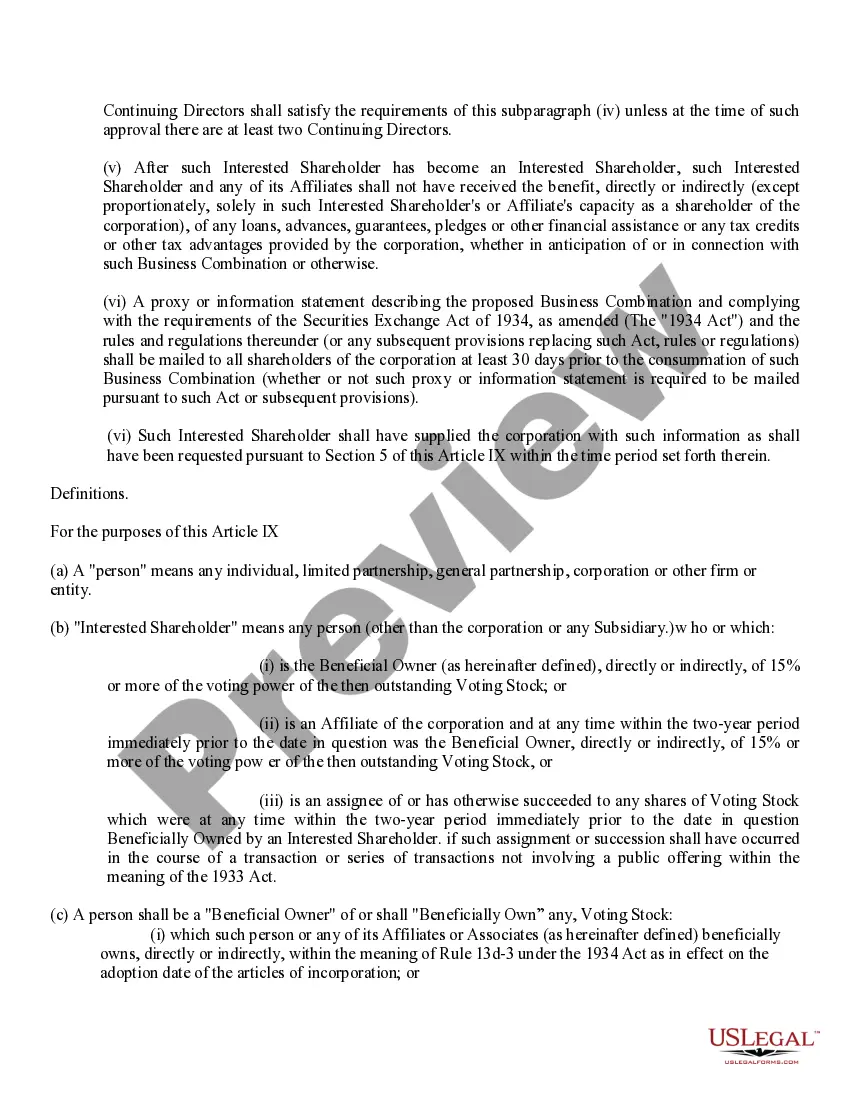


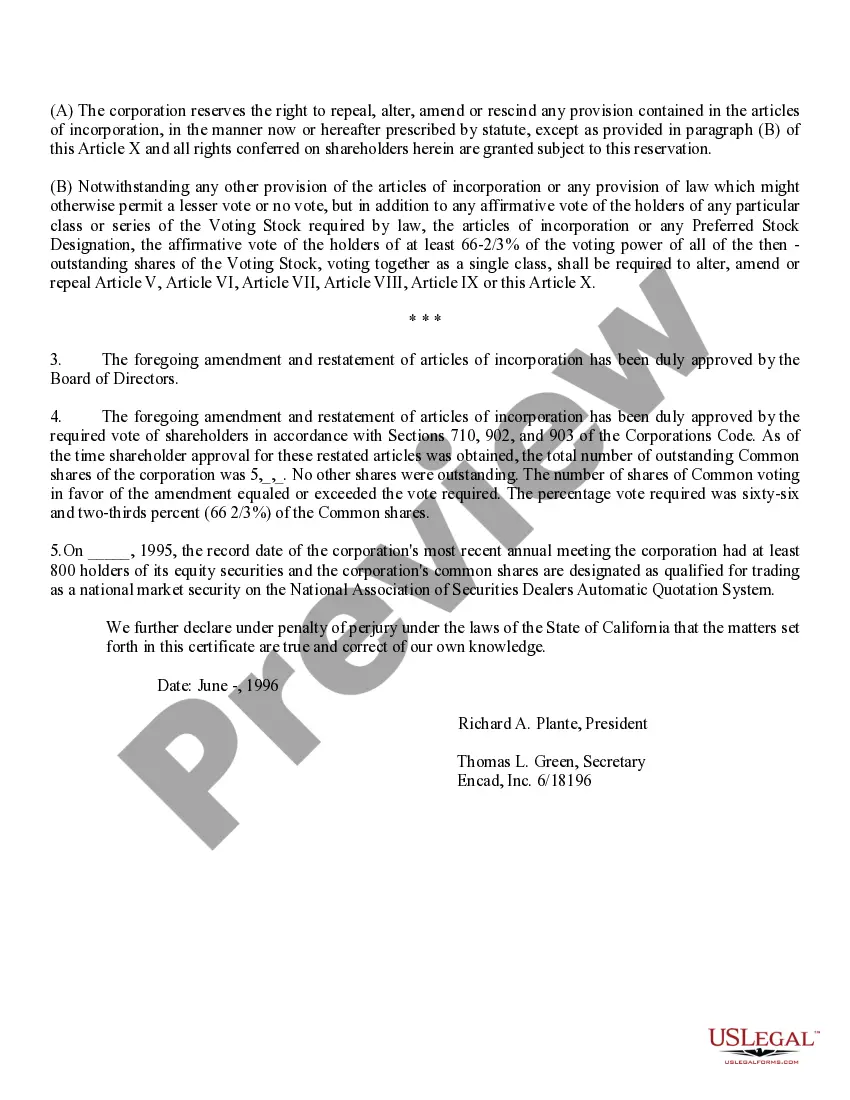

Get your form ready online
Our built-in tools help you complete, sign, share, and store your documents in one place.
Make edits, fill in missing information, and update formatting in US Legal Forms—just like you would in MS Word.
Download a copy, print it, send it by email, or mail it via USPS—whatever works best for your next step.
Sign and collect signatures with our SignNow integration. Send to multiple recipients, set reminders, and more. Go Premium to unlock E-Sign.
If this form requires notarization, complete it online through a secure video call—no need to meet a notary in person or wait for an appointment.
We protect your documents and personal data by following strict security and privacy standards.

Make edits, fill in missing information, and update formatting in US Legal Forms—just like you would in MS Word.

Download a copy, print it, send it by email, or mail it via USPS—whatever works best for your next step.

Sign and collect signatures with our SignNow integration. Send to multiple recipients, set reminders, and more. Go Premium to unlock E-Sign.

If this form requires notarization, complete it online through a secure video call—no need to meet a notary in person or wait for an appointment.

We protect your documents and personal data by following strict security and privacy standards.
Looking for another form?





How to fill out Restated Articles Of Incorporation?
It’s widely acknowledged that one cannot transform into a legal expert in an instant, nor can one rapidly learn to draft Restated Articles With Graphs without possessing a unique set of competencies.
Assembling legal documents is an elaborate task that necessitates specific education and expertise. So why not entrust the development of the Restated Articles With Graphs to the professionals.
With US Legal Forms, which boasts one of the largest legal document collections, you can discover everything from court documentation to templates for internal communication.
You can regain access to your documents from the My documents section at any time. If you are a returning customer, you can easily Log In and find and download the template from the same section.
Regardless of the reason for your documentation—be it financial, legal, or personal—our website has you covered. Explore US Legal Forms today!
- Recognize the document you seek by utilizing the search feature at the top of the webpage.
- Review it (if this feature is available) and assess the accompanying description to confirm whether Restated Articles With Graphs aligns with your needs.
- Initiate a new search if a different document is required.
- Create a complimentary account and select a subscription plan to purchase the document.
- Click Buy now. Once the payment process is finalized, you can download the Restated Articles With Graphs, complete it, print it, and distribute it to the appropriate parties or organizations.
Form popularity
FAQ
The five fundamental rules for writing a literature review include: focusing on a specific topic, summarizing key findings, analyzing and synthesizing the literature, maintaining a clear structure, and adhering to proper citation styles. By following these rules, you ensure that your review is thorough and well-organized. When you incorporate restated articles with graphs, you also enhance the visual appeal of your work. This approach helps engage your readers more effectively.
Including graphs in a research paper involves inserting them at relevant points within the text. Ensure each graph has a clear title and is accompanied by an explanation of its significance. When discussing restated articles with graphs, elaborate on how the data supports your thesis. This strategy helps create a cohesive narrative in your research.
To reference graphs in a report, include a caption that describes the content of the graph succinctly. Make sure to cite the source of the data, especially if it comes from restated articles with graphs. Following proper citation guidelines helps maintain academic integrity and allows readers to locate the original source. This practice enriches your report’s credibility.
You should avoid redundancy and overly technical language in a literature review. Keep your writing clear and concise, focusing on the essential points. Additionally, do not include unsupported claims; instead, rely on credible sources to back your statements. This approach ensures that your review of restated articles with graphs remains impactful.
Absolutely, you can include graphs in a literature review. Graphs provide a visual representation of data that can clarify complex points. Integrating restated articles with graphs makes your review more engaging and easier to understand. Just ensure that each graph is relevant and clearly labeled for your audience.
In a literature review, you should avoid personal opinions and anecdotal evidence. Staying objective and focused on existing research is crucial. Additionally, do not include irrelevant information that does not contribute to your analysis of restated articles with graphs. This ensures that your review remains credible and targeted.
The four main types of graphs in statistics are bar graphs, line graphs, pie charts, and scatter plots. Each type serves a unique purpose in presenting data visually. For instance, bar graphs compare different categories, while line graphs show changes over time. Incorporating these graphs into restated articles can significantly enhance clarity.
Yes, a literature review can include graphs. Including graphs enhances the presentation of data and can illustrate trends or comparisons effectively. When you present restated articles with graphs, you provide visual support that can make your arguments more compelling. This approach helps readers grasp complex information quickly.
Formatting graphs in a report requires attention to detail and clarity. Begin by choosing a layout that enhances the visibility of your data, especially when dealing with restated articles with graphs. Use consistent colors, fonts, and styles to maintain professionalism. Additionally, incorporate legends and labels that are easy to read, as this aids in conveying your message effectively to your readers.
Adding data to a blank chart or modifying existing data is straightforward. Start by selecting the chart, then access the data input options. If you are using tools related to restated articles with graphs, you can easily input your desired figures or edit existing ones. Make sure to update any labels or titles to reflect these changes accurately, ensuring clarity for your audience.