Non Exempt Property In Chapter 7
Description
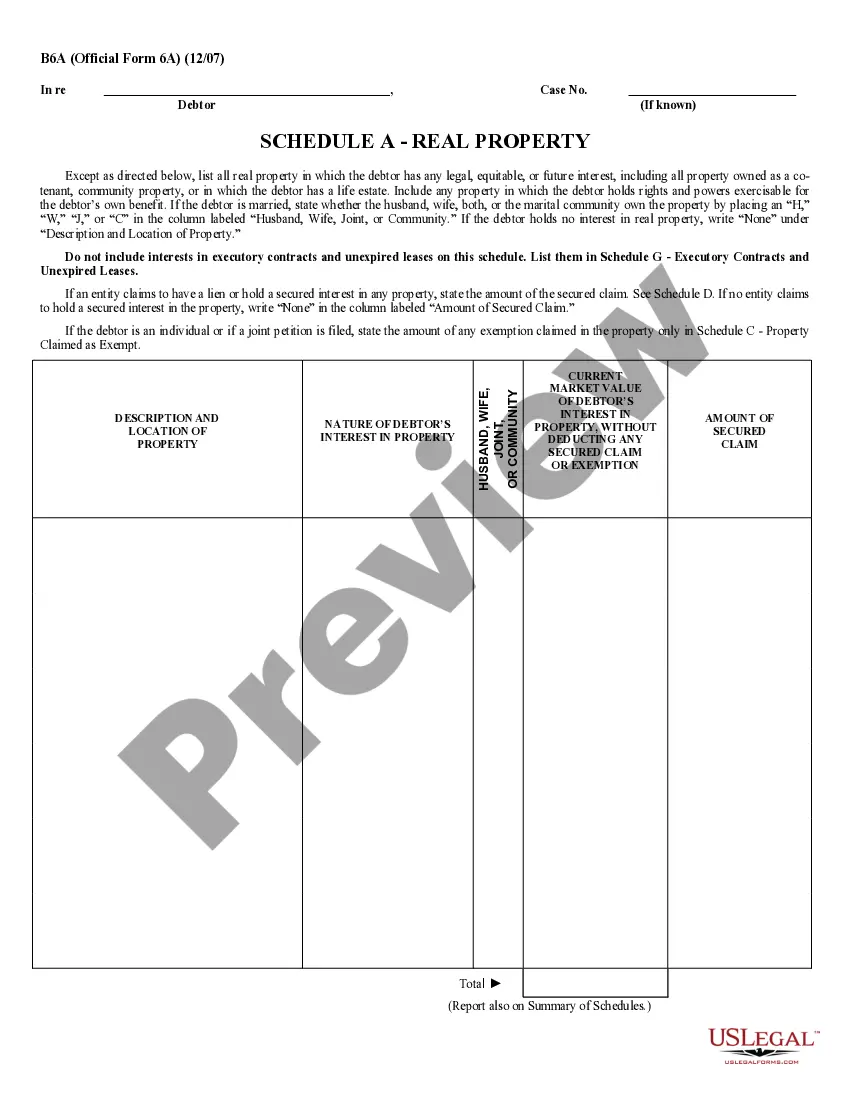
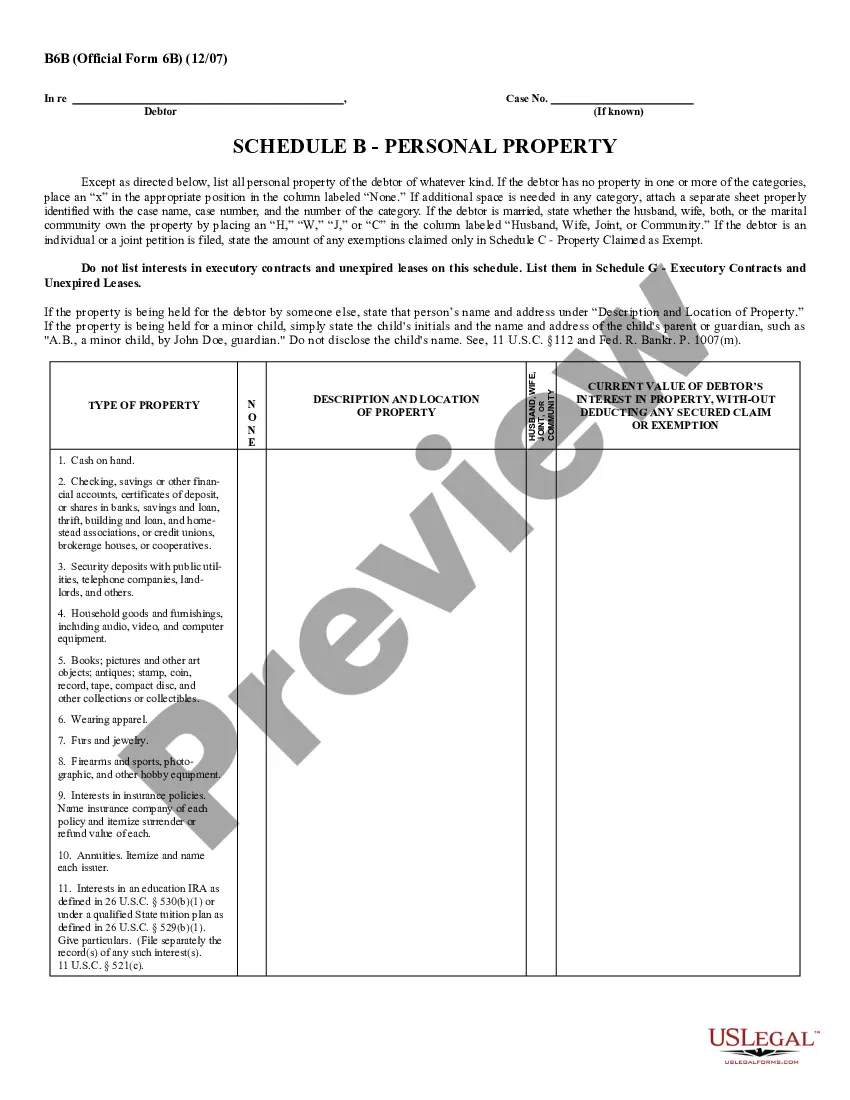



How to fill out Property Claimed As Exempt - Schedule C - Form 6C - Post 2005?
Managing legal documents and processes can be a lengthy addition to your entire day.
Non Exempt Property In Chapter 7 and similar forms usually necessitate that you locate them and figure out how to fill them out correctly.
Consequently, whether you are addressing financial, legal, or personal issues, having a comprehensive and user-friendly online library of forms readily available will be beneficial.
US Legal Forms is the premier online platform for legal templates, featuring over 85,000 state-specific forms and a variety of resources to assist you in completing your documents with ease.
Is this your first time using US Legal Forms? Register and set up an account in a few minutes and you’ll gain entry to the form library and Non Exempt Property In Chapter 7. Then, follow the steps below to fill out your form: Ensure you have the correct form using the Preview feature and reviewing the form details. Select Buy Now when ready, and choose the subscription plan that suits your requirements. Click Download and then fill out, sign, and print the form. US Legal Forms has twenty-five years of experience helping users manage their legal documents. Acquire the form you need today and simplify any process without exerting effort.
- Browse the collection of relevant documents available to you with just one click.
- US Legal Forms offers you state- and county-specific forms available for download at any time.
- Protect your document management processes with a superior service that enables you to prepare any form within minutes without additional or hidden charges.
- Simply Log In to your account, locate Non Exempt Property In Chapter 7 and obtain it immediately from the My documents section.
- You can also access previously downloaded forms.
Form popularity
FAQ
General Unsecured Claims (?GUCs?) Aside from equity holders, GUCs are the largest group of claim holders and the lowest in the priority waterfall ? therefore, recoveries are normally received on a pro-rata basis, assuming there are any funds remaining.
Priority debt is a phrase referring to the most urgent or important debts that must be paid off in bankruptcy. Listed in the order of priority, these include alimony, child support, trustee fees, bankruptcy attorney fees, court fines, employee wage debt.
Bankruptcy exemptions in Ontario ItemValueHousehold furniture, equipment, food and fuelUp to $14,180All clothingN/AA motor vehicleUp to $7,117Tools of trade or businessUp to $14,4054 more rows ?
For Non-Farmers: Household furniture and personal effects to a value of $4,500 per person. Tools of the trade to a value of $4,500. A motor vehicle, if required for employment. $32,000 equity in your home ($64,000 if jointly owned) Certain life insurance policies. Certain pensions.
That being said, here's what you're not allowed to do with a Chapter 7: Lie under oath about your financial or property assets. Keep property that must be used to discharge your debts. Miss payments to certain creditors in order to keep your home.