Case Bankruptcy Filed With Dol
Description
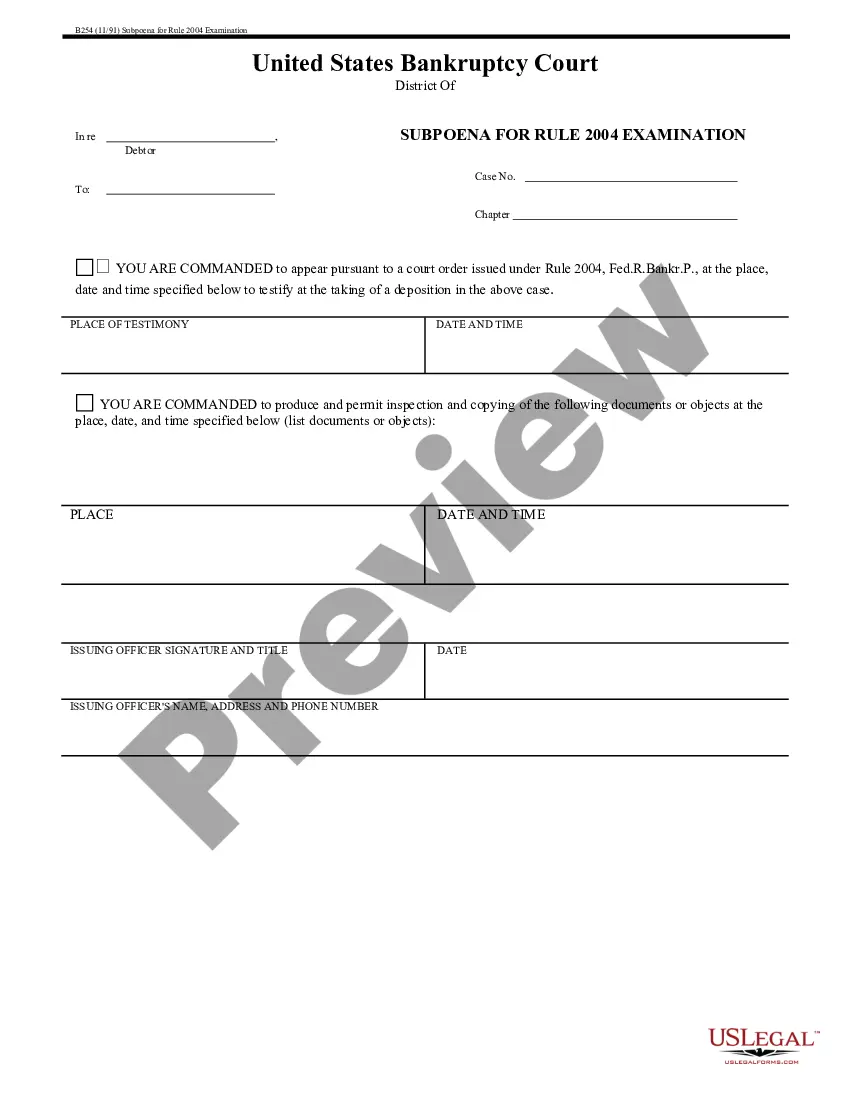




How to fill out Subpoena In A Case Under The Bankruptcy Code - B 256?
Regardless of whether for professional reasons or personal issues, everyone encounters legal matters at some point in their lives. Completing legal paperwork requires meticulous attention, starting with selecting the appropriate form template. For example, if you choose an incorrect version of the Case Bankruptcy Filed With Dol, it will be rejected upon submission. Thus, it is essential to obtain a reliable source of legal documents like US Legal Forms.
If you wish to acquire a Case Bankruptcy Filed With Dol template, follow these straightforward steps: Obtain the template you require by using the search bar or catalog navigation. Review the form’s details to ensure it aligns with your case, state, and county. Click on the form’s preview to inspect it. If it is not the correct form, return to the search function to locate the Case Bankruptcy Filed With Dol sample you need. Download the file if it satisfies your requirements. If you already possess a US Legal Forms account, simply click Log in to access previously saved documents in My documents. If you do not have an account yet, you can download the form by clicking Buy now. Select the suitable pricing option. Complete the account registration form. Choose your payment method: you can use a credit card or PayPal account. Select the document format you prefer and download the Case Bankruptcy Filed With Dol. Once it is saved, you can fill out the form using editing software or print it and complete it manually.
- With a vast US Legal Forms catalog available, you do not need to waste time searching for the right template online.
- Utilize the library’s straightforward navigation to find the correct template for any circumstance.
Form popularity
FAQ
Unpaid wages are typically treated as unsecured debts in a case bankruptcy filed with dol. This means they may not receive priority during the bankruptcy proceedings. However, you should note that employees may have certain rights to recover unpaid wages, depending on the circumstances. Consulting with a bankruptcy attorney can help you understand how your unpaid wages will be handled.
Before filing a case bankruptcy filed with dol, it is crucial to assess your financial situation thoroughly. You should create a budget and evaluate all your debts and assets. Additionally, consider seeking advice from a financial professional or a licensed bankruptcy attorney. They can provide valuable insights and help you explore alternatives to bankruptcy if applicable.
The first step in beginning a case bankruptcy filed with dol is to gather all necessary financial documents. This includes your income statements, debts, and asset information. Next, you should consult with a qualified bankruptcy attorney who can guide you through the process. They will help you understand your options and determine the best path forward.
If you file for personal bankruptcy, you generally have two options: Chapter 7 or Chapter 13. A Chapter 7 bankruptcy will sell off many of your assets to pay your creditors. In a Chapter 13 bankruptcy, you keep the assets but must repay your debts over a specified period.
That being said, here's what you're not allowed to do with a Chapter 7: Lie under oath about your financial or property assets. Keep property that must be used to discharge your debts. Miss payments to certain creditors in order to keep your home.
Key Elements to Include in the Letter A bankruptcy letter should be clear and concise and provide all the necessary information. It should include the name and contact information of the debtor, the date of the filing, the court where the bankruptcy was filed, the case number, and the type of bankruptcy filed.
A bankrupt's discharge may be opposed by creditors, the LIT or the BIA if the bankrupt has failed to meet his/her obligations or has committed an act of misconduct under the Bankruptcy and Insolvency Act (BIA) (see section 173 (1) of the BIA ). The Court will then review the opposition and render a decision.
You should not spend any money or dispose of any assets you own when you file your Chapter 7 bankruptcy case. Without court approval, the Chapter 7 Trustee can force the recipient to return the money or property. However, the income you receive after filing your case is yours to use.