Termination And Resignation
Description
Get your form ready online
Our built-in tools help you complete, sign, share, and store your documents in one place.
Make edits, fill in missing information, and update formatting in US Legal Forms—just like you would in MS Word.
Download a copy, print it, send it by email, or mail it via USPS—whatever works best for your next step.
Sign and collect signatures with our SignNow integration. Send to multiple recipients, set reminders, and more. Go Premium to unlock E-Sign.
If this form requires notarization, complete it online through a secure video call—no need to meet a notary in person or wait for an appointment.
We protect your documents and personal data by following strict security and privacy standards.

Make edits, fill in missing information, and update formatting in US Legal Forms—just like you would in MS Word.

Download a copy, print it, send it by email, or mail it via USPS—whatever works best for your next step.

Sign and collect signatures with our SignNow integration. Send to multiple recipients, set reminders, and more. Go Premium to unlock E-Sign.

If this form requires notarization, complete it online through a secure video call—no need to meet a notary in person or wait for an appointment.

We protect your documents and personal data by following strict security and privacy standards.
Looking for another form?
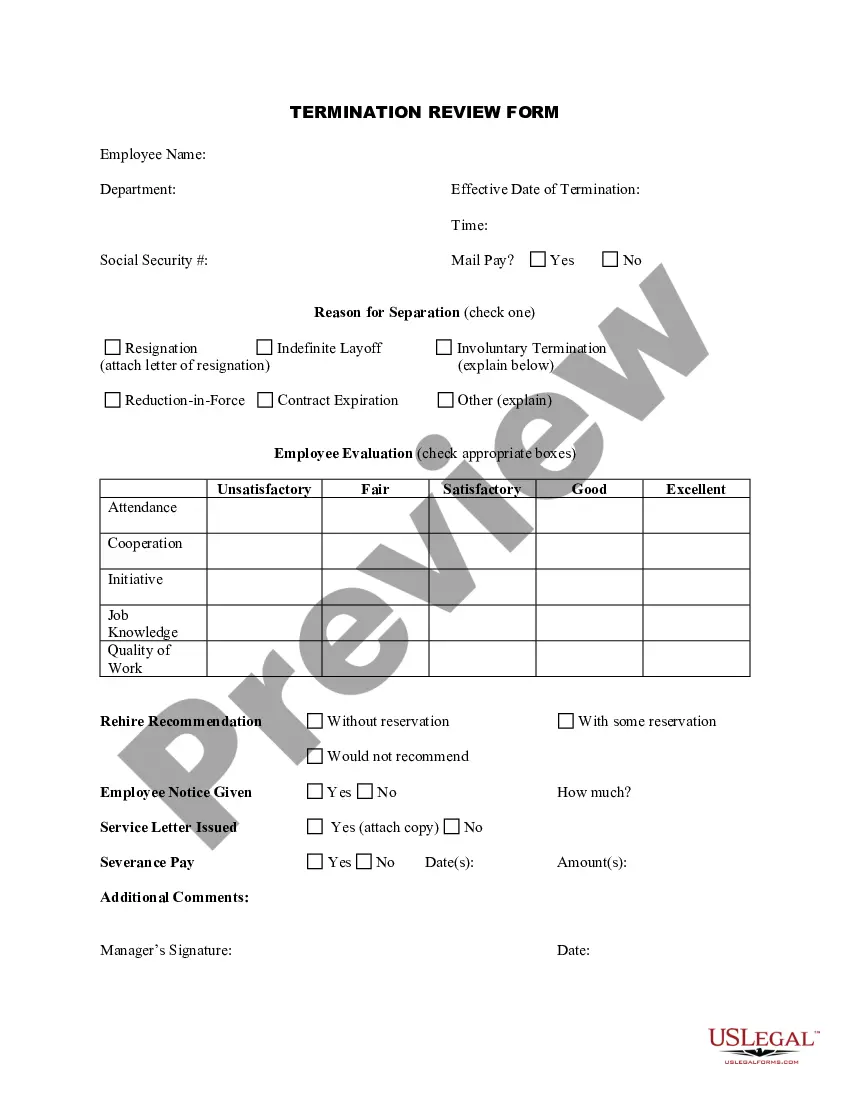
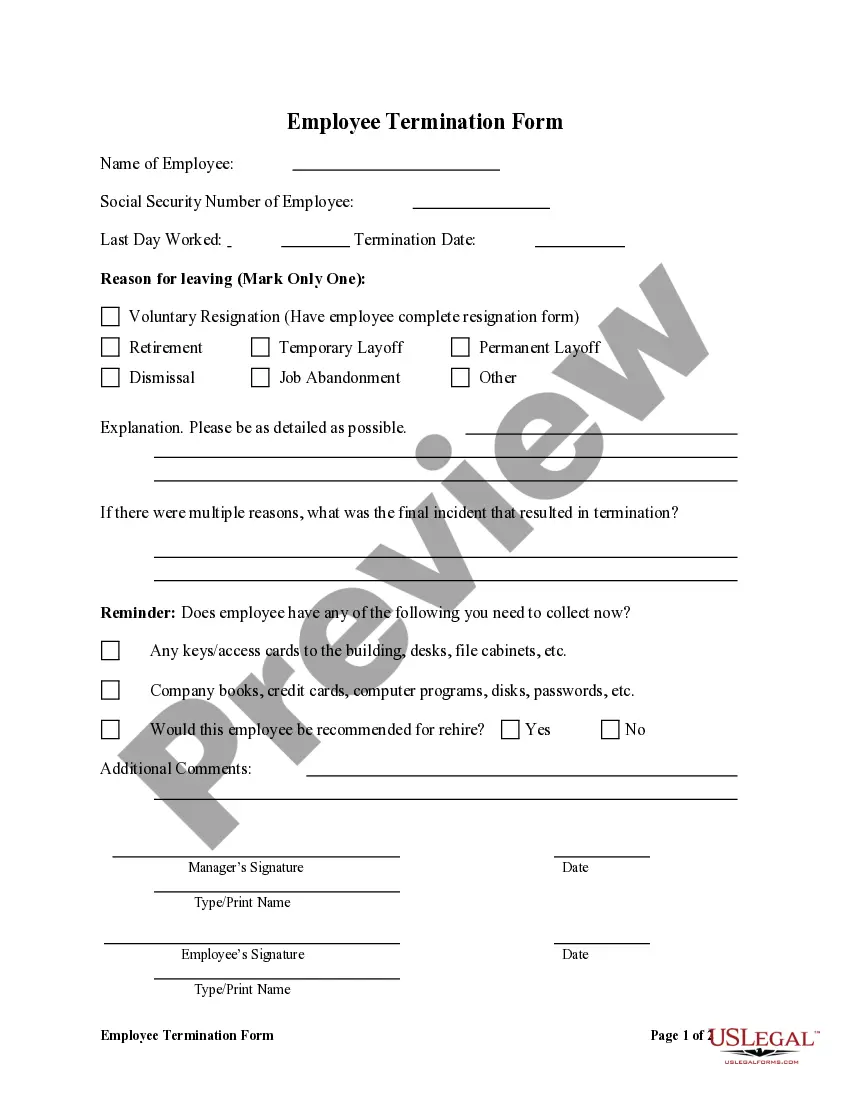
How to fill out Termination Review Form?
- Log into your existing account on the US Legal Forms website and verify your subscription status. If it's expired, you can easily renew it in accordance with your payment plan.
- For first-time users, begin by browsing our comprehensive library and use the Preview mode to evaluate the document that best suits your needs.
- If you don’t find the right form, utilize the Search tab to quickly navigate to other templates that may be necessary for your situation.
- Once you have selected an appropriate document, proceed to click the Buy Now button and choose your desired subscription plan while registering your account.
- Complete your purchase using your credit card or PayPal account and ensure you securely submit your payment.
- Finally, download the form directly onto your device. You can find access to your saved documents anytime in the My Forms section of your account.
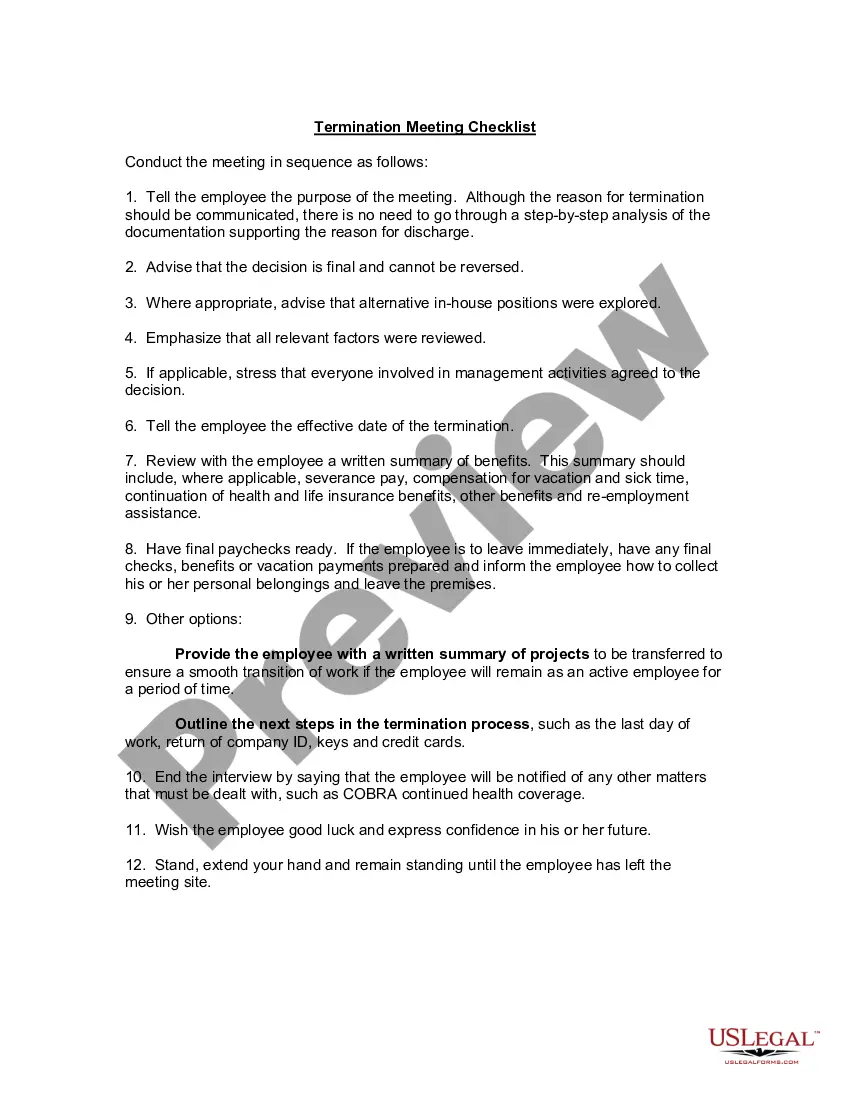
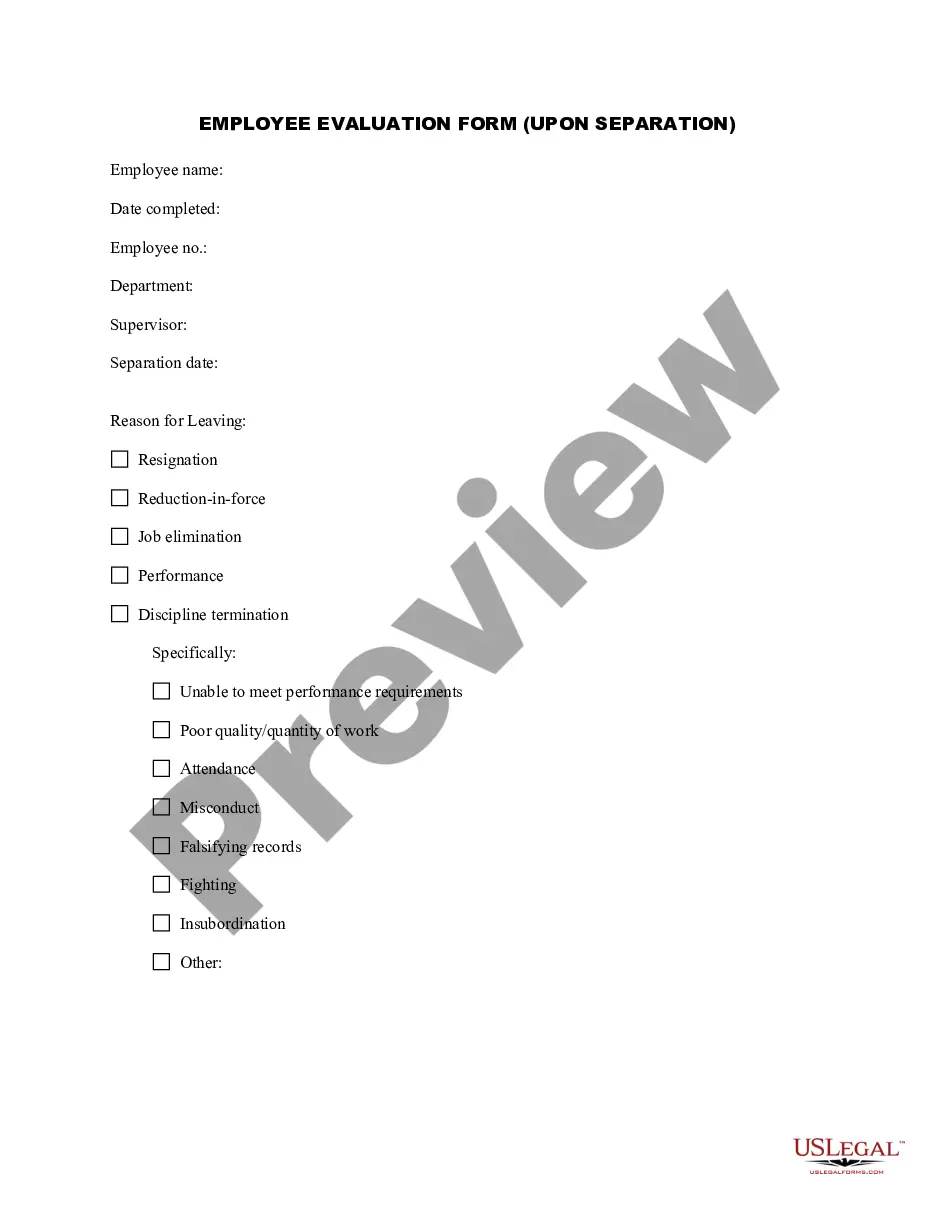
By following these steps, you can conveniently obtain crucial termination and resignation documents through US Legal Forms, simplifying the often complex legal processes.
Start your journey towards hassle-free legal documentation today by visiting US Legal Forms!
Form popularity
FAQ
It is typically better to quit a job rather than get fired. Quitting allows you to leave on your own terms, which can reflect positively on your work history. In the context of termination and resignation, resigning can help you negotiate your next steps while preserving your professional image. If you're considering this decision, think about using a platform like USLegalForms to guide you through the resignation process smoothly.
Generally, it's better to resign than to be dismissed. Choosing resignation indicates that you are taking control of your situation, which can impress future employers. In matters of termination and resignation, resigning may help you avoid the negative stigma that can accompany being fired. However, ensure that your decision aligns with your career goals and financial situation.
Yes, you can ask to resign instead of being fired. Many individuals prefer to resign, as it often allows them to maintain a positive reputation. When considering termination and resignation, a voluntary resignation can help you leave on your own terms. It can also open doors for future employment opportunities, as potential employers may view your choice to resign more favorably.
Receiving a termination letter can feel daunting, but it is not necessarily a reflection of your worth as an employee. It outlines your dismissal formally, which can sometimes be part of the process, especially for legal clarity. Understanding your rights through services offered by platforms like uslegalforms can provide you peace of mind in understanding the implications of such letters.
If you provide a two weeks' notice and are subsequently terminated, it typically voids your notice period. In this case, your employer may choose to release you immediately without needing to honor your notice. It’s essential to understand the implications on your benefits and final paycheck when facing termination after notice.
Yes, you can ask to resign in lieu of being terminated, depending on your workplace dynamics. This request can present you as proactive and responsible, which may reflect positively on you. Using legal resources, like those from uslegalforms, can help you navigate this conversation effectively.
Deciding whether to resign before potential dismissal requires careful consideration. Resigning may protect your reputation, whereas being dismissed can leave a negative mark on your employment history. We recommend evaluating your options thoroughly to determine which path aligns with your professional goals.
The choice between saying 'resign' or 'quit' can shape how others perceive your decision. Using 'resign' conveys professionalism and a thoughtful exit, while 'quit' can imply a sudden or unfavorable choice. Since termination and resignation are closely tied to how you leave a job, it’s important to choose your words carefully.
In most cases, it is generally better to resign rather than face termination. Resigning allows you to maintain a level of professional dignity, and it can prevent negative impacts on your reputation. It also provides you with the opportunity to explain your departure in a way that highlights your positive choices.
Termination and resignation are not the same. Termination is when an employer ends your employment, often for specific reasons. In contrast, resignation is a voluntary decision by you to leave your job. Understanding this difference is crucial for your career planning and future opportunities.