Hourly Employee Exempt From Overtime
Description
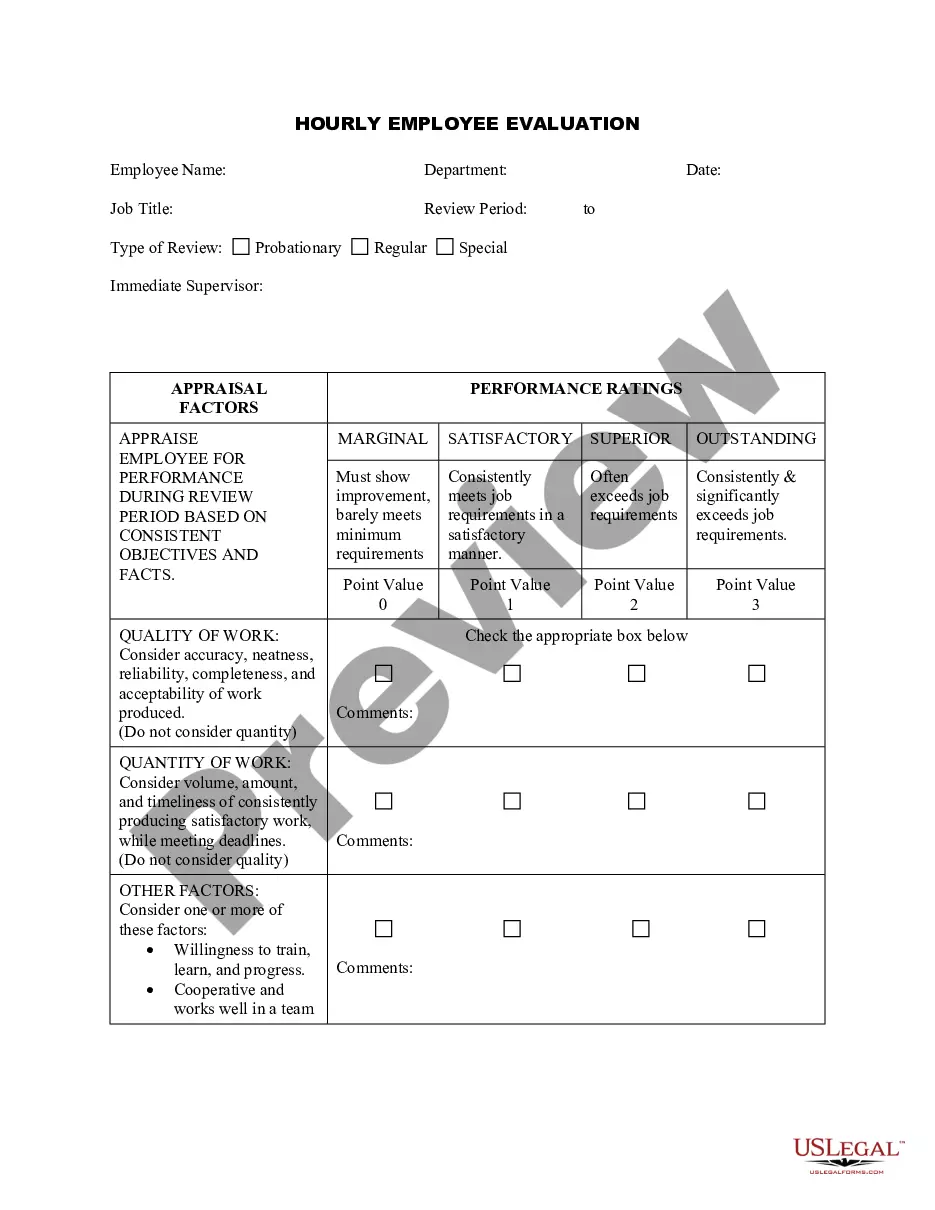
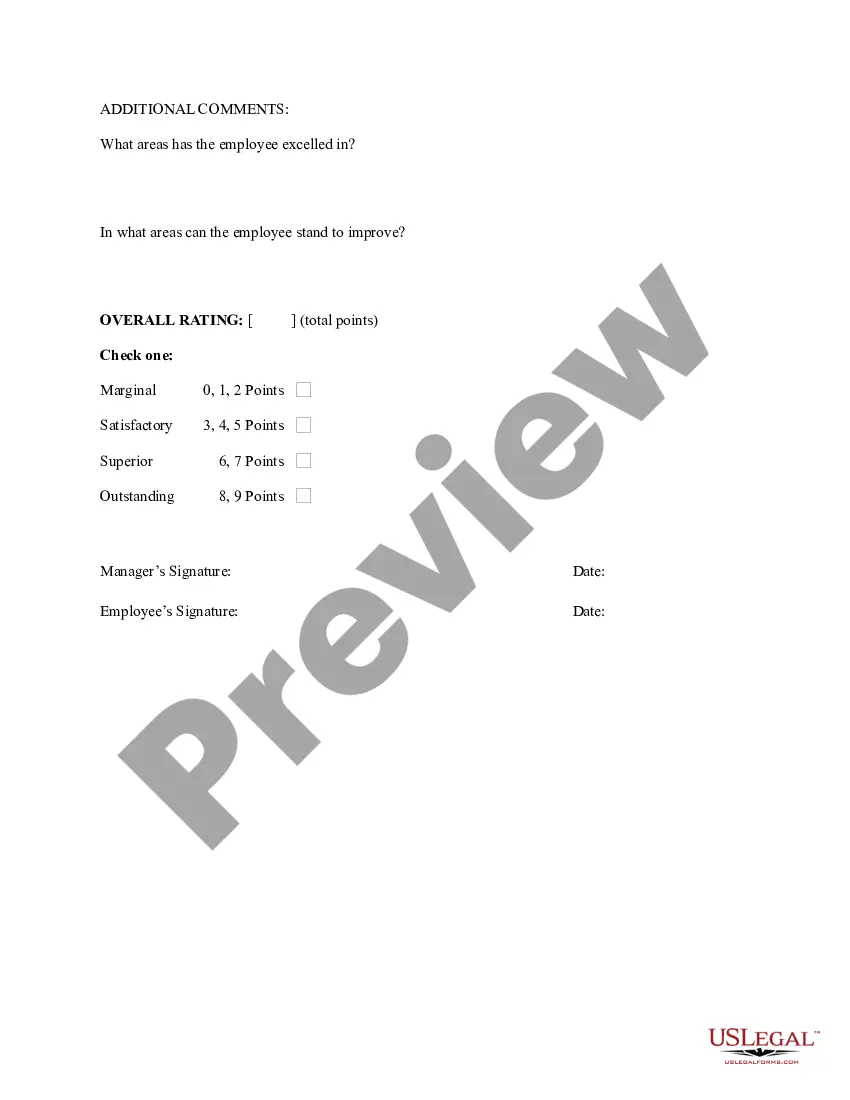
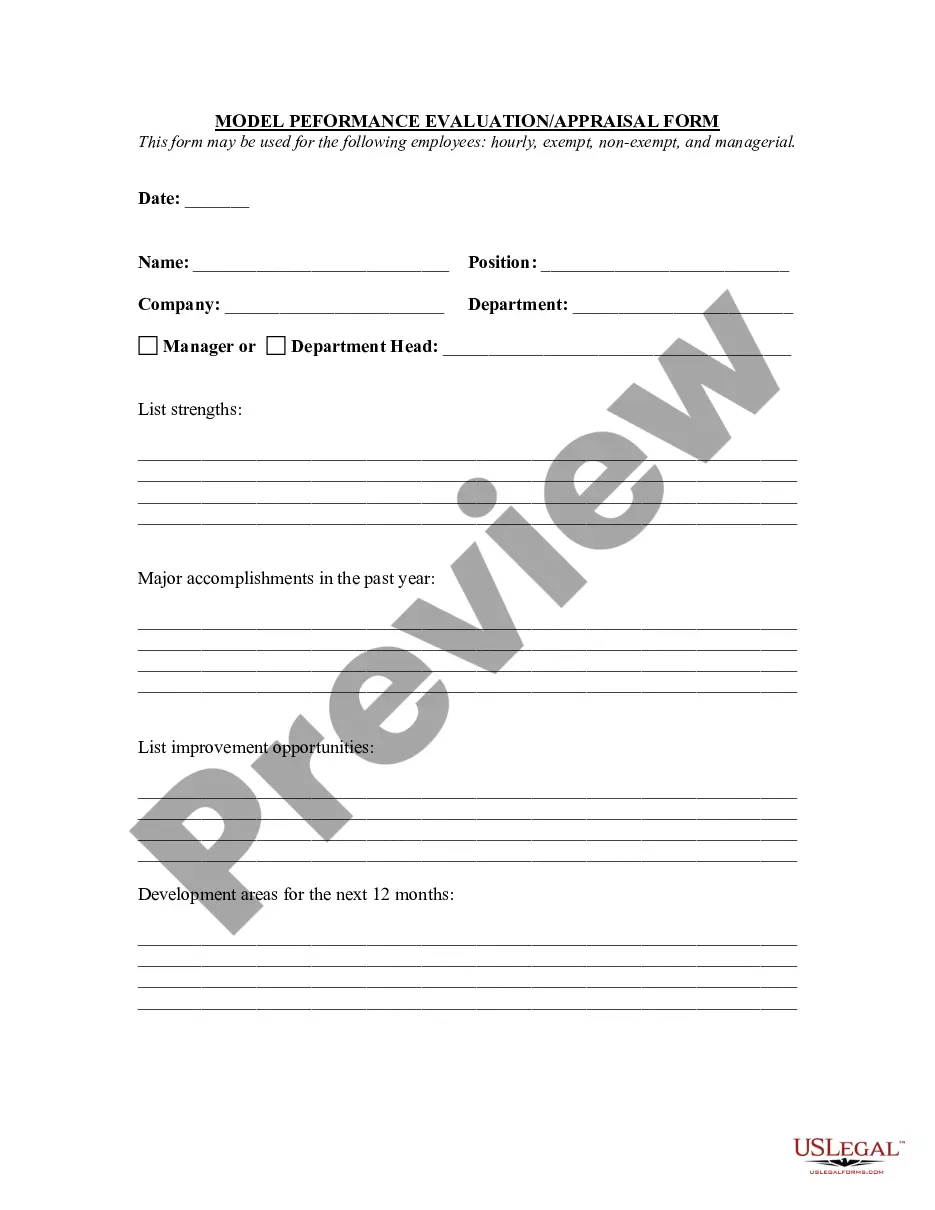
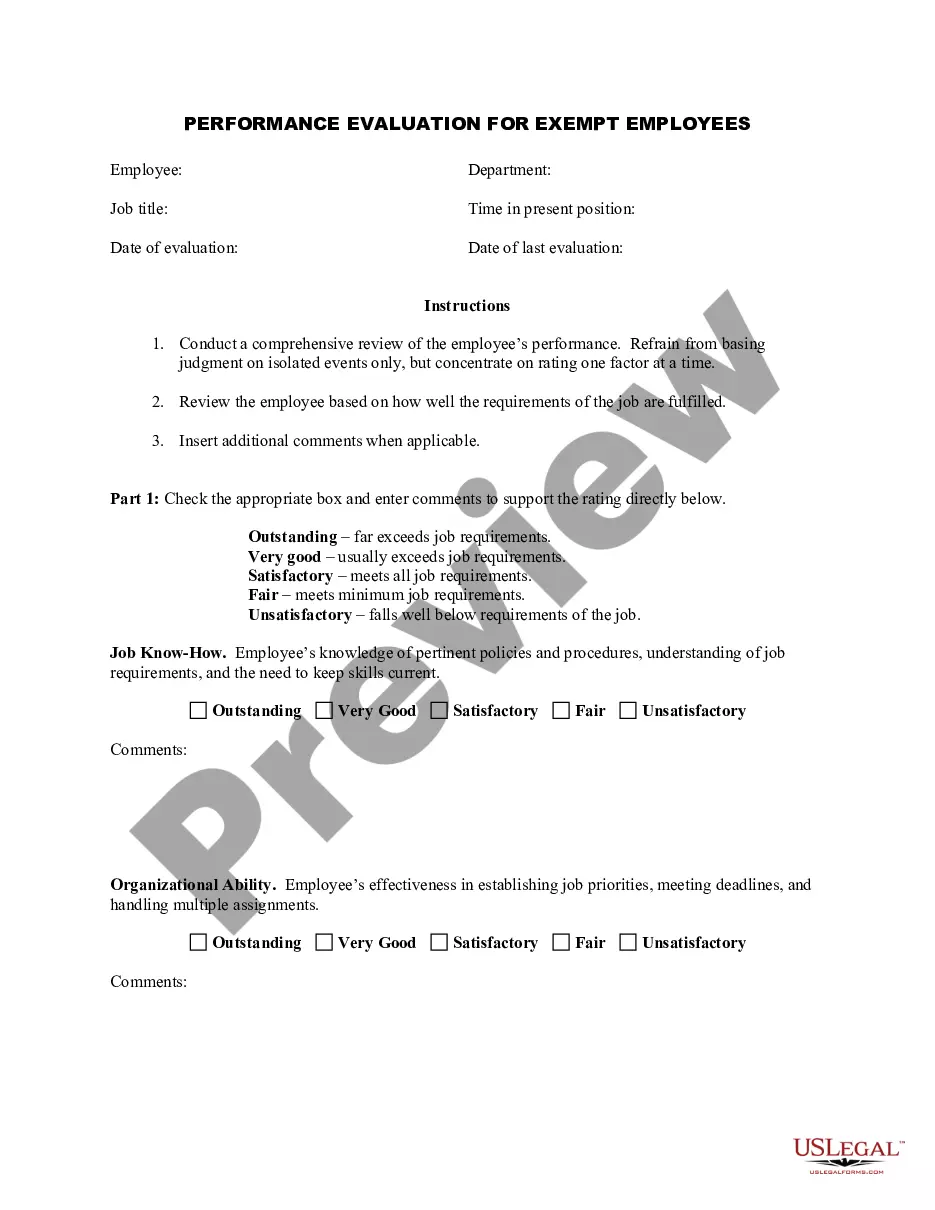
Get your form ready online
Our built-in tools help you complete, sign, share, and store your documents in one place.
Make edits, fill in missing information, and update formatting in US Legal Forms—just like you would in MS Word.
Download a copy, print it, send it by email, or mail it via USPS—whatever works best for your next step.
Sign and collect signatures with our SignNow integration. Send to multiple recipients, set reminders, and more. Go Premium to unlock E-Sign.
If this form requires notarization, complete it online through a secure video call—no need to meet a notary in person or wait for an appointment.
We protect your documents and personal data by following strict security and privacy standards.

Make edits, fill in missing information, and update formatting in US Legal Forms—just like you would in MS Word.

Download a copy, print it, send it by email, or mail it via USPS—whatever works best for your next step.

Sign and collect signatures with our SignNow integration. Send to multiple recipients, set reminders, and more. Go Premium to unlock E-Sign.

If this form requires notarization, complete it online through a secure video call—no need to meet a notary in person or wait for an appointment.

We protect your documents and personal data by following strict security and privacy standards.
Looking for another form?


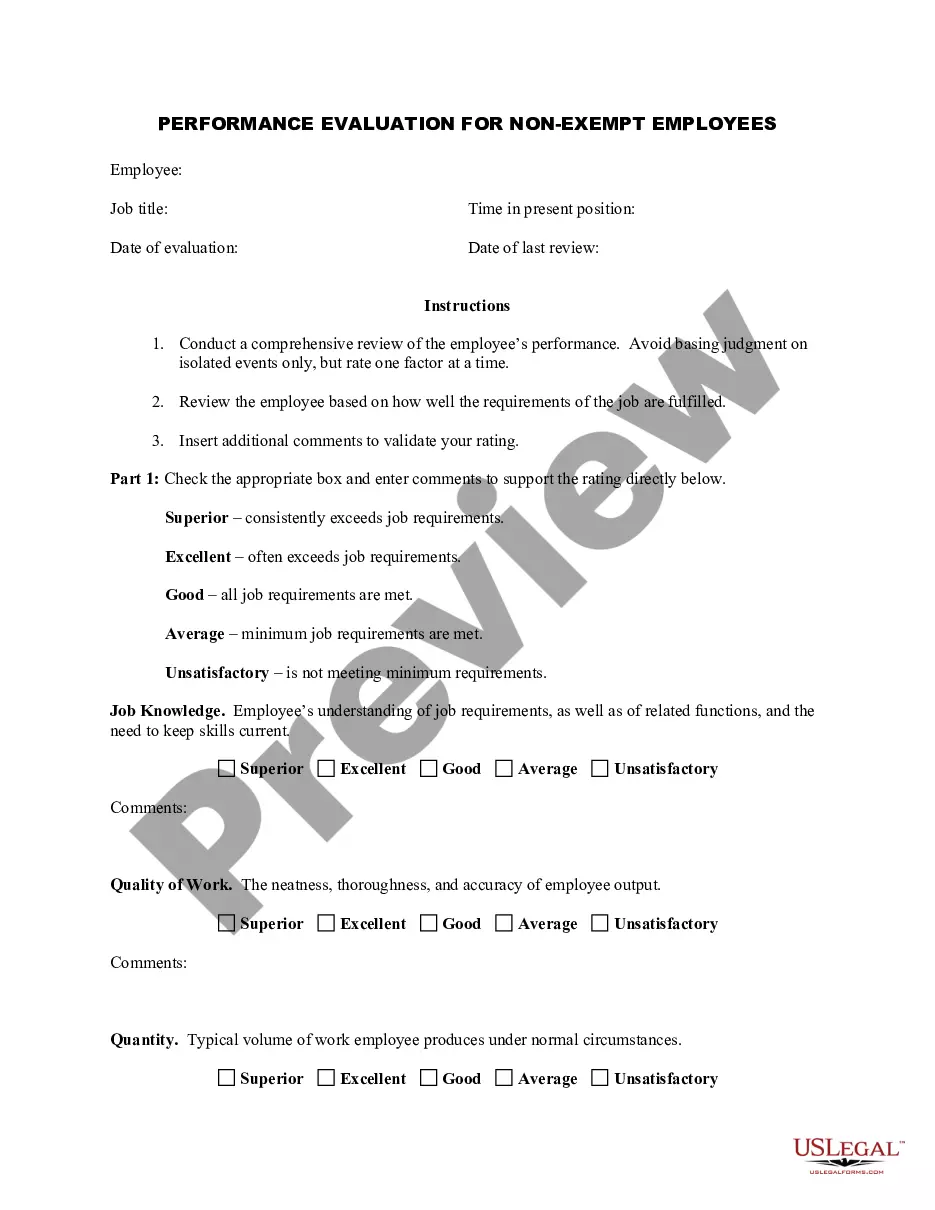
How to fill out Hourly Employee Evaluation?
Whether for corporate reasons or for personal matters, everyone must confront legal circumstances at some stage in their lifetime. Completing legal documentation necessitates meticulous care, starting from selecting the appropriate form template.
For example, if you select an incorrect version of a Hourly Employee Exempt From Overtime, it will be rejected upon submission. Thus, it is crucial to have a trustworthy source of legal documents like US Legal Forms.
With an extensive US Legal Forms catalog available, you will never need to waste time searching for the suitable sample online. Take advantage of the library’s straightforward navigation to locate the correct form for any situation.
- Obtain the sample you require by utilizing the search box or catalog navigation.
- Review the form’s description to ensure it aligns with your situation, state, and county.
- Select the form’s preview to examine it.
- If it is not the correct document, return to the search feature to find the Hourly Employee Exempt From Overtime sample you require.
- Acquire the template if it fulfills your needs.
- If you already possess a US Legal Forms account, simply click Log in to access previously saved documents in My documents.
- If you do not have an account yet, you can obtain the form by clicking Buy now.
- Select the appropriate pricing option.
- Fill out the profile registration form.
- Select your payment method: use a credit card or PayPal account.
- Choose the file format you prefer and download the Hourly Employee Exempt From Overtime.
- Once it is saved, you can complete the form using editing software or print it and fill it out manually.
Form popularity
FAQ
Exempt employee overtime Employees may be considered exempt if they are paid a salary, earn at least $684 per week or $35,568 annually, and perform the job duties of one of the exempt professions (administrative, executive, etc.).
Exempt staff are paid semi-monthly and are exempt from the overtime provisions of the state and federal wage and hour laws. Under special circumstances, supervisors and managers have the discretion to grant time off with pay (?flex time?) to exempt staff that have worked substantial extra hours in any given work week.
If you work a regular, 40-hour work week without an employment contract, you are probably non-exempt. No matter what your job title is, if you earn less than $913/week (gross), you are non-exempt. If you are not an executive, or an administrative or professional employee, you are probably non-exempt.
Exempt employees are paid a salaried amount and aren't entitled to overtime pay, and their labor is considered to be higher skilled. Nonexempt employees are paid hourly and are entitled to overtime pay, and their labor is considered manual or less skilled.
Under the FLSA, white-collar exemptions can apply to executive, administrative, professional, outside sales and certain computer-related positions. The worker must be paid on a salary basis, and the worker's primary job duties must satisfy the legal requirements for an exemption under the corresponding job category.