Performance Work
Description
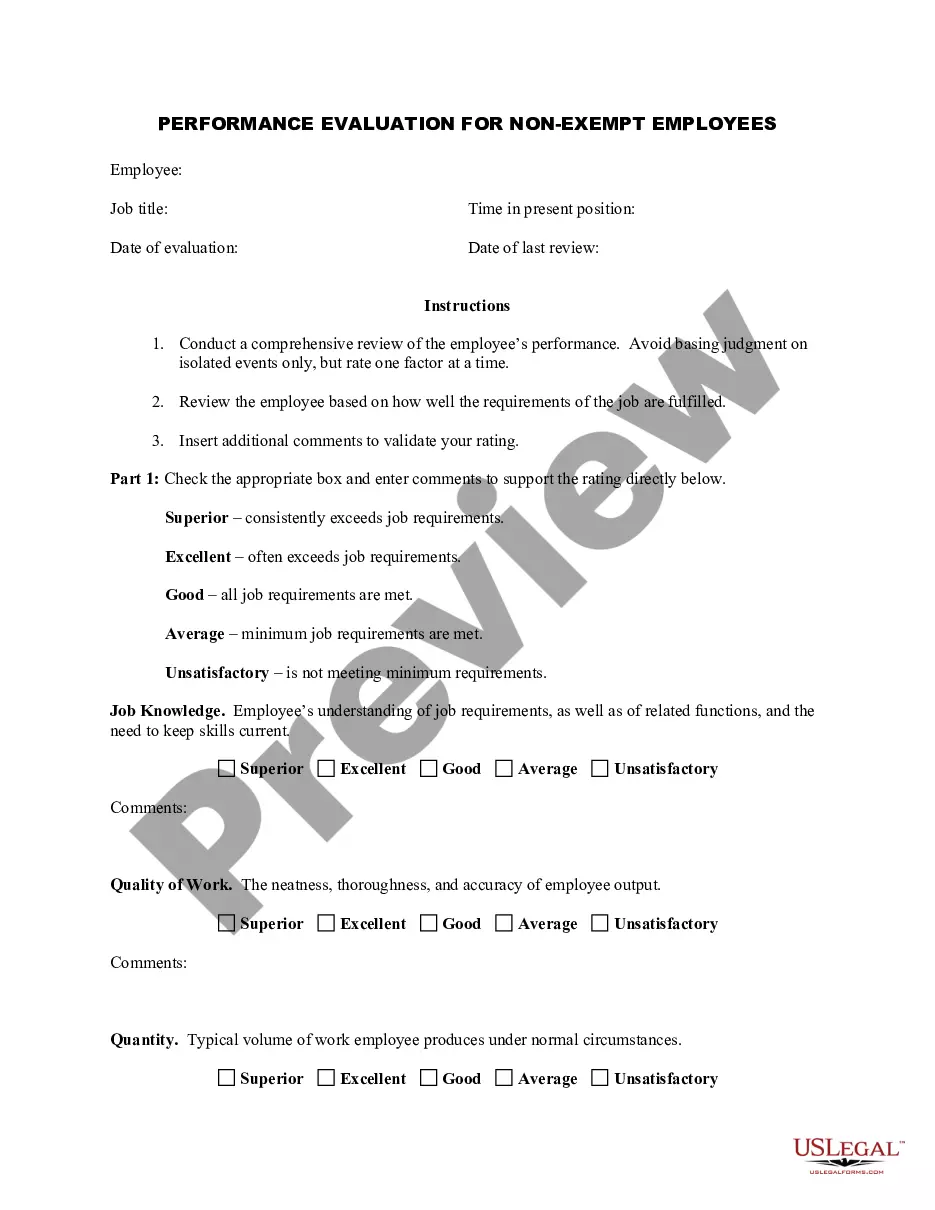
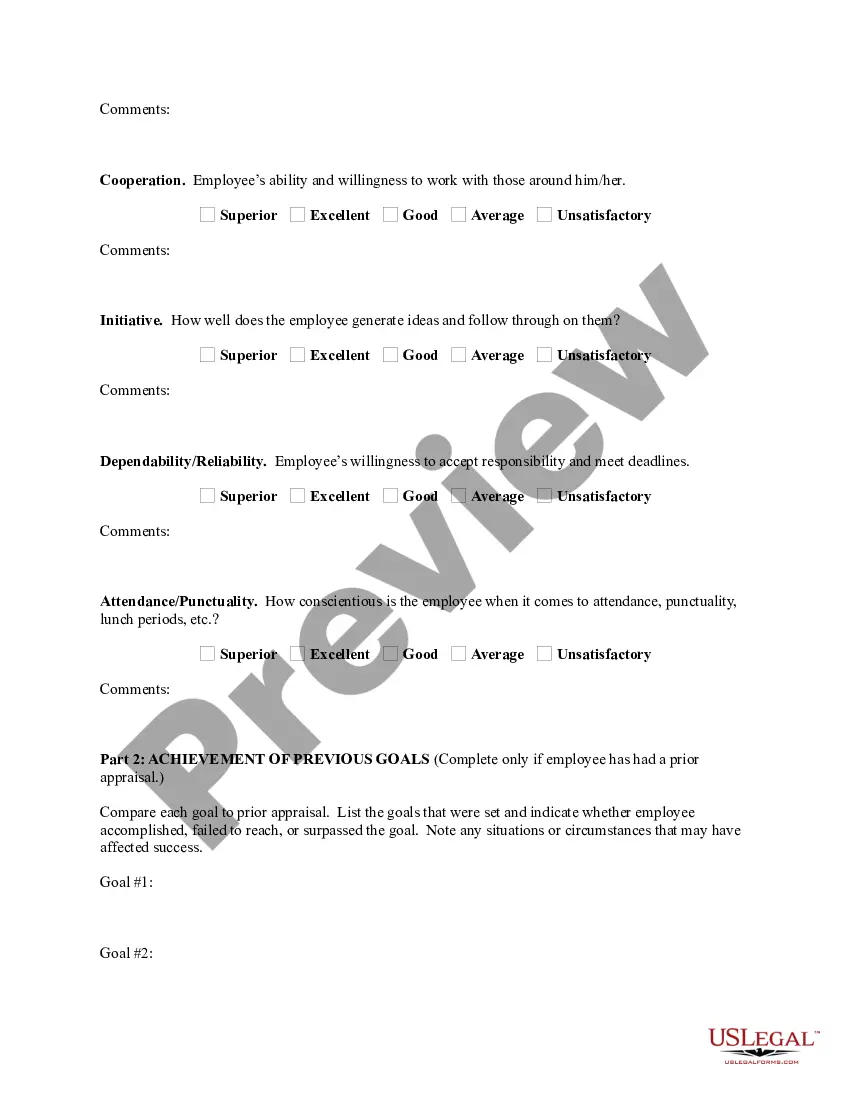
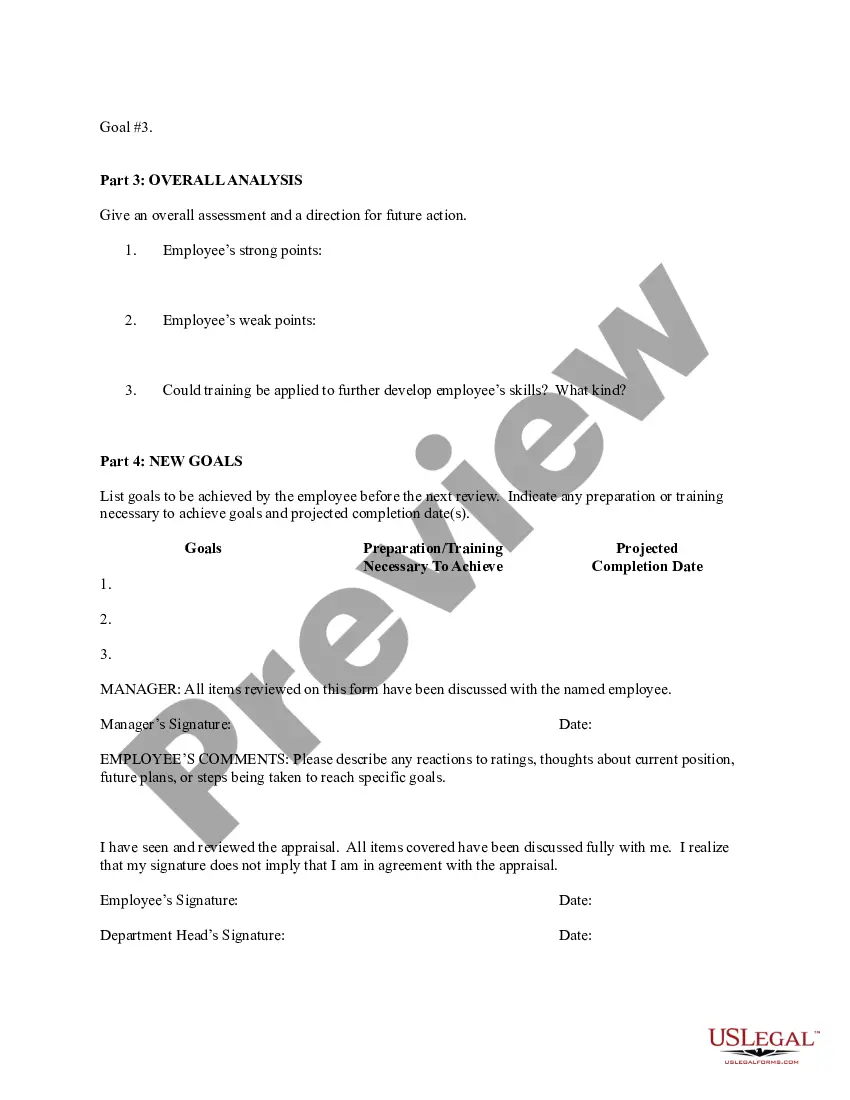
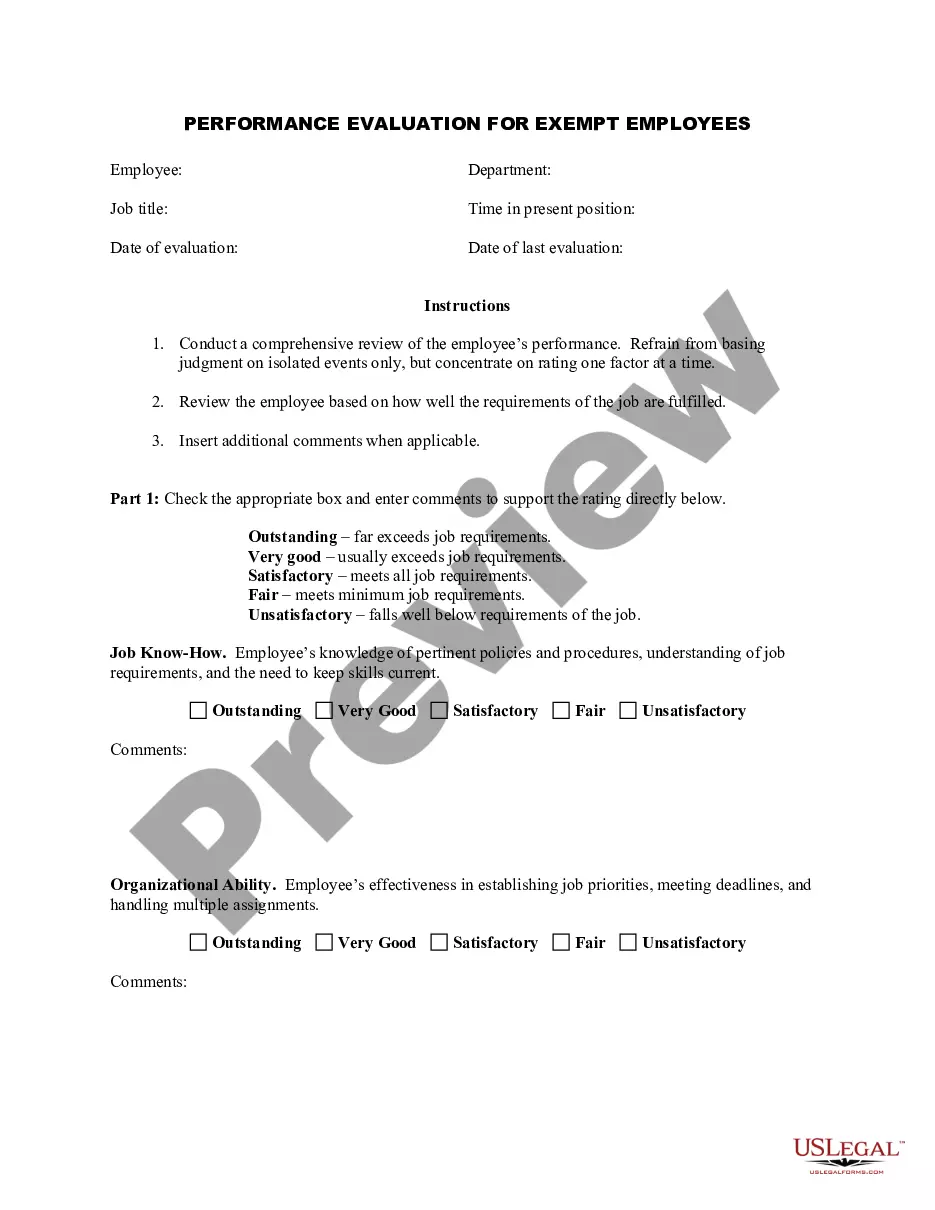
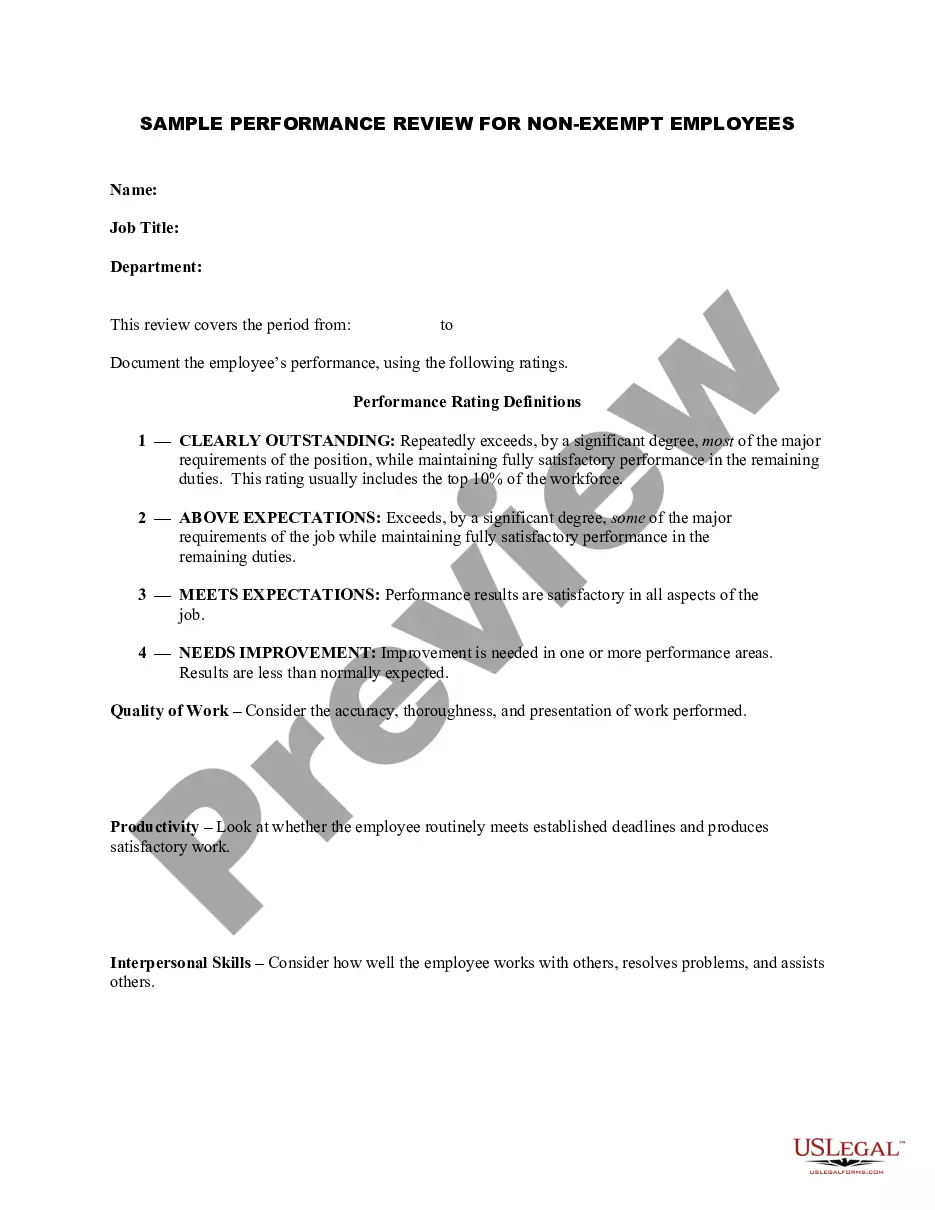
How to fill out Performance Evaluation For Nonexempt Employees?
- If you are a returning user, log in to your account and download your needed form by clicking the 'Download' button. Verify that your subscription is active; if not, renew as per your payment plan.
- For first-time users, start by reviewing the Preview mode and form descriptions. Ensure the selected form aligns with your needs and complies with local jurisdictional requirements.
- If necessary, utilize the Search tab for alternative templates if the current one doesn't meet your requirements.
- Proceed to purchase the document by clicking 'Buy Now' and selecting the subscription plan that suits you. You'll need to create an account to access the full library.
- Finalize your purchase by entering your credit card information or logging in with your PayPal account to secure your subscription.
- Download the form to your device, allowing for easy completion. Access it anytime in the My Forms section of your profile.
In conclusion, US Legal Forms is an invaluable resource for anyone seeking to handle performance work efficiently. With a vast array of legal forms and expert support, you can ensure all your documentation needs are met accurately.
Take control of your legal matters today by visiting US Legal Forms and experience the ease of creating legal documents.
Form popularity
FAQ
Filling out a performance report requires you to analyze your results against the key performance indicators set at the beginning of the review cycle. Be sure to provide context around achievements and challenges, highlighting your contributions to the overall performance work. Clear, concise reporting not only reflects your progress but also sets the stage for future improvements.
To fill out a performance management form, begin by gathering all relevant data related to your performance through the review period. Clearly articulate your strengths and areas needing enhancement, while also aligning your goals with team objectives. Utilizing a structured template can help you present your performance work logically and comprehensively.
An example of a performance improvement plan includes defining specific performance issues, such as not meeting sales targets, and setting clear, achievable goals for improvement. The plan should outline steps to enhance performance work, including training sessions, regular check-ins, and available resources. This structure helps create a successful roadmap for improvement.
While a Performance Improvement Plan (PIP) is designed to address performance issues, it may lead to termination if the employee does not meet the established improvement goals. However, it's crucial to view a PIP as an opportunity to improve your performance work through targeted support and feedback. Focus on your development during this time to increase your chances of success.
Filling out a performance improvement plan involves clearly identifying performance gaps and setting measurable objectives. Collaborate with your supervisor to outline specific actions, deadlines, and support needed to achieve these goals. This process reinforces your commitment to enhancing your performance work and fosters open communication.
To fill out your performance review effectively, start by reflecting on your achievements and areas for improvement during the review period. Use specific examples to highlight your contributions to team goals and company objectives. This approach not only helps in demonstrating your performance work but also encourages constructive feedback for future growth.
Creating a work performance report begins with gathering data on employee achievements and challenges over a specified period. Organize this information into sections, highlighting key performance indicators and trends. Utilize templates available on platforms like USLegalForms to streamline this process and ensure compliance with organizational standards.
To record work performance, utilize structured methods such as performance logs, evaluation forms, or software applications designed for performance tracking. Ensure that records are objective, consistent, and based on measurable outcomes. This approach helps in assessing and managing performance work efficiently.
Documenting work performance involves keeping detailed records of employee activities, achievements, and challenges. Use performance reviews and regular feedback sessions to record observations. Consistent documentation can serve as a valuable tool in evaluating performance work and identifying areas for improvement.
To report poor employee performance work, collect documentation that illustrates the issues, such as attendance records or completed tasks. Speak with your supervisor or HR department to understand the reporting process within your organization. Clear and factual reporting helps create a solid foundation for any necessary actions.