Performance Evaluations
Description
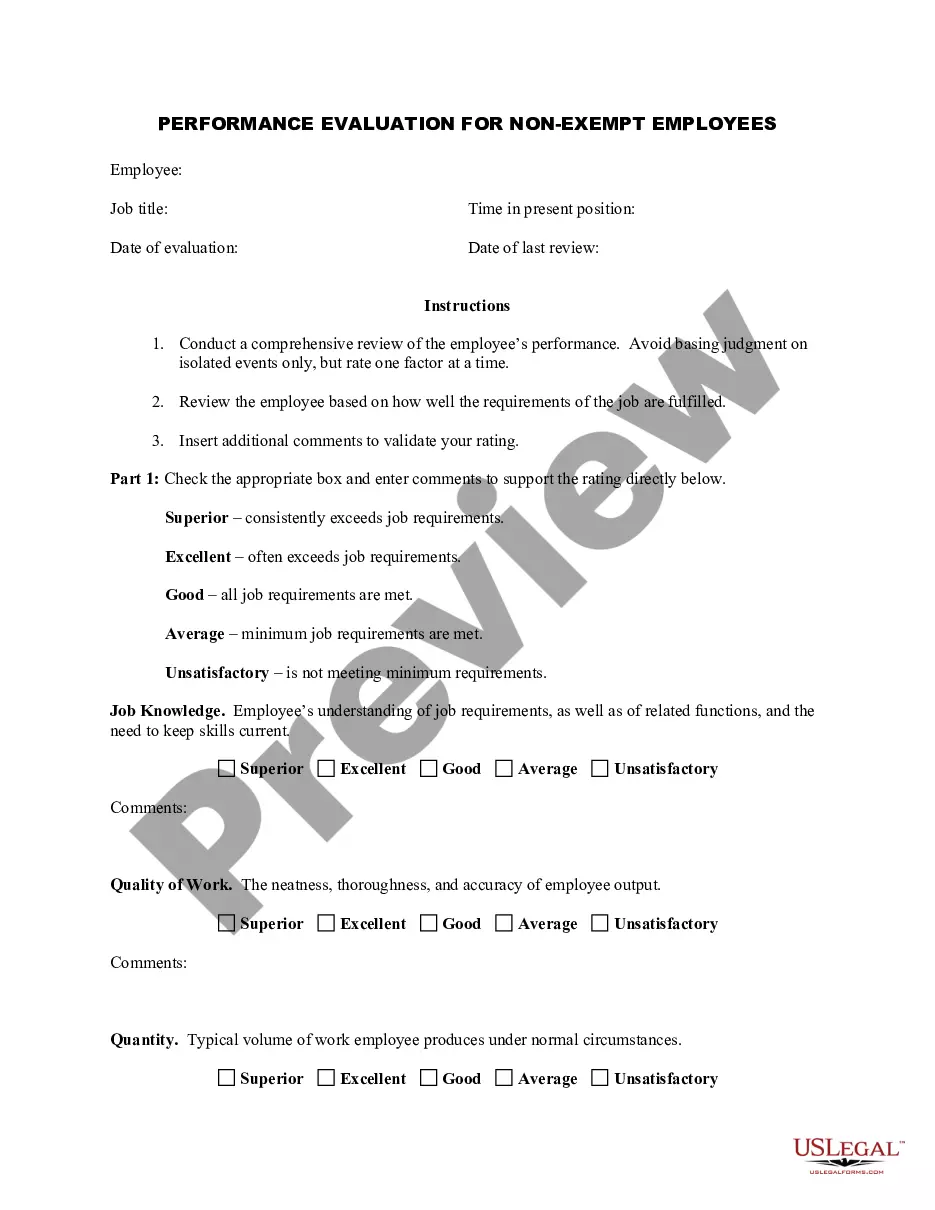
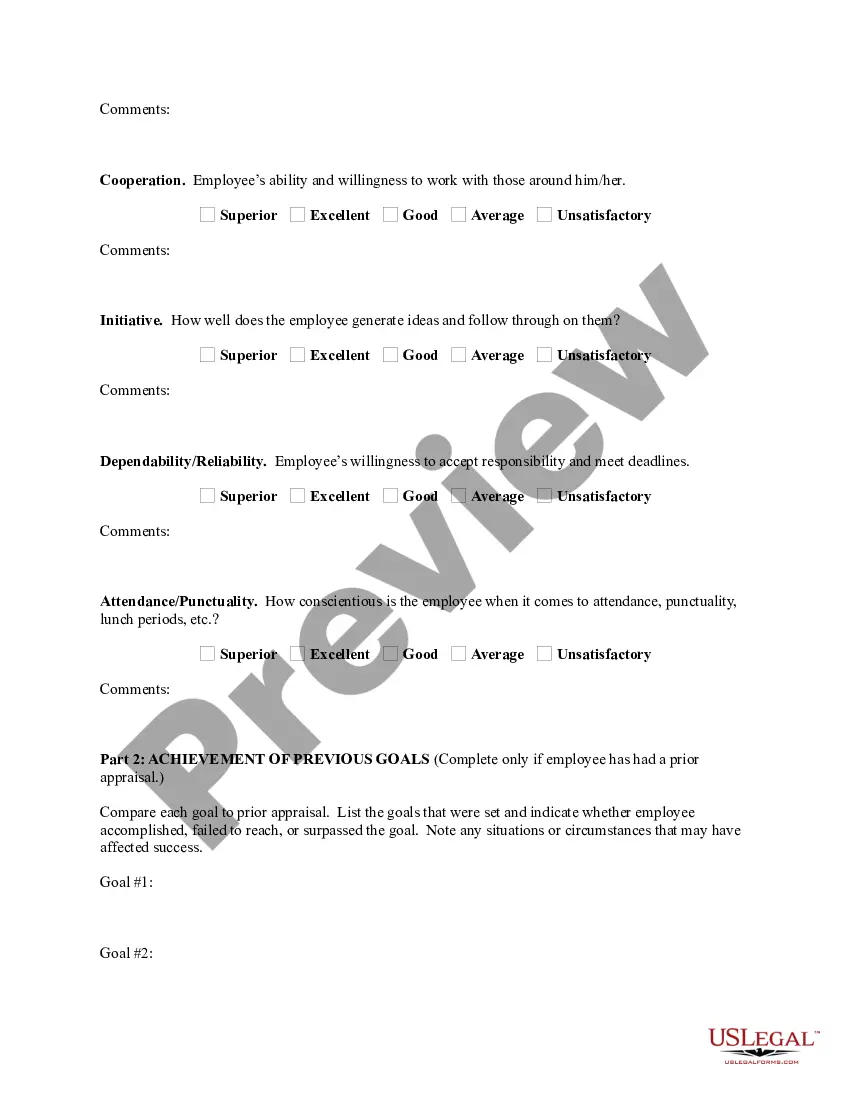
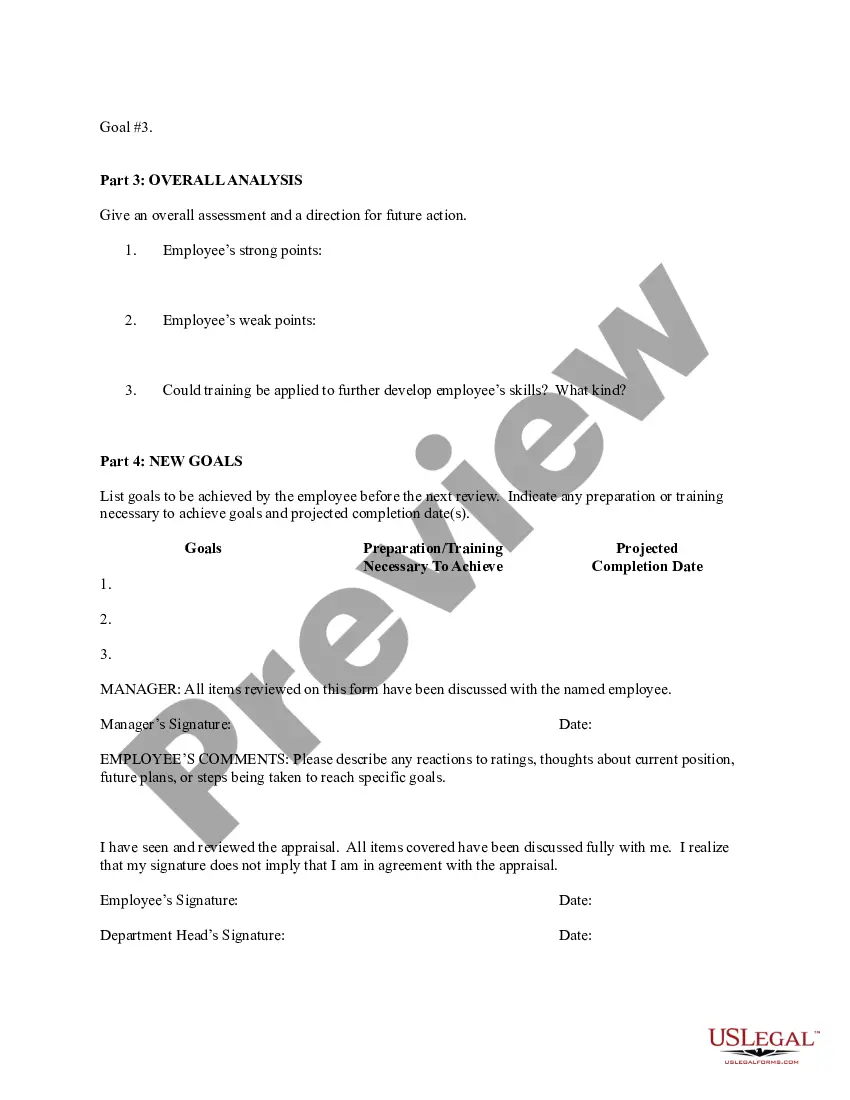
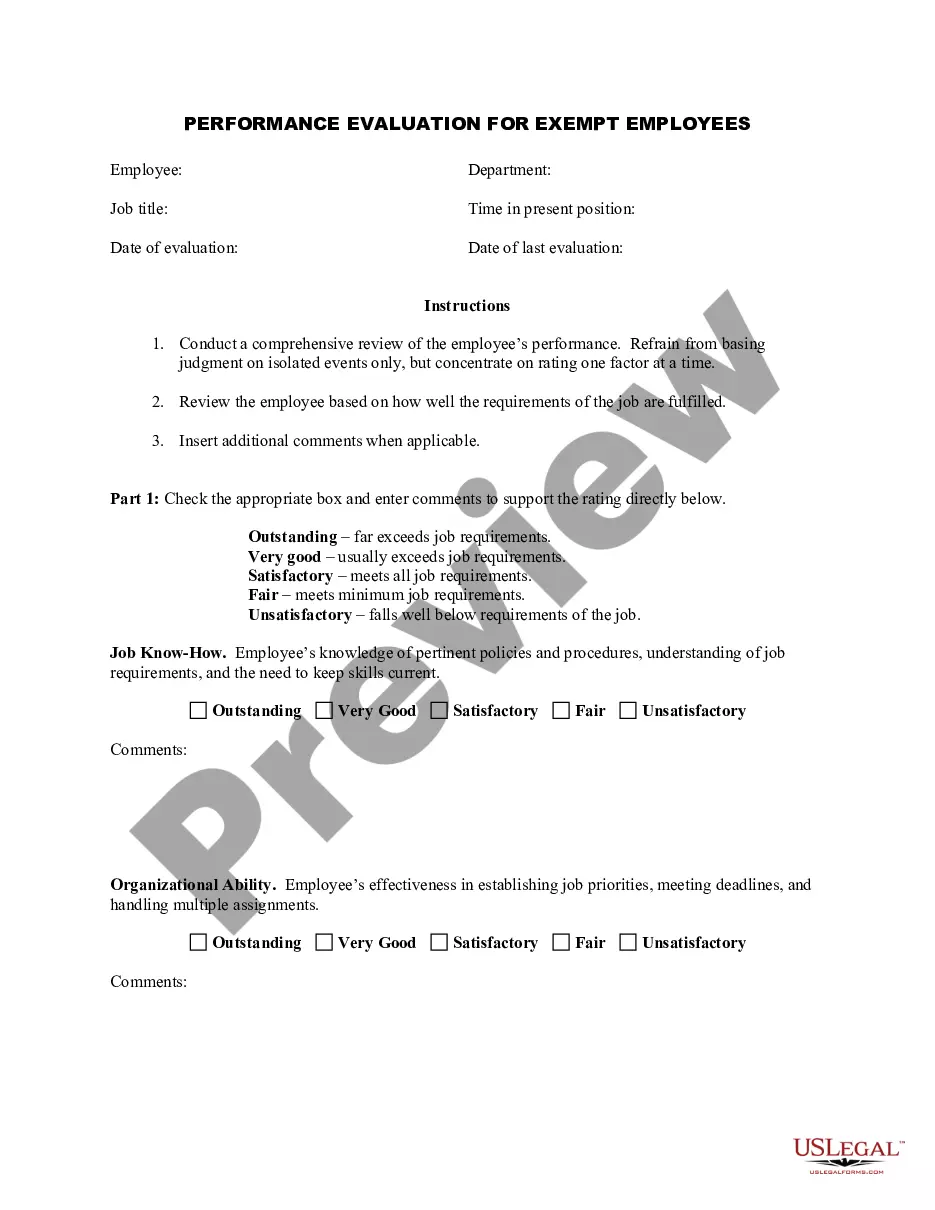
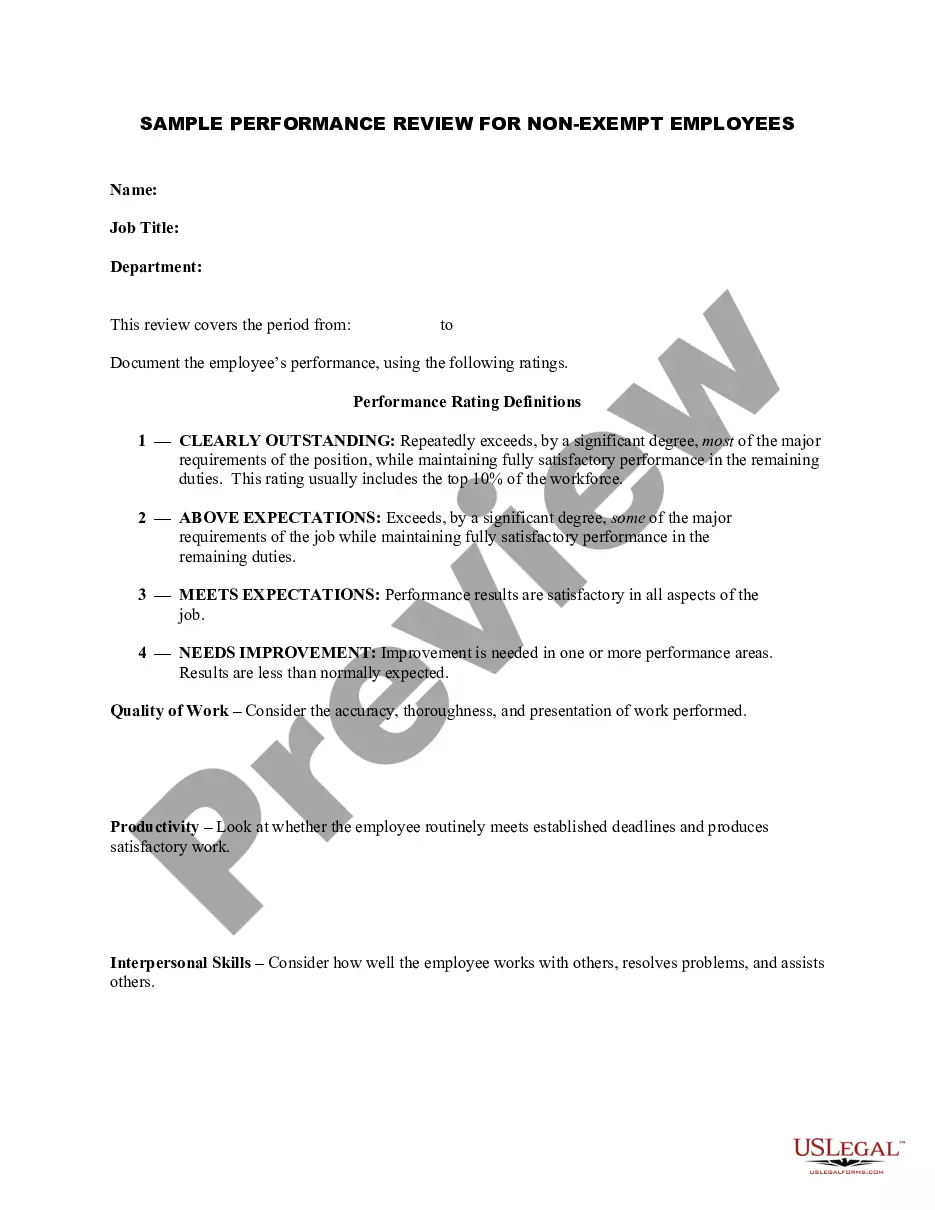

How to fill out Performance Evaluation For Nonexempt Employees?
- Log in to your US Legal Forms account if you are a returning user, ensuring to check your subscription validity first.
- If you are a new user, first explore the Preview mode to review the form details and confirm it matches your requirements and jurisdiction.
- If necessary, utilize the Search feature to find alternative templates that better suit your needs.
- Purchase the selected document by clicking the Buy Now button and choose your preferred subscription plan.
- Complete your payment by entering your credit card details or using your PayPal account.
- Download your completed form and save it on your device. Access it anytime from the My Forms section of your profile.
In conclusion, US Legal Forms provides users with a vast selection of performance evaluation templates and easy access to legal forms that empower both individuals and attorneys. Whether you need help with completion or have specific requirements, the platform is designed to facilitate a seamless experience.
Take advantage of the extensive resources available and streamline your documentation process today!
Form popularity
FAQ
Performance evaluation examples can range from peer reviews to self-assessments. For instance, using a standardized form that rates various skills can provide structure to the evaluation. Another example includes 360-degree feedback, where input comes from multiple sources, offering diverse perspectives. Utilizing tools like USLegalForms can streamline this process, ensuring all aspects of performance evaluations are covered effectively.
Five essential words often associated with performance reviews include 'feedback,' 'goals,' 'progress,' 'development,' and 'communication.' These terms highlight the critical components of any performance evaluation process. They emphasize the importance of open dialogue and a shared understanding of expectations. Incorporating these concepts into performance evaluations can lead to more effective employee engagement.
A good work performance evaluation includes honest feedback, acknowledgment of strengths, and constructive suggestions for improvement. It’s important that this evaluation is based on measurable criteria and specific examples rather than generalizations. The aim is to provide a balanced view that facilitates employee development. Effective performance evaluations can drive both individual and organizational growth.
Performance evaluations often use a five-level system to categorize employee performance, typically ranging from 'Unsatisfactory' to 'Outstanding.' This scale helps set clear expectations and provides a framework for assessing performance. Employees can understand where they stand and what it takes to reach the next level. Such clarity can enhance motivation and direct performance evaluations effectively.
During your performance evaluation, clearly express your accomplishments and the challenges you faced. It is beneficial to outline specific projects and the skills you applied to achieve success. Additionally, consider areas where you seek further development, as this shows a commitment to growth. This dialogue serves as a crucial part of performance evaluations, fostering productive discussions about your career path.
A performance assessment often includes a structured conversation between an employee and their manager. It might focus on specific goals, achievements, and areas needing improvement. For instance, when evaluating sales performance, a manager could review sales figures alongside customer feedback to provide a well-rounded assessment. This approach facilitates clear communication about the employee’s contributions and helps guide future performance evaluations.
To politely ask for an appraisal, approach your manager with a positive attitude and express your interest in understanding your performance. Frame it as an opportunity for personal and professional development. Convey that you value their feedback, and this appreciation can lead to constructive performance evaluations.
Yes, it is completely acceptable to ask for a performance review. Employees often seek performance evaluations to gain insights into their strengths and areas for improvement. It shows your dedication to professional development and enables better alignment with organizational goals.
To request a performance evaluation via email, write a concise and respectful message to your supervisor. State your intent clearly and include any specific topics you want to address in the review. This formalizes your request and ensures that the performance evaluations are conducted in a timely manner.
To achieve a positive performance review, focus on delivering consistent results and maintaining good relationships with colleagues. Proactively seek feedback throughout the year to identify areas for growth. Engaging in regular discussions about your goals and contributions can significantly enhance your performance evaluations.