Performance Evaluation For Employees Examples
Description
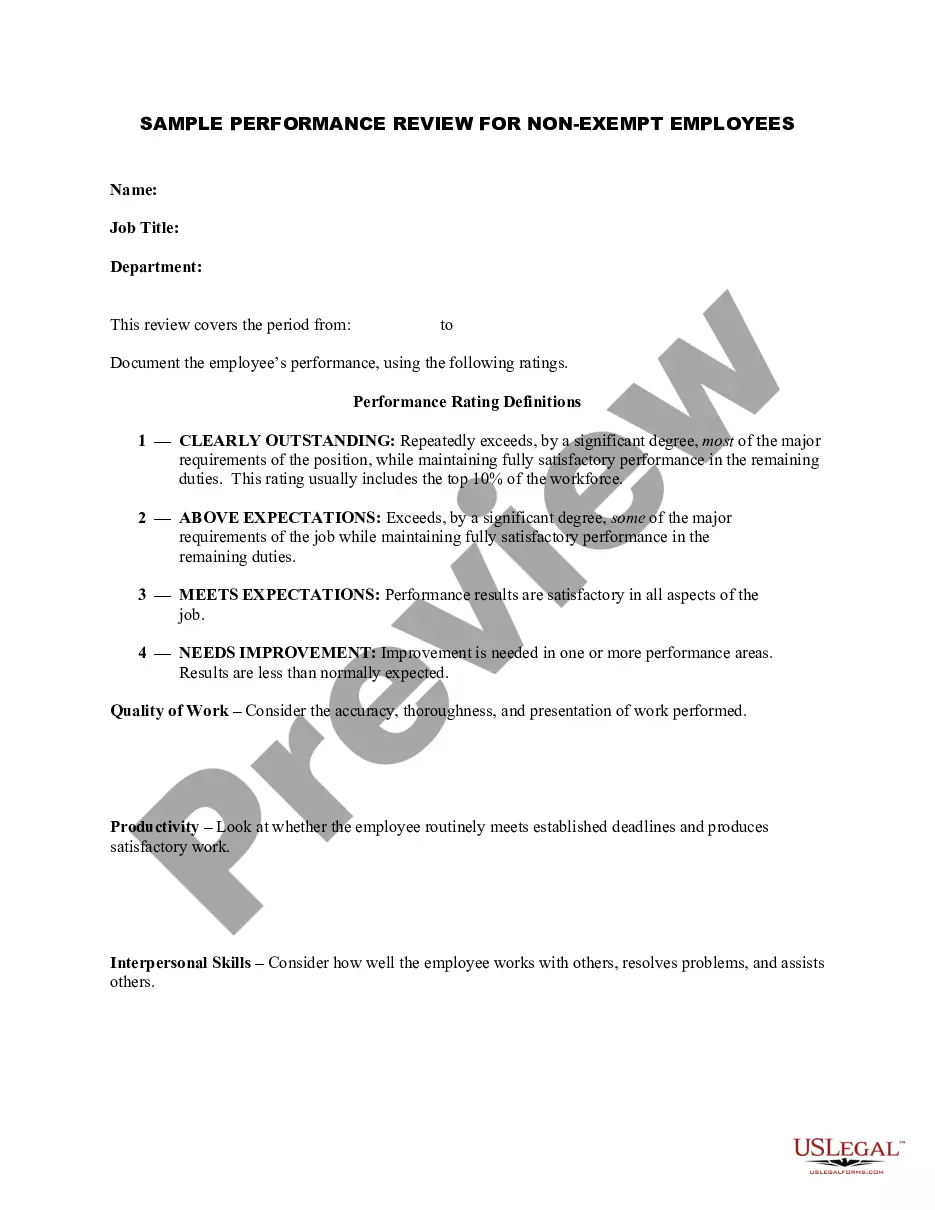
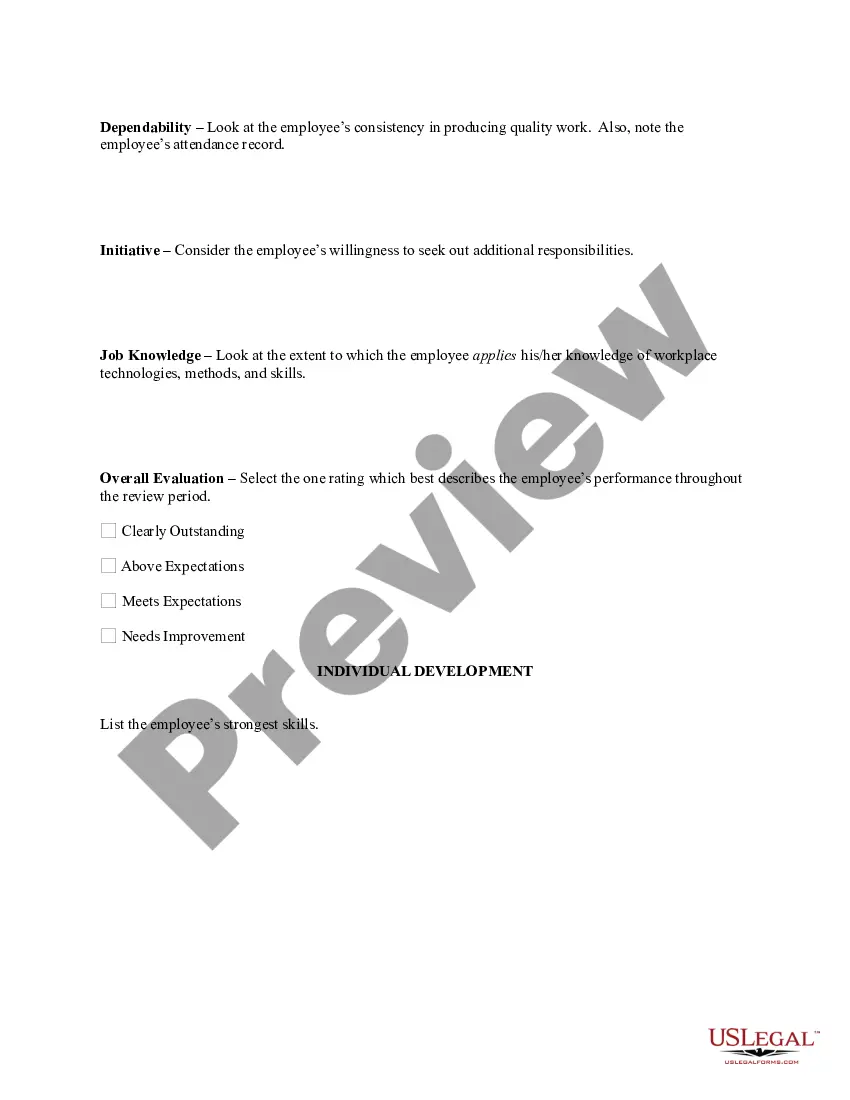
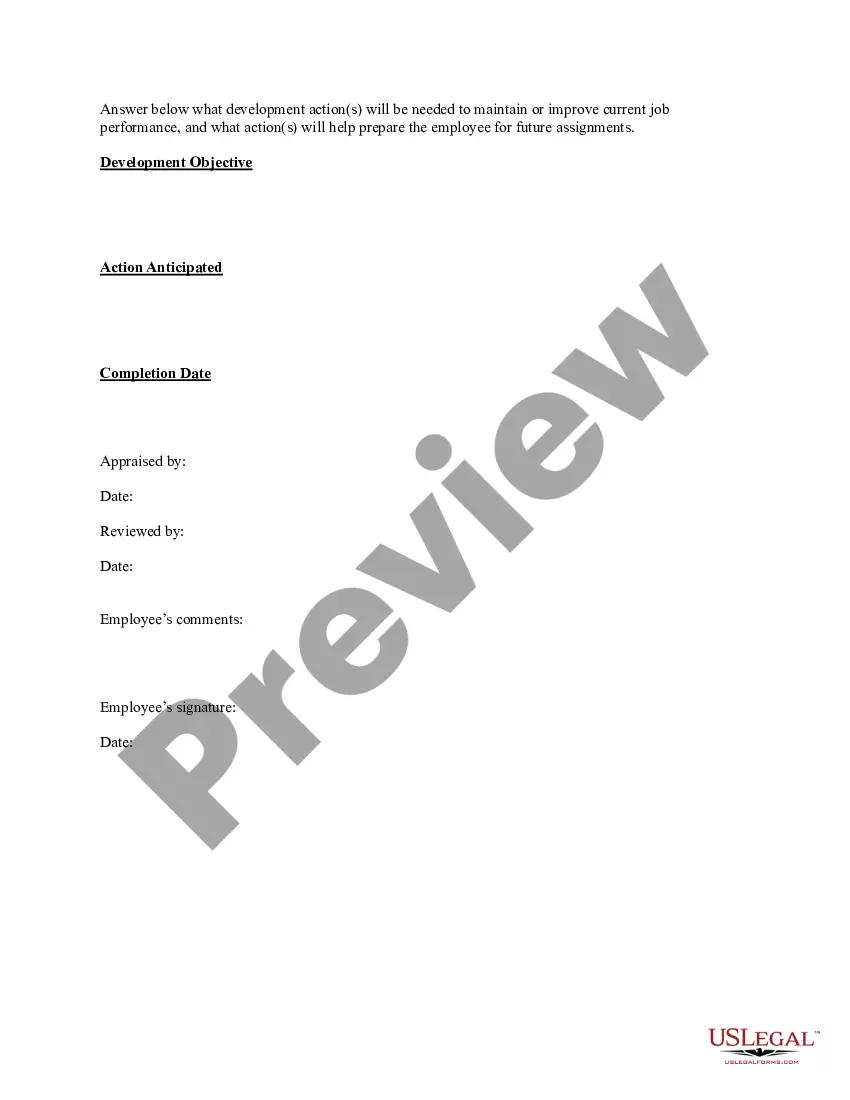
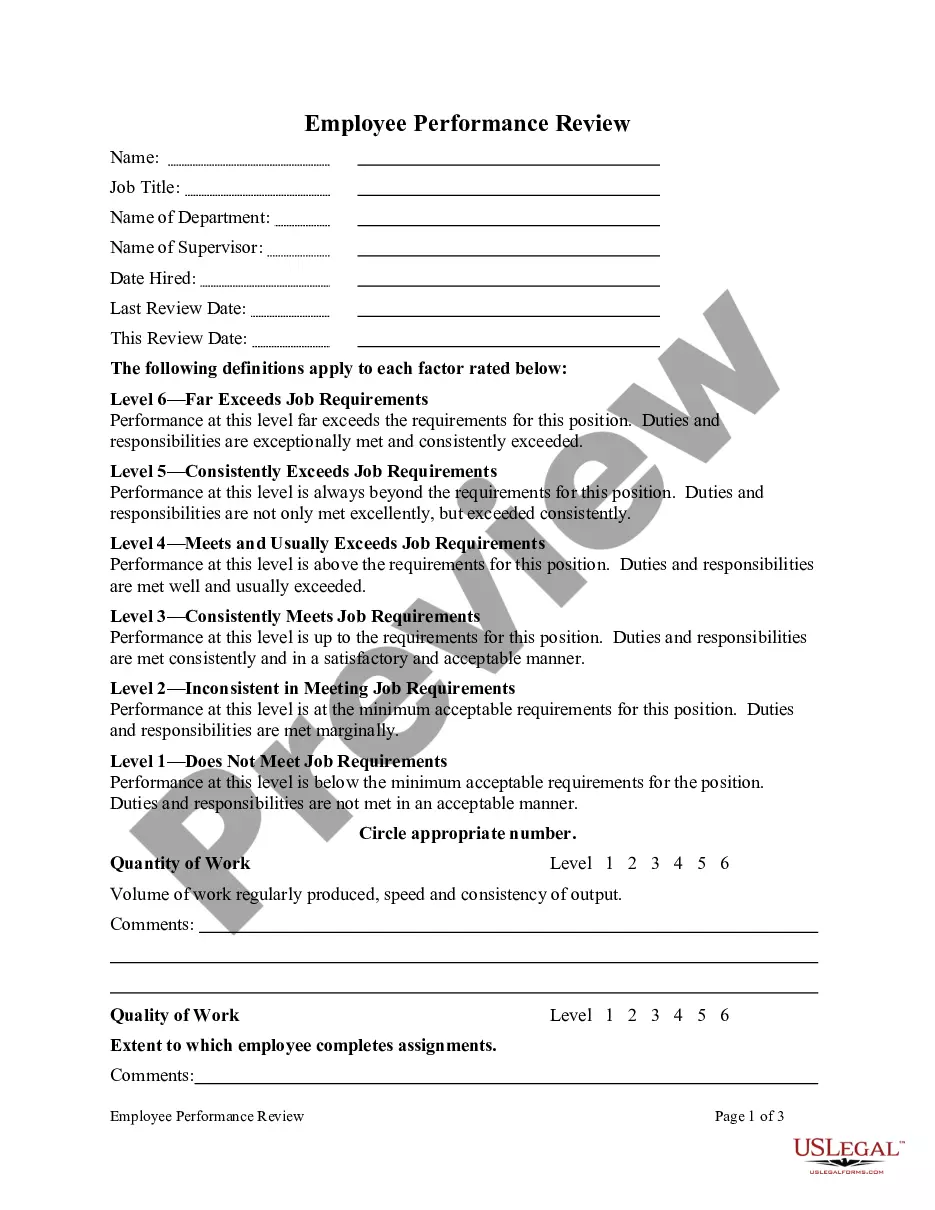
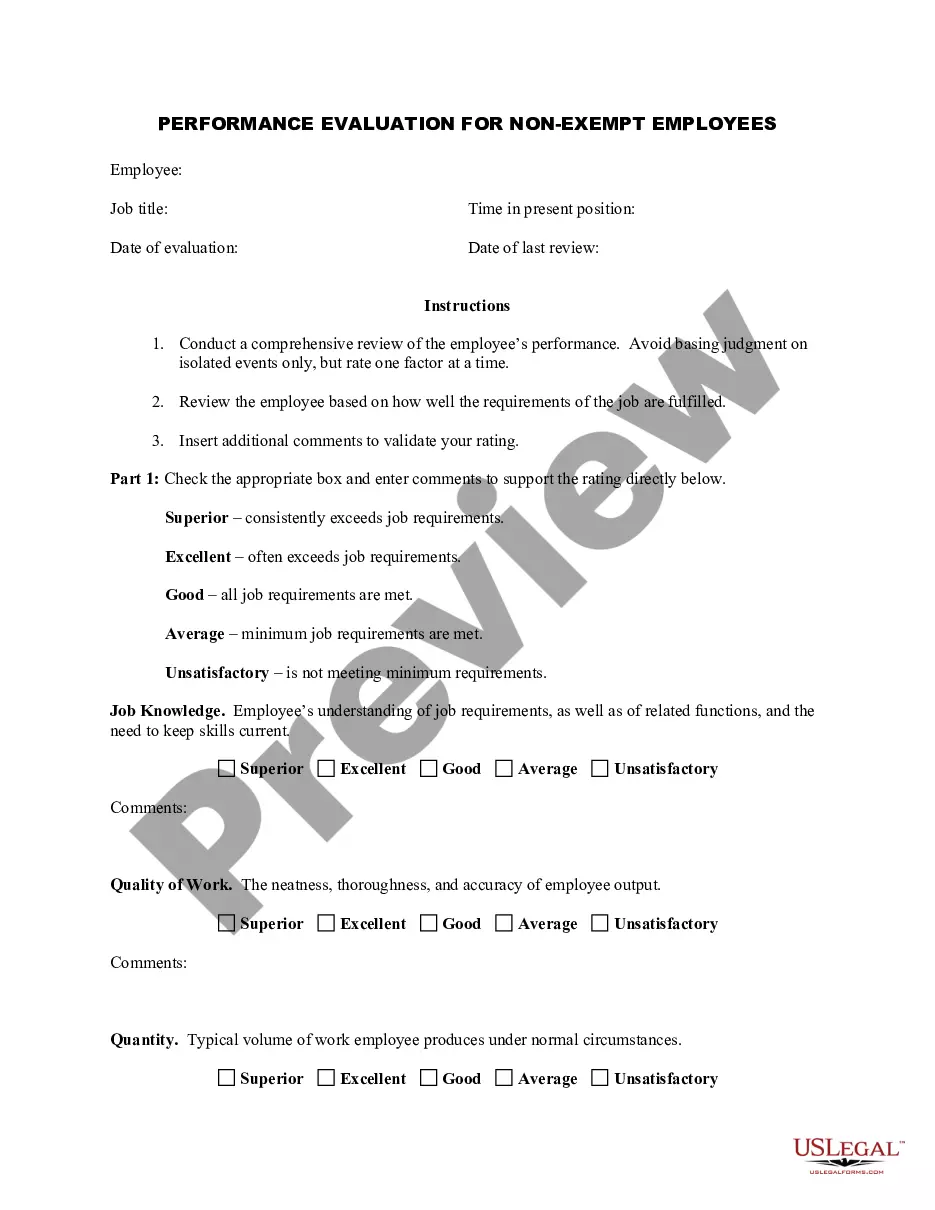
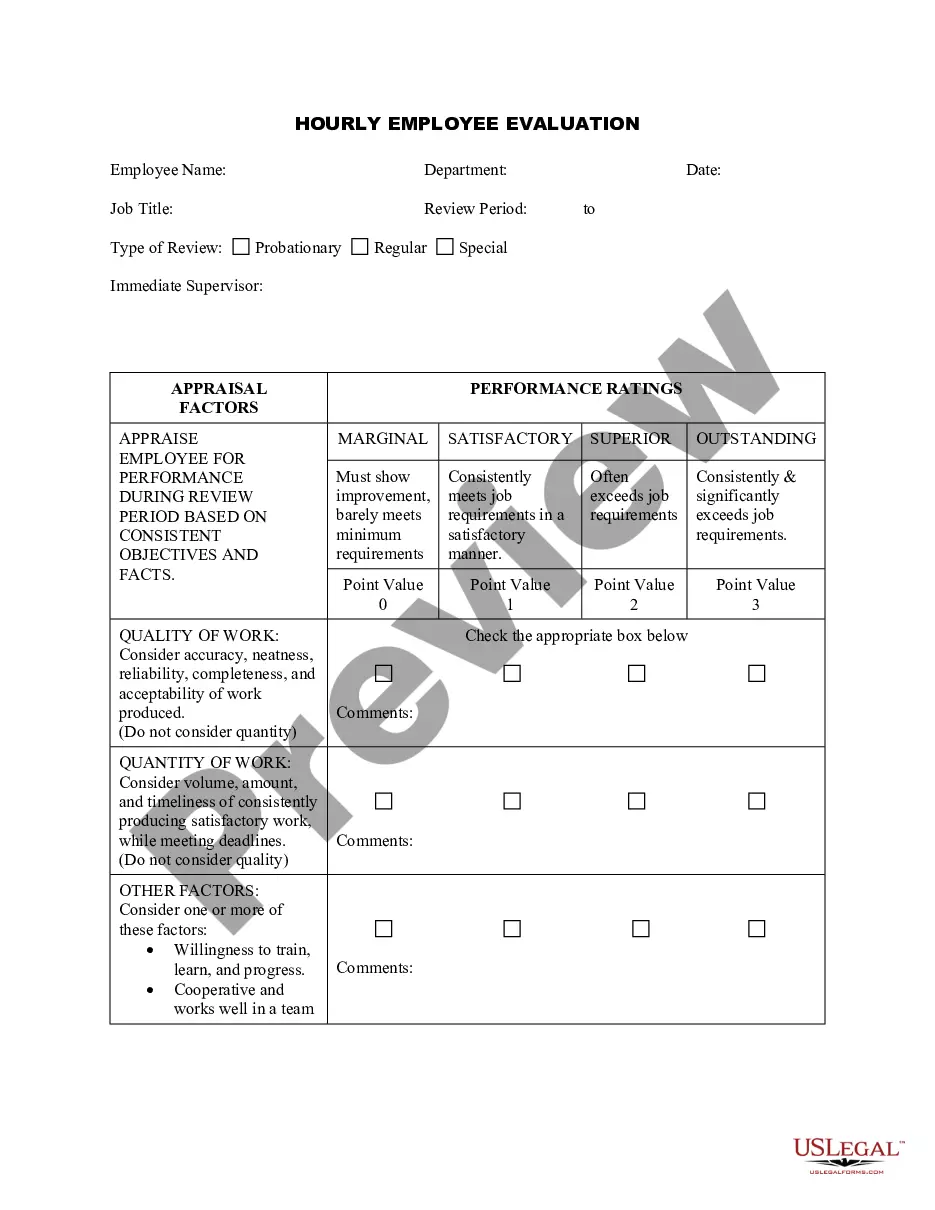


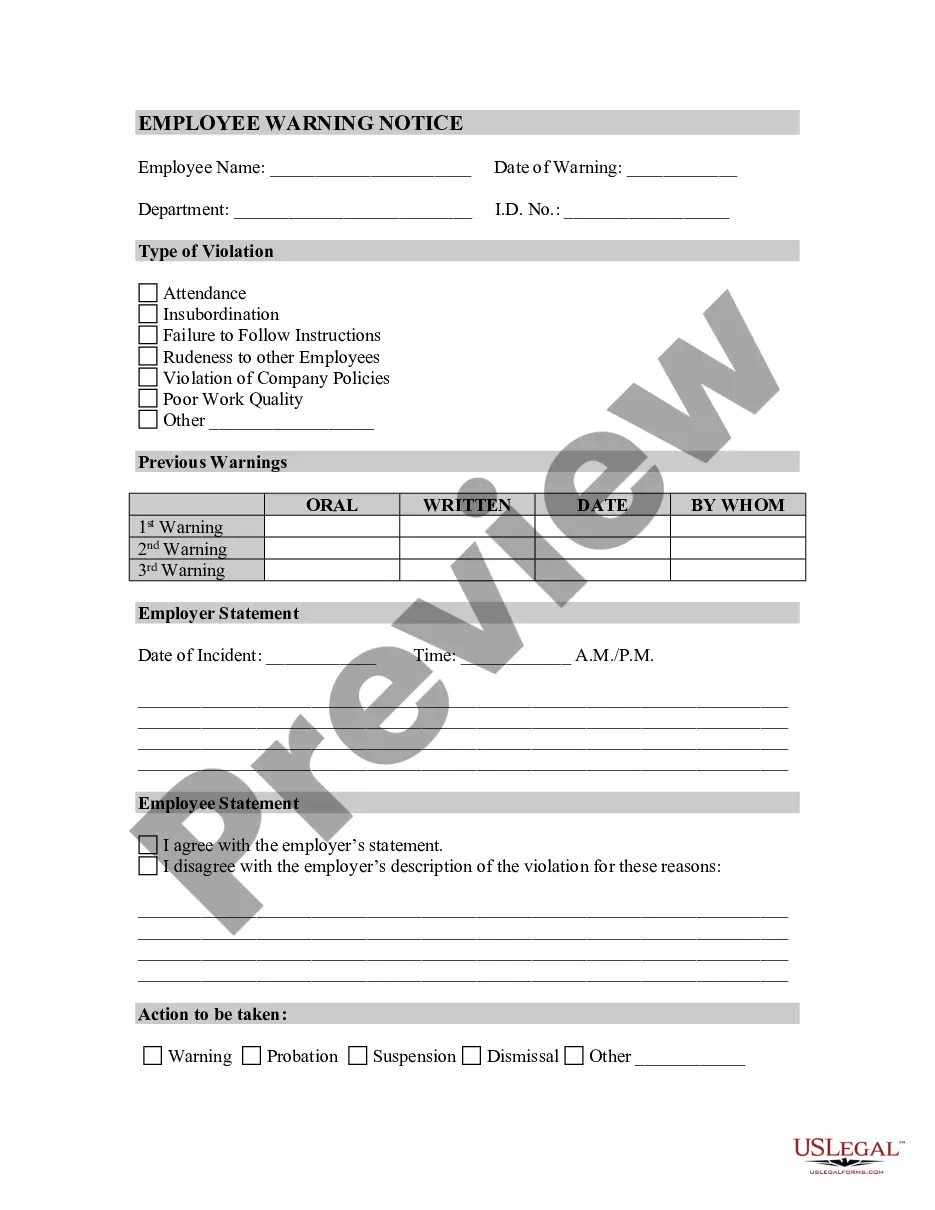



How to fill out Sample Performance Review For Nonexempt Employees?
- Log in to your US Legal Forms account. Ensure your subscription is active; renew it as needed to maintain access.
- Browse the extensive library. Use the preview features to find the performance evaluation form that best fits your requirements.
- Use the search functionality if necessary. Locate additional templates that fit your needs with the convenient search tab.
- Purchase the selected form. Click 'Buy Now' to choose a subscription plan that works for you while creating an account to access all resources.
- Complete your transaction. Provide your payment information to finalize your order and gain access to the document.
- Download the form. Save the template on your device for immediate use or find it later in the 'My Forms' section of your profile.
By following these steps, you can efficiently obtain the performance evaluation forms you need while leveraging the robust features of US Legal Forms.
Don't miss out on efficient document handling—get started now and unlock the potential of precise legal documents with US Legal Forms.
Form popularity
FAQ
When writing your employee evaluation, aim for clarity and specificity. Include measurable outcomes and personal observations to provide a comprehensive view of performance. Looking at performance evaluation for employees examples can assist you in crafting a well-rounded evaluation that supports employee development.
In the evaluation of performance, begin by stating the employee's accomplishments. Follow this with constructive feedback and actionable suggestions for future growth. Drawing on performance evaluation for employees examples can enhance your feedback and ensure you're providing valuable insights for development.
A strong review for staff includes specific achievements, like leading a successful project or improving team dynamics. You could write, "Your leadership in the recent project helped us exceed our goals, and your positive attitude remains inspiring to the team." Consider using performance evaluation for employees examples to create balanced and impactful reviews.
A good appraisal comment should highlight both strengths and areas for growth. For instance, you might say, "You consistently meet deadlines and show great initiative, but I encourage you to seek more feedback from peers to enhance collaboration." Utilizing performance evaluation for employees examples can help you frame comments that motivate and guide your staff.
In your employee evaluation, focus on key achievements and areas for improvement. Start with specific examples of the employee's contributions to the team, followed by constructive feedback. Performance evaluation for employees examples can guide you in articulating these points effectively and clearly.
Filling out an employee performance evaluation requires careful consideration and preparation. Start by gathering relevant performance data and feedback from various sources. Use specific performance evaluation for employees examples to provide a balanced view, encompassing both strengths and areas that need attention. This method ensures a fair and comprehensive appraisal process.
During a performance review, avoid negative or vague language that may demotivate the employee. Steer clear of personal attacks or broad generalizations that lack supporting evidence. Instead, focus on specific behaviors and outcomes. By highlighting measurable performance evaluations for employees examples, you foster a more productive and positive discussion.
When filling out employee comments on a performance appraisal, be specific and constructive. Use clear examples from the employee's work to illustrate points. Focus on the company's goals and how the employee's contributions have progressed. This approach can enhance the performance evaluation for employees examples by demonstrating growth and areas for improvement.
A good evaluation comment should be specific and constructive. For instance, you might say, 'John consistently meets his project deadlines, demonstrating strong organizational skills and reliability.' This type of feedback not only praises the employee's contributions but also provides a clear, actionable example. Incorporating such performance evaluation for employees examples enhances the overall effectiveness of your evaluations.
Writing a performance evaluation for an employee involves assessing their work against established goals. Start by gathering feedback from peers and supervisors, then summarize their performance in various categories, including strengths and areas needing growth. Using consistent criteria helps maintain objectivity. By utilizing performance evaluation for employees examples, you can create a comprehensive, consistent evaluation that guides development plans.