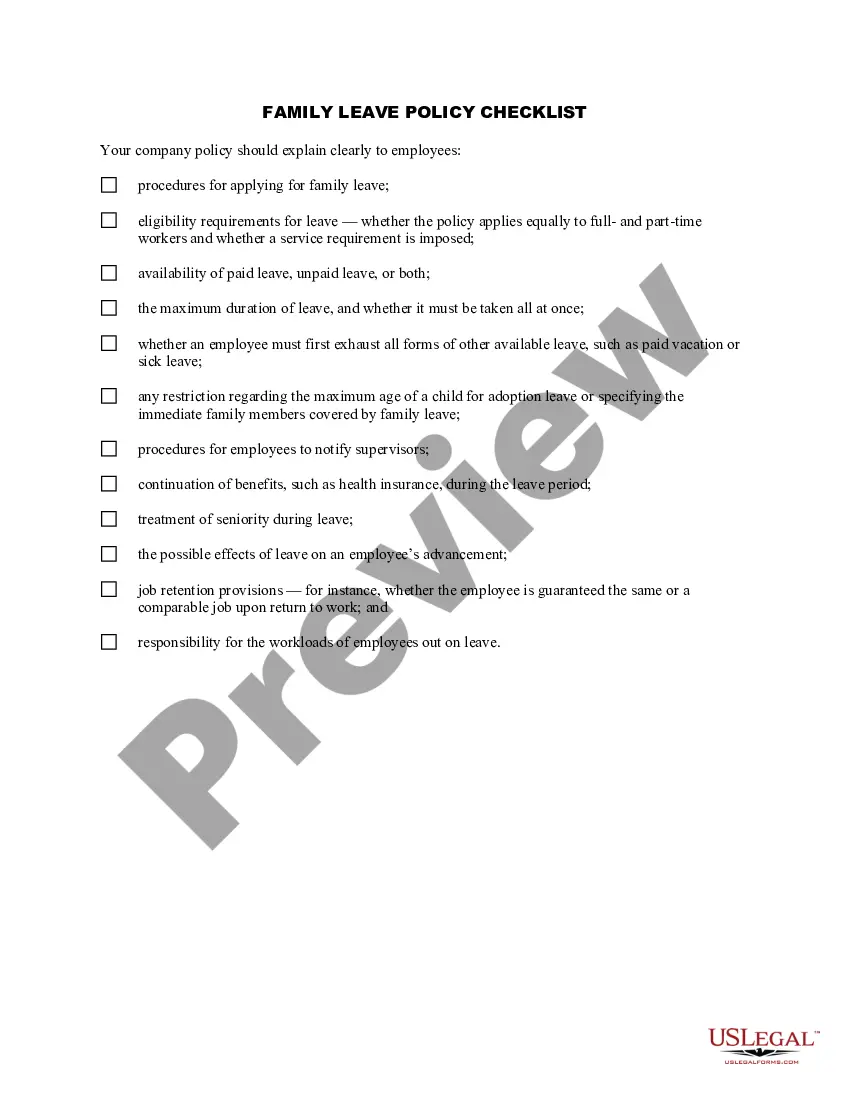
Leave Policy For Maharashtra
Description
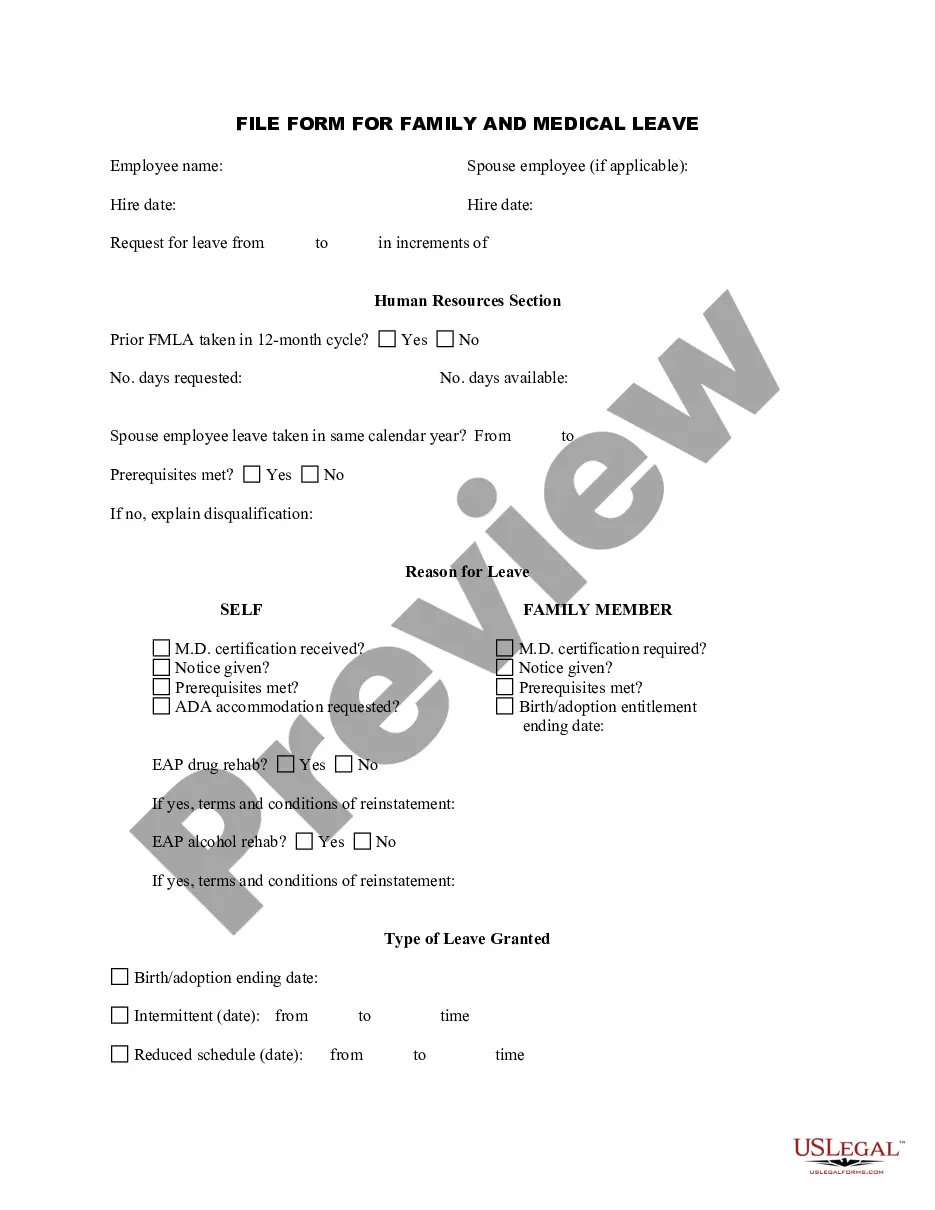
Get your form ready online
Our built-in tools help you complete, sign, share, and store your documents in one place.
Make edits, fill in missing information, and update formatting in US Legal Forms—just like you would in MS Word.
Download a copy, print it, send it by email, or mail it via USPS—whatever works best for your next step.
Sign and collect signatures with our SignNow integration. Send to multiple recipients, set reminders, and more. Go Premium to unlock E-Sign.
If this form requires notarization, complete it online through a secure video call—no need to meet a notary in person or wait for an appointment.
We protect your documents and personal data by following strict security and privacy standards.

Make edits, fill in missing information, and update formatting in US Legal Forms—just like you would in MS Word.

Download a copy, print it, send it by email, or mail it via USPS—whatever works best for your next step.

Sign and collect signatures with our SignNow integration. Send to multiple recipients, set reminders, and more. Go Premium to unlock E-Sign.

If this form requires notarization, complete it online through a secure video call—no need to meet a notary in person or wait for an appointment.

We protect your documents and personal data by following strict security and privacy standards.
Looking for another form?

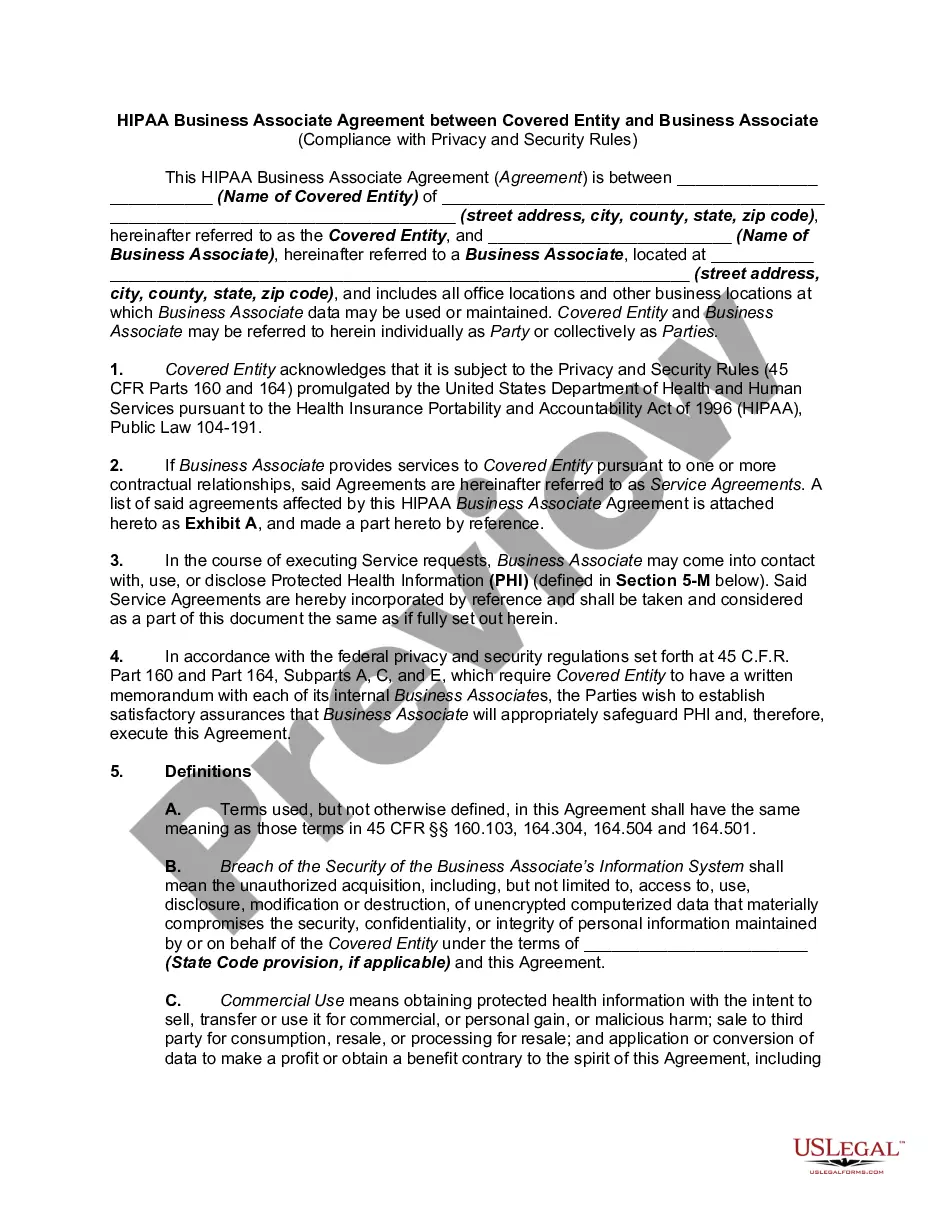
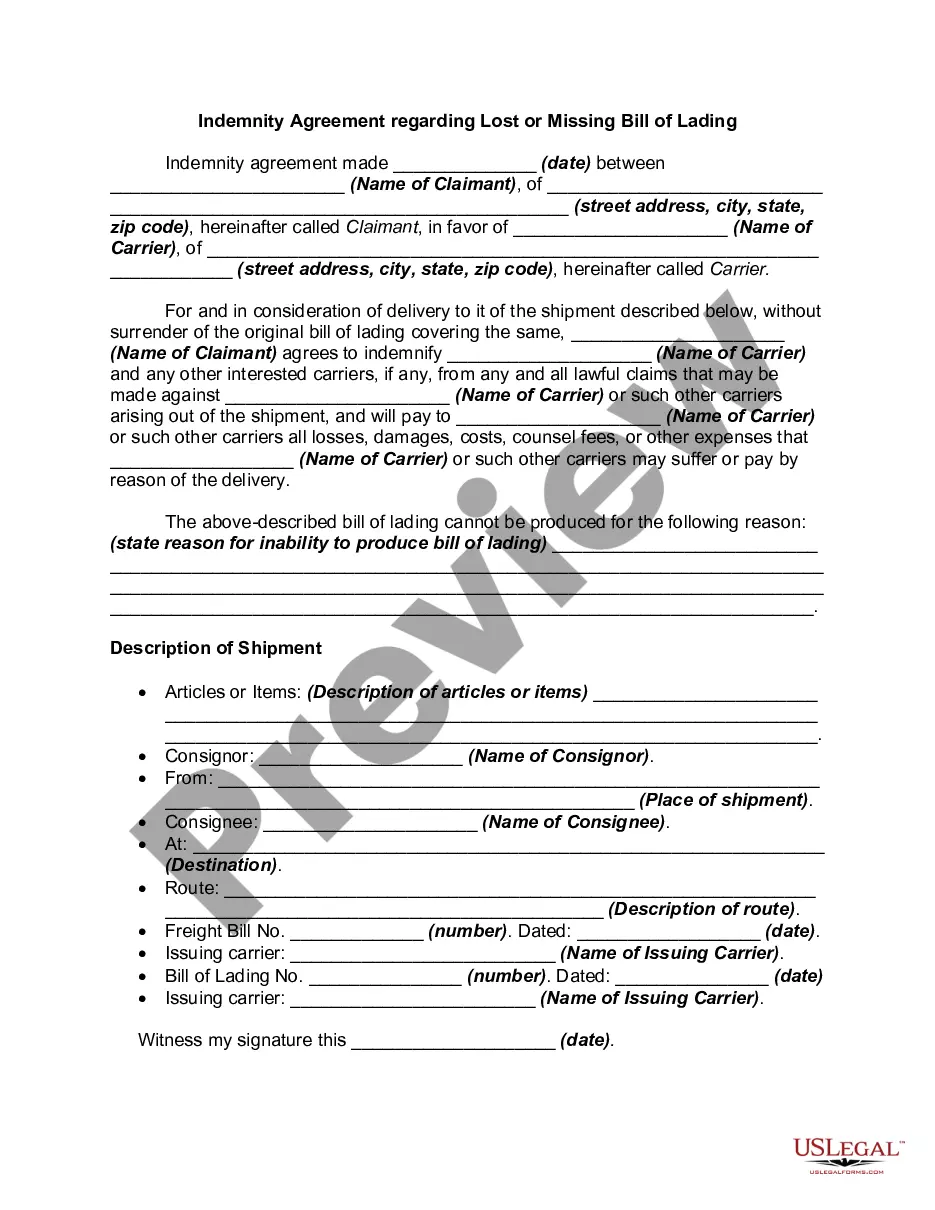
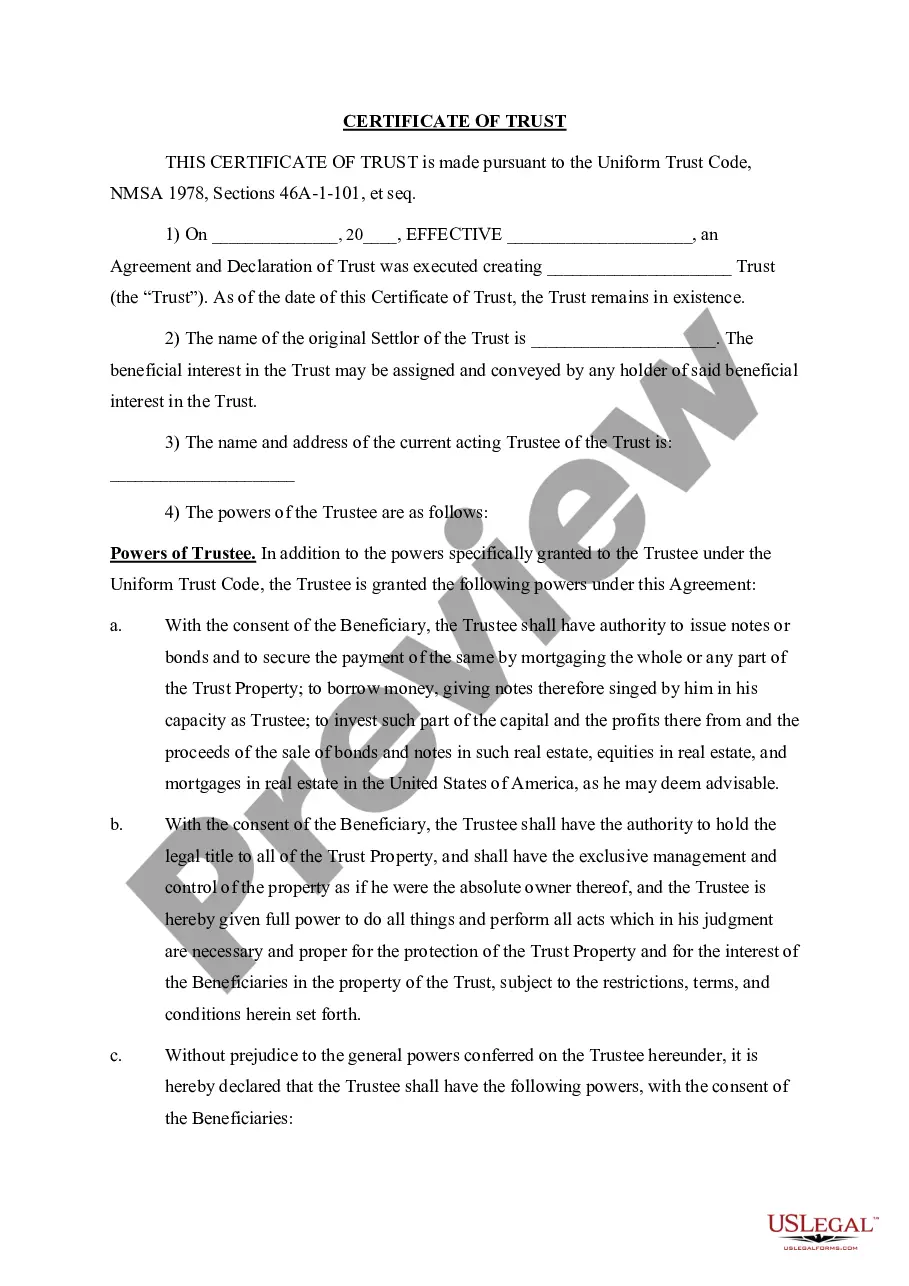





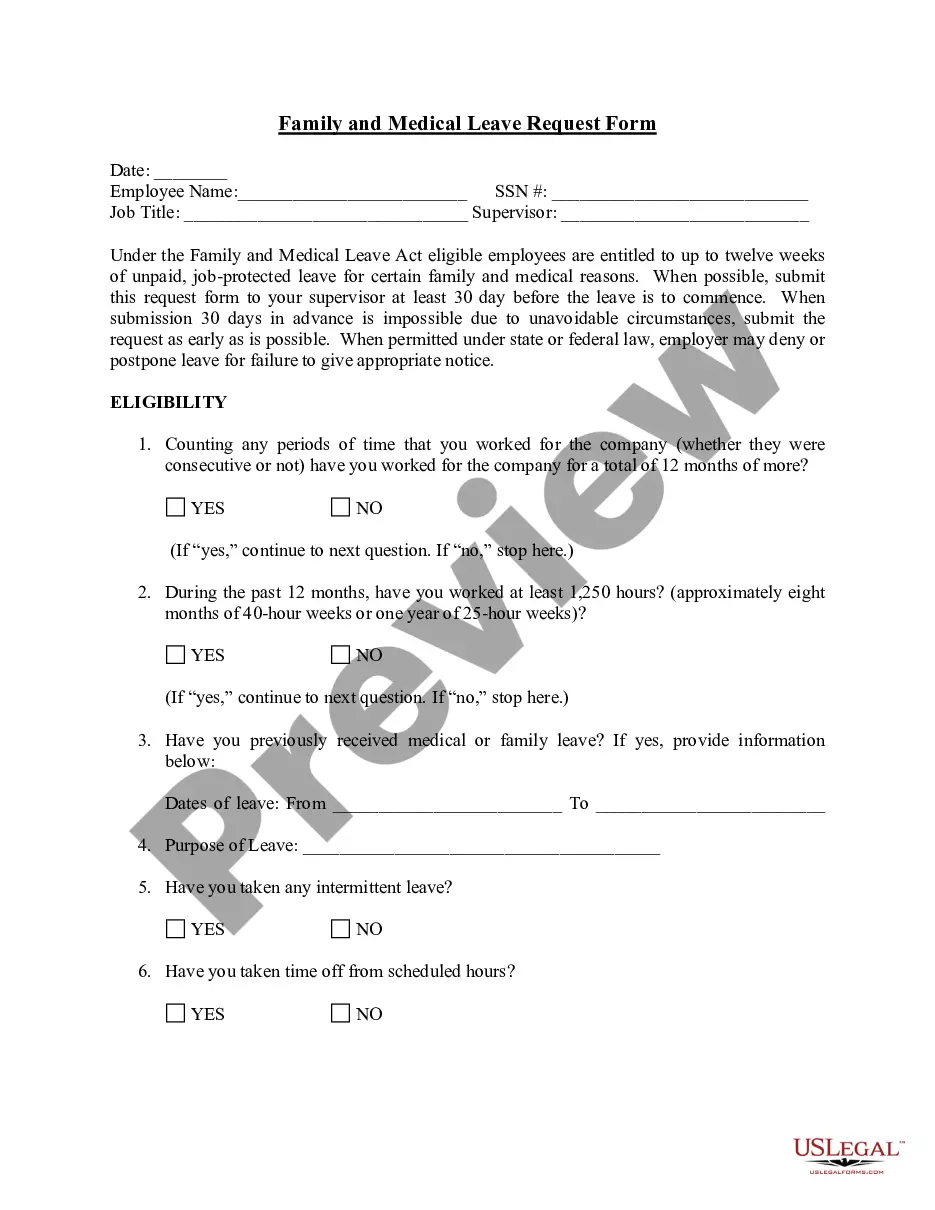
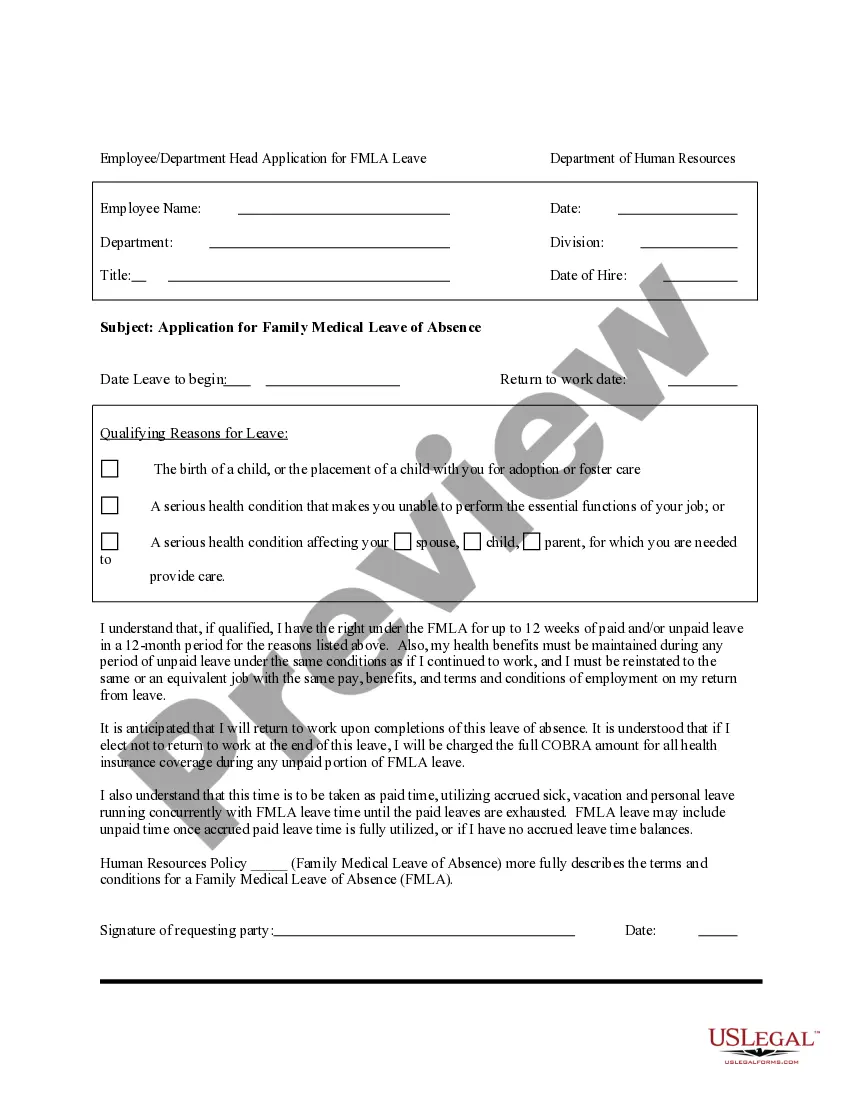
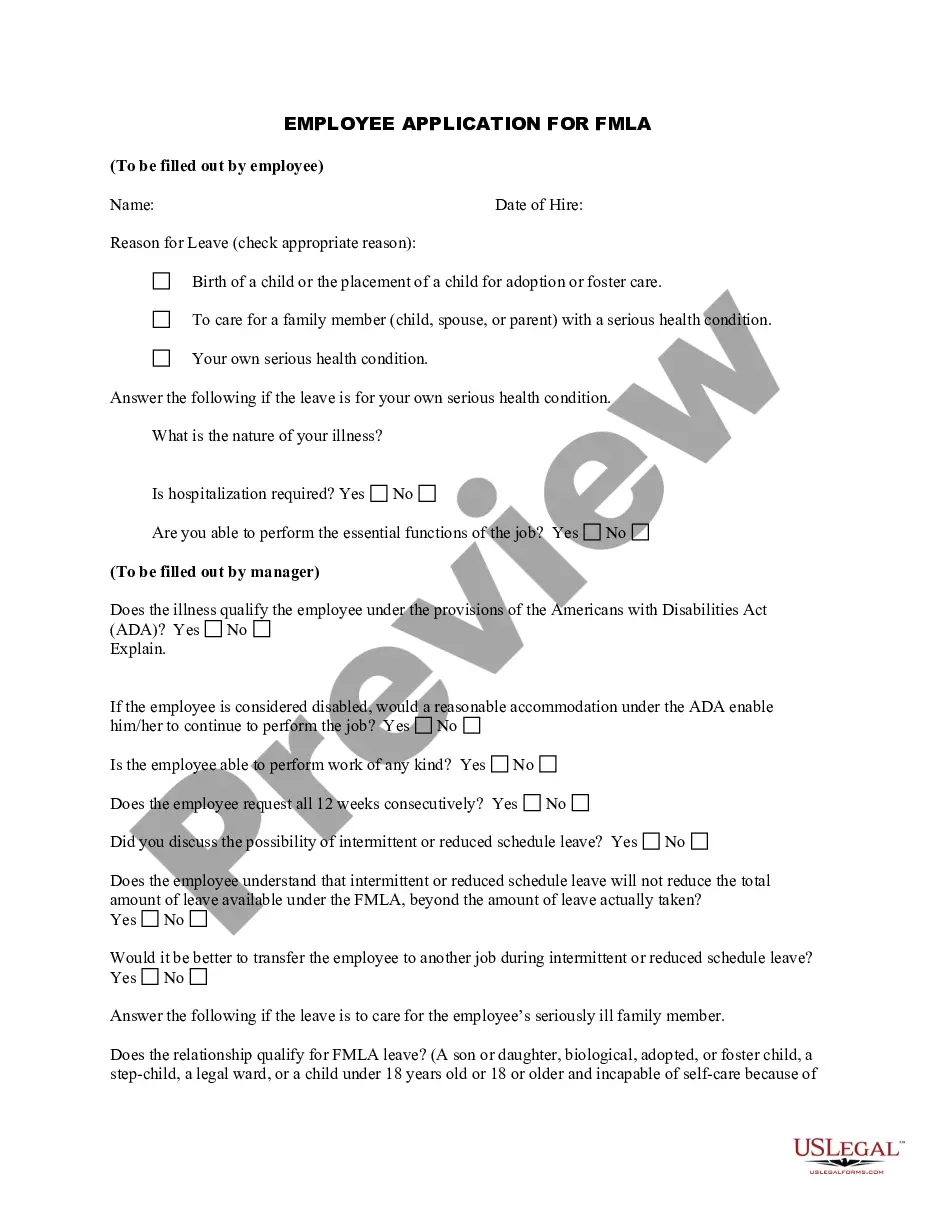
How to fill out Family Leave Policy Checklist?
Managing legal documentation can be daunting, even for the most seasoned experts.
If you are seeking a Leave Policy for Maharashtra and lack the time to search for the appropriate and current version, the processes can be anxiety-inducing.
With US Legal Forms, you are able to.
Obtain state- or county-specific legal and business documents. US Legal Forms fulfills any needs you may have, from individual to business documents, all in one location.
If this is your first time using US Legal Forms, create an account to gain unlimited access to all platform features. Follow these steps once you find the form you need.
- Employ cutting-edge tools to complete and manage your Leave Policy for Maharashtra.
- Access a comprehensive collection of articles, manuals, and resources pertinent to your situation and requirements.
- Save time and effort locating the documents you require, and utilize the advanced search and Review feature of US Legal Forms to discover and download the Leave Policy for Maharashtra.
- If you have a monthly subscription, Log In to your US Legal Forms account, search for the form, and download it.
- Visit the My documents tab to see the documents you have previously downloaded and to manage your files as needed.
- Utilize a robust online form library to significantly improve the management of these circumstances.
- US Legal Forms stands as a frontrunner in online legal documents, boasting over 85,000 state-specific legal forms available to you at any moment.
Form popularity
FAQ
Don't provide personal or sensitive financial information Never give out or confirm personal or sensitive financial information ? such as your bank account, credit card, or full Social Security number ? unless you know the company or person you are talking with is a real debt collector.
Statute of Limitations in Arizona The statute of limitations for credit card debt is three years. For car loans, mortgages and medical debts it's six years, and for unpaid taxes it's 10 years. The timeframe indicates the amount of time a debt collector has to collect a debt.
The 7-in-7 rule explained Collectors are permitted to place a call to the consumer about a particular debt seven (7) times within a period of seven (7) consecutive days, so long as no contact is made with the consumer in any of the attempts.
In the new changes to Regulation F, the frequency at which a collections agency can contact a consumer has changed. This change, presented in Section 1006.14B21A, addresses telephone call frequency and restricts agencies to contacting a consumer seven times within seven consecutive days.
This is where we get our "7-in-7" concept. You can attempt to contact a consumer about 1 debt 7 times in 7 days. And it's the "1 debt" that's key here. Phone numbers do not matter; how many debts your agency has for the consumer does.
Write the collector a letter explaining your circumstances and why you would like the debt removed, such as if you're about to apply for a mortgage. There's no guarantee your request will be accepted, but there's no harm in asking. A record of on-time payments since the debt was paid will help your case.
Debt collectors cannot harass or abuse you. They cannot swear, threaten to illegally harm you or your property, threaten you with illegal actions, or falsely threaten you with actions they do not intend to take. They also cannot make repeated calls over a short period to annoy or harass you.
The Fair Debt Collection Practices Act (FDCPA) prohibits debt collectors from using abusive, unfair, or deceptive practices to collect debts from you, including: Misrepresenting the nature of the debt, including the amount owed. Falsely claiming that the person contacting you is an attorney.