Survey Job Satisfaction
Description
Get your form ready online
Our built-in tools help you complete, sign, share, and store your documents in one place.
Make edits, fill in missing information, and update formatting in US Legal Forms—just like you would in MS Word.
Download a copy, print it, send it by email, or mail it via USPS—whatever works best for your next step.
Sign and collect signatures with our SignNow integration. Send to multiple recipients, set reminders, and more. Go Premium to unlock E-Sign.
If this form requires notarization, complete it online through a secure video call—no need to meet a notary in person or wait for an appointment.
We protect your documents and personal data by following strict security and privacy standards.

Make edits, fill in missing information, and update formatting in US Legal Forms—just like you would in MS Word.

Download a copy, print it, send it by email, or mail it via USPS—whatever works best for your next step.

Sign and collect signatures with our SignNow integration. Send to multiple recipients, set reminders, and more. Go Premium to unlock E-Sign.

If this form requires notarization, complete it online through a secure video call—no need to meet a notary in person or wait for an appointment.

We protect your documents and personal data by following strict security and privacy standards.
Looking for another form?
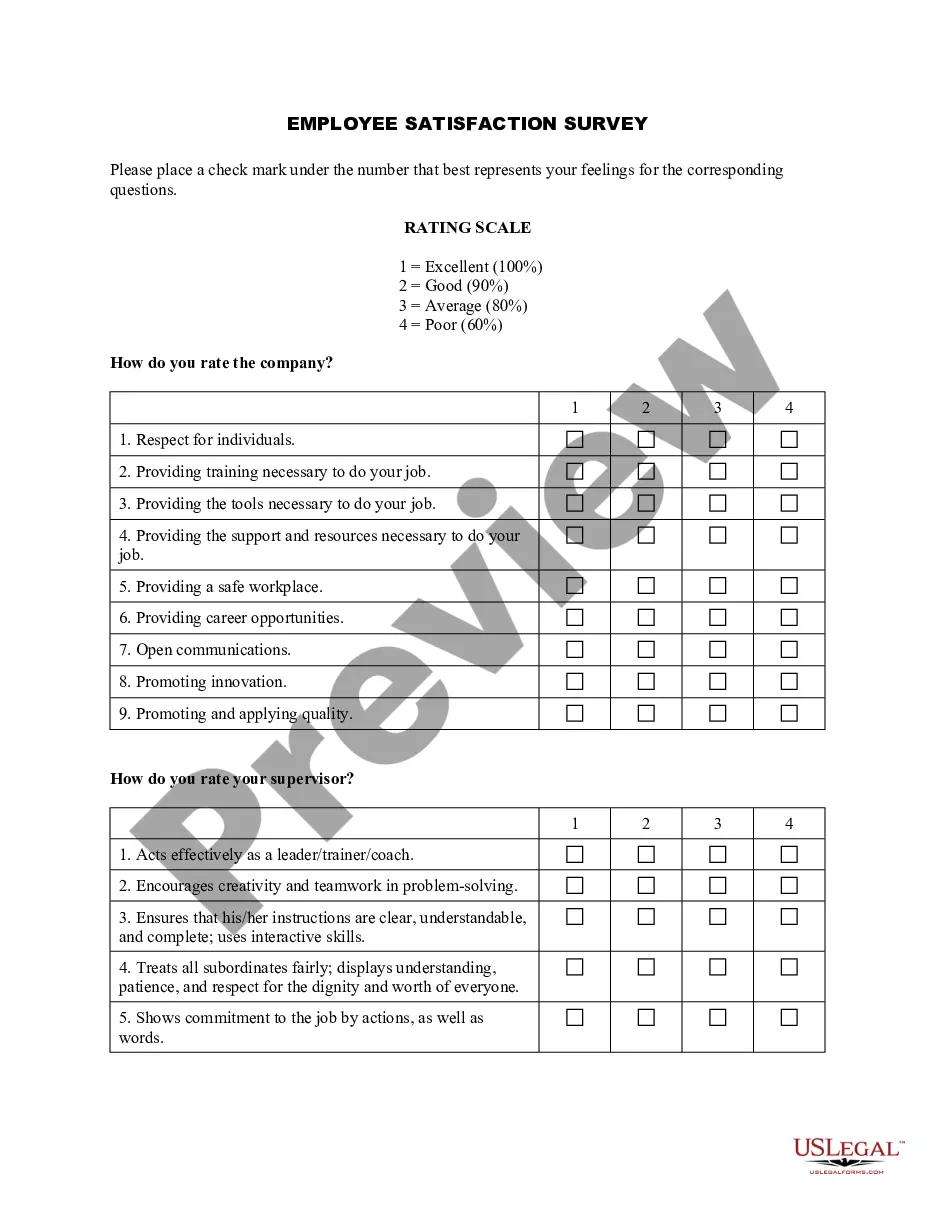
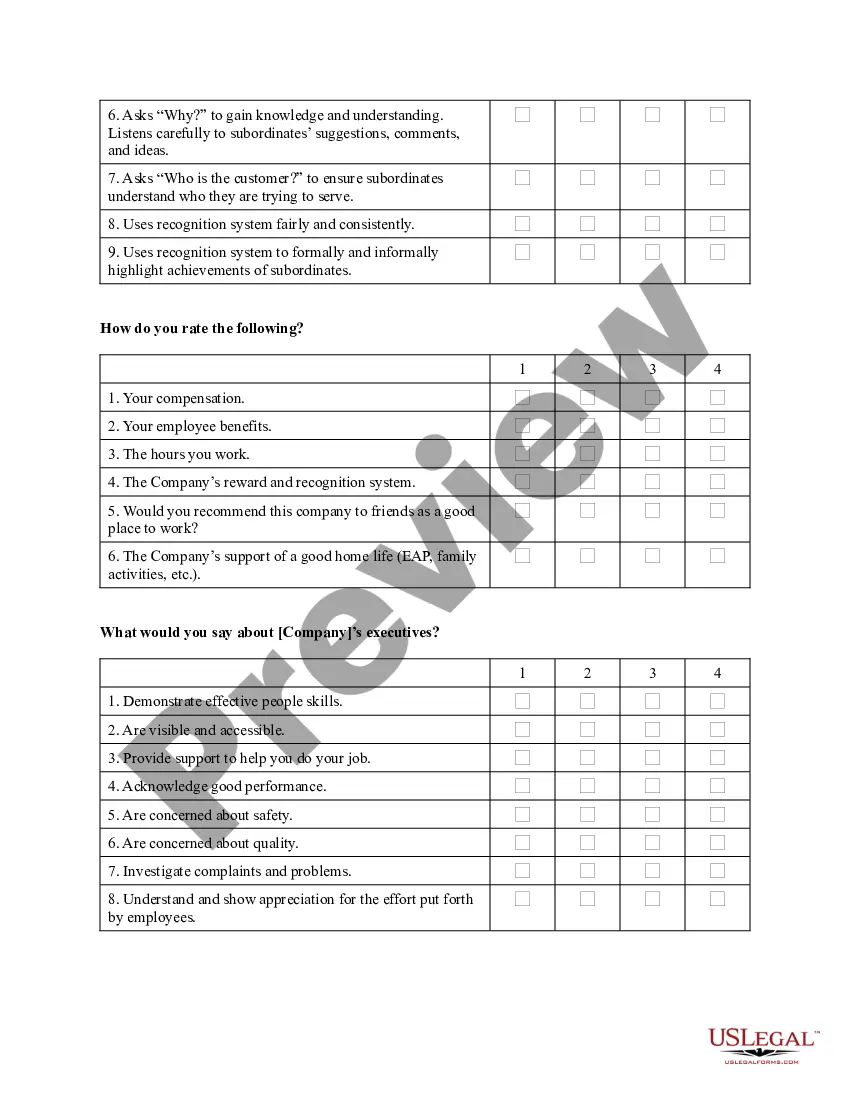
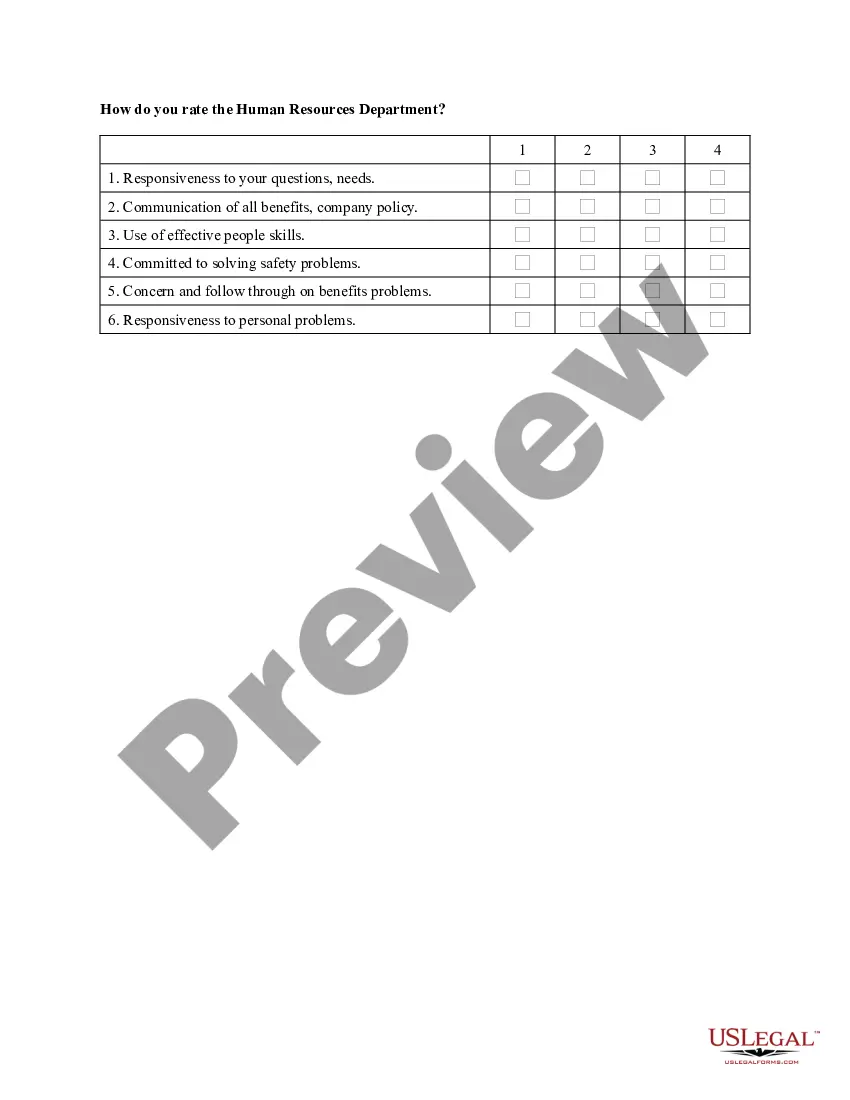
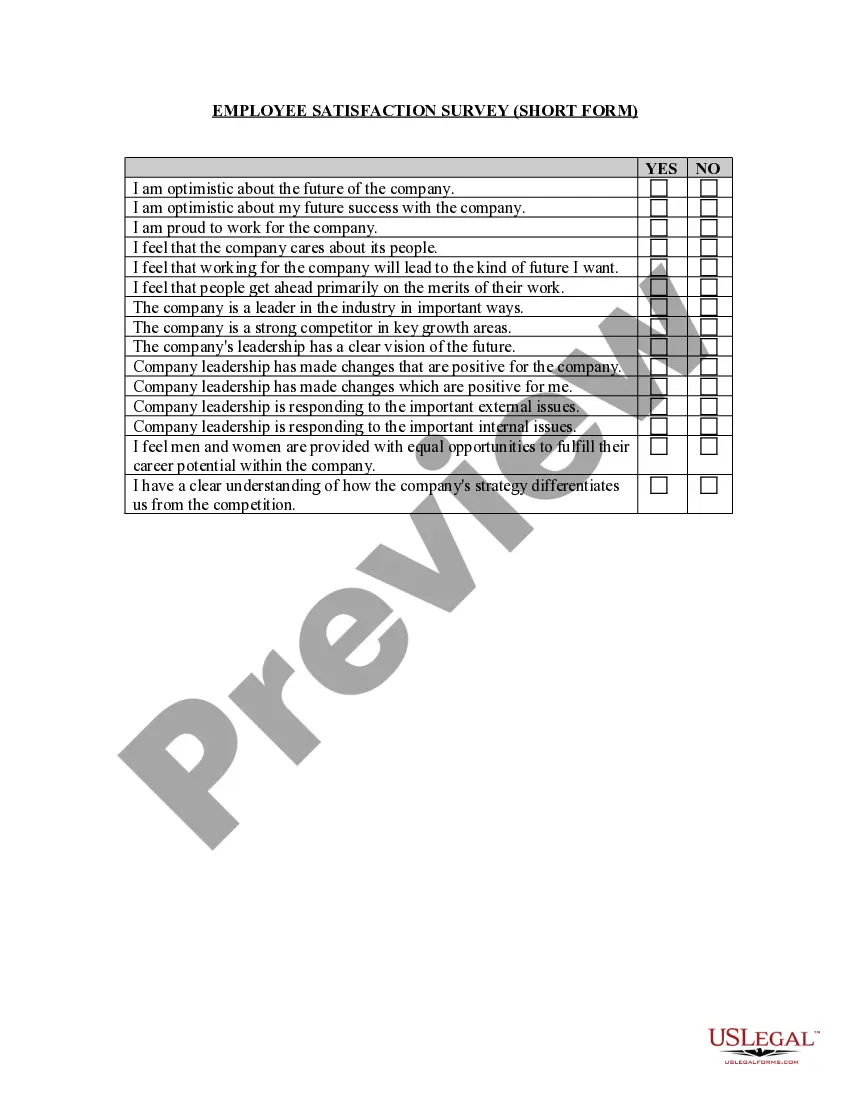
How to fill out Employee Satisfaction Survey - Long Form?
- If you're a returning user, log in to your account and secure the necessary form template by clicking the Download button. Confirm your subscription status before proceeding.
- For first-time users, begin by browsing the Preview mode to assess form descriptions. It's essential that the template aligns with your specific requirements and complies with local laws.
- If the desired template isn’t a perfect fit, utilize the Search tab to locate the correct form. Verify its suitability before moving forward.
- Purchase the selected document by clicking on the Buy Now button and selecting an appropriate subscription plan. Account registration is required to access the document library.
- Complete your purchase by entering your credit card information or using PayPal for convenience.
- Download the completed form directly to your device, allowing for easy access to it through the My Forms section in your profile whenever required.
In conclusion, utilizing US Legal Forms for surveying job satisfaction not only simplifies the documentation process but also empowers users with a vast collection of forms and expert assistance. This makes the task of gathering vital employee feedback easy and efficient.
Start your journey towards enhanced job satisfaction today by accessing the comprehensive resources at US Legal Forms!
Form popularity
FAQ
Effective satisfaction survey questions for measuring survey job satisfaction could include, 'How satisfied are you with your current role?' or 'What improvements would you like to see in teamwork?' These questions help gauge specific aspects of the work experience and can inform better practices within your organization, enhancing overall employee morale.
To write an effective satisfaction survey, begin by clearly defining the objectives of the survey job satisfaction. Include a mix of closed and open-ended questions to capture diverse feedback. Focus on the areas that matter most to your organization, such as work environment, management practices, and resources provided. This approach will ensure you gather comprehensive insights.
When collecting feedback to assess survey job satisfaction, it's helpful to include specific, constructive comments. Examples might include, 'I appreciate the opportunities for professional growth,' or 'The team environment fosters collaboration and innovation.' Such comments can provide valuable insights into employee experiences and suggest areas for improvement.
The top five questions to include in a survey are: 'How likely are you to recommend this job to others?' 'What aspects of your job do you enjoy the most?' 'What changes would you suggest to improve workplace satisfaction?' 'How well do you believe the company supports your career goals?' and 'Do you feel you have a good work-life balance?' These questions guide you toward understanding employee sentiment and areas for growth.
For an employee satisfaction survey, ask targeted questions that probe into employee experiences. Effective questions include asking about job involvement, communication within the team, challenges faced in daily tasks, and suggestions for workplace improvements. This targeted approach can reveal critical insights into your workforce's overall satisfaction.
Questions for employee satisfaction should encompass various aspects of the work experience. Consider asking about job fulfillment, recognition for good work, availability of training, and team dynamics. This comprehensive approach allows you to gain valuable insights into how satisfied employees feel and which areas need attention.
Good satisfaction survey questions focus on key areas that impact employee happiness. These questions might include inquiries about workplace relationships, job clarity, company values, and opportunities for advancement. The insights gained from a well-structured survey will help your organization enhance its work environment and boost productivity.
Five effective survey questions for employees include: 'How satisfied are you with your current job role?' 'Do you feel valued at work?' 'How clear are your job responsibilities?' 'What resources do you need to perform your job better?' and 'How likely are you to recommend this company to a friend?' These questions facilitate a deeper understanding of employee engagement and motivation.
When crafting a satisfaction survey, aim to include questions that address various aspects of the job. Inquire about job roles, workload, management support, and workplace culture. This way, you can gather comprehensive feedback to help assess employee morale and identify areas for improvement.
To conduct a job satisfaction survey, start by defining your objectives and determining what insights you need. Create a questionnaire that focuses on areas such as work environment, relationships with colleagues, and opportunities for growth. Once your survey is ready, distribute it to employees using tools like US Legal Forms, which makes the process easy and effective.