Workplace Harassment Training For Employees
Description
Get your form ready online
Our built-in tools help you complete, sign, share, and store your documents in one place.
Make edits, fill in missing information, and update formatting in US Legal Forms—just like you would in MS Word.
Download a copy, print it, send it by email, or mail it via USPS—whatever works best for your next step.
Sign and collect signatures with our SignNow integration. Send to multiple recipients, set reminders, and more. Go Premium to unlock E-Sign.
If this form requires notarization, complete it online through a secure video call—no need to meet a notary in person or wait for an appointment.
We protect your documents and personal data by following strict security and privacy standards.

Make edits, fill in missing information, and update formatting in US Legal Forms—just like you would in MS Word.

Download a copy, print it, send it by email, or mail it via USPS—whatever works best for your next step.

Sign and collect signatures with our SignNow integration. Send to multiple recipients, set reminders, and more. Go Premium to unlock E-Sign.

If this form requires notarization, complete it online through a secure video call—no need to meet a notary in person or wait for an appointment.

We protect your documents and personal data by following strict security and privacy standards.
Looking for another form?








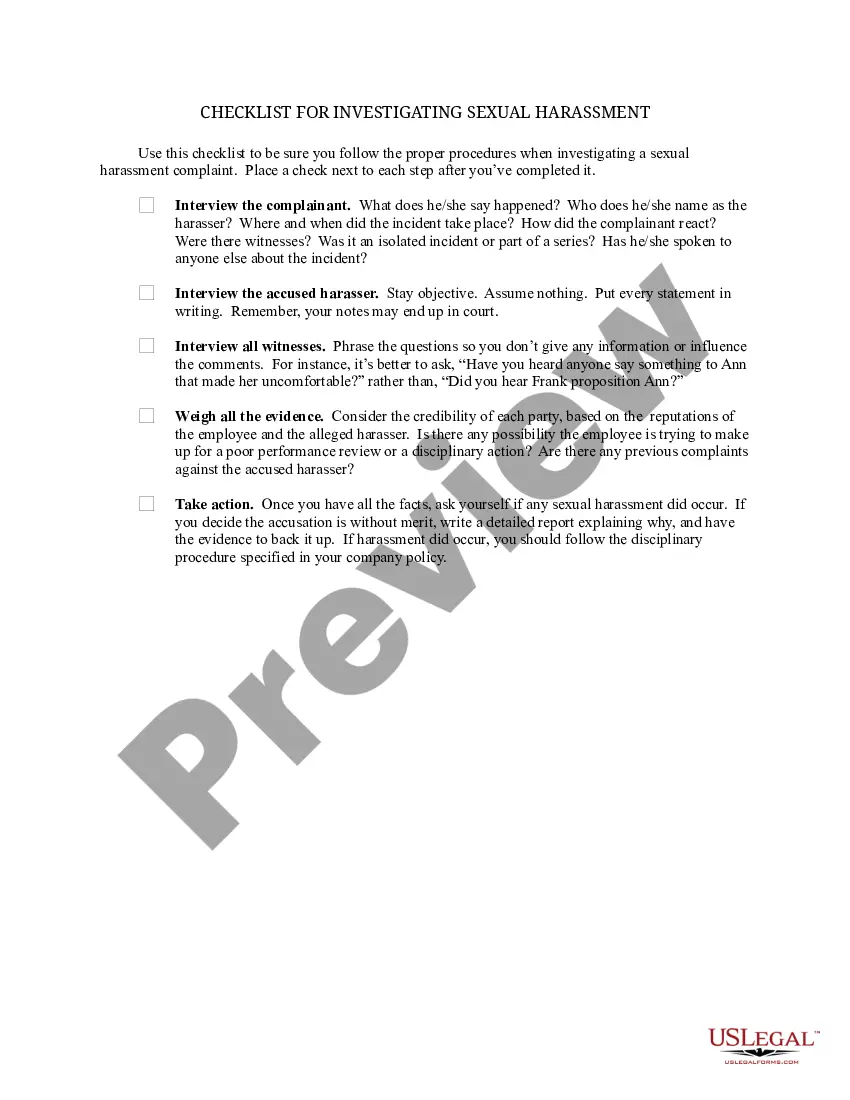
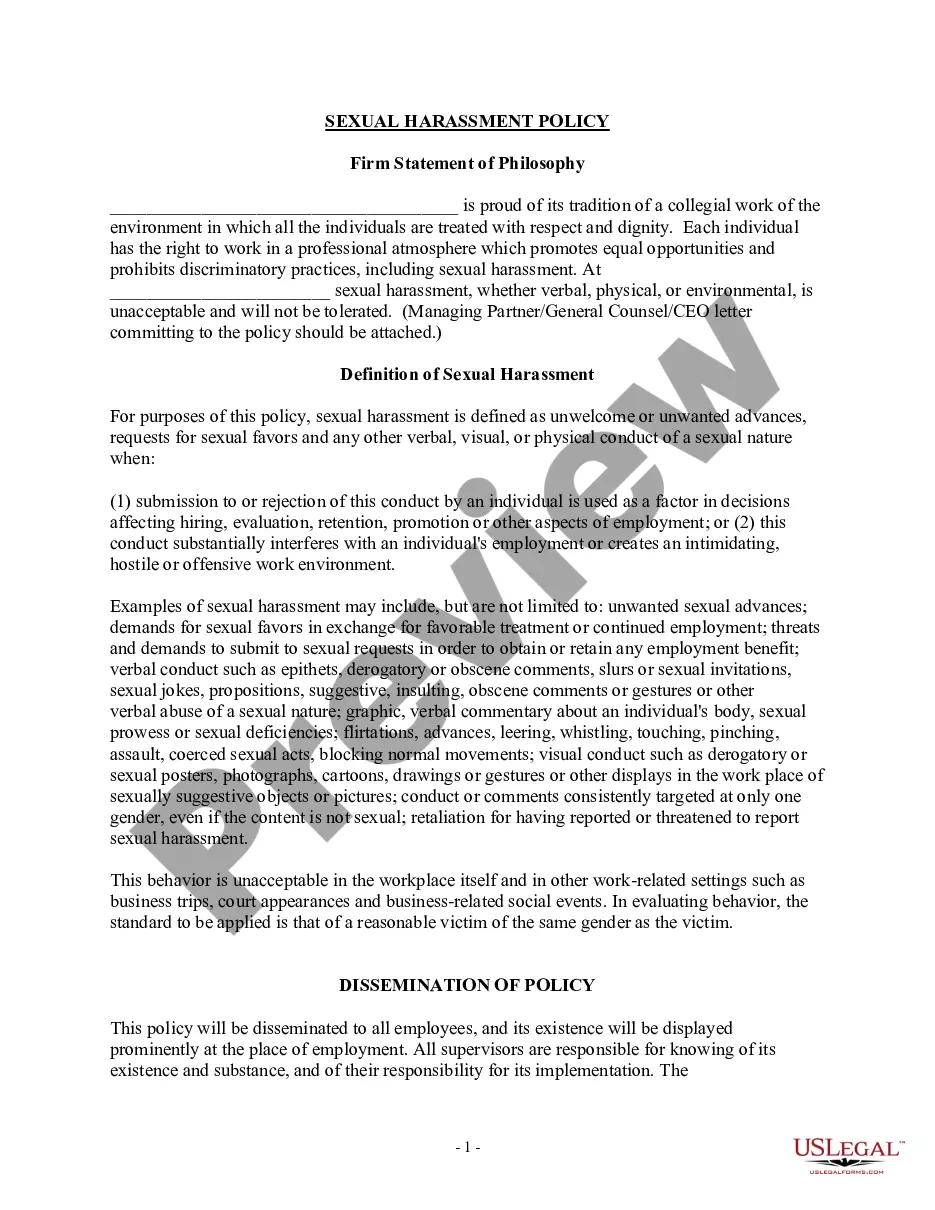
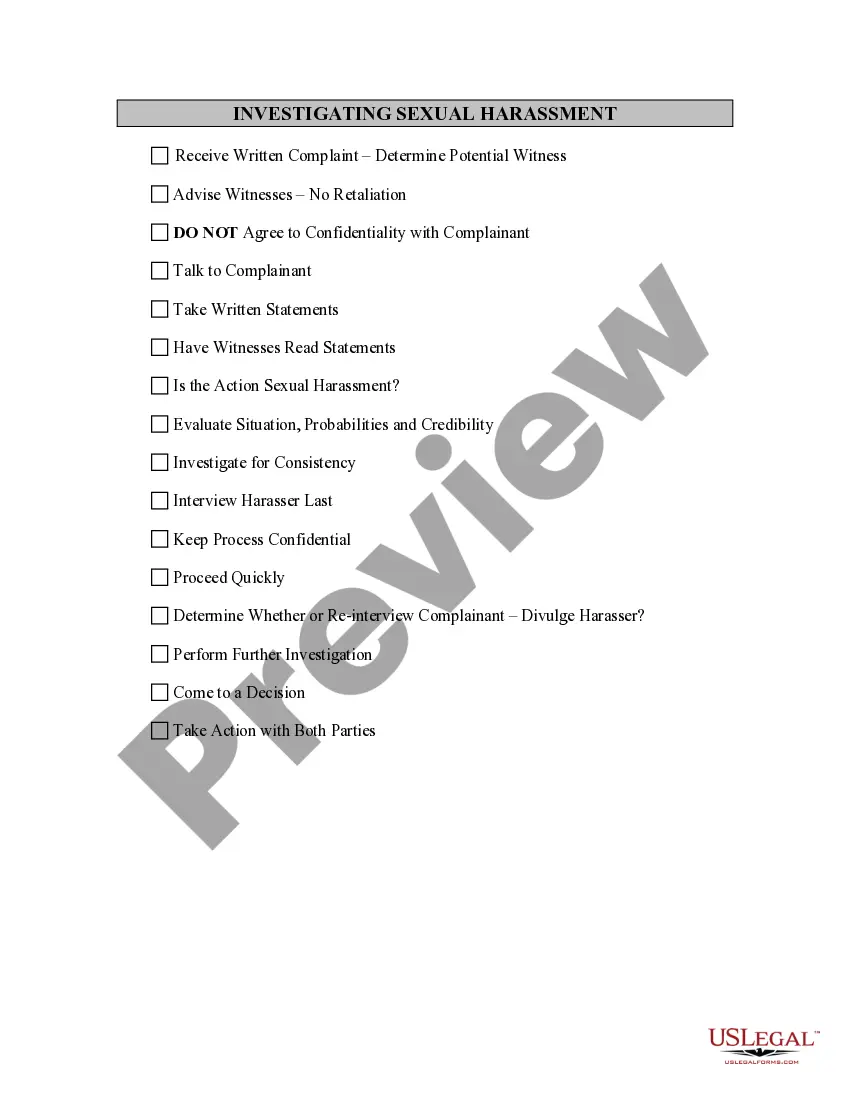
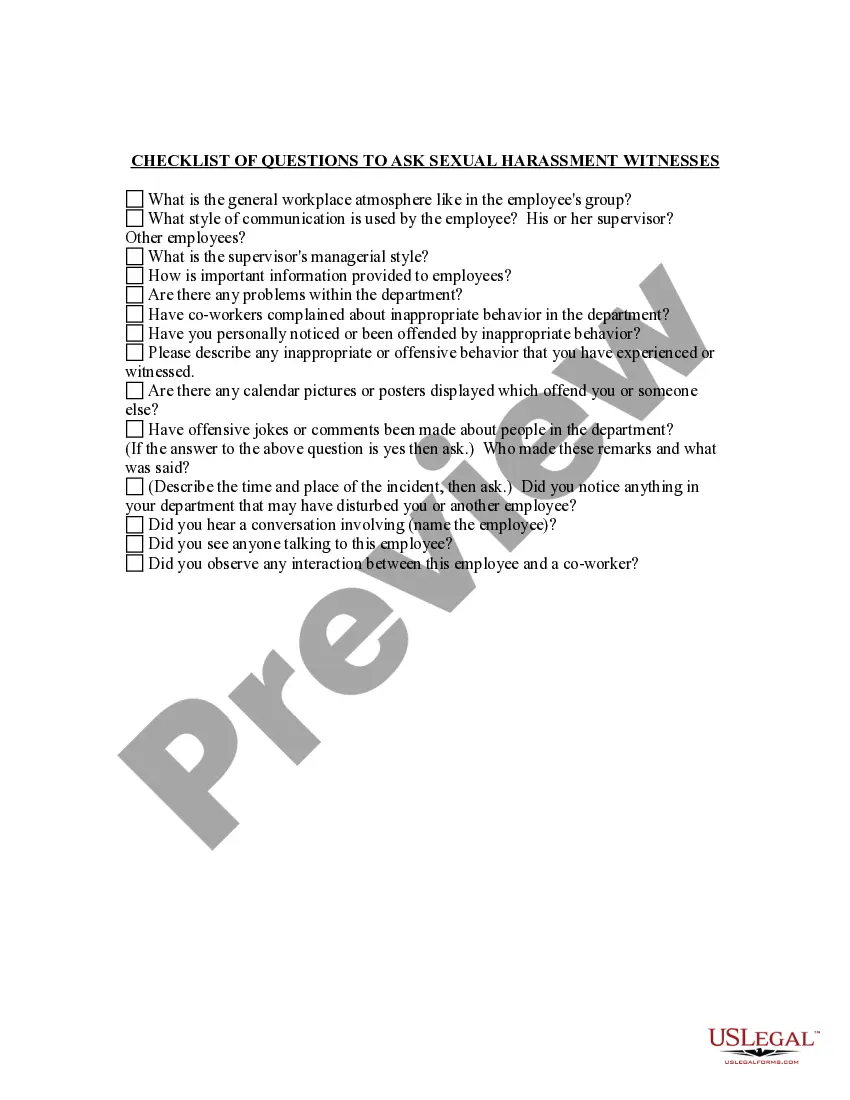
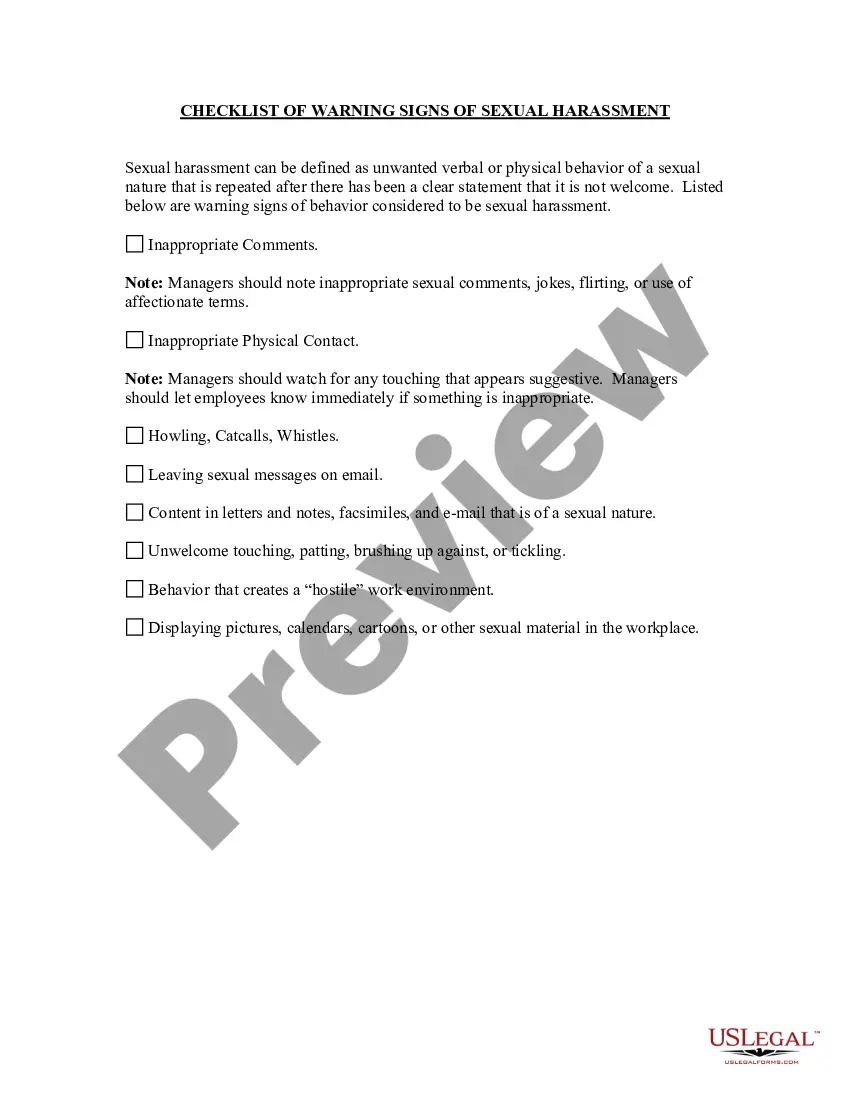
How to fill out Checklist For Investigation Sexual Harassment - Workplace?
- If you're an existing user, log into your account at US Legal Forms and download the required training template by clicking the Download button. Ensure your subscription is active; if not, renew it according to your plan.
- If you are new to US Legal Forms, begin by checking the Preview mode and detailed descriptions of the available templates. Choose one that fits your training requirements and complies with local jurisdiction laws.
- Should you find any discrepancies, utilize the Search tab to find alternative templates that better suit your needs. Once you find the right form, proceed to the next step.
- Click on the Buy Now button and select your preferred subscription plan. Remember, you need to register an account to access the vast library of legal forms.
- Complete your purchase by entering your payment details or using your PayPal account. This step finalizes your access to the needed resources.
- Finally, download your selected template to your device, ensuring you can complete the training and access it anytime through the My Forms section of your profile.
In conclusion, US Legal Forms offers a robust library of legal forms that empower both individuals and attorneys. With over 85,000 fillable templates, you can ensure legally sound documentation for workplace harassment training.
Don't wait; start building a safer workplace today by visiting US Legal Forms and accessing your training resources!
Form popularity
FAQ
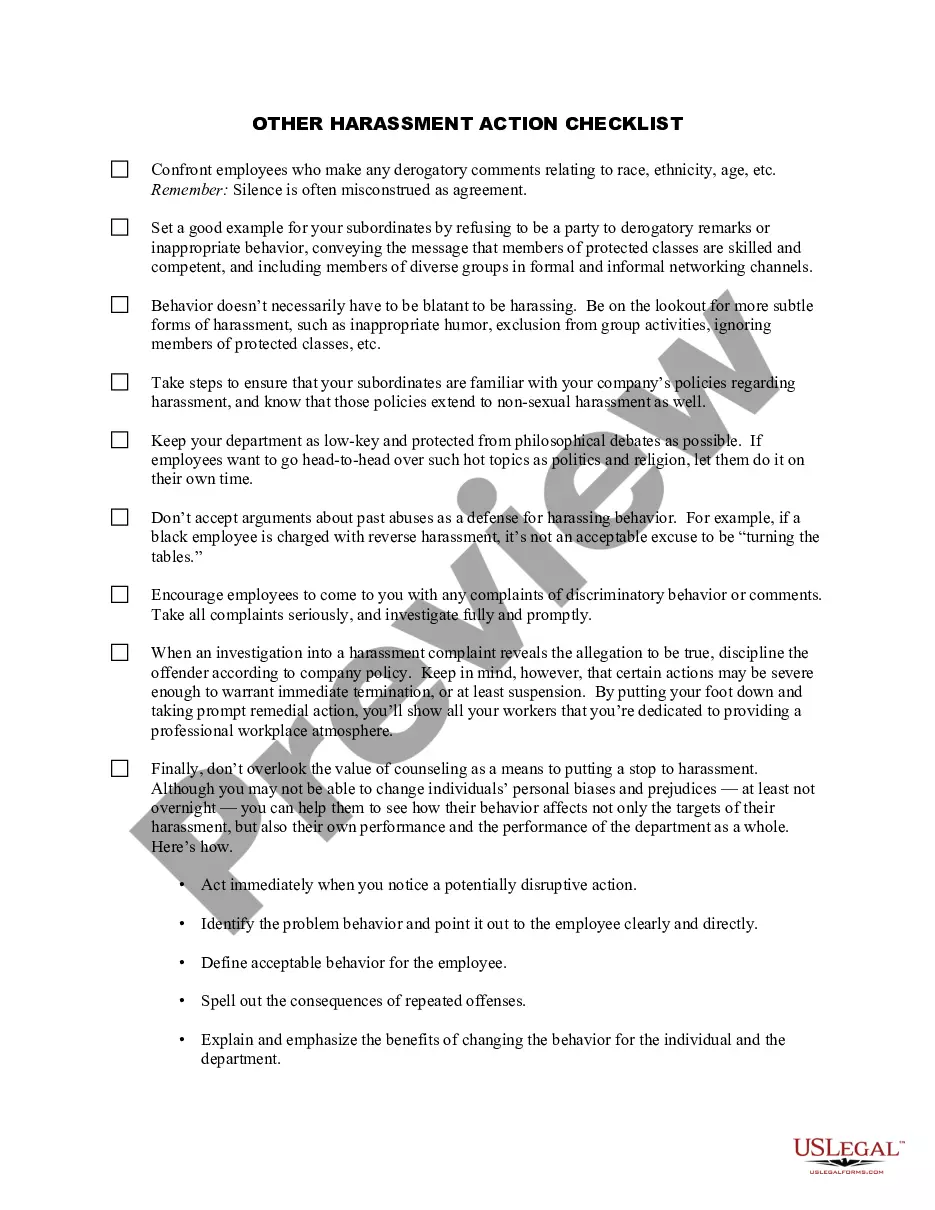
Evidence for workplace harassment can include written communications, recorded conversations, witness testimonials, and documentation of recurring behaviors. Keep detailed records of incidents, as they provide a clear picture of the harassment. Leveraging workplace harassment training for employees equips staff with the knowledge to recognize and report such behavior effectively.
To write up an employee for harassment, begin by compiling all relevant evidence and witness statements. Clearly outline the incidents that violated workplace policies and ensure that the document is factual and devoid of emotional language. Align your actions with the training provided through workplace harassment training for employees to ensure a fair and consistent approach.
To document a toxic work environment, keep a detailed log of incidents, including specific dates, times, and descriptions of inappropriate behaviors. Collect any relevant emails, messages, or witness statements to support your observations. Utilizing workplace harassment training for employees can help identify and address issues, contributing to a healthier workplace culture.
Firstly, document the incident, noting details such as time, place, and witnesses. Secondly, report the harassment to your supervisor or the HR department. Thirdly, seek support from colleagues or legal advisors, if necessary. Lastly, follow up to ensure that workplace harassment training for employees is utilized to prevent future incidents.
When you report a case of harassment, HR takes immediate action to investigate the claim. They will conduct interviews with involved parties, gather evidence, and assess the situation thoroughly. Providing workplace harassment training for employees helps HR handle such reports efficiently and establishes a protocol for addressing these serious issues.
A comprehensive harassment prevention program should include clear policies, assessment tools, training resources, and supportive reporting mechanisms. It should provide employees with access to guidance and resources, fostering an open dialogue about harassment. Incorporating these elements through targeted workplace harassment training for employees can significantly enhance workplace culture and minimize risks.
The primary focus of modern anti-harassment training is to foster a culture of respect and empower employees to speak up against inappropriate behavior. Training programs emphasize prevention, awareness, and active engagement rather than only compliance with legal requirements. By prioritizing these aspects in workplace harassment training for employees, organizations can reduce incidents and promote a positive work environment.
Workplace harassment includes any unwelcome behavior that creates an intimidating, hostile, or offensive work environment. This can involve verbal comments, physical actions, or visual displays that demean or belittle an individual. Workplace harassment training for employees helps clarify these behaviors to prevent misconceptions and promotes a culture of respect.
An effective training program should cover the definition of discrimination, real-world scenarios, and the organization's reporting procedures. It should also provide strategies for addressing discrimination and fostering inclusivity at work. By integrating these elements into workplace harassment training for employees, organizations can create a proactive culture that limits discrimination claims.
A comprehensive policy should clearly define what constitutes workplace harassment, outline reporting procedures, and describe the consequences of violating the policy. Additionally, it should emphasize a commitment to maintaining a respectful workplace and provide resources for all employees. Implementing these components through workplace harassment training for employees ensures that everyone understands expectations and responsibilities.