Sexual Harassment Work
Description
Get your form ready online
Our built-in tools help you complete, sign, share, and store your documents in one place.
Make edits, fill in missing information, and update formatting in US Legal Forms—just like you would in MS Word.
Download a copy, print it, send it by email, or mail it via USPS—whatever works best for your next step.
Sign and collect signatures with our SignNow integration. Send to multiple recipients, set reminders, and more. Go Premium to unlock E-Sign.
If this form requires notarization, complete it online through a secure video call—no need to meet a notary in person or wait for an appointment.
We protect your documents and personal data by following strict security and privacy standards.

Make edits, fill in missing information, and update formatting in US Legal Forms—just like you would in MS Word.

Download a copy, print it, send it by email, or mail it via USPS—whatever works best for your next step.

Sign and collect signatures with our SignNow integration. Send to multiple recipients, set reminders, and more. Go Premium to unlock E-Sign.

If this form requires notarization, complete it online through a secure video call—no need to meet a notary in person or wait for an appointment.

We protect your documents and personal data by following strict security and privacy standards.
Looking for another form?







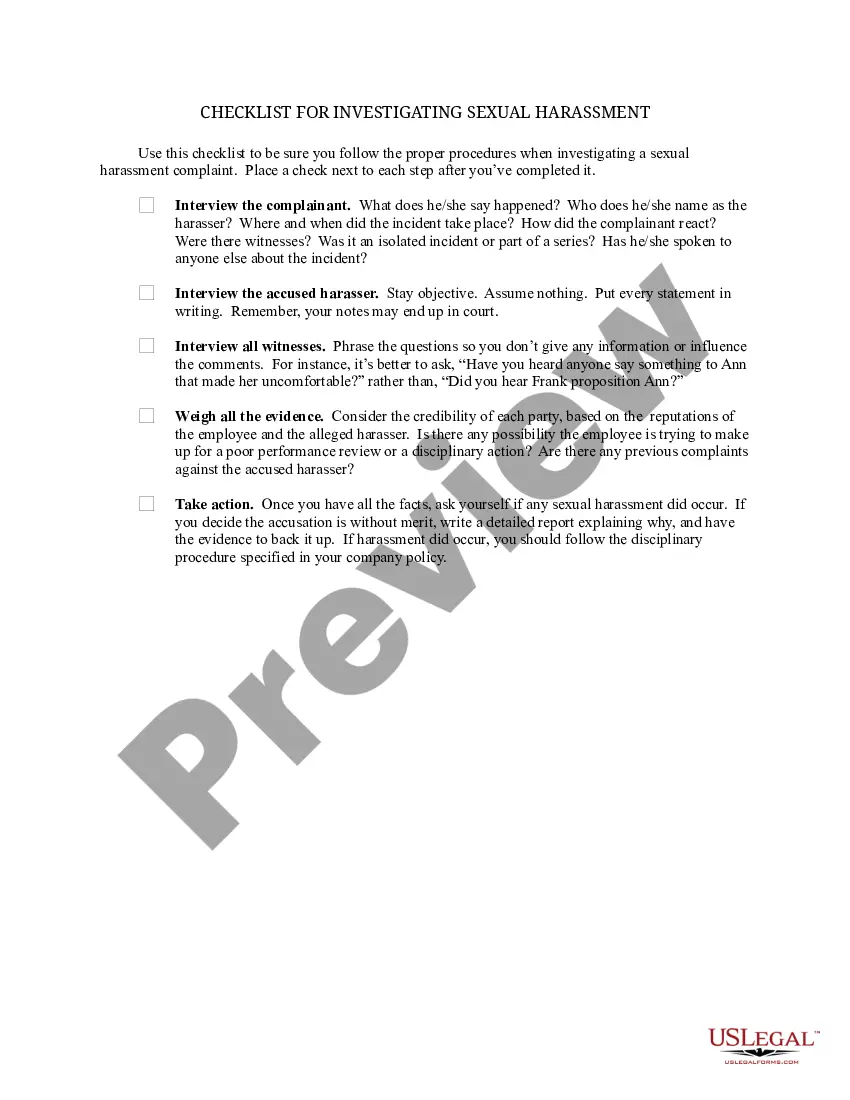
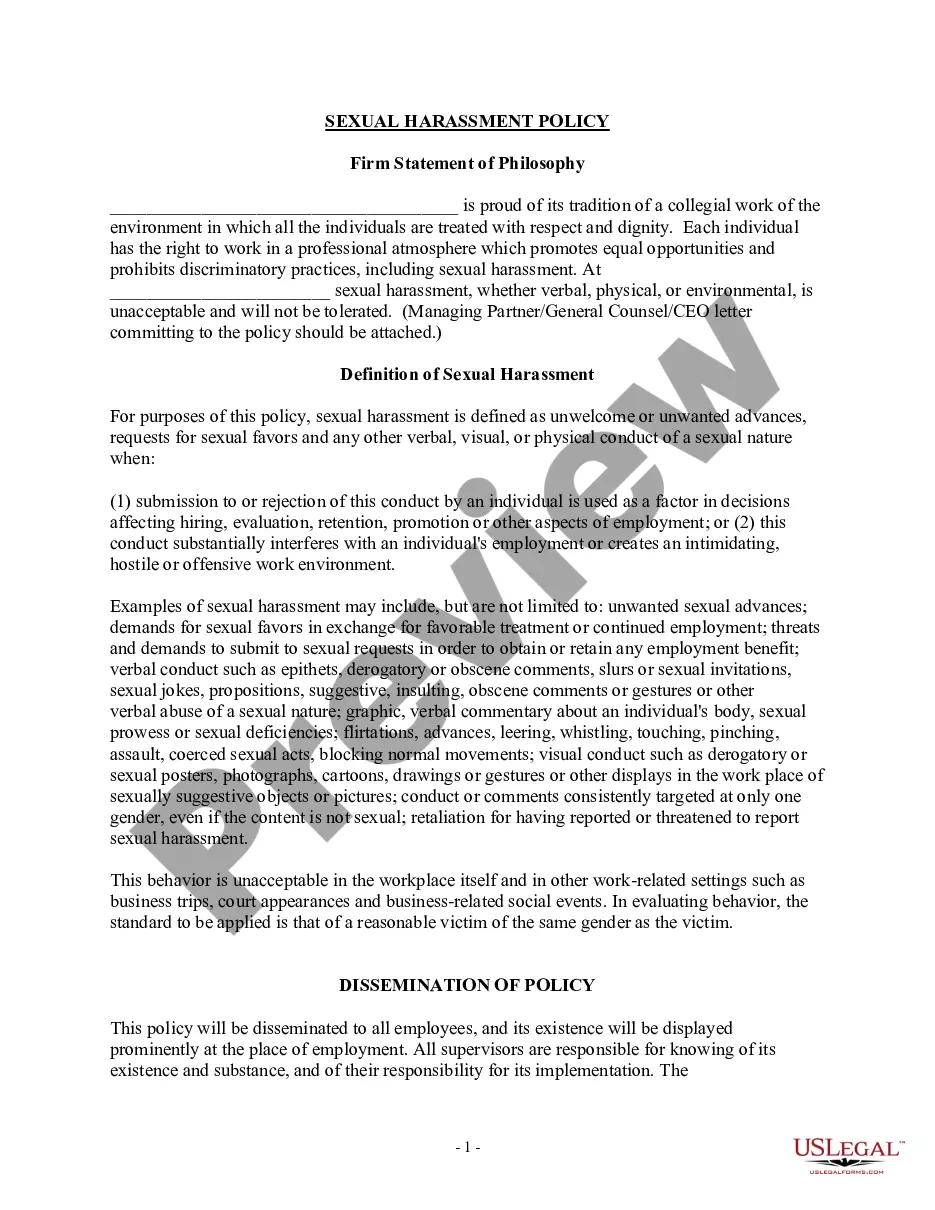
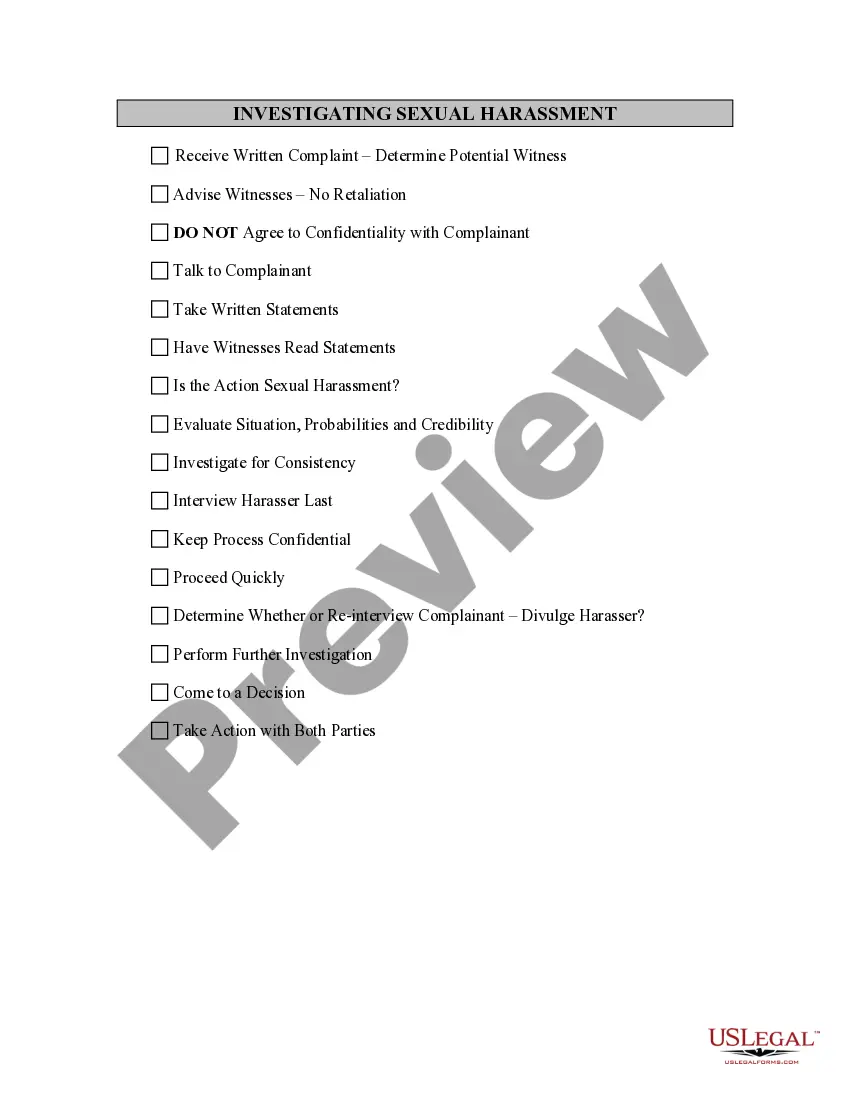
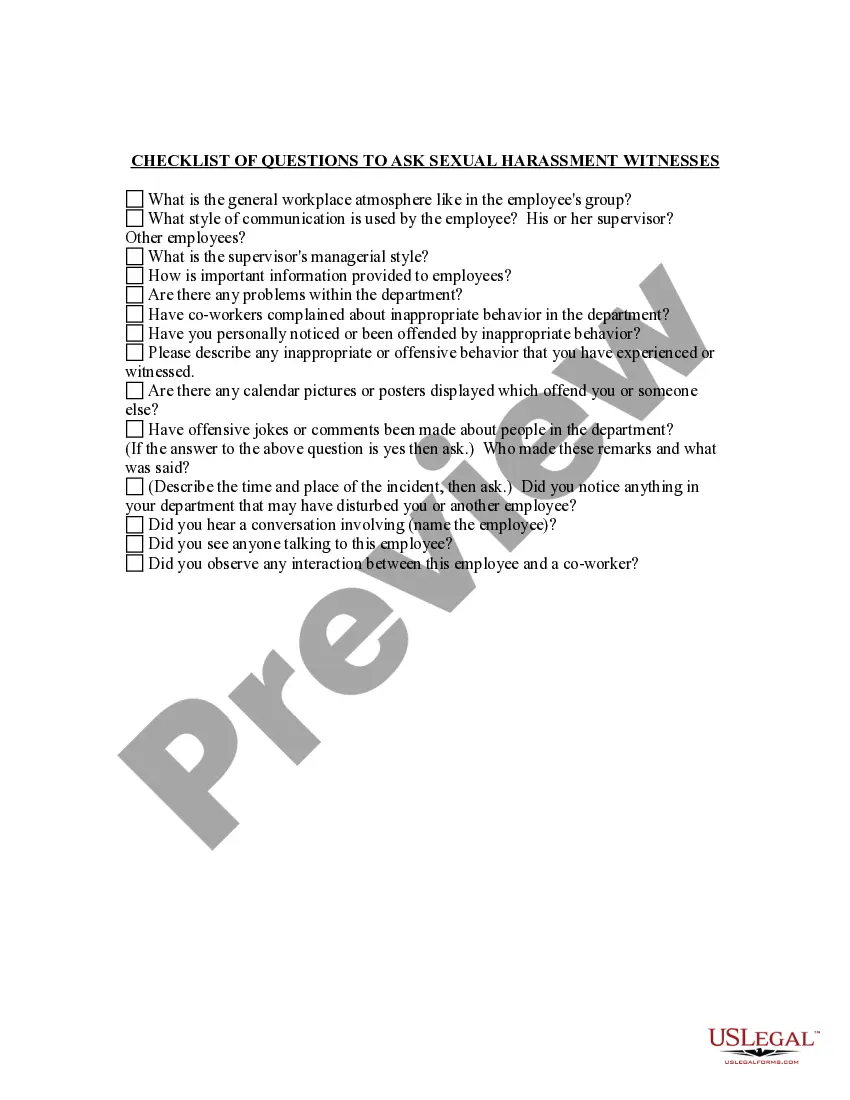
How to fill out Checklist For Investigation Sexual Harassment - Workplace?
- Log into your US Legal Forms account. If you are a returning user, make sure your subscription is active. If it has expired, renew it based on your payment plan.
- Choose your required form. Review the Preview mode and description carefully to select a document that matches your legal needs.
- Utilize the search functionality if you need a different template. Make sure the new choice aligns with your local jurisdiction’s requirements.
- Proceed to purchase the document. Click the 'Buy Now' button and select your preferred subscription plan.
- Complete your transaction by entering your payment information through a credit card or PayPal.
- Download your form. Save it to your device, allowing you to fill it out and access it anytime from the 'My Forms' section of your account.
By following these simple steps, you can swiftly acquire the necessary legal documents to address sexual harassment in the workplace.
Don't hesitate to take action—visit US Legal Forms today to navigate your legal needs with confidence.
Form popularity
FAQ
When you report harassment, HR takes the matter seriously and begins an investigation into the claims of sexual harassment work. They review the evidence you provide, interview relevant parties, and assess the situation for compliance with company policies. After gathering all necessary information, HR will take appropriate steps to resolve the issue, which may include training, mediation, or disciplinary action. You can expect to be informed about the outcome and any measures taken.
Writing someone up for workplace harassment involves collecting clear evidence of the incidents related to sexual harassment work. Create a detailed record that highlights what happened, how often it occurred, and any witnesses present. Once you have the information gathered, consult your employee handbook for reporting procedures, then file your report with HR for appropriate action. This documentation is crucial for ensuring that the matter is handled properly.
To write someone up for harassment at work, start by documenting specific incidents of sexual harassment work. Include dates, times, locations, and descriptions of the behavior. After that, follow your company's procedures for reporting such actions. Finally, submit your documentation to your HR department to initiate the investigation process.
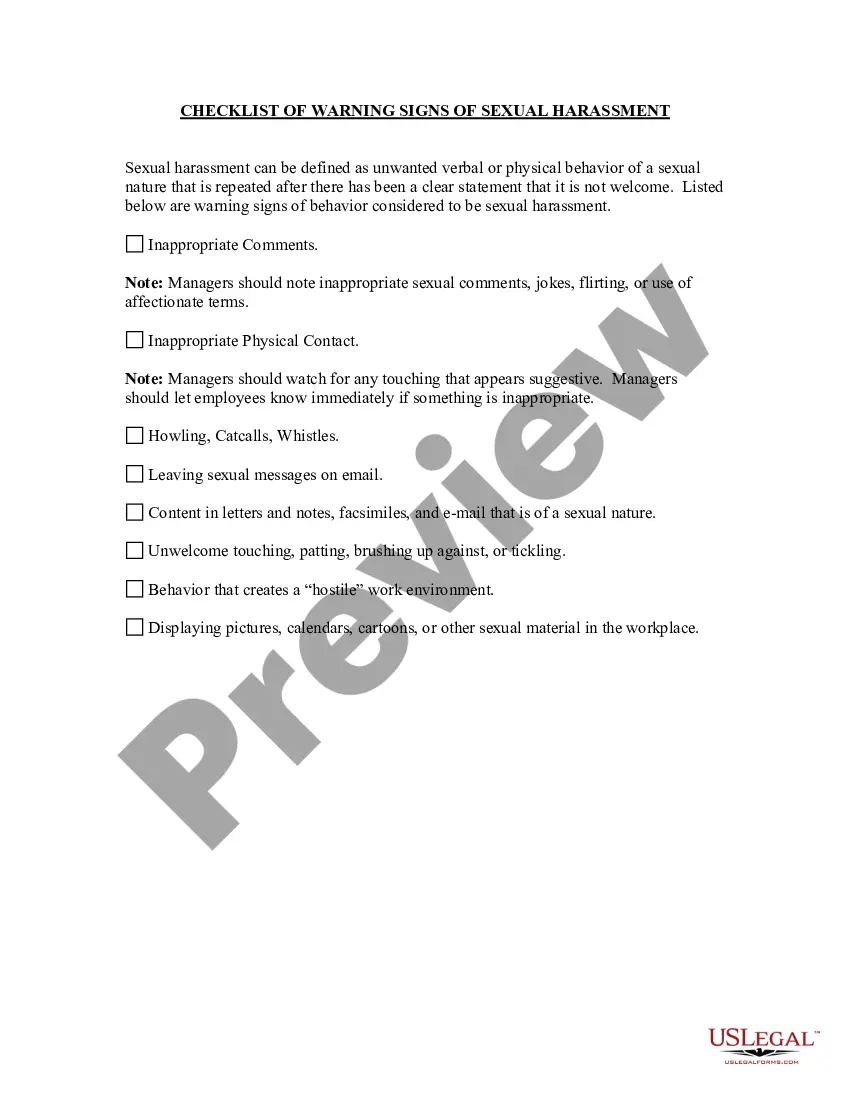
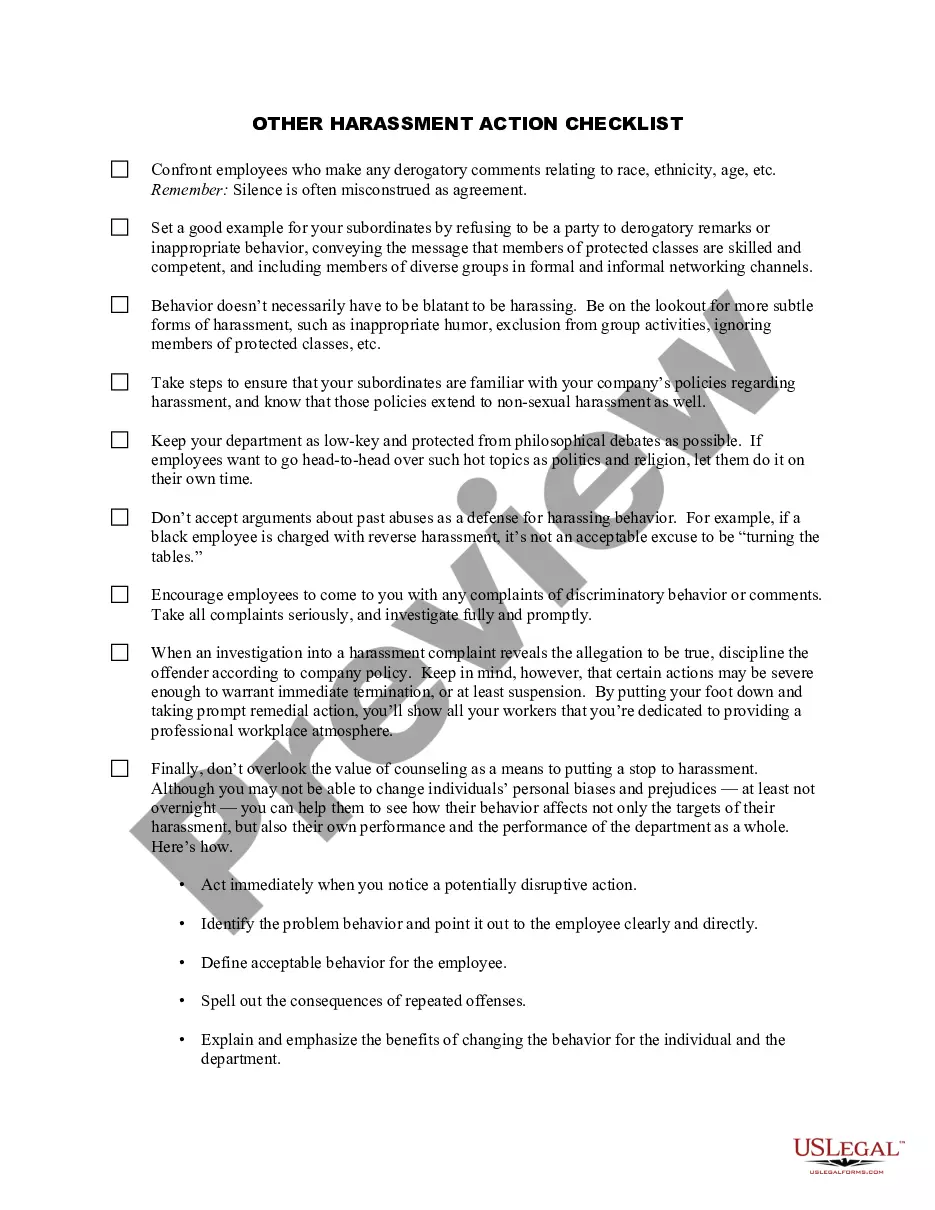
Conduct that may qualify as sexual harassment includes unwanted touching or physical advances, inappropriate comments about someone's appearance, sharing inappropriate images or jokes, and creating a hostile work environment through offensive behavior. Each of these examples shows that any unwelcome behavior can create a difficult atmosphere for employees. It's essential to understand these behaviors to foster a respectful workplace.
If you experience sexual harassment at work, the first step is to document everything, including what was said or done. Next, familiarize yourself with your employer’s harassment policies. Inform your supervisor or HR as soon as you feel comfortable doing so. Lastly, if your concerns are ignored, consider legal options to ensure your rights are protected.
Start by keeping a detailed record of the harassment incidents, as this information is crucial. Review your workplace's sexual harassment policy to understand your rights. After that, report the issue to HR or a designated authority in your company. If the situation persists, it is wise to consult with an attorney specializing in sexual harassment work for further guidance.
When reporting sexual harassment at work, begin by documenting the incidents. Note the dates, times, and details of each occurrence. Next, review your company’s harassment policy and procedures. Then, report the harassment to your supervisor or HR department, and consider seeking legal advice if your concerns are not addressed promptly.