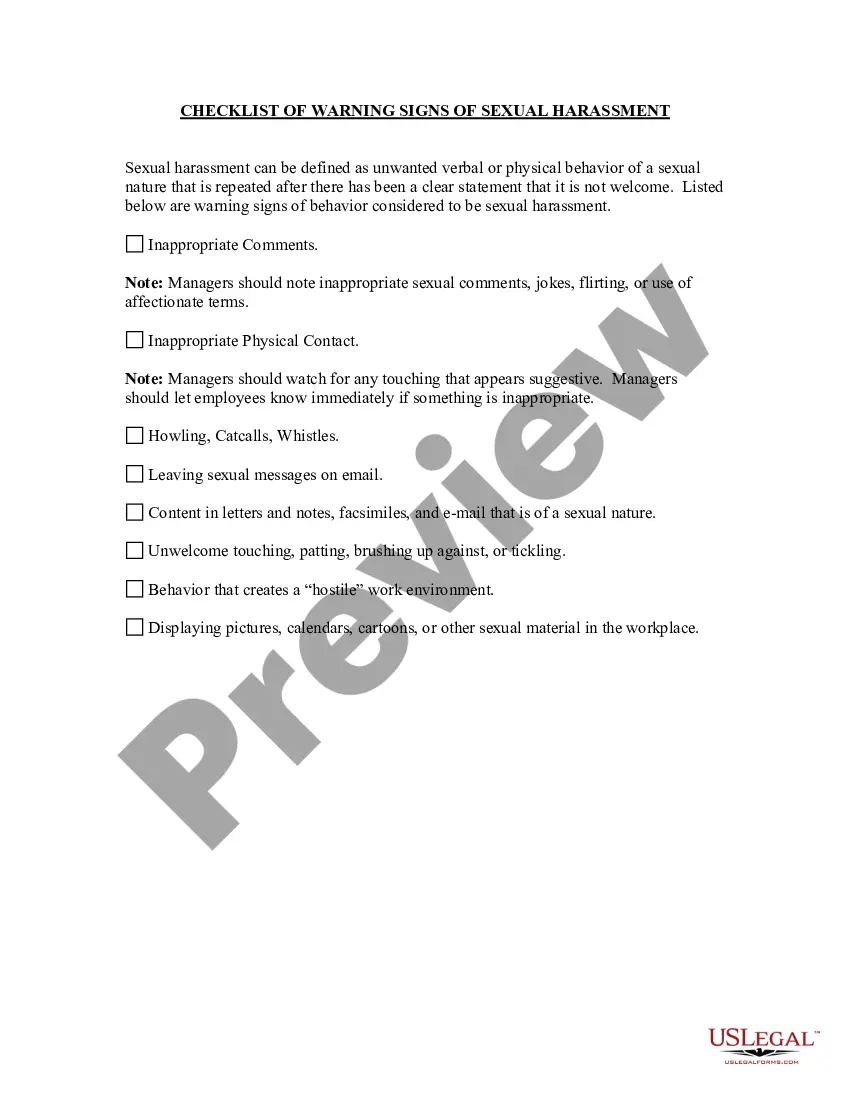
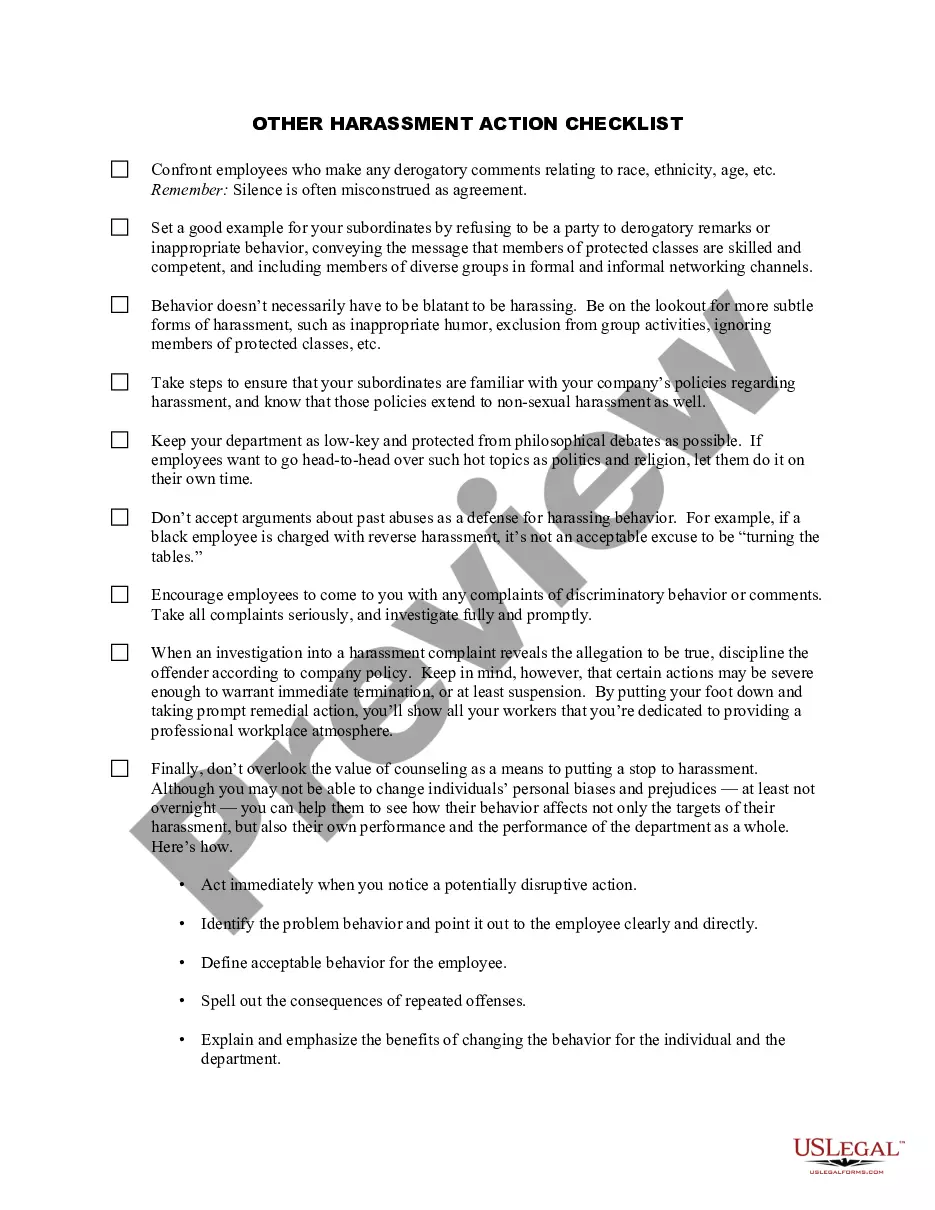
Sexual Harassment Training With Certificate
Description
Get your form ready online
Our built-in tools help you complete, sign, share, and store your documents in one place.
Make edits, fill in missing information, and update formatting in US Legal Forms—just like you would in MS Word.
Download a copy, print it, send it by email, or mail it via USPS—whatever works best for your next step.
Sign and collect signatures with our SignNow integration. Send to multiple recipients, set reminders, and more. Go Premium to unlock E-Sign.
If this form requires notarization, complete it online through a secure video call—no need to meet a notary in person or wait for an appointment.
We protect your documents and personal data by following strict security and privacy standards.

Make edits, fill in missing information, and update formatting in US Legal Forms—just like you would in MS Word.

Download a copy, print it, send it by email, or mail it via USPS—whatever works best for your next step.

Sign and collect signatures with our SignNow integration. Send to multiple recipients, set reminders, and more. Go Premium to unlock E-Sign.

If this form requires notarization, complete it online through a secure video call—no need to meet a notary in person or wait for an appointment.

We protect your documents and personal data by following strict security and privacy standards.
Looking for another form?







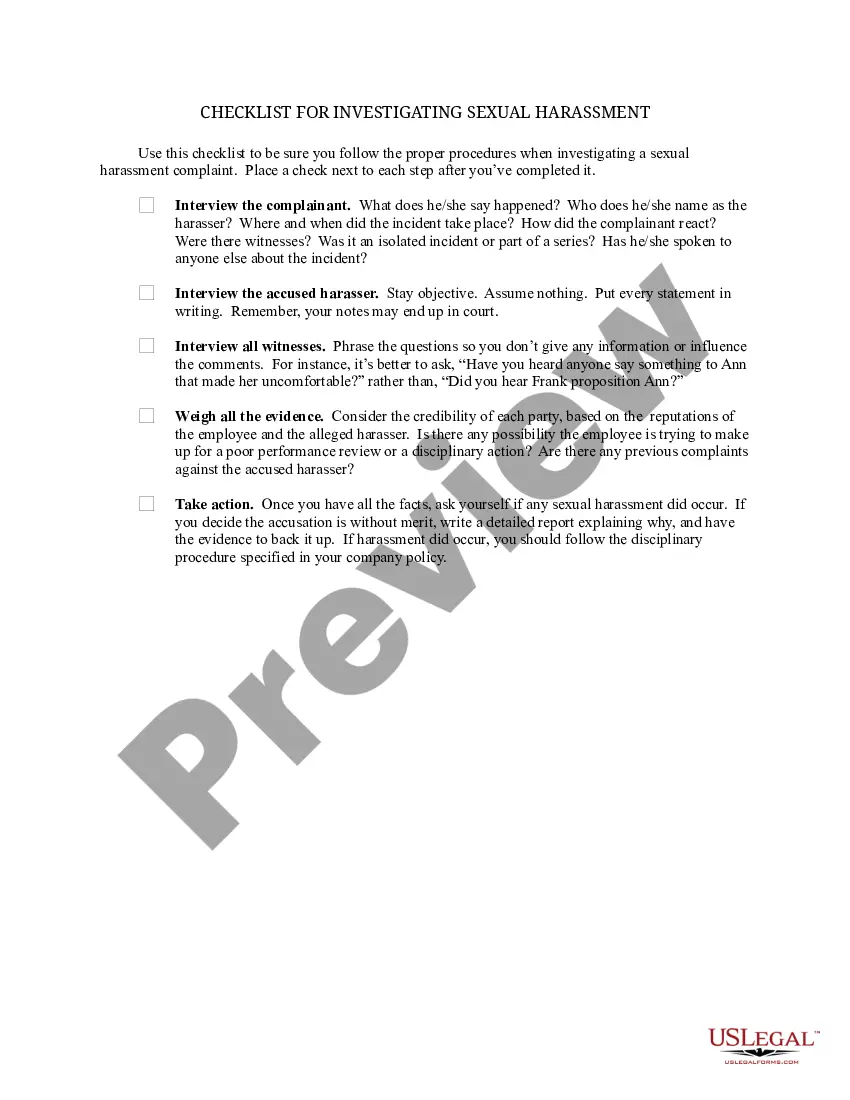
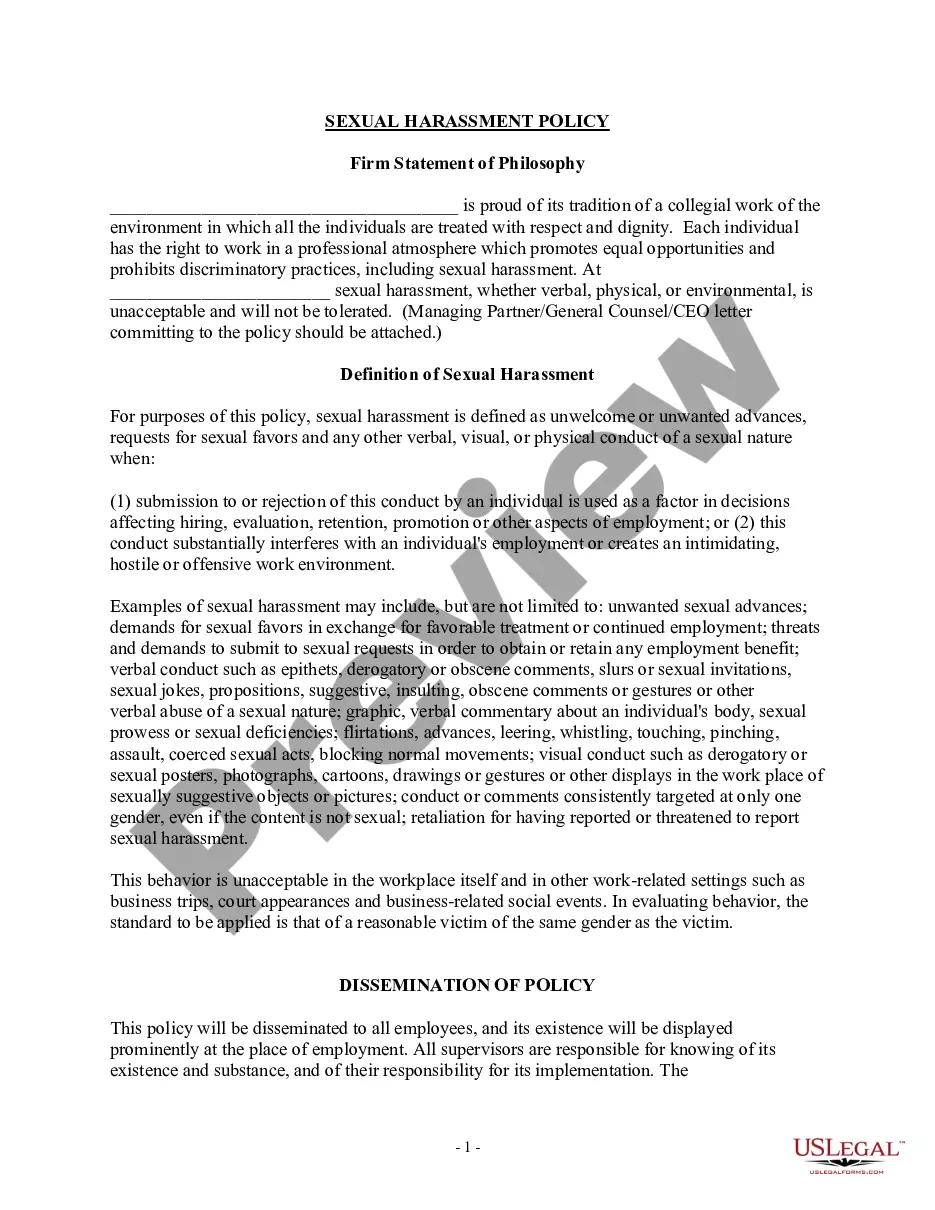
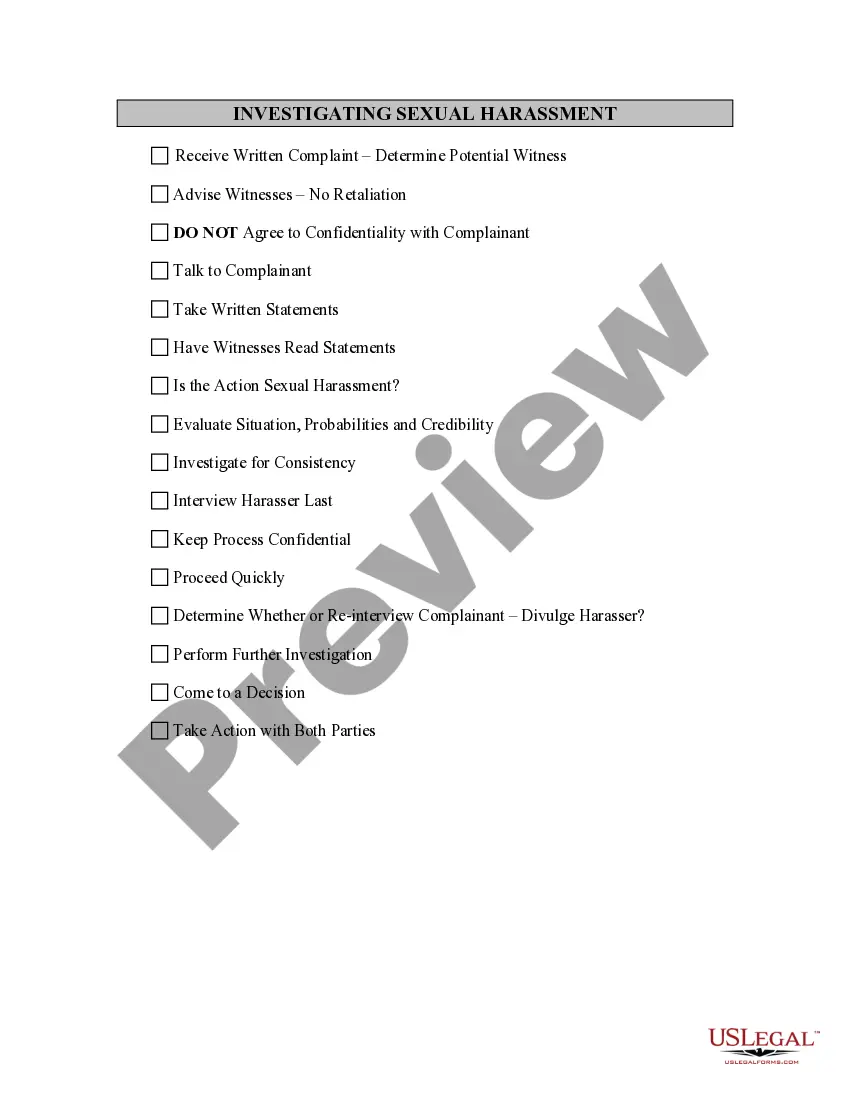
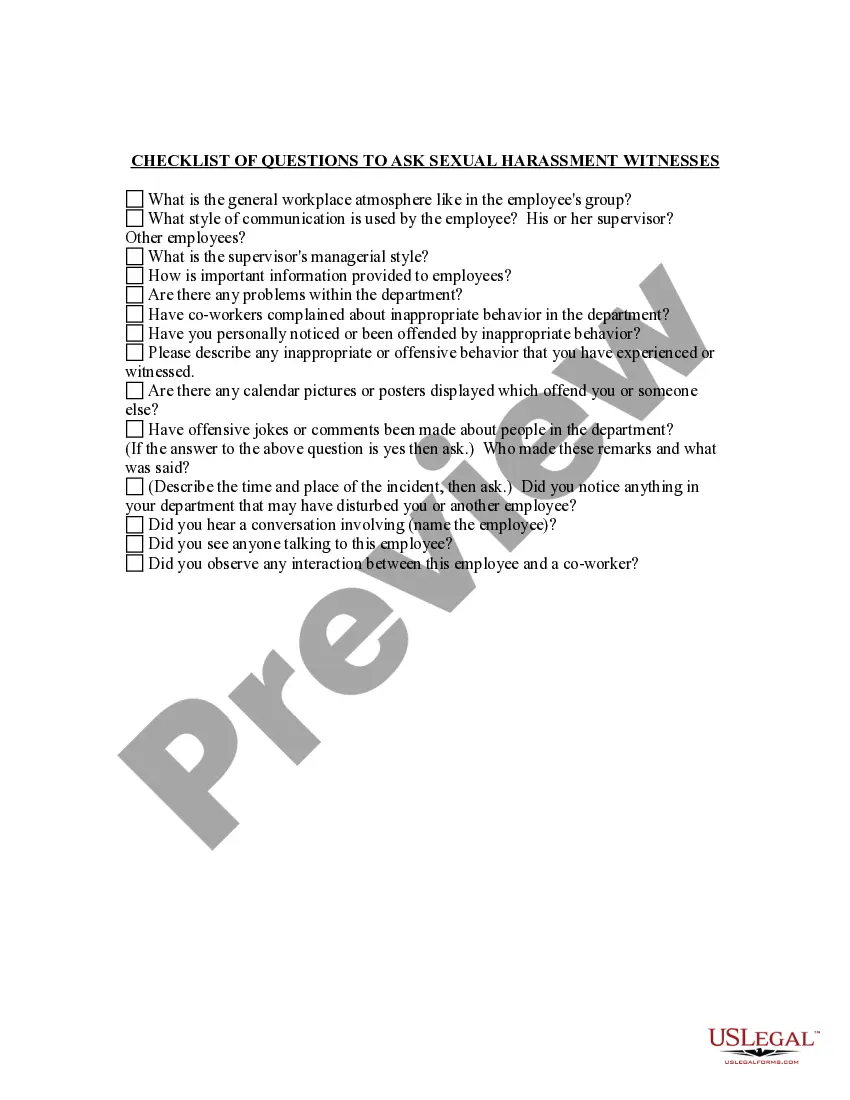
How to fill out Checklist For Investigation Sexual Harassment - Workplace?
- Log in to your US Legal Forms account if you're a returning user. Ensure your subscription is active, or renew it if necessary.
- For first-time users, explore the Preview mode and form descriptions to select the document that aligns with your jurisdiction and needs.
- If you encounter discrepancies, utilize the Search feature to find the appropriate form. This ensures that your training document meets all requirements.
- Purchase your selected form by clicking 'Buy Now' and select a suitable subscription plan. You'll need to register for an account for full access.
- Complete your payment using a credit card or PayPal to finalize the purchase.
- Download the document to your device. Access it anytime via the 'My documents' section in your profile.
By following these steps, you can effortlessly secure a valuable sexual harassment training with certificate, enhancing workplace compliance and safety.
Ready to get started? Visit US Legal Forms today and empower your organization with comprehensive legal resources.
Form popularity
FAQ
SB 1343 training requires a minimum of one hour of sexual harassment training with certificate for nonsupervisory employees and two hours for supervisory employees. This structured timeline allows employees to absorb critical information about harassment and their rights. Completing this training not only fulfills compliance requirements but also enhances workplace communication.
A comprehensive harassment training program should cover key topics such as the definition of sexual harassment, examples of prohibited conduct, and the process for reporting harassment. Additionally, it should include an overview of the legal responsibilities of employers and employees. An effective program, like those offered on the US Legal Forms platform, equips participants with the knowledge needed to create a respectful workplace.
Yes, AB 1825 establishes a minimum threshold by requiring employers with 50 or more employees to conduct sexual harassment training with certificate for all supervisory staff. This ensures that a significant portion of the workforce is educated and equipped to handle harassment issues effectively. Meeting this threshold is vital for compliance and workplace culture.
California Bill AB 1825 is legislation that mandates sexual harassment training with certificate for supervisory employees in larger workplaces. This law emphasizes the need for awareness and dialogue around harassment, aiming to create safer, more respectful environments. Understanding this law helps employers comply and protects their most valuable asset: their employees.
AB 1825 training requires employers to provide at least two hours of sexual harassment training with certificate for all supervisory employees every two years. Topics must include the definitions of sexual harassment, the employer's obligations, and potential consequences for those engaging in such behavior. By meeting these requirements, businesses can foster a safer workplace.
SB 1343 and AB 1825 are both California laws that mandate sexual harassment training with certificate for employees. However, SB 1343 requires minimum training for employees in workplaces with five or more workers, while AB 1825 applies to employers with 50 or more employees. As a result, SB 1343 has a broader reach, ensuring more employees receive essential training.
Harassment prevention training generally lasts about one to two hours, allowing employees to engage fully with the material. This format provides adequate time for important discussions and activities related to sexual harassment training with certificate. By dedicating this time, organizations can significantly improve their workplace culture and ensure employees know how to contribute to a respectful environment.
As of now, several states, including California, Illinois, and New York, require sexual harassment training with certificate for employees. Each state has its own guidelines on the frequency and content of the training. Understanding these requirements helps organizations implement effective training programs to foster a safer work environment and comply with legal standards.
Yes, New York requires employers to conduct sexual harassment training with certificate for all employees annually. The law mandates that organizations develop training that meets specific criteria, ensuring that employees are well-informed about what constitutes harassment and how to report it. By fulfilling this requirement, companies show their commitment to maintaining a healthy workplace culture.
Typically, harassment training lasts about one to two hours, depending on the course content. This timeframe allows participants to cover essential topics and engage in discussions, ensuring they grasp key concepts of sexual harassment training with certificate. Investing this time helps foster a more informed workforce and promotes a culture of respect and accountability.