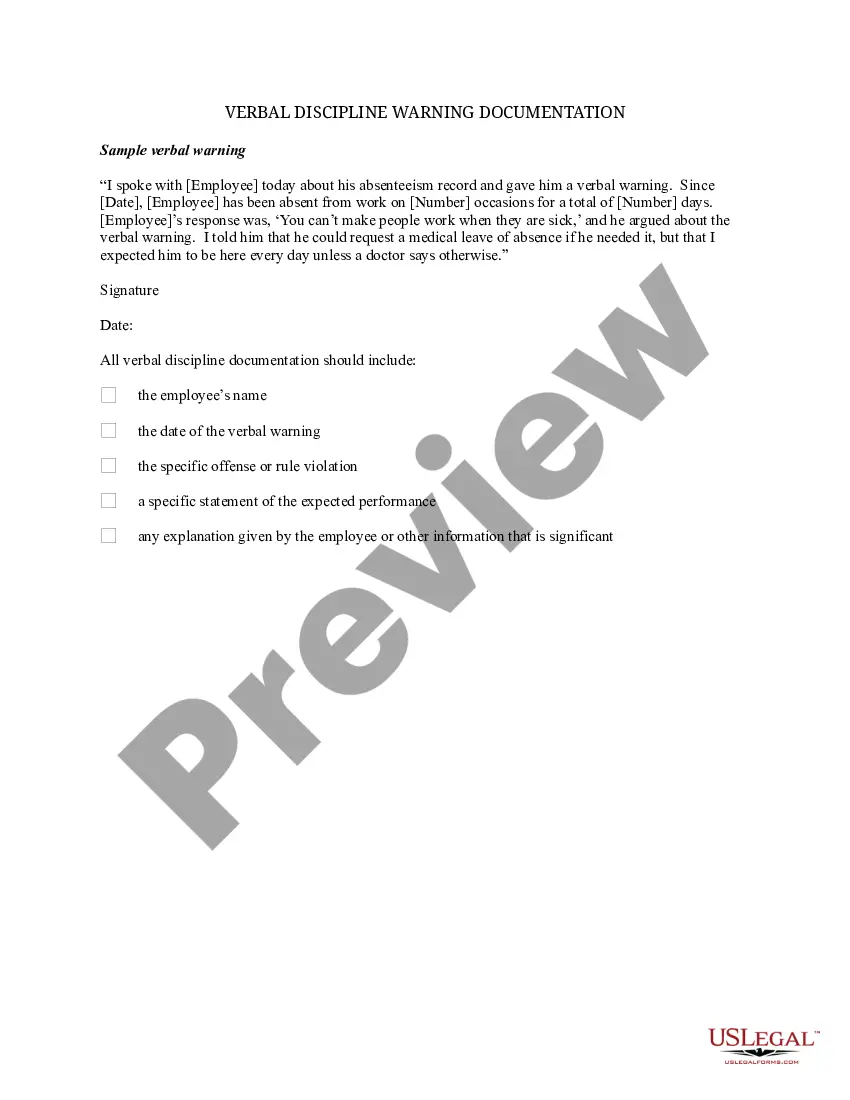
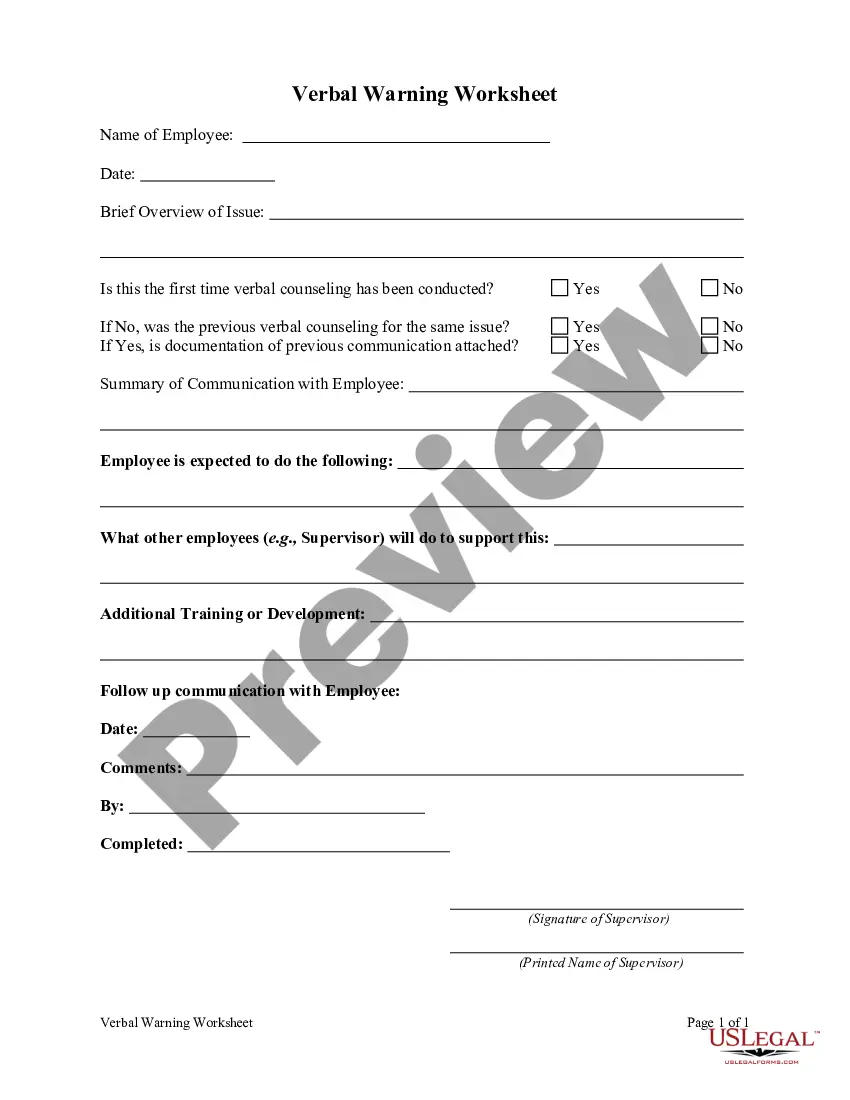
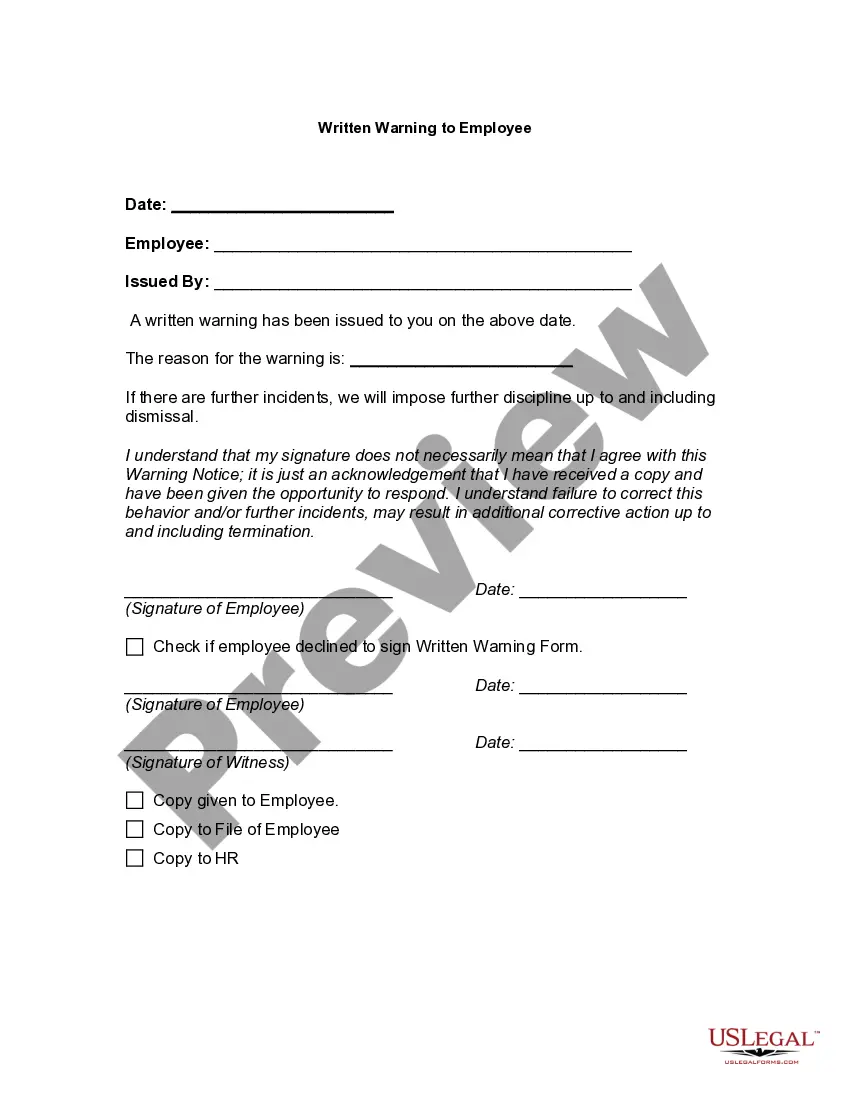
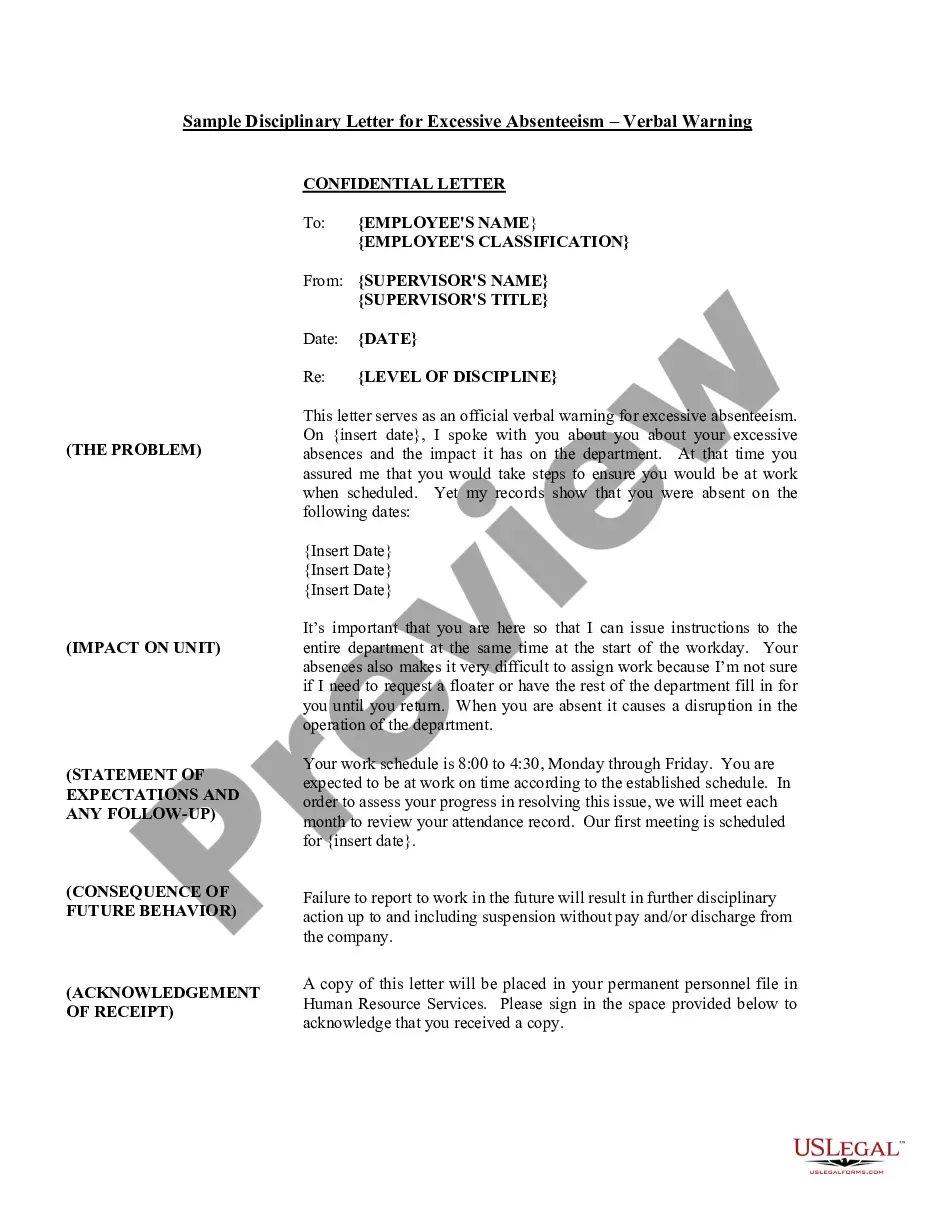
Verbal Warning Letter Format
Description
Get your form ready online
Our built-in tools help you complete, sign, share, and store your documents in one place.
Make edits, fill in missing information, and update formatting in US Legal Forms—just like you would in MS Word.
Download a copy, print it, send it by email, or mail it via USPS—whatever works best for your next step.
Sign and collect signatures with our SignNow integration. Send to multiple recipients, set reminders, and more. Go Premium to unlock E-Sign.
If this form requires notarization, complete it online through a secure video call—no need to meet a notary in person or wait for an appointment.
We protect your documents and personal data by following strict security and privacy standards.

Make edits, fill in missing information, and update formatting in US Legal Forms—just like you would in MS Word.

Download a copy, print it, send it by email, or mail it via USPS—whatever works best for your next step.

Sign and collect signatures with our SignNow integration. Send to multiple recipients, set reminders, and more. Go Premium to unlock E-Sign.

If this form requires notarization, complete it online through a secure video call—no need to meet a notary in person or wait for an appointment.

We protect your documents and personal data by following strict security and privacy standards.
Looking for another form?



How to fill out Verbal Discipline Warning Documentation Checklist?
Whether for professional reasons or personal issues, everyone must manage legal scenarios at some point in their existence.
Completing legal documentation requires meticulous focus, starting from selecting the right form template. For example, if you opt for an incorrect variation of the Verbal Warning Letter Format, it will be dismissed upon submission.
With a comprehensive US Legal Forms catalog available, you don't need to waste time searching for the right sample online. Utilize the library’s straightforward navigation to find the appropriate form for any circumstance.
- Obtain the template you require by utilizing the search box or catalog browsing.
- Review the form’s details to ensure it aligns with your situation, jurisdiction, and locality.
- Click on the form’s preview to review it.
- If it's not the correct form, return to the search function to find the Verbal Warning Letter Format sample you require.
- Download the template once it fulfills your needs.
- If you have a US Legal Forms account, click Log in to access previously saved templates in My documents.
- If you do not yet possess an account, you can procure the form by clicking Buy now.
- Select the appropriate pricing option.
- Fill out the account registration form.
- Choose your payment method: either use a credit card or PayPal account.
- Select the document format you prefer and download the Verbal Warning Letter Format.
- Once it is downloaded, you can fill out the form using editing software or print it and complete it manually.
Form popularity
FAQ
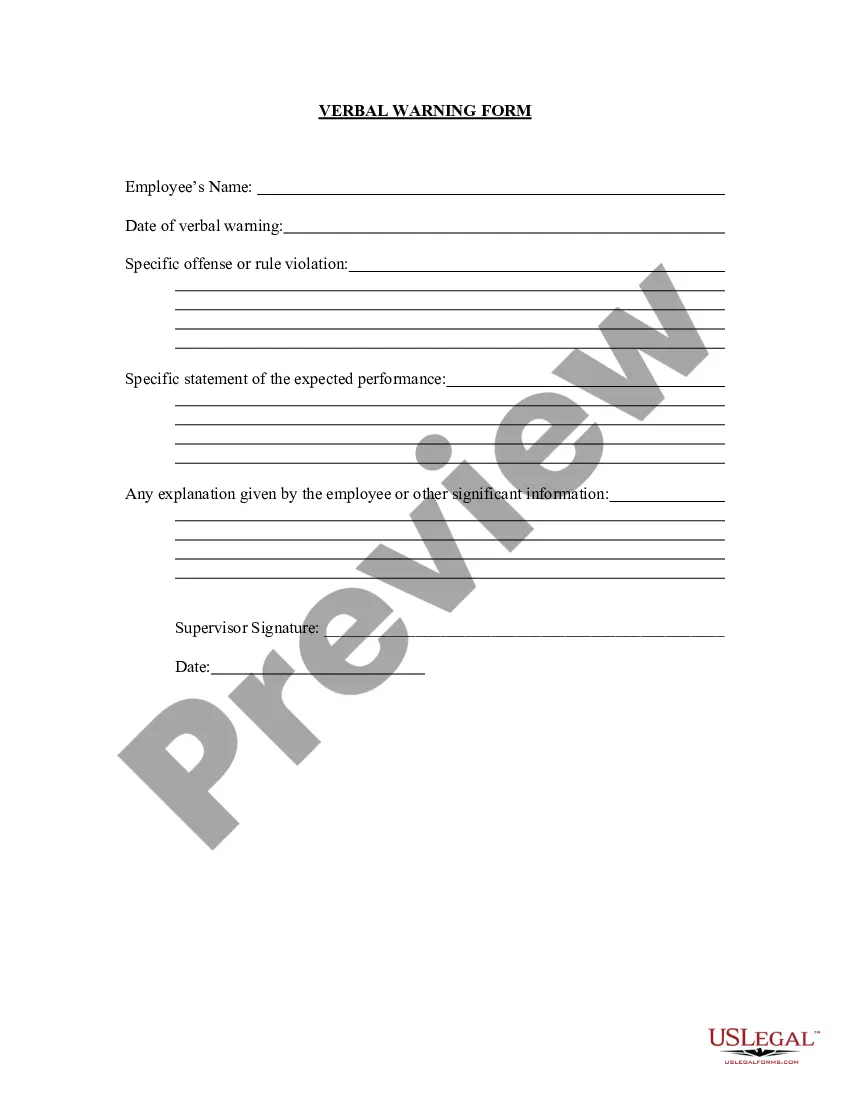
Creating a verbal warning letter involves summarizing the conversation you had with the employee. Begin with the date and the employee's name, followed by a description of the issue discussed, the expectations moving forward, and any possible consequences for not adhering to these expectations. Utilizing a structured verbal warning letter format can help ensure that all necessary details are clearly laid out, enhancing understanding and compliance. If you need templates or additional resources, consider USLegalForms for a range of options.
An informal verbal warning should be delivered in a private setting to avoid embarrassment and maintain respect. Approach the conversation with empathy, discussing the behavior that needs to change while expressing your willingness to support improvement. Use conversational language to ensure the message is clear and constructive. After the discussion, you might want to follow up with a written note that reflects the verbal warning letter format to document the interaction.
To write a verbal warning, start by clearly stating the issue that prompted the warning. Ensure you communicate the expected behavior moving forward and outline any consequences for continued issues. It's crucial to remain professional and stick to the facts to maintain clarity and accountability. Following a verbal warning, consider documenting the conversation using a verbal warning letter format for future reference.
Generally, a verbal warning precedes a written warning. This approach allows the employee a chance to correct their behavior without escalating the issue immediately. Employing a verbal warning letter format can help document this initial step. However, organizations may have specific policies regarding disciplinary actions, so it's wise to review these.
An example of a letter of verbal warning typically begins with the employee's name and the issue at hand. It should detail the observed behavior, the conversation held, and the expected improvement. Following a verbal warning letter format allows for a professional tone and ensures all necessary information is included. Use the letter as a guide for clarity and structure.
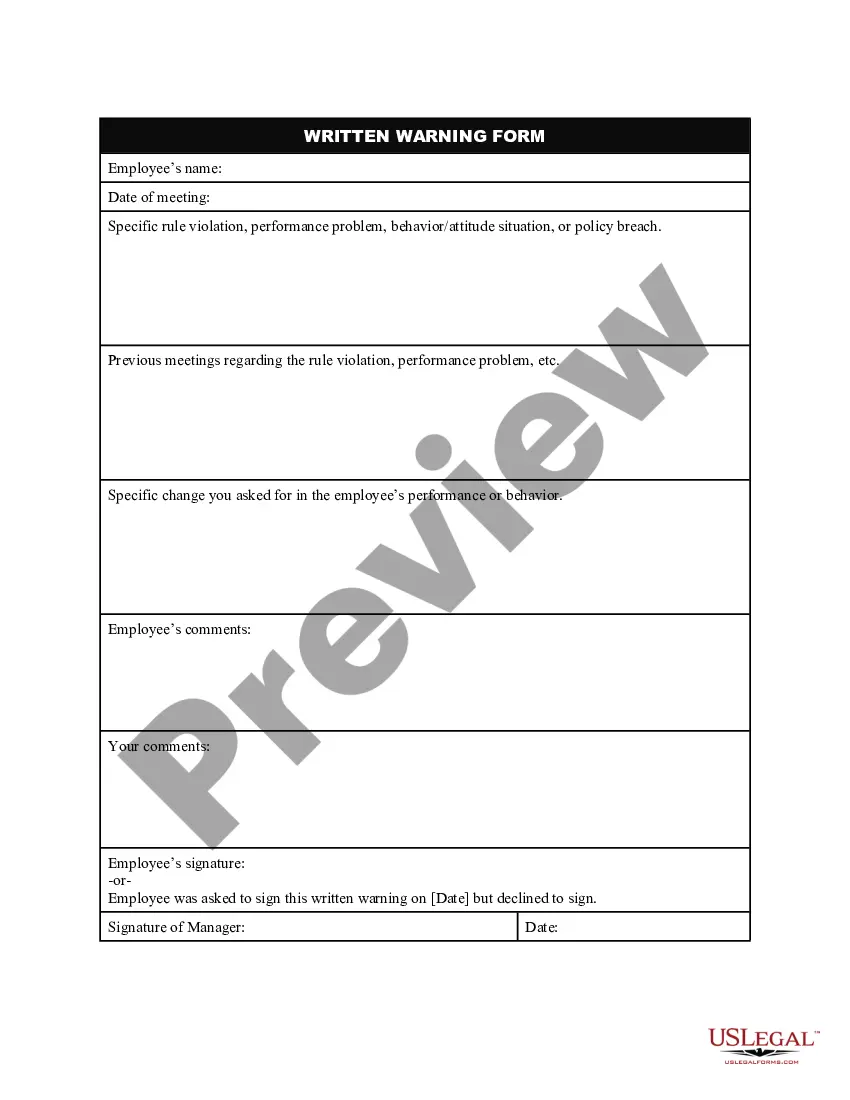
Yes, a verbal warning can be captured in writing, often referred to as a verbal warning letter. This letter provides a formal record of the discussion and helps clarify expectations. Using a verbal warning letter format ensures all essential points are covered. It's a good practice for both management and employees.
Documenting a verbal conversation with an employee requires creating a written record soon after the meeting. Include the date, time, participants, and key discussion points. A verbal warning letter format can serve as a useful template for this documentation. Always keep it professional and factual to ensure clarity in future discussions.
Writing a verbal warning letter involves outlining the specific issue in a clear and concise manner. Start with the date and the employee's name, followed by a brief introduction stating the purpose. Utilize a verbal warning letter format, including the incident details and discussions held. Finally, outline the expectations for improvement and any follow-up actions.
When issuing a verbal warning, clearly articulate the specific behavior or performance issue. It's essential to explain how it impacts the team or organization. Using a verbal warning letter format can help structure your message. Conclude by indicating the expected change and the consequences of failing to improve.
To give a formal verbal warning, start by scheduling a private meeting with the employee. Clearly state the concerns regarding their performance or behavior, ensuring they understand the issue. Use a verbal warning letter format to guide the discussion and maintain clarity. Always encourage the employee to share their perspective, fostering an open dialogue.